Research Article | Volume 4 Issue 2 (July-Dec, 2024) | Pages 1 - 7
Public Health Awareness: Understanding the Attitudes and Knowledge of Shimla Residents on Over-the-Counter Medications
 ,
1
Junior Resident, Internal Medicine, Sri Ramachandra Medical College, Sri Ramachandra Institute of Higher Education and Research , Chennai.
2
Junior Resident, Pediatrics, Jawaharlal Nehru Medical College, Aligarh Muslim University(AMU).
Under a Creative Commons license
Open Access
Received
Nov. 10, 2024
Revised
Nov. 16, 2024
Accepted
Nov. 20, 2024
Published
Dec. 20, 2024
Abstract

Background: Over-the-counter (OTC) medications are widely used for self-care due to their accessibility and affordability. However, inappropriate use of OTC drugs, including self-medication, exceeding dosages, and improper storage, poses significant public health risks. Understanding public attitudes and knowledge regarding OTC medications is essential for promoting safe practices and minimizing adverse outcomes. This study aims to assess the awareness, attitudes, and practices of Shimla residents regarding OTC medications and identify socio-demographic factors influencing these behaviors.Materials and Methods: A descriptive cross-sectional study was conducted among 400 adult residents of Shimla, Himachal Pradesh, over three months (August–October 2024). A structured questionnaire, divided into socio-demographic information and OTC medication awareness and practices, was administered via online platforms. Participants' knowledge was scored across 20 questions, categorized as Very Good (>80%), Good (60–79%), Fair (41–59%), and Poor (<40%). Data were analyzed using Epi Info V7 to determine frequencies, percentages, and associations between socio-demographic factors and awareness levels.Results: The study revealed a moderate level of awareness regarding OTC medications among participants. Most respondents scored "Good" (38.50%) or "Fair" (33.00%), while only 22.00% demonstrated comprehensive knowledge ("Very Good"). Participants showed strong awareness of risks related to misuse (74.50%) and expiration (77.50%) but exhibited misconceptions about herbal supplements being OTC drugs (49.00%) and the proper definition of OTC (44.50%). Rural residents (56.25%) exhibited lower awareness compared to urban participants, and individuals with higher educational attainment demonstrated better understanding. Misconceptions about self-diagnosis (65.50% recognized it as unsafe) and combining OTC with prescription drugs (61.50% acknowledged risks) highlighted critical gaps in knowledge and practices.Conclusion: While foundational knowledge of OTC medications exists among Shimla residents, significant gaps in understanding safe practices, drug interactions, and proper storage persist, particularly among rural and less-educated populations. Targeted public health campaigns, pharmacist-led education, and community outreach are crucial for addressing these gaps and promoting responsible OTC medication use. By fostering informed self-care practices, such initiatives can enhance health outcomes and mitigate risks associated with OTC drug misuse.

Keywords
INTRODUCTION

Over-the-counter (OTC) medications are an integral part of modern healthcare systems, offering individuals the convenience of self-care and the ability to manage minor health issues without the need for a prescription. These medications, which include pain relievers, antacids, cold remedies, and vitamins, are widely used for their accessibility and affordability. While OTC drugs can significantly improve health outcomes by providing quick and cost-effective relief, their misuse or overuse poses substantial public health risks. Inappropriate self-medication, failure to follow recommended dosages, and interactions with prescription medications can lead to adverse effects, masking of serious illnesses, and increased healthcare costs.[1-4]

Public knowledge and attitudes toward OTC medications play a critical role in determining their appropriate use. Despite the growing reliance on self-medication, studies worldwide indicate that many individuals lack adequate knowledge about the safe and effective use of OTC drugs. Common misconceptions include the belief that OTC medications are entirely risk-free, leading to practices such as exceeding recommended dosages or using them for prolonged periods without medical supervision. These behaviors can result in complications, including drug dependency, organ damage, or the exacerbation of underlying conditions.[4-8]

Shimla, the capital of Himachal Pradesh, provides a unique setting to study public attitudes and knowledge of OTC medications. The region's diverse demographic profile, including rural and urban populations, varying education levels, and differing access to healthcare facilities, influences medication practices. Urban residents may have better access to pharmacies and information about OTC drugs, while rural populations may rely on informal sources for medication, increasing the risk of misuse. Additionally, cultural beliefs and limited healthcare access in some areas can drive self-medication practices, compounding public health concerns.

Understanding the knowledge, attitudes, and practices of Shimla residents regarding OTC medications is essential for developing targeted public health interventions. Factors such as education, income, and exposure to healthcare systems significantly influence medication behaviors, shaping the risks and benefits associated with OTC drug use. Previous research suggests that tailored awareness campaigns can bridge knowledge gaps, encouraging responsible self-care while minimizing health risks.

This study aims to evaluate the attitudes and knowledge of Shimla residents about OTC medications, identify gaps in understanding, and explore the socio-demographic factors influencing self-medication practices. By providing evidence-based insights, this research seeks to inform public health strategies, promoting the safe and effective use of OTC drugs and empowering individuals to make informed healthcare decisions.


Aims and Objectives

Aims:
To assess the attitudes, knowledge, and practices of Shimla residents regarding over-the-counter (OTC) medications, with a focus on understanding gaps in knowledge and exploring the socio-demographic factors influencing self-medication behaviors. This study aims to provide actionable insights for the development of targeted public health interventions to promote the safe and effective use of OTC drugs.

Objectives:

  • To evaluate the level of public awareness regarding the appropriate use of OTC medications, including dosage, indications, and potential risks.

  • To analyze common misconceptions and unsafe practices related to OTC drug use, such as prolonged usage, self-diagnosis, and combining OTC drugs with prescription medications.

  • To assess the sources of information residents rely on for OTC drug use, such as pharmacists, advertisements, or informal advice, and their role in shaping practices.

  • To provide evidence-based recommendations for public health education campaigns aimed at improving awareness and fostering responsible self-medication practices.

MATERIALS AND METHODOLOGY

Research Approach: This was a descriptive cross-sectional study aimed at assessing public attitudes, knowledge, and practices related to over-the-counter (OTC) medications among residents of Shimla.

Research Design: A community-based cross-sectional survey design was employed to capture a snapshot of public knowledge and behaviors regarding OTC medication use.

Study Area: The study was conducted in Shimla, Himachal Pradesh, encompassing both urban and rural regions to ensure diverse representation. This region's socio-economic and geographic diversity provided a comprehensive context for evaluating public attitudes toward OTC medications.

Study Duration:The study was carried out over three months, from August 2024 to October 2024.

Study Population: The target population included adults aged 18 years and above who had been residents of Shimla for at least one year. Participants were recruited from urban and rural areas to ensure a representative sample reflecting the district’s demographic and socio-economic diversity.

Sample Size: Using a 95% confidence level, a 50% estimated awareness level regarding OTC medication use, and a 5% margin of error, a sample size of 400 participants was determined. An additional 5% was included to account for non-responses, ensuring robust data collection.

Study Tool: A structured questionnaire was developed and pre-tested for clarity, reliability, and cultural relevance. The questionnaire was divided into two sections:

Socio-Demographic Information: Included variables such as age, gender, education, occupation, income, and area of residence (urban/rural).

OTC Medication Awareness and Practices: Consisted of 20 structured questions addressing:

  • Knowledge of common OTC medications and their indications.

  • Awareness of risks associated with improper use, such as side effects, dependency, and interactions with other drugs.

  • Attitudes toward self-medication and reliance on OTC drugs for minor illnesses.

  • Sources of information on OTC medications, including pharmacists, advertisements, and informal advice.

  • Identification of barriers to safe OTC drug use, such as lack of information or healthcare access.

Each correct response was awarded one point, and total scores were categorized as:

  • Very Good (>80%): 16–20 points.

  • Good (60–79%): 12–15 points.

  • Fair (41–59%): 8–11 points.

  • Poor (<40%):<8 points.

Data Collection:

  • Data were collected using a Google Forms-based survey distributed via WhatsApp, Facebook, and Instagram to maximize reach.

  • Convenience sampling was employed, and responses were collected until the target sample size of 400 was achieved.

Data Analysis:

  • Data were organized and cleaned using Microsoft Excel.

  • Statistical analysis was performed using Epi Info V7 software, including:

  • Frequency and percentage distribution for socio-demographic variables.

  • Descriptive statistics for awareness scores.

Ethical Considerations:

  • Participation was voluntary, with informed consent obtained from all respondents.

  • Confidentiality and anonymity of participants were strictly maintained, with no identifying information recorded.

  • The study adhered to ethical guidelines for human research, and participants were informed of their right to withdraw at any time

RESULTS

The study evaluated public awareness, attitudes, and practices regarding over-the-counter (OTC) medications among Shimla residents. A total of 400 participants contributed data, providing insights into the socio-demographic diversity and varying levels of knowledge related to OTC medication use.


Table 1: Socio-Demographic Profile of Study ParticipantsVariable

Categories

Frequency (n)

Percentage (%)

Gender

Male

192

48.00


Female

208

52.00

Age Group (Years)

18–25

85

21.25


26–35

135

33.75


36–45

120

30.00


46–55

45

11.25


56 and above

15

3.75

Education Level

No formal education

24

6.00


Primary school

72

18.00


Secondary school

125

31.25


Undergraduate degree

136

34.00


Postgraduate degree

43

10.75

Area of Residence

Urban

175

43.75

Participants were evenly distributed by gender, with slightly more females (52.00%). Most respondents were in the 26–35 (33.75%) and 36–45 (30.00%) age groups. Education levels varied, with 34.00% holding undergraduate degrees, and rural residents accounted for the majority (56.25%), reflecting Shimla's demographic landscape.


Table 2: Awareness and Practices Regarding OTC Medications


Question

Options

Frequency of Correct Responses (n)

Percentage (%)

1. What are OTC medications?

a) Medications available without prescription
b) Medications for minor illnesses
c) Vaccines
d) None of the above

240

60.00

2. Are OTC drugs safe for long-term use without consultation?

a) Yes
b) No
c) Sometimes
d) Not sure

210

52.50

3. Which is a common OTC medication?

a) Antibiotics
b) Paracetamol
c) Pain relievers
d) Blood thinners

278

69.50

4. Can misuse of OTC drugs lead to health issues?

a) No
b) Yes
c) Rarely
d) Not sure

298

74.50

5. What is the main source of information about OTC drugs?

a) Pharmacists
b) Advertisements
c) Family
d) None

178

44.50

6. Do OTC drugs require strict dosage adherence?

a) Yes
b) No
c) Only for certain drugs
d) Not sure

186

46.50

7. Are OTC drugs effective for treating viral infections?

a) Yes
b) No
c) Sometimes
d) Not sure

202

50.50

8. Is self-diagnosis a safe practice?

a) Yes
b) No
c) Sometimes
d) Not sure

262

65.50

9. What is the risk of combining OTC drugs with prescription medications?

a) Drug interactions
b) Faster recovery
c) No risks
d) Not sure

246

61.50

10. Are pharmacists reliable for OTC drug advice?

a) No
b) Yes
c) Sometimes
d) Not sure

228

57.00

11. Can OTC drugs be addictive?

a) Yes
b) No
c) Only in specific cases
d) Rarely

204

51.00

12. Are OTC drugs cheaper than prescription medications?

a) Yes
b) No
c) Not sure
d) It depends

252

63.00

13. What does "OTC" stand for?

a) Over-The-Counter
b) Outside-The-Clinic
c) Outpatient Treatment Center
d) None of the above

178

44.50

14. Should you consult a doctor before using OTC drugs for chronic conditions?

a) Yes
b) No
c) Sometimes
d) Rarely

286

71.50

15. What should you do if you experience side effects from OTC drugs?

a) Stop use and consult a doctor
b) Continue use
c) Reduce dosage
d) Ignore

270

67.50

16. Are herbal supplements considered OTC drugs?

a) Yes
b) No
c) Sometimes
d) Not sure

196

49.00

17. Can OTC medications expire?

a) Yes
b) No
c) Only for some drugs
d) Not sure

310

77.50

18. Is it safe to share OTC medications with others?

a) Yes
b) No
c) Only in emergencies
d) Not sure

290

72.50

19. Should OTC drugs be stored in a cool, dry place?

a) Yes
b) No
c) Doesn't matter
d) Not sure

296

74.00

20. Is it safe to take OTC drugs with alcohol?

a) Yes
b) No
c) Depends on the drug
d) Rarely

284

71.00


Participants showed varied awareness levels regarding OTC medications. While 74.50% understood the risks of misuse, knowledge about proper storage (74.00%) and expiration (77.50%) was higher. However, misconceptions persisted, such as low awareness of herbal supplements not being OTC drugs (49.00%) and incorrect understanding of the OTC acronym (44.50%).


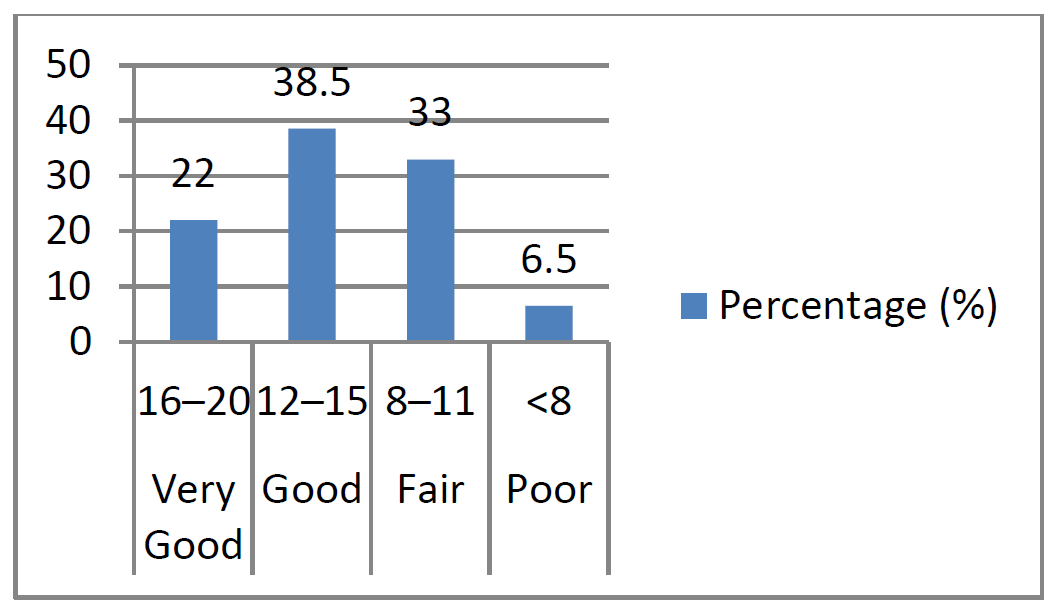
Most participants scored in the "Good" (38.50%) and "Fair" (33.00%) categories, reflecting moderate awareness. Only 22.00% demonstrated comprehensive knowledge ("Very Good"), while 6.50% scored poorly, highlighting gaps in understanding that require targeted educational efforts.

These results underline significant gaps in public knowledge and practices related to OTC medication use, emphasizing the need for robust public health interventions to address misconceptions and promote safer practices.


Figure-1: Distribution of Knowledge Scores on OTC Medications

DISCUSSION

This study provides a comprehensive evaluation of public awareness, attitudes, and practices regarding over-the-counter (OTC) medications among residents of Shimla. The findings highlight a mix of foundational knowledge and critical gaps, emphasizing the urgent need for targeted public health interventions to improve the safe use of OTC drugs. By identifying socio-demographic influences and misconceptions, this research offers actionable insights to inform community-specific health promotion initiatives.

The socio-demographic profile of participants revealed key factors influencing awareness and practices regarding OTC medications. The balanced gender distribution (48.00% male and 52.00% female) suggests the importance of targeting both genders equally in educational campaigns. A significant portion of participants fell within the 26–35 (33.75%) and 36–45 (30.00%) age groups, indicating that working-age individuals may be the primary users of OTC medications due to their accessibility and convenience. Younger adults (18–25) demonstrated relatively limited awareness, highlighting the need for early preventive education, particularly in schools and colleges.

Educational attainment played a crucial role in shaping knowledge levels. Participants with undergraduate (34.00%) and postgraduate (10.75%) degrees demonstrated better awareness of safe practices compared to those with no formal education (6.00%). This underscores the necessity of tailoring educational campaigns for less-educated populations, focusing on simplified messaging to bridge knowledge gaps. Furthermore, rural residents (56.25%) exhibited lower awareness levels compared to their urban counterparts, reflecting disparities in access to healthcare services, information dissemination, and pharmacist consultations. Addressing these rural-urban gaps through community outreach programs is essential for equitable healthcare education.

The study revealed encouraging levels of awareness about certain aspects of OTC medication use. A majority of participants (74.50%) recognized the risks associated with misuse, and 71.50% understood the importance of consulting a doctor before using OTC drugs for chronic conditions. Additionally, 77.50% were aware of drug expiration, reflecting a foundational understanding of safety measures.

However, significant gaps were identified in other areas. Only 49.00% of participants correctly understood that herbal supplements are not considered OTC drugs, and just 44.50% accurately defined the OTC acronym. These misconceptions can lead to inappropriate use of medications, posing health risks. Moreover, only 44.50% recognized improper storage as a critical safety concern, indicating the need for awareness campaigns addressing the importance of proper handling and storage of medications.[9,10]

Self-diagnosis and self-medication emerged as significant issues, with 65.50% of participants acknowledging that self-diagnosis is unsafe. While this indicates some level of understanding, it also reflects a need for further education on the risks of unsupervised drug use. Additionally, although 63.50% agreed that pharmacists are reliable sources of advice, gaps in healthcare access, particularly in rural areas, may limit the ability of residents to seek professional guidance.

The study underscores the need to strengthen preventive knowledge and promote safer health-seeking behaviors. While most participants recognized the importance of consulting healthcare professionals, there were notable deficiencies in understanding the broader implications of inappropriate OTC medication use. For example, only 46.50% understood the need for strict dosage adherence, and just 44.50% were aware of improper disposal practices, which can contribute to environmental hazards and public health risks.

Public health campaigns should focus on fostering a deeper understanding of these issues, emphasizing the importance of adhering to prescribed dosages, consulting professionals, and safely disposing of unused medications. Efforts should also address misconceptions about the effectiveness of OTC drugs for conditions like viral infections, as 50.50% of participants incorrectly believed OTC drugs could be effective against such illnesses. This highlights the need for targeted messaging about the proper indications for OTC medication use.

The distribution of knowledge scores revealed that only 22.00% of participants demonstrated comprehensive understanding ("Very Good"), while the majority fell into the "Good" (38.50%) and "Fair" (33.00%) categories. Alarmingly, 6.50% scored poorly, reflecting significant knowledge gaps among a subset of the population. These findings highlight the importance of prioritizing underserved groups, particularly rural residents and those with lower educational attainment, in public health initiatives.[11,12]

Specific gaps, such as misconceptions about drug interactions, improper storage, and self-medication, should be prioritized in educational efforts. Tailored campaigns using accessible formats, such as visual aids, community workshops, and healthcare worker-led sessions, can help improve understanding and encourage safer practices.[13,14]

The findings of this study have significant implications for public health strategies in Shimla and similar regions. First, mass awareness campaigns emphasizing the safe use of OTC medications are crucial. These campaigns should focus on dispelling misconceptions, such as the effectiveness of OTC drugs for viral infections and the safety of self-diagnosis, while promoting adherence to proper usage guidelines.

Second, addressing rural-urban disparities is essential for equitable healthcare education. Simplified and culturally sensitive materials, including posters, pamphlets, and community radio messages, can help bridge literacy gaps and ensure broader dissemination of health information. Collaboration with local healthcare providers, pharmacists, and community leaders can further enhance outreach and engagement.

Third, integrating OTC medication education into existing healthcare programs, such as those focused on chronic diseases or maternal and child health, could amplify the impact of these efforts. Encouraging pharmacists to educate consumers during drug purchases and establishing community collection points for expired or unused medications can promote safe practices.

Finally, leveraging digital platforms for health education, particularly in urban areas with higher internet penetration, could reach a wider audience. Online campaigns focusing on FAQs about OTC medications and interactive sessions with healthcare professionals could further enhance public understanding.


Strengths and Limitations

The strengths of this study include its representative sample, capturing diverse socio-demographic perspectives from both urban and rural areas, and its comprehensive evaluation of OTC medication awareness. However, reliance on online data collection may have excluded individuals without internet access, potentially underrepresenting older and rural populations. Future research should incorporate in-person surveys and qualitative methods, such as focus group discussions, to gain deeper insights into cultural and behavioral factors influencing OTC medication use.

CONCLUSION

This study highlights critical gaps in public awareness and practices regarding OTC medication use among Shimla residents. While foundational knowledge exists, misconceptions about self-medication, drug interactions, and improper storage persist, particularly among rural and less-educated populations. Targeted educational campaigns, community outreach, and pharmacist-led interventions are essential to promote responsible OTC medication use. By addressing these gaps, public health initiatives can reduce the risks associated with improper OTC drug practices, ultimately enhancing health outcomes and fostering safer healthcare behaviors in the region.

Conflict of Interest:

The authors declare that they have no conflict of interest

Funding:

No funding sources

Ethical approval:

The study was approved by theJawaharlal Nehru Medical College, Aligarh Muslim University(AMU).

REFERENCES
  1. National Institute on Drug Abuse. "Over-the-Counter Medicines" National Institute on Drug Abuse 16 Nov. 2024, https://nida.nih.gov/publications/drugfacts/over-counter-medicines. Accessed 16 Nov. 2024.

  2. MedlinePlus. "Over-the-Counter Medicines" MedlinePlus 16 Nov. 2024, https://medlineplus.gov/overthecountermedicines.html. Accessed 16 Nov. 2024.

  3. Ray I., et al. "Over-the-Counter Drugs and Self-Medication: A Worldwide Paranoia and a Troublesome Situation in India During the COVID-19 Pandemic" Annals of Medicine and Surgery (Lond.) 78 (2022) 103797. DOI: https://doi.org/10.1016/j.amsu.2022.103797.

  4. Ahmed R., et al. "Brief Overview on Over-the-Counter Medicine and Their Impact on Community Health" Indian Journal of Pharmaceutical Practices 15.2 (2022) pp. 67-72. DOI: https://doi.org/10.5530/ijpp.15.2.13.

  5. Truemeds. "Over-the-Counter Medication: A Trending Practice, Its Benefits, and Risks Involved" Truemeds 16 Nov. 2024, https://www.truemeds.in/blog/over-the-counter-medication-a-trending-practice-its-benefits-and-risks-involved. Accessed 16 Nov. 2024.

  6. Abdullah IS., et al. "Over-the-Counter Medicine Attitudes and Knowledge Among University and College Students in Brunei Darussalam: Findings from the First National Survey" International Journal of Environmental Research and Public Health 19.5 (2022) 2658. DOI: https://doi.org/10.3390/ijerph19052658.

  7. Mantell Associates. "The Evolution of Over-the-Counter Medicines: A Shift in Self-Care" Mantell Associates 16 Nov. 2024, https://www.mantellassociates.com/the-evolution-of-over-the-counter-medicines-a-shift-in-self-care/. Accessed 16 Nov. 2024.

  8. Bekele KM., et al. "Knowledge, Attitude, and Practice on Over-the-Counter Drugs Among Pharmacy and Medical Students: A Facility-Based Cross-Sectional Study" Integrative Pharmacy Research and Practice 9 (2020) pp. 135-146. DOI: https://doi.org/10.2147/IPRP.S280592.

  9. BahrinDzulkharnainFBS., et al. "Knowledge, Attitude and Practice Towards the Use of Over-the-Counter Medicines: An Online Survey Among Bruneian Adults Amid the COVID-19 Pandemic" Sustainability 14.15 (2022) 9033. DOI: https://doi.org/10.3390/su14159033.

  10. SowmyaK., and P. Saravanan. "Knowledge, Attitudes, and Practices of Over-the-Counter Drug Usage Among Medical and Paramedical Students of an Urban Tertiary Care Hospital" National Journal of Physiology, Pharmacy, and Pharmacology 11.06 (2021) pp. 610-615. DOI: https://doi.org/10.5455/njppp.2021.11.060670.

  11. ShresthaR., and M. S. Bhandari. "Knowledge, Attitude, and Practice on Over-the-Counter Drugs Among Undergraduate Students of a Tertiary Care Teaching Hospital" Journal of Universal College of Medical Sciences 12.01 (2024) pp. 47-51. DOI: https://doi.org/10.3126/jucms.v12i01.43231.

  12. Abdullah IS., et al. "Over-the-Counter Medicine Attitudes and Knowledge Among University and College Students in Brunei Darussalam: Findings from the First National Survey" International Journal of Environmental Research and Public Health 19.5 (2022) 2658. DOI: https://doi.org/10.3390/ijerph19052658.

  13. Deo SK., et al. "Awareness and Practice of Over-the-Counter Drugs in a Selected Community of Nepal" Advances in Medical and Dental Health Sciences 2.4 (2019) pp. 44-47. DOI: https://doi.org/10.47310/amdh.2019.0247.

Goyal A., et al. "Knowledge, Attitude, and Practices of Over-the-Counter (OTC) Medicines Among Rural Population: A Cross-Sectional Study" Asian Journal of Pharmaceutical and Pharmacological Sciences 4.2 (2018) pp. 227-231. DOI: https://doi.org/10.21276/ajpps.2018.4.2.6

Recommended Articles
Research Article
Advancing Awareness: Bridging Knowledge Gaps in Colon Cancer Awareness among the Population of District Mandi, Himachal Pradesh
Published: 20/10/2023
Download PDF
Research Article
Empowering Women's Health: A Comprehensive Assessment of Uterine Fibroids and Uterine Cancer Awareness in the Reproductive Age females of District Solan, Himachal Pradesh
Published: 30/12/2023
Download PDF
Research Article
The impact of the inclusion method in developing creative thinking and its reflection on the cognitive and applied achievement of the skill of serving from above in volleyball for students
Published: 30/12/2023
Download PDF
Research Article
Cooperative Societies as Sources of Health Insurance among Members in Ibadan, Nigeria: Implication for Community Social Work Practice
Published: 30/10/2021
Download PDF
Chat on WhatsApp
Flowbite Logo
PO Box 101, Nakuru
Kenya.
Email: office@iarconsortium.org

Editorial Office:
J.L Bhavan, Near Radison Blu Hotel,
Jalukbari, Guwahati-India
Useful Links
Order Hard Copy
Privacy policy
Terms and Conditions
Refund Policy
Shipping Policy
Others
About Us
Team Members
Contact Us
Online Payments
Join as Editor
Join as Reviewer
Subscribe to our Newsletter
+91 60029-93949
Follow us
MOST SEARCHED KEYWORDS
Copyright © iARCON International LLP . All Rights Reserved.