Today, energy has undoubtedly become a feature of the era in which we live, and the amount of energy consumed by an individual has become a measure of the progress of nations. It is an established fact that buildings consume high energy in all its life stages and with its various components, and most of the energy wasted in the building is due to its misuse or as a result of the wrong design of the building, which makes it draining energy significantly. The research problem is that the traditional techniques and materials used in buildings, have a specific impact on energy savings in buildings within certain limits. The research aims to use nanomaterials to provide thermal comfort in the building while rationalizing energy consumption without neglecting the architectural formation and aesthetic appearance.Therefore, an inductive and deductive approach was used to achieve the goal of the research. The research reached a group of nanomaterials whose roles varied between thermal insulation, the amount of energy consumed for lighting, or the extent of the impact of nanomaterials on global warming, and thus their role in the process of energy conservation in the building.
Keywords
Nanotechnology
Energy conservation
Thermal comfort
Building design
Architecture
INTRODUCTION
The human being has developed the methods of adaptation with the environment surrounding it according to its various needs, and dealt with those around it to reach the development and the embrace of the environment surrounding it in its interest, and from the end of the seventh century to our time present, the societies began using the term “Revolution” Creativity, innovation and scientific research to reach the technology of the present era. [1]
Various techniques have been harnessed in the process of adaptation and development, and nanotechnology from techniques that herald a huge leap in all branches of science and engineering, especially in building, construction and architecture, by rearranging the particles of matter next to each other, and special methods of micro-scales, and researchers' studies competed And workers in the field of building and construction in the production of nanomaterial’s with high-quality characteristics and specifications.
Importance of Research
The importance of the research is to clarify the extent of the possibility of harnessing nanotechnology in rationalizing energy in buildings, as nanotechnology is one of the most important fields in our time, because of its uses with unique and new characteristics, which will change the concept of construction, and have positive effects on buildings in the future. Which will contribute to the development of architecture.
The Research Problem
The problem of the research is that the traditional techniques and materials used in their traditional and refined form in many buildings, have a specific effect on the architectural formation and aesthetic appearance, and help to save energy in buildings within certain limits that cannot be exceeded. Through this research, it shows the importance of using materials with nanotechnology to produce buildings with high efficiency in rationalizing energy consumption in addition to the architectural formation and aesthetic appearance.
The purpose of the Research
Raising the efficiency of buildings using nanomaterials techniques in the process of rationalizing energy consumption in buildings, and determining the extent of the impact of nanotechnology uses on them. To achieve the goal, an inductive and deductive approach was used: Studying nanotechnology, the concept of nanotechnology, its principles, its production methods, and its forms.
He touched on the concept of energy rationalization and its efficiency, its importance and the requirements of thermal comfort for humans
The impact of employing nanotechnology materials in the building and its architectural formation
First Axis / Nanotechnology
Nanotechnology is one of the modern technologies that needs a lot of research and studies, so we can call our next era the “nano age” and this technology will have a lot of effects in the fields of life, especially in the field of architecture [2].
Nano Science
It is the science that studies and is concerned with dealing with materials at their atomic and molecular levels at a scale not exceeding 100 nanometers, and is concerned with classifying molecules and atoms and studying their distinctive properties of nanomaterials, and studying the phenomena associated with reducing their size in order to explain them, and nanoscience is the science of the secrets and the secrets of the two century and the two materials. It has different characteristics and specifications [1].
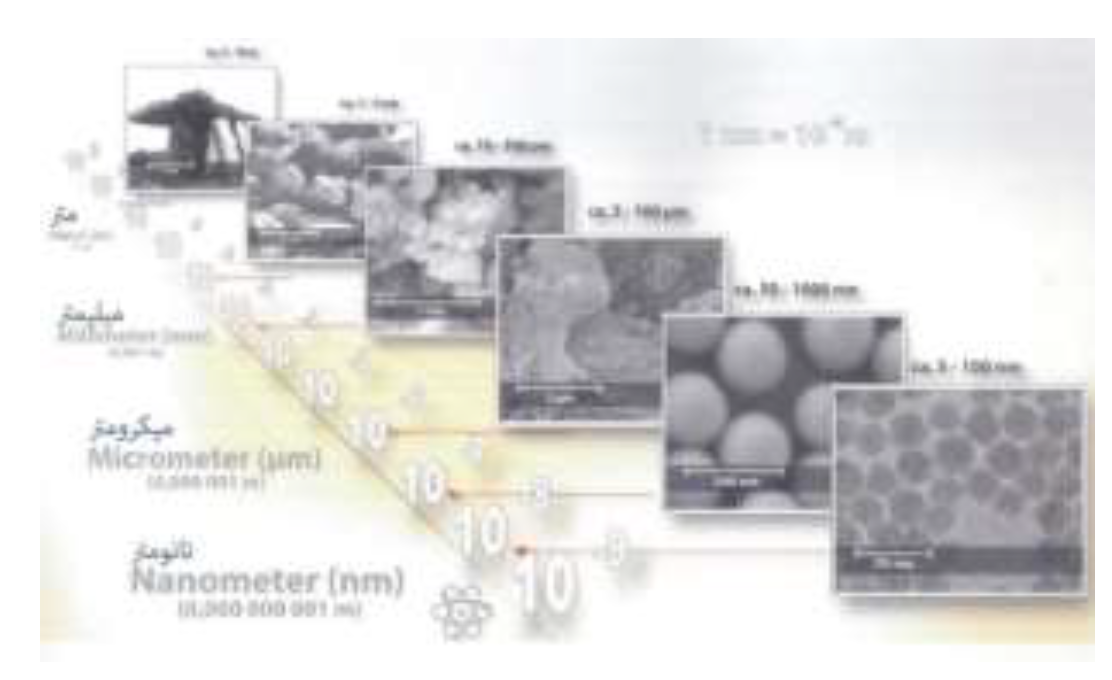
Nanometer means a unit of longitudinal measurement like the rest of the recognized units of measurement, and it is concerned with measuring very small things "Microscope Electron" that can only be seen under an electron microscope and are not seen with the naked eye (things smaller than (10 thousand nanometers) [1]). Figure 1 shows the nanoscale from meter to nanometer.
The Nano Technique
Nanotechnology, or miniature technology, which deals with individual atoms and molecules that make up materials by using precise tools to build and operate a smaller group of materials while repeating the process of building and operating for smaller groups of materials more than once to reach the required size or It is the technology that is concerned with the design and manufacture of materials and machines at the nanometer scale. In general, this technology aims to apply nanoscience for the purpose of creating the production of means, techniques and products that are characterized by their extremely small size, as well as their economic cost that does not exceed the raw material and energy used in the manufacturing process of these means and products [1].
Figure 1: Shows the Nanoscale from Meter to Nanometer
The Importance of Nanotechnology
Nanotechnology has contributed to scientific and global developments, and entered all fields of life, including engineering, construction and architecture, to be used in solving problems such as energy resources, reducing costs in the field of construction and materials used in finishing external facades, reducing building maintenance and raising its efficiency [2-5].
The interest in nanotechnology has also increased due to its distinctive properties, as the material, when it is in a size of less than a hundred nanoparticles, appears to have new properties that are often contrary to its known properties in its natural form, for two main reasons:
The increase in the ratio of the surface area to the total volume of the material: a cube whose volume (1 cm3) will have a surface area of (6 cm2). We divided it into cubes with a side length of 1 nanometer each, and the surface area would become 60 million square centimeters with the size constant [6]
b- Quantum confinement or confinement: the electric charges (electrons) occur when the dimensions of the material are smaller than the distance liberating the electrons, where the free electrons swim around the atoms at certain distances only (let’s say 20 nanometers for a certain substance), so if we make a ball of this material with a diameter of 10 nanometers The free electrons will face restrictions or confinement that prevents their normal movement
Principles of Nano and its Features
The principles of nanotechnology can be summarized in the following points:
The possibility of controlling the movement of the atoms individually and accurately and rearranging them
The physical and chemical properties of the material at the nanometer scale differ from the properties of the same material at its natural scale
Nanotechnology depends on the principles of physics, chemistry, biology, electrical and electronic engineering
The possibility of controlling the atoms to rearrange them accurately in the manufacture of materials and machines and purify them from impurities and defects
Nanotechnology depends on scientific research that can be applied in useful inventions
As for the advantages of nano, they are listed in the points below:
The possibility of building any material because the atom is the building unit for all materials
Discovering distinctive properties of materials that can be used in many inventions and applied fields
The characteristics of machines and materials become better, as they are smaller, lighter, stronger, faster, cheaper, and less energy consuming
Turning science fiction into reality
Manufacture of Nano Materials
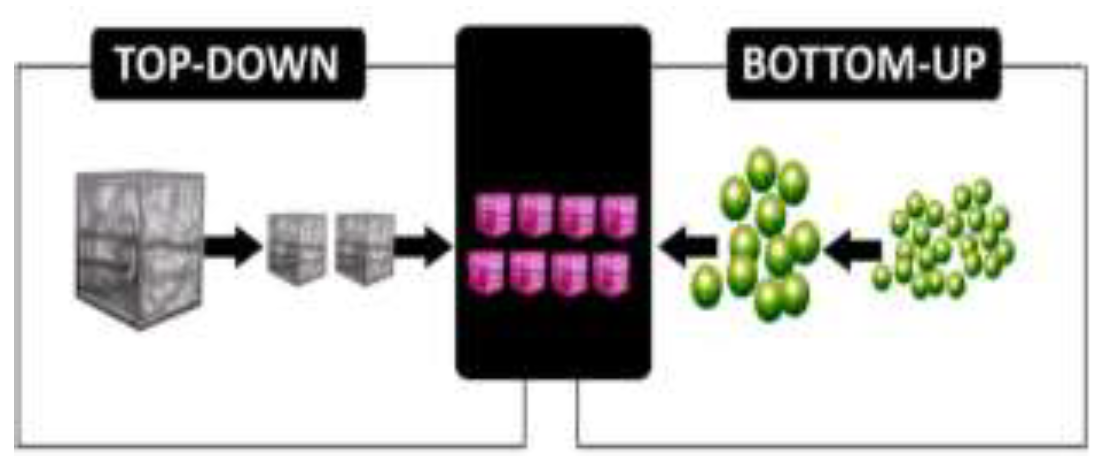
Nanomaterials are manufactured in different ways, and among the most famous methods of manufacturing nanomaterials, Figure 2 the different methods for preparing nanoparticles:
Approach Down-Top: - It begins by cutting the material (bulk) in the sense of size until it reaches the pieces within the nano-scale, and nanoparticles are manufactured from larger particles using sculpting, grinding, fragmentation or other techniques as in electronic industries minute
Approach up-Bottom: Nano material is prepared by building it, starting from individual atoms or molecules, by direct control of it, and it is one of the long-term techniques where they are arranged with each other until they reach the desired size and shape, and this process is similar wall construction process
Types of Nano Formation
Nano-sized raw materials play an important role in the properties of the resulting nanomaterials, unlike what happens when manufacturing ordinary materials. The materials usually consist of a group of granules that contain a number of atoms, and these granules may be visible or invisible to the naked eye depending on their size. It can be observed with a microscope. In materials, the size of the particles varies from hundreds of micrometers to centimeters, while in nano materials, the size of the particles is in the range of one to one hundred nanometers. The nanoparticles include:
Nanotubes: hollow tubes, each tube having a diameter of less than 100 nanometers and may reach thousands of nanometers in length. Examples are: carbon nano tubes, silicon tubes, and titanium tubes
Nanoparticles: They have several shapes, and one of its dimensions is less than 100 nanometers, and it may be in the form of a cube, spherical, or oval
Nano-Composite: It results from the process of distributing or diffusion of nano materials inside ordinary materials, for example, carbon nanotubes are distributed and spread inside some plastic materials, to obtain nano-composite with superior properties
Thin Films: It is a thin layer of a specific material with a thickness of less than 100 nanometers, and these thin layers are used in the field of semiconductors such as silicon and gold alloys
Nanorods: They are similar to nanotubes, except that they are solid and shorter than them, such as gold and platinum rods
Figure 2: The Different Methods for Preparing Nanoparticles
It Can Be Reached from the Previous Axis
Nanoscience is the science that studies and is concerned with dealing with materials at their atomic and molecular levels at a scale not exceeding 100 nanometers, and nanoscience is used for the purpose of producing materials and means that are characterized by their infinite size, as well as the cost-effectiveness of the raw material and energy manufacturing process. Nano materials can be manufactured in several forms, depending on the intended use of these materials, so that the properties of machines and materials become better in terms of smallness and size, strength, speed, cost, and less energy consumption. Nano materials have been harnessed in all areas of life, including engineering, construction and architecture, to solve problems such as energy resources and reduce costs in the field of construction, as well as the properties of materials used in finishing external facades, in addition to reducing building maintenance and raising its efficiency.
The Second Axis / Energy Conservation
There is no doubt that energy has become today a feature of the era in which we live. Rather, the amount of energy consumed by an individual has become a measure of the progress of nations. One of the established facts is that buildings consume high energy in all its age stages and with its various components, and most of the energy wasted in the building is due to its misuse. Or as a result of the wrong design of the building, making it extremely draining of energy. Therefore, the energy axis is considered one of the most important bases that must be taken into account in the evaluation of public buildings.
The Concept of Rationalizing Energy Consumption
In recent years, many countries of the world have conducted studies, set policies, and taken practical measures in laws and various sectors to conserve energy and reduce its consumption and contribute to solving the resulting environmental problems. Accordingly, many concepts have emerged that discussed the concept of “energy rationalization” and “energy efficiency.” And "conserving energy", with the aim of preserving the environment through good handling and conservation of energy, but they differed in each of them in the way of handling and application. The concept of energy efficiency in the building means the method of reducing the consumption of energy (renewable and non-renewable) spent as a final product in operating and maintaining the comfort requirements in the building [3].
Energy Efficiency
To know what energy efficiency is, we must first define “consumption efficiency” as the ability to provide the best results without spending and the need for it from available resources [3]. “Improving energy efficiency” means by reducing the amount of energy needed for a unit of economic activity to the least possible without having a fundamental impact on activity. This requires integrated and rational planning of energy sources while working to raise the efficiency of their use in all sectors consuming them. As for “energy efficiency” it is defined as “the ability to provide the best results of energy."
The Importance of Rationalizing Energy Consumption
The importance of rationalizing energy consumption can be clearly known as the best solution at the present time by improving the efficiency of current energy use and reducing wasted energy in the long run. The technical level leads to an increase in the economic returns, contribution to sustainable development and a reduction in environmental repercussions.
Elements of Evaluation for the Rationalization Process
The efficiency of energy consumption in architecture is through two aspects, the first is to increase technical efficiency and harness it to serve the architectural work, which is known as the active system, such as the emergence of modern air-conditioning devices that consume less energy compared to previous devices, and secondly, to reduce the need to use energy through Designs that take climatic conditions into design considerations during design [3].
In order to assess the factors affecting energy consumption in the construction phase of the building, it is necessary to identify the stages of construction, the age of the building, as the impact is not limited to the construction phase only, but extends its impact until the building is completely destroyed, while emphasizing the importance of access to sustainable energy and through harnessing the uses of technical materials Nano in buildings, whether in the structure or the finishing materials on the external facades that work on the continuation of the impact of each stage on the other, to choose the materials used in construction, and it is noted from the extensive studies on obtaining comfort for the stage of operating the building that energy consumption at this stage depends mainly on comfort Thermal energy mainly through various maintenance operations, and to study these properties and their relationship with the factors affecting the rationalization of energy consumption in the construction phase of the building in order to be evaluated through it.
Thermal Comfort in the Building
The concept of thermal comfort is an element of the quality of the internal environment, and it is one of the most important physiological factors that affect our mental and human capabilities, which affects our ability to enjoy and feel comfortable. The body or acquired by heat exchanged with the surrounding medium. The thermal range in which a person feels comfortable is called the thermal comfort zone. Thermal comfort is one of the most important physiological factors affecting the general comfort of the person, and the designer must control the exterior covering of the building to avoid the effect of temperature and humidity, such as the thermal comfort properties that exceed the limits of the temperature. The passage of heat from the outside to the inside, and the density of nanomaterials plays an important role in raising the efficiency of the material that affects the external facades and thus works on the heat comfort inside the spaces. [4]
There is a difference between the climatic conditions in the external environment and the requirements for thermal comfort in the internal environment. It is imperative that the building and its envelope have certain specifications and characteristics in order to achieve energy efficiency in green buildings, because the greatest weight falls on the shoulders of the building itself in achieving this goal. Dividing the design vocabulary of the building into four levels [4]: The first level, signature and formation of the building. The second level: Thermal properties of building materials. Third level, windows and openings. Fourth level: natural ventilation and air perfusion. The concept of rationalizing energy consumption in the building means the method of reducing the consumption of energy spent as a final product in operating and maintaining the comfort requirements in the building in order to preserve the environment, and "energy efficiency" is defined as "the ability to provide the best results of energy".
One of the aspects of energy efficiency in architecture is through reducing the need to use energy through designs that take climatic conditions into design considerations during the design, as well as harnessing nanotechnology materials in buildings, whether in the structure or finishing materials on the external facades that work to continue the effect Each stage on the other, to choose the materials used in construction, and it is noted from the extensive studies in order to obtain comfort from the stage of operating the building that the energy consumption in this stage depends mainly on thermal comfort mainly through various maintenance operations, and to study these properties and their relationship to the factors affecting the rationalization of Energy consumption in the construction phase of the building so that it can be evaluated through which thermal comfort is considered one of the most important physiological factors affecting the general comfort of the person, and the designer must control the external envelope of the building to avoid the influence of external humidity and thermal comfort can reach the limits of temperature and temperatures. Through nanotechnology materials by controlling their properties such as the time impediment to the passage of time. The heat is transferred from the outside to the inside, and the density of nano materials plays an important role in raising the efficiency of the material, which affects the external facades and thus works on the heat comfort inside the spaces.
The third Axis / Harnessing Nanotechnology in Architecture to Rationalize Energy
Nanotechnology has affected buildings in terms of construction methods and exterior finish materials, and nanotechnology has been combined with architecture. Nanotechnology had its impact on the properties of materials and also on energy, which in turn led to a noticeable difference in the methods of thinking and architectural design, and nanotechnology entered the field of construction and building in order to reduce the cost of construction and preserve raw materials in construction and to open modern areas in energy saving and environmental preservation.
And the use of high-performance nano-materials for materials gave unique properties of construction materials from an increase in mechanical and chemical resistance, and an increase in physical properties, and thus many building materials that used nanotechnology appeared, and it had a role in the process of rationalizing energy consumption on the one hand and on the formation of architectural formation and external facades of public buildings on the other hand.
Nanotechnology has been widely used to improve the specifications of building materials by changing the properties of the material depending on the space through which the electrons move inside this material. As a result of changing the space through which electrons and additives move to achieve all the functions needed by the building that meet the needs of the user. It is possible to limit the building materials in which nanotechnologies were used in order to rationalize energy.
Nanotechnology in Concrete
The concrete considers the most constructive materials to spread and use among the rest of the materials in the field of the building, and many studies were conducted on them to develop their properties, so traditional concrete is mixed with a percentage of SIO2 with the other materials that make up for the other. Its ability to resist and durability, and advanced nanotechnology allowed a better understanding of the components and capabilities of concrete at the nano level [4].
The so-called "Nano-concrete" means that it bears nano-materials with unique properties, either by coating them or by adding some particles and nano-compounds in very small quantities in the concrete mixture of cement components. It tops the list of important building materials, and it is possible to increase the strength of its properties or get some properties improved, whether it is fresh or hardened concrete.
Advantages of Nano Concrete
Saves nano concrete in cost due to a 50% reduction in cement consumption
Nano concrete extends the life span of buildings to increase the strength of their properties
Reduces the thickness of concrete slabs and column segments in length and width
Lead to an increase in the areas and heights of buildings
Works to resist corrosion
Bear ten times the traditional concrete and the consequent reduction in emissions resulting from the manufacture of cement used in the building and the cause of global warming
Nano Concrete and Energy
Some of the types of nano concrete that helped in saving energy:
NanoSilica (NS)
Nano-silica additives can control the corrosion of the basic H-S-C (Hydrate-Silicate-Calcium) produced from the reaction of concrete, which is responsible for the cement adhesion properties including shrinkage rate, porosity, flexibility and permeability, which can be modified to obtain better durability and properties. The nano silica material has also proven that it can reduce the leaching of calcium in the water, in addition to the possibility of water penetration because it does not absorb water and therefore this leads to improving its endurance, and nanotechnology is also used to remove carbon dioxide from the cement industry, which helps in resisting the phenomenon of Global warming, and by adding nano-silica particles, this may improve the density of concrete, and improve its ability to resist higher pressure, as it has increased the degree of resistance more than ten times the normal concrete, and concrete can also be manufactured that reduces pollution from the air as a result of the interaction of its components with sunlight [4].
Titanium Dioxide (Tio2)
A material with a white coating that is used as a reflective coating, and interacts with volatile organic pollutants, and bacterial films to reduce the effect of rain, and it is also a water repellent and thus achieves the property of self-cleaning for surfaces, and helped reduce pollutants, which led to saving energy and the environment [4].
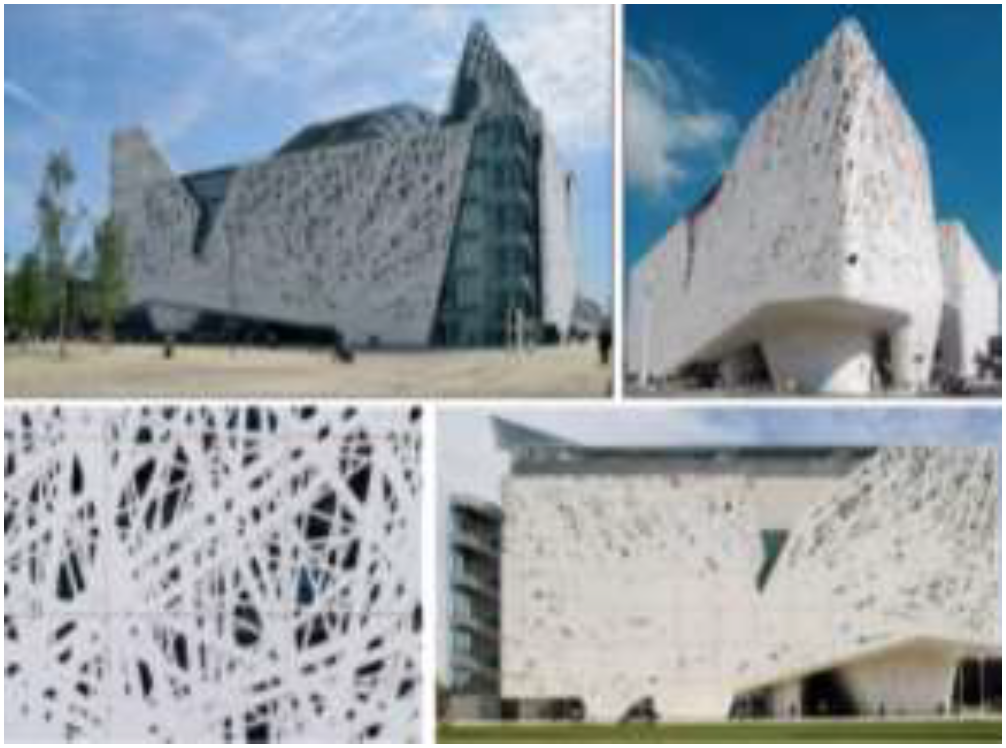
Titanium dioxide granules improve the environmental performance of concrete and cement, the scratch resistance of concrete and cement from weathering factors, self-cleaning from microbes and organic and inorganic compounds, and the disposal of water on the concrete surface. Titanium dioxide increases the durability of reinforced concrete as well as carbon dioxide emissions to concrete [7]. Titanium dioxide was used on the buildings' exterior covers. Figure 3 the use of titanium dioxide in the facades of Expo Milano 2015 - Italy Pavilion.
Figure 3: The use of Titanium Dioxide in the Facades of Expo Milano 2015 - Italy Pavilion
Light Transmitting Concrete
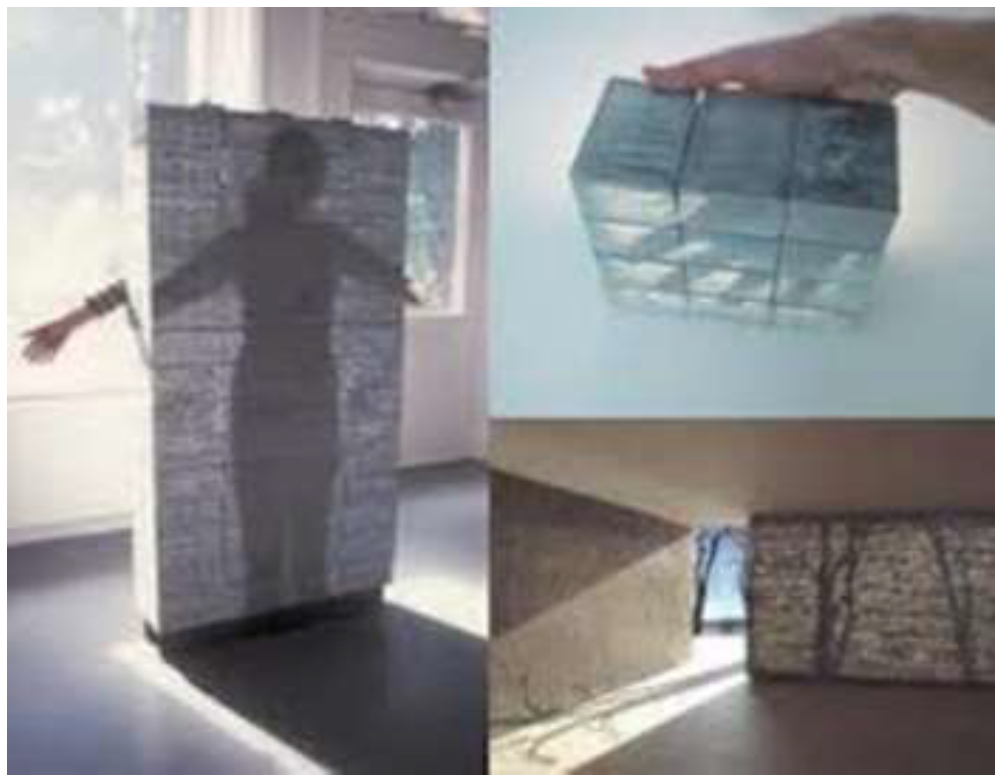
It is concrete that transmits light from the outside to the inside so that the building becomes more like a large window, so it uses less artificial lighting and works to save energy [4]. Transparent concrete was used in buildings because it is an inexpensive material compared to other materials and the benefits resulting from it (lightweight in prefabricated parts, and it is an excellent heat and sound insulation material, and it can be easily dealt with as it can be manufactured according to the required specifications and with specific strength and density, [4] and can be controlled Its quality easily, and it also resists different weather conditions as it has low moisture absorption. It is considered one of the important materials used in the external casings of public buildings, as it is easy to use and form, and has high flow-ability and workability, and is not affected by temperature differences and fire resistance, and transparent concrete gives the building an external appearance and an aesthetically pleasing appearance. Reflection of the surrounding environment during the day.
Nano Technology with Aluminum Panels
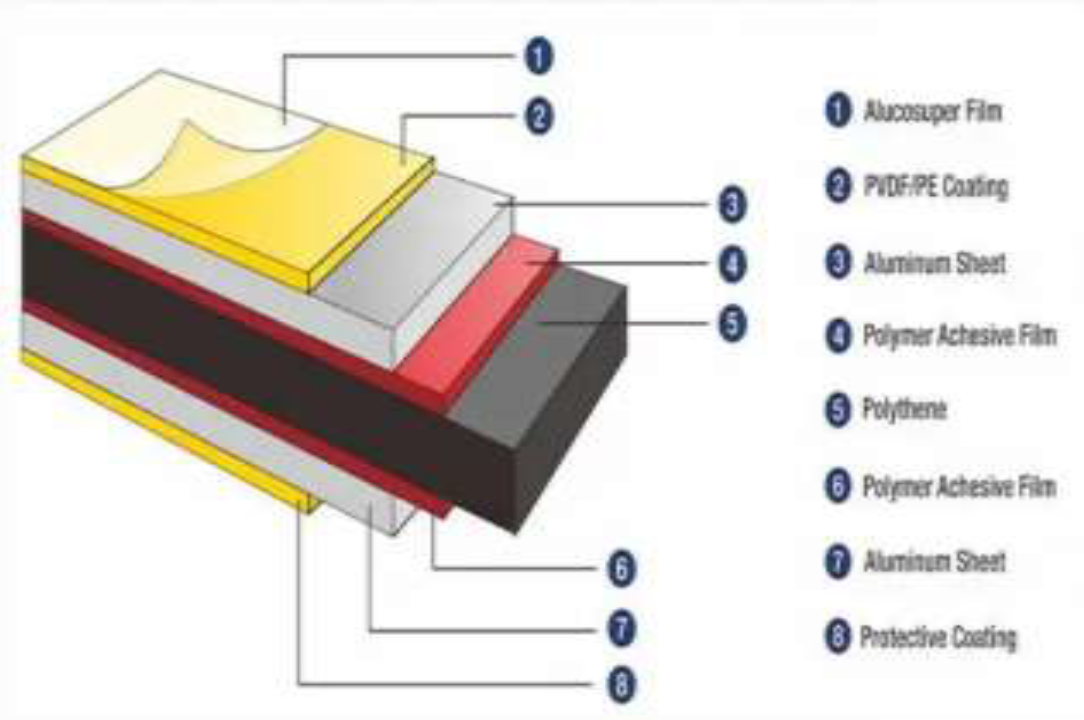
Aluminum is considered one of the environmentallyfriendly materials as it is one of the lightest building materials in weight compared to size. The density of aluminum is (7.2 kg/cm3) in addition to its other properties such as high resistance to rust, fire resistance, and corrosion resistance. It is made of aluminum sheets consisting of aluminum and plastic materials composited to “ACM” Material Composite Aluminum) in two layers consisting of two aluminum cover sheets and a sheet of non-toxic polyethylene with low density and used as a multi-layered protective coating of aluminum The sheets are in the cladding of the external facades of buildings, as the nano technology prevents dust from sticking to the surface of the panels, and is easy to install compared to other cladding materials, as it is a heat and sound insulation material, and the aluminum composite panel is mainly used in the construction of high-quality self-cleaning hotels and other nano-composite walls. Buildings that require resistance to reduce the impact of pollution Figure 5 shows a section of an aluminum composite panel and its layers.
Figure 4: Light Transmitting Concrete
Nanotechnology in Glass
Glass is one of the most important materials used in reshaping the exterior facades, giving the buildings an aesthetic appearance, providing the maintenance process, and providing natural lighting and a suitable climate for the interior spaces of buildings away from the cost of artificial lighting, while preserving the surrounding environment. Nanotechnology has varied in the manufacture of glass with high specifications, such as high-transparency glass called (active glass) in covering the outer surface of nanoparticles, which works to remove pollutants and dust deposited on the glass externally, making it self-cleaning by rain and water is easy. To protect from the sun's rays by rain and water itself is one of the uses of nanotechnology, as each of them is a transparent layer between glass panels (as an interlayer) this layer is made up of nanoparticles of silica dust (SiO2).
Also, one of the characteristics of this type of treated glass entails saving energy and electricity, and heat and light are introduced from the glass used in the exterior facades, and fine pigments that are applied through nanotechnology such as “thermo chromatic” in this type of glass that works on the appropriate thermal insulation with Providing the appropriate lighting, and there is another application of glass by placing a layer of nano-particles of silica dioxide (SiO2) between the glass panels (as an inner layer) that works to protect against heat.
Reflective Glass
Reflective glass to prevent the penetration of solar radiation depends on the presence of a thin transparent layer, which is painted on the surface of ordinary or heat-absorbing glass, preferably the outer transparent layer facing the sun, so that it prevents the entry of solar radiation to the glass, but this thin layer needs to withstand weather factors Therefore, the coating process must take place during the manufacture of the glass, but if the coating is done at a later stage, the metal layer is not able to withstand weather factors so it is used from the inside only, and the reflective layer reduces the transmittance of the glass in general, especially if the coating layer is used on absorbent glass (Reflective absorbent glass), and it is preferable that the metal layer be external to the sun, to convert the glass when exposed to a large amount of light without the need to conduct electricity, using the Protection Solar technology [6].
Figure 5: Shows A Section of An Aluminum Composite Panel and Its Layers
Solar Control Glass
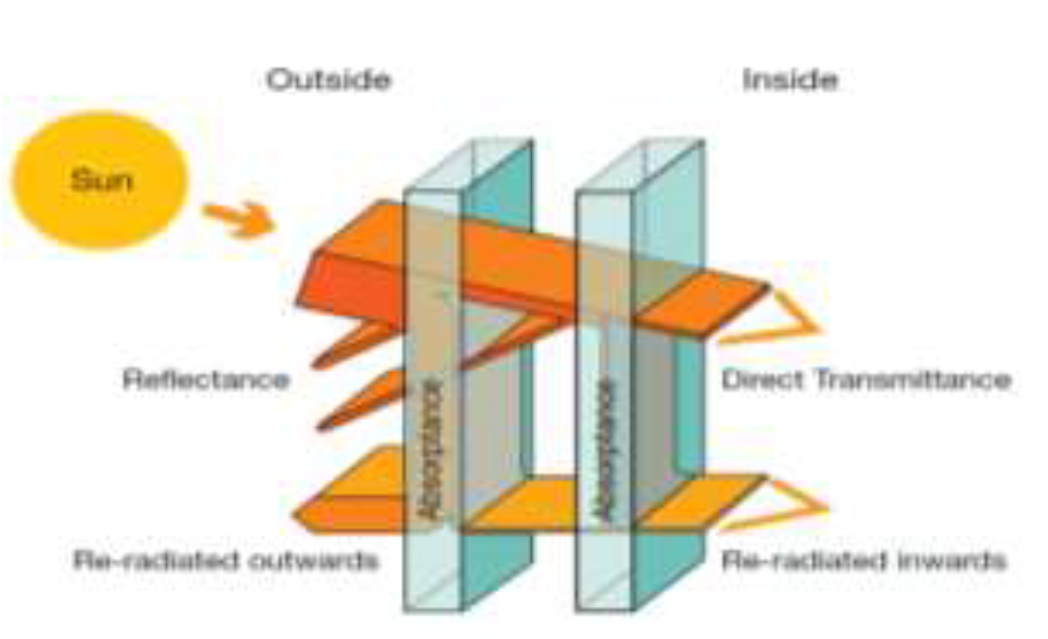
The glass unit consists of several layers of tin oxide SnO2 coating, where the thickness of this layer determines the reflected color of the glass and its thickness ranges between (10:100 nanometers) according to the silver colors reflected on the glass. Figure 6 illustrates the idea of solar control glass.
Nano-processed glass has distinctive properties that increase its efficiency and clearly reduce the undesirable transmittance characteristics, which provides flexibility for the designer to make suitable spaces for openings in buildings to provide natural lighting and a suitable climate for the interior spaces in buildings away from the cost of industrial lighting and industrial air conditioning, thus preserving the surrounding environment, and working to provide energy [6]. The glass also resists acids and chemical and organic compounds, as it uses titanium dioxide Tio2 in the form of nanoparticles to paint the glass to resist pollution, and thus works to resist volatile organic compounds and bacterial films.
Smart Glass (Electrolytic Color Changing Glass)
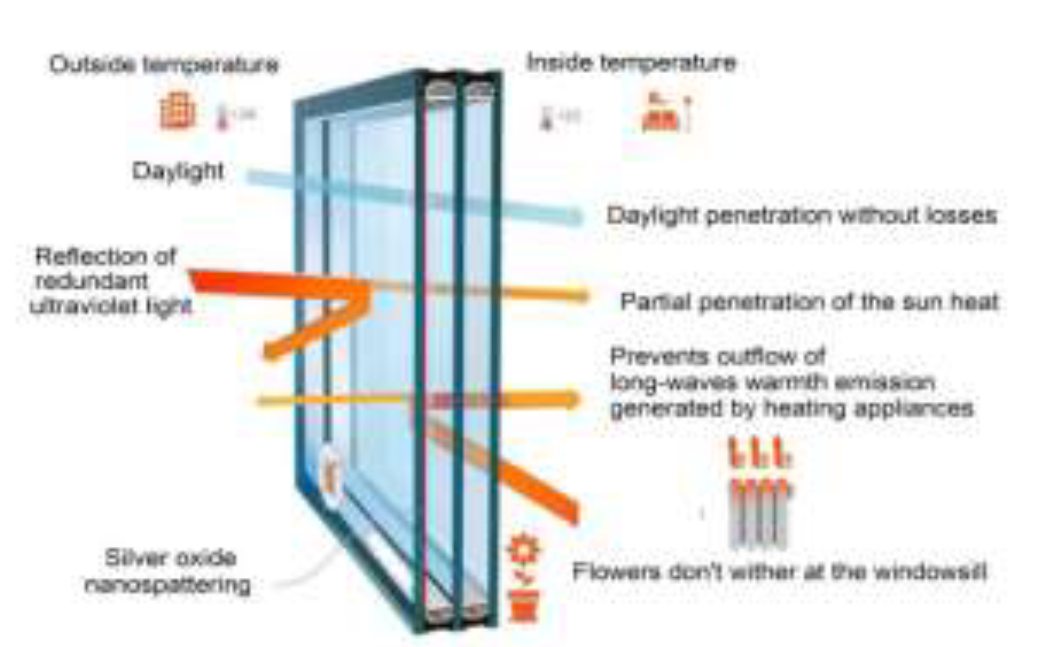
Electrically switchable glass that changes its properties to transmit light when voltage is applied to it, and these types of glass allow users to control the amount of light and therefore heat, changing from transparent to translucent glass and partially blocking vision through it while preserving light through the glass. This type of glass has the ability to resist fire, save maintenance costs, and also has the ability to change the intensity of lighting inside buildings, and how to reduce the energy used to cool or heat buildings, and the glass material was used in many buildings and one of the most important These buildings are the East Hotel in Germany, where the building used Tio2 photocatalytic self-cleaning glass, which helped keep the glass clean and transparent due to the properties of nanotechnology. Figure 7 illustrates the idea of smart glass.
Nano Coatings
Nano-pigments are used to develop the functions of the surfaces of external facades, and they are also used on materials to improve their properties and quality and work to raise the efficiency of the building, as nanotechnology is used to improve the properties of self-cleaning, insulation materials, fire resistance, bacteria, fog, and nano-pigments are used on materials to save cost [12]. In nanotechnology, nanomaterials and nano compounds are made, whether in the form of nano granules, dyes, thin films, or by adding them to the components of the basic material when production, to perform the same function intended, but when manufactured in the form of paint, it can be painted with the installations and buildings erected and this is because The difficulty of adding nano-compounds to the basic materials of the shrine building, and nano-dyes varied as "Effect-Lotus- Cleaning-Self", "Photocatalysis- Cleaning-Self", "Effect-Lotus- Cleaning-Self", "Effect-Lotus-Cleaning-Self" paint, "Easy-To" paint -Clean (ETC)" and other nano dyes, and we will explain in the paragraphs below the dyes that had a role in thermal insulation and energy conservation in buildings.
Figure 6: Illustrates The Idea of Solar Control Glass
Uses of the Photo Catalytic Self-Cleaning Technique
This technology is considered the most used in the field of construction and buildings, and it has been used in many buildings around the world, and the self-cleaning technology is “photostimulation” for building maintenance, which reduces costs, and works to remove dust and pollutants from the surface of the glass to improve vision and to enter light for the interior space, and thus reduce energy consumption used in lighting.
The word photoCatalysis) is a word from the two parts of the first part of the photo) and the second (Catalysis) adopts the motivation process on the subject, as it works to increase the rate of transforming the interacting materials without this material is affected by this material, this material is known (The rate of the reaction by reducing the activation energy required for it, and therefore the photocatalytic process is a reaction in which light is used as an activator for a substance that increases the rate of a chemical reaction without having a role in the reaction itself.
This coating is used in air technology systems in buildings, as well as to protect surfaces from bacteria and fungi, and the effect of titanium dioxide was discovered in 1967 by Professor Fujishima’s use of special aluminum oxide in 1989 by Professor Fujishima. Titanium dioxide coating was used on the ceiling and walls of an operating room in the hospital, and the result was a decrease in the amount of bacterial contamination in that room, and since that time this substance has been used as an anti-bacterial and in reducing contamination.
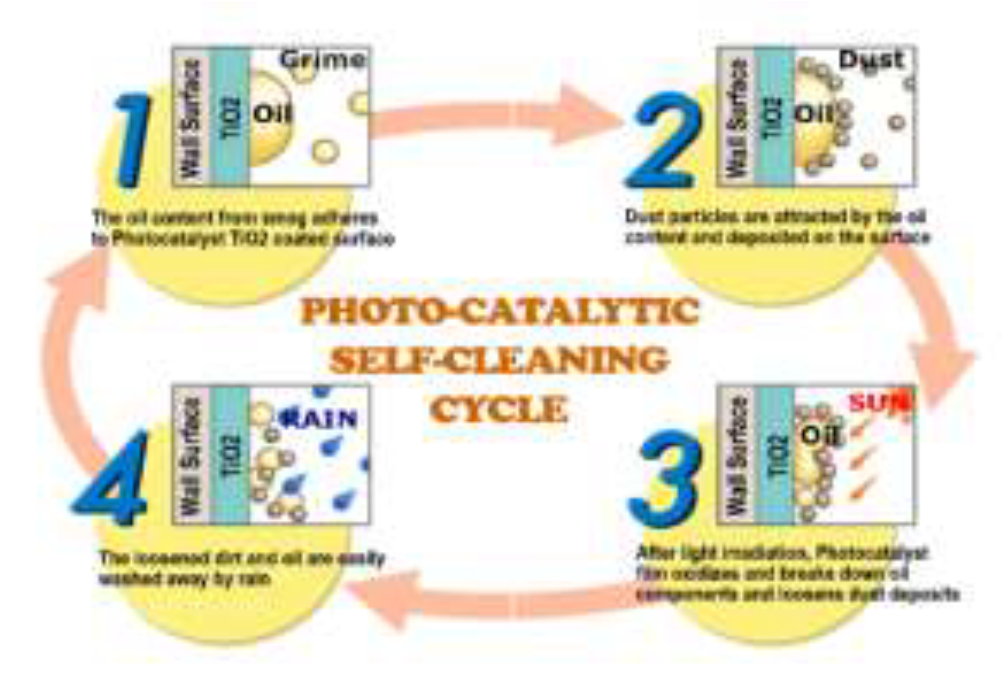
In 1995, a new phenomenon was discovered that led to the widespread use of photocatalytic use using titanium dioxide. Performed by Fujishima and colleagues using atomic force microscopy, it was observed that ultraviolet rays partially stripped oxygen atoms from the surface of titanium dioxide. Figure 8 Photo catalytic self-cleaning technique. When surfaces are exposed to ultraviolet rays, these rays provoke photo stimulation, which leads to the decomposition of organic compounds on the surfaces into environmentally friendly hydrocarbons.
Figure 7: Illustrates the Idea of Smart Glass
Anti-Reflective Coating
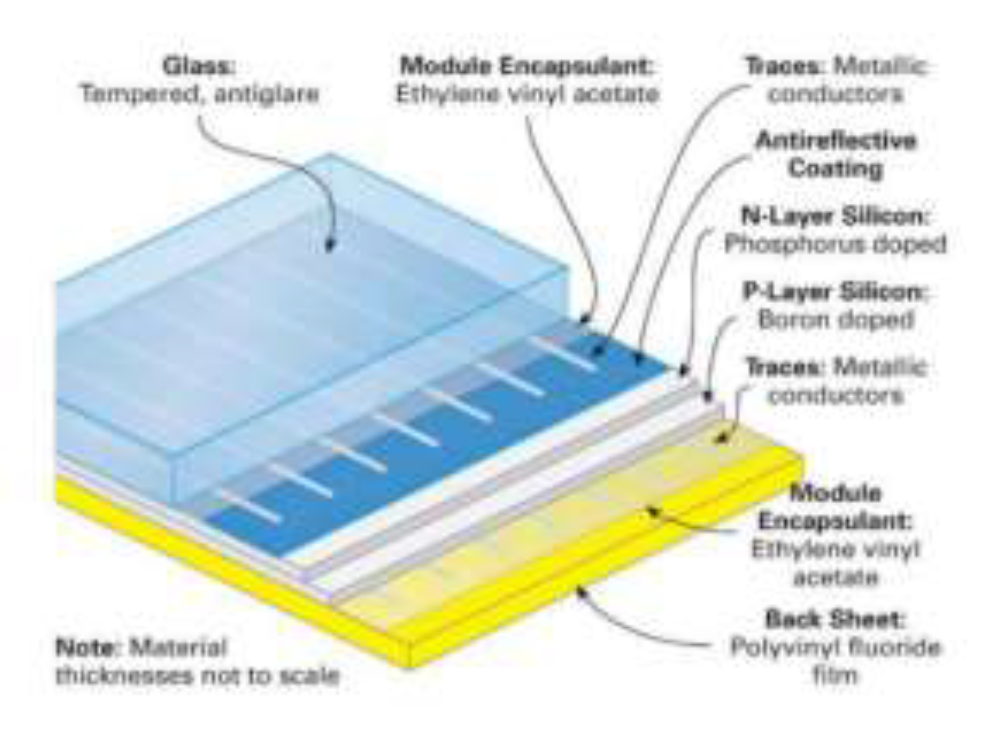
It is a type of coating that reduces the reflectivity of the magnetic lengths to be absorbed by solar cells. Several materials have been used, such as magnesium fluoride (MgF2), which is the most widely used in the field of thin films. The coating was used for the first time before the world was used in the 18th century AD. The coating in the manufacture of lenses in the year 1930 AD, and this coating works to disturb and limit the work of optical surfaces that require high light transmittance such as solar cells, while the anti-reflective coating works to reduce the reflected intensity to increase the specific efficiency. Figure 9 shown Anti-reflective Coating.
The objective of the anti-reflection films on surfaces is to reduce the reflection in order to improve the transmittance. Its uses are in the visible part of the solar spectrum, and this property was used in glass and the reflectivity of the incident light can be reduced to a minimum possible by coating with an anti-reflective film, and extending its life.
European countries hastened to solve the energy crisis by insulating buildings with materials that meet the needs of the individual and do not increase carbon dioxide emissions, and insulating materials are used to maintain a constant temperature in a closed place to protect the environment by reducing gases (CO2, NO2) the greenhouse effect. Nanotechnology provided high-efficiency insulation materials and less reliance on non-renewable materials. Nano materials were made that are more efficient than traditional insulators by 30%, and they are also applied in the form of solid sheets, thin films or paints.
Figure 8: Photo Catalytic Self Cleaning
Types of Nanotechnology in Insulation
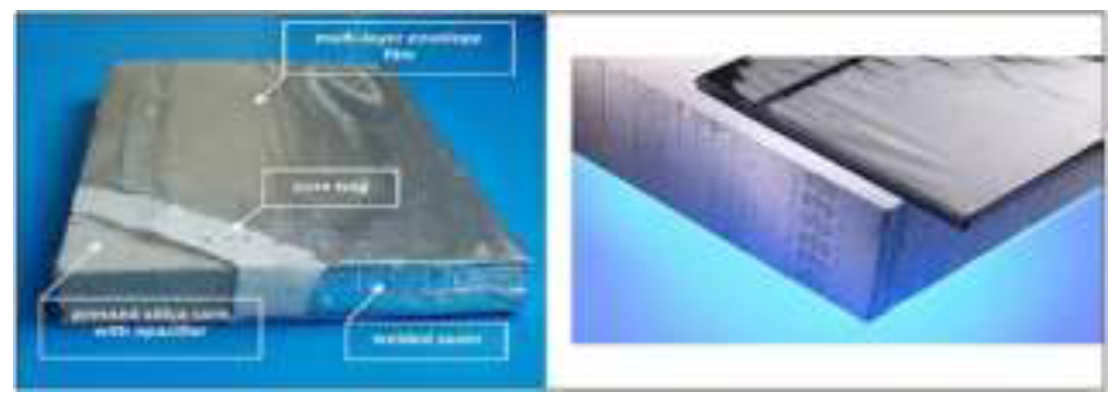
Vacuum Insulation Panels (VIPs): The nano-technology vacuum insulation boards are characterized by the maximum thermal insulation and the minimum insulation thickness. They are suitable for providing very good thermal insulation with a thickness much thinner than traditional insulation boards such as polystyrene materials. They also have a thermal conductivities factor of less than (5 to 10) times. It is one of the traditional insulators, and its thickness is 25 mm, which is several times less than the traditional insulation. Figure (10) shows Vacuum Insulation Panels (VIPs). Vacuum insulation panels are used in interior and exterior walls and in building floors because of their thin thickness, and their useful life ranges (from 30 to 50) years from operating time, and does not require periodic maintenance, and contributes to reducing carbon dioxide and nitrogen emissions [6].
Aerogel (NanoGel)
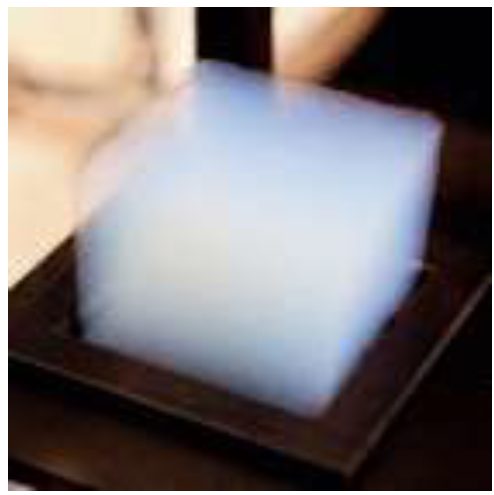
A low-density gel substance in which the liquid was replaced by a gas, and it consists of 5% solid matter, and 95% air, and the result was the emergence of a substance with a very low density and multiple properties. One of the most important of these characteristics is its high ability to heat insulation and provide natural lighting, as it is light in weight, and it is called frozen smoke, liquid smoke or foam due to its semi-transparent. Another factor is nature. Because of its light weight, it can carry materials that are 2,000 times heavier than them, a material similar to glass and silica. Figure 11 and 12 illustrates the use of aerogel in buildings.
It is used as an insulating material to fill various types of cavities between glass panels, and multi-layered walls, and is suitable for use in the external parts of the building, which helps reduce electrical energy consumption through cooling and heating, and also acts as a sound insulator. The aerogel acquires heat throughout the year, and maintains Visible light transmittance by 20%, so it achieves many goals, including:
Providing industrial lighting, which helps in rationalizing energy
Creating thermal comfort in the interior spaces
Figure 9: Anti-Reflective Coating
Thin- Film Insulation [8]
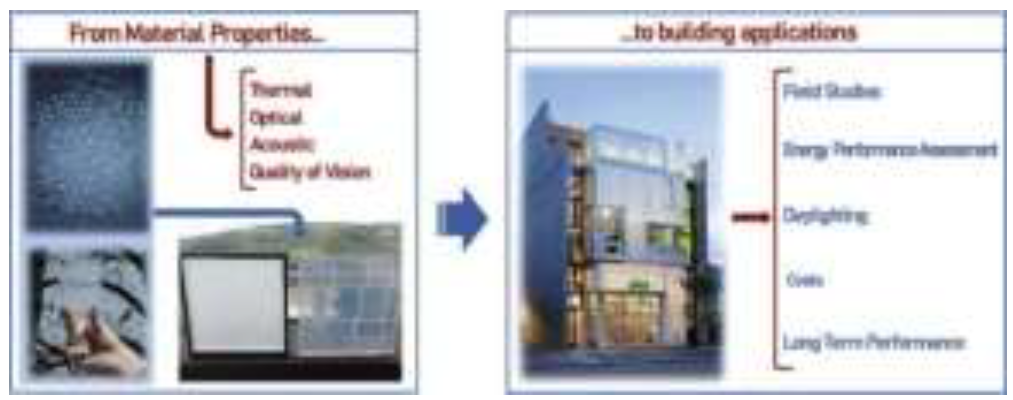
Thin nano films are used in the thermal insulation of glass, which is a sheet of stainless-steel nanofibers, and helps absorb infrared rays, and is able to block sunlight, which helps reduce the temperature of the interior space by 2-3 degrees compared to with traditional materials, which helps to rationalize energy consumption in buildings. Figure 13 illustrates the idea of thin films, while Figure 14 illustrates the use of thin films in windows.
Figure 10: Shows Vacuum Insulation Panels (VIPs)
Figure 11: Aerogel (NanoGel)
Figure 12: Illustrates the Use of Aerogel in Buildings
Figure 13: Illustrates the Idea of Thin Films
Figure 14: Illustrates the Use of Thin Films in Windows
Films in Windows
Through the third axis of research, we find that nanotechnology supported society with ideas and techniques that help solve architectural problems, and provided many materials in the field of building and construction, and these materials affected architecture, as materials with unique properties appeared that changed the general concept in the use of materials Building. The role of nanomaterials and their properties was reflected in energy conservation, as shown in Table 1.
RESULTS
There is no doubt that energy has become today a feature of the era in which we live. Rather, the amount of energy consumed by an individual has become a measure of the progress of nations. Therefore, energy is one of the most important foundations that must be taken into account in the evaluation of public buildings that consume energy greatly, and nanotechnology has provided energy-saving materials with their uses to make buildings environmentally friendly, interacting with climatic factors while gaining energy that benefits the building and its surroundings. Through the research, it was concluded that nanomaterials were harnessed in their various forms and properties, which supported the process of energy rationalization in buildings and on several levels, as:
Thermal insulation and control of the amount of energy gained and lost through the outer shell of the building
NanoSilica (NS)
Light Transmitting Concrete
Nanotechnology with aluminum panels
Vacuum Insulation Panels (VIPs)
Aerogel (NanoGel)
Thin- Film Insulation
Reducing the amount of energy consumed in lighting
Aerogel (NanoGel)
Uses of the “Photo catalytic Self-Cleaning” technique
Smart Glass
Solar control glass
Reflective glass
Light Transmitting Concrete
Titanium Dioxide (Tio2)
Reducing the effects of construction materials on global warming.
NanoSilica
REFERENCE
Abdel-Wahhab, Taha Kamal, and Ahmed Ibrahim Al-Badri. “What Is Nanotechnology.” Sudan University of Science and Technology, 2015, pp. 1.
Gomaa, Hussein. “Nanotechnology in the Construction and Building Sector.” 2009, pp. 40.
Amin, Safe Attributes. An Introduction to Understanding Nanotechnology. Arab House of Sciences, 10 May 2009, pp. 13.
Al-Habashi, Noha Alawi Abu Bakr. “What Is Nanotechnology: A Brief Introduction.” Ministry of Culture and Information, Saudi Arabia, 2011, pp. 11.
Saleh, Mahmoud Muhammad Salim. “Nanotechnology and a New Scientific Era.” Prince Sattam bin Abdulaziz University, Community College, Al-Aflaj Governorate, 2010, pp. 12.
Abdel-Wahhab, Taha Kamal, and Ahmed Ibrahim Al-Badri. “What Is Nanotechnology.” Sudan University of Science and Technology, 2015, pp. 2.
Recommended Articles
Research Article
Some Properties of Fuzzy g-Regular Spaces
Hassan Abid Al-Hadi Ahmed,
Noor Al-Huda A. Haider
Published: 10/12/2025
Download PDF
Research Article
Predictive Security Analytics for Large-Scale Multi-Tenant Linux Shared Hosting Environments: An Empirical Study
Ayad A. Yass
Published: 25/02/2026
Download PDF
Research Article
Sentence Representation using LSTM for Question Retrieval
Khanh-Linh Dinh,
...
Thi Hang Dao
Published: 30/12/2022
Download PDF
Research Article
Deep Transfer Learning for Automated Detection of Developmental Dysplasia of the Hip in X-ray Images
Idress Mohammed Husien
Published: 11/12/2023
Download PDF
PO Box 101, Nakuru
Kenya.
Email: office@iarconsortium.org
Editorial Office:
J.L Bhavan, Near Radison Blu Hotel,
Jalukbari, Guwahati-India
Abdulmajeed, N. S. (2022). Harnessing Nanotechnology to Conserve Energy in Buildings. Scientific Research Journal of Engineering and Computer Sciences, 2(2), 1-10.
MLA
Abdulmajeed, Nada S.. "Harnessing Nanotechnology to Conserve Energy in Buildings." Scientific Research Journal of Engineering and Computer Sciences 2.2 (2022): 1-10.
Chicago
Abdulmajeed, Nada S.. "Harnessing Nanotechnology to Conserve Energy in Buildings." Scientific Research Journal of Engineering and Computer Sciences 2, no. 2 (2022): 1-10.
Harvard
Abdulmajeed, N. S. (2022) 'Harnessing Nanotechnology to Conserve Energy in Buildings' Scientific Research Journal of Engineering and Computer Sciences 2(2), pp. 1-10.
Vancouver
Abdulmajeed NS. Harnessing Nanotechnology to Conserve Energy in Buildings. Scientific Research Journal of Engineering and Computer Sciences. 2022 Jul;2(2):1-10.



 Download PDF
 Download XML