Leadership behaviour plays a crucial role in determining the growth and sustainability of any organization. When leadership is characterized by positive attitudes, organizations experience healthy and progressive development; however, when such behaviour is lacking, decline and loss of value become inevitable. The Baptist Church, as an organization of God’s people, is built upon rich spiritual values and doctrines sustained by pastors trained to exemplify godly conduct and uphold the Baptist heritage established since the 17th century. The founding fathers of the Baptist faith yielded to divine calling and laid a strong spiritual foundation that continues to influence Christian life and society today. However, contemporary trends indicate a gradual erosion of this heritage. According to Ijaola [1], Director of Communications, Nigerian Baptist Convention, modern Baptists are drifting from their distinctive traditions—such as devotion to Scripture, commitment to Sunday School, daily prayer routines, pride in carrying the Bible, sound preaching, and active participation in convention sessions. He observes that the once-shared sense of collective ownership within the Convention is fading, as the heritage of “we” shifts toward “they.” The article concludes with a reflective challenge from Genesis 18:17–19, urging believers to uphold and transmit the Baptist heritage faithfully to future generations
Keywords
Pastors
Leadership Behaviour
Sustenance
Baptist Heritage
Nigerian Baptist Convention
INTRODUCTION
Leadership behaviour has ever been a factor for a healthy and increased growth as well as the reason for the stunted growth in any organization. If not well sustained with a positive attitude by the Leader, the life of any organization will experience a downward slope or go bankrupt either spiritually or physically and such organization should expect to lose its value as it dies gradually. It is no gainsay that the Baptist Church is an organization of the children of God which hasrich values and which is led by pastors who are trained to be the epitome of godly behaviours.The pastors are also trained to besustainers of the Baptist heritage that has been born since the 17th century.Our great founding fathers yielded to God’s calling and left an heritage to build and to perfect our spiritual life thereby positivelyinfluencing our society today. There is an adage that “if you do not stand for something, you fall for anything.” Baptists have their distinctive beliefs and doctrines which are referred to as the great heritage which must be handeddownfrom one generation to the other for a well-formed Christian life and membership of the Baptist church. Ijaola [1], the Director of Communications Department of the Nigerian Baptist Convention, in his article titled “Eroding Our Baptist Heritage” in the Nigerian Baptist Magazine laments the departure of contemporary Nigerian Baptists from our heritage. He reports that a Yoruba hymn was posted on the social media and some friends referred to it as “the good old days”.This spurred him into thinking of the Baptist distinctive heritage which hinges on Baptists as the people of the book.He outlines the distinctive heritage to be the love for the Bible(reading, memorizing and meditating on it), Sunday School (learning mysteries from the word of God), Morning and Evening Prayers (fixed prayerhours), not being ashamed of carrying the Bible(holding the Bible with pride), sound preaching(which is the strongest Baptist heritage), attending the convention in session (which everyone formerly anticipated). He further laments that “The Heritage of ‘we’ is gradually becoming ‘they’ as concerning the decisions made in the Convention which is another case of eroding culture” [1] He concludes by challenging his readers with Genesis 18:17-19 and asking “Can the same be said of you?
Everyone of whom this cannot be said is or has eroded our heritage as Baptists, and such people are creating a generational gap”.This points to the lack of emphasis on our heritage and thus depicts a lack of promotion and sustenance of it in the Nigerian Baptist Convention.
Going down the memory lane, Huffman citing Buell Kazee stated that Baptists are either distinctive or they are unknown. Huffman laments that:
In times past the line of demarcation between Baptists and the denominations of this world was pronounced. The Methodists, Presbyterians, Catholics, and others knew where Baptists stood on issues; today the line of separation is a muted and a mottled grey. Where the world ends and the church begins is no longer clearly defined. Such a spirit and attitude is the spirit of Balaamism in this Laodicean church age. This fact is tragic: the spirit of ecumenism has deeply pervaded the ranks of the Baptists of this day
This corroborates Spurgeon’s remarks in the late 1800's that:
We are going downhill at breakneck speed. Spurgeon saw the breakdown in Baptist life in England years ago. This evil spread to the shores of America. Huffman decried further when he preached his sermon titled ‘Baptists: Yesterday, Today, and Tomorrow’ at the sixteenth annual messenger body meeting of the churches composing the Illinois State Baptist Association which met with the Temple Missionary Baptist Church of Moline, Illinois, September 9, 1972. He said thatwe are suffering the dire effects of this moral and spiritual breakdown. I read Baptists of old such as Gill, Spurgeon, Graves, Fuller, Pendleton, Broadus, Boyce, J.B. Moody, Francis Wayland, W.A. Jarrel, J.B. Jeter, and others. I rejoice in their doctrinal stand on matters that made Baptists differ from all other groups. Though the writings of these great men adorn the shelves of many preachers’ libraries, the doctrines they espoused, wrote about, and taught unashamedly are not being sounded forth in clarion tones in these days of widespread apostasy! Doctrines that have been identified with Baptists for centuries have ceased to be preached in many pulpits across America.
In the opinion of Huffman the Baptist heritage is a blessed one. This age has produced generations who know nothing of, and care not for, the sufferings of the forefathers. This attitude has been produced by the neglect of teaching and preaching truth by Church pastors. The breakdown in Baptist life began years ago. The truths held dynamically at first came to be held formally (p.17). The above lament is evidently seen in the Nigerian Baptist Convention.
Leaders add value; biblical leaders bring identity, hope, and character to their leadership relationships. They have a wonderful opportunity.The organization such as the Nigerian Baptist Convention constituted of different local congregations indeed expects leaders like pastors to add value to the organization in a way that communicates worth, purpose, and hope that nurtures people’s development and their growth in the ability to participate in and contribute to the mission of the organization.Ciulla [2] argues that it is the responsibility of the leader to have firmly stated values regarding the importance, care, and development of their people; it is also their responsibility to identify, reinforce, or change the culture. Wright articulates that when we gather in the name of Christ, we are also a taste of the Kingdom of God on earth. We are a community of the Spirit. A leader who will promote values must be involved in self-leadership which is a time of investing, regularly keeping his call clear, avoiding mission drift, and keeping distraction, discouragement, and temptation at bay [3].
This paper hinges on the heritage transmission channel which is pastors’ leadership behaviour with a view to examine how it positively or negatively affects the sustenance of the Baptist heritage which is well rooted in the Scriptures. The doctrines are “Christian ideals constituting Baptist viewpoints” [4]. How the leadership of the church promotes or neglect what makes the Baptist church so peculiar and different from other denominations in the world and Nigeria, in particular, is the question that undergirds the discourse in this paper.
Wright notes that Leadership is a relationship – a relationship in which one person seeks to influence the thoughts, behaviours, beliefs, or values of another person. Baptist pastors are trained Christian leaders who are meant to influence the thoughts, behaviours, beliefs, or values of their members. When this is done, it gives room for transforming leadership which is a relationship that raises the vision, values, and aspirations of both the leader and the follower to new levels of expectation [5]. This is the responsibility of a pastor that has a positive leadership behaviour. “For behavioural theorists, a leader’s behaviour is the best predictor of his leadership influences and as a result is the best determinant of his or her leadership success” (www.leadership-central.com/behavioral-theories.html).
Leadership behaviours are easy to comprehend, though perhaps requiring effort to perform them consistently. Behaviour change gives every leader a path forward to increasing effectiveness. Behaviours can be learned as well as practiced. Kouzes and Posner [6] have developed a conventional advancing series of leadership practices (behaviours). These include inspiring the vision, modelling the way, challenging the status quo, encouraging the heart, and enabling others to act. Leadership behaviour in the context of this paper is simply the way in which leaders such as local church pastors function or operate (through leadership practices) in promoting the heritage of the organization to which they belong and in which they have been given the opportunity to lead.
Brief History of the Baptists
Baptist History begins with Christ and the Apostles.Other churches may date their beginning with men in latest centuries, but Baptists churches had their start during the ministry of Jesus when He formed His church out of John the Baptist’s conception, the first missionary Baptist preacher. Several historians like John T. Christian, Alexander Campbell, John C. Ridpath, Ypeig and Dermout, Mosheim, Cardinal Hosius, all from different denominations had affirmed that Baptists have existed through the ages since Christ. One of the comments of John C. Radpath, who is a Methodist, is “I should not readily admit that there was a Baptist church as far back as 100AD, though without a doubt there were Baptists then as all Christians were Baptists”[7].
Two primary founders of General Baptists were John Smyth and Thomas Helwys. The earliest church of this persuasion was formed about 1609. A later group known as Particular Baptists surfaced in the late 1630s, led by such men as Henry Jessey, William Kiffin, and John Spilsbury [8]. The Baptists’ views started when Smyth and Helwys and their little band left England in 1607.They formed their church by an Old Testament covenant, argued for some degree of government control of religion, and made no provision for believers’ baptism. Within two years they had changed on all these points, and Smyth had founded a church on the baptism of professed believers. Smyth startled friend and foe alike when he decided in 1609 that baptism should be applied to believers only and that this voluntary baptism based on confession should form the basis of the church [8].Baptists can be identified as Protestants as such important Reformation doctrines such as justification by faith, the authority of the Scripture, and the priesthood of believers reflect prominently in Baptist theology [8].
The Baptist name emerged as the opponents of the now Baptists called them Anabaptists, but they preferred such names as “brethren,” the “baptized churches,” and “churches of the baptized way.” By the early 1640s, some opponents were calling them “Baptists.” The group had begun to use the name of themselves by the mid-1650s, but not for a full century would Baptist be accepted [8]. The Baptists arose within English Congregationalism and represented a mostly Calvinistic or Puritan understanding of Christian Faith [9].
The Southern Baptist Convention was birthed as a result of a split in the Triennial Convention in 1845. The split was due to a disagreement over the issue of slavery. The Southern wing of the General Convention, now known as the Southern Baptist Convention organized a board of foreign missions in Richmond Virginia. By February 1846, the board had been organized and had decided “to begin mission work in West Africa as soon as it was found possible. Indeed in the absence of suitable volunteers direct from the United States of America, the Board had to rely on representatives of colonies in Liberia and Sierra Leone. The board contemplated as early as 1848 and began operations in Nigeria as soon as 1850, which was due primarily to the influence and efforts of T.J. Bowen.
Thomas Jefferson Bowen was born on January 2, 1814. He was best educated and naturally gifted. Bowen was a good soldier who wanted to be a renowned lawyer and politician. After giving his life to Christ and being baptized, with his adventurous spirit, Bowen dared to move down to Central Africa because he thought it has a favourable climate and people were more civilized compared to other parts of Africa which was considered ‘a white man’s grave.’ He came to Nigeria with Goodale and Robbert Hill in December 1849 targeting their final destination to be Ighoho. Goodale died in Liberia and Hill discontinued on April 13, 1850. He was welcomed in Ijaye Orile where he was given a parcel of land with which he built the First Baptist Church in Nigeria.- now First Baptist Church, Ijaiye Orile; but because of financial incapacitation went back to America to give a report and possibly raise some funds. After raising some funds, he came back with his wife and the families of J.S. Dennard and J.H Lacy. Lacy became sick and relocated to America while the Dennards died prematurely. Bowen and wife moved sorrowfully to Ijaye for the Yoruba Mission in Nigeria on October 2, 1853, and by 1854, the first Baptist church ever in Nigeria had been built while W.H Clark arrived Ijaye as a most welcome reinforcement. The Baptist mission work which was started by Bowen and supported by his converts has strove through challenges from 1950 till date.
The Baptists Heritage and Distinctive
The name, ‘Baptist’, understood in the light of its historical context,signifies a people who have held tenaciously to great biblical truths.Baptists are people of the Book beyond all else. And they enjoy a priceless heritage of generations who have exalted God’s Son as Saviour and have proclaimed God’s inspired Word. Baptists are well-known from other Christian groups by specific biblical distinctives. The name “Baptist” identifies people who hold those distinctives. Individuals who have studied the doctrines of the Baptist have identified them as certain characteristic beliefs that are distinctive of Baptists and have termed these core beliefs "Baptist Distinctive." When all of these beliefs are held by a person or a group, they can rightly be called "Baptist."If they hold most of them, they are termed to be "Baptistic".
Scholars present the Baptist heritage as distinctive principles, truths which make them distinct and separate as a denomination. The principles are all related to other great scriptural doctrines. Such doctrines as the deity of Christ, the atonement, the personal work of the Holy Spirit, and so on are as great essentials of the Baptist Faith [10-12]. Belief in the Holy Trinity as reflected by early Baptist Confessions which usually began with a belief in God, who has revealed Himself to mankind as Father, Son, and Holy Spirit. Baptists accepted the personality and deity of the Holy Spirit and defined His work from a biblical perspective in such areas of comfort, inspiration and illumination of Scripture [8].
Oroniran [4] outlines the Baptist Heritage to include salvation by grace through faith, regenerated adult baptized believers in Jesus Christ, believer’s baptism by immersion, the supreme authority of Scriptures, and religious liberty. Oladeji [13] in his work put forth some beliefs (doctrines) that Baptists share with other Christians which are belief in God, faith in Jesus Christ, belief in the Holy Spirit, salvation, election, and predestination. Some other scholars have used the acronym ‘BAPTISTS’ to present Baptist beliefs as:
B- Biblical Authority
Autonomy of the Local Church
P- Priesthood of all Believers
T-Two Ordinances of the Local Church
Individual Soul Competency
S- Saved, Baptized Church Membership
T-Two Offices in the local Church
S- Separation of Church and State
Biblical Authority
The Bible is the sufficient and final authority in all matters of belief, faith, and practice. It is an open book for each believer to read and interpret for themselves [14]. The two groups of English Baptists agreed on the truthfulness and final authority of Scripture. Their confessions, preaching, and public disputations all appealed to Scripture to confirm their teachings. Helwys’ Confession of 1611 asserts this from 2 Tim 3.16 while Dillard states that the New Testament is our rule of faith and practice. The Baptist faith and message begins its statement on the Scriptures by saying that “The Holy Bible was written by men divinely inspired and is the record of God’s revelation of Himself to man.” The Bible has God for its author, salvation for its end, and truth, without any mixture of error for its matter while the criterion for interpretation is Christ. The Bible as a religious book is inerrant, authoritative, sufficient, and final [13].
Autonomy of the Local Church
The churches which Jesus commanded his disciples to organize are local, congregational, and independent bodies. Autonomy of the local church is the right for self-government and freedom of will or actions. The church is free to call a pastor or pastors to give her spiritual leadership, free to choose her officers, raise and manage her resources, administer ordinances, acquire property, settle internal disputes and organize worship services as led by the Holy Spirit without any external human control [13].The local church is an independent body accountable to the Lord Jesus Christ, the head of the church. A Baptist Church practices a Congregational Rule. All human authority for governing the local church resides within the local church itself. Thus, the church is autonomous or self-governing. No religious hierarchy outside the local church may dictate a church’s beliefs or practices. Autonomy does not mean isolation. A Baptist church may fellowship with other churches around mutual interests and in an associational tie, but a Baptist church cannot be a “member” of any other body [14].
P-- Priesthood of all Believers
A “Priest” is defined as “one authorized to perform the sacred rites of religion, especially as a mediatory agent between humans and God” (http://www.bethelbaptist.ca/ baptistdistinctives/). Every believer today is a priest of God and may enter into His presence in prayer directly through our Great High Priest, Jesus Christ. No other mediator is needed between God and people. As priests, we can study God’s Word, pray for others, and offer spiritual worship to God. We all have equal access to God–whether we are preachers or not. In the priesthood of all believers, every believer has access to God because of regeneration every believer is a priest through whom God works, every believer is a priest with no human High priest who calls for congregational rule; every believer is taught of God every believer offers the sacrifices of praise, purse and person.
All believers in Christ are equal in a church. The church is a fellowship of believers. Each member is in a personal relationship with the Head of the Church. Accordingly, there are no degrees or status among Christians. Every Christian is called upon to fulfill the ministry of the church. The priesthood of all believers also includes what might be called “the prophet hood of all believers.” To share in the telling forth or proclamation of the gospel is a necessary function of priesthood [15,14].
T--Two Ordinances of the Local Church
The local Baptist church observes two ordinances:
Baptism of believers by immersion in water is practiced. It signifies that the individual identified with Christ in His death, burial, and resurrection. Baptism validates regenerated membership and union with Christ. We are first Spirit-baptized into and identified with the Universal Church and then water baptized into and identified with a local church
The Lord’s Supper or communion is observed. It signifies the commemoration of Christ’s death for our sins. The Lord’s Supper demonstrates regenerated membership and communion with Christ and His Church. Christ instituted the Lord’s Supper on the eve of His crucifixion, commanding that His followers continue to observe it until His return [14,16].
I-- Individual Soul Competency
Soul competency is the truth that every believer answers only to God and his or her conscience. Baptists use the terms competency and liberty interchangeably, but they both infer the same concept. This principle upholds that every individual, whether a believer or an unbeliever, has the freedom to choose what he believes is right in the religious realm. No one should be forced to assent to any belief against his will. Baptists have always pleaded for full religious freedom [15,8] and have always opposed religious persecution. However, this liberty does not exempt one from responsibility to the Word of God or from accountability to God Himself. We have individual soul liberty because of the priesthood of every believer. Another reason for soul liberty is that we do not practice infant baptism which violates individual soul liberty. Those who practice such baptism force their identity on the infant without consent [8,15-16]
S-- Saved, Baptized Church Membership
Local church membership is limited to individuals who give a believable testimony of personal faith in Christ and have publicly identified themselves with Him in believer’s baptism. When the members of a local church are believers, oneness in Christ exists, and the members can endeavour to keep the unity of the Spirit in the bond of peace. Saved or regenerated church membership is premised on the following facts:
It is the Word of God that regenerates
If there is no regenerated church membership, there is no biblical authority
It is impossible to get unsaved people to love God, His Word, and His people [15-16]
T--Two Offices in the Local Church
The Bible mandates only two offices in the church: pastor and deacon. The terms, “pastor,” “elder,” and “bishop,” or “overseer”– all refer to the same office. The two offices of pastor and deacon exist within the local church, not as a hierarchy outside or over the local church. The Pastor is the "under shepherd" of the church, and the care of its members is his responsibility. He is to be the leader of eachperson in the congregation whose responsibility it is to elect them. The Deacon is a servant of the church and he/she is to assist the Pastor in certain duties. These men are elected by the congregation to this office. They are not given authority to rule over the church or pastor, but to aid in the work of the church [8,16].
S-- Separation of Church and State
God established both the church and the civil government, and He gave each its own distinct sphere of operation. The government’s purposes are outlined in Romans 13:1-7 and the church’s purposes in Matthew 28:19 and 20. Neither shouldone control the other nor should there be an alliance between the two. Christians in a free society can properly influence government towards righteousness, which is not the same as a denomination or group of churches controlling the government. The government does not force us to believe or practice what we believe against our conscience. Therefore,Baptists also believe in the separation of church and state. There cannot be autonomy of the local church without the separation of church and state, and we have separation of church and state because of soul liberty [15-16]
Leadership Clarified in the Context of the Baptist Heritage
A few definitions will be considered to establish the concept of leadership and to explain it in the context of the discourse of the paper. Hollander [17] defines leadership as a process of influence between a leader and those who are followers. This definition is similar to the opinion of Donelly, Ivancevich and Gibson [18] that leadership is an attempt at influencing the activities of followers through the communication process and towards the attainment of some goal or goals. Baptist Pastors as leaders of churches have the responsibility of influencing those they are leading towards the sustenance of the shared vision (Baptist heritage/distinctive). Influence in this regard will be through the communication of the distinctives. This is to be done by the consistent teaching and promotion of the distinctives. In the words of Atanda [4], “doctrine is that which is taught, accepted and believed. It is the interpretation of some phase of life. Christian doctrines are those teachings that interpret our relations with God regarding Christ and his saving work” and it comes to bear at this juncture. Pastors are to teach the Christian doctrines. In leading, they should mobilize those led to wanting to fight for the shared aspirations of sustaining the heritage. Thisbuttresses the submission of Hemphill & Coons [19] that leadership is the behaviour of an individual when he is directing the activities of a group towards a shared goal (sustenance/practice of the distinctive).
Nigerian Baptist Convention Pastors’ Leadership Behaviours in Context: Implications for Sustenance of the Baptist Heritage
It is sad to note that there is a backward move from our Baptist Heritage in Nigeria. This is evident by the absence of emphasis on distinctive, polity and practices of the Baptist people by several contemporary Baptist leaders, pastors and layleaders. It may, in fact, not be an overstatement to declare that today, many church-going Baptists and several Baptist Pastors may not be able to say with a degree of clarity and conviction why they are Baptists and what it means to be one. The lack of emphasis on our heritage has made some people of the Baptist faith (especially, youths) to migrate to Pentecostal churches to worship as they seem to be so free in the Pentecostal atmosphere. Some of our youths having gone out to experience what they term ‘the Spirit-led experience’ resolve to stay where they got this new orientation all because they forgot the same is present and verily a part of our heritage that we promote without bias.
The Baptist distinctives are biblical and they are part of God’s truth as revealed in His Word. The knowledge of these facts provides practical benefits when promoted. Pastors’ leadership behaviour towards promoting and sustaining the distinctiveness is cardinal in achieving such benefits. Therefore, a survey using astructured interview guide was conducted to examine Pastors’ attitudes towards the practice of the Baptist Heritage, and to identify factors responsible for a paradigm shift from heart religion to Spirit-led experience. Some Pastors of local churches (with at least 10 years’ experience), lecturers of theological institutions and executive leaders of the Nigerian Baptist Convention (a total of 20 persons) were used. A content analysis of the responses was done and the findings revealed the following which are presented according to the interview questions posed to respondents.
Interview Question 1
“As a pastor/leader in the Baptist denomination, what is your response and position on the practice of Baptist Distinctive in your church and among those you are leading?”
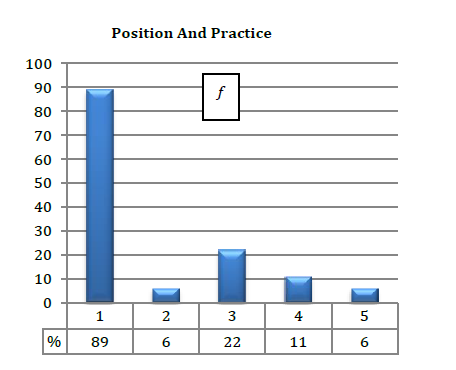
Responses to the interview question above are shown in Figure 1 below.
Figure 1: Position of Pastors/Leaders on the Practice of Baptist Distinctives
Key:
Positive attitude and full support for the practice of the Baptist distinctives
Baptist distinctives used for Bible studies occasionally in the church
The distinctives used for distinguishing teaching that helped to correct misunderstandings of some concepts
The practice of Baptist distinctive should not be distorted, manipulated and discarded because it is unique and good as it distinguishes the Baptist as a denomination
The practice of the distinctives makes the Baptist build spiritually independent members
The findings reflected in figure 1 above depicts that 89% of interviewees have a positive attitude towards the promotion of the Baptist heritage as they have tried in one way or the other to create awareness for it. 22% of pastors have used the distinctives in teaching sessions to correct misunderstanding of some concepts. This implies that many of the pastors do not actually in practice engage in the promotion of it.
Interview Question 2
“What have you observed in some Baptist pastors/leaders about the practice and promotion of the Baptist distinctives?”
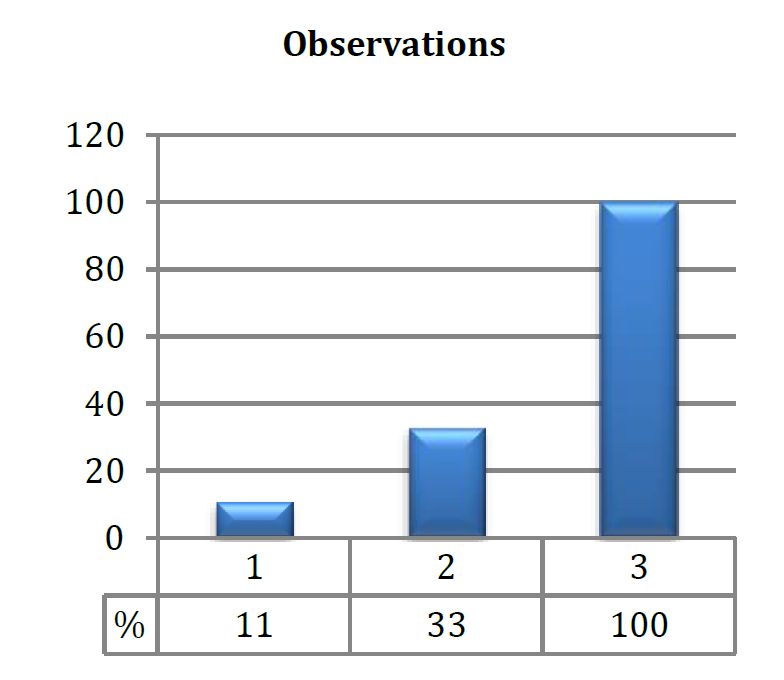
Responses to the interview question above are shown in figure 2a below and figure 2b further shows the different attitudes of pastors/leaders about the practice of the Baptist heritage.
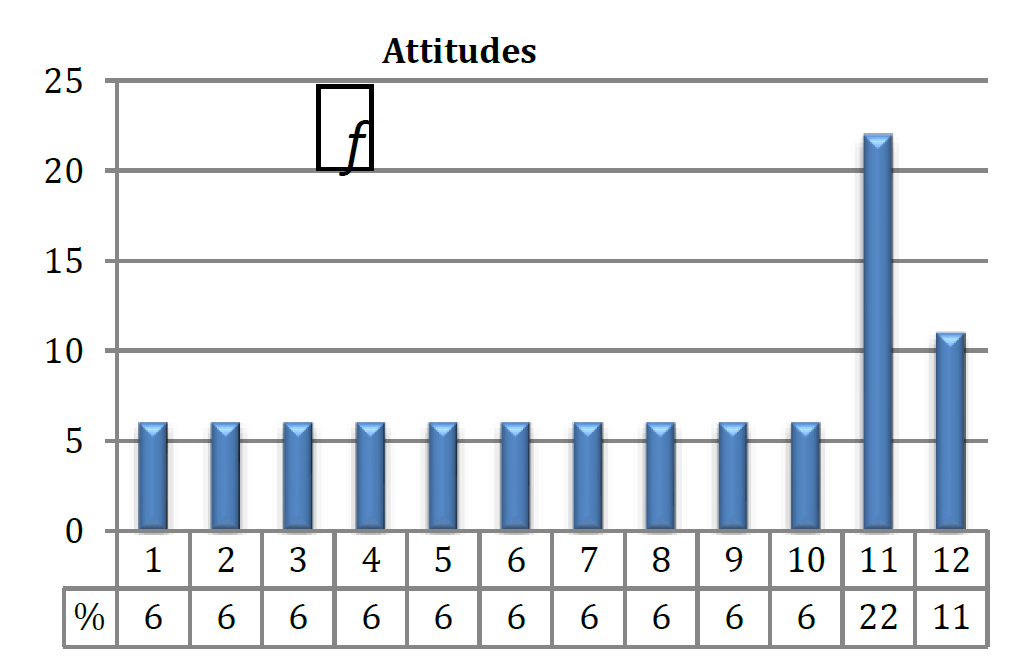
Different attitudes of pastors towards the practice and promotion identified include those as shown in figure 2b below
Key:
Evidence of gross ignorance on the part of some pastors about the Baptist distinctives
Poor and inadequate promotion of the Baptist distinctive
Key:
Totally ignorant of the distinctive
Some who have knowledge of them are lukewarm
Unfaithfulness towards the practice
Lax adherence
Total stoppage of the practice
Discarded the practice
Do not appreciate it
Nonchalant attitude
Pastors do not think it is necessary
Lack of Corporation
The abuse of autonomy of local churches by pastors (using it to their advantage and to cover up in their churches)
Some pastors do promote the distinctive and are the good image projectors of the convention
Figure 2a shows that 11% of respondents have observed some evidence of gross ignorance on the part of some pastors about the Baptist distinctives, 33% have observed poor and inadequate promotion of the Baptist distinctives and they all (100%) described the attitudes of pastors towards the practice and promotion of Baptist distinctive which are itemized and reflected in Figure 2b. Among the attitudes, 22% (less than average) of respondents marked out the abuse of autonomy of local churches by pastors (using it to their own advantage and to cover up in their churches) while 11%( less than average) commented that despite the negative attitude of some pastors, some pastors still promote the distinctives and are the good image projectors of the convention.The findings indicate that Baptist senior executives and experienced pastors have observed the different poor attitude of Pastors towards the promotion of the Baptist heritage and the attitudes spelled out bothers on the behaviour of those leading the churches yet no proactive steps have been thought out to salvage the situation.
Figure 2a: Observations of Baptist Pastors/Leaders about the Practice and Promotion of the Baptist Distinctives
Figure 2b: Different Attitudes of Pastors towards the Practice and Promotion of the Baptist Distinctive
Interview Question 3
“What are Some Challenges to the Practice of the Baptist Distinctive in the Nigerian Baptist Convention”
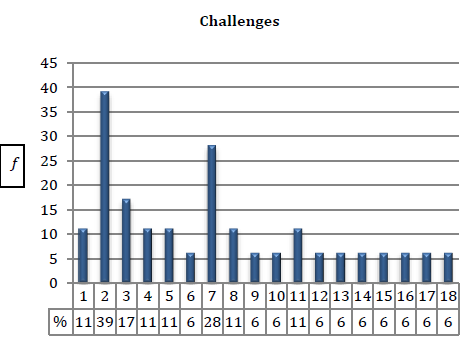
Responses to the interview question above are shown in Figure 3 below.
Figure3: Challenges to the practice of the Baptist distinctive in the Nigerian Baptist Convention”
Key:
Pastors’pursuance of personal agenda and aspiration to gain recognition.
Lack of adequate awareness, proper knowledge, and understanding of the distinctives
Lack or low level of theological education and understanding of pastors
Inadequate sense of ownership by both pastors and church members
Lack of regular emphasis and consistent teaching
Interaction with people of other denominations or church typology
Influence of other denominations
Lack of monitoring by NBC
Lack of provision of sanctions for defaulters and unfaithfulness
Fear of losing members to other churches
Inconsistency between profession and actual behaviour and practice of leaders
Identity crisis, the distinctives are thought to be less-spiritual and conservative
Lack of practical understanding and contextualization
Generational gap
Lack of readiness to obey that you must be baptized into full membership
The current trend of blended worship practices that sometimes seem syncretic
Some Pastors are not well taught about the Baptist faith and practice
Getting lower qualifications from the Baptist seminary and going for higher degrees in non-Baptist theological institutions
Figure 3 above reveals several challenges to the practice of the Baptist distinctives in the Nigerian Baptist Convention, and the lack of adequate awareness, proper knowledge, and understanding of the distinctives (39%) is taken to be the superior challenge amongst all others. This is not a surprise because it has been very glaring among young Baptist pastors of this 21st century. This places a responsibility on top NBC executives, theological educators and experienced pastors to ensuring an in-depth knowledge of the distinctives to be assimilated by the current generation of pastors/leaders.
Interview Question 4
“In Your Opinion, What Are the Factors You Can Identify As Responsible For the Migration of Some Baptist Youths to Other Churches
Responses to the interview question above are shown in figure 4 below.
Key:
Domination of the elderly in the Baptist Church
Lack of opportunities in the choice for youth to serve and rigidity of some pastors concerning certain issues
Inability to understand the language and the characteristics of youths on spiritual issues (the lead factor) such as
Recognition and promotion of their talents and skills which the Baptist neglect
Inadequate relevant platforms and low level of excellence in programmes that will make them explore and maximize their potentials
Lack of care and appreciation especially regarding physical needs such as employment, admission, and payment of school fees, these are the things other churches used to get them close and appreciate them and their ideas.
Lack of social ministry and building of affectionate interpersonal Christian relationship
Peer group influence
Use of sophisticated instruments, sound music and media by some other churches (non – Baptist churches)
Emphasis on miracles by other churches
Pastors’ or Elders’ leadership inconsistency that has failed to address the distinctiveness of belief and practice that have resulted to youth not grasping their essence and value
Lack of appreciation of Baptist heritage.
Lack of dynamism in worship or service style, a monotonous form of worship
Family backgrounds (some parents are just church goers)
The influence of wrong doctrines and deception exposed to through the internet and mass media
The influence of “pen tie ‘rascal or radical’” churches especially when they get to a higher institution
Some believe our local churches are not opened enough or resistant to the move of the Holy Spirit as they have developed a belief in speaking in tongues and prophesying while praying
Figure 4 above reveals varying opinions on the reasons for migration of Baptist youths to other churches. The lead factor (67%) revealedis inability of pastors/leaders to understand the language and the characteristics of youths on spiritual issues such as recognition and promotion of their talents and skills which the Baptist neglect; inadequate relevant platforms; and low level of excellence in programmes that will make them explore and maximize their potentials.Thisimplies that youths are peculiar and they need to be studied and their needs responded to in light of the Baptist distinctive. This could be achieved through sound teaching and grooming.
Interview Question 5
“What are your suggestions for the sustenance of Baptist heritage or distinctive in the Nigerian Baptist Convention?”
Key:
Periodic and regular emphasis with creativity and passion in teaching of Baptist heritage in theological institutions
Pastors should teach church members the distinctives by organizing seminars, symposiums, conferences until their beauty is well appreciated. These should be done by the convention president, conference presidents, associational moderators and some knowledgeable Baptist Pastors in their respective jurisdictions (Lead suggestion)
Historical background should be addressed. Leaders should be more proud of the heritage and should manifest distinctives more
Provision for sanctions against pastors who deliberately flout the Baptist heritage
Those who will be leading must be people who understand the nitty-gritty of Baptist heritage and have the sustaining power of it
Teaching should be organized for children. It should be contextualized and contemporized.
Organize free spiritual retreats for youths and catch them young so that they can be built and uphold this heritage
Baptist pastors receiving higher degrees from non-Baptist theological institutions should be discouraged
There is a need for educational improvement of church pastors and leaders
These distinctives should be practicedwituh the leadership of the Holy Spirit and not an individual’s interest and ambition
From Figure 5 above, respondents(39%) suggested some measures in promoting the Baptist heritage. The most important suggested solution within the category of suggestions is that those who will be leading must be people who understand the nitty-gritty of Baptist heritage and have the will-power to sustain it.
CONCLUSION
This paper is concluded under the premise that the sustenance of Baptist Heritage and distinctive is undoubtedly based on pastors’ positive attitude towards them and on the contrary, if some pastors have developed an attitude of negligence, it will not help for the sustenance but will call for its being ignored and neglected from generation to generation. Therefore, pastors and church leaders are advised to arise to this responsibility, turn a new leaf and stand in the gap for the promotion of this rich, Bible-based heritage.
REFERENCES
Adelokoji, Ijaola. “Eroding our Baptist heritage.” The Nigerian Baptist, vol. 95, no. 4, April 2016.
Ciulla, J.B. Ethics and leadership effectiveness. International Leadership Association, 2003. www.ila-net.org/members/directory/downloads/antonakis-ciulla-13.pdf. Accessed 25 June 2021.
Hybels, Bill. Courageous leadership. Grand Rapids, Michigan: Zondervan Publishers, 2002.
Oroniran, D.F. The Baptist heritage: A Nigerian perspective. Ibadan: Titles Publishers, 2013.
Burns, James MacGregor. Leadership. New York: Harper & Row, 1978.
Kouzes, J.M. and B.Z. Posner. The leadership challenge. San Francisco: Jossey-Bass, 1995.
Odle, Joe T. The church members’ handbook. Nashville, Tennessee: Broadman Press, 1962.
McBeth, Leon. The Baptist heritage: Four centuries of Baptist witness. Nashville, Tennessee: Broadman Press, 1987.
Hudson, Winthrop S. Baptist convictions. Valley Forge, Pennsylvania: Judson Press, 1963.
Tribble, Harold W. Our doctrines. Nashville, Tennessee: The Sunday School Board of the Southern Baptist Convention, 1936.
Ness, Van Isaac J. Training in the Baptist spirit. Nashville, Tennessee: The Sunday School Board of the Southern Baptist Convention, 1940.
Bow, J.G. What Baptists believe and why they believe it. Nashville, Tennessee: Ssbsbc, 1989.
Oladeji, Moses Olatunde. The people called Baptists and their distinctive beliefs. Ibadan: Bounty Press Ltd., 2012.
General Association of Regular Baptist Churches. “Baptist distinctives.” 2007. http://baptiststudiesonline.com/wp-content/uploads/2007/02/baptist-distinctives-garbc.pdf. Accessed 30 May 2021.
Study and Research Division of Baptist World Alliance.We Baptists. Franklin, Tennessee: Providence House Publishers, 1999.
Eight Baptist distinctives. n.d. http://cornerstonebaptist-tyro.com/distinctives.aspx. Accessed 29 May 2021.
Hollander, E.P. Leadership dynamics: A practical guide to effective relationships. New York: Free Press, 1978.
Donelly, J.H. et al.Organizations: Behavior, structure, processes. 5th ed., Plano, Texas: Business Publications Inc., 1985.
Hemphill, J.K. and A.E. Coons. “Development of the leader behavior description questionnaire.” Leader Behavior: Its Description and Measurement, edited by R.M. Stogdill and A.E. Coons, Columbus, Ohio: Bureau of Business Research, Ohio State University, 1957.
Recommended Articles
Research Article
Effect of Laser Bio stimulation and Bone Graft in Treatment of a Large Periapical Lesion – A CBCT Analysis
Ruchika Gupta Dewan,
Unnavi Chauhan
Published: 22/11/2020
Download PDF
Research Article
Classifying Problems of Diabetic Foot
Amit Kumar C Jain
Published: 23/11/2020
Download PDF
Research Article
Rare Presentation Heterogeneous Pregnancies
Imad Abedzaid Mohan Aljanabi,
...
Marwa Habeeb Nazal
Published: 20/03/2021
Download PDF
Research Article
Emerging Role of Nutraceuticals in Covid 19
Naaz Huda,
...
Kaur Charanjeet
Published: 22/11/2020
Download PDF
PO Box 101, Nakuru
Kenya.
Email: office@iarconsortium.org
Editorial Office:
J.L Bhavan, Near Radison Blu Hotel,
Jalukbari, Guwahati-India
Ishola-Esan, H. O. (2021). Pastors’ Leadership Behaviour and the Sustenance of Baptist Heritage in the Nigerian Baptist Convention. IAR Journal of Humanities and Cultural Studies, 2(2), 1-9.
MLA
Ishola-Esan, Helen O.. "Pastors’ Leadership Behaviour and the Sustenance of Baptist Heritage in the Nigerian Baptist Convention." IAR Journal of Humanities and Cultural Studies 2.2 (2021): 1-9.
Chicago
Ishola-Esan, Helen O.. "Pastors’ Leadership Behaviour and the Sustenance of Baptist Heritage in the Nigerian Baptist Convention." IAR Journal of Humanities and Cultural Studies 2, no. 2 (2021): 1-9.
Harvard
Ishola-Esan, H. O. (2021) 'Pastors’ Leadership Behaviour and the Sustenance of Baptist Heritage in the Nigerian Baptist Convention' IAR Journal of Humanities and Cultural Studies 2(2), pp. 1-9.
Vancouver
Ishola-Esan HO. Pastors’ Leadership Behaviour and the Sustenance of Baptist Heritage in the Nigerian Baptist Convention. IAR Journal of Humanities and Cultural Studies. 2021 Jul;2(2):1-9.



 Download PDF
 Download XML