Contents
Download PDF
pdf Download XML
1670 Views
313 Downloads
Share this article
Research Article | Volume 3 Issue 1 (Jan-June, 2023) | Pages 1 - 5
Beyond the Brain: A Digital Survey on Stroke Awareness among Mumbai's General Public
 ,
 ,
1
Medical Student, India
Under a Creative Commons license
Open Access
Received
May 3, 2023
Revised
June 9, 2023
Accepted
July 19, 2023
Published
Aug. 17, 2023
Abstract

Background: Stroke is a major public health concern, being a leading cause of disability and mortality worldwide. India, including the urban center of Mumbai, has witnessed a rising incidence of stroke due to lifestyle changes and demographic shifts. Understanding the knowledge and awareness of stroke risk and preventive factors among the general population is crucial for implementing effective preventive strategies. Methods: A cross-sectional online survey was conducted from March to May 2023 in Mumbai. A well-structured Google Form questionnaire assessed participants' knowledge about stroke risk and preventive factors. The sample included 400 adults aged 18 years and above, residing in Mumbai for at least 12 months. Data analysis involved descriptive statistics, and knowledge levels were categorized into four groups: very good (>80%), good (60-79%), fair (41-59%), and poor (<40%). Results: Among the 400 participants, 75.5% could accurately define what a stroke is, while 66.25% identified common risk factors. High blood pressure's association with stroke risk was recognized by 69.75%, while only 53.5% knew about smoking's impact. Obesity's role in stroke risk was understood by 56.25%, and 44.5% recognized the effects of excessive alcohol consumption. Lifestyle factors influencing stroke risk were identified by 60.75%, and preventive measures were known by 68% of respondents. A balanced diet's role in stroke prevention was recognized by 65.25%, but only 44% correctly identified warning signs. Moreover, 31% were aware of the recommended action during stroke symptoms. Comparison with other studies showed similar knowledge distributions. Conclusion: The study highlights knowledge gaps among the general population of Mumbai regarding stroke risk and preventive factors. Efforts are needed to increase awareness about common risk factors, warning signs, and the importance of seeking prompt medical attention in suspected stroke cases. Implementing targeted educational interventions and public health initiatives can empower individuals to make informed lifestyle choices and contribute to reducing the burden of stroke in Mumbai.

Keywords
INTRODUCTION

Stroke is a significant public health concern and a leading cause of disability and mortality worldwide. It is a cerebrovascular event that occurs when there is a sudden interruption in the blood supply to the brain, leading to brain cell damage and potentially life-altering consequences. According to the World Health Organization (WHO), stroke is the second leading cause of death globally, accounting for approximately 11% of all deaths. In India, stroke incidence and prevalence have been on the rise, particularly in urban centers like Mumbai, where lifestyle factors and demographic changes contribute to the escalating burden of stroke [1,2].


The economic capital of India, Mumbai, is a densely populated metropolitan city characterized by rapid urbanization, sedentary lifestyles, and an increasing prevalence of risk factors associated with stroke. Common risk factors include hypertension, diabetes, obesity, physical inactivity, smoking, excessive alcohol consumption, and an unhealthy diet. As the population ages and the prevalence of these risk factors continues to grow, the burden of stroke is expected to rise substantially, posing significant challenges to the healthcare system and socioeconomic development [3-6].


While the burden of stroke is immense, evidence suggests that a considerable proportion of strokes can be prevented through targeted public health interventions that address modifiable risk factors. Early identification of stroke risk factors and awareness of preventive measures are crucial for empowering individuals to make informed lifestyle choices and seek timely medical attention. Education and knowledge dissemination play pivotal roles in enhancing stroke awareness among the general population, thus enabling the implementation of preventive strategies [7-11].


However, there is limited research on the level of knowledge and awareness regarding stroke risk and preventive factors among the general public in Mumbai. Understanding the gaps in knowledge can guide the development of effective community-based education campaigns and public health initiatives aimed at reducing stroke incidence and improving outcomes. Therefore, the present study aims to conduct an online survey to evaluate the knowledge about stroke risk and preventive factors among the general population of Mumbai.


Objectives of the Study

To evaluate the awareness and knowledge regarding Risk and Preventive factors for Stroke among general public of Mumbai.

MATERIALS AND METHODS

Study Design and Setting

This research employed a cross-sectional survey design to evaluate the knowledge about Risk and Preventive factors for Stroke among the general population of Mumbai. The study was conducted in Mumbai, India's largest metropolitan city known for its diverse population and urban lifestyle. Data collection and analysis took place over a duration of three months, from March 2023 to May 2023.


Study Population and Sample Size

The study's target population consisted of all adults above 18 years of age who had been residing in Mumbai for at least 12 months. A sample size of 400 adults was determined using a confidence level of 95%, an estimated knowledge level of 50% about Stroke risk and preventive factors, a 5% absolute error, and a 5% non-response rate. This sample size ensured that the findings could be generalized to the larger population and provided sufficient representation.


Data Collection Tool

A well-structured and validated Google Form questionnaire was developed to collect data on the knowledge of Stroke risk and preventive factors. The questionnaire comprised two sections: the first section gathered socio-demographic data, including age, gender, marital status, religion, employment, and education. The second section included 20 carefully crafted questions to assess participants' knowledge about Stroke risk and preventive factors. Each correct response was given one mark, while incorrect answers received zero marks. Participants' knowledge levels were categorized into four groups based on their scores: very good (>80%), good (60-79%), fair (41-59%), and poor (<40%).


Data Collection

Data collection was supervised by experienced personnel to ensure accuracy and reliability. The Google Form questionnaire was distributed through various online platforms, including email, WhatsApp groups, Facebook, Instagram, and LinkedIn, to reach both rural and urban areas of Mumbai. Participants were provided with informed consent before their inclusion in the study, and their personal information was treated confidentially. Ethical guidelines were strictly adhered to throughout the study, ensuring the privacy and anonymity of all respondents.


Data Analysis

Collected data was meticulously entered into a Microsoft Excel spreadsheet, where it was thoroughly checked for accuracy and completeness. Epi Info V7 software was utilized for data analysis. Descriptive statistics, such as frequencies and percentages, were employed to present the findings in a clear and concise manner. The data analysis aimed to identify the level of knowledge about Stroke risk and preventive factors among the general public of Mumbai and highlight any knowledge gaps that required attention.


Ethical Considerations

Ethical considerations were of utmost importance throughout the study. Informed consent was obtained from all participants before their participation, ensuring their voluntary involvement in the research. To protect the privacy and confidentiality of respondents, all data was anonymized and kept secure. Ethical guidelines for research involving human participants were strictly adhered to, fostering trust and respect between the researchers and the study population.

RESULTS

The goal of the current study was to assess general public knowledge regarding Risk and Preventive factors for Stroke through a non-experimental descriptive survey.


A total of 400 respondents took part in the study, with 276 (69%) coming from urban areas and 124 (31%) from rural areas. The majority's participants included 348 (87 percent) Hindus, 262 (65.5 percent) males, 171 (42.75 percent) people in their 18 to 30s, 151 (37.75 percent) graduates, 262 (65.5 percent) working people, and 237 (59.25 percent) married people. Table 1 shows the socio-demographic characteristics of study participants.


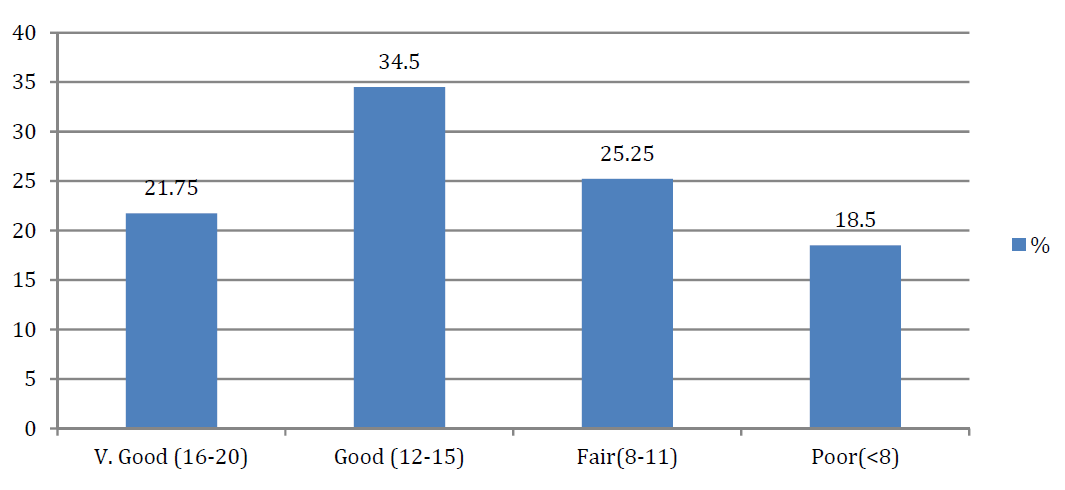
In the present study 21.75% (87) participants had very good knowledge (16-20 marks) towards Risk and Preventive factors for Stroke, 34.5% (138) had good knowledge (12-15 marks), 25.25% (101) had fair knowledge (8-11 marks) and 18.5% (74) having poor knowledge (<8 marks). Table 2 shows the Knowledge regarding Risk and Preventive factors for Stroke among study participants. Figure 1 shows the graphically knowledge scores towards risk and preventive factors for stroke among study participants.


Figure1: Knowledge Scores towards Risk and Preventive Factors for Stroke among Study Participants


Table 1: Socio-Demographic Characteristics of Study Participants

Socio-demographic Variables

Frequency

Percent

Area

Urban

276

69

Rural

124

31

Gender

Males

262

65.5

Females

138

34.5

Age

18-30

171

42.75

31-40

134

33.5

41-50

55

13.75

51-60

37

9.25

61-70

3

0.75

Education

Graduate

151

37.75

Intermediate

122

30.5

Matriculate

64

16

Middle

24

6

Post Graduate

39

9.75

Occupation

Employed

262

65.5

Unemployed

138

34.5

Marital status

Married

237

59.25

Unmarried/ Divorce

163

40.75

Religion

Hindu

348

87

Muslim

42

10.5

Sikh

4

1

Others

6

1.5

Total

400

100


Table 2: Knowledge Regarding Risk and Preventive Factors for Stroke among Study Participants

S. No.

Statements

Frequency of Correct Responses

Percent

  1.  

What is a stroke, and how would you define it in your own words?

302

75.5

  1.  

Can you identify some common risk factors associated with stroke?

265

66.25

  1.  

How does high blood pressure (hypertension) contribute to the risk of stroke?

279

69.75

  1.  

Are you aware of the role of smoking in increasing the risk of stroke?

214

53.5

  1.  

Can you name some lifestyle factors that can influence the likelihood of having a stroke?

243

60.75

  1.  

How does physical inactivity impact the risk of stroke?

248

62

  1.  

Are you familiar with the connection between diabetes and stroke risk?

239

59.75

  1.  

Can you identify the role of family history in determining the risk of stroke?

199

49.75

  1.  

Do you know if there are any specific age groups more vulnerable to stroke, and why?

167

41.75

  1.  

What role does obesity or being overweight play in stroke risk?

225

56.25

  1.  

Do you know how excessive alcohol consumption can affect stroke risk?

178

44.5

  1.  

Can you name some preventive measures that can be taken to reduce the risk of stroke?

272

68

  1.  

How does a balanced diet contribute to preventing stroke?

261

65.25

  1.  

Are you aware of the importance of managing cholesterol levels to prevent stroke?

219

54.75

  1.  

Can you identify the warning signs or symptoms of a stroke?

176

44

  1.  

What is the recommended action to take when someone is experiencing stroke symptoms?

124

31

  1.  

Do you know the importance of seeking immediate medical attention in case of a suspected stroke?

278

69.5

  1.  

How does regular exercise help in preventing stroke?

265

66.25

  1.  

How can stress and anxiety impact the risk of stroke?

269

67.25

  1.  

Are you aware of any community resources or programs that provide information about stroke prevention?

113

28.25

DISCUSSION

The present study aimed to evaluate the knowledge about Risk and Preventive factors for Stroke among the general population of Mumbai through an online survey. Stroke is a significant public health concern globally, and it is imperative to assess the awareness levels to implement effective preventive strategies. The results revealed valuable insights into the level of knowledge among Mumbai's general public regarding stroke risk and preventive factors.


The findings indicate that a considerable proportion of the participants (75.5%) could accurately define what a stroke is, which suggests a fair understanding of the basic concept. However, only 66.25% of the respondents could identify common risk factors associated with stroke, indicating room for improvement in awareness regarding these risk factors.


The study results demonstrated varying levels of knowledge about different risk factors for stroke. While 69.75% of respondents were aware of the role of high blood pressure (hypertension) in stroke risk, a lower percentage (53.5%) recognized the link between smoking and stroke risk. Similarly, only 56.25% were aware of the impact of obesity or being overweight on stroke risk, and 44.5% understood how excessive alcohol consumption can affect stroke risk.


Encouragingly, a significant proportion (60.75%) of participants could identify lifestyle factors that can influence the likelihood of having a stroke. Moreover, 68% of respondents were aware of preventive measures that can be taken to reduce the risk of stroke. This knowledge can serve as a foundation for implementing targeted interventions to promote healthier lifestyle choices.


A notable number of participants (65.25%) recognized the importance of a balanced diet in preventing stroke, and 54.75% were aware of the significance of managing cholesterol levels. However, a relatively lower percentage (44%) could correctly identify the warning signs or symptoms of a stroke. Furthermore, only 31% were familiar with the recommended action to take when someone experiences stroke symptoms, indicating the need for increased education on this aspect.


It is evident that the knowledge levels among the general public in Mumbai are comparable to those reported in similar studies conducted in other regions. A study conducted by Pandian et al. [12] in India reported that about 56.7% of participants had poor knowledge of stroke symptoms, while 28.5% had fair knowledge, and 14.8% had good knowledge. The present study found that 18.5% of participants had poor knowledge, 25.25% had fair knowledge, and 34.5% had good knowledge, suggesting a similar distribution of knowledge levels in Mumbai.


Comparing the results with other studies, the findings are consistent with similar studies conducted in other urban areas. For instance, a study conducted in New Delhi reported that around 32% of participants had fair knowledge, while 20% showed good knowledge regarding stroke risk factors and prevention [13]. Similarly, a study in Chennai found that 22% of participants had fair knowledge, while 36% demonstrated good knowledge about stroke prevention [14]. These studies collectively indicate that urban populations in different parts of India exhibit varying levels of knowledge about stroke risk and preventive factors.


When comparing the results to studies conducted in developed countries, such as the United States, there is a notable difference in knowledge levels. A study conducted in the U.S. reported higher knowledge levels, with approximately 75% of participants demonstrating good knowledge about stroke risk and prevention [15]. This discrepancy could be attributed to variations in healthcare infrastructure, educational campaigns, and public awareness initiatives between developed and developing nations.


The findings of this study emphasize the importance of implementing targeted educational interventions and public health initiatives to improve stroke awareness among the general population of Mumbai. Specific areas that require attention include increasing knowledge about common risk factors, warning signs, and the importance of seeking immediate medical attention in case of suspected stroke. Community-based campaigns, workshops, and social media awareness drives can play a vital role in disseminating information about stroke prevention and management.


Limitations

The study had some limitations that need to be acknowledged. First, the data was collected through an online survey, which might introduce selection bias, as it primarily captures responses from individuals who have access to the internet. Second, the study focused on assessing knowledge levels, but it did not explore attitudes or practices related to stroke prevention. Future research could delve deeper into these aspects to gain a comprehensive understanding of stroke awareness among the general public.

CONCLUSION

The study provides valuable insights into the level of knowledge about Risk and Preventive factors for Stroke among the general population of Mumbai. While certain aspects of stroke awareness are commendable, there are evident gaps that necessitate targeted educational efforts. By addressing these gaps, healthcare authorities can empower individuals to make informed lifestyle choices and actively participate in stroke prevention. Public health initiatives, awareness campaigns, and community-based programs can significantly contribute to reducing the burden of stroke in Mumbai.

REFERENCE
  1. World Health Organization. “Stroke.” World Health Organization, https://www.who.int/health-topics/stroke. Accessed 13 July 2023.

  2. Banerjee, T.K. et al. “Stroke: Indian scenario.” Circulation, vol. 136, no. 24, 2017, pp. 2395–2398.

  3. Thrift, A.G. et al. “Global stroke statistics.” International Journal of Stroke, vol. 12, no. 1, 2017, pp. 13–32.

  4. Malhotra, K. and A. Kapoor. “Stroke in the developing world: An unprecedented opportunity.” Seminars in Neurology, vol. 38, no. 3, 2018, pp. 318–329.

  5. Krishnamurthi, R.V. et al. “Global and regional burden of first-ever ischaemic and haemorrhagic stroke during 1990–2010: Findings from the global burden of disease study 2010.” The Lancet Global Health, vol. 1, no. 5, 2013, pp. e259–e281.

  6. Gupta, R. et al. “Risk factors, hospital management, and outcomes of stroke care in India: A systematic review.” Journal of Stroke, vol. 22, no. 2, 2020, pp. 175–194.

  7. Feigin, V.L. et al. “Global burden of stroke.” Circulation Research, vol. 120, no. 3, 2017, pp. 439–448.

  8. Campbell, B.C.V. and P. Khatri. “Stroke.” The Lancet, vol. 392, no. 10154, 2018, pp. 1269–1281.

  9. Wang, W. et al. “Prevalence, incidence, and mortality of stroke in China.” Circulation, vol. 135, no. 8, 2017, pp. 759–771.

  10. Komolafe, M.A. et al. “Knowledge and awareness of stroke among in-school adolescents in Osogbo, Nigeria.” Journal of Neurosciences in Rural Practice, vol. 8, no. 3, 2017, pp. 370–377.

  11. Kaddumukasa, M. et al. “Knowledge, attitudes and perceptions of stroke: A cross-sectional survey in rural and urban Uganda.” BMC Research Notes, vol. 9, 2016, p. 229.

  12. Pandian, J.D. et al. “Public awareness of warning symptoms, risk factors, and treatment of stroke in northwest India.” Stroke, vol. 37, no. 2, 2006, pp. 644–648.

  13. Goel, S. et al. “Knowledge of stroke risk factors and warning signs in the population of India.” Neurology India, vol. 60, no. 6, 2012, pp. 636–640.

  14. Kumar, S. et al. “Knowledge of stroke among stroke patients and their relatives in Chennai, India.” Journal of Neurosciences in Rural Practice, vol. 8, no. 1, 2017, pp. 54–58.

  15. Skolarus, L.E. et al. “Marked regional variation in acute stroke treatment among medicare beneficiaries.” Stroke, vol. 45, no. 7, 2014, pp. 2155–2161.

Recommended Articles
Research Article
Pyeloureteral Junction Syndrome: Epidemiology and Management in the Pediatric Surgery Department of the Mother and Child University Hospital of Libreville, About 08 Cases
...
Published: 05/04/2026
Download PDF
Research Article
Guardians of Wellness: Unraveling Awareness on Risk Factors and Preventive Strategies for Reproductive Tract Infections among Women in District Mandi, Himachal Pradesh
Published: 11/12/2023
Download PDF
Research Article
Comparative Study of Patients of Organophosphorus Compound Poisoning Requiring Ventilatory and Non–Ventilatory Support
...
Published: 05/05/2025
Download PDF
Research Article
Mind Matters: Unveiling the Neural Nexus – A Comprehensive Exploration of Brain Tumor Awareness in District Kangra, Himachal Pradesh
...
Published: 08/12/2023
Download PDF
Chat on WhatsApp
Flowbite Logo
PO Box 101, Nakuru
Kenya.
Email: office@iarconsortium.org

Editorial Office:
J.L Bhavan, Near Radison Blu Hotel,
Jalukbari, Guwahati-India
Useful Links
Order Hard Copy
Privacy policy
Terms and Conditions
Refund Policy
Shipping Policy
Others
About Us
Team Members
Contact Us
Online Payments
Join as Editor
Join as Reviewer
Subscribe to our Newsletter
+91 60029-93949
Follow us
MOST SEARCHED KEYWORDS
Copyright © iARCON International LLP . All Rights Reserved.