The present study is conducted at Bhadar reservoir landed of Rajkot in Gujarat, India. Duration of work was 8 months. Water temperature of surface water ranges 21.5°C to 32.5°C in during the study period. Variation range of the pH in reservoir water was narrow i.e. Between 7.4 to 8. In general pH of water was towards alkaline side. The DO value was ranged between 7.3 mg/l to 8.9 ppm. Dissolved oxygen is a fundamental requirement for all life. Total hardness (TH) of water range from 82 mg/l to 102 ppm. The alkalinity ranges from 112 mg/l to 130 ppm.
Keywords
Wallago Attu
Water Quality Parameter
Bhadar Reservoir
INTRODUCTION
India is having rich source of inland water bodies in the form of rivers, lakes and reservoirs [1]. The State fisheries department of Gujarat has listed 711 reservoirs, covering an area of 2, 86,230 ha. This is in addition to 561 small irrigation tanks, which are actually reservoirs, with water spread are 44025 ha. Thus, the total area under reservoirs in the State is 286230 ha. More than 95% (in number) of these man-made lakes belong to the small category, although they form only 29% of the total area. The small reservoirs in the State have an average size of 349 ha. There are 7 no of large, 28 no of medium and 676 no of small reservoirs present in Gujarat. [2]. Basically authentic fish diversity and their survivability support to be influenced by numbers of water quality measurement parameters like pH, temperature, Dissolved Oxygen (DO), Biological Oxygen Demand (BOD), salinity, alkalinity [3] (Table 1). The quality of water it’s depent on variations and their impacts of functions and biodiversity of the reservoir [4]. The changes in the physico-chemical parameters tend to change the living biota, especially in the numbers, diversities and distributions in that ecosystem [5]. The rapid growing population and improved living standards, the pressure on the present water resources is increasing day by day [6]. Reservoirs are those water bodies formed or modified by human activity for specific purposes, in order to provide a reliable and controllable resource [7].
MATERIALS AND METHODS
The present study is conducted at Bhadar reservoir landed of Rajkot district (Saurashtra region (22°30′N 70°78′33"E) in Gujarat, India. Bhadar reservoir (site) is located at 21°76′28"N 70°42′37" E near Bhukhi village Dhoraji, Taluka of Rajkot district during July 2018 to February 2019. Data collected from the sites at every 1 month interval. Fish samples were collected from different selected localities by random sampling method. Samples were brought to college of Fisheries, Veraval and clean thoroughly. Random sampling has been done to collect the required data. The collected data was analyzed as per the standard statistical methods [8].
Surface water samples were collected in polythene cans from sampling sites of reservoirs. Water temperature, pH will determine on site itself and DO, Alkalinity and Hardness determination water samples will be collected in sample bottles, and transported to laboratory will be through standard procedures, American Public Health Association [9].
Table 1:Water Quality Parameters
No
Parameters
Method
References
1
Temperature
Thermometer
(APHA, 2005)
2
Ph
Ph Meter
(APHA, 2005)
3
Dissolved Oxygen
Winkler’s Method
(APHA, 2005)
4
Total Alkalinity
Titration Method
(APHA, 2005)
5
Total Hardness
Titration Method
(APHA, 2005)
RESULTS
The quality of life is linked with the quality of environment, hence biological components of fresh water depend on better physico-chemical conditions, and therefore analysis of physic-chemical Parameters of water is essential. Physico-chemical parameters and monthly variation in Water Temperature (WT), Potential of Hydrogen ion (pH), Dissolved oxygen (DO), Total Hardness (TH) and Alkalinity (Alk) of Surface water of Bhadar- reservoirs were monitored on monthly basis.
Table 2: Monthly Recorded of Physico-Chemical Parameters at Bhadar Reservoir from July 2018 – February 2019
MONTHS
PARAMETERS
Temperature
Ph
DO. (Ppm)
Alkanity (Ppm)
Hardness (Ppm)
JULY
23.5
8
7.4
112
102
AUGUST
24.5
7.6
7.3
120
100
SEPTEMBER
24.8
7.7
7.6
130
98
OCTOBER
24.3
7.5
7.8
120
92
NOVEMBER
23.5
7.5
7.3
115
87
DECEMBER
21.5
7.4
7.8
120
90
JANUARY
21.8
7.8
8.5
115
90
FEBRUARY
32.5
8.1
8.9
118
83
Table 3: Standrd Deviation of Various Parameters at Bhadar Reservoir From July 2018 – February 2019
Sr. No.
Parameters
Minimum
Maximum
Mean±Sd
1.
Temperature
21.5
32.5
24.55±3.430
2.
Ph
7.4
8.1
7.7±0.250
3.
Do. (Ppm)
7.3
8.9
7.825±0.584
4.
Alkanity (Ppm)
112
130
118.75± 5.418
5.
Hardness (Ppm)
83
102
92.75±6.649
Table 4: Seasonal Variation (Mean±Sd) Of Physico-Chemical Parameters At Bhadar Reservoir From July 2018 – February 2019
Parameters
Mansoon
Winter
Summer
Temperature (°C)
24.266±0.680
23.1±1.442
27.15±7.566
Ph
7.766±0.208
7.533±0.152
7.95±0.212
D.O (Ppm)
7.433±0.152
7.633±0.288
8.7±0.282
Alkalinity (Ppm)
120.66±9.018
118.33±2.886
116.5±1.666
Hardnees (Ppm)
100±2
89.666±2.516
86.5±4.949
Table 5: Seasonal Variation (Mean ± Se) Of Physico-Chemical Parameters At Bhadar Reservoir From July 2018 – February 2019
Parameters
Mansoon
Winter
Summer
Temperature (°C)
24.266±0.392
23.1±0.832
27.15±5.35
Ph
7.766±0.120
7.533±0.088
7.95±0.15
D.O (Ppm)
7.433±0.088
7.633±0.166
8.7±0.2
Alkalinity (Ppm)
120.66±5.206
118.33±1.666
116.5±1.5
Hardnees (Ppm)
100±1.154
89.666±1.452
86.5±3.5
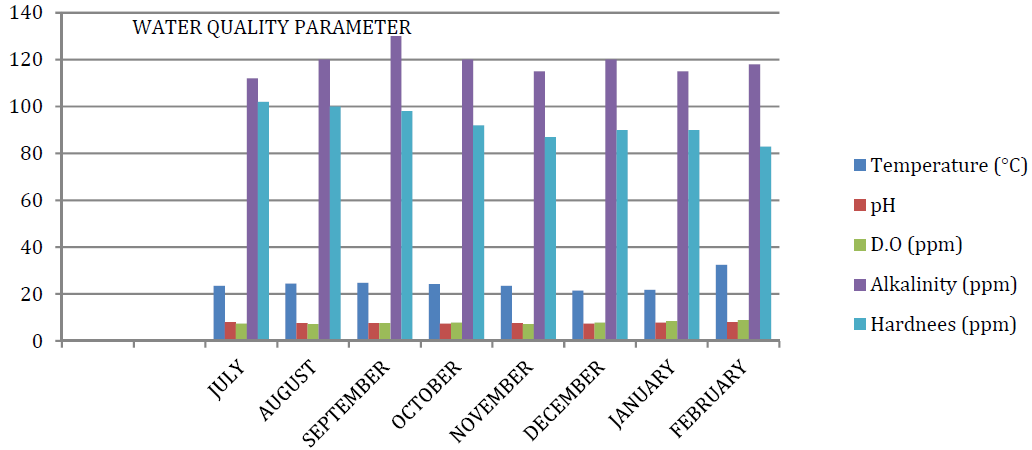
Figure 1: Monthly Variations in Water Quality Parameters
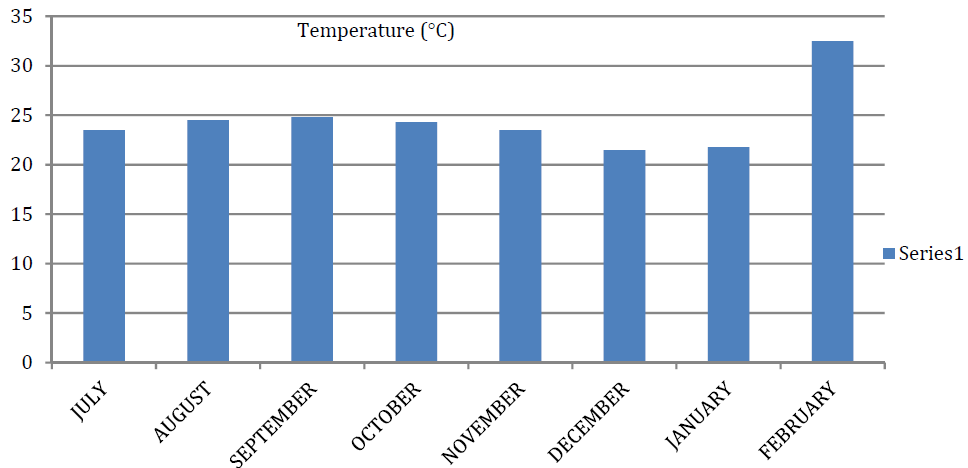
Figure 2:Monthly Variations in Temperature
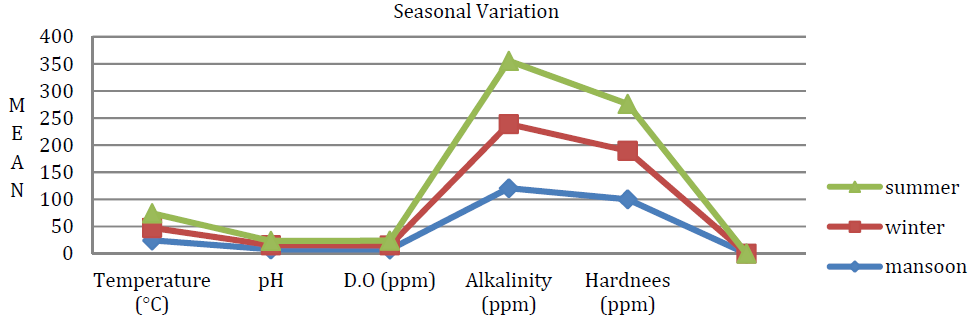
Figure 3:Seasonal Variations in Water Quality Parameters
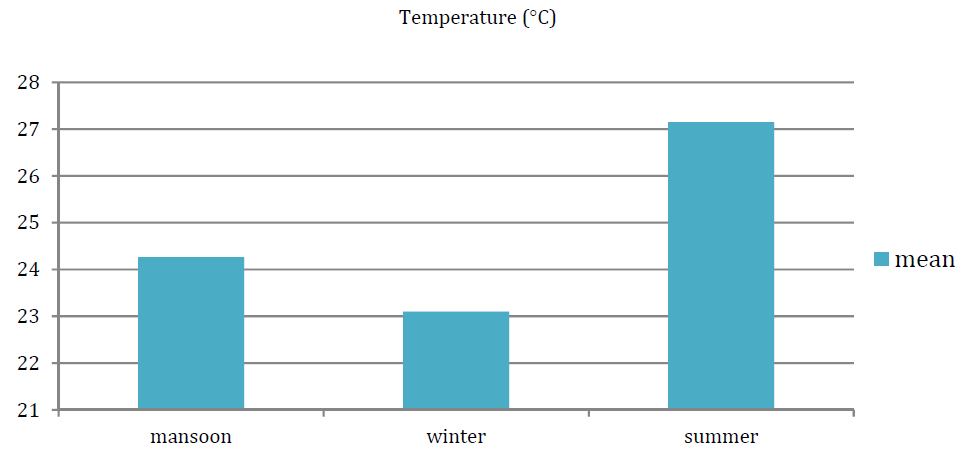
Figure 4:Seasonal Variations in Temperature
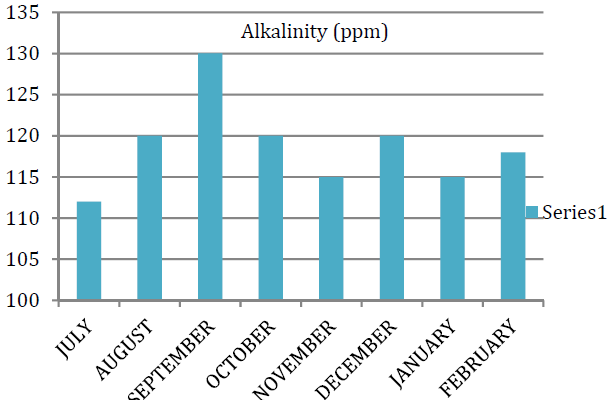
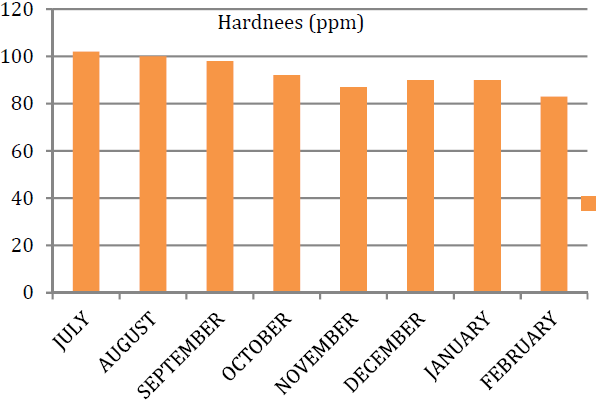
The data on the monthly variation in physic-chemical parameter of Bhadar reservoir is presented in (Table 2). The limnological profile of the Bhadar reservoir is greatly influenced by intensive anthropogenic activities. Physico-chemical parameters like temperature, pH, dissolved oxygen, alkalinity and hardnees are known to affect ecosystem characteristics- Temperature is a thermal gradient of water and it governs the dissolution of gasses, survival and biological activity of aquatic organism. Water temperature of surface water ranges 21.5°C to 32.5°C from Bhadar-reservoir during the study period. Variation range for pH of reservoir water was narrow i.e. Between 7.4 to 8.1 during the study period. In general pH of water was towards alkaline side. The DO value was ranged between 7.3 mg/l to 8.9 ppm during the study period. Dissolved oxygen is a fundamental requirement for all life. Total hardness (TH) of water range from 82 mg/l to 102 ppm for Bhadar-reservoir during the study period. In the present study alkalinity ranges from 112 mg/l to 130 ppm for Bhadar reservoir during the study period.
PH (Hydrogen-Ion Concentration)
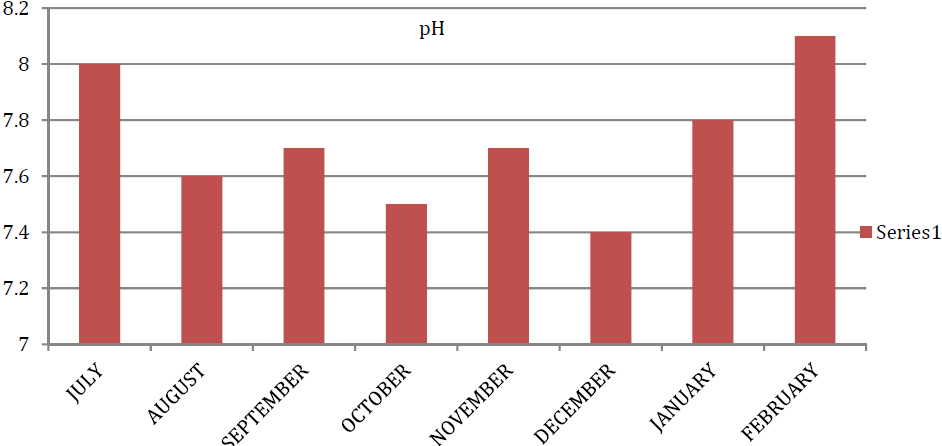
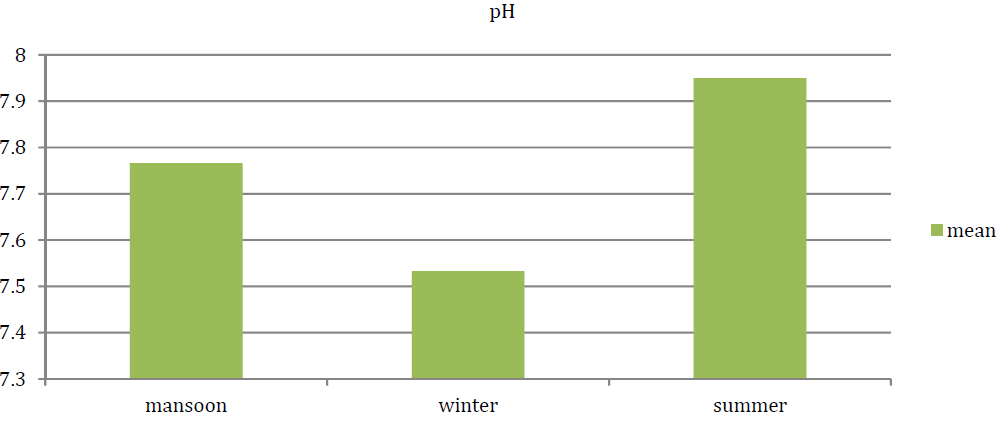
pH is one of the most important factors that serves as an index for the pollution. The measurement of the pH of surface waters is important because many pollutants increase in toxicity with changes in pH. The permissible limit of pH value of drinking water specified as 6.5 to 8.5 as per WHO standards. This approves that the nature of surface water samples varies from slightly acidic to slightly alkaline. The pH value was alkaline throughout the study period. The value ranges from 7.4 to 8.1. The mean pH value 7.7±0.250 was recorded in the month of February, 2019 and the minimum value pH 7.08 ± 0.80 in, December 2018 all are in (winter season), (Figure 5 6). There was significance difference between the months and the season throughout the study period.
Dissolved Oxygen (Do)
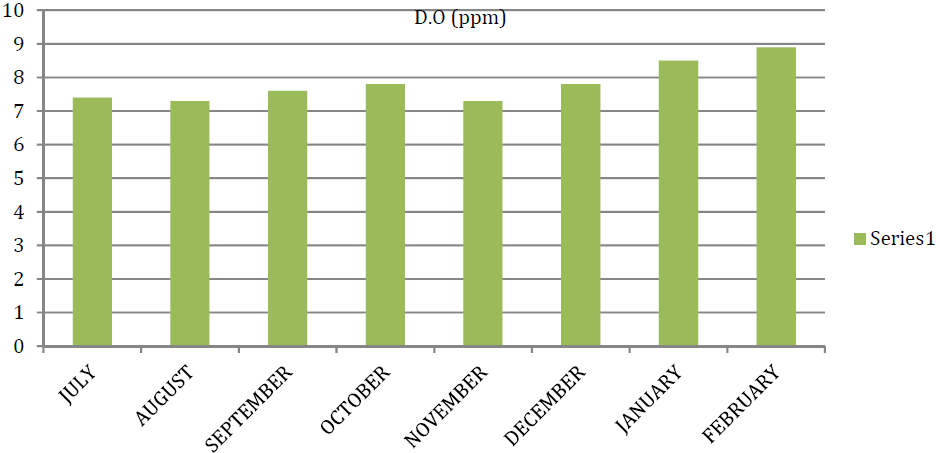
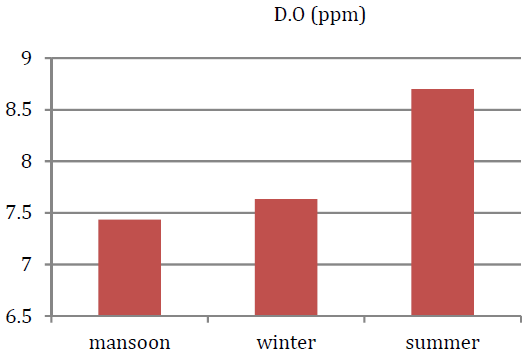
The DO values ranges from 7.3 to 8.9 ppm. The maximum value 8.9 ppm was recorded in the month February, 2019 (summer season) and the minimum value 7.3 ppm in the month of August, 2018, (raining season). The means value 7.825±0.584 recorded during study, (Figure 7-8). Statistically, there were significance differences between the months and the season. Alkalinity above 100 ppm is indicative to high productive nature of water. (Figure 1).
Figure 5:Monthly Variations in pH
Figure 6:Seasonal Variations in pH
Figure 7:Monthly Variations in DO
Figure 8:Seasonal Variations in DO
Figure 9:Monthly Variations in Alkalinity
Figure 10:Seasonal Variations in Alkalinity
Figure 11.Monthly Variations in Hardness
Figure 12. Seasonal Variations in Hardness
Water Quality Parameters:
Water Temperature: Fishes are exothermic, their body temperature is about that of the surrounding environment; and affects all metabolic processes. The water temperature ranged from 21.5°C to 32.5°C. The maximum (32.5 ± 3.430) was recorded in the month of February, 2019 (summer season) and the minimum 21.5°C was recorded in the month December, 2018 (winter season), (Figure 2-4 and Table 3-5). The variation in water temperature between the months was highly significance (p<0.05). However there was no significance difference between the stations (p<0.05). There is a closed relation between the atmospheric temperature and water temperature. Air temperature is one of the most important ecological factors which control the physiological behavior of the aquatic system and distribution of the microorganisms.
Total Alkalinity
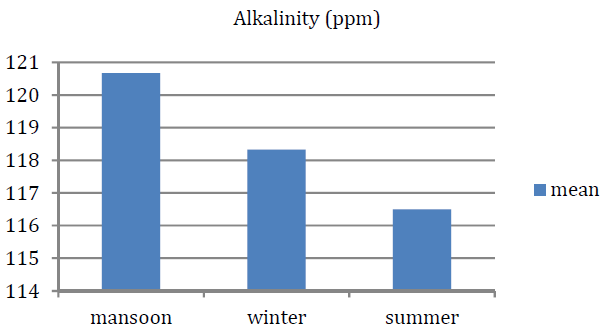
The values range from 112 to 130 ppm. The mean value 118.75± 5.418 was recorded during study. The maximum value 130 ppm obtained in the month of September, 2018 (raining season) and minimum mean value 112 ppm was recorded in the month of July, 2018 (mansoon season). The result shows significance difference between the months, (Figure 9-10).
Total Hardnees
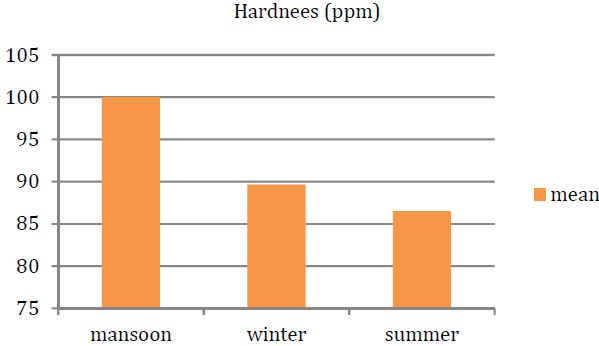
Total hardness of water during the study period fluctuates from 83 to 102 ppm. The mean value of 92.75±6.649 was recorded in study. The maximum value recorded 102 ppm month of July, 2018 and lowest mean value 83 was obtained in the month of February, 2019 (dry season). The result showed significance difference between the months, (Figure 11-12).
DISCUSSION
In the present study, temperature was 23 0C at during winter whereas 27 0C at during summer. Water temperature was recorded maximum in summer and minimum in winter season. Similar observations were recorded by Sawane [10] and Khinchi et al. [11]. According to George pH is important parameters of water. Most of the aquatic life are adapted to average pH and cannot withstand abrupt changes. In the present study the pH value of the sampling stations are slightly alkaline which range from 7.4 to 8.1. The maximum values of pH recorded in the present investigation are in summer in this can be due to increased and decreased biogenic activities of the system. Similar observations were recorded by Ayoade et al. [12] in Kalisara reservoir. The maximum dissolved oxygen was recorded during, summer and lower in the monsoon season at Bhadar reservoir. Present result correlates with Khinchi et al. [13]. Total Alkalinity was recorded during, mansoon and lower in the summer season at Bhadar reservoir. Similar study of Seasonal variation exhibited the highest values of alkalinity during northeast monsoon season by Narashimha Rao and Jaya Raju [14]. The maximum value of Total Hardness was recorded during, mansoon and lower in the summer season at Bhadar reservoir. Patil et al. [15] reported higher hardness during monsoon season and attributed it to the inflow of rainwater from agricultural fields carrying good amount of suspended salts.
CONCLUSION
Water temperature was recorded maximum in summer and minimum in winter season. The maximum values of pH recorded in the present investigation are in summer in this can be due to increased and decreased biogenic activities of the system. In the present study the maximum dissolved oxygen was recorded during, summer and lower in the monsoon season at Bhadar reservoir. Maximum values of dissolved oxygen in the summer due to the rise in the temperature increase in the solubility of oxygen, slightly more photosynthetic activities and due to increase rate of aereation. The values of dissolved oxygen are minimum in monsoon because of increased organic matter from the surface and agricultural runoff. In the present study the maximum value of Total Alkalinity was recorded during, mansoon and lower in the summer season at Bhadar reservoir. The maximum value of Total Hardness was recorded during, mansoon and lower in the summer season.
REFERENCE
Ayyappan, S. et al.Handbook of Fisheries and Aquaculture. 2006.
Sugunan, V.V. Reservoir Fisheries in India. Food and Agriculture Organization of the United Nations, 1995.
Kisku, S. et al. “A cross-sectional study on water quality in relation to fish diversity of Paschim Medinipur, West Bengal, India through geoinformatics approaches.” The Egyptian Journal of Aquatic Research, vol. 43, no. 4, 2017, pp. 283–289.
Mustapha, M.K. “Assessment of the water quality of Oyun Reservoir, Offa, Nigeria, using selected physico-chemical parameters.” Turkish Journal of Fisheries and Aquatic Sciences, vol. 8, no. 2, 2008, pp. 34–80.
Raveendar, B. et al. “Assessment of the present status of fish diversity in relation to physicochemical characteristics of Nanaksagar reservoir of Uttarakhand.” Journal of Entomology and Zoology Studies, vol. 6, no. 2, 2018, pp. 477–484.
Kalwale, A.M. and P.A. Savale. “Determination of physico-chemical parameters of Deoli Bhorus dam water.” Advanced Applied Science Research, vol. 3, no. 1, 2012, pp. 273–279.
Thornton, K.W. et al., editors. Reservoir Limnology: Ecological Perspectives. John Wiley and Sons, 1990.
Snedecor, G.W. and W.G. Cochran. Statistical Methods. Oxford and IBH Publishing Corporation, 1967.
American Public Health Association. Standard Methods for the Examination of Water and Wastewater. 21st ed., American Public Health Association, American Water Works Association, and Water Pollution Control Federation, Sept. 2005.
Sawane, A.P. et al. “Seasonal distribution of trace elements of water, Irai River, Chandrapur (M.S.).” NSL, vol. 6, no. 6, 2007, pp. 376–379.
Khinchi, P.J. et al. “Effect of domestic activities on water quality parameters of river Irai, district Chandrapur, Maharashtra.” Journal and Information Science, no. 3, 2011, pp. 103–105.
Ayoade, A.A. et al. “Changes in physicochemical features and plankton of two regulated high altitude rivers, Garhwal Himalaya, India.” European Journal of Scientific Research, vol. 27, no. 1, 2009, pp. 77–92.
Khinchi, P.J. et al. “Effect of domestic activities on water quality parameters of river Irai, district Chandrapur, Maharashtra.” Journal and Information Science, no. 3, 2011, pp. 103–105.
Narasimha, R.P. and P.B. Jaya Raju. “Ecology of surface water in Nigeria.” Journal of Aquatic Biology, vol. 16, nos. 1–2, 2001, pp. 11–14.
Patil, M.K. et al. “On water quality around urban ecosystem.” Edited by K.S. Unni, 1986, p. 222.
Recommended Articles
Research Article
Electrochemical Comparative Studies On The Redox Behavior Of Cu(II) And Cr(II) Before And After Interactions With Ciprofloxacin In Solutions
H. M. Naseem Akhtar,
M. Q. Ehsan
Published: 10/08/2021
Download PDF
Research Article
A Rare Case Report of Waugh Syndrome in an Eight Months Old Male
Pielly Hanna,
...
Bassem Abou Merhi
Published: 10/03/2021
Download PDF
Research Article
Study on Prevalence and Etiology of Early Neonatal Deaths in Jasin district, Melaka from 2014-2017
Sujat a Khobragade,
...
Yadneshwar Khobragade
Published: 30/05/2021
Download PDF
Research Article
Clinicopathological Correlation in Cases of Acute Appendicitis: An Overview
Rahul Rai,
...
Tushar
Published: 05/04/2025
Download PDF
PO Box 101, Nakuru
Kenya.
Email: office@iarconsortium.org
Editorial Office:
J.L Bhavan, Near Radison Blu Hotel,
Jalukbari, Guwahati-India
Mohale, H. P., Desai, A. Y. & Goyal, K. (2021). Seasonal Study of Physico-Chemical Parameters from Bhadar Reservoir of Gujarat, India. International Academic Journal of Applied Bio-Medical Sciences, 2(1), 1-6.
MLA
Mohale, Hari P., A. Y. Desai and Kiran Goyal. "Seasonal Study of Physico-Chemical Parameters from Bhadar Reservoir of Gujarat, India." International Academic Journal of Applied Bio-Medical Sciences 2.1 (2021): 1-6.
Chicago
Mohale, Hari P., A. Y. Desai and Kiran Goyal. "Seasonal Study of Physico-Chemical Parameters from Bhadar Reservoir of Gujarat, India." International Academic Journal of Applied Bio-Medical Sciences 2, no. 1 (2021): 1-6.
Harvard
Mohale, H. P., Desai, A. Y. and Goyal, K. (2021) 'Seasonal Study of Physico-Chemical Parameters from Bhadar Reservoir of Gujarat, India' International Academic Journal of Applied Bio-Medical Sciences 2(1), pp. 1-6.
Vancouver
Mohale HP, Desai AY, Goyal K. Seasonal Study of Physico-Chemical Parameters from Bhadar Reservoir of Gujarat, India. International Academic Journal of Applied Bio-Medical Sciences. 2021 Jan;2(1):1-6.


 Download PDF
 Download XML