Comparison of Usg Guided Technique and Nerve Stimulator Technique in Supraclavicular Brachial Plexus Block in Upper Limb Surgeries
Ayesha Rahman
1
,
Vijaykumar T. K
2
1
Department of Anaesthesiology, BLDE Deemed to be university Shri B.M. Patil Medical College Hospital and Research Centre, Sholapur Road Vijayapur, India
2
Professor,Department of Anaesthesiology BLDE Deemed to be university Shri B.M. Patil Medical College Hospital and Research Centre, Sholapur Road Vijayapur, India
Introduction: The supraclavicular technique to blocking the brachial plexus is thought to be the simplest and most successful. The traditional method of employing paresthesia to locate the nerve cluster by anatomical landmarks has been linked to a higher failure rate and nerve damage. The peripheral nerve stimulator (PNS) improves brachial plexus localization by locating nerves using a low-intensity electric current (up to 2.5 mA) for a short duration (0.05–1 ms) with an insulated needle to obtain a defined response of muscle twitch or sensation and injecting local anaesthetic solution close to the nerve. However, this method did not minimise the danger of harm to nearby structures. The use of ultrasonography (USG) to locate the brachial plexus has changed the field of regional anaesthesia forever. The expense and knowledge necessary, however, are the limiting elements. The purpose of this research was to compare the two procedures in terms of process time, block properties, and complication rate. Aim and Objective of the Study: The study's goal was to compare USG guided and nerve stimulator techniques for supraclavicular brachial plexus block in upper-limb procedures. Primary Objective: Procedure time, Time of onset of motor and sensory blockade, Duration of blockade. Secondary Objective: Failure rates, Complications (Intra-op and post-op). Subjects: A prospective randomized controlled trial was done on 60 ASA I and II patients who were scheduled for forearm, wrist, and hand procedures. Patients were divided into two groups of 30 each: Group A and Group B. Methods: Inj.2 percent lignocaine with adrenaline 1:200000 and Inj. 0.5 percent bupivacaine were used in both groups. The amount of local anaesthetic administered is determined by body weight and does not exceed the hazardous dose (Inj. Bupivacaine 2mg/kg and Inj. Lignocaine 7mg/kg). The supraclavicular brachial plexus block in Group A was performed using a USG-guided approach, while the block in Group B was performed using a PNS technique. There were both primary and secondary outcomes mentioned. Results: In Group A procedure time was 12.97±2.00 and in group B the procedure time was 22.87±1.52 which is statistically significant (p-value being<0.05). Sensory block onset time was 12.73 1.72 mins (Mean±S.D.) in Group A, while motor block onset time was 21.572.54 mins. In Group B, the time taken for sensory block to be achieved was 17.83±1.70 minutes, and for the motor block was 27.77±1.81 minutes, both of which are statistically significant (p-value 0.05). In Group A the time period for which the sensory action was present was 8.37±0.99 mins (Mean±S.D), whereas in It was 7.13 0.81 in Group B, which is statistically significant (p-value of 0.05). The duration of the motor block in Group A was 6.10 0.80 minutes (Mean S.D.), but it was 6.07 0.74 minutes in Group B, which is statistically insignificant because the "p-value" is 0.08. Intra-op supplementary medications were not used in group A patients while in group B 6 out of 30 patients received intra-op supplementary medications i.e., Inj. Fentanyl. “p-value” on comparison was 0.009 which was statistically significant. In group A no block failure was observed while in group B 3 blocks out of 30 had failed. “p-value” was 0.07 and was statistically insignificant. There were no adverse effects or post op complications observed in both groups. Conclusion: The ultrasound guided technique is superior to the nerve stimulator technique for administration of supraclavicular brachial plexus block in upper limb surgeries.
Keywords
Supraclavicular Brachial Plexus Block
Ultrasonography
Peripheral Nerve Stimulator
INTRODUCTION
The concept of regional anaesthesia was founded on the premise that pain is transmitted by nerve fibres that can be disrupted anywhere along their journey. General anaesthetic was successfully provided for the first time in 1846, at a time when regional anaesthesia was unavailable. Regional anaesthesia was initially reported in 1855 by Rynd, who outlined the idea of injecting a morphine solution hypodermically around a peripheral nerve [1]. William Halstead performed the first regional brachial plexus blockade in 1884. Kulenkampff described the first "blind" supraclavicular method to blocking the brachial plexus in 1911 in Germany [1]. Supraclavicular brachial plexus block is an affective technique for providing upper-limb regional anaesthesia. The brachial plexus in the supraclavicular area can now be identified and located using a variety of ways. Electric stimulation and patient-reported paraesthesia are two common approaches that rely on semi-blind surface landmark detection [2].
Electrical stimulation was first used to detect peripheral nerves in 1962[3]. This approach is said to have several advantages, including a better success rate, the avoidance of vascular harm, and the prevention of paresthesias and related neurological injury [4-5]. Ultrasound guided approach is a cutting-edge technique that offers non-invasive real-time visualisation of the nerves to be blocked, the pleura and veins, as well as the needle and local anaesthetic drug dissemination.
The purpose of this study was to compare the nerve stimulator guided and the newly popularised ultrasound guided techniques for supraclavicular brachial plexus block in terms of procedure time, onset and duration of the block, success rate, overall effectiveness of the block, and the incidence of complications.
Aim and Objectives of the Study
AIM: The aim of the study is to compare USG guided technique and nerve stimulator technique in providing supraclavicular brachial plexus block in upper limb surgeries.
Primary Objective
Procedure time
Onset of motor and sensory blockade
Duration of blockade
Secondary Objective
Failure rates
Complications
1911-1912, For the first time Kulenkampff discovered a technique to administer the supraclavicular block percutaneously. His thought process was that the brachial plexus lies below the skin above the clavicle and hence can be approached via the percutaneous technique. A point midway between the clavicle and subclavian artery where the external jugular vein encounters the clavicle served as a reliable reference point for inserting the needle while administering block. He tried it on himself first, using 5 mL of Novocain. He eventually increased the dose to 10 millilitres and was able to achieve complete anaesthesia. Backwards, inwards, and downwards, the needle was pointing. He emphasised that the purpose of the method was to produce paraesthesia in order to discover the trunks, not to hit the rib. The rib, he explained, was merely there to prevent pleural invasion. He used a needle that was 4 cm long. [4-5] In 1926, Livingston used Kulenkampff's procedure without inducing paraesthesia by injecting 30 ml of 2% procaine into the deep cervical fascia after it had been pierced. He believed that the artery and plexus were separated by a fascia investment. [4] In 1940, Patrick came up with the concept of "wall of anaesthesia" over the first rib and concluded that 60-70ml of local anaesthetic solution could be delivered through said wall via 5-6 needle insertions. The technique became known as the "classical supraclavicular technique" because it became the "standard technique" for supraclavicular block. (4) Knight tweaked Patrick's method in 1942. Three independent needle insertions, parallel to one another, were used to provide the three injections. For the first time, he used a needle insertion technique that was immediately caudal. Murphey employed a single injection technique in 1944, using the lateral border of the anterior scalene muscle as a marker. Moreover, unlike most previous procedures, the needle entry orientation was caudal rather than medial or dorsal. Bonica and Moore merged the techniques of Kulenkampff and Patrick in 1949 to create a procedure that began with the use of classical landmarks for needle insertion direction and required definite paraesthesia prior to the first injection. Then, using Patrick's approach, "walking the rib" and injecting numerous times during each withdrawal of the needle, I created a wall of anaesthetic solution. By the late 1940s, there had been a lot of clinical experience with brachial plexus block during both peacetime and wartime operations, and innovative techniques to brachial plexus block had been documented.
Vinu Mervick Alfred et al. [6] conducted a study on sixty patients over the age of 18 who were scheduled for elective upper limb surgery and were split into two groups at random. Under ultrasound supervision, Patients in Group A had supraclavicular brachial plexus block, while those in Group B received PNS. On comparing the two groups, time of onset of sensory and motor block in Group A was shorter. Sensory block lasted longer with USG technique (group A) than with PNS technique (group B). There were no problems among the participants in either group. They concluded that, USG-guided technique of administering supraclavicular brachial plexus block was faster to perform when compared with the nerve stimulator technique, it also had a faster onset of sensory and motor block action
Anil Ratnawat et al. [7] after receiving ethical approval, a prospective randomised single blind comparison study in eighty patients undergoing supraclavicular brachial plexus block with 0.5 percent Ropivacaine at a tertiary care teaching hospital in Rajasthan. These patients were assigned to one of two groups: PNS (n = 40) or US (n = 40). Time taken to perform the procedure, time of onset and duration of action of sensory and motor blockage, and complications were all evaluated in both groups. In group PNS, the process took longer to perform, while in group US. Sensory and motor block onset times in group PNS were longer compared to US group. The sensory and motor blocks in group PNS lasted 7 hours and 6 hours, respectively, while in group US they lasted 8 hours and 7 hours. Group PNS had a success percentage of 90%, whereas Group US had a success rate of 97.5 percent. Conclusion: For supraclavicular brachial plexus block, ultrasound guided method was found to be much better than PNS
Shivinder Singh, et al. [8] performed a similar study to compare the two techniques in terms which technique is more efficacious and safer. He also recorded and compared the outcomes. 102 patients who were posted for upper limb surgeries and planned for supraclavicular block were recruited by them for the study and divided randomly into the two study groups: US or nerve stimulator (NS). The brachial plexus was seen using a 9.0 MHz probe on a "Titan" Portable US Machine from Sonosite, Inc. Kensington, UK, and 40 ml of 0.25 percent local anesthetic solution was injected near the brachial plexus. The needle was inserted 1-1.5 cm above the midpoint of the clavicle in Group (NS). When the current intensity in the hand or wrist was less than 0.4 mA, 40 ml of 0.25 percent bupivacaine was administered. Success in block were more in US group compared to NS group (US group-90%; NS group-73.1%). Successful block was established more quickly in US group compared to NS group. Only one of the US participants had an accidental arterial puncture, while seven of the NS patients did. At the end of their study, they established that USG guided technique for supraclavicular block was faster in onset, qualitatively better and lasted longer
Aditi Bhatnagar, et al. [9], performed a study to see if using a USG to administer supraclavicular brachial plexus block was better than using a PNS to do the same. 60 patients belonging to ASA 1 and 2 posted for upper limb surgery were recruited for this study. In each group, 30 patients will have a supraclavicular block under ultrasound guidance (group U) or nerve stimulation guidance (group N) (group P). Inj. Bupivacaine 0.5 percent 15ml and 2 percent lignocaine- with epinephrine 1:200000 15ml were given to both groups (total volume, 30 mL). Time required to perform the procedure, time required for sensory and motor action to set in, success rate, intra-op hemodynamic parameters and complications were observed and compared in the two groups of their study. The P group had a faster mean block performance while compared to the U group. The P group also had lesser mean onset time compared to the U group. The P group had a longer mean time for motor block onset compared to the U group. Only 2 of the 30 patients in the U group (93.3 percent) did not achieve block success (p = 0.68), whereas 25 of the 30 patients in the P group (83.3 percent) did. Hemodynamic alterations (SBP, DBP, MAP, HR and SpO2) monitored every 5 minutes for up to 30 minutes showed no significant difference. They came to the conclusion that using ultrasonography to do the supraclavicular block is both faster and more accurate
Duncan, et al. [10] conducted a randomized controlled trial. The majority of studies suggest that using US guidance to do a brachial plexus block leads in near 100% success, with or without problems. The goal of this study was to compare the method and utility US -guided supraclavicular brachial plexus block to a nerve stimulator (NS)-guided procedure. Their goal was to record block execution time, sensory and motor block onset time, block quality, and success rates. In this prospective randomized trial, 60 patients were randomly assigned to one of two groups: US (Group US) or NS (Group NS) (Group NS). Both groups were given a 1:1 mixture of 0.5 percent bupivacaine and 2% lignocaine, along with a dose of 1:200000 adrenaline. The amount of local anaesthetic injected is calculated based on the patient's weight and does not exceed the safe dose (injection bupivacaine 2 mg/kg, injection lignocaine with adrenaline 7 mg/kg). The two groups were compared in terms of block execution time, sensory and motor block initiation time, sensory and motor block quality, and success rates. General anaesthetic was used to complement the unsuccessful blocks. In terms of demographic data and the start of sensory and motor block, there was no significant difference between patient groups. They came to the conclusion that the difference in block execution time and success rates between the two groups was not statistically significant. There was a failure rate of 10% in the US and 20% in the NS group, which was statistically insignificant (p = 0.278). No complications were encountered in both groups. They concluded that use of US and NS group guided techniques for supraclavicular brachial plexus blocks provides a high success rate and fewer complications than the blind approach. This study, however, did not demonstrate that one strategy is preferable to the other
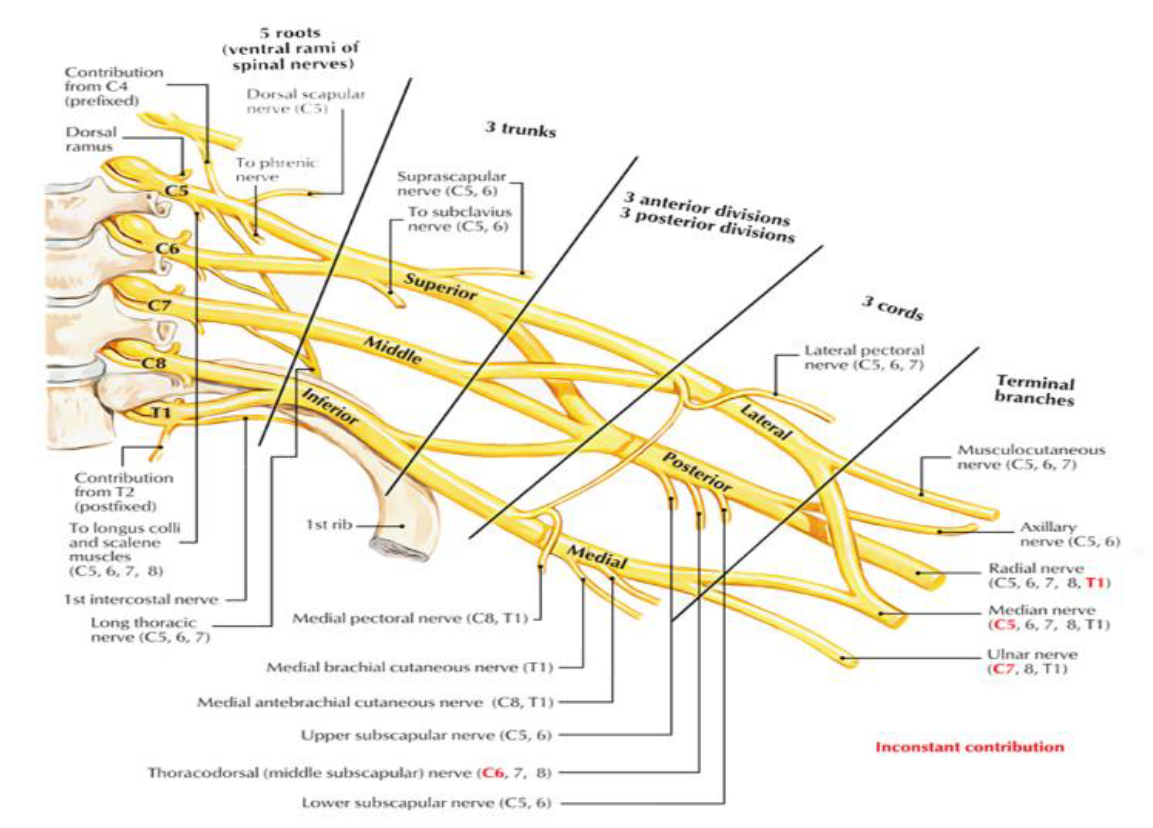
Anatomy: Brachial Plexus: A detailed understanding of the anatomy of the brachial plexus is required for the appropriate use of brachial plexus blockade for upper limb procedures. To master this technique, you must understand its formation, distribution, and vascular, muscle, and fascial interactions. Roots, trunks, cords, divisions, and terminal nerves make up the plexus of fibres that make up the plexus.
Formation of the Plexus Roots: Root Value: Anterior rami of C5, C6, C7, C8, and T1. Occasionally, C4 also combines to form the brachial plexus.
Trunks
The roots emerge from the intervertebral foramina and are located between the anterior and posterior tubercles of the transverse process in question. C5 and C6 roots join to form the upper trunk as they descend between the scalenus anterior and Medius. C7 root gives rise to the middle trunk, C8, T1 gives rise to the lower trunk. Each of the formed trunks divides into anterior and posterior divisions behind the clavicle and forms cord in the axilla.
Cords
The six divisions of the stream are divided into three cords: lateral, medial, and posterior, and are made up of the following: The anterior divisions of upper and middle trunks come together to for the lateral cords. On the other hand, the posterior divisions of the upper, middle, lower trunks form the posterior cord, the anterior division of the lower trunk continues as the medial cord.
Branches
Branches are given off from roots, trunks and cords.
Table 1: Branches from Roots
Nerve Origin
Supply
C5, C6, C7
Nerve to the serratus anterior.
C5-C6
Longus cervices
C5-C8
Three scalene muscles
C5
Rhomboids
C5
Twig to the phrenic nerve
Table 2: Branches from the Trunks
Nerve Origin
Supply
C5-C6
Nerve to Subclavius
C5-C6 (Upper Trunk)
Suprascapular Nerve
Table 3: Branches from Cords
Nerve Origin
Supply
Lateral Cord
C5-C7
Lateral Pectoral Nerve
C5-C7
Lateral Branch Of Median Nerve
C5-C7
Musculocutaneous Nerve
Medial Cord
C8-T1
Medial Pectoral Nerve
C8-T1
Medial Branch Of Median Nerve
C8-T1
Medial Cutaneous Nerve Of Arm
C8-T1
Medical Cutaneous Nerve Of Forearm
C7, C8, T1
Ulnar Nerve
Posterior Cord
C5-C6
Upper Subscapular Nerve
C5-C6
Lower Subscapular Nerve
C6, C7, C8
Nerve To Lattismus Dorsi
C5-C6
Axillary Nerve
C5-T1
Radial Nerve
Figure 1: Brachial Plexus
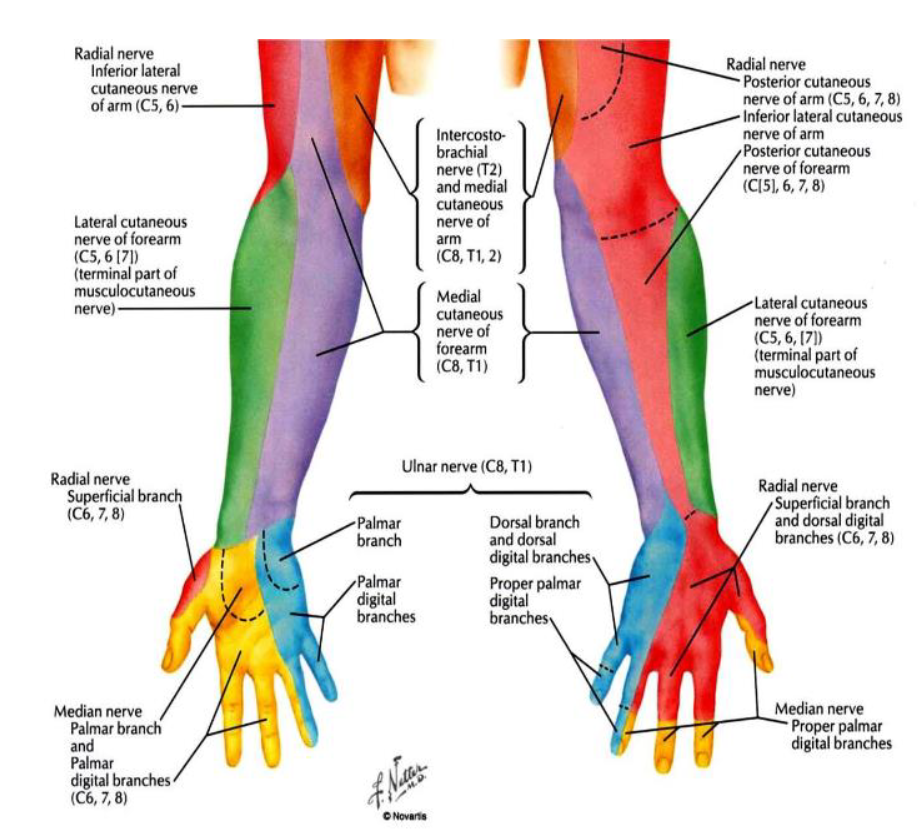
Figure 2: Sensory Innervations of Palmar and Dorsal Surface
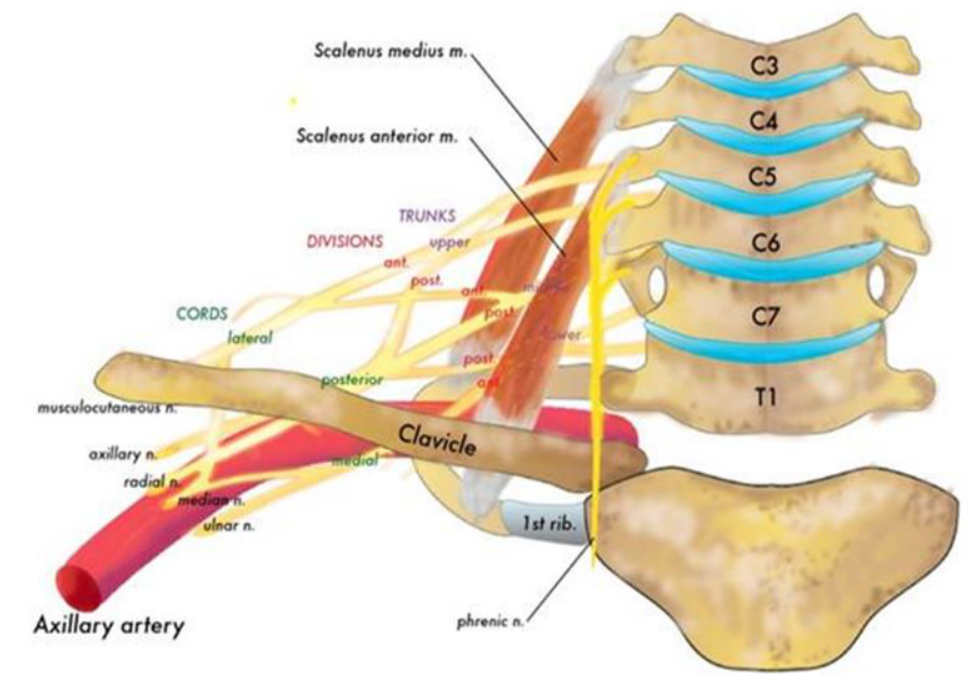
Figure 3: Relationship of the Brachial Plexus
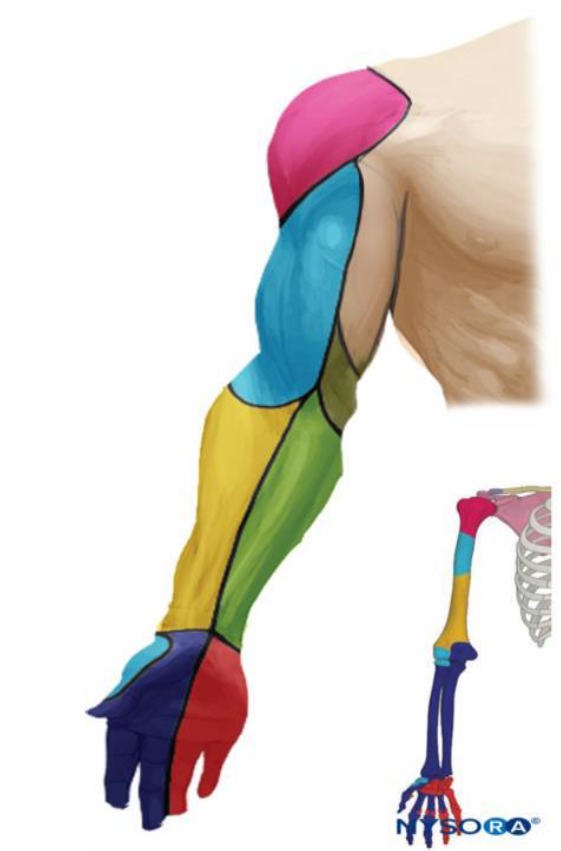
Figure 4: Dermatomes Effected in Supraclavicular Brachial Plexus Block
Relationship of the Brachial Plexus
The plexus lies in the fascia invested between middle and anterior scalene muscles as it traverses from the cervical transverse process to the first rib. The scalenus anterior muscle separates the subclavian vein from the artery and the plexus lies in close proximity to the scalenus anterior. The subclavian artery however lies close to the scalenus medius. The plexus is covered by the brachial plexus sheath which is basically formed by the perivertebral fascia that splits to invest these muscles only to re-join at their lateral edges to form interscalene gap. Upon crossing the first rib, the three trunks of the plexus are stacked on top of each other. On crossing the first rib the trunks split into 2 divisions and 3 cords. Ultimately the cords lead to formations of nerves which supply the upper limb in the lower axilla[12].
Brachial Plexus Sheath
The brachial plexus is in close proximity to various structures along its length. The plexus wedged between the anterior and middle scalene muscles lies superior and posterior to the second and third parts of the subclavian artery. The pleura dome is located anteriorly to the lower trunk and posteriorly to the artery. The fascial barriers that surround these structures, as well as factors regulating the dispersion of local anaesthetics in the sheath, were highlighted by Winnie, Radonjic, Sudarsana Rao, Akkineni, and Zia Durrani [13]. The prevertebral fascia separates and invests in the anterior and middle scalene muscles, fusing at the lateral edges to form the enclosed interscalene gap. This fascia then wraps around the nerve roots as they leave the transverse process descending towards first rib to for the trunks of the plexus. The roots of the brachial plexus merge as they pass through this area, becoming trunks of the brachial plexus. They invigilate the scalene fascia, which forms the subclavian perivascular sheath, which then becomes the axillary sheath as it travels beneath the collarbone, along with the subclavian artery. The identification of nerves and injection of a local anaesthetic mixture into the fascial sheath are used in all approaches for blocking the brachial plexus.
Approach to Brachial Plexus Block: A] Blocks Above the Clavicle: Interscalene brachial plexus block at Level of the roots subclavian brachial plexus block at level of trunks.
B Blocks Below the Clavicle
Infraclavicular brachial plexus block at the level of Division/Cords. Axillary brachial plexus block at the level of Cords/Terminal nerves.
Supraclavicular Brachial Plexus Block
Upper limb surgeries can be conveniently performed under regional block. The supraclavicular approach to brachial plexus block is commonly employed to anesthetize the upper limb for surgeries below the shoulder. The supraclavicular approach blocks the plexus at the level of its trunks. This strategy usually produces a thick, predictable block that starts quickly. Georg Hirschel, a German physician in the year 1911 described a method to approach the brachial plexus from the axilla. A few months later, German surgeon Diedrich Kulenkampff is said to have done the first percutaneous supraclavicular approach on himself. In 1928, Kulenkampff and Persky published their approach. They provided a detailed description of how the block is to be performed. They performed the block on the patient. This technique called the “blind technique” is followed to this day in settings where modalities such as ultrasound machine and nerve stimulator are unavailable. They stated that the individual administering the block should be seated comfortably on a stool on the side that has to be anesthetized and the patient can be made to lie with a pillow placed under the shoulder or be seated. The midpoint of the clavicle where the subclavian artery pulsations are felt is palpated and the needle is inserted at a point corresponding to this in the supraclavicular region. The needle is directed medially towards T3 spinous process.
Although this technique provided the quickest approach to the brachial plexus, it came associated with a high risk of accidental puncture of pleura leading to pneumothorax.
This common complication could not be ignored nor taken lightly. Hence, its popularity rapidly declined up until 20th century [10]. Brand and Papper in their journal compared the supraclavicular approach with the axillary approach and gave fair warning against the 6.1% prevalence of pneumothorax associated with supraclavicular block [15]. Extensive research and studies were carried out in order to device a method to minimise the risk of pneumothorax.
Interest in the supraclavicular approach further declined when Adriani and Accardo in 1949 as well as Burham in 1958 discovered axillary approaches that were far safer and hence preferred by anaesthesiologists [13-14].
Alon Winnie and Vincent Collins as well as Brown and collaborators came up with variations to the supraclavicular approach. According to winnie and collins the anethesia could be provided around the subclavian artery and within the borders of the sheath. Murphey on the other hand who published his study in 1944 stated that the block can be given just lateral to anterior scalene muscle via a single injection technique [15-16]. The “plumb-bob technique” which was the term given to the technique introduced by Brown and collaborators is based on cadaver dissections using volunteer magnetic resonance imaging and was initially reported in 1993 [17].
The brachial plexus is formed by the anterior rami of C5, C6, C7, C8 and T1, which runs between the anterior and middle scalene muscles and is responsible for the superior, middle, and inferior trunks. The anterior and posterior branches of each trunk then re-join to produce the three cords (lateral, posterior, and medial) that go distally to the clavicle. At the level of the trunks, the supraclavicular approach of inhibits the brachial plexus [18]. Because it is shallow and lateral to the subclavian artery, there is a substantial danger of subclavian artery puncture with this route. Furthermore, it is close to the apical pleura, and the needle may mistakenly pierce the pleura, resulting in pneumothorax. However, with ultrasound guidance, they are theoretically less likely. Patients receiving supraclavicular block may develop ipsilateral phrenic nerve palsy as a result of cephalad diffusion of local anaesthesia if applied in higher amounts. The incidence has decreased as a result of the regulated administration of the medicine under USG guidance. Recurrent laryngeal nerve palsy and Horner's syndrome have also been reported as side effects of this treatment [19].
Indications
Anaesthesia and analgesia for procedures of the upper extremity, below the shoulder
Elbow and hand surgeries
Contraindications
Local infection at the site of needle insertion
Significant coagulation abnormalities
Uncooperative patient/ Patient refusal
Because of the risk of pneumothorax or phrenic nerve block, supraclavicular block is not given bilaterally and specifically avoided in patients who have respiratory compromise
With head rotated to opposite side the patient is positioned in a semi-recumbent position. Patient's shoulder is lowered and if the patient is able to then he is asked to flex the elbow and rest his forearm on his lap with his wrist supinated and palm turned towards patient’s face. This makes it possible to detect even minor finger movement caused by nerve stimulation. If the patient is unable to supinate their wrist, a roll is placed beneath it to allow the fingers to move freely. Typically, the operator takes a position on the side that was blocked.
Nerve Stimulator Technique
Electrostimulation was first used by Scribonius Largus, in Mesopotamia around 47CE [20-21]. He used eels as a source of electricity in order to regulate pain by either attaching the live eel to patients’ skin or have the patients place their limbs inside a water tank full of eels. This method of his gained immense popularity for treating gout, arthritis and headache. He went on to compile his thoughts and observations in a book called “Compositiones”.
The basis for neurostimulation was made in the 1830s by Michael Faraday [22]. He discovered that an electrical current could generate a magnetic field and a magnetic field had the ability to produce an electrical current. The "Faradic Electrifier" was dubbed one of the "most magnificent [sic] innovations of the century!" by the Boston Globe. "All cases of rheumatism, sickness of the liver, stomach, and kidneys, lung complaints, paralysis, lost vigour, nervous incapacity, female complaints...are treated with the electrifier," according to the Boston Globe. [22]
In 1860 G. Gaiffe, a French scientist, devised a transcutaneous electrical nerve-stimulating device capable of delivering 3 milliamperes. Twenty years down the line, electrotherapy increased in popularity, and patients attached Gaiffe’s device to their heads. When compared to connecting the electrodes to an extremity, this caused minor shocks to the brain and altered pain receptors, resulting in a reported higher reduction in pain. Julius Althaus, a German-English physician, disclosed direct electrical stimulation of a peripheral nerve to relieve surgical pain in the extremities about this time. [23]
Melzack and Wall proposed the "gate control" theory of pain in the 1960s. Wall and Sweet are credited as being the first to confirm the "gate control" notion. [24] They were able to show that a nonpainful electrical stimulus may be used to block pain perception in a peripheral nerve [25].
In the next decade, different types of equipment and various applications of peripheral nerve stimulation were described [26]. In majority of such equipment/devices the electrodes were in close vicinity of the peripheral nerve or in direct contact.
Eventually, the percutaneous technique to insert electrodes was invented. This was demonstrated by Weiner and Reed to treat occipital neuralgia via a technically easier and less invasive placement of an electrode in the proximity of the nerve and after this breakthrough other indications for PNS grew.
One of the indications being the tracking of nerves in order to provide regional blocks.
Perthes invented and reported an electrical nerve stimulator in the early 1900s, while Pearson pioneered the use of insulated needles to locate nerves. Greenblatt and Denson described the use of a portable stimulator with variable current output for nerve localization in 1962. Ford et al proposed employing nerve stimulators with a constant current source based on an analysis of the electrical characteristics of peripheral nerve stimulators. In 2004, Hadzic and Vloka revealed the electrical properties and manufacturing criteria for modern nerve stimulators, which are now widely used [25].
Neurophysiology and Electrophysiology
To thoroughly understand the workings of a nerve stimulator and its various implications, a brief understanding of neurophysiology and electrophysiology is helpful [27].
"A wave of physical and chemical excitation along a nerve fibre in response to a stimulus, accompanied by a transitory change in electric potential in the fibre's membrane," according to the medical dictionary is the definition of a stimulus [28].
A stimulus must result in an action, which occurs as a result of changes in potential throughout the body's cells.
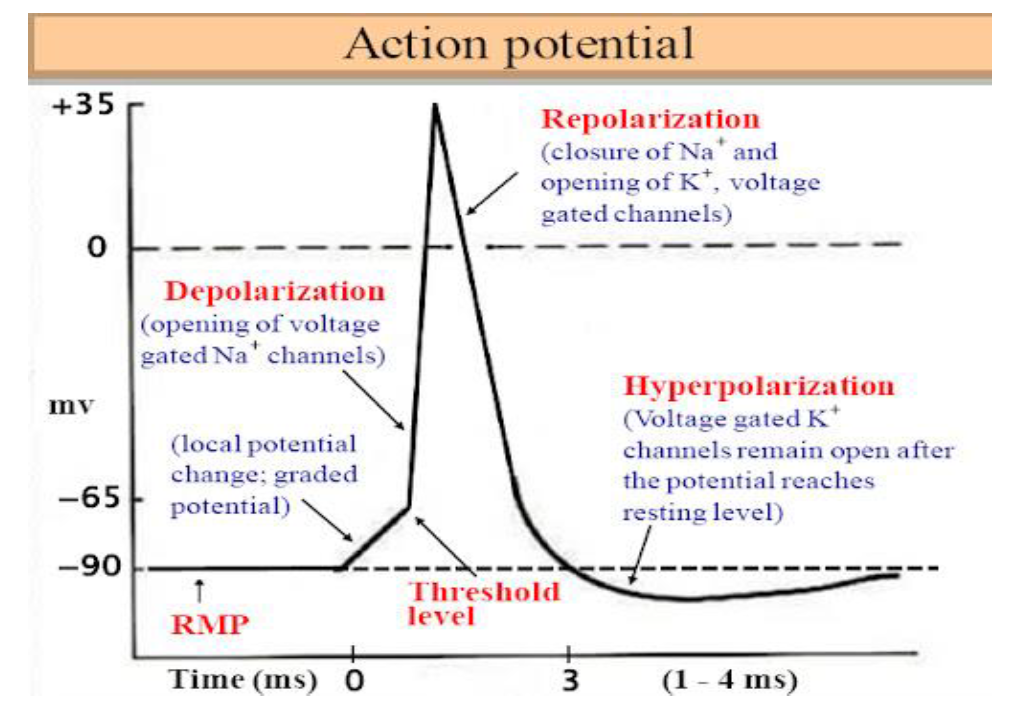
Resting membrane potential refers to the potential of the membrane when it not stimulated by any impulse and its value -90mV. In the presence of adequate stimulus there is a decrease of the RMP from -90mV to -55mV, a process called as depolarization, and this generates an action potential. Only nerves and muscles have the ability to generate action potentials, and these are carried from cell to cell along their membranes. In order to generate an action potential a threshold must be crossed, in not action potential will fail propagate. This is very aptly called the “all or nothing” response (Figure 5).
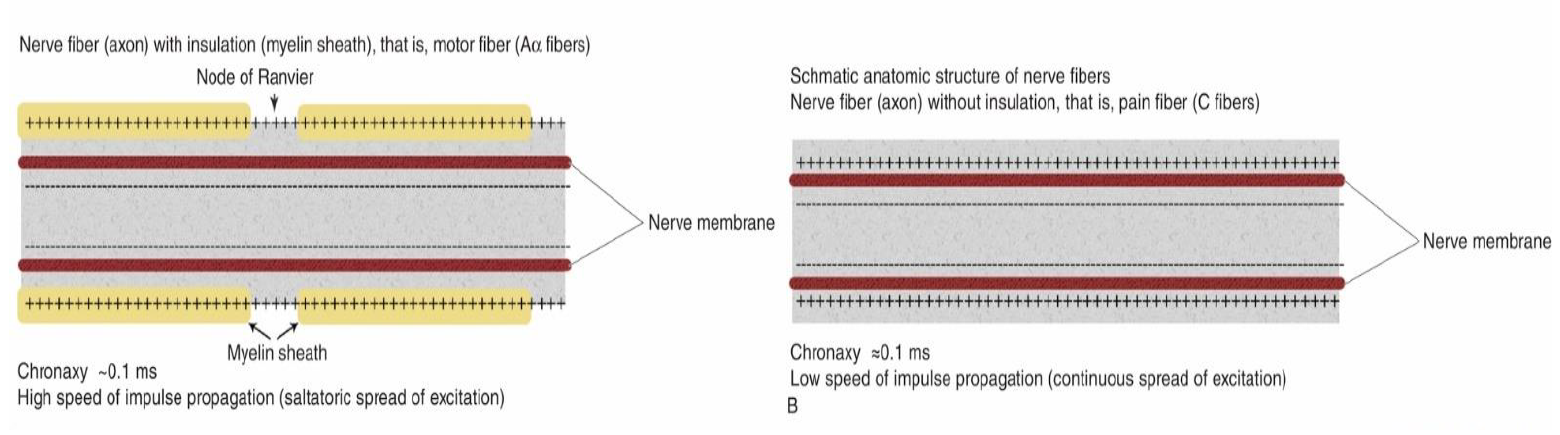
Action potential can be generated by stimulating membrane with an external stimulus as well, the negatively charged external stimulus can effectively decrease the membrane potential to the desired threshold. Myelinated and larger nerve fibres such as Aα motor fibres have faster speed of propagation and lower threshold for external stimulus while unmyelinated and smaller diameter fibres like C fibres have slower speed of propagation and higher threshold (Figure 6).
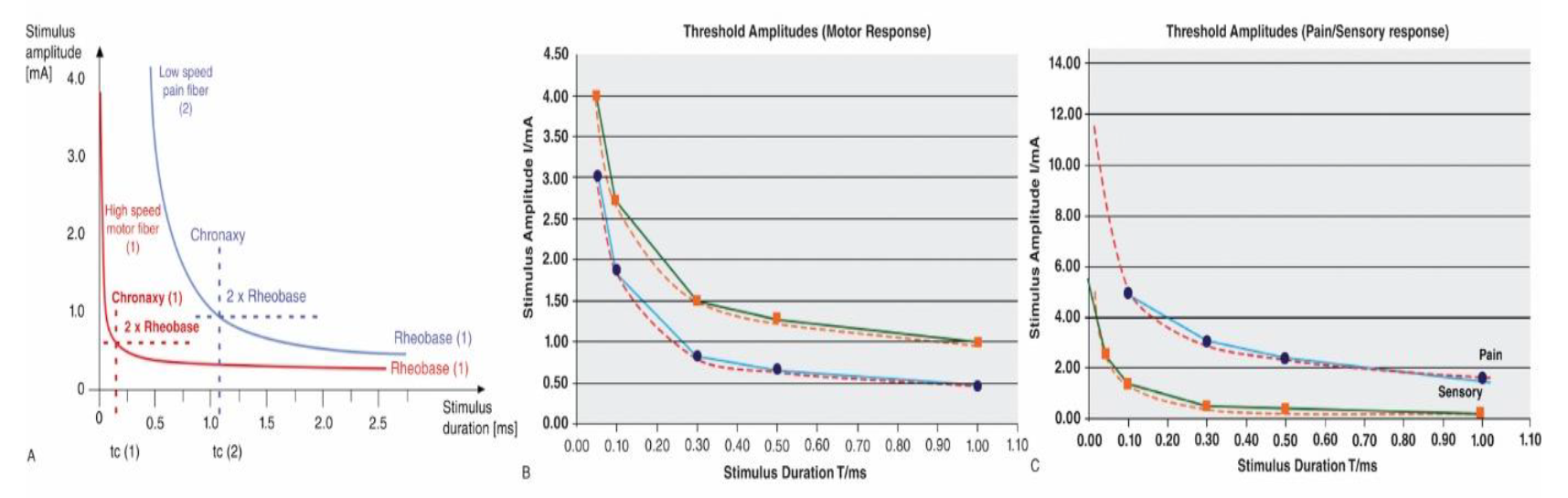
Rheobase refers to the minimum intensity of stimulus which if applied for adequate time produces a response. Chronaxie refers to the minimum duration for which the stimulus of double the rheobase intensity must be applied to produce a response. In other words, the chronaxie is an index of the excitability of a tissue and can be used to compare the excitability of various tissues. The most effective way to induce action potentials is to use electrical pulses with the same duration as the chronaxie. This is why motor responses may be induced with such short pulse durations (e.g., 0.1 ms) and low current amplitudes without stimulating C-type pain fibres, which require greater amplitudes (Figure 7).
The nerve stimulator, the needle, the insulated needle tip, the skin surface, the grounding electrode lead and the connecting wires form a circuit. This circuit's resistance fluctuates depending on the properties of the patient's skin, and the capacitance varies with the frequency of the stimulation current and is referred to as "impedance" or "complex resistance." Short pulse durations were shown to have a greater frequency, while extended pulse durations had a lower frequency. The skin surface, the grounding electrode, the needle, and the needle tip all have a significant impact on these variables. A nerve stimulator with a consistent current source and appropriate voltage output power is required to compensate for this variable degree of resistance.
Figure 5: Generation and Transmission of Nerve Impulse
Figure 6: Impulse Propagation in Mylinated and Unmyelinated Nerve Fibres
Figure 7: Effect of Duration of Impulse on its Amplitude
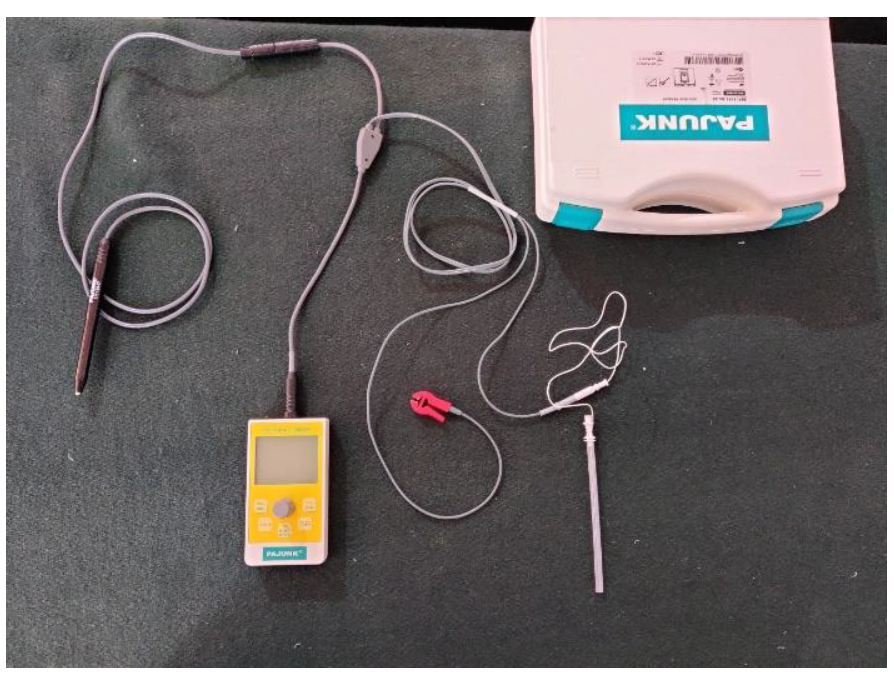
Figure 8: Peripheral Nerve Stimulator with Stimuplex Needle
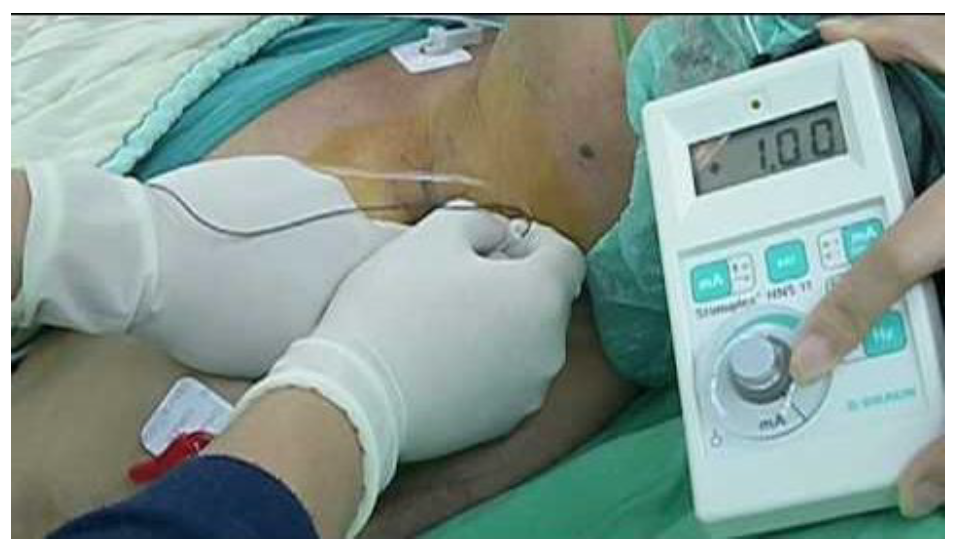
Figure 9: Supraclavicular Block Being Administered Using PNS Technique
The Device
As mentioned earlier, the circuit is made up of:
The nerve stimulator
The needle with insulated tip
The grounding electrode
The patients skin
The connecting wire
In addition to this the device also consists of a tracer that helps to trace the nerve.
Procedure
The block is performed with the patient either in semi-recumbent position or supine position with his/her head turned to the opposite side. However, the semi recumbent position has been found to be more comfortable for both the patient as well as the anaesthesiologist. Patient's shoulder is lowered and if the patient is able to then he is asked to flex the elbow and rest his forearm on his lap with his wrist supinated and palm turned towards patient’s face. This position allows any minor finger movement caused by nerve stimulation to be detected. A roll is placed beneath the patient's wrist if they are unable to supinate it, allowing the fingers to move freely. The anaesthesiologist should stand on the operating table and palpate the landmarks with the non-dominant hand while inserting and manipulating the needle with the dominant hand.
After positioning the patient properly, the SCM is palpated and traced along its posterior border where it meets the clavicle. At this point, a parasagittal line is drawn. This is of immense importance since the area medial to this is highly prone for occurrence of pneumothorax. For this purpose, the needle is separated by safe distance of 2.5cm and carefully advanced from a lateral location to this parasagittal plane. The margin of safety can also be determined by measuring the width of the SCM's clavicular head at its insertion on the clavicle. This is where the palpating index finger is positioned. The needle is put above the palpating finger and progressed perpendicularly for 2–5 mm into the skin before being guided caudally below the palpating finger and parallel to the midline.
The block must be given above the clavicle, below the palpating finger. When the needle is advanced to a sufficient distance, muscle twitch is elicited in all fingers (>0.5mA) to confirm the placement of the needle. If muscle twitch is observed at <0.5mA it’s highly possible that intra-neural placement of needle has occurred.
Such situations demand repositioning of the needle till muscle twitch is abolished at <0.5mA, this is done by slightly withdrawing the needle and adjusting the angle in antero-posterior plane. Care should be taken that the needle is always kept parallel to the midline and never directed medially.
In order to locate a peripheral nerve with an insulated needle using PNS an electrical stimulus of about 1-2Hz having low intensity (described as 5mA) and short duration (described as 0.05-1ms) is utilised to elicit a noticeable muscle response. A muscle response at 0.5mA indicates an intraneural placement of needle and is extremely hazardous. In such conditions the needle should be withdrawn by 1mm until no response is obtained 0.5mA. Upon location local anaesthetic is injected around the nerve to provide anaesthesia and analgesia.
Ultrasound Guided Technique
Supraclavicular block was almost redundant due to its close proximity to the pleura and major vessels which posed a great risk However, with the introduction of Ultrasonography in regional blocks, supraclavicular block made a comeback. USG is advantageous in the sense that it allowed direct visualisation of the structures in the supraclavicular region. Direct visualisation allowed to safely access the trunks of the brachial plexus and strategically avoid puncturing the artery and pleura. For these reasons ultrasound has now become a very popular technique to administer supraclavicular brachial plexus block. Ultrasonography is based on the piezoelectric effect discovered by Jacques and Pierre curie in 1880. The first ever application of ultrasound in the technological field was done by Paul Langevin in1917 to detect submarines. Dr. Karl Theodore Dussik in Austria 1942 was the first to publish his works on medical ultrasonics. He introduced hyperphonography, a technique which used ultrasound to visualize the cerebral ventricles although many renowned scientists all over the world did great work in the field of medical ultrasonics the name of Dr. Ian Donald and his colleagues in Glasgow, stands out. The extensive research done by them in the mid-1950s, facilitated the development of practical technology and applications, leading to the wider use of ultrasonography in the field of medicine. He measured the parietal diameter of the foetal head using the one-dimensional A-mode (amplitude mode).
Donald and Brown presented an ultrasound image of a female genital tumor two years later. Brown developed the "two-dimensional compound scanner," which allowed the examiner to see the density of the tissue and is widely regarded as a watershed moment in the use of ultrasound in medicine. Ultrasonography is gaining popularity fast [29]. La Grange in 1978 first described the utilisation of ultrasound probe to detect arteries [30]. However, its use to visualise and guide the progression of needle in the administration of supraclavicular brachial plexus block was documented by Kapral and colleagues [31].
Ultrasound Anatomy
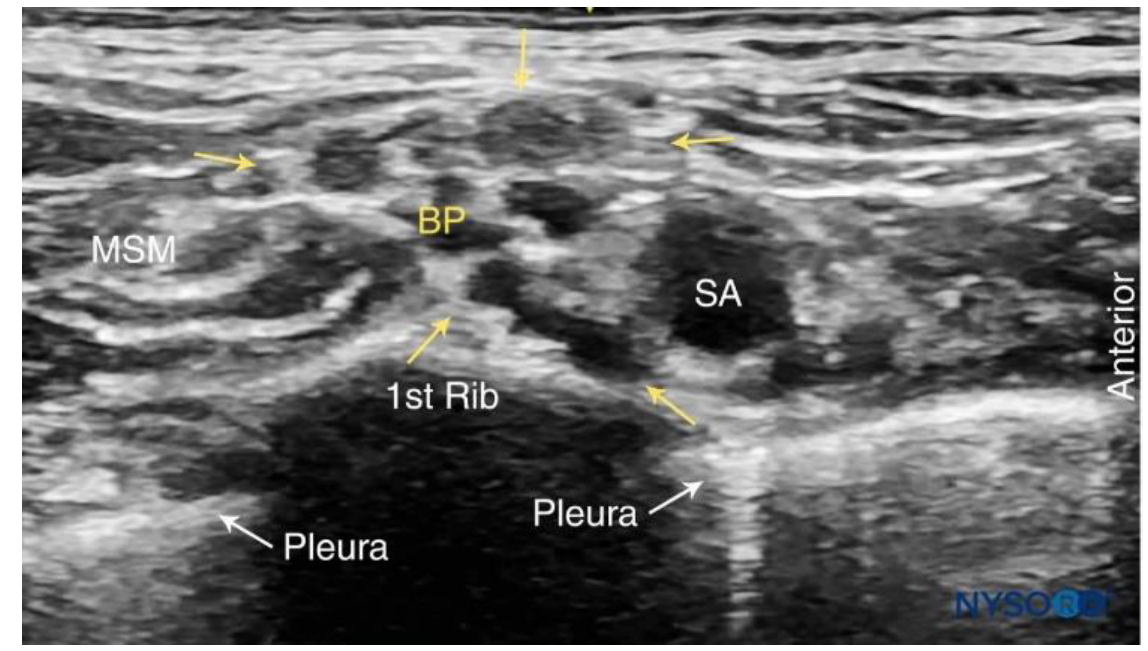
The subclavian artery lies between the anterior and middle scalene muscle insertions and lies posterior to the clavicle's mid-point. It runs between the insertions of the aforementioned muscles and then continues above the first rib. The subclavian artery appears as a circular anechoic structure above and parallel to the clavicle, the pleura and first rib appear as a hyperechoic structure arranged in a linear fashion just lateral and deep to the subclavian artery. The brachial plexus is a group of hypoechoic spherical nodules that run behind and beneath the artery. With the transducer parallel to the collarbone, the upper, middle, and lower trunks are easily visible. The facial sheath, which surrounds the plexus, can also be seen. The probe is placed in the sagittal plane in such a manner as to be able to clearly see the lower trunk of the plexus, which is located deep to the artery. The first rib must also be visualized just below the plexus. With lung tissue deep to it, the pleura is visible as a hyperechoic structure before or posterior to the first rib. The iconic coastal sign may be seen from this vantage point (shimmering to and fro movement of the pleura).
Ultrasonography Machine
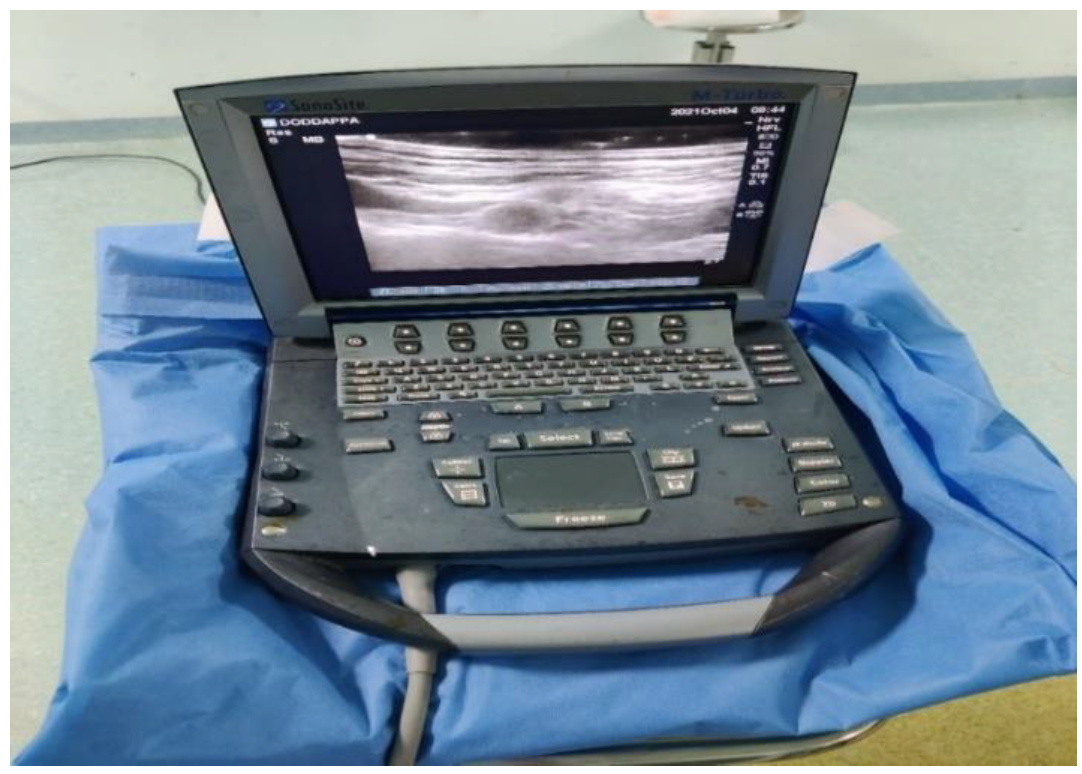
A portable USG machine is used to give supraclavicular brachial plexus block. These are high-resolution, sophisticated, and costly devices roughly the size of a laptop.
It includes a variety of probes, including linear, curvilinear, and phased array probes, among others.
The linear probe is used by anaesthesiologists to administer regional blocks.
Linear (also known as vascular) probes are high-frequency probes that are better for imaging surface structures and vessels. They are also known as vascular probes. A linear probe has crystals that are positioned in a linear pattern within a flat head and emit sound waves in a straight line. The image produced by this probe contains frequencies of (5–13 MHz) and is rectangular in shape, providing superior resolution and penetration. As a result, this probe is well-suited to imaging superficial structures and ultrasound-guided treatments.
The gadget has easy-to-use control buttons that allow the anaesthesiologist to alter the brightness, depth, and other settings to his or her liking.
Procedure
The skin in the supraclavicular region is made sterile by cleaning with betadine solution. The transducer is the placed in the transverse plane, posterior to the midpoint of clavicle. It is angle caudally to produce a cross-sectional view of the subclavian artery. The plexus appears as a group of hypoechoic oval structures that run posterior and superficial to the artery. Ideally, before inserting the needle colour Doppler setting of the usg machine must be utilised prior to needle insertion to rule out major vessels (e.g., dorsal scapular artery, transverse cervical artery, suprascapular artery) passing along the needle's projected trajectory [32].
25- to 27-gauge needle is used to infiltrate the skin with approximately 1-2ml of local anaesthetic 1 cm lateral to the transducer to alleviate discomfort during needle insertion. Care should be taken to not insert the needle deeper than 1cm at first, this helps to reduce the risk of inadvertent puncture and injection into the brachial plexus. The nerve block needle is then inserted into the brachial plexus in a lateral-to-medial direction. As the needle is put into the sheath, it often makes an audible "pop."
After careful aspiration to ensure proper needle placement, 1–2 mL of local anaesthesia is injected. When the needle moves away from the brachial plexus, it may be essential to advance the needle another 1–2 mm closer to the plexus to provide adequate local anaesthetic distribution. Needle repositioning may be required if a local anaesthetic injection fails to induce a spread over the brachial plexus.
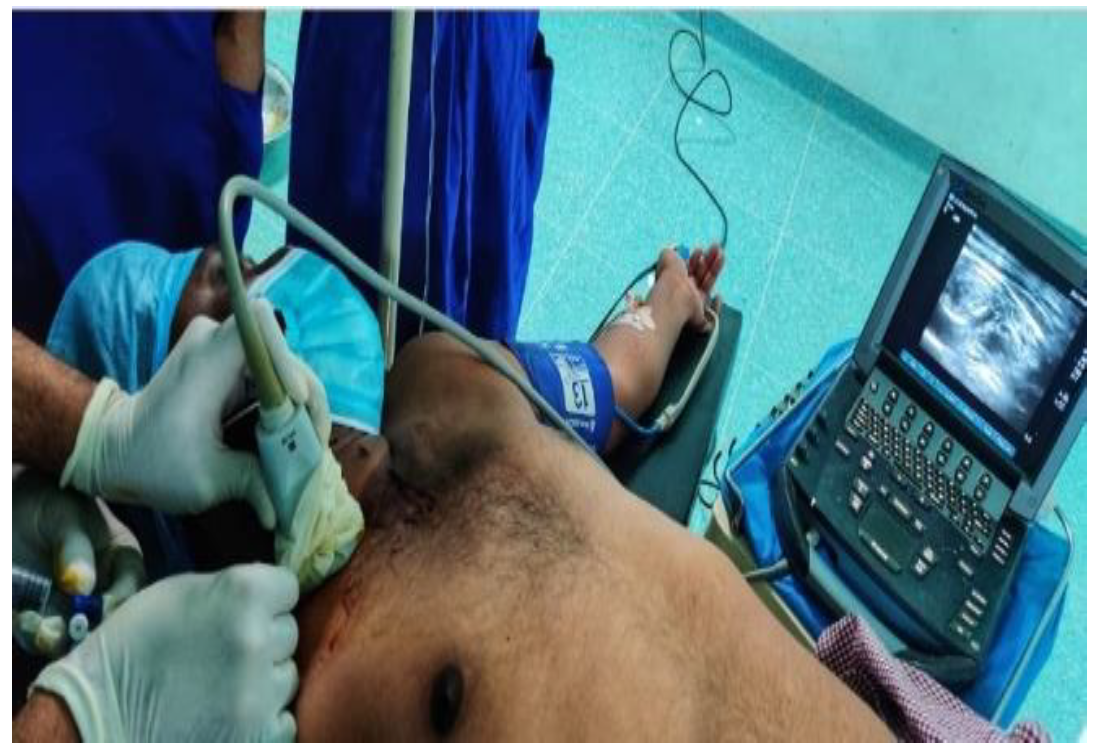
Figure 12: Supraclavicular Block Being Administered By USG Guided Technique
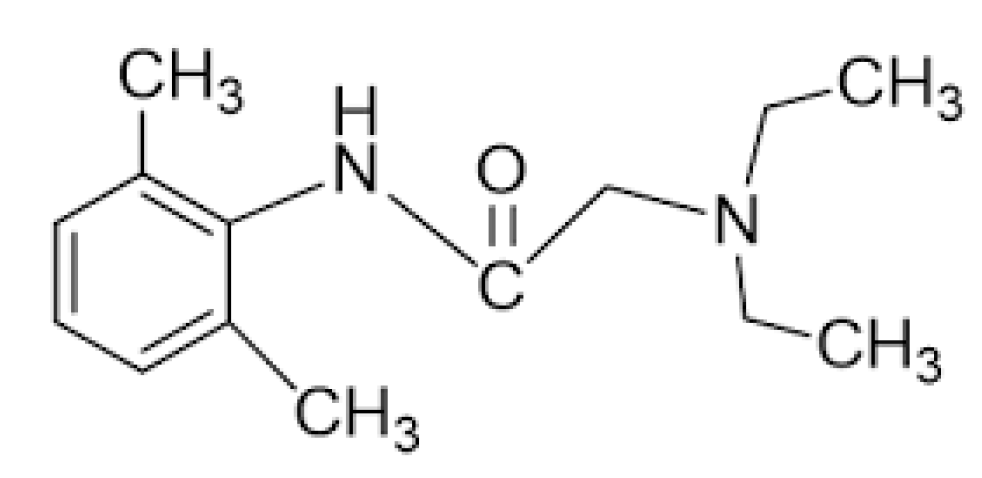
Figure 13: Chemical Structure of Lignocaine
Pharmacology of Drugs Used in the Study
Local Anaesthetics: Reversible conduction blockage of impulses through central and peripheral nerve pathways is achieved with local anaesthetics. As local anaesthetic concentrations increase, the conduction of sensory, motor and autonomic impulses. This leads to inhibition of autonomic system, sensory nervous system along with the paralysis of target skeletal muscles. On the basis of chemical structure local anaesthetics can be classified as follows [33-34].
Aminoamides
Lidocaine, mepivacaine, bupivacaine, and ropivacaine are some of the examples. Between the benzene ring and the intermediate chain, there is an amide bond. Microsomal enzymes breakdown them in the liver. The amide medicines aren't broken down into paraaminobenzoic acid, thus they don't cause allergic reactions. Methylparaben, a paraaminobenzoic acid derivative with allergenic potential, may be present in multi-dose vials of amide local anaesthetic.
Aminoesters
Procaine, cocaine, tetracaine, and choroprocaine are a few examples. Between the benzene ring and the intermediate chain, there is an ester bond. Pseudocholinesterase hydrolyzes them in the plasma. Paraminobenzoic acid (PABA), an allergic metabolite of ester chemicals, is the primary metabolite.
Mechanism of Action
As we know neuronal membranes contain ion-selective sodium channels that are the sites of action of local anaesthetic. The local anaesthetic agents bind to these channels and restrict the flow of sodium ions, which leads to conduction blockade. When the permeability of sodium ion channels fails to rise, the rate of depolarization slows to the point where it fails to reach threshold potential and action potential is not generated [33].
Lignocaine
Lignocaine [35,37-38], is an amino amide and the first of its kind. It was synthesised for the first time by a Swedish chemist named Nils Lofgren in 1943, he called it xylocaine. In 1949, his colleague Bengt Lundqvist conducted the first injectable anaesthetic trials on himself, and the product was first marketed.
Lignocaine is made by combining 2,6 xylidine with chloroacetyl chloride and then reacting it with diethylamine in two stages.
Lignocaine is commonly used in cardiac settings as a Type 1 antiarrythmic agent. It is also used for the management of ventricular arrythmias due to acute MI. Also, it is used for central neuraxial block as well as various peripheral neuraxial blocks.
In patients that are allergic to amide local anaesthetics lignocaine is to be avoided. In cardiac patients having severe degree of Sinoatrial node, atrioventricular node block, administering lignocaine can be life threatening.
Pharmacodynamics
Lignocaine undergoes dealkylation in the liver to produce an active metabolite called monoethylglycinexylidide, 95 percent of this active metabolite is ultimately converted to glycine xylidide which is an inactive metabolite. The elimination half-life of lignocaine is 1 to 2 hrs. However, elimination is prolonged in patients suffering from congestive cardiac failure and hepatic impairement. Plasma values of 6 to 25 micromole/litre are commonly related with therapeutic effects of lignocaine (1.5 to 6microgm free base per ml). The ratio of blood to plasma distribution is about 0.84. With plasma levels over 6 microgm free base per ml, objective unfavourable signs become more obvious. Plasma values of 6 to 25 micromole/litre are commonly related with therapeutic effects of lignocaine (1.5 to 6microgm free base per ml). The ratio of blood to plasma distribution is about 0.84. With plasma levels over 6 microgm free base per ml, objective unfavourable signs become more obvious.
Pharmacokinetics
Lignocaine blocks the entry of sodium ions via the fast voltage gated sodium channel, preventing impulse generation and transmission. The membrane of the post synaptic neuron will not depolarize if there is enough blocking, and the action potential will not be transmitted. This has an anaesthetic effect because it not only prevents pain signals from reaching the brain, but it also stops them before they start. With careful titration, sensory neurons can be blocked with a high degree of selectivity, although greater concentrations affect other neural transmission modes. Its actions are as follows:
Phase 4 diastolic depolarization inhibitions
Reduction in automaticity
Reduction in duration of action potential
Rise in the ventricular fibrillation threshold
Inhibition of sensory nerve impulse conduction
Side Effects
Lignocaine-related side effects are comparable to those seen with other amide anaesthetics. The following are the most often reported types:
Erythema, petechiae, edema, and injection site reactions such as bruising, burning, contusion, bleeding, discomfort, sloughing, and venous thrombosis or phlebitis (with topical application)
Anxiety, tremors, twitching, unconsciousness, hallucinations, headache, light headedness, mood changes, sense of heat, cold, numbness, twitching Bupivacaine induced convulsions in animals and people, which were followed by hypoxia, hypercapnia, and acidosis [46]
Cardiac arrest, bradycardia, and hypotension
Respiratory arrest and depression
Hypersensitivity when you instil it, it starts to burn (ophthalmic). Breathing and swallowing difficulties, numbness of the lips and tongue, and other parasthesia, such as heat and cold
Bupivacaine
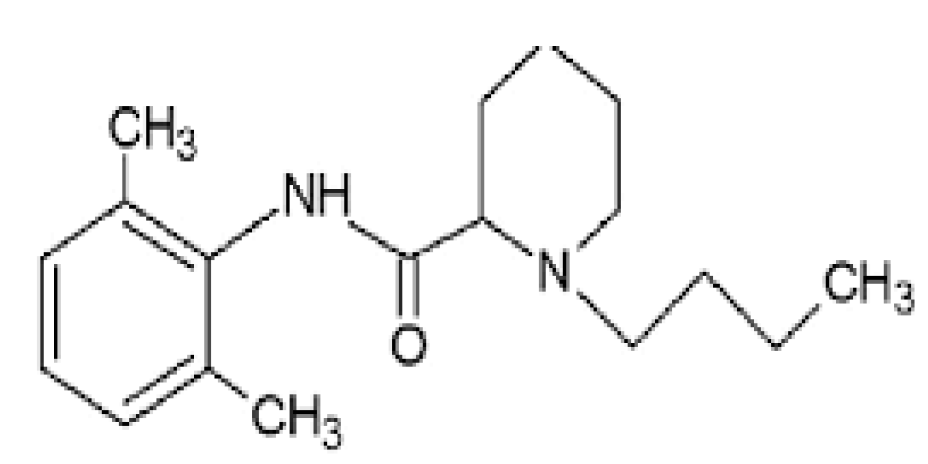
Bupivacaine is a potent local anaesthetic with a lengthy half-life. It is one of the homologous series created by Ekenstam [35] in 1957, and L.J. Telivuo was the first to employ it in clinical practise in 1963. Bupivacaine hydrochloride is a monohydrate of 2 piperidine carboxamide, 1 butyl N-2, and 6 dimethyl phenyls. The molecule of bupivacaine is a tertiary amine separated by a chain from an aromatic ring system, which is a benzene ring. The tertiary intermediate amine is a proton acceptor that is a base, and this end is extremely hydrophilic. It is classed as an aminoamide molecule since the chain has an amide bond (-NHCO). The anaesthetic potency is enhanced by the amide bond. [35,37-38]
Because of its higher lipophilicity (because to the butyl group), bupivacaine is more powerful and creates longer-lasting blocks. Bupivacaine hydrochloride has a pKa of 8.1 at 36°C. 2-3 mg/kg is the safe dose. Clinically the following preparations are used:
For Infiltration- 0.125%- 0.25%
For peripheral nerve blocks- 0.25%- 0.5%
Surgical or obstetrical epidural- 0.125%-0.75%
Spinal- 0.5% heavy
Pharmacodynamics
Lipophilic absorption accounts for the majority of the drug's tissue uptake. As a result, effective pKa is shifted downward, favouring the neutral base form. Local anaesthetics inhibit nerves by acting on sodium channels [39-42]. Bupivacaine works by lowering currents in voltage-activated Na+channels to stop impulses. The inhibition is not specific, although it does diminish K+currents. Bupivacaine binds to locations on voltage-gated Na+channels, preventing them from opening via suppressing conformational changes.
Pharmacokinetic
In addition to how much of the drug is injected and at which site, a few other factors also determine the blood concentration of Bupivacaine. These include the rate at which drug is being absorbed, the rate of its distribution in the tissue and rate of biotransformation. Whether or not a vasoconstrictor has been used as an adjuvant to bupivacaine also plays a crucial role, so does the rate of excretion of the drug [37-38,43].
A two- or three-compartment model can be used to describe the distribution of Bupivacaine. The uptake by fast equilibrating tissues, or tissues with a high vascular perfusion, is thought to be related to the rapid distribution phase (alpha). The slower phase (beta) is mostly determined by the compound's distribution to slowly equilibrating tissues, as well as its biotransformation and excretion. Drug concentrations are higher in highly perfused tissues. Lung tissue extracts bupivacaine quickly. Skeletal muscle contains the highest percentage of injected local anaesthetic dosage.
Figure 14: Chemical Structure of Bupivacaine
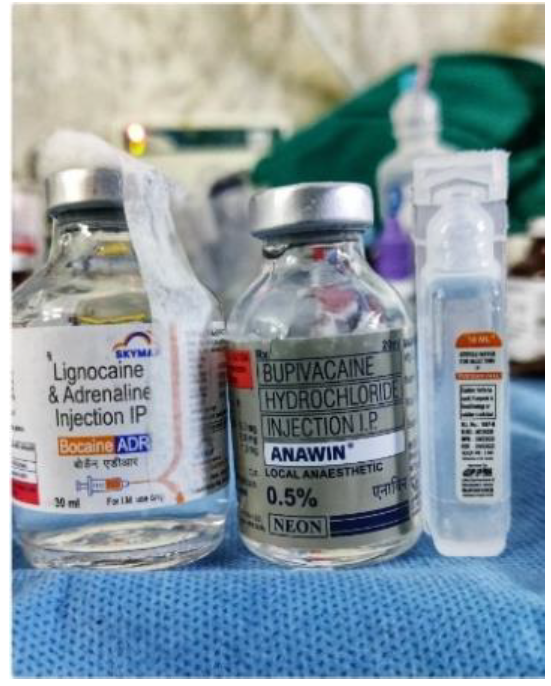
Figure 15: Drugs used in supraclavicular brachial plexus block
The liver plays major role in enzymatic degradation of Bupivacaine while the drug is excreted by the kidneys. 95% of the drug is converted to is converted into its metabolites and excreted in the urine while the remaining drug is excreted just as it is. The drug's renal clearance is inversely proportional to its protein binding capability and urine pH.
Side Effects
It has a low risk of side effects if taken at the right dose. It is more cardiotoxic than Lignocaine, and hypoxia, hypercapnia, and pregnancy exacerbate this [44-45].
Bupivacaine toxicity is more common in the CNS. Light headedness and dizziness are the first symptoms, followed by visual and hearing disturbances. Disorientation and drowsiness are possible side effects. Shivering, perioral numbness, muscular twitching observed in parts of the extremities. At higher blood concentrations of bupivacaine patient can suffer from cardiac and respiratory arrest. Acidosis caused due to bupivacaine increases the risk of PaCo2
Bupivacaine inhibits the fast phase of depolarization (Vmax) in purkinge fibres and the ventricular musculature more than Lignocaine. It also slows recovery from a dependent block when compared to Lignocaine. In contrast to complete recovery by Lignocaine, this results in limited restoration of Vmax between action potentials at high rates. This helps to explain why Lignocaine is antiarrhythmic and Bupivacaine is arrhythmogenic. Bupivacaine in high concentrations prolongs conduction time via many areas of the heart, and at extremely high concentrations leads to cardiac arrest. Bretylium, but not Lignocaine, was able to raise the ventricular tachycardiac threshold that Bupivacaine had decreased
If a high plasma level is attained, respiratory depression might occur, resulting in depression of the medullary respiratory center
Impulse conduction time is faster in the preganglionic beta fibres and are hence more sensitive to local anaesthetics such as Bupivacaine. In epidural and paravertebral block, preganglionic sympathetic fibres are involved, resulting in extensive vasodilation and subsequent hypotension. When used for conduction blockade, all local anaesthetics, especially Bupivacaine, cause sensory blocking at a higher rate than motor fibres
Adjuvant Drug-Epinephrine/Adrenaline:
When doing peripheral nerve blocks, epinephrine is a typical addition to local anaesthetics. With intermediate-acting local anaesthetics, epinephrine has been demonstrated to increase the duration of analgesia and anaesthesia as well as the intensity of the block. As a vasoconstrictor with significant alpha1 effects, epinephrine reduces the local anaesthetic's systemic absorption, reducing peak plasma levels and lengthening block period. Because of its beta-1 actions, the medication also serves as a signal for intravascular injection in dilute quantities. Epinephrine when used in combination with a local anaesthetic can cause systemic effects such as tachycardia thus it should be used with caution in patients with a strong cardiac history. When performing a block in an area with reduced or absent anastomotic blood flow, the medication should definitely be avoided. Because of the risk of ischemia neurotoxicity, dosages of 1:400,000 (2.5mcg/ml) or less may be preferable. When epinephrine is delivered perineurally at larger quantities, it reduces extrinsic blood flow, albeit there is no evidence that this impact is harmful to humans[33].
MATERIALS AND METHODS
Source of Data
This study was conducted in the Department of Anaesthesiology, B.L.D.E (Deemed to be University) Shri. B M PATIL Medical College and Hospital, Vijayapur.
Method of Collection of Data: Study Design: A prospective randomised comparative study.
Study Period
One and half years from December 2019 to August 2021.
Sample Size
With a predicted common proportion of 4-6 minutes to perform block in two groups, 7% and 66.6 percent (ref), the minimal sample size per group is 25 = 30 patients with 95% power and a 5% threshold of significance.
Formula used:
n: (z α +z β) 2 2 p*q/ MD2
Where
Z: Z statistic at a level of significance
MD: Anticipated difference between two proportions
P: Common Proportion
q: 100-p
Total sample size: 30+30=60
Experimental Section: Randomization: The study population of 60 patients was randomly selected and divided into two groups of 30 patients each using computer produced random number tables (Group A- USG guided technique; Group B- PNS guided technique). All the patients in the study were posted for upper limb surgeries with the plan of anaesthetizing them using the supraclavicular brachial plexus block. For the block weight adjusted dose of lignocaine 2% with adrenaline (7mg/kg) + 0.5% bupivacaine (2mg/kg).
Group A
These patients received supraclavicular brachial plexus block under ultrasound guidance.
Group B
These patients received supraclavicular brachial plexus block under nerve stimulator guidance.
The observations that were made were recorded and tabulated for the purpose of statistical analysis in order to come to definitive results.
Inclusion Criteria
Patients undergoing elective forearm, wrist and hand surgeries
American Society of Anaesthesiologist (ASA) grade I and II
Age 18-80 years of both the sexes
Exclusion Criteria
Patient refusal
Infection at the site of injection
History / findings of allergy to local anaesthetics
Medical disorders like pre-existing neuropathy, psychiatric illness, coagulopathy and bleeding disorders or any other contraindication
Patient with H/O full stomach, Hypertension, Epilepsy
Preanaesthetic Evaluation
A thorough pre anesthetic evaluation of all patients included in the study was done as follows.
History
A history of underlying medical ailment, prior surgical history, anaesthetic exposure, and hospitalization were all asked about.
Physical Examination
In addition to assessing the general condition of the patient and recording his vital signs (heart rate, blood pressure, respiratory rate), his/her weight, height was also recorded. A complete examination of respiratory system, cardiovascular system, central nervous system and vertebral system along with airway assessment was done.
Investigations
Standard investigations were required in this study, they were as follows: CBC, Coagulation profile, chest x ray, electrocardiogram, random blood sugar, Renal function test, HbSAg, HIV and urine routine.
Equipment for Supraclavicular Brachial Plexus Block
Ultrasound Machine (sonosite M-Turbo), a linear probe with a frequency of 7-15Mhz
Nerve stimulator device with insulated needle
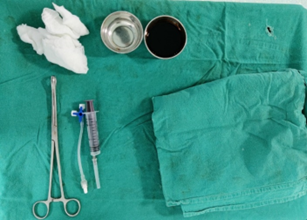
Sterile tray with following sterile equipment (Block Trolly)
A 10cc disposable syringe
3 ways with 10 cm extension
Sponge holding forceps, betadine solution and spirit for sterilising the area
Gauze pieces
A small bowl for the drugs (2% lignocaine with adrenaline, 0.5%Bupivacaine, sterile water)
Procedure
60 patients posted for elective upper limb surgeries was assigned randomly to 2 groups containing 30 patients each, Group A(ultrasound) and Group B (nerve stimulator)
All patients were examined the day before surgery and thoroughly investigated according to institute protocol and was counselled with regards to anaesthesia as well as procedure
Patient's meeting the above criteria was asked to participate in the study and informed consent was taken. Patients was instructed to fast for 6-8 hours
All the resuscitation and monitoring equipment like bag-valve-mask system, laryngoscope, endotracheal tubes and emergency drugs are kept ready in the operation theatre for management of any adverse event
On the day of operation, patient was taken to operation theatre. Baseline values of Blood pressure, heart rate and SpO2 is recorded
20G cannula is used to achieve intravenous access and premedication is given i.e., Inj. Ondansetron 4mg given
Group A
A Sonosite Ultrasound equipment with a 4 cm linear transducer and a frequency of 5–10 MHz was used to execute ultrasound-guided supraclavicular block. For drug injection, a needle from an 18G cannula linked to a 10-centimetre extension was used. Patients was positioned in a supine posture with a shoulder roll under them, their heads turned away from the blocked side, and their arms held downward to depress the clavicle. The ultrasonic probe is put in a sterile plastic sheath in the supraclavicular area in an oblique plane. The brachial plexus is a honeycombed hyper and hypoechoic tissue above the first rib and pleura, lateral to the subclavian artery. After infiltrating the skin with 2% lignocaine, an 18G needle with a three-way extension was inserted into the skin. The needle is progressively moved into the sheath of the brachial plexus, with the subclavian artery as a marker, once it has been visualised on the screen. To examine the spread, 2 ml of saline is administered under vision. Following negative aspiration, the local anaesthetic solution is injected into the brachial plexus sheath under vision at least two different needle placements surrounding the subclavian artery when the spread is satisfactory
Figure 14: Block Trolley
Group B
In this group, the positive PNS electrode is connected to an ECG lead and implanted in the ipsilateral shoulder, whereas the negative electrode is connected to a 20G insulated needle. After skin preparation, the subclavian artery is palpated in the supraclavicular region, and the skin is infiltrated with 2% lignocaine immediately lateral to the artery. The needle prick is taken 1 inch to the point where the SCM muscle inserts at the clavicle. The needle is inserted into the skin in a downward and inward orientation, with the PNS set to deliver 1.5–2.5 mA current at 1 Hz frequency and 0.1 ms pulse duration. The needle is slowly advanced till an obvious muscle twitch of the shoulder muscles is observed which indicates that the brachial plexus has been encountered. After which the needle advanced caudally with a slight posterior angulation. The direction and advancement of the needle is done to sequentially encounter all three trunks of the brachial plexus (upper, middle, lower) which is made evident by muscle twitches corresponding to the three trunks from the shoulder to the fingers. The goal of this block is to put the needle's tip close to the lower trunk, which is indicated by a flexion or extension twitch of the fingers. Once the finger twitch was obtained, the current was gradually reduced to 0.5 mA and subsequently to the local. An anaesthetic solution is administered after a negative aspiration.
The procedure time is calculated as the time from the first needle insertion to its removal at the end of the block in both groups. The complete cutaneous innervation of the upper limb is assessed for pain and touch, including the musculocutaneous, radial, ulnar, median, and medial cutaneous nerves of the arm and forearm, as well as the intercostobrachial nerve. The sensory block in each dermatome was assessed using the scale below:
2 - normal sensation
1 – hypoesthesia
0 - no sensation felt.
The onset time of sensory block for each nerve was measured from the withdrawal of the block needle to the time when a score of zero was reached.
The modified Bromage scale [15] for upper extremities was used to measure motor block after 5, 10-, 15-, 20-, and 30-minutes following injection of the medication [5]. The elbow, wrist, and fingers were examined for flexion, extension, abduction, and adduction. The time for motor action to set in was calculated from the time of removal of the block needle to the time when a modified Bromage grade of 3 was reached.
Modified Bromage grade to assess upper limb motor weakness:
Grade 0: Normal motor function with full extension of elbow, wrist, and fingers
Grade 1: Ability to flex and extend wrist and fingers
Grade 2: Ability to flex and extend only fingers
Grade 3: Complete motor block with the inability to move elbow, wrist, and finger. Mild sedation (intravenous Midazolam 1–2 mg) was used during the procedure. Supplementation with intravenous fentanyl 1 mcg/kg was given if analgesia was insufficient. If the patient's agony persisted, general anaesthesia was administered, and the block was deemed unsuccessful. All patients were observed for 1 hour following surgery in the post-anaesthesia care facility before being transferred to their ward. The following were also noted
Requirement intra-op supplementary medication
Block failure and subsequent conversion to General anesthesia
Adverse outcomes (defined as vascular puncture, new cardiac dysrhythmias, seizure, transcutaneous oxygen saturation less than 90%, Horner's syndrome, symptoms of local anaesthetic toxicity, and pneumothorax) were recorded
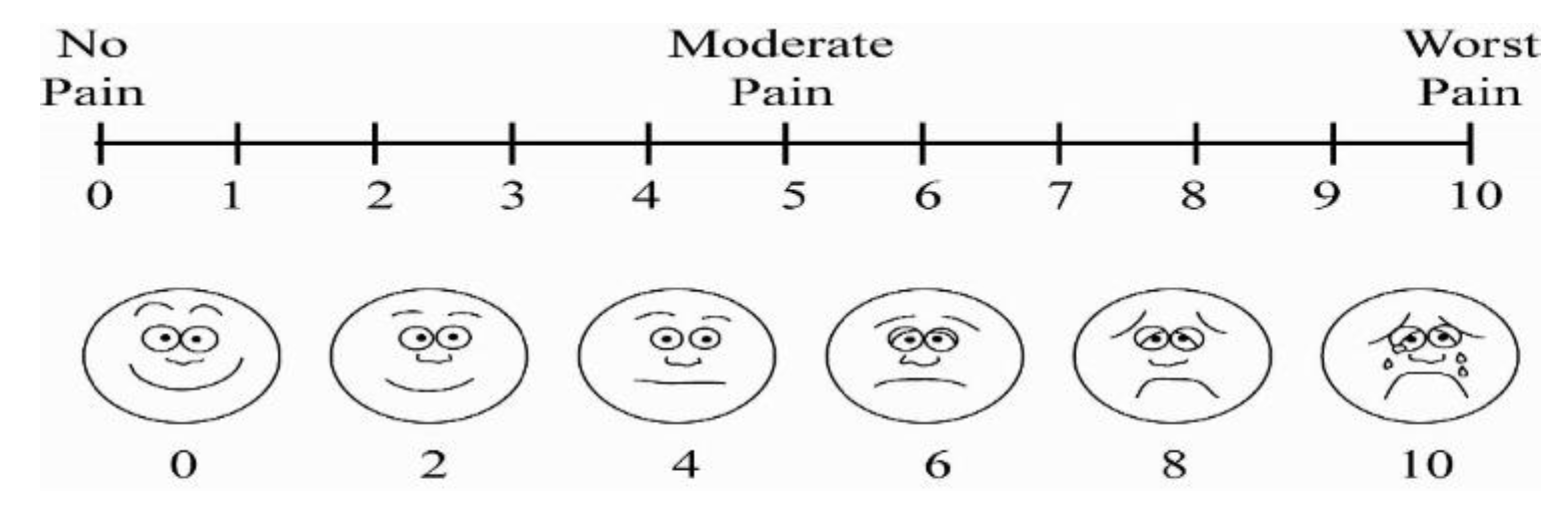
Postoperative pain at the surgical site was assessed using a 10-point visual analog scale (0 = no pain and 10 = worst imaginable pain), and a score of more than 3 was taken as the endpoint for the duration of the block.
Patients were observed for 24 hours for complications such as persisting paraesthesia and pneumothorax after administering the block.
Figure 15: Visual Analog Scale
RESULTS
The study was conducted for a period of one and half years on patients between 18-80 years undergoing upper limb surgeries. The data required to derive results for aforementioned objectives of the study was recorded, tabulated and properly analyzed. The following observations were made:
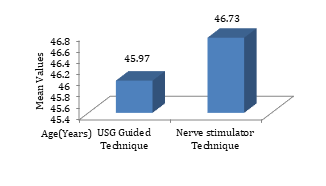
In our investigation, both groups had comparable ages and weights. The cases ranged in age from 18 to 80 years old, with a mean of 45.97 17.64 for Group A and 46.73 16.45 for Group B, with a p value of 0.862
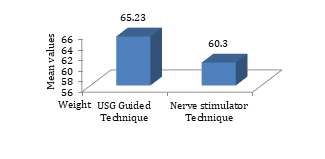
With a p value of 0.14, the mean weight of the patients in Group A is 65.23 8.86 kg and in Group B is 60.30 5.97 kg. The weights of the patients in the two groups are comparable, and no statistically significant difference exists between them
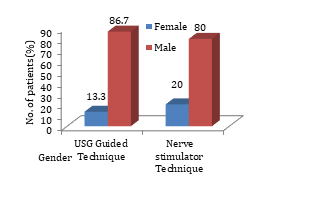
In Group A, 26 of the 30 individuals were males and 4 were females. Out of the 30 individuals in Group B, 23 were males and 7 were females. The 'p' value was 0.488
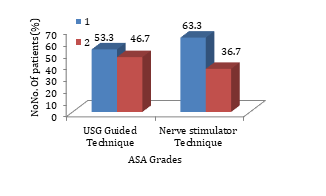
In Group A, 16 of the 30 participants were ASA-1 and 14 were ASA-2. Out of the 30 individuals in Group B, 19 were ASA-1 and 11 were ASA-2. The value of 'p' was 0.432. Thus, the demographic data of the two groups was statistically insignificant
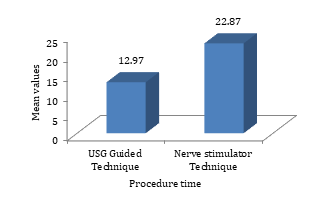
The procedure time was statistically significant (p-value<0.001) since in Group A procedure time was 12.97±2.00 while group B the procedure time was 22.87±1.52
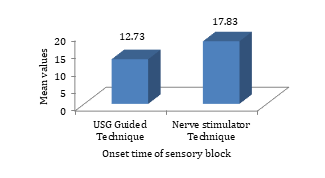
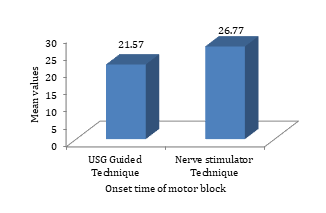
Sensory block onset time was 12.73±1.72 mins (Mean S.D.) in Group A, while motor block onset time was 21.57±2.54 mins. In Group B, the onset time of sensory block was 17.83 ±1.70 minutes, and the onset time of motor block was 27.77±1.81 minutes, both of which are statistically significant (p-value 0.05)
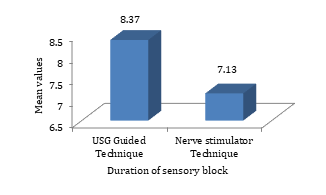
The duration of sensory block in Group A was 8.37±0.99 minutes (Mean S.D.), but it was 7.13±0.81 minutes in Group B, which is statistically significant (p-value of 0.05)
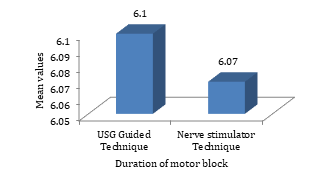
Interestingly the duration of motor block between the two groups was comparable and statistically insignificant (p-value-0.08). The time period for which motor block acted in Group A was 6.10±0.80 minutes (Mean S.D.), but it was 6.07±0.74 minutes in Group B
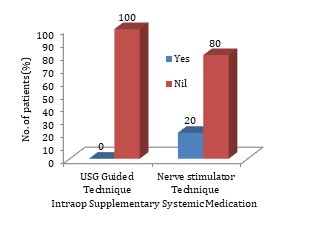
Intra-op supplementary medications were not used in group A patients while in group B 6 out of 30 patients received intra-op supplementary medications i.e., Inj. Fentanyl. “p value” on comparison was 0.009 which was statistically significant
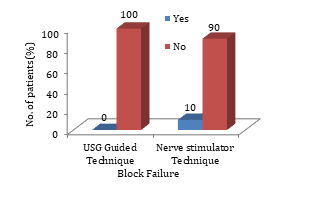
In group A no block failure was observed while in group B 3 blocks out of 30 had failed. “p value” was 0.07 and was statistically insignificant
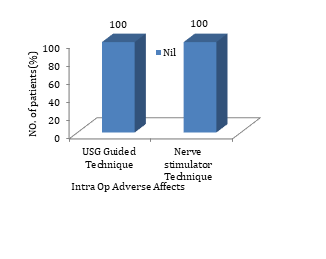
There were no adverse effects observed in any of the patients in both groups
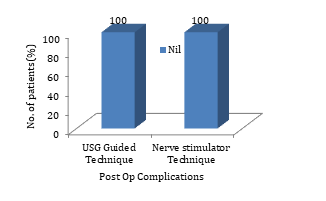
There were no post op complications observed in any of the patients in both groups
Table 1: Distribution of Patients According to Age and Weight
Age
USG Guided Technique
Nerve stimulator Technique
p-Value
Mean
±SD
Mean
±SD
Age (Years)
45.97
17.645
46.73
16.450
p = 0.862
Weight
65.23
8.869
60.30
5.972
p = 0.14
Figure 16: Distribution of Patients According to Age
Figure 17: Distribution of Patients According to Weight
Figure 18: Distribution of Patients According to Gender
Figure 19: Distribution of Patients According to ASA Grade
Table 2: Distribution of Patients According to Gender
Gender
USG Guided Technique
Nerve Stimulator Technique
Chi Square Test
p-Value
N
%
N
%
Female
4
13.3
7
20.0
Χ2 = 0.4800
p = 0.4884
Male
26
86.7
23
80.0
Total
30
100.0
30
100.0
Insignificant
Table 3: Distribution of Patients According to ASA Grade
ASA Grade
USG Guided Technique
Nerve stimulator Technique
Chi Square Test
p-Value
N
%
N
%
1
16
53.3
19
63.3
Χ2 = 0.6171
p = 0.4321
2
14
46.7
11
36.7
Total
30
100.0
30
100.0
Insignificant
Table 4: Procedure Time Between Study Groups
Procedure Time
USG Guided Technique
Nerve Stimulator Technique
p-Value
Mean
±SD
Mean
±SD
Procedure Time
12.97
2.008
22.87
1.525
p = 0.001*
* (p<0.05)
Table 5: Onset Time of Sensory Block Between Study Groups
Onset Time of Sensory Block
USG Guided Technique
Nerve Stimulator Technique
p-Value
Mean
±SD
Mean
±SD
Onset Time of Sensory Block
12.73
1.721
17.83
1.704
p = 0.001*
*significant (p<0.05)
Figure 20: Procedure Time Between Study Groups
Figure 21: Onset Time of Sensory Block Between Study Groups
Table 6: Onset Time of Motor Block Between Study Groups
Onset time of motor block
USG Guided Technique
Nerve stimulator Technique
p-Value
Mean
±SD
Mean
±SD
Onset time of motor block
21.57
2.542
26.77
1.813
p = 0.001*
Note: * significant (p<0.05)
Figure 22: Onset Time of Motor Block Between Study Groups
Figure 23: Duration of Sensory Block Between Study Groups
Figure 24: Duration of Motor Block Between Study Groups
Table 7: Duration of Sensory Block between Study Groups
Duration of sensory block
USG Guided Technique
Nerve stimulator Technique
p-Value
Mean
±SD
Mean
±SD
Duration of sensory block
8.37
0.999
7.13
0.819
p = 0.001*
Note: * significant (p<0.05)
Table 11: Duration of Motor Block between Study Groups
Duration of motor block
USG Guided Technique
Nerve stimulator Technique
p-Value
Mean
±SD
Mean
±SD
Duration of motor block
6.10
0.803
6.07
0.740
p = 0.0865
Table 12: Use of Intra Op Supplementary Medication between Study Groups
Intraop Supplementary Systemic Medication
Usg Guided Technique
Nerve Stimulator Technique
p-Value
N
%
N
%
Yes (Inj. Fentanyl)
0
0
6
20.0
p = 0.0098*
Nil
30
100.0
24
80.0
Total
30
100.0
30
100.0
Note: * Significant (p<0.05)
Table 13: Incidence of Block Failure between Study Groups
Block Failure
Usg Guided Technique
Nerve Stimulator Technique
p-Value
N
%
N
%
Yes
0
0
3
10.0
p = 0.0756
No
30
100.0
27
90.0
Total
30
100.0
30
100.0
Figure 25: Use of Intra op Supplementary Medication Between Study Groups
Figure 26: Incidence of Block Failure Between Study Groups
Figure 27: Incidence of Intra op Adverse Effects Between Study Groups
Table 14: Incidence of Intra op Adverse Effects between Study Groups
Intra Op Adverse Effects
Usg Guided Technique
Nerve Stimulator Technique
p-Value
N
%
N
%
Nil
30
100.0
30
100.0
Total
30
100.0
30
100.0
Table 15: Incidence of post op complications between study groups
Post Op Complications
Usg Guided Technique
Nerve Stimulator Technique
p-Value
N
%
N
%
Nil
30
100.0
30
100.0
Total
30
100.0
30
100.0
Figure 28: Incidence of Post Op Complications Between Study Groups
Statistical Analysis
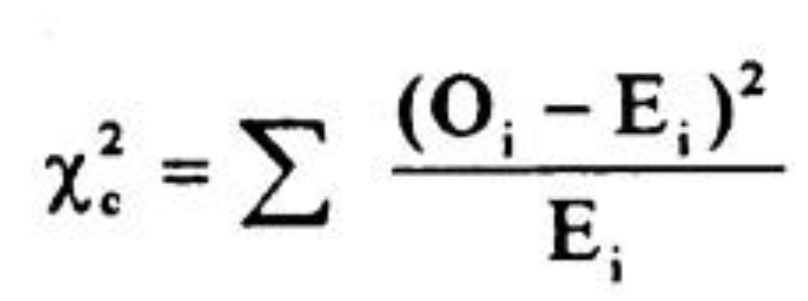
All of the qualities were described in detail. The summary statistics of mean and standard deviation (SD) were utilised for continuous variables. For the purpose of data summaries and diagrammatic display of categorical data, numbers and percentages were used. For the relationship between two categorical variables, the Chi-square test was utilised as test of significance for qualitative data. Categorical variables were provided as frequency (percentage) and graphs, whereas numerical variables were presented as Mean and SD. The unpaired t test/ Mann-Whitney U test was used to compare numerical variables between groups, while the Chi square/ Fisher's Exact test was used to compare categorical variables. The formula for the chi-square statistic used in the chi square test is.
Where
C: Degrees of freedom
O: Observed value
E: Expected value
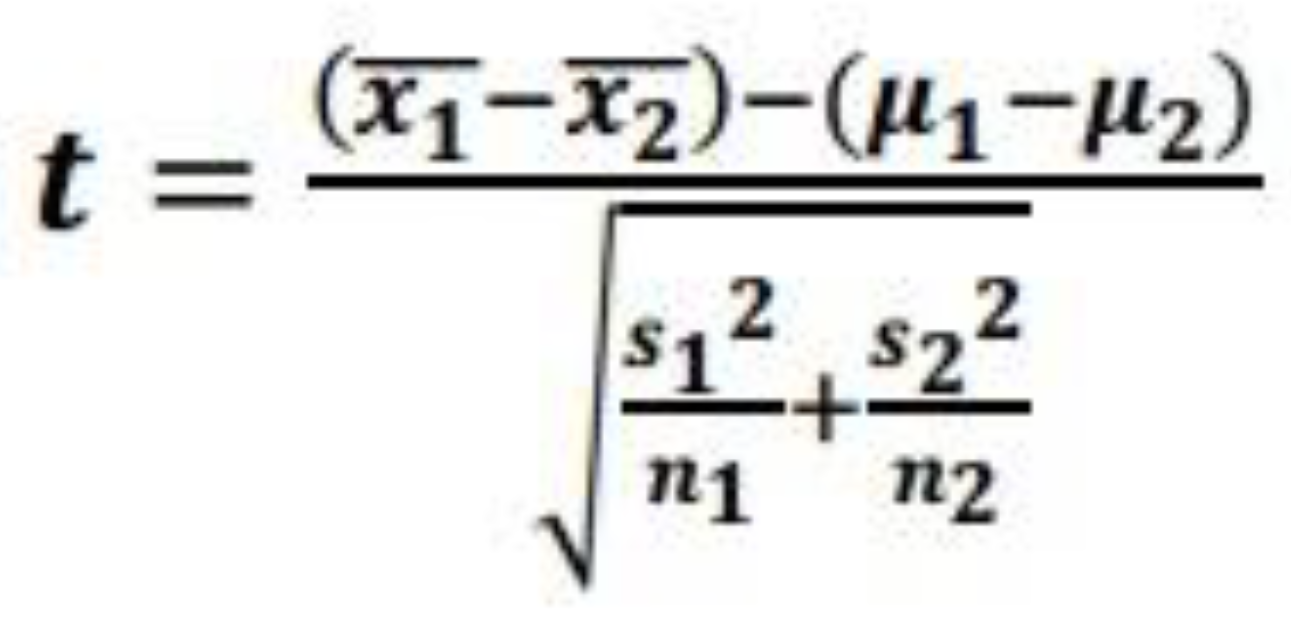
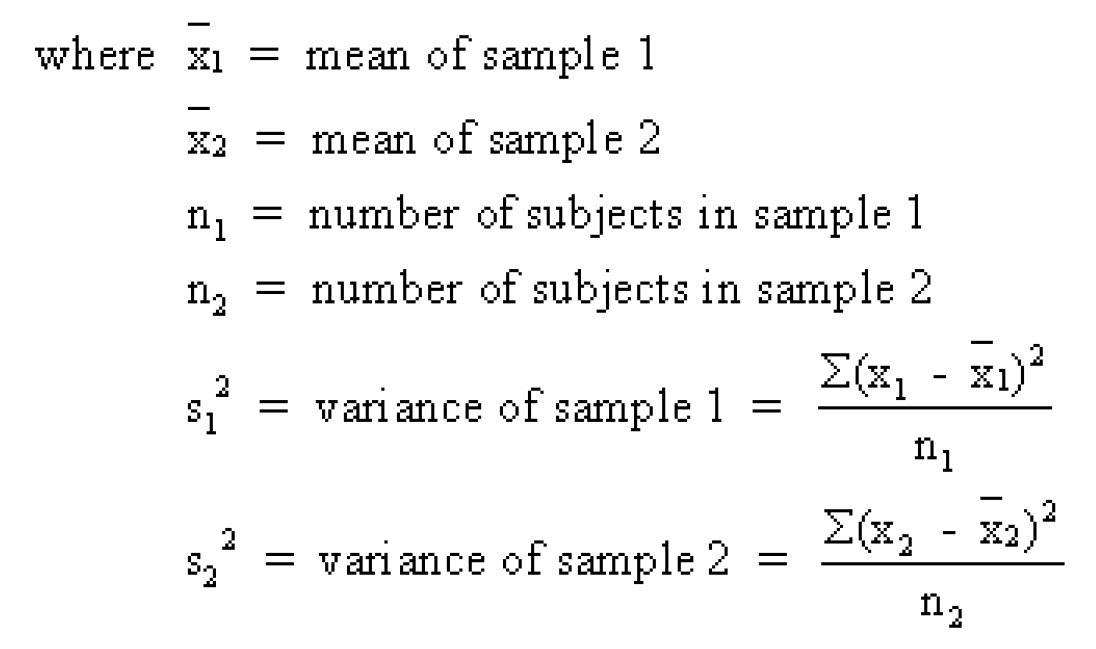
The formula for the unpaired t test is:
The t statistic to test whether the means are different can be calculated as follows:
MS Excel and MS word was used to obtain various types of graphs such as bar diagram, line diagram. Data was entered into Microsoft excel data sheet and SPSS version 22 (IBM SPSS Statistics, Somers NY, USA) was used to analyze data.
The results were considered to be statistically significant if the p-value was<0.05, else they were considered insignificant.
DISCUSSION
For patients, anaesthesiologists, and surgeons, brachial plexus block is an easy technique to anesthetize the upper limb surgeries. Because it is simple to administer and reasonably safe, the supraclavicular approach to the brachial plexus block is very common.
When using a nerve stimulator to execute a nerve block, a muscle twitch obtained at low output indicates near contact to the nerve, resulting in higher success rates [48]. However, in clinical practice, the topic of how close is close enough has not been precisely established, and it may alter for different blocks [49]. This is especially true with single-injection plexus anaesthesia, which involves blocking several nerves from a single injection location. The initial current setting, or seeking current, is the result of a balance between a current high enough to provide some guidance into the nerve but moderate enough to avoid a confusing and unduly powerful reaction during a nerve-stimulator technique. Once the appropriate response has been elicited, the nerve stimulator output and needle position are adjusted to replicate the response at a lower current.
Perthes and Pearson [50] established that nerves could be recognised by electrostimulation in 1912 and 1955, respectively, but it was Greenblatt and Denson [51] in 1962 who first used the nerve stimulator in clinical practise. Nerve stimulators are now widely recognised as helpful tools in the treatment of nerve blocks [48,52]. The criteria of an ideal instrument were examined and specified in the 1980s [53-56]. These and other investigations have contributed to the understanding of the link between a motor response and the distance between the needle tip and the nerve [48,52,57,58]
The introduction of ultrasound technology has improved the quality of nerve block by allowing the anaesthesiologist to secure an accurate needle position and monitor the distribution of the local anaesthetic in real time, resulting in a higher success rate, shorter onset time, and a reduction in the volume required for successful block. [59-63] With the advent of ultrasonography in locating peripheral nerves such as the brachial plexus, the deposition of local anaesthetic around the target neve became more accurate [64].
Group A patients were given USG guided supraclavicular brachial block while Group B patients were given nerve stimulator guided supraclavicular brachial plexus block with 7mg/kg of 2% lignocaine with adrenaline, 2mg/kg of 0.5% Bupivacaine.
Patients ranging from 18-80 years of age were recruited for this study. On comparison the mean for Group A was 45.97±17.64 and for Group B was 46.73±16.45, and it was statistically insignificant.
In Group A, 26 of the 30 individuals were males and 4 were females. Out of the 30 individuals in Group B, 23 were males and 7 were females. The age and sex p-values were 0.862 and 0.488, respectively. As a result, neither group's demographic data was statistically significant.
With a p value of 0.14, the mean weight of the patients in Group A is 65.23±8.86 kg and in Group B is 60.30±5.97 kg. The patients' weights in the two groups are comparable.
In our study, Group A had a much lower procedure time than Group B. (12.97±2.00 vs 22.87±1.52 respectively) which is statistically significant (p-value being<0.05). In Group A, the onset time of sensory block was 12.73±1.72 mins (Mean S.D.), and the onset time of motor block was 21.57±2.54 mins, whereas in Group B, the onset time of sensory block was 17.83±1.70 mins, and the onset time of motor block was 27.77±1.81 mins, which is statistically significant (p-value of 0.05), implying that the time for onset of sensory and motor action was shorter with USG.
Other studies such as those conducted by Alfred et al. Ratnawat et al. and Bhatnagar et al. to compare the two techniques had similar results as our study. Duncan et al. however in their study concluded that the procedural time and the time of onset of sensory as well as motor action was comparable with both techniques [6,66,7,9,69,10].
Because of the diversity in the link between the surface architecture and nerve placement, the procedure duration was longer in the nerve stimulator group, but the use of USG may reduce this variation. The needle is positioned and repositioned under direct view with USG guidance, but the PNS technique uses a landmark technique to locate the plexus, necessitating numerous needle pricks and needle repositioning, resulting in a lengthier duration.
On comparing the statistics of duration of sensory block the values were found to be statistically significant (p<0.05) with the mean±SD of Group A 8.37±0.99 mins while in Group B it was 7.13±0.81.
On comparing the duration of motor block the values were found to be statistically insignificant (p-value-0.08) with the mean±SD of Group A 6.10±0.80 mins whereas in Group B it was 6.07±0.74.
Ratnawat et al. discovered that the USG group (8.13 1.63 h and 7.13 1.63 h, respectively) had a much longer sensory and motor block than the PNS group with 30 ml of 0.5 percent ropivacaine solution (6.14 2.36 h and 5.14 2.36 h, respectively). [12] Singh et al. reported a long block with USG [13]. Duncan et al. showed that both the USG and PNS groups had comparable mean sensory and motor durations when employing a 1:1 mixture of 0.5 percent bupivacaine and 2 percent lignocaine with 1:200,000 adrenaline [10].
The supraclavicular block is guided by sonographic imaging to determine the size, depth, and exact position of the neighbouring structures, as well as their anatomy. The use of USG aids in the accurate placement of the needle, the placement of the local anaesthetic, and the visualisation of the drug's distribution. This accelerates the start of the block, which could explain the block's long duration in our study.
Intra-op supplementary medications were not used in group A patients while in group B 6 out of 30 patients received intra-op supplementary medications i.e., Inj. Fentanyl. “p-value” on comparison was 0.009 which was statistically significant.
In group A no block failure was observed while in group B 3 blocks out of 30 had failed. “p-value” was 0.07 and was statistically insignificant. Singh et al. found that 45 out of 50 (90%) of 102 patients developed successful USG blocks, compared to 38 out of 52 (73.1%) of Group PNS patients who required additional nerve blocks (p = 0.028) [13]. Duncan et al. and found a similar rate of successful blocks in both groups, while block failures were seen in both USG and PNS in these trials [66,10].
There were no adverse effects such as puncture, newly observed cardiac dysrhythmias, seizure, transcutaneous oxygen saturation lower than 90%, Horner's syndrome, signs of local anaesthetic toxicity, and pneumothorax observed in any of the patients in both groups. There were no post op complications such as persisting paraesthesia and pneumothorax observed in any of the patients in both groups.
Alfred et al. Duncan et al. and Bhatnagar et al. also derived similar results. However, during check aspiration, Singh et al. found seven arterial punctures in the PNS group, but only one in the USG group [13].
Because the study was conducted on ASA I and II patients with a BMI of less than 35 kg/m2, the results are not applicable to patients with a BMI more than 35 kg/m2. Patients having a higher ASA grading, as well. All the blocks were administered by a single anesthesiologist who had no prior experience with either technique but had been trained in both prior to the trial. As a result, the learning curve that may have altered procedure timeframes for new learners or experienced anaesthetists who are already familiar with Nerve Stimulation or Ultrasonography was different.
The small sample size of only 60 patients is one of the study's weaknesses. A large sample size and multicentric investigation will provide a better picture of the occurrence of complications such arterial puncture and pneumothorax. Our study did not record the number of needle pricks or needle readjustments, which would be useful in determining patient discomfort and satisfaction.
REFERENCE
Raj P. Textbook of regional anesthesia. Philadelphia: Churchill Livingstone; 2002.
Greenblatt G.M. et al. Needle nerve stimulator-locator: nerve blocks with a new instrument for location of nerves. Anesth Analg. 1962, vol. 4, pp. 599-602.
Sia S. et al. Multiple-injection axillary brachial plexus block: a comparison of two methods of nerve localization - nerve stimulation versus paresthesia. Anesth Analg. 2000, vol. 91, pp. 647-651.
Winnie A.P. Does the transarterial technique of axillary block provide a higher success rate and lower complication rate than a paresthesia technique? Reg Anesth. 1995, vol. 20, pp. 482-485.
Alfred V.M. et al. Comparison of ultrasound with peripheral nerve stimulator-guided technique for supraclavicular block in upper limb surgeries: A randomized controlled trial. Anesth EssaysRes. 2018, vol. 12, no. 1, pp. 50-54. doi:10.4103/aer. AER_211_17.
Ratnawat A. et al. Comparative study between nerve stimulator guided technique and ultrasound guided technique of supraclavicular nerve block for upper limb surgery. Int J Res Med Sci. 2017, vol. 4, no. 6, pp. 2101-2106.
Singh S. et al. An evaluation of brachial plexus block using a nerve stimulator versus ultrasound guidance: A randomized controlled trial. J Anaesthesiol Clin Pharmacol. 2015, vol. 31, pp. 370-374.
Bhatnagar et al. Comparative study between nerve stimulator guided technique and ultrasound guided technique for supraclavicular nerve block in upper limb surgery - A randomized controlled trial. Int J Med Anesthesiol. 2020, vol. 3, no. 2, pp. 11-15. doi:10.33545/ 26643766.2 020.v3.i2a.116.
Duncan M. et al. A comparative study of nerve stimulator versus ultrasound-guided supraclavicular brachial plexus block. Anesth Essays Res. 2013, vol. 7, no. 3, pp. 359-364. doi:10.4103/ 0259-1162.123235.
Ellis H. et al. Anatomy for anaesthetists. 8th ed. Blackwell Science; 1997, pp. 160-195.
Lee J.A. et al. A synopsis of anesthesia. 10th ed. John Wright and Sons; 1987.
Winnie A.P. et al.Factors influencing distribution of local anesthetic injected into the brachial plexus sheath. Anesth Analg. 1979 May, vol. 58, no. 3, pp. 225-234.
Lanz E. et al. The extent of blockade following various techniques of brachial plexus block. Anesth Analg. 1983;62:55-58.
Brand L. et al. A comparison of supraclavicular and axillary techniques for brachial plexus blocks. Anesthesiology. 1961, vol. 22, pp. 226-229.
Winnie A. et al. The subclavian perivascular technique of brachial plexus anesthesia. Anesthesiology. 1964, vol. 25 pp. 353-363.
Brown D.L. et al. Supraclavicular nerve block: anatomic analysis of a method to prevent pneumothorax. Anesth Analg. 1993, vol. 76, pp. 530-534.
Brown D.L. et al. Supraclavicular nerve block: anatomic analysis of a method to prevent pneumothorax. Anesth Analg. 1993 Mar, vol. 76, no. 3, pp. 530-534.
Morgan G.E. et al. Clinical anesthesiology. 6th ed. McGraw-Hill, 2018.
Ottestad E. et al. History of peripheral nerve stimulation - update for the 21st century. Pain Med. 2020 August, vol. 21 (Suppl 1):S3-S5.
Cambiaghi M. et al. Scribonius Largus (probably before 1CE-after 48CE). J Neurol. 2018, vol. 265, no. 10 pp. 2466-2468.
Reynolds E.T. Faraday and the electrical basis of brain activity. Pract Neurol. 2007, vol. 7, no. 5, pp. 331-335.
Althaus J. A treatise on medical electricity, theoretical and practical: and its uses in the treatment of paralysis, neuralgia and other diseases. London: Longmans, Green; 1873.
Melzack R. et al. Pain mechanisms: a new theory. Science. 1965, vol. 150, no. 3699, pp. 971-979.
Wall P.D. et al. Temporary abolition of pain in man. Science. 1967, vol. 155, no. 3758, no. 108-109.
Parker J.L. et al. Technology for peripheral nerve stimulation. Prog Neurol Surg. 2015, vol. 29, pp. 1-19.
Ford D.J. et al. Electrical characteristics of peripheral nerve stimulators: implications for nerve localization. Reg Anesth. 1984, vol. 9, pp. 73-77.
"Nerve impulse." The American Heritage medical dictionary. 2007. Accessed 2 September 2021. https:// medical-dictionary.thefreedictionary.com/nerve+impulse
Nadrljanski M. et al. History of ultrasound in medicine. Radiopaedia. 2021. Accessed 1 October 2021. https:// radiopaedia.org/articles/8660
La Grange P. et al. Application of the Doppler ultrasound bloodflow detector in supraclavicular brachial plexus block. Br J Anaesth. 1978 September, vol. 50, no. 9, pp. 965-967.
Kapral S. et al. Ultrasound-guided supraclavicular approach for regional anesthesia of the brachial plexus. Anesth Analg. 1994, vol. 79, no. 3 pp. 538-542.
La Grange P. et al. Application of the Doppler ultrasound bloodflow detector in supraclavicular brachial plexus nerve block. Br J Anaesth. 1978, vol. 50, pp. 965-967.
Stoelting R.K. et al. Local anesthetics. In: Handbook of pharmacology and physiology in anesthetic practice. 3rd ed. Philadelphia: Lippincott Williams and Wilkins; 2006, pp. 199-203.
Berde C.B. et al. Local anesthetics. In: Miller R.D. et al. editors. Miller's anesthesia. 7th ed. Philadelphia: Churchill Livingstone Elsevier; 2010, pp. 913-940.
Hardman J.G. et al. Local anesthetics. In: The pharmacological basis of therapeutics. 10th ed. New York: McGraw-Hill; 2001.
Moore D. Supraclavicular approach for block of the brachial plexus. In: Regional block: a handbook for use in the clinical practice of medicine and surgery. 4th ed. Springfield: Thomas; 1981, pp. 221-242.
Kulenkampff D. Brachial plexus anaesthesia: its indications, technique, and dangers. Ann Surg. 1928 June, vol. 87, no. 6 pp. 883-891. doi:10.1097/00000658-192806000-00015
Bier A. Versuche über Cocainisirung des Rückenmarkes. Dtsch Z Chir. 1899, vol. 51, pp. 361-369. doi:10.1007/B F02792160
Satapathy A.R. et al. Axillary brachial plexus block. Anesthesiol Res Pract. 2011;2011:173796. doi:10.1155/ 2011/173796
De Jong R. Axillary block of the brachial plexus. Anesthesiology. 1961, vol. 22, pp. 215-225.
Butterworth J.F. et al. Molecular mechanisms of local anesthetics: a review. Anesthesiology. 1990, vol. 72, no. 4, pp. 711-725.
Hille B. Common mode of action of three agents that decrease the transient change in sodium permeability in nerves. Nature. 1966 June, vol. 210, no. 5042, pp. 1220-1222.
Narahashi T. et al. Site of action and active form of local anesthetics. Neurosci Res. 1971, vol. 4, pp. 65-99.
Taylor R.E. Effect of procaine on electrical properties of squid axon membrane. Am J Physiol. 1959 May, vol. 196, no. 5, pp. 1071-1078.
Estebe J.P. et al. The pharmacokinetics and pharmacodynamics of bupivacaine-loaded microspheres on a brachial plexus block model in sheep. Anesth Analg. 2001, vol. 93, pp. 447-455.
Canbay O. et al. Comparative arrhythmogenic effects of lignocaine and bupivacaine. J Ankara Med Sch. 2003, vol. 25, no. 1, pp. 27-34.
Levsky M.E. et al. Cardiovascular collapse from low dose bupivacaine. J Popul Ther Clin Pharmacol. 2005 October, vol. 12, no. 3, pp. 240-245.
Heavner J.E. et al. Severe hypoxia enhances central nervous system and cardiovascular toxicity of bupivacaine in lightly anesthetized pigs. Anesthesiology. 1992 July, vol. 77, no. 1, pp. 142-147.
Sage D.J. et al. Influence of lidocaine and bupivacaine on isolated guinea pig atria in the presence of acidosis and hypoxia. Anesth Analg. 1984 January, vol. 63, no. 1, pp. 1-7.
De Andres J. et al. Peripheral nerve stimulation in the practice of brachial plexus anesthesia: a review. Reg Anesth Pain Med. 2001, vol. 26, no. 5, pp. 478-483.
Carles M. et al. An evaluation of the brachial plexus block at the humeral canal using a neurostimulator (1417 patients): the efficacy, safety, and predictive criteria of failure. Anesth Analg. 2001, vol. 92, no. 1 pp. 194-198.
Katz J. Use of nerve stimulators for peripheral nerve blocks. In: Benzon H.T. et al. editors. Essentials of pain medicine and regional anesthesia. New York: Churchill Livingstone; 1999, pp. 395-398.
Greenblatt G.M. et al. Needle nerve stimulator-locator: nerve blocks with a new instrument for locating nerves. Anesth Analg. 1962, vol. 41, pp. 599-602.
Hadzic A. et al. Nerve stimulators used for peripheral nerve blocks vary in their electrical characteristics. Anesthesiology. 2003, vol. 98, no. 4, pp. 969-974.
Raj P. et al. Use of the nerve stimulator for peripheral nerve blocks. Reg Anesth. 1980, vol. 5, no. 1, pp. 14-21.
Ford D.J. et al. Electrical characteristics of peripheral nerve stimulators: implications for nerve localization. Reg Anesth. 1984, vol. 9, no. 2, pp. 73-77.
Ford D.J. et al. Comparison of insulated and uninsulated needles for locating peripheral nerves with a peripheral nerve stimulator. Anesth Analg. 1984, vol. 63, no. 10, pp. 925-928.
Pither C.E. et al. The use of peripheral nerve stimulators for regional anesthesia: A review of experimental characteristics. Reg Anesth. 1985, vol. 10, no. 2, pp. 49-58.
Chapman G.M. Regional nerve block with the aid of a nerve stimulator. Anaesthesia. 1972, vol. 27, no. 2, pp. 185-193.
Tulchinsky A. et al. Nerve stimulator polarity and brachial plexus block. Anesth Analg. 1993, vol. 77, no. 1, pp. 100-103.
Kumar L.C. et al. Comparison of peripheral nerve stimulator versus ultrasonography guided axillary block using multiple injection technique. Indian J Anaesth. 2014 November, vol. 58, no. 6, pp. 700-704.
Marhofer P. et al. Ultrasound guidance in regional anaesthesia. Br J Anaesth. 2005 January, vol. 94, no. 1, pp. 7-17.
Grau T. Ultrasonography in the current practice of regional anaesthesia. Best Pract Res Clin Anaesthesiol. 2005 June, vol. 19, no. 2, pp. 175-200.
Koscielniak-Nielsen Z.J. Ultrasound-guided peripheral nerve blocks: what are the benefits. Acta Anaesthesiol Scand. 2008 July, vol. 52, no. 6, pp. 727-737.
Williams S.R. et al. Ultrasound guidance speeds execution and improves the quality of supraclavicular block. Anesth Analg. 2003 November, vol. 97, no. 5, pp. 1518-1523.
Soeding P.F. et al. A randomized trial of ultrasound-guided brachial plexus anaesthesia in upper limb surgery. Anaesth Intensive Care. 2005 December, vol. 33, no. 6, pp. 719-725.
Alfred V.M. et al. Comparison of ultrasound with peripheral nerve stimulator-guided technique for supraclavicular block in upper limb surgeries: A randomized controlled trial. Anesth Essays Res. 2018, vol 12, no. 1, pp. 50-54. doi:10.4103/ aer.AER_211_17
Williams S.R. et al. Ultrasound guidance speeds execution and improves the quality of supraclavicular block. Anesth Analg. 2003 November, vol. 97, no. 5, pp. 1518-1523.
Mani K.V. et al. A study on comparison between ultrasound guided technique and peripheral nerve stimulator guided technique in performing brachial plexus block (supraclavicular approach) for upper limb surgeries. Int J Med Health Res. 2017, vol. 3, no. 7, pp. 61-64.
Recommended Articles
Research Article
Comparison between Ultrasound Guided Thoracic Paravertebral Block and Intercostal Nerve Blocks for Pain Relief Following Multiple Rib Fractures
Nadia T. Al-Bayaty,
Amar Salti
Published: 30/03/2026
Download PDF
Research Article
Evidence Guided, Experience Based and Patient Compatible 3-Step Protocol for Managing Moderate to Severe Category of COVID19 Infections
Farah Husain,
...
Kirti N Saxena
Published: 05/01/2021
Download PDF
Research Article
A Descriptive Cross-Sectional Study to Evaluate the Knowledge about Symptoms and Risk Factors for Heart Attack (Myocardial Infarction) Among the General Population of New Delhi
Aastha Sehgal,
...
Avneet Kaur
Published: 06/05/2023
Download PDF
Research Article
Knowledge About Risk and Preventive Factors for Osteoarthritis Knee among Ortho OPD Patients in Regional Hospital, Keylong in District Lahaul and Spiti of Himachal Pradesh
Ajay Thakur,
Jaspal Chaudhary
Published: 20/06/2022
Download PDF
PO Box 101, Nakuru
Kenya.
Email: office@iarconsortium.org
Editorial Office:
J.L Bhavan, Near Radison Blu Hotel,
Jalukbari, Guwahati-India
Rahman, A. & T. K, V. (2021). Comparison of Usg Guided Technique and Nerve Stimulator Technique in Supraclavicular Brachial Plexus Block in Upper Limb Surgeries. IAR Journal of Anaesthesiology and Critical Care, 2(2), 1-21.
MLA
Rahman, Ayesha and Vijaykumar T. K. "Comparison of Usg Guided Technique and Nerve Stimulator Technique in Supraclavicular Brachial Plexus Block in Upper Limb Surgeries." IAR Journal of Anaesthesiology and Critical Care 2.2 (2021): 1-21.
Chicago
Rahman, Ayesha and Vijaykumar T. K. "Comparison of Usg Guided Technique and Nerve Stimulator Technique in Supraclavicular Brachial Plexus Block in Upper Limb Surgeries." IAR Journal of Anaesthesiology and Critical Care 2, no. 2 (2021): 1-21.
Harvard
Rahman, A. and T. K, V. (2021) 'Comparison of Usg Guided Technique and Nerve Stimulator Technique in Supraclavicular Brachial Plexus Block in Upper Limb Surgeries' IAR Journal of Anaesthesiology and Critical Care 2(2), pp. 1-21.
Vancouver
Rahman A, T. K V. Comparison of Usg Guided Technique and Nerve Stimulator Technique in Supraclavicular Brachial Plexus Block in Upper Limb Surgeries. IAR Journal of Anaesthesiology and Critical Care. 2021 Jul;2(2):1-21.



 Download PDF
 Download XML