Introduction: The number of caesarean sections has increased over, especially in the developed countries. Hence, it has increasingly become a greater challenge to provide care for the pregnant, but this has given obstetric anesthetists’ a greater opportunity to contribute to obstetric services. Aims: to identify the characteristics of participants during cesarean section by using the general and spinal anesthesia during the period of study. Methods: A cross-sectional study was conducted in the operation unit in Elweya Maternity Teaching Hospital in Baghdad. Semi-structured questionnaire was used to collect the information from the records. The sample size was 1987 cases. Data was described by using the descriptive statistics such as frequency, percentage, Chi-square, and p. value. STATA version 14 statistical package was used to analyze the data. Results: Our finding, 44.3% (841/1897) were between 31 - 40 years old, followed by 34.1% (646/1897) were between 21 to 30 years old. Majority of pregnant women 69.9% (1326/1897) were housewives; 57.4% were uneducated; 48.7% (924/1897) of them had overweight, followed by 30 %( 569/1897) had normal weight. The totals of CS were higher during October 36 %, followed by September 34.8% and the percentage was lower 29.2% in November 2020. Conclusion: We concluded that the most of them had general anesthesia during CS. The respiratory tract infections and overweight are one of reasons for spinal anesthesia indication. There are significant association had been found between the age, occupation and BMI by the types of anesthesia at the p. value less than 0.5. Recommendation: we recommended to see the future development of new medications and newer techniques with a greater understanding and further research, obstetric anesthetists’ would play an even greater role to optimize the care of the parturient during caesarean delivery.
As we know that natural childbirth is the best and most appropriate option for women from a medical point of view, but sometimes the doctor may have to undergo a cesarean section due to health problems that may endanger the life of the mother and the fetus, and two options are given to her in making a decision about spinal and general anesthesia [1, 2]. Many women prefer general anesthesia over partial anesthesia. It is one of the oldest types of anesthesia used in childbirth and is considered the classic type of anesthesia [3]. Thus, the types of anesthesia used vary according to the woman’s health status and the fetus’s situation and to the type of childbirth that the woman will undergo [4]. If a cesarean section is decided to be performed, either by prior agreement with the mother because her health condition requires it, or if it is required to resort to her at the start of the birth process, there are several options available for her[5,6].
For, spinal anesthesia, or the so-called back needle, is the process of stopping the nerve impulses from the peripheral nerves to the spinal cord by injecting an anesthetic substance such as lidocaine into the spinal fluid [7]. During the mid-anesthesia, the patient does not lose consciousness, but only sensation and movement in the lower part of his body, which makes it easier for the doctor to perform the surgery easily and without pain or suffering [8].
A study conducted in US, the authors reported that the spinal anesthesia is the technique of choice for cesarean section because not only it avoids a general anesthetic and the risk of failed intubation, but also because it provides effective pain control, mobility and fast return back to daily activities for new mothers and increase their quality of life [9]. As a study in Colombia done by john et al, reported the neuraxial anesthetic techniques are the method of choice for C-section delivery, because they are associated with lower morbidity, though mortality and neonatal outcomes are similar as compared to general anesthesia [10]. A randomized clinical trial conducted in Turkey reported that the spinal anesthesia is superior to general anesthesia in terms of fetal wellbeing [11]. Also, a cross sectional study conducted in Egypt, the authors mentioned to combine spinal–epidural anesthesia is safer on the newborn than general anesthesia regarding the APGAR scores and acid–base balance [12]. From this point, this study aimed to identify the characteristics of participants during cesarean section by using the general and spinal anesthesia during the period of study.
A cross-sectional study was conducted in the operation unit in Elweya Maternity Teaching Hospital in Baghdad. All the cases admitted from September 2020 to the end of November 2020 was enrolled in this study. All operations that were performed in the general and private ward in which general and spinal anesthesia was used were included. As for the spinal anesthesia, cases that suffer from health problems such as hypertension, heart, respiratory problems, asthma, previous of CS and overweight, which are considered as contraindications to administering general anesthesia, have been included. Semi-structured questionnaire was used to collect the information from the records. The sample size was 1987 cases. Data was described by using the descriptive statistics such as frequency, percentage, Chi-square, and p. value. STATA version 14 statistical package was used to analyze the data. Ethical clearance was obtained from the Ministry of Health/ Iraq. Oral and written informed consent was obtained from participants before enrolled to this study.
Out of 1897 pregnant women, 44.3% (841/1897) were between 31-40 years old , followed by 34.1% (646/1897) were between 21 to 30 years old and the less percentage 6.4% (122/1897) in the age less than 20 years old (Table 1). Also, the majority of pregnant women 69.9% (1326/1897) were housewives. In addition, 57.4% (1089/1897) of pregnant were uneducated and 42.6 %( 808/1897) were educated. For body mass index, 48.7% (924/1897) of them had overweight, followed by 30 %( 569/1897) had normal weight and only 4.4% (83/1897) of them had underweight under 18.5 (Table 1). There are significant association had been found between the age, occupation and BMI by the types of anesthesia at the p. value less than 0.5(Table 1).
In Table 2, the majority of them 34.2 %( 104/304) had respiratory tract infection problems, followed by 10.9 %( 83/304) had overweight and obese, 14.5 % ( 44/304)
Table 1: Characteristic of Patients According To Types of Anesthesia during CS
| Variables | Types of anesthesia |
Total (1897) | p-Value | ||||
| General anesthesia(1593) | Spinal anesthesia(304) | ||||||
| Frequency | Percent | Frequency | Percent | Frequency | Percent | ||
| Age groups | - | - | - | - | - | - | - |
| Less than 20 | 77 | 4.8 | 45 | 14.8 | 122 | 6.4 |
< 0.00001 |
| 21- 30 | 573 | 36.0 | 73 | 24.0 | 646 | 34.1 | |
| 31-40 | 754 | 47.3 | 87 | 28.6 | 841 | 44.3 | |
| More than 40 | 189 | 11.9 | 99 | 32.6 | 288 | 15.2 | |
| Occupation | - | - | - | - | - | - | - |
| Housewives | 1159 | 72.8 | 167 | 54.9 | 1326 | 69.9 |
< 0.00001 |
| Employed | 373 | 23.4 | 100 | 32.9 | 473 | 24.9 | |
| Student | 61 | 3.8 | 37 | 12.2 | 98 | 5.2 | |
| Education | - | - | - | - | - | - | - |
| Educated | 687 | 43.1 | 121 | 39.8 | 808 | 42.6 |
0.2828 |
| Uneducated | 906 | 56.9 | 183 | 60.2 | 1089 | 57.4 | |
| BMI | - | - | - | - | - | - | |
| Underweight / less than 18.5 | 44 | 2.8 | 39 | 12.8 | 83 | 4.4 |
< 0.00001 |
| Normal weight /18.5-24.9 | 387 | 24.3 | 182 | 59.9 | 569 | 30.0 | |
| Overweight /25-29.9 | 883 | 55.4 | 41 | 13.5 | 924 | 48.7 | |
| Obesity /30 or greater | 279 | 17.5 | 42 | 13.8 | 321 | 16.9 | |

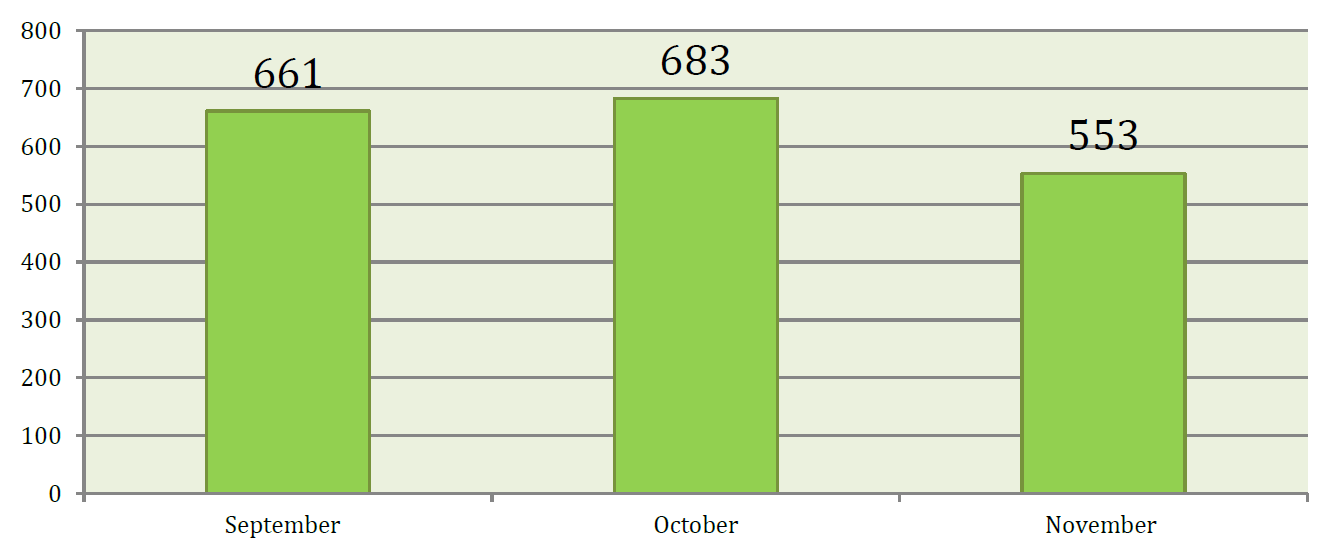
Figure 1: Total of Cesarean Section during September Up To November 2020
Table 2: Indication for Spinal Anesthesia
| Indication | Frequency | Percent |
| Heart problems | 23 | 7.6 |
| Respiratory tract infections | 104 | 34.2 |
| Overweight and obese | 83 | 27.3 |
| Hypertension | 33 | 10.9 |
| Hypotension | 17 | 5.5 |
| Previous history of cesarean section | 44 | 14.5 |
| Total | 304 | 100 |

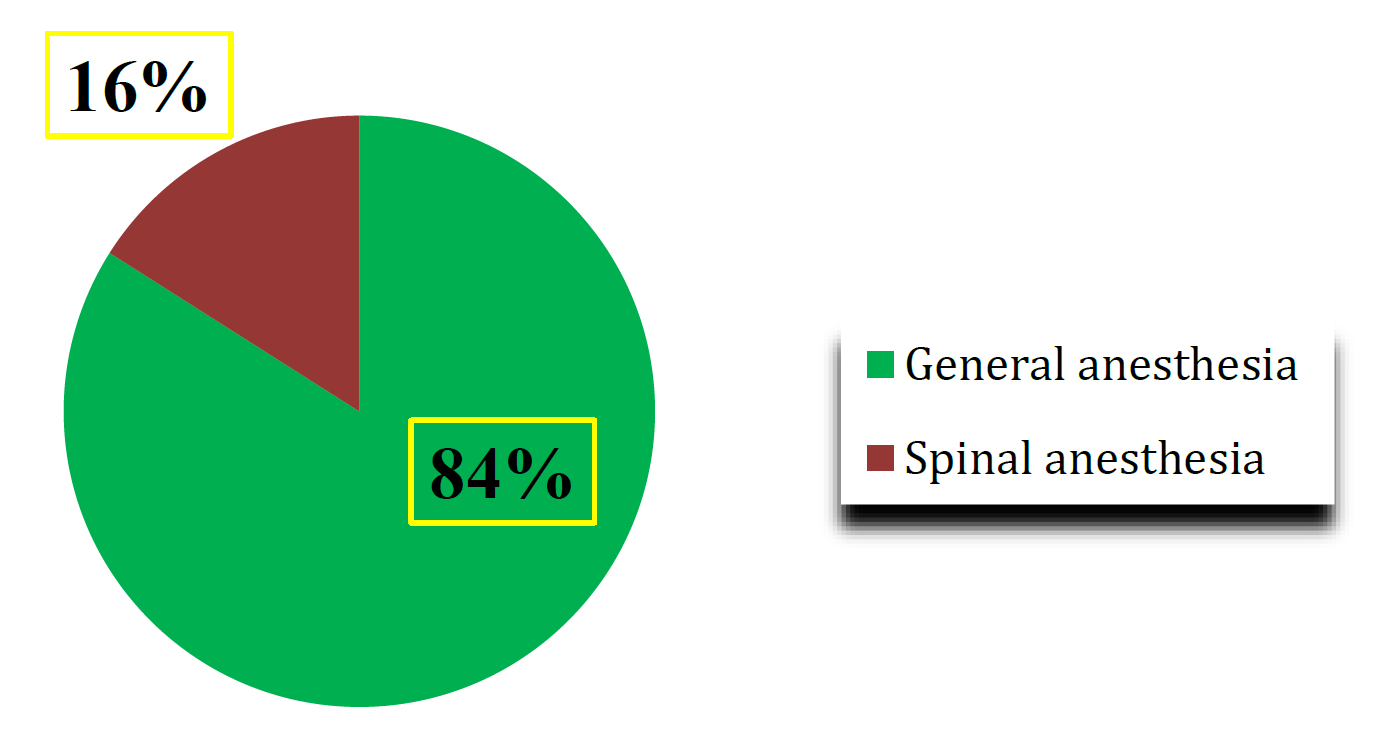
Figure 2: Types of Anesthesia during Cesarean Section
The types of anesthesia used differ according to the health condition of the woman and the situation of the fetus and the different type of childbirth that the woman will undergo. If a cesarean delivery is decided, whether by prior agreement with the mother because her health condition requires it, or if it is required to resort to her at the start of the birth process, there are several options available for anesthesia as GA or Spinal anesthesia[13,14].
The majority of the participants in this study are pregnant women who prefer general anesthesia over half anesthesia because of its advantages, including not feeling what is going on around it during the caesarean section, knowing that every anesthesia has advantages and problems, but they prefer this type of anesthesia.
In our study, we found 44.3% were between age groups 31 to 40 years old, followed by 34.1% in the age groups 21 to 30 years old and compared with another study in Iran by Teimoori et al [1], they found 60% of participants were in the age groups 21- 30 years old and 29% in the age groups 31-40 years old. This difference is due to the difference in health conditions and the cultural level between the two countries. Also, the most of them 69.9% were housewives; 57.4% were uneducated and compared with other results in Egypt [12], they found the similar results. This similarity in results is due to the deterioration of the educational situation and the economy between countries due to wars and poor living conditions that led most of them to drop out of school and lack to providing jobs for them. Obesity also raises the risk of surgical and anesthetic complications.
Obese individuals thus fare worse than normal weight individuals in surgeries [15]. Patients with high BMI have a greater prevalence of comorbid conditions, require alterations in anesthetic and oocyte retrieval management, and more often experience intraoperative and postoperative events [16]. For body mass index, 48.7% of them had overweight, this result compared with another results in Pakistan [3], they indicated the most had overweight. But a study done it in Korea [6], they reported the most of participants had normal weight. This refers to differ in lifestyle and habits between countries. Obese individuals are at a risk of obstructive sleep apnea and several other respiratory problems, they may have airway obstruction as well [5, 17].
Obesity has significant effects on the metabolism and pharmacokinetic profiles of most anesthetic agents [18]. Although, the majority of them 34.2 % had respiratory tract infection problems, and compared with other results in Canada [19], the majority had the asthmatic and common cold. This difference is due to the different environment and lifestyle, especially European countries that suffer from very cold weather during the last months of the year.
Spinal anesthesia is a safe method of conducting anesthesia during pregnancy without any long term complications [20]. In this study we found only 16% of them had spinal anesthesia during CS. Other study done it in Malaysia [21], the majority of participants had spinal anesthesia during CS. There is a possibility that the mother would want to use this type of anesthesia because of its advantages over general anesthesia, or because she suffers from some diseases or problems for which general anesthesia may negatively affect her life and the life of the fetus.
Our finding refer to annual number of cesarean deliveries has been increasing in concert with an increasing number of total deliveries. The totals of CS were higher during October 36 %, followed by September 34.8% and the percentage was lower 29.2% during November 2020. This result was compared with another study in Japan [2], reported the total of CS was 34.9% (342/979) during 2019. This refers to different of lifestyle between countries, as Japan is considered one of the developed countries in the economy, health, and education.
We concluded that the majority of them were in the age groups 21 to 40 years old, were housewives, uneducated, had overweight and obese. Generally, most of them had general anesthesia during CS. The respiratory tract infections and overweight are one of reasons for spinal anesthesia indication. There are significant association had been found between the age, occupation and BMI by the types of anesthesia at the p. value less than 0.5. It would be interesting to see the future development of new medications and newer techniques with a greater understanding and further research, obstetric anesthetists’ would play an even greater role to optimize the care of the parturient during caesarean delivery.
Teimoori, B. et al. "Comparison of General and Spinal Anesthesia on Maternal Hemoglobin Changes After Caesarean Section." Biomed Pharmacol J, vol. 9, no. 3, 2016.
Ikeda, T. et al. "A Retrospective Review of 10-Year Trends in General Anesthesia for Cesarean Delivery at a University Hospital: The Impact of a Newly Launched Team on Obstetric Anesthesia Practice." BMC Health Serv Res, vol. 20, 2020, 421.
Naz, F. et al. "Complications of Spinal Anaesthesia in Caesarean Section." Pak J Med Health Sci, vol. 4, 2010, pp. 277–280.
Saasouh, W. et al. "Degree of Obesity Is Not Associated with More than One Intubation Attempt: A Large Centre Experience." Br J Anaesth, vol. 120, no. 5, 2018, pp. 1110–1116.
Brodsky, J.B. "Recent Advances in Anesthesia of the Obese Patient." F1000Res, vol. 7, 2018, F1000 Faculty Rev-1195.
Jeong, E.K. et al. "The Effect of Type of Anesthesia on Intra and Post-Operative Blood Loss at Elective Cesarean Section." Korean J Anesthesiol, vol. 62, no. 2, 2012, pp. 125–129.
Palanisamy, A. et al. "General Anesthesia for Cesarean Delivery at a Tertiary Care Hospital from 2000 to 2005: A Retrospective Analysis and 10-Year Update." Int J Obstet Anesth, vol. 20, no. 1, 2011, pp. 10–16.
Robert, K. et al. Anesthesia and Co-Existing Disease. Churchill Livingstone, 2002, pp. 539–539.
Ghaffari, S. et al. "The Effect of Spinal versus General Anesthesia on Quality of Life in Women Undergoing Cesarean Delivery on Maternal Request." Cureus, vol. 10, no. 12, 2018, e3715.
Páez, L.J.J. et al. "Anestesia Regional versus General para Parto por Cesárea." Rev Colomb Anestesiol, vol. 40, 2012, pp. 203–206.
Saygı, A.İ. et al. "Comparison of Maternal and Fetal Outcomes Among Patients Undergoing Cesarean Section Under General and Spinal Anesthesia: A Randomized Clinical Trial." Sao Paulo Med J, vol. 133, no. 3, 2015, pp. 227–234.
Abdallah, M.W. et al. "A Comparative Study of General Anesthesia versus Combined Spinal–Epidural Anesthesia on the Fetus in Cesarean Section." Egypt J Anaesth, vol. 30, no. 2, 2014, pp. 155–160.
Hong, J.Y. et al. "Comparison of General and Epidural Anesthesia in Elective Cesarean Section for Placenta Previa Totalis: Maternal Hemodynamics, Blood Loss and Neonatal Outcome." Int J Obstet Anesth, vol. 12, no. 1, 2003, pp. 12–16.
McGlennan, A. et al. "General Anaesthesia for Caesarean Section." Cont Educ Anaesth Crit Care Pain, vol. 9, no. 5, 2009, pp. 148–151.
Sumikura, H. et al. "Rethinking General Anesthesia for Cesarean Section." J Anesth, vol. 30, no. 2, 2016, pp. 268–273.
Egan, B. et al. "Anesthetic Impact of Body Mass Index in Patients Undergoing Assisted Reproductive Technologies." J Clin Anesth, vol. 20, no. 5, 2008, pp. 356–363.
McGlennan, A. et al. "General Anesthesia for Caesarean Section." Cont Educ Anaesth Crit Care Pain, vol. 9, no. 5, 2009, pp. 148–151.
Juang, J. et al. "Choice of Anesthesia for Cesarean Delivery: An Analysis of the National Anesthesia Clinical Outcomes Registry." Anesth Analg, vol. 124, no. 6, 2017, pp. 1914–1917.
Lesage, S. "Cesarean Delivery under General Anesthesia: Continuing Professional Development." Can J Anaesth, vol. 61, no. 5, 2014, pp. 489–503.
Devroe, S. et al. "General Anesthesia for Caesarean Section." Curr Opin Anaesthesiol, vol. 28, no. 3, 2015, pp. 240–246.
Chiang, C.F. et al. "Injection Speed of Spinal Anaesthesia for Caesarean Delivery in Asian Women and the Incidence of Hypotension: A Randomised Controlled Trial." J Clin Anesth, vol. 39, 2017, pp. 82–86.