Introduction: As US guidance offers real-time view of the block needle, the brachial plexus, and its spatial relationship with the critical structures surrounding it; it not only boosted the success rates, but also decreased the complication rates. Aims: To compare Time taken for performing blockade, onset of blockade and complete blockade between PNS and USG guided techniques for the supraclavicular approach of brachial plexus block. Materials and methods: This study is an observational cross-sectional randomized study done for a period of 6 months. A total of 60 patients who were posted for elective upper limb surgeries in tertiary care center were chosen for the study and categorized into group A and B by computerized randomization. Group A - patients who underwent US guided supraclavicular block. Group B - patients who underwent PNS guided supraclavicular block. Results: In study, most of the patients fall in the age category of 20-50 years. The groups were similar in-patient characteristics like age, sex, department to which the patient belonged and ASA grading. By comparing the time taken for onset of blockade and complete blockade in patients belonging to both groups, in whom blockade was performed within 5 min, which is statistically significant. In group A patients, no complications occurred. In group B, 6.67 % (2 out of 30) patients had accidental vascular puncture, though the difference is not statistically significant (p-Value = 0.492). Conclusions: we conclude that ultrasonography guided supraclavicular brachial plexus block Is quick to perform, offers improved safety, ensures good quality of blockade and accurate in identifying the position of the nerves to be blocked.
Peripheral nerve block anaesthesia has many clinical benefits that lead to better patient outcomes as well as lower overall healthcare costs. Excellent anaesthesia and postoperative pain control, less side effects than general anaesthesia, and early physical activity are encouraged by peripheral nerve blocks. Reduced use of opioids for postoperative pain, less postoperative complications, and earlier discharges are often correlated with the use of nerve blocks. In elderly and high-risk patients undergoing a wide range of surgical procedures, especially in the upper and lower extremities, regional anaesthesia is particularly desirable and effective [1].
The satisfaction of patients and surgeons is a major concern when adding regional anesthesia to the surgical service. Surveyed patients prefer, and are cautious about needles, general to regional anesthesia. Surgeons are cautious about block failures and the rise in non-operative periods. The use of medical instruments such as peripheral nerve stimulator and ultra-sonogram to accurately or consistently strengthen peripheral nerve blocks is a requirement for regional anesthesia to approach the performance of general anesthesia.
To help nerve position, nerve stimulators have tried to add an objective end point. They apply a small amount of direct current (DC) to the needle that is transmitted to the nerve when it is close enough. To produce a motor response, the nerve is then stimulated. To enhance the success rate of a block, a suitable motor response corresponding to the motor innervations of the desired nerve to be blocked has been shown.
Ultrasonography has revolutionized the method in which nerve blocks are conducted in recent years. It has an additional advantage of being able to picture the nerves and the needle during the performance of a nerve block over other techniques. The cost of the system and preparation are the two major problems that currently hinder the use of this technique. Ultrasound imaging techniques enable the anesthesiologist to secure an accurate needle location and track the local anesthetic delivery in real time, with the potential benefit of improving nerve block efficiency, shortening block latency, and reducing the minimum volume needed to achieve a good nerve block [2].
AIM
To determine the superior technique for the supraclavicular approach of the brachial plexus when performing a nerve block among peripheral nerve stimulator and ultrasound guided techniques.
The Prospective randomized intervention study was conducted in the Department Of Anaesthesiology, Critical Care and Pain Medicine at tertiary care center in total of 60 patients (30 in each group) who are posted for elective upper limb surgeries. Study done for a period of 6 months.
Inclusion Criteria
Patients aged between 18 – 64 years, weighing 50–70 kg and who belong to ASA 1 or 2 grades, presenting for elective upper limb surgeries.
Exclusion Criteria
Emergency surgeries, Patient or surgeon refusal, Patients for whom peripheral nerve block is contraindicated, such as in coagulation abnormality, medications are contraindicated, Patients on chronic analgesic therapy at home and any h/o nerve injury, neuropathy, and inability to properly describe postoperative pain to investigators (language barrier, psychiatric disorder, and dementia).
Patients who came for upper limb surgeries were assessed first and ASA – 1 and 2 patients alone were chosen for our study. Then, we categorized the patient into either group A or B by means of computerized randomization.
Group A – Patients who underwent ultrasound guided brachial plexus block
Group B – Patients who underwent peripheral nerve stimulator guided brachial plexus block
After detailed explanation about the procedure, an informed consent was obtained from each patient. After positioning the patient appropriately, under strict aseptic precautions, procedure was performed. The total volume of local anesthetic (LA – 50:50 mixture of 2% lignocaine with adrenaline and 0.5% bupivacaine) injected in both groups was 20ml.
Parameters observed were time taken to perform blockade (time from starting of procedure to time of injection of local aesthetic), Time taken to onset of blockade( from the time of injection of local aesthetic to loss of pinprick sensation), Time taken for complete blockade (from the time of injection of local aesthetic to complete motor block), Need of supplementary analgesics / conversion to general anesthesia (considered as failed block), Supplementary analgesics (inj.fentanyl 2 mcg /kg I.V and inj.midazolam 0.05mg/kg I.V) and Complications if any.
After explaining the procedure to patient in detail, Informed consent was taken for the procedure. 30 minutes prior to the procedure patient was premeditated with inj. Glycopyrrolate 0.2 mg I.M. Then, patient was taken inside O.T and all essential monitors were connected. Then, patient was positioned supine with head turned about 30° to the contralateral side. Under strict aseptic precautions, the interscalene groove was palpated at its most inferior point, which is just posterior to the subclavian artery pulse; the latter was felt in a plane just medial to the midpoint of clavicle. After raising a skin wheal with local anesthetic, a 22G 5cm insulated needle was connected to the nerve stimulator kit and it was inserted. The nerve stimulator was set to deliver a current of 1.5–2.5 mA [3].
Muscle twitches were appreciated, as the needle approached the brachial plexus. The aim of the technique was to produce an isolated muscle twitch of the fingers. Wrist flexion and extension were also acceptable responses, but supination or pronation or any other more proximal motor twitches were not. Before giving the drug, I verified that the responses were present until the current was lowered up to 0.5 mA. It is very important not to advance the needle more than 2 cm in the caudal direction if no twitch is visible. In this case the situation should be reassessed starting with the nerve stimulator and its connections and determination of landmarks. On the other hand, when a twitch from the brachial plexus is being elicited the depth of needle insertion is less important as such motor twitch reveals that the needle is still in close proximity to the plexus. Then the drug should be injected near the plexus after careful aspiration.
USG Guided Supraclavicular Block
After explaining the procedure to patient in detail, Informed consent was taken for the procedure. 30 minutes prior to the procedure patient was premeditated with inj. Glycopyrrolate 0.2 mg I.M. Then patient was taken inside O.T and all essential monitors were connected.
Visualizing nerves by sound waves requires the use of high frequencies offering high resolution images. However, higher the frequency, smaller is the penetration depth. Most nerve block applications require frequencies in the range of 10–14 MHz. With the patient in supine position with head turned about 30° to the contralateral side, the skin was disinfected and the transducer positioned in the transverse plane immediately superior to the clavicle at approximately its midpoint. The transducer was tilted caudally to obtain a cross-sectional view of the subclavian artery. The brachial plexus was seen as a collection of hypo echoic oval structures lateral and superficial to the artery [4]. Using a 25- to 27-gauge needle, 1 to 2 mL of local anesthetic was injected into the skin 1 cm lateral to the transducer to decrease the discomfort during needle insertion. The block needle was then inserted in plane toward the brachial plexus, in a lateral-to-medial direction. The needle itself was identified as a hypo echoic structure and the needle generated a dorsal acoustic shadow. In addition, the needle was also identified by direct needle movement and tissue displacement. It is important to fill the needle system with local anesthetic before puncture to avoid air inclusion. Because of the frequency-dependent penetration depth (the higher the ultrasound frequency, the shorter the penetration depth), the linear probe creates a rectangular cross-section image based on the dimensions of the probe. At any point of this cross-section, the cannula can be adduced and is known as a dorsal acoustic shadow hypo echoic structure.
An audible "pop" is frequently associated with the entry of the needle into the brachial plexus sheath as the needle moves through the paravertebral fascia/brachial plexus sheath. After thorough aspiration, 1 to 2 mL of local anesthetic is administered to record the accurate orientation of the needle. If the brachial plexus is pushed away from the needle by the injection, an additional advancement of the needle 1 to 2 mm deeper may be necessary to achieve sufficient local anesthetic distribution.
The statistical information collected regarding all the selected cases were recorded in a master chart and the statistical analysis was done with SPSS software ver.16.0 using Student’s unpaired t test, Chi-square test, Fisher’s exact test, wherever appropriate. A p value <0.05 was considered statistically significant.

Most of the patients in both groups fall in the age category of 20 – 50 years. There is no significant difference between two groups in age, gender and ASA grading distribution. There is no significant difference in distribution between two groups.

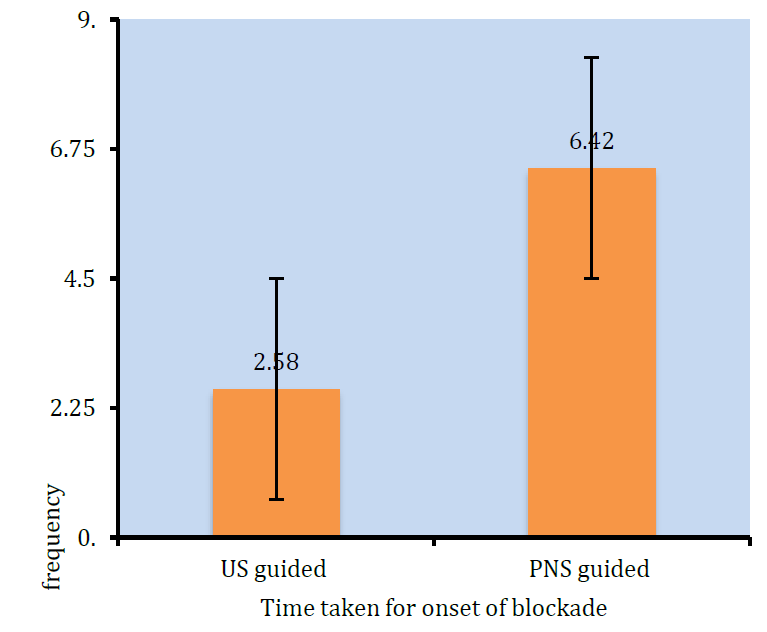
Figure 1: Mean and SD Wise Distribution of Time Taken For Onset of Blockade

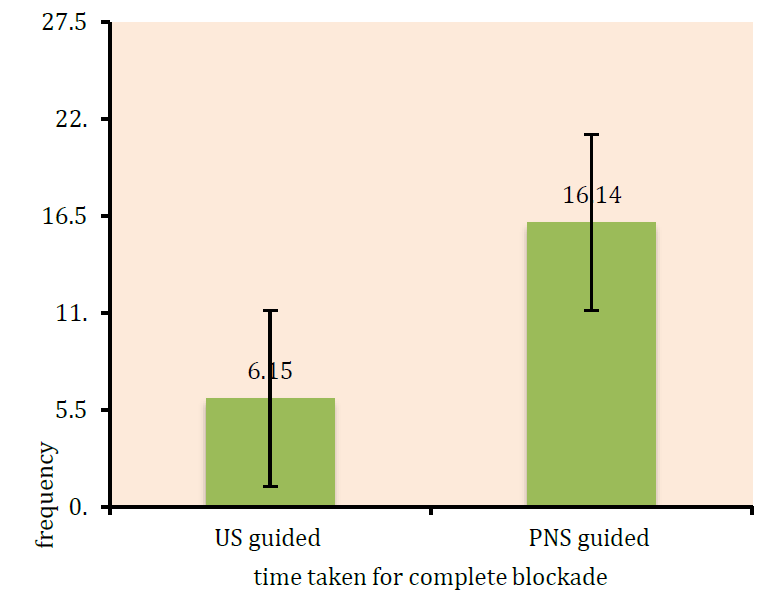
Figure 2: Mean and SD Wise Distribution of Time Taken For Complete Blockade

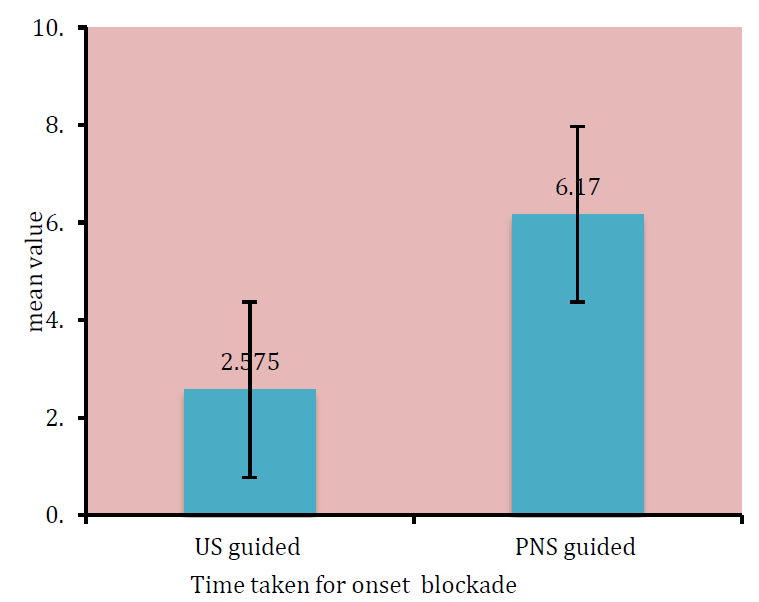
Figure 3: Mean and SD Wise Distribution of Time Taken For Onset of Blockade and Time Taken To Perform Blockade (Only <5 Min)

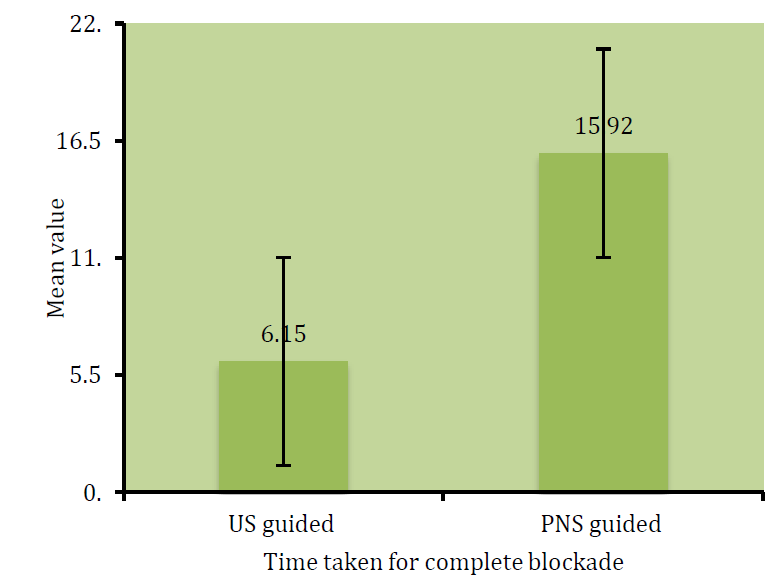
Figure 4: Mean and SD Wise Distribution of Time Taken For Complete Blockade and Time Taken To Perform Blockade (Only <5 Min)
Table 1: Overall Demographic Distribution of Patients in Both Groups in Study
| Age (in years) | GROUP A (US guided) | GROUP B (PNS guided) | p-value | ||
Number of patients | percentages | Number of patients | percentages |
0.932 | |
10-20 | - | - | 1 | 3.33 | |
20-30 | 8 | 26.67 | 8 | 26.67 | |
30-40 | 10 | 33.33 | 11 | 36.67 | |
40-50 | 8 | 26.67 | 5 | 16.67 | |
50-60 | 3 | 10.00 | 4 | 13.33 | |
60-70 | 1 | 3.33 | 1 | 3.33 | |
Total | 30 | 100 | 30 | 100 | |
Gender distribution |
|
|
|
|
|
Male | 21 | 70 | 22 | 73 | 0.774 |
Female | 9 | 30 | 8 | 27 |
|
ASA grading |
|
|
|
|
|
1 | 14 | 47 | 15 | 50 | 0.796 |
2 | 16 | 53 | 15 | 50 |
|
Table 2: Types of Surgery Wise Distribution in Each Group
| Department | Group A (US guided) | Group B (PNS guided) | p-value | ||
Number of patients | Percentages | Number of patients | percentages | ||
Orthopedics | 28 | 93 | 25 | 83 |
0.506 |
Plastic Surgery | 2 | 7 | 3 | 10 | |
Surgery | - | - | 2 | 7 | |
Total | 30 | 100 | 30 | 100 | |
Table 3: Time Taken to Perform Blockade
| Time taken for perform to blockade | GROUP A (US guided) | GROUP B (PNS guided) | p-value | ||
Number of patients | percentages | Number of patients | percentages |
0.112 | |
<5 min | 30 | 100 | 26 | 87 | |
5-10 min | - | - | 4 | 13 | |
Total | 30 | 100 | 30 | 100 | |
Table 4: Need of Supplementary Analgesics
Need of supplementary analgesics | GROUP A (US guided) | GROUP B (PNS guided) | p-value | ||
Number of patients | percentages | Number of patients | percentages | ||
Yes | - | - | 2 | 6.7 |
0.492 |
No | 30 | 100 | 28 | 93.3 | |
Table 5: Complications in Present Study Compared In
| Complication | GROUP A (US guided) | GROUP B (PNS guided) | p-value | ||
Number of patients | percentages | Number of patients | percentages |
0.492 | |
Vascular Puncture | - | - | 2 | 6.7 | |
No | 30 | 100 | 28 | 93.3 | |
Total | 30 | 100 | 30 | 100 | |
The cases taken for study mostly belonged to orthopedic department in both groups.
The p value is 0.506. There is no significant difference between the groups in department wise patient selection.
The time taken to perform blockade in all patients (100%) belonging to group A is <5 min. The time taken to perform blockade in 87 % of patients in group B is <5 min and 13 % of patients in group B is 5–10 min. This difference is statistically insignificant (p-value is 0.112). Even though this difference is statistically insignificant, performing block with ultrasound guidance is little faster than that with PNS guidance.
Comparison of time taken for onset of motor blockade was done between the patients in whom the time taken to perform the blockade was less than 5 min in both groups and we found that time taken in group A is significantly less than in group B indicated by the p-value <0.001.
Comparison of time taken for onset of blockade was done between the patients in whom the time taken to perform the blockade was less than 5 min in both groups and we found that time taken in group A is significantly less than in group B indicated by the p value <0.001.
Comparison of time taken for complete blockade was done between the patients in whom the time taken to perform the blockade was less than 5 min in both groups and we found that time taken in group A is significantly less than in group B indicated by the p value <0.001.
We were able to conduct surgeries successfully under block in all patients in group A and in 93.3% of patients in group B. In group A, none of the patients required supplementary analgesics. In group B, 6.67% (2 out of 30) patients required supplementary analgesics (inj.fentanyl 2mcg/kg i.v and inj.midazolam 0.05 mg/kg i.v). Even though difference is not statistically significant (p value = 0.492), there is a chance that PNS guided patients may require supplementary analgesics.
In group A patients, no complications occurred. In group B patients 6.67% (2 out of 30) patients had accidental vascular puncture. Even though the difference is not statistically significant (p-Value = 0.492), there is more chance of vascular puncture in PNS guided patients when compared with USG guided patients.
Regional anesthesia has been very popular in India unlike the western countries, where most of the patients want to be asleep during surgery. Effects of drug limited to part of body to be operated on and after effects usually less than after general anesthesia e.g. pulmonary complications and venous thromboembolism, and high quality post-operative pain relief are some of the advantages of regional anesthesia. In recent years, ultrasonographic guidance for peripheral nerve blocks has been implemented in real time, which is rapidly developing and becoming increasingly useful in regional anesthesia. Unpopular blocks such as the supraclavicular brachial plexus block have also been rejuvenated due to the ability to visualize plexus, artery, first rib and pleura.
This study compares the different parameters between the supraclavicular block guided by USG and the supraclavicular block guided by PNS. In present study, the patients were categorized as Group A – patients who received blockade under USG guidance and Group B – patients who received blockade under PNS guidance. The drug used for blockade in both groups was 20ml of 50:50 mixture of 0.5% bupivacaine and 2% lignocaine with adrenaline. The parameters which I observed were the time taken to perform blockade, onset of blockade and complete blockade.
In present study, most of the patients fall in the age category of 20-50 years. The groups were similar in-patient characteristics like age, sex, department to which the patient belonged and ASA grading. In present study, the time taken to perform blockade in all patients (100%) belonging to group A was <5 min. The time taken to perform blockade in 87 % of patients in group B was <5 min and 13 % of patients in group B was 5 – 10 min. Even though the difference is statistically insignificant, time taken to perform blockade with USG was less than that with PNS guidance. This is supported by the studies conducted by Krutika B. Rupera et al. [5] and Leslie C. Thomas et al. [6]. In the study conducted by Krutika B. Rupera et al. [5], the procedure time was 4.55±0.74 min in USG guided group and 5.71±0.92 min in PNS guided group, which was highly significant (p-Value<0.0001). Results obtained in Leslie C. Thomas et al. [6] study were US group required significantly less time to conduct the block (4.3+/-1.5 minutes) than the NS group (10+/-1.5 minutes), p=009. The possible reasons could be direct visualization of the structures, confidence and accuracy of needle placement and reduction in number of attempts of needle insertion as supported by Vincent W.S. Chan et al. [7].
The mean time taken for onset of blockade in group A was 2.58±0.65 min and in group B was 6.42±2.60 min. The difference between both groups is statistically significant (p<0.001), which is supported by the studies conducted by Leslie C. Thomas et al. [6], Peter Marhofer et al. [8], Beyazit Zencirci et al. [9] and Krutika B. Rupera et al. [5]. In Krutika B Rupera et al. [5] study, the time taken for onset of blockade in USG guided group was 2.97±0.72 min and in PNS guided group was 3.63±0.76 min, which was highly significant (p-Value<0.002). Leslie C. Thomas et al [6] state that in their study, the US group achieved a significantly faster onset of sensory block (US group, 12+/-2 minutes, NS group, 19+/-2 minutes, p = .02).
The mean time to achieve motor blockade in group A was 6.15±1.25 min and in group B was 16.14±4.88 min. The difference between both groups is statistically significant (p<0.001). This finding was also stated in studies conducted by Leslie C. Thomas et al [6], Peter Marhofer et al [8], Beyazit Zencirci et al [9] and Krutika B Rupera et al [5]. In Leslie C. Thomas et al [6] study, motor blockade was achieved in 13.5+/-2.3 minutes in US group as compared to 20.2+/-2.1 minutes in NS group with p-Value of 0.03. Time taken for complete motor blockade in Krutika B Rupera et al [5] study, in USG group was 13.17±1.54 min and in PNS group was 16.96±1.83 min, which was highly significant (p-Value<0.0001).
The reasons for faster onset and complete blockade in group A could be attributed to direct visualization of brachial plexus, injection of local anesthetic exactly in the perineural space and monitoring whole procedure with the help of real time ultra-sonogram. These views are also supported by the study done by Vincent W.S. Chan et al [7]. The volume (20ml) of local anesthetic which I used for block was good enough to cause a faster onset in group A, but not in group B, which was also stated by A. McNaught et al [10].
In Beyazit Zencirci et al [9] study, 86.67% of the cases in PNS group formed a sensory full block and 76.67% of these formed a motor full block within the first half hour. On the other hand, in US group, sensory full block and motor full block rates were 100%. Similar results were obtained in present study in which complete motor blockade could not be achieved in 6.67% (2 out of 30) of patients belonging to group B in whom sensory block was successful and we completed the surgery by giving supplemental analgesics (inj.fentanyl 2 mcg /kg I.V and inj.midazolam 0.05mg/kg I.V) in those patients.
By comparing the time taken for onset of blockade and complete blockade in patients belonging to both groups, in whom blockade was performed within 5 min, I was able to derive a statistically significant difference, which states that by using real time ultrasonography, we will get a faster onset of blockade and complete blockade.
In group A patients, no complications occurred. In group B, patients 6.67% (2 out of 30) patients had accidental vascular puncture. Even though the difference is not statistically significant (p-Value = 0.492), there is more chance of vascular puncture in PNS guided patients when compared with USG guided patients, which is supported by Beyazit Zencirci et al. [9] study.
The ultrasound guided method identifies nerves, vessels, muscles, and septa. One of the main advantages of using ultra-sonogram is the ability to monitor the whole procedure of nerve blockade. During the procedure, damage to important structures like vessels can be avoided. Redirecting the cannula can be performed under visual control. We had no accidental vessel puncture in any patient too. The risk of accidental nerve damage and other complications can thus possibly be reduced. The success rate of the ultrasound guided block was 100%.
Present Study conclude that ultrasonography guided supraclavicular brachial plexus block Is quick to perform, offers improved safety, ensures good quality of blockade and accurate in identifying the position of the nerves to be blocked. Wider availability of USG is likely to ensure even greater use in the future and will become the gold standard for peripheral nerve blocks when compared to the other conventional techniques.
Nysora.com. "NYSORA - The New York School of Regional Anesthesia - Keys to success with peripheral nerve blocks." Nysora.com, www.nysora.com/updates/3105-keys-to-suc cess-with-peripheral-nerve-blocks.html. Accessed 19 Nov. 2011.
Bishop J. and Sprague M. et al. "Interscalene regional anesthesia for arthroscopic shoulder surgery: a safe and effective technique." Journal of Shoulder and Elbow Surgery, vol. 15, no. 5, 2006, pp. 567–570.
Morgan Jr G. et al. Clinical Anesthesiology. 4th ed., McGraw-Hill, 2009, pp. 332–333.
Nysora.com. "NYSORA - The New York School of Regional Anesthesia - Ultrasound-guided supraclavicular brachial plexus block." Nysora.com, www.nysora.com/techniques /3015-ultrasound-guided-supraclavicular-brachial-plexus-b lock.html. Accessed 20 Feb. 2012.
Rupera K. et al. "Supra-clavicular brachial plexus block: ultra-sonography guided technique offer advantage over peripheral nerve stimulator guided technique." National Journal of Medical Research, vol. 3, no. 3, 2013, pp. 241–244.
Thomas L. et al. "Comparison of ultrasound and nerve stimulation techniques for interscalene brachial plexus block for shoulder surgery in a residency training environment: a randomized, controlled, observer-blinded trial." The Ochsner Journal, vol. 11, no. 3, 2011, pp. 246–252.
Chan V. et al. "Ultrasound-guided supraclavicular brachial plexus block." Anesthesia & Analgesia, vol. 97, no. 5, 2003, pp. 1514–1517.
Marhofer P. et al. "Ultrasonographic guidance improves sensory block and onset time of three-in-one blocks." Anesthesia & Analgesia, vol. 85, no. 4, 1997, pp. 854–857.
Zencirci B. "Comparison of nerve stimulator and ultrasonography as the techniques applied for brachial plexus anesthesia." International Archives of Medicine, vol. 4, no. 1, 2011, p. 4.
Mcnaught A. et al. "Ultrasound reduces the minimum effective local anaesthetic volume compared with peripheral nerve stimulation for interscalene block." British Journal of Anaesthesia, vol. 106, no. 1, 2011, pp. 124–130.