Since ancient times, humans have sought to document their experiences, beliefs, and achievements through visual expression. From cave drawings to monumental inscriptions, art has served as a medium for recording reality, spiritual rituals, and historical events. With the development of civilizations, art evolved into more refined forms such as painting, sculpture, and calligraphy, becoming a means to preserve cultural identity and collective memory. Among the various artistic expressions, Islamic art-particularly Ottoman calligraphy and miniature painting-played a significant role in narrating religious stories, historical events, Islamic conquests, and the social life of Ottoman society. These artworks are characterized by rich symbolism, layered compositions, aesthetic harmony, and narrative coherence, which reflect both spiritual depth and dramatic structure. Ottoman calligraphic scenes often combine text and image in a way that enhances visual storytelling and emotional engagement. This study aims to analyze Ottoman calligraphic art from a dramatic and structural perspective, focusing on its narrative composition, visual symbolism, and expressive elements. By examining selected examples of Ottoman calligraphy and miniatures, the research highlights how dramatic principles such as movement, rhythm, space, and sequential narration are embedded within these artworks. The study adopts a descriptive and analytical approach to explore the relationship between form and content in Ottoman calligraphic scenes.
Keywords
Employment
Forms
Drama
Aesthetic
Ottoman Photography
INTRODUCTION
Methodological Framework
Search Problem: Since ancient times, man has been interested in writing down his diaries like the events he is going through. His means of blogging was to draw on the walls of caves and stones. He mimicked his daily reality.
He was also interested in the codification of the spiritual rituals. A master matched his inscriptions between form and content and clear ideas that the viewer can understand and interpret smoothly. These monuments remain to this day. A witness to those covenants.
After the evolution and openness in all spheres of life, whether religious, political or social. The need for man to retain and immortalize his achievements. Man tended to immortalize his achievements through the arts, so he chose certain types of arts to perform that task and chose the art of painting, sculpture and calligraphy to remain witness to the evolution of those times.
Art is a conscious response to nature, and it is the intellectual and civilized in the human society that recorded the creativity and authenticity of the artist inspired by nature and the needs of its time guaranteed for its achievement.
It was the art of calligraphy in general and the art of Ottoman calligraphy in particular and among the most important arts that gave the greatest role in the transmission and manifestation of important events such as religious stories of prophets, battles, Islamic conquests and highlighting the role and achievements of Ottoman leaders. In addition to the expression of social life included customs and traditions of Ottoman Turkish society. They had their own style and fingerprint in the art of the formulation of miniatures with aesthetic and constructive structure and narrative composition with exciting dramatic characteristics. Through this aesthetic and dramatic consistency of the text of the calligraphic scene, the researcher identified the problem of his research with the following question (what are the aesthetics of the dramatic scene in the art of Ottoman calligraphy).
The Importance of Research: Scholars and researchers benefit Ottoman calligraphy at the level of artistic and social studies and students of fine art colleges and institutes
Research Objective: The research aims to recognize the aesthetics of the dramatic scene in Ottoman calligraphy
Search Limits: Objective boundaries: aesthetic and dramatic structure and its formation in the art of Ottoman photography
Time Limits: Period of 1544-1603
Spatial Boundaries: pictorial miniatures in Turkey
MATERIALS AND METHODS
Definition of Terminology
Aesthetics: The term is mentioned in the Holy Quran by saying: "And wherein is beauty for you, when you bring them home in the evening, and as you lead them forth to pasture in the morning". (An-Nahl, 6)
Language: (Aesthetics) beauty and Man (is beautified) by (ُ) so he is handsome and the woman (beautiful) [1]
Terms: Beauty: A pronunciation of things, a pleasure and a sense of order and harmony. It is one of the three concepts to which the provisions of values (beauty, right and good) are attributed [2]
Drama: Language: The word drama in the intermediate lexicon is a story of a side of human life presented by actors who imitate the original people in their dress, words and deeds [3]
Terminology: The drama is the writing, composition or creation of prose or poetry that is shown in silent gesture or in movements and story dialogue that involves conflict and is often designed to be shown onstage [4]
Procedural Definition (Dramatic Forms): It is a story of reality or of the artist's imagination that he works to embody and organize its cosmetic elements in accordance with the rules of dramatic structure in a graphic scene of the Ottoman School
Theoretical Framework
The Origins of Drama and The Elements of Artistic Structure: The term drama emerged with the beginnings of theatrical art by the Greeks who helped to crystallize this concept, and because the theatre as is called- The father of arts- because it combines more art, there is literary writing and there is the art of actor, director and visual art of designing paintings, theatrical backgrounds and music art and all these arts can meet in one art alone. Art is a way to help man understand the world around him. It is comparable to history or philosophy and it also uses the same means used by these branches of knowledge to record the details of life. History aims to record the realities of the past. Art speaks to its audience through imagination, emotion and reason when the recipient falls face to face in front of human experience.
So, every kind of art uses a number of artistic means that can help it to reach its goals in depicting part of the human experience. Music uses tone, rhythm, and harmony. Visual art addresses us through a sense of sight and uses colors, lines, light and shade to create a pleasant aesthetic composition that expresses a system and consistency in which emotion and thought arouses us, a spatial art that expresses it with the space of the painting. The content of the painting also expresses things that are actually present. It also expresses the artist's vision of this reality in images of formations, shapes and lines. Just as each type of art addresses its audience through a certain sense, each art has its means of expressiveness, poetry, activation, meters and narrative. The drama means dialogue, and the origin of the word drama derives from the Greek verb (Dran), meaning works or moves [5].
The drama is also known as a literary attitude that involves conflict and includes analysis of it through the presence of at least two characters. The drama is a character and a category of classifications put forward by aesthetics and found in literary and artistic works such as novel and drawing. [6] The drama is not confined to the stage but even in the drawing. The graphic achievement within the visual painting also contains conflict. The drama is based on the artist's perception of his story about a set of characters within a particular event and this event evolves to a peak, through mutual dialogue between these characters, the dramatic event is not only reflected in the expression of what takes place between people, it is an illustration of the actions of individuals in their relationship with each other. With the clarification of the attitudes that bind them within their dramatic world imagined by the artist, the dramatic relationship is a conflict that extends not only to people's relationship with each other but also to their relationship with the different forces surrounding them Artistic achievement, whether it be moral work or a portrait containing dramatic values. The main function of drama is to drive the individual through the cleansing process to reach the psychological compatibility between him and his contradictory disputes with his community on the other hand. So it seeks any drama to influence society and make the biggest collective impact. This happens within a certain possibility during which events are embodied, according to a strategy that looks at the time or time available and within the dramatic space of time the characters that embody events or choose part of history as the subject of drama, either if the events were empty into many stories, the symbol or relationship to these events was referred to despite their great importance [7]. Most of the plotting works of art involve a dramatic structure, whether it's a play, a story or a painting. Structure means creating inevitable relationships between the events of the artwork so that it all forms one consistent pattern. The structure is to unite successive events by creating inevitable relationships between them [8] What governs dramatic structure is the process of coordinating events within a logical process based on the principle of cause and effect. The hierarchy of events within the artwork is not subject to the same logic of life.
Technical Characteristics of Turkish Calligraphy School
Ousmane Shah, the first founder of the Ottoman Empire in 699 Hijri and took from central Anadolu as his capital. The Ottoman Empire extended its influence over vast areas of the Anadolu region and the Balkans, extending to Syria, the Arabian Peninsula and into Egypt and North Africa [9]
In addition to the military expansion of the Ottoman Empire, there has been a boom in the political, economic, cultural and artistic fields. An art school with Islamic roots has emerged in terms of used materials and calligraphy. In particular, Islamic art is the fruit of synergies of experience and the outcome of previous experiences of the Islamic religion, its origins in Rafidain and Nile as well as Persian civilization.
Islamic art has arisen as a result of the polemical mentality between an existing heritage and an up-to-date thought. This is evident in the fine arts, Islamic miniatures, architecture and Islamic art in general. It is the product of the Islamic religion movement and is one of the most important cultural harmonies that represent superstructures in Islamic societies. The spirit of Islamic art has been characterized by symbolism and research in abstract shapes. The Muslim artist goes on to expand the utilization of this visual principle to achieve through the expressive purposes of the wealthiest aesthetics. He tends to overlay levels to express the abundance, collectivity and large crowds to benefit from them to express spatial change. This is when the area of his artwork is divided into successive levels vertically or horizontally according to a deliberate and carefully arranged chronological or spatial sequence through which the artist achieves gestures and temporal hindrances in events.
It must be pointed out that divisions and their multiplicity do not constitute a barrier separating each part because great art destroys all the connections associated with the subject in people's minds [10].
Ottoman art has taken a lot of Islamic art, it's an extension of it. The Ottoman School is arguably the most important Islamic school because of the length of time it lived although it did not have its own style. At its inception, it relied on Iranian calligraphers. Rather, the Turks used Persian language in Turkish literature at the beginning of their state stages. The Ottoman Empire even summoned European photographers to Turkey in Istanbul [11].
The fall of the Constantinople State in 1435 AD on the hands of the Ottoman Empire facilitated their contact with the stranger. The European influence in Ottoman calligraphy has been evident since the 15th century, when Sultan Mohammed II summoned six Italians, including Gentily Blellini, who painted many images of Sultan. In the mid-16th century, a Persian school was formed that matched the work of the Ottoman miniatures. During this period, by order of the Ottoman sultans, approximately thirty calligraphic manuscripts with historical texts were completed. They spoke of their triumphant campaigns. Its purpose was to celebrate the glory of these sultans, including the oldest Ottoman topographic imagery [9]. At the end of the eighteenth century, Ottoman calligraphic took oil instead of mineral colors. This increased the aesthetic of calligraphy, as the paintings were characterized by thickness and gave them an impression of vitality. The calligrapher organized and coordinated the colors, each of which retained their autonomy and character without mixing, as the red, green, yellow, blue and gold colors were distinguished and the calligrapher was trying to use the natural colors in the image [12].
There were several ceremonies, one of the most important of which was the one created by Suleiman, who accepted to paint images imitating Timorese and Safavid production with his first and second covenants.
The distinction of the Ottoman School in terms of general design and artistic composition of calligraphy is further enhanced by the terms and accuracy of the details, especially the mapping and planning of the cities and towns that they passionate about Turks, which were predominantly geometric in nature. The Ottoman Turkish calligrapher, in drawing people, tended to diversify in size between human drawings that tended to show manhood with strong bodies and wide flanks and Turkish faces were characterized by mustaches as well as drawing people in full lateral or confrontational mode [12].
The Turkish calligraphy has been interested in the realistic way of dealing with his themes. He draws all his waters and falls in front of him from events and the facts he sees and tries to gain natural color images of the things he portrays. [13]. Although the Turkish calligrapher touched East and Western schools, he added his own touch and the Ottoman character encapsulated it with its own advantage. They embodied images of daily life and war epics, the prominence of majesty and majesty in religious images, as well as your interest in historical manuscripts.
In a second phase, the Turkish calligraphers tried to be unique in his own identity and style. The calligraphs he painted were far removed from what they used to be. The calligraphs he painted were limited to personal drawings and distinctive colors. As well as his interest in drawing pictures of the sultans and their families. It also distinguishes by painting images of women playing and close to the sultans. The images are classified by status, function or proximity to the sultan. They also have a focus on the large character around which the events revolve.
The Turkish calligrapher sought to express psychological conditions when drawing people, as the viewer was able to see cases of fear, dismay and sadness very clearly [13]. The Turkish calligrapher was also interested in implementing the characters' costumes with high precision and realism. The soldiers painted in war uniforms and the high rectangular head cover the shape that comes out of the top of the feather or the marker [12]. In addition to drawing other Turkish clothing such as kaftan, jibe and huge turbans worn by sultans and courtiers.
The backgrounds of Turkish calligraphs were characterized by two types, either an architectural background reflecting the Ottoman architecture of the Ottoman era from mosques, palaces and castles, even though the features of the European architecture appeared in terms of perspective. Or a backdrop that organizes landscapes, because the Ottoman Turkish photographer is passionate about drawing gardens and orchards, so that he focuses on the countryside by drawing an orchard or garden [12].
Here we can say that the Ottoman calligrapher has a certain character that inspired him from his social environment and civilization and has employed subjects from his daily life with high aesthetic.
Theoretical Framework Indicators
Drama is not limited to one type of art but exists in most artistic achievements. There is theatrical drama, musical drama and fine drama
The drama aims to influence the recipient and create the collective influence
The Ottoman School has been able to devote to itself a style of its own distinguishing it from other schools despite Iranian and European influences. This influence has disappeared since the 16th century and the Ottoman artist has also abandoned the colors of the Persian artist and created his own
Ottoman Turkish miniatures documented a collection of religious, historical and societal events and issues that were based on intellectual sources belonging to Turkish and Muslim society
The essentials of the dramatic event are the expression of the characters and the clarification of their actions within their mutual relationships
Search Procedure
Research Community: The era covered by the research, which lasted from 1544-1603, provided a large number of photographic models with different dramatic subjects belonging to the Ottoman school, which produced during this period 60 models.
Research Curriculum
The researcher adopted the analytical descriptive curriculum.
Research Sample
The researcher tested his research sample which reached to (3) models that were deliberately selected according to the following justifications:
Acts of drama and elements of structural drama have been selected
The variation of the era in which they appeared varied
Its competence to analyze according to its return, chronology and fame
Sample 1
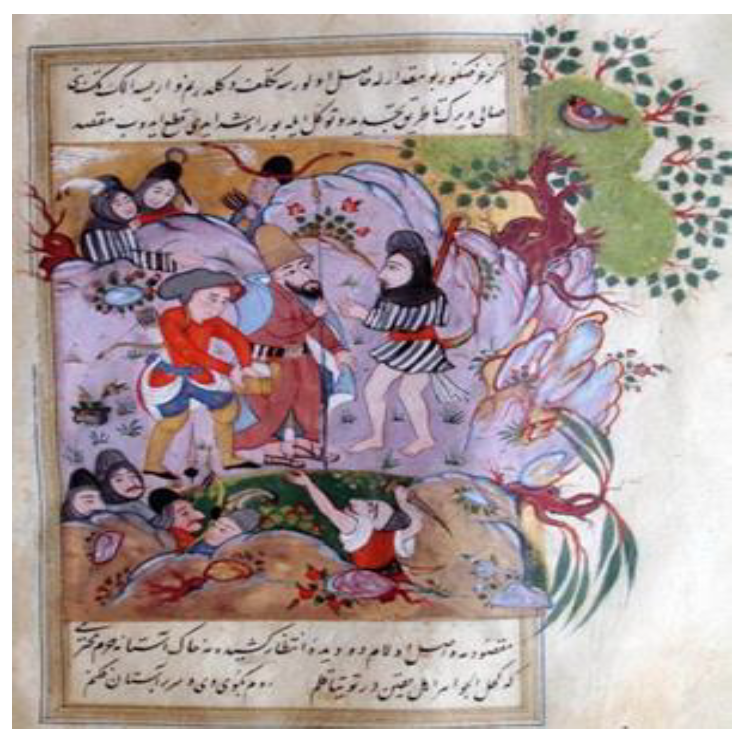
Analysis: At first sight, a man appears in the center of the painting with a black beard.
Wearing a cloak and filling his head with a hat, holding the spear with his right hand while holding his left hand the tip of his cloak and standing on the sides of two men, the man from the right side appears barefoot and wears striped shorts and a red belt that divides his body in half with a black head cover. He carries a bow on his shoulder. The man in the left side, wearing multiple-colored shorts and a large hat, holds a bag with his hands.
On the left side, we see three men looking like they are hiding behind the rocks. At the bottom of the page, a group of five men appear to be carrying a dagger. The artist gave an aesthetic to the painting by placing a tree with a bird at the top. He also adorned the painting with writing on its upper and lower sides. The aesthetic of the painting is highlighted by the Turkish artist's interest in diversity in shaping a harmonious climate between the figurative structure and the subject's unity between them to form a semantic unit that involves a system of relationships between its organically interconnected parts, making the colors consistent and spread between white, black and red Figure 1.
Figure 1: Miniature: The Bandit and the Ascetic Sufi
Sources: The Place of the Manuscript: Tobkai-Istanbul Museum Artist: Ghulam Hassan Yusuf
This painting embodies a realistic theme that is part of everyday life at that time(Bandits). Because the scene was so harmonious and harmonious, it was a dramatic scene that mimicked events that actually happened at the time, the artist divided the dramatic event and distributed it to the possibilities of the painting so that the viewer could thoroughly touch the event inside the painting and spread the men and hide them in the place where the hero of the painting arrived. (Cleric) While we take other people's glances and they are ready to pounce on it, it reinforces the dramatic plot of the event and the building of conflict inside the painting, so the dagger is raised by one of the thieves towards the clergyman.
The artist wanted to create a semantic balance through which the levels and details of visual shapes as well as the diversity of the colors that made the construction of the image visually commensurate with the nature of the distribution of the vocabulary, the photographer worked on a process whereby he wrote the story of the dramatic event through the main and secondary characters who supported the event. It became more convincing to the recipient. The dialogue was a narrative communication between the people in the painting that was evidenced by the expressive movements. It provoked suspense and pleasure in the dramatic event. The element of time and space is also present in the painting.
Spatial characteristics have emerged by drawing rocks, trees and small weeds. It became clear to the recipient that the place of the event was in a wild area and in broad daylight, expressed by the artist through the colors in the painting. As the dramatic event enhanced the clarity of its artistic unit, the aesthetic structure was visible in this work through the artist's deliberate highlighting of lines and curved places and in colors suggesting reality, which achieved color harmony. The shapes in the painting seemed to move and this was due to the dramatic spirit in which the painting was hoarded, through the clarity of the conflict between the hero and the thieves, helped by the repetition of the colors that gave a balanced rhythm in harmony with the decorative writings on both sides of the upper and lower painting.
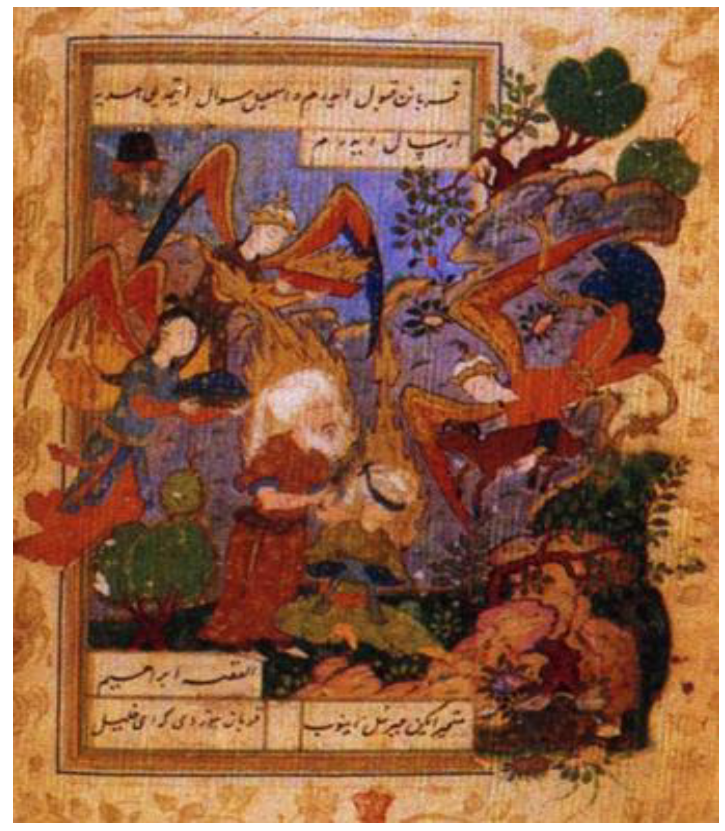
Figure 2: Identification of the Miniature and Manuscript
Date of Implementation: 1593-1594 Painting Measurement: 24 × 16cm
Sources: Manuscript Location: (British Library) Artist:Mohammed bin Suleiman Al-Fadli
Sample 2
Analysis: The event foretells that Prophet Ibrahim (P) tried to sacrifice his son Ismail in pursuit of the narrative by presenting as qurban. The artist distributed his forms in the painting dramatically allowing the event to be read in chronological order. The beginning of the scene was the process of documenting the Prophet Ibrahim's son in preparation for his slaughter. Prophet Ibrahim appeared in the form of a man with a white beard and a large white turban covering his head. He grabbed his son in the seating position while he was documented with a black wrap covering his eyes. We also note the existence of a halo resembling a firelock around Prophet Ibrahim's head. The drama of the work depicted the wild environment, trees and plants, with precise details that seemed to be realistic. The bottom left side shows an angel with the scapegoat heading to the center of the event and it seems that the artist wanted to portray Gabriel (p) according to the story.
The angle of view refers to Ibrahim and his son (peace be upon them) on the right side. Two angels appear to be carrying according to an unknown material because of the lack of clarity of their drawn details. The painting depicted us angels in the form of humans and in ordinary clothes with simple inscriptions with two arched wings and in sharp angles unfamiliar with the regular bird species with a crown on the head.
The artist's desire to employ the religious dramatic event of the story of the Prophet Ibrahim's vision of the slaughter of his son Ismail (p.). Although the religious text was compressed and the artist could not take his role in the interpretation, the painting then took the aesthetic dimension. The artist in this painting embodied a reality and imagination perspective. The intuitive treatment related to fiction, in a way that prompted a move away from stylistic wording and took the scene away from being descriptive to a metaphysical perception that was consistent with the illustrative quotes of the employed novel event.
If we follow the miniature theme, we will find a pattern of stability in the distribution of blocks. From the main block (Ibrahim and his son) stationed in the face of the scene and in a disciplined format, we will see a symmetry between two opposite blocks on both sides and a movement towards the center that is angels with trees on both sides of the main block. The color rhythm in the painting emerged between the red gradients in varying proportions in the perimeter of the scene in angel and Ibrahim clothing, and then the tonal area is equal to the blue and green ground, which is consistent with the wild atmosphere of trees and plants.
This painting is also characterized by the streamlining of the lines and the waves of the natural boundaries of the earth and the sky. It is also worth noting that the unique feature of this painting is the endowment of the geometric boundaries and straight lines that limit their right and left sides. What is noted is that the drawing is fully carried out on a floor decorated with plant decorations, mainly branches and leaves connected to the surface of the painting in yellow color. So, it can be said that this artistic achievement as much as the religious drama is simulated by the literary side. It has formally used elements with semantic loads at the level of creativity. This work has come about achieving the semantic values of religious content with treatments associated with the methods of the Ottoman school by recording the historical event and completing the portrayal of the characters and drawing them in a direction approaching realism Figure 2.
Sample 3
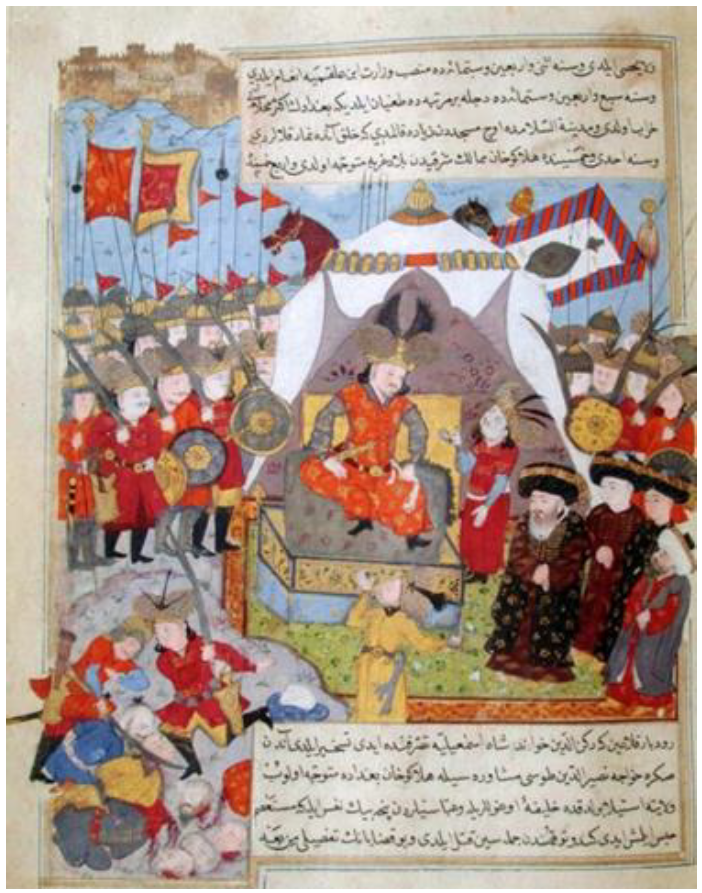
Analysis: This painting dramatically represents a camp for the armies and in the center is a large tent in a larger white color. In its upper sides, a horse's head appears and a large throne stands out. A man has his hands on his knees and weapon on his right. The man's head is topped up with a golden crown. This seems to be the leader around whom he rallies from the right and left armies bearing his weapons and red banners. Besides the commander stands a man who looks at him as well as four generalized people who differ from the rest of the crowd inside the painting scene. Standing on the front side of the commander is a man in yellow dress who has his hand up, On the bottom and on the left side, two soldiers appear to be on alert to execute two people. On the bottom side, we see many severed heads.
Figure 3: Identification of the Miniature and Manuscript
Date of Manuscript: 1598-1603 Miniature Measurement:21 × 34 .5cm
Manuscript Location: Tobkabi Museum – Istanbul Artist: Mohammed bin Tahir bin Sheikh Noureddine Al-Najibi Al-Sahrodi
The painting was distinguished by the scriptural tapes up and down from reading this painting, which embodies a dramatic historical theme that depicted the leader mediating the soldier. The artist depicted the camp overcrowded with soldiers and then the commander mediating the crowds. These military crowds are spread over the edges of the painting and they support the dramatic event in which the main character (commander) emerged. What dramatically enhanced his importance was his appearance in the center of the painting sitting on the throne and the movement of his hands as well as the crown on his head and the soldier around him, gave great importance to the scene as the main theme in the work.
The artist did the plot of the work through a dramatic painting dialogue that is based on the element of suspense through the hierarchy of the successive event in the scene. This was highlighted by the state of preparedness and flag raising of the soldiers, as well as the views of the two soldiers in the process of beheading as well as the scattering of the heads around them. This graphic narrative, which tells us about a previous battle down to the height of the event and the leader's triumph and dialogue with the four characters, expressed the state of negotiation with the losing army. What created a dramatic plot and escalation of the dramatic event was consistent with the idea of the event which retained the theme unit in terms of shape, the artist also excelled when he did not clearly define the location but merely made the event open space. Time was treated by the artist in color, which made the event look like a day. The artist adopted the aesthetic structure of the painting by adopting a realistic approach to his shapes. He did not take into account the issue of proportion and proportionality. Although he moved away from perspective, he did not compromise the proportionality of the painting. What increased the beauty of the painting was his choice of near-reality colors that showed the characteristics of the characters' costumes. What made the painting even more beautiful was his adoption of written decorations to document events.
RESULTS
Findings and Conclusions
In selecting his subjects, the Ottoman Turkish calligrapher was based on a simulation of the reality and various events stemming from the intellectual construction of Turkish society in an integrated dramatic context. He embodied scenes of historical religious events as in the sample 2, warfare as in the sample 3 and life scenes as in the sample 1
The Turkish calligrapher followed the realistic style in his miniatures when he treated the shapes (Human, animal, plant, architectural construction), however, these graphic works are not without the imagined vision of the calligrapher by not taking into account the proportion and proportionality in them, not relying on the perspective in the structure of the scene and the distribution of the elements therein, as well as showing the costumes of the era in which the event took place and paying attention to the decorative details (plant and engineering) of the forms. In addition to achieving linear, formal and color balance and proportionality, the colors came in harmony and consistency based on light and mysterious colors and color gradients, enhancing the beauty of the dramatic scene
The Ottoman Turkish miniature in all sample models was characterized by the power of its dramatic structure, which was characterized by the arrangement and succession of events on one side and contained the element of conflict and suspense on the other side, and drew attention to the character of the hero in proportion to the main idea of the event, which was clear in form and content of the scenes and maintaining the unity of its subject in all sample models
They did not leave all the scenes of the Ottoman Turkish miniature and their events from the cosmetic dramatic dialogue between the characters. The photographer relied on the principle of the encounter between the characters and the movement of objects in harmony with the course of events within a structural space between closed or open, which enhanced the aesthetic of the dramatic scene
The Ottoman Turkish calligrapher tried to highlight the characteristics of spatial and time in all sample models, which deepened the course of the dramatic event of the scene
The Ottoman Turkish calligrapher deliberately shows movement on different forms in miniature scenes, whether in the movement of objects, heads or limbs, or in the position of standing and sitting in line with the idea of the scene, as it has a powerful impact on the activation of the dramatic aspect of the scene
The Ottoman Turkish calligrapher in the three samples was able to reflect the factual action of the event theme by adopting the documentation side by writing inside horizontal fields adorning the miniature sides of the top or top and bottom, which reinforced the dramatic aspect of the scene
CONCLUSION
The Ottoman calligrapher’s incarnation of real events and topics occurred in a past or possibly contemporary time and thus formed them within a special vision and in a dramatic context. This means his adherence to his society's traditions and to the religious and historical event that has affected him
The work of the Ottoman calligrapher embodied subjects of intellectual and aesthetic dimensions and carried a meaningful message associated with society's intellectual structure. This enhanced the value of scenes of graphic dramas
The Ottoman calligrapher’s aesthetic insights and ideas are mixed between what is written in the texts of a manuscript that has occupied a place within the space of the scene and what is a visual calligrapher of the event in a dramatic context balanced in terms of form and content
REFERENCE
Al-Razi, Mohammed bin Abu Bakr Al-Qadir. Mukhtar al-sahah. Arab Book House, 1981.
Reid, Harbat. Meaning of art. Translated by Sami Khashaba, Public Cultural Affairs House, 1986.
Al-Najjar, Mohammed Ali et al.Intermediate lexicon. Arabic Language Complex, Sadiq Printing and Publishing, 2005.
Fathi, Ibrahim. Dictionary of literary terminology. Labour Cooperation for Printing and Publishing, n.d.
Mandor, Mohammed. Literature and art. Egypt’s Renaissance House, 2006.
Elias, Mary and Qassab, Hanan. Theatre lexicon. Lebanon Library Publishers, 2006.
Lukash, George. History of the development of modern drama. Translated by Kamaluddin Eid, vol. 1, National Translation Center, 2016.
Sarhan, Samir. Principles of drama science. Sharjah Center for Intellectual Creativity, Department of Culture and Media, Government of Sharjah, n.d.
Fontana, Maria Vitoria. Islamic miniatures. Translated by Ezzedine Enaya, Enlightenment for Printing and Publishing, 2015.
Fatous, Bassam. Reading strategies: connection and monetary action. Canadian House, Hama Foundation, 1988.
Hassan, Zaki Mohammed. Calligraphy and informing calligraphers in Islam. Hindawi Educational and Cultural Foundation, n.d.
Farghly, Abu Hamad Mahmoud. Islamic calligraphy: its origins and schools. Egyptian House of Lebanon, 2002.
Hussein, Mahmoud Ibrahim. School in Islamic calligraphy. First ed. 1988, second ed. 2002
Recommended Articles
Research Article
Measuring Cherenkove Radiation Energy at a Specific Angle
Samaher W. Hashim
Published: 22/02/2026
Download PDF
Research Article
The Effect of Using Special Exercises on the Development of the Defensive Movement Speed Skill of Misan Futsal Club Players
Yasser Jumaa Falih
Published: 02/02/2026
Download PDF
Research Article
The Effectiveness of Neuromuscular Coordination Exercises in Regulating the Electrical Activity of Shoulder Muscles and Its Reflection on Biomechanical Characteristics and the Level of Shot Put Achievement for Juniors
Waleed Khairullah Fayhan
Published: 20/01/2026
Download PDF
Research Article
Design of an Electronic Device for Measuring Complex Motor Reaction Time to Auditory and Visual Stimuli
Imad Saadallah Khamis,
Ibrahim Khalil Ibrahim
Published: 22/01/2026
Download PDF
PO Box 101, Nakuru
Kenya.
Email: office@iarconsortium.org
Editorial Office:
J.L Bhavan, Near Radison Blu Hotel,
Jalukbari, Guwahati-India
Salih, E. N. (2023). Using dramatic forms and their aesthetic in the art of Ottoman Calligraphy. Scientific Research Journal of Multidisciplinary, 3(1), 1-7.
MLA
Salih, Esam N.. "Using dramatic forms and their aesthetic in the art of Ottoman Calligraphy." Scientific Research Journal of Multidisciplinary 3.1 (2023): 1-7.
Chicago
Salih, Esam N.. "Using dramatic forms and their aesthetic in the art of Ottoman Calligraphy." Scientific Research Journal of Multidisciplinary 3, no. 1 (2023): 1-7.
Harvard
Salih, E. N. (2023) 'Using dramatic forms and their aesthetic in the art of Ottoman Calligraphy' Scientific Research Journal of Multidisciplinary 3(1), pp. 1-7.
Vancouver
Salih EN. Using dramatic forms and their aesthetic in the art of Ottoman Calligraphy. Scientific Research Journal of Multidisciplinary. 2023 Jan;3(1):1-7.


 Download PDF
 Download XML