Invasive species are distinguished by their simplicity in reproductive and ability to adapt to adverse environments. Biological invasion has been identified as the primary driver of global change, responsible for biotic interchange and, as a result, habitat homogenization. It is well recognized that invasive species have been one of the primary causes of native species loss in recent centuries, affecting the natural ecosystem of each geographic area. Furthermore, the number of invasive species is fast increasing in all countries and taxonomic groupings, thus it is critical to implement more effective measures than those that have been used, which may include their phytochemical evaluation and, biological activities for future applications in phytotherapy and pharmacy. This review intends to show the phytochemical potential of three known invasive species, commonly present in the Portuguese maritime coastal zones, specifically, Agave americana, Carpobrotus edulis and Arundo donax. This study can be extended to other similar situations involving invasive species from other countries with the goal to enhance the efficiency of potential future projections for these species, particularly on the phytotherapeutic and pharmaceutical levels. Technological and scientific comprehension of these species' chemical and biological qualities will serve improve the efficiency of the management strategies will be implemented, emphasizing a sustainable economy.
Keywords
Invasive Species
Agave Spp
Carpobrotus Edulis
Arundo Donax
Phytochemical Compounds
Biological Properties
Ecological Sustainability
INTRODUCTION
From the time of the discoveries to the present time, the flora has changed and has come to include exotic species [1]. Thus, the movement of these species accompanied the Age of Discovery and increased with the development of intercontinental commercial transport technologies [2]. Currently, the introduction of exotic species has become easier and much intensified, as it relies on the fleets of international trade for the transport of goods and people, moving thousands of species between different continents [3-6]. By introducing exotic species, humanity caused changes and consequently influenced a large part of the resident biota, often with disastrous consequences for communities and natural ecosystems [7]. Intentionally or accidentally, the introduction of exotic species increased during the 20th century, as well as the evidence of the degree of threat that some of these could represent to native species (autochthonous and/or endemic), as well as to ecosystems [1]. Invasive species, which might be plants, animals, fungi, or microbes, are one of the most serious threats to biodiversity, having an ecological and economic impact on existing ecosystems [8-10]. An invasive species is a species that inserts itself into a new habitat, directly or indirectly, because of human activity and that manages to produce fertile offspring, often in large numbers, at considerable distances from the parent plant, managing to disperse from completely autonomously [1]. The invasion process requires species to be transported from their origin location to a new geographic area, where they are released into ecosystem and, as a result, adapted to new edaphic and climatic conditions. Invasive plants are characterized by being extremely easy to adapt, reproduce and expand [8]. The ease of integration of invasive plants is related to their rapid adaptation to selection pressures determined by biotic and abiotic stressors. The presence of invasive plants, which alter the richness of an ecosystem and damage it, is a major danger [11]. One of the easiest strategies to verify if a species is truly invasive is to examine if it is invasive somewhere else [10].
According to Shrestha UB et al. [9] biological invasions are one of the most important elements that might contribute to the extinction of a species. Over the years, there has been an increase in the number of invasive species, more relevant in recent decades, which makes it increasingly difficult to preserve biodiversity [12]. It is estimated that around 1000 invasive species are currently growing and developing on Earth [8]. According to Denóbile C et al. [13], as the number of invasive species introduced into the planet increases, will also increase their detrimental consequences in the years ahead. Most invasive plants are thought to have an advantage over native species in the face of global change factors such as changes in temperature, precipitation, nitrogen, or atmospheric CO2 [14].
The ease with which an exotic species moves between areas of development and proliferation determines its invasive potential, which may be more or lesser based on biological characteristics [15]. Thus, according to Van Kleunen et al. [16] meta-analysis, which included 125 invasive and 196 non-invasive plants, invasive plants obtained higher values in a set of categories investigated by the authors (e.g., physiology, growth rate, among others), providing them with a better performance compared to non-invasive exotic plants. Invasive species are a major danger to biodiversity, ecosystems, water and soil quality, human health and security, and other social and economic repercussions [8,13,14,16].
Following the implementation of Commission Implementing Regulation (EU) 2016/1141 of 13 July 2016, which adopts a list of invasive alien species of concern in the Union, all Member States were responsible for creating and establishing a plan or set of action plans capable of controlling the routes of introduction that require priority intervention (article 13), as well as establishing a surveillance system for the early identification and rapid eradication of the species (article 14), and implementing effective measures for species management exotic invasive species that have spread on a large scale in its territory (article 19). Similarly, Member States must also take measures to restore invaded ecosystems, unless the cost/benefit ratio demonstrates that the costs of such measures are high and disproportionate to the benefits of restoration (article 20).
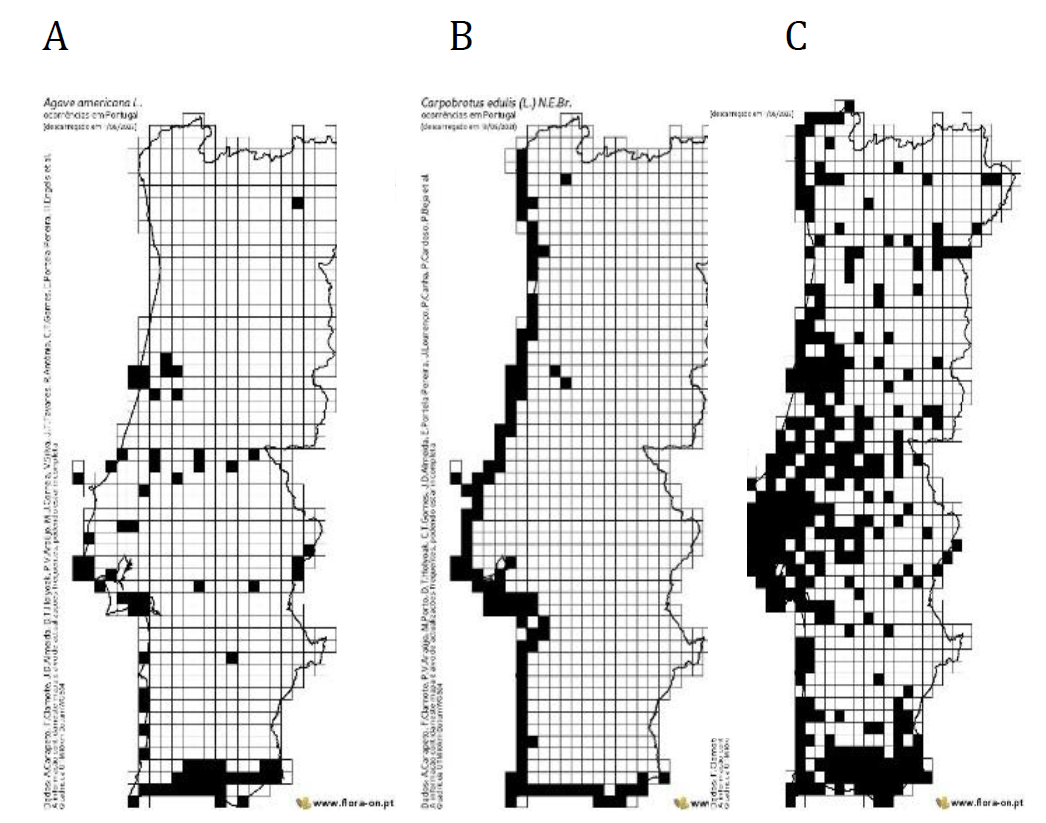
The number of exotic plant species present in Portugal has been increasing, with Almeida JD and Freitas H [17] reporting 667 naturalized exotic species, which represented about 18% of the total vascular flora of Continental Portugal, compared to 15% of 1999 and 17% of 2005. Marchante H et al. [18] highlights various species, such as Agave americana, Carpobrotus edulis, and Arundo donax, because of their widespread occurrence (Figure 1). These three invasive species all have one trait: they pose a serious threat to ecosystems and have entered the Portuguese maritime coastal zone, including dunes, sandy terrain near water lines, and cliffs [18].
Exotic plant species, whether intentionally or unintentionally introduced, spread, and can threaten the balance and future of native vegetation. They can, however, be beneficial to the national economy if they have specific chemical properties that are relevant in the use for the benefit of human health. Invasive plants can be used as a sustainable and free supply of phytochemicals having antioxidant, antibacterial, antifungal, and anticancer properties, among others [8].
Figure 1: Geographic Distribution of Agave Americana (A), Carpobrotus Edulis (B) and Arundo Donax (C) in Continental Portugal [19]
Agave Americana
Morphology and Botanical Characterization: Within the plant kingdom, the Aspargales order, which includes the Agavaceae family, is composed of 9 genera subdivided into 293 species. The genus Agave is the largest of this family, consisting of 166 species that preferentially inhabit North America and Central America, including Agave americana [20]. An americana, popularly known as Agave, is originally from Mexico and the Antilles [21]. Morphologically, it can be described as a perennial herb, consisting of green or greyish-green leaves, large, thick, pointed and with thorns on the margins, arranged in a basilar rosette, reaching up to 3 meters in height, with occasional flowering. Agave americana is a monocarpic plant that can live for several decades before flowering. Although the plants can possibly be grown for more than ten years before harvesting, and a partial harvest of leaves is conceivable during this period, a specific weevil (agave snout weevil, Scyphophorus acupunctatus) frequently damages the plant before it reaches maturity. Agave americana is predominantly utilized as a xeriscape ornamental, but it has a long history of traditional usage and has lately been studied for other useful products [22]. This plant is a source of sugar and minerals, but it also possesses anti-inflammatory, antioxidant, and anticancer properties [23,24]. Agave is primarily used to make distilled (spirits) and non-distilled alcoholic beverages such as Tequila, Mezcal, Bacanora, Raicilla, Sotol, and Pulque, all of which have specific ties to Mexican history and culture and contribute to the Mexican economy [25].
(Bio)Chemical Characterization of Agave Americana
Because of their vast distribution across the plant kingdom, as well as their high chemical variety and broad spectrum of biological action, the study of Agave phytochemical compounds is becoming more popular [26-28]. According to Sahnoun et al. [29,30], Agave americana has great potential as a specific chemotaxonomic marker and has several biological activities.Agave is a source of natural fibers, saponins, monosaccharides, such as fructose, and fructans [31]. The biological properties of this species are directly related to its richness in phenolic compounds [28]. Agave has a variety of secondary metabolites, including as saponins, flavonoids, homoisoflavonoids, phenolic acids, and tannins, in addition to its main metabolites (fibers) [14,31]. Kaempferol is the main flavonoid present in Agave americana [32]. Saponins, which are present in a large and varied number of plant species, are the most studied group of secondary metabolites. Since saponins are important constituents of Agave, their antibacterial, antientomological, anticholesterolemic, antifungal, anticancer, hemolytic, anti-inflammatory, antihypertensive, hypoglycaemic, hypoglycemic, anti-asthmatic and gastroprotective properties are crucial for the interest in this invasive species [28,31].
The secondary metabolites of Agave americana are mainly found in the leaves. The leaf contains phenolic compounds, such as kaempferol, quercetin, isorhamnetin, ellagic acid hexoside [32]. However, according to a to Kadam P et al. [33], the roots also include saponins and flavonoids. This explains why the leaves and roots of A. americana are traditionally used as an anesthetic, to ease headache and rheumatic pain, and to cure wounds, treat syphilis, gout, infections, and burns [34]. The leaves of A. americana are rich in puerarin and apigenin, which demonstrated important inhibitory effect against α-amylase from A. oryzae [29]. Among the phenolic acids, p-coumaric acid is also an important bioactive compound present in Agave, being the main inhibitor of human α-amylase [30]. Inhibition of pancreatic α-amylase activity affects the use of carbohydrates as an energy source. Natural α-amylase inhibitors have been known for many years and were discovered in plants such as wheat [35]. The significance of p-coumaric acid and puerarin found in Agave leaves has been proven, indicating that these chemicals have anti-diabetic characteristics and could be used as therapeutic agents for postprandial glycemia [29,30]. One of the main Agave by-products resulting from the production of tequila and mezcal are the leaves. These residues proved to be rich in biologically active secondary metabolites, such as phenols, flavonoids, phytosterols and saponins, with potential to be used in the development of new drugs [34]. As previously stated, the saponins are the group of secondary metabolites that stand out the most in this species [36]. Saponins exhibit antifungal activity, which is one of the several biological activities documented. Agave's anti-inflammatory action is related to the presence of saponins, phenolic chemicals, and terpenes. López-Romero J et al. [28] demonstrated that the main mechanism of action of these compounds against the development of inflammatory processes occurs through the inhibition of regulatory enzymes, such as cyclooxygenases, phospholipases, and lipoxygenases. Examples of these compounds are tigogenin and chlorogenin, both steroidal saponins. Shatalov AA & Pereira P, [37] reported that the genus Agave stands out for its great commercial and medicinal importance. The same authors also associated such medicinal properties with the presence of steroidal saponins. Cantalasaponin-1, which is also responsible for anti-inflammatory actions, was characterized as a chemical with gastroprotective efficacy and low toxicity, promising as an ulcer prevention drug with fewer adverse effects. However, there are other biological activities related to saponins. Guleria S and Kumar A [38] related saponins to antimicrobial effects because they are stored in plant cells as inactive precursors but are activated by vegetal enzymes when plants are the object of a pathogenic attack, conferring antimicrobial activity. Of all the saponins observed in every Agave species, kammogenin is the most abundant [32]. Terpenes and saponins modify the membrane characteristics of Gram-negative and Gram-positive bacteria, causing changes in hydrophobicity, surface charge, and membrane integrity, resulting in internal component leakage and cell death [32].
An Americana:Potential Applications in Industry
The bioactive components of saponins, as well as their physical-chemical properties, are of great importance to the food and pharmaceutical sectors, as stated in the previous section: act as precursors for the semi-synthesis of steroid drugs; have antibacterial, hypolipidemic, antiulcer, expectorant, anti-inflammatory, androgenic activity; can increase the nutritional and medicinal value of foods, giving them nutraceutical properties; can be used for bioactive product encapsulation and stability, or as emulsifiers [9]. Furthermore, saponins have been shown to have additional health benefits and can be utilized for weight loss, alcohol absorption inhibition, and hyaluronidase inhibition [39].
As stated before, the leaves of this plant contain saponins that have anti-inflammatory properties [40], being used for the treatment of wounds and inflammation [36]. Agave saponins, like the nonsteroidal anti-inflammatory medication indomethacin, appear to inhibit cyclooxygenase-1 and cyclooxygenase-2 enzymes, hence preventing the inflammatory cascade associated with arachidonic acid [40]. Misra AK et al. [41] also described the anti-inflammatory activity of Agave americana hydroalcoholic extracts in a dose-dependent manner in acute and subacute inflammatory experimental animal models. Researchers attribute the observed outcomes from plant extracts to their constituents, flavonoids and genins, which lower the chemical mediators of inflammation. It was recently established that the leaves of Agave species can be used to investigate potential applications in neuroinflammatory diseases. Therefore, Agaveleaves, as they have the potential to become a sustainable source to produce phytopharmaceutical compounds, need to be deeply investigated so that they can be applied in the treatment of several illnesses. Despite the number of beneficial effects of saponins due to the presence of numerous bioactive components, it is, however, noteworthy that their toxicity, which depends on dosage, can have adverse effects. But this cytotoxic nature makes saponins potential chemotherapeutic agents with great interest from the pharmaceutical industry [9]. It is vital not to forget that plant ripening reduces saponin concentration. As a result, efficient quantification of these and other bioactive components is required so that they can be used safely by industry. One crop-protection strategy involves blocking -amylases in insects, so eliminating them and allowing for improved plant growth. In contrast, inhibition of pancreatic amylase in humans is a well-established therapeutic strategy that, as previously stated, can be utilized to treat diabetes mellitus [42]. Blood glucose levels rise after a meal, making it difficult for diabetes individuals to maintain a "healthy" plasma glucose concentration [35]. However, this maintenance can also be accomplished by delaying glucose absorption in the digestive system by inhibiting -amylase and -glucosidase [43]. This illustrates the role of -amylase enzymes in the treatment of diabetes mellitus and suggests that they may be more successful in type II diabetes [28].The antimicrobial activity of phenolic compounds, terpenes and saponins is associated with the chemical structures of these compounds, as well as with hydrophobicity and molecular size. Furthermore, compared to higher molecular weight compounds, low molecular weight compounds like these can more easily penetrate the bacterial membrane, increasing its interaction with intracellular components and enhancing its antimicrobial effects [32]. Ethanolic extracts of leaves of the genus Agave showed antibacterial activity against Bacillus subtilis, Staphylococcus aureus, Escherichia coli and Salmonella choleraesuis [44]. These data are of great interest, as they can promote the formulation of new drugs obtained from plant products that have fewer adverse effects, being an alternative to antibiotics. The antibacterial activity observed in Agave americana leaf extracts can be attributed to the presence of an alcoholic molecule derived from tetratriacontanol and homoisoflavanoid compounds [44].Agave fructans, which are sucrose-derived fructose polymers containing b(2®1) and/or b(2®6) links, are natural food additives that can be employed as prebiotics, stabilizers, fat substitutes, viscosifiers, texturizers, and sweetenersSo far, there is no indication that Agave fructans are allergenic or harmful [45]. The concentrations of free sugars and fructans in Agave depend on plant age. Younger plants (2-4 years old) have a low degree of polymerization and a higher concentration of free sugars, while agaves aged 10 to 12 years have a higher total concentration of carbohydrates, but a low concentration of free sugars and fructans, which may originate polymers with a degree of high, intermediate, or low polymerization. The consumption of fructans promotes the antioxidant effect, reducing oxidative stress, favours the absorption of minerals, and shows chemoprotective effects, which prevent some cancers, such as colorectal cancer. In addition, Agave fructans support the growth of beneficial intestinal bacteria Lactobacillus and Bifidobacterium, that inhibit the growth of harmful bacteria, regulate blood glucose, and act to improve the health of overweight people [46]. Consequently, the applications in the nutritional industry/market can be enormous. Consumed fructans are not digested, and when they reach the colon, are fermented by the intestinal microflora, which leads to the stimulation of the activity of beneficial intestinal bacteria [45]. Antioxidants can influence the gut microbiome, encouraging the diversity of intestinal bacteria and the development of bioactive metabolites [47]. The value of the genus Agave seems to be useful, but more studies are needed. Its phytochemical richness enables the extraction of multiple natural chemical compounds and important active principles in the prevention/treatment of various clinical diseases, resulting in industry interest in several sectors [41]. Carpobrotus EdulisMorphology and Botanical Characterization: Carpobrotus edulis (C. edulis) is a South African plant species [48]. It is a member of the Aizoaceae family, a tracheophytic plant family with 135 genera and over 1900 species, almost all of which are native to dry or semi-arid habitats on the African continent[49]. Morphologically, variety edulis can be described as a perennial, succulent, creeping subshrub, with branched scaly stems that can reach several meters. The length of the edible leaves is significantly short (up to 13 centimetres), green in color, sometimes with a reddish or purple tint, especially at the tips. The genus Carpobrotus is distinguished by leaves with a triangle base, the angle of which varies between isosceles and equilateral depending on the species [50]. The yellow or pink flowers can reach between 8 and 10 centimetres in diameter, blooming between April and July.
According to Marchante H et al. [18], Carpobrotus edulis (Hottentot-fig or iceplant) is a harmful invasive plant. It is found primarily in coastal dunes, capes, and regions next to slopes where it was planted. If a plant is more tolerant of soil salt than others, it will have an advantage over the others, invading the habitat and spreading more quickly. And this species is known for its ability to tolerate salinity and grow in both dry and humid environments [50].
Carpobrotus edulis is an exotic plant with a high impact throughout the world. Fast growth, great resistance, and high regenerative capacity, together with the production of thousands of seeds clearly demonstrate its invasive character and the crucial need for control where it is not native [50]. This species grows rather quickly near to the ground, spreading over a broad area that it easily covers, and can be called a mat-forming plant, limiting the formation, growth, and development of other plants [12]. In addition, this plant is very easy to climb. It is therefore not surprising that it readily proliferates in places where most plants cannot, such as cliffs, sand dunes, among other coastal areas [50]. Species of the genus Carpobrotus multiply promptly, either by seed dispersal or by vegetative nodules. The seeds have a germination capacity of two years, which allows the creation of vast seed banks in the soil, with the potential to colonize the zone again [50]. There are several animals that feed on it, especially the succulent fruits, in the form of figs, which helps in the propagation of the species. It has even been shown that germination capacity increases when passing through the digestive tract of some animals, mainly rabbits and, to a lesser extent, deer [18]. Despite being an invasive plant, this plant has various traditional medical purposes, including sinusitis, tuberculosis, fungal and bacterial diseases, and diabetes, among others [49].
(Bio)chemical Characterization of Carpobrotus Edulis
The profile of bioactive compounds described in Carpobrotus edulisis quite variable. Hafsa J et al. [51] investigated C. edulis extracts and discovered a variety of phenolic chemicals, including sinapic acid, ferulic acid, luteolin-O-glucoside, isoquercetin, and ellagic acid. Martins A et al. [52] also described catechins, epicatechins and proanthocyanidins, with some pentacyclic triterpenoids (β-amyrin, oleanolic acid and uvaol) also being reported. Meddeb E et al. [53] described quinic and caffeic acid (chlorogenic acid) esters, including the acid in 3-O, 4-O, and 5-O-caffeoylquinic forms. Additional compounds identified in C. edulis stem, leaves, and flowers include saponins, coumarins, alkaloids, anthraquinones, cyanogenic glycosides, unsaturated sterols/triterpenoids, and tannins [49]. An important compound found in this plant is chlorogenic acid, which not only has been shown to be able to reduce oxidative stress, but also decreases the incidence of cardiovascular disease (preventing an increase in blood pressure) [53].
The fruit, Hottentot-fig, is edible and high in carbs. In terms of micronutrients, the levels of calcium and magnesium described in Carpobrotus fruits are higher than those found in regularly consumed fruits. However, although the values may differ, Carpobrotus edulis is the one with the highest levels of these minerals, also containing considerable levels of zinc and manganese. When compared to the ripe fruit, the peels contain a higher variety of chemicals, particularly phenolic acids, flavonoids, and coumarins, with coumaric acid and uvaol found solely in this region of the Hottentot-fig. Vanillin and kaempferol-O-(ramnosyl) hexosilhexoside, on the other hand, are pulp-specific. The same authors described azelaic acid and emodin for the first time in peels and pulp. Azelaic acid has important pharmacological effects (antioxidant, antibacterial), and emodin, among other things, has antibacterial, anti-inflammatory, and anticancer activity. Fruit also has a considerable ability to inhibit tyrosinase, an enzyme involved in melanogenesis, as well as a significant capability to reduce iron [54]. Moreover, ferulic acid, catechol, tannins, rutin, neohesperidin, and hyperosides are among the chemicals identified in C. edulis leaves, with flavonoids being the most abundant [49]. However, according to Bazzicalupo M et al. [55], phenolic acids are the most abundant compounds in the aqueous extract of the leaves, with hydroxycinnamic acids having the highest content, with dicaffeoylquinic acid being the most abundant, followed by dihydrocaffeic acid 3-sulfate and p-coumaric acid 4-O-glucoside. After phenolic acids, flavonoids, tannins, pyrimidine derivatives and triterpenes follow, in increasing order of concentration.
The essential oils derived from the leaves are also high in bioactive components such monoterpenes, sesquiterpenes, diterpenes, and fatty acid esters, which are thought to have antioxidant, antibacterial, and immunomodulatory activities [49]. It is well understood that the presence of bioactive chemicals has a direct relationship with biological capabilities. García-Oliveira P et al. [22] reported thatC. edulis hydroethanolic extracts exhibited important antioxidant activity through radical scavenging mechanisms, attributed to the presence of phenolic acids. Martins A et al. [52] stated that catechin, epicatechin and derivatives, present in C. edulis, can reduce inflammatory processes and allow inhibition of the H+/K+ ATPase proton pump, thus reducing stomach acidity, which leads to believe that it is for this reason that it is used in traditional medicine to treat different inflammations and digestive problems. C. edulis' antibacterial action has also been described, with Meddeb E et al. [53] claiming that catechin is responsible for increasing the permeability of the cell membrane, facilitating bacterial lysis. Bioactive compounds, such as flavonoids, attenuate infections caused by bacteria [49].
Carpobrotus Edulis: Potential Applications in Industry
Compounds with biological activity found in C. edulis appear to be responsible for the invasive plant's cardioprotective, antifungal, antiviral, immunomodulatory, antioxidant, neuroprotective, and anticancer activities, enhancing its application in the creation of novel pharmaceutical medications [49]. Some plants are presented as a natural source of antioxidants, which can be an asset as a natural resource for the development of new medicines. Although beneficial when they are at normal levels, the exaggerated amount of free radical damages cells, affecting their function and, therefore, being harmful to the body. Carpobrotus edulis antioxidant activity was evaluated, and it demonstrated a high capacity to block 2,2-diphenyl-1-picrylhydrazyl free radicals, indicating that this invasive species can be employed as a natural antioxidant [51]. Ibtissem B et al. [56] demonstrated the antioxidant activity of C. edulis alcoholic extracts, noting a very substantial proportion of suppression of 2,2-diphenyl-1-picrylhydrazyl free radicals (94.64%), agreeing with García-Oliveira P et al. [22] and Erhabor RC et al. [57]. The genus Carpobrotus was and still is used in traditional medicine in South Africa for the treatment of fungal and bacterial infections. Regarding antibacterial activity is assumed that the presence of several tannins and flavonoids present in C. edulis are responsible for the antibacterial activity demonstrated in its crude extract [56]. Similarly, catechin not only demonstrated antibacterial activity against a broad range of Gram-negative and Gram-positive bacteria, but it also demonstrated a synergistic effect in a rat study, enhancing the effect of streptomycin against Mycobacterium tuberculosis due to an inhibitory process on fatty acids and mycolic acids (which are responsible for conferring resistance to antibiotics used against the bacteria). Ibtissem B et al. [56]s described the antibacterial activity of Carpobrotus edulis against Staphylococcus aureus, Esherichia coli and Pseudomonas aeruginosa. The methanolic extract of C. edulis also inhibited the growth of Mycobacterium tuberculosis resistant to multiple phagocytosed drugs and of Staphylococcus aureus resistant to methicillin, which enhances the use of this plant for the treatment of infections, namely multidrug-resistant intracellular infections [58]. Leaf extracts of C. edulis also exhibited excellent inhibitory activity against E. cloacae [57] and showed therapeutic properties for oral pathogens, namely S. mutans, S. sanguinis, Lactobacillus spp., P. gingivalis, F. nucleatum, and Candida spp [59]. Uvaol, β-amyrin, oleanolic acid, catechin, epicatechin, and monogalactosyldiacylglycerol could be responsible for the activity against different Gram-negative and Gram-positive strains of bacteria [52]. Cock IE et al. [59] investigated the antibacterial activity of C. edulis fruits and leaves. The scientists concluded that the chemical composition of the plant fluctuates and that it is responsible for the inhibition of Klebsiella pneumoniae, even though inhibitory activity against this bacterium was only seen in the leaves and not in the fruits. Other biological activities have also been reported in other studies. Among the possible uses of Carpobrotus edulis is the treatment of infections in patients with acquired immunodeficiency syndrome [53]. Indeed, C. edulis is employed in the treatment of infections related to the human immunodeficiency virus (HIV). The explanation for this application is because aqueous extracts of C. edulis inhibit HIV-1 protease, an essential enzyme for the replication and maturation of HIV to its infectious form[60]. As previously stated, C. edulis possesses antioxidant activity, and it is well known that consuming natural antioxidants helps to boost the immune system and reduces the probability of acquiring neoplasms [60].
An inhibitory effect of the P-glycoprotein transporter protein was observed, which, in turn, is responsible for conferring resistance to several drugs used in the treatment of some types of neoplasms, and the main factors responsible for this inhibitory effect of P-glycoprotein are the compounds uvaol, β-amyrin, oleanolic acid, highlighting uvaol as the most promising compound. However, it has been suggested that the presence of the methyl group at the C-29 position of uvaol is primarily responsible for its higher activity than the others. Of all the compounds mentioned above, the pentacyclic triterpenoid uvaol was the compound that proved to be the most effective in therapy against cancer, without inducing toxicity, demonstrating the potential to be used in combination with doxorubicin. Rutin, a flavonoid present in this plant, has been suggested to be a molecule that offers health benefits, including anticancer, antioxidant, antidiabetic, anti-inflammatory and antimicrobial properties. According to Firouzai-Amandi, rutin encapsulated in biodegradable nanoparticles showed anticancer activity against the human ovarian cancer cell line Skov3. Thus, phenolic composition obtained in C. edulis extracts showed a significant inhibitory effect on the specific activity of alpha-amylase, alpha-glucosidase, and aldose reductase enzymes. Procyanidin and 1,3-dicaffeoxyl quinic acid showed greater capacity as potential alpha-amylase and alpha-glucosidase inhibitors, while isorhamnetin-3-O-rutinoside and luteolin-7-O-beta-d-glucoside exhibited more ability to inhibit aldose reductase. As a result, the hypoglycemic impact of this invasive plant extract can be used in the development of novel medications for type 2 diabetes [61].
The bioactive properties of C. edulis leaves, such as antioxidant and skin matrix preservation, showed potential for them to be incorporated into topical formulations with anti-aging, anti-inflammatory and healing properties [55]. Liposomal formulations of this invasive plant leave extract exhibited positive effects on the healing process. This agrees with the results of Bazzicalupo M et al. [55], who showed that leaf extracts increase wound closure and collagen formation while inhibiting collagenase and hyaluronidase. As a result of its key bioactive qualities, this invasive plant has the potential to be used into medicinal and cosmetic goods. More research is needed to ensure the absence of toxicity and, more importantly, to reuse existing resources in the ecosystem, in this case an invasive plant, which has the added benefit of lowering its influence on the natural environment.
Arundo Donax
Morphology And Botanical Characterization: Arundodonax L. is a Gramineae family perennial grass with an unknown origin due to its tiny size and large number of chromosomes, while several writers situate it as belonging to East Asia.Giant reed is well recognized as an intriguing biomass source due to its high productivity and low requirements, as it can be cultivated in practically any type of soil and with very little water.Its introduction into other regions of the world, including Portugal, is very old, and it is most likely due to the use of culms in agriculture, hedges, and slope fortification [62]. This species, which grows very quickly, has large dimensions, growing from 2 to 10 m in height, with leaves 3-8 cm wide, lanceolate-linear, with sharp margins and long attenuated in a fine point. Its roots are fibrous, penetrating deep into the soil. The flowers are gathered in panicles of 30-90 cm, oblong, dense, and compacted in a cream to brown cluster [18]. Arundo donax is regarded as one of the world's worst invasive plants because it displaces native flora and destroys the ecological state of the regions it invades[62]. Fragments of the rhizomes are dragged by watercourses, creating new distant invasion foci, that prevent the development of native vegetation and interfere with water flow [18]. A. donax is characterized by having an asexual vegetative reproduction, originating new plants directly from the rhizomes. It can also be regenerated from stem fragments or lateral stems that come into touch with soil and, under the right conditions, sprout roots [63].
(Bio)chemical Characterization of Arundo Donax
In terms of chemical composition, this invasive plant contains proteins, carbohydrates, and fatty acids, as well as phytoconstituents such as phenolics, lignin, cellulose, hemicelluloses, alkaloids, indoles, terpenoids, xanthones, xanthene, and trace elements [63]. The composition of the lipophilic fraction of this plant consists of n-fatty acids (41%), sterols (19%), monoglycerides (13%), fatty alcohols (7%), and steryl glucosides (6%) [62]. According to Míguez C et al. [64], the largest concentration of total phenolic compounds is observed in aqueous extracts of leaves, followed by flowers, and finally stems. Also, it was observed in aqueous extracts of A. donaxstems high contents of polysaccharides and polyphenols, as well as a significant antioxidant potential [65].
Among the alkaloids, bufotenine, dehydrobufotenine, bufotenidine, N, N-dimethyltryptamine, 5-methoxy-N-methyltryptamine, gramine, donaxine, donaxirine, donaxiridine, arundine, arundafine, arundinine, arundamine, arundacine, arundarine, arundavine, arundaline, N-acetyltryptamine, trans-N-(p-coumaroyl) serotonin, trans-N-feruloyl serotonin, tuberosine B, donasine, and eleagnin were isolated in the rhizome, root or flowers of the plant [63,66]. Arundo donaxleaves also contain terpenoids, such as ɑ-amyrenone, β-amyrenone and cycloartenone. These compounds have positive inotropic effects as well as vasodilator action.
Arundo Donax: Potential Applications in Industry
Arundo donax L. has several uses in traditional medicine, but it also has bioenergy and socioeconomic importance. It is currently a low-cost alternative for producing biomass and bioenergy, and it may also be used to make biopolymers or cellulosic pulp, as well as fishing rods, musical instruments, canes, and construction materials [39]. However, the most researched application is the potential of the species Arundo donax L. in the phytoremediation of heavy metal-contaminated soils. A. donax has been demonstrated to detoxify toxic metals, being able to absorb and bioaccumulate copper, cadmium, mercury, nickel, lead, and arsenic, and may therefore be a signal of their existence [67]. In addition, this invasive plant can accumulate metals that are harmful to the environment and human health, showing a good capacity to grow in contaminated soils, at different pH and salinity values. This aptitude to absorb heavy metals and bioremediate soils can be improved through a process of symbiosis with other plants [39]. As a result, A. donax can be used to decontaminate polluted soils and wastewater [39], improve soil quality, and prevent agricultural product contamination. Fontes-Candia C et al. [68] employed bioactive aqueous extracts of A. donaxstems to create porous and hydrophilic bioactive aerogels, having antioxidant activity due in part to the presence of hemicelluloses. These aerogels showed potential for use as bioactive pads for food packaging, by inhibiting β-carotene bleaching or reducing lipid oxidation of red meat. Despite being an invasive plant, A. donaxexhibits a variety of biological activities, like antibacterial, antifungal, anthelmintic, antioxidant, antiproliferative, and antispasmodic, among others [63,69]. The leaves, stem, roots, and rhizome have traditionally been employed for the treatment of dermatological, gastrointestinal, skeletal, menstrual, respiratory, urinary (e.g., cystitis), pertussis, condyloma, and toothaches [63]. For example, the rhizome was used to treat dropsy and had anti-cancer properties when boiled in wine with honey. In turn, the root infusion was thought to have diuretic, depurative, emollient, and diaphoretic properties, among others. Moreover, several compounds extracted from A. donax have additional potential use in the pharmaceutical, cosmetic and food industries. For instance, xylose, which produces xylitol, which is employed in diabetic diets, and levulinic acid and g-valerolactone, which allow the creation of food flavorings [37].
Bufotenine, bufotenidine and dehydrobufotenine evidence anti-inflammatory and analgesic properties, showing bufotenine also possess antiviral activity. N, N'-dimethyltryptamine and 5-methoxy-N, N-dimethyltryptamine, which have psychedelic effects, have the potential to be employed in the treatment of several neuropsychiatric disorders, as well as in the treatment of alcohol and cigarette addictions [70]. Arundine and its derivatives show antiviral and phytopathogenic antifungal effects. As a matter of fact, arundine does, in fact, have anti-tobacco mosaic virus action as well as antifungal activities against plant diseases [63]. The N-acetyltryptamine compound has antifungal [71] and antiradical activity, and its carbonyl group may be responsible for the latter. N-(p-coumaroyl) serotonin and N-feruloylserotonin, antioxidative indolic polyphenols have promising anti-atherogenic properties [72], while eleagnine shows anti-inflammatory activity. Both a- and b-amyrenone inhibited the activity of pancreatic lipases in vitro, allowing them to be used pharmacologically in anti-obesity formulations [22]. Other studies developed in mice showed that a- and b-amyrenone lowered postprandial glycemia and adiposity. Cycloartenone, in turn, has antiviral activity, namely anti-influenza, because it inhibits the Influenza neuraminidase A virus. An N-acetyl-D-glucosamine lectin isolated from the plant's rhizomes displays antiproliferative action in human cancer cell lines. A. donax's chemical composition also includes levulinic acid and γ -valerolactone, which may be intermediates for medicinal and/or food products [73]. Levulinic acid is used in the manufacture of capsules, tablets, and injections, mostly for cancer treatment [39], and is also useful in the food industry as a flavoring agent [63]. γ-Valerolactone, which may be produced by hydrogenating levulinic acid [74], is recognized as a green solvent with applications in the pharmaceutical industry, specifically in peptide synthesis. Regarding antimicrobial activity, different plant organs can be used for antibacterial actions. Some A. donax extracts hindered the growth of B. subtilis, whereas others inhibited the growth of B. cereus. Hexadecanoic acid seems to be the main inhibitor of B. subtilis, whereas xanthone influences B. cereus growth. Also, lignin shows antimicrobial effects against Escherichia coli, Listeria monocytogenes, Staphyloccus aureus and Staphylococcus epidermidis. As a result, the lignin isolated from A. donax has the potential to be combined into nanoparticles for use, for example, in the treatment of wounds that can be infected by the above microorganisms [75]. A. donax also exhibits antifungal activity against Basidiomycetes, preserving wood[76],and against plant pathogenic fungi. A. donaxbio-oil also seems to be effective against Reticulitermes flavipes [76]. In short, despite its reputation as an invasive plant, A. donax can be used for a variety of purposes, contributing to a more sustainable economy and greater ecosystem balance.
CONCLUSION
Invasions by exotic plants are one of the major causes of ecosystem changes, threatening native biodiversity. Thus, knowledge of invasive plants must imply a management plan for these plants, which must include at least three distinct phases: prevention, early detection and rapid response, and management (control, eradication and/or use). This bibliographic review focused on three common invasive species in Portuguese coastal areas, which have interesting botanical and chemical characteristics for application in the pharmaceutical, cosmetic or food industries, demonstrating their possible valorisation.
As described throughout the work, the phytochemical richness of these species allows the obtaining of several natural chemical compounds, which potentiate useful active principles in the prevention/treatment of several clinical conditions. It was found that after analysing the extracts of plants of the genus Agave, it has a wide variety of bioactive compounds with anti-inflammatory, antibacterial, antioxidant, antidiabetic, and antifungal properties, with most of these compounds found in the leaves. The constituent in greater quantity in Agave americana are saponins, which are mainly responsible for the antibacterial activity of this plant. Carpobrotus edulis is also useful in the treatment of bacterial infections, mainly thanks to the presence of catechin, which forms hydrogen bonds with bacteria, altering their permeability. C. edulis is also useful in cancer therapy, mainly due to the uvaol compound that acts as an adjuvant, allowing a higher concentration of the drug used in the treatment of cancer through the passage of P-glycoprotein.Finally, Arundo donax, rich in n-fatty acids and sterols, has the highest concentration of total phenolic compounds in the leaves. The alkaloid content of this plant seems to be related to potential anti-inflammatory, analgesic, antiviral, antifungal and anti-atherogenic properties. Terpenoids show the ability to inhibit the activity of pancreatic lipases and reduce postprandial glycemia, which gives them potential anti-obesity action. Hexadecanoic acid and lignin, in turn, seem to be responsible for the antimicrobial activity of this invasive plant.
REFERENCE
Simberloff, D. “How common are invasion-induced ecosystem impacts?” Biological Invasions, vol. 13, no. 5, 2011, pp. 1255–1268.
Simberloff, D. et al. “Impacts of biological invasions: What’s what and the way forward.” Trends in Ecology & Evolution, vol. 28, no. 1, 2013, pp. 58–66.
Boscutti, F. et al. “Urban sprawl facilitates invasions of exotic plants across multiple spatial scales.” Biological Invasions, vol. 24, 2022, pp. 1497–1510.
Catford, J.A. et al. “Introduced species that overcome life history tradeoffs can cause native extinctions.” Nature Communications, vol. 9, no. 1, 2018, p. 2131.
Brunel, S. et al. “Eradication and control of invasive alien plants in the mediterranean basin: Towards better coordination to enhance existing initiatives.” EPPO Bulletin, vol. 43, no. 2, 2013, pp. 290–308.
Felton, A. et al. “Identifying and managing the ecological risks of using introduced tree species in sweden’s production forestry.” Forest Ecology and Management, vol. 307, 2013, pp. 165–177.
Silva, L. et al.As Invasões Biológicas em Portugal: História, Diversidade e Gestão. Arte e Ciência, Universidade do Porto, 2018.
Nguyen, D.T.C. et al. “New frontiers of invasive plants for biosynthesis of nanoparticles towards biomedical applications: A review.” Science of the Total Environment, vol. 857, 2023, pp. 159278.
Shrestha, U.B. et al. “potential impact of climate change on the distribution of six invasive alien plants in Nepal.” Ecological Indicators, vol. 95, 2018, pp. 99–107.
Vance, E.D. et al. “scientific basis for sustainable management of eucalyptus and populus as short-rotation woody crops in the U.S.” Forests, vol. 5, no. 5, 2014, pp. 901–918.
Novoa, A. and L. González. “Impacts of carpobrotus edulis on the germination, establishment and survival of native plants.” PLOS ONE, vol. 9, no. 9, 2014, pp. e107557.
Roiloa, S.R. et al. “Division of labor brings greater benefits to clones of carpobrotus edulis in the non-native range.” Frontiers in Plant Science, vol. 7, 2016, pp. 349.
Denóbile, C. et al. “Public health implications of invasive plants: A scientometric study.” Plants, vol. 12, no. 3, 2023, pp. 661.
Yang, W. et al. “Polyvinyl alcohol/chitosan hydrogels with enhanced antioxidant and antibacterial properties.” Carbohydrate Polymers, vol. 181, 2018, pp. 275–284.
Rejmánek, M. et al. “Plant invasions and invasibility of plant communities.” Vegetation Ecology, edited by E. van der Maarel and J. Franklin, 2nd ed., Wiley, 2013.
Van Kleunen, M. et al. “A meta-analysis of trait differences between invasive and non-invasive plant species.” Ecology Letters, vol. 13, no. 2, 2010, pp. 235–245.
Almeida, J.D. and H. Freitas. “Exotic flora of continental portugal: A new assessment.” Bocconea, vol. 24, 2012, pp. 231–237.
Marchante, H. et al.Guia Prático para a Identificação de Plantas Invasoras em Portugal. Imprensa da Universidade de Coimbra, 2014.
Carapeto, A. et al. “Flora-on: Flora de portugal interactiva.” Sociedade Portuguesa de Botânica, 2021, www.flora-on.pt.
Rahmani, H. et al. “Phenolic quantification and antioxidant activity of agave americana leaves.” Advances in Environmental Biology, vol. 10, no. 9, 2016, pp. 194–200.
Hammuel, C. et al. “Phytochemical and antimicrobial screening of agave sisalana extracts.” Acta Poloniae Pharmaceutica, vol. 68, no. 4, 2011, pp. 535–539.
García-Oliveira, P. et al. “From tradition to health: Chemical and bioactive characterization of five traditional plants.” Molecules, vol. 27, no. 19, 2022, pp. 6495.
Rizwan, K. et al. “Phytochemical and biological studies of agave attenuata.” International Journal of Molecular Sciences, vol. 13, no. 5, 2012, pp. 6440–6451.
Hackman, D. et al. “Agave americana: An evidence-based systematic review.” Journal of Herbs, Spices & Medicinal Plants, vol. 6, 2006, pp. 101–122.
Licursi, D. et al. “Multi-valorisation of giant reed (Arundo donax).” Industrial Crops and Products, vol. 112, 2018, pp. 6–17.
Álvarez-Chávez, J. et al. “Agave by-products: Nutraceutical value and processing methods.” Polysaccharides, vol. 2, 2021, pp. 720–743.
Ortega, Z. et al. “Characterization of agave americana l. plant as potential source of fibres for composite obtaining.” SN Applied Sciences, vol. 1, 2019, pp. 987.
Almaraz-Abarca, N. et al. “The phenols of the genus agave (agavaceae).” Journal of Biomaterials and Nanobiotechnology, vol. 4, 2013, pp. 9–16.
Sahnoun, M. et al. “Effect of agave americana l. on human and aspergillus oryzae s2 α-amylase inhibition.” Natural Product Research, vol. 33, no. 5, 2019, pp. 755–758.
Sahnoun, M. et al. “Apigenin isolated from agave americana encodes α-amylase inhibition.” Journal of Food Science & Technology, vol. 55, 2018, pp. 1489–1498.
Quiñones-Muñoz, T.A. et al. “Nutraceutical properties of medicago sativa, agave spp., zea mays, and avena sativa.” Metabolites, vol. 12, no. 9, 2022, pp. 806.
López-Romero, J.C. et al. “Biological activities of agave by-products and their possible applications.” Journal of the Science of Food and Agriculture, vol. 98, no. 7, 2018, pp. 2461–2474.
Maazoun, A.M. et al. “Phytochemical profile and insecticidal activity of agave americana leaf extract.” Environmental Science and Pollution Research, vol. 26, 2019, pp. 19468–19480.
Bermúdez-Bazán, M. et al. “Hunting bioactive molecules from the agave genus.” Molecules, vol. 26, no. 22, 2021, pp. 6789.
Piparo, E. et al. “Flavonoids for controlling starch digestion.” Journal of Medicinal Chemistry, vol. 51, no. 12, 2008, pp. 3555–3561.
Mannasaheb, B.A. et al. “Protective effect of agave americana leaf extract in ulcerative colitis.” Ayu, vol. 36, no. 1, 2015, pp. 101–106.
Shatalov, A.A. and H. Pereira. “Xylose production from giant reed (arundo donax).” Carbohydrate Polymers, vol. 87, 2012, pp. 210–217.
Guleria, S. and A. Kumar. “antifungal activity of agave americana leaf extract.” Archives of Phytopathology and Plant Protection, vol. 42, no. 4, 2009, pp. 370–375.
Guo, Y. et al. “Paris polyphylla-derived saponins inhibit bladder cancer cell growth.” Current Urology, vol. 11, no. 3, 2018, pp. 131–138.
Monterrosas-Brisson, N. et al. “Anti-inflammatory activity of different agave plants.” Molecules, vol. 18, no. 7, 2013, pp. 8136–8146.
Misra, A.K. et al. “Anti-inflammatory effect of agave americana extract.” Pharmacognosy Research, vol. 10, no. 1, 2018, pp. 104–108.
Najafian, M. et al. “Trans-chalcone as a novel α-amylase inhibitor.” Molecular Biology Reports, vol. 38, no. 3, 2011, pp. 1617–1620.
Tundis, R. et al. “Natural products as α-amylase and α-glucosidase inhibitors.” Mini-Reviews in Medicinal Chemistry, vol. 10, no. 4, 2010, pp. 315–331.
Khan, M. et al. “Antibacterial and irritant activities of plant extracts.” Pakistan Journal of Zoology, vol. 42, no. 1, 2010, pp. 93–97.
Verma, D.K. et al. “Composition and toxicology of fructans.” Journal of Food Composition and Analysis, vol. 99, 2021, pp. 103884.
Espinosa-Andrews, H. et al. “Role of agave fructans in health and food applications.” Trends in Food Science & Technology, vol. 114, 2021, pp. 585–598.
Naliyadhara, N. et al. “Dietary antioxidants and gut microbiome.” Journal of Functional Foods, vol. 100, 2023, pp. 105365.
Jami, F. et al. “A new cytospora species pathogenic on carpobrotus edulis.” Fungal Systematics and Evolution, vol. 2, 2018, pp. 37–43.
Akinyede, K.A. et al. “Ethnopharmacology of carpobrotus edulis.” Scientia Pharmaceutica, vol. 88, no. 3, 2020, p. 39.
Campoy, J. et al. “Monographs of invasive plants in Europe: Carpobrotus.” Botany Letters, vol. 165, nos. 3–4, 2018, pp. 440–475.
Hafsa, J. et al. “Antioxidant and antiproliferative activities of carpobrotus edulis.” Biomedicine & Pharmacotherapy, vol. 84, 2016, pp. 1496–1503.
Martins, A. et al. “Constituents of carpobrotus edulis inhibit p-glycoprotein.” Anticancer Research, vol. 30, no. 3, 2010, pp. 829–835.
Meddeb, E. et al. “Biochemical study of carpobrotus edulis bioactive properties.” Applied Biochemistry and Biotechnology, vol. 182, no. 3, 2017, pp. 1131–1143.
Castañeda-Loaiza, V. et al. “Exploring fruits of carpobrotus edulis.” Industrial Crops and Products, vol. 144, 2020, pp. 112005.
Bazzicalupo, M. et al. “Carpobrotus edulis extract as a skin preserving agent.” Journal of Integrative Medicine, vol. 19, no. 6, 2021, pp. 526–536.
Ibtissem, B. et al. “Antioxidant and antibacterial properties of carpobrotus edulis.” Scientific Research, vol. 2, no. 3, 2012, pp. 359–365.
Erhabor, R.C. et al. “Antimicrobial activities of south African plants.” South African Journal of Botany, vol. 146, 2022, pp. 643–652.
Martins, A. et al. “antibacterial properties of carpobrotus edulis.” International Journal of Antimicrobial Agents, vol. 37, no. 5, 2011, pp. 438–444.
Cock, I.E. et al. “Traditional use of southern african medicinal plants.” South African Journal of Botany, vol. 153, 2023, pp. 258–279.
Omoruyi, B.E. et al. “Inhibition of HIV-1 protease by carpobrotus edulis.” Evidence-Based Complementary and Alternative Medicine, 2020, pp. 9648056.
Sabiu, S. et al. “Phenolics profiling of carpobrotus edulis.” Molecules, vol. 26, no. 16, 2021, pp. 4867.
Kumar, P. et al. “Arundo donax: Traditional and ethnomedicinal importance.” Journal of Herbmed Pharmacology, vol. 10, no. 3, 2021, pp. 269–280.
Corno, L. et al. “Arundo donax: A non-food crop for bioenergy.” Biotechnology Advances, vol. 32, no. 8, 2014, pp. 1535–1549.
Míguez, C. et al. “Exploitation of arundo donax as a phenol source.” Waste and Biomass Valorization, vol. 13, 2022, pp. 4253–4265.
Pansuksan, K. et al. “Phytochemical compounds in arundo donax.” Pharmacognosy Journal, vol. 12, no. 2, 2020, pp. 287–292.
Jia, A.L. et al. “A new indole alkaloid from arundo donax.” Natural Product Research, vol. 10, 2008, pp. 105–109.
Sepúlveda, B. et al. “Metal uptake in wild vegetation.” Environmental Geochemistry and Health, vol. 45, no. 1, 2023, pp. 137–149.
Fontes-Candia, C. et al. “Bioactive cellulose-based aerogels from arundo donax.” Food Hydrocolloids, vol. 96, 2019, pp. 151–160.
Badar, S.N. et al. “Anthelmintic efficacy of arundo donax.” Brazilian Journal of Veterinary Parasitology, vol. 30, no. 2, 2021, pp. e001221.
Lowe, H. et al. “Psychedelics as therapeutic options.” Molecules, vol. 27, no. 8, 2022, pp. 2520.
Ramlawi, S. et al. “Antimicrobial activity in arthrobacter spp.” Journal of Basic Microbiology, vol. 61, no. 8, 2021, pp. 745–756.
Takimoto, T. et al. “Effects of polyphenols on vascular smooth muscle cells.” Molecular Nutrition & Food Research, vol. 55, no. 10, 2011, pp. 1561–1571.
Raspolli Galletti, A.M. et al. “From giant reed to valeric biofuels.” Applied Energy, vol. 102, 2013, pp. 157–162.
Victor, A. et al. “Levulinic acid as a strategic chemical.” Catalysts, vol. 12, no. 8, 2022, pp. 909.
Ndaba, B. et al. “Extraction methods and antimicrobial activities of lignin.” Sustainable Chemistry and Pharmacy, vol. 18, 2020, pp. 100342.
Temiz, A. et al. “Bio-oil from giant cane as a wood preservative.” BioResources, vol. 8, no. 2, 2013, pp. 2084–2098.
Recommended Articles
Research Article
Imaging Evaluation of Ultrasonography Versus Magnetic Resonance,
Imaging in Diagnosis of Carpal Tunnel Syndrome among Female Patients with Positive Nerve Conduction Study
Download PDF
Research Article
The Efficacy of 5- Fluorouracil Cream and 25% Podophyllin Solution in Treatment of Plantar Warts in Alternative Day Regimen ; An Open Therapeutic Trial.
Download PDF
Research Article
An evaluation of Profile of Medico-legal autopsies conducted at Dr. Radhakrishnan Govt. Medical College, Hamirpur, Himachal Pradesh
Download PDF
Research Article
Failure to thrive and Congenital Heart Disease among Infants of Hilly Regions
Abhinav Gautam,
Deepak Kumar Sharma
Published: 10/07/2021
Download PDF
PO Box 101, Nakuru
Kenya.
Email: office@iarconsortium.org
Editorial Office:
J.L Bhavan, Near Radison Blu Hotel,
Jalukbari, Guwahati-India
Vinha, A. F., Sousa, C., Moutinho, C. & Matos, C. (2023). Invasive Plants and Their Possible Applications - Phytochemical Profile and Biological Properties: A Review. International Academic Research Journal of Internal Medicine & Public Health, 4(1), 1-10.
MLA
Vinha, Ana. F., et al. "Invasive Plants and Their Possible Applications - Phytochemical Profile and Biological Properties: A Review." International Academic Research Journal of Internal Medicine & Public Health 4.1 (2023): 1-10.
Chicago
Vinha, Ana. F., Carla Sousa, Carla Moutinho and Carla Matos. "Invasive Plants and Their Possible Applications - Phytochemical Profile and Biological Properties: A Review." International Academic Research Journal of Internal Medicine & Public Health 4, no. 1 (2023): 1-10.
Harvard
Vinha, A. F., Sousa, C., Moutinho, C. and Matos, C. (2023) 'Invasive Plants and Their Possible Applications - Phytochemical Profile and Biological Properties: A Review' International Academic Research Journal of Internal Medicine & Public Health 4(1), pp. 1-10.
Vancouver
Vinha AF, Sousa C, Moutinho C, Matos C. Invasive Plants and Their Possible Applications - Phytochemical Profile and Biological Properties: A Review. International Academic Research Journal of Internal Medicine & Public Health. 2023 Jan;4(1):1-10.


 Download PDF
 Download XML