Background: Gender equality and modernization have given women the opportunity to be involved in the workforce, receive higher education and be involved in social and political structures. On the other hand, in the household women have several roles and responsibilities, one of which is the role of a mother to breastfeed her baby. The role and responsibility as a mother to breastfeed is influenced by several factors. Therefore, this study aims to determine what factors influence the role and responsibility of mothers to breastfeed in the era of gender equality. Methods: This study uses a grounded theory approach with 11 respondents who have met the inclusion and exclusion criteria. Data collection using semi-structural interview. Results: The research resulted in 4 themes consisting of changes and adaptations of roles after giving birth, multiple roles as wives, women's independence, and social norms. Discussion: Mother's roles and responsibilities for breastfeeding are formed after the mother goes through the stage of role change and adaptation after giving birth and is influenced by multiple roles as a wife, women's independence, and social norms regarding the obligation of mothers after giving birth to breastfeed. The division of roles and responsibilities in households that are carried out alone and together, the role of women's independence to work and be educated, and social norms indicate the existence of gender equality and inequality towards women in carrying out their roles and responsibilities for breastfeeding.
Keywords
Mother's Roles and Responsibilities
Breastfeeding
Influencing Factors
Gender Equali
INTRODUCTION
Gender equality is a matter of human rights, requirements, and indicators for sustainable development (SDGs). Gender equality is in the fifth point of the SDGs and contains about women's empowerment including in terms of health, education and economy.
According to Unesco [1] gender equality means that women and men have the same conditions to fully realize their human rights. The existence of gender equality and modernization has led to the separation of roles for women which ultimately provides opportunities for women as individuals to obtain higher education, be involved in the economic structure as professional workers and breadwinners, and be involved in social and political structures [2,3]. On the other hand, the role of women as mothers is responsible for managers in household work, maintaining harmonious relationships in the household, providing support to working husbands, being loyal and submissive and obedient to their husbands, nurturing and educating children, understanding and understanding about emotional development. children, children's activities and children's activities at school, and breastfeeding after giving birth [4,5].
The period of pregnancy and breastfeeding is a period in which the first stage of development for achieving the role of motherhood is developed, so at this time women will need more time to adjust to their new role [6]. This shows that women have heavier roles and responsibilities than men [2]. In Indonesia, discrimination in the economy, patriarchal culture and religious conservatism, and marital status are some of the causes that prevent children and women from being able to fulfill their rights to achieve gender equality.
Based on the research of Tampah [7] and Lebni [8] various series of roles and responsibilities that women have can cause role overload, role conflict, physical and mental health disorders in mothers, and stress. Stress can cause a decrease of milk production [9]. In addition, the undivided of roles and responsibilities in the household can affect the way mothers breastfeed [7].
Based on the description above, the researcher argues that with the existence of gender equality and modernization which gives women has more roles and responsibilities in many aspect it can affect the roles and responsibilities as mothers to breastfeed. Therefore, thea aim of this study is to explore the factors that influence the role and responsibility of mothers to breastfeed by using the grounded theory method.
MATERIALS AND METHOD
Research Design
This research design uses a qualitative study with a grounded theory approach. It aims to gain a new perception in a situation that is commonplace in this case is how about to breastfeed.
Place and Time of Research
This research was conducted at the Maminaa mother and baby spa home care Malang, and several mothers in the Malang city area who had previously been given information about this research and were willing to participate in the study. The research was conducted from 17 May 2021 to 15 June 2021.
Research Sampling
This study uses a purposive sampling technique, which means that the respondents selected in the study are determined based on certain criteria by the researcher. Certain criteria or inclusion criteria in this study include: mothers who have given birth, are breastfeeding or have breastfed for <2 years, either breastfeeding, formula milk, or both, not breastfeeding but giving formula milk, and mothers who are working outside the home and/or housewives. Meanwhile, the inclusion criteria in this study were mothers who were deaf or mute, and mothers who gave birth but were still born. The number of respondents in this study were 11 people who had met the research inclusion criteria.
Research Instruments
The main instrument in qualitative research is the researcher herself. Meanwhile, in this study, the researcher used a tool in the form of a question script sheet containing 13 questions that had been prepared and adapted to the research objectives. The interview guide in this study focuses on the process of the respondent's experience and the steps of the process.
Data Collection
Data was collected by using semi-structural interview technique by telephone. This is because at the time the research was taking place, it was in the COVID-19 pandemic so it was not possible to conduct interviews directly. The interview process took about 30-50 minutes for each respondent. During the interview process the researcher recorded, recorded and improvised or developed questions from the answers given by the respondents. Informed consent and research explanation sheets were given through the owner of Maminaa Mother and Baby Spa to prospective respondents. The researcher contacted prospective respondents who were willing to participate in the study and asked again their willingness to participate in the study. Informed consent was given by respondents by answering their willingness to participate in research in whatsapp chat.
Data analysis
Analysis of research data was carried out in 3 stages consisting of:
Open Coding
At this stage the researcher wrote the transcript into a script manually by listening to the results of the interviews again. The researcher then looks for keywords, grouping them into sub-themes and forming them into themes. The researcher then identified one theme which was then used as the core phenomenon.
Axial Coding
After the researcher finds the theme of the core phenomenon, the researcher begins to connect each of these themes and forms a schema or discussion result that represents the theoretical model of the thing being studied.
Selective Coding
The researcher writes or builds a “story line” based on the schema that has been formed. This story line then becomes a new proposition, hypothesis, or statement.
Trustworthiness
Trustworthiness or the degree of trust is a term of validity and reliability of data in qualitative research [10]. According to Lincoln and Guba in Polit [10], the validity or validity of the data in qualitative research (Trustworthiness) consists of four criteria, namely credibility, dependability, confirmability and transferibility. Credibility in this research is achieved by the persistence of the researcher, time triangulation, re-examination of the research results with the supervisor, using adequate research references, conducting repeated assessments and examinations to ensure research results. Dependability or credibility in research is done by auditing the entire research process. The next confirmability process is carried out to determine whether the data found in the study reflect the voices of the respondents and the actual conditions. Next is the transferability stage where the researcher describes and writes down the research results clearly and systematically. All of the criteria for achieving trustworthiness are achieved by being carried out together with two supervisors who are competent in their fields.
RESULTS
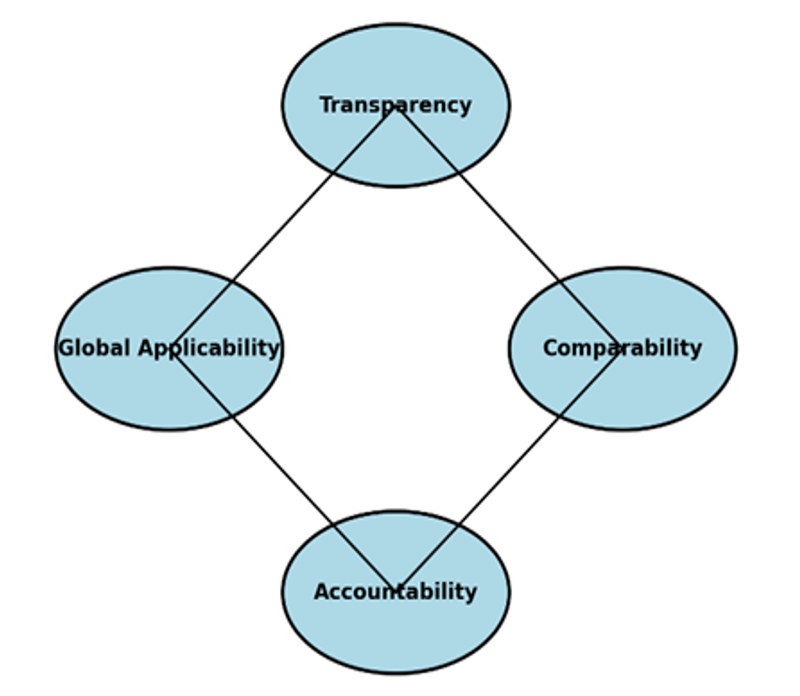
The number of respondents in this study amounted to 11 people who have met the inclusion and exclusion criteria. This study resulted in 4 themes which were then identified as factors that influence the role and responsibility of mothers to breastfeed. The interaction between themes that illustrates how these factors relate to the mother's role and responsibility for breastfeeding is depicted in Figure 1.
Social Norms
Respondents recounted their experiences during breastfeeding, where they experienced several obstacles that caused the mother to have difficulty breastfeeding and even one respondent was unable to breastfeed at all. The existence of social norms regarding the necessity of a mother to breastfeed after giving birth and family expectations so that the mother is able to breastfeed then have a negative impact on the mother's psychology. This can be seen from the respondents' statements about how the environment provides doctrine or treats them to be able to breastfeed:
“I feel like my mother asked me to give breast milk, so I feel pressured when my mother says I have to eat this, eat that, drink this so that the milk flows smoothly, can give breast milk. I feel like my mother really hopes that I can give breast milk to my child, even though my condition is like this. (Respondent 11)
"There is such a culture that you (mother) have to breastfeed regardless of my own desire to breastfeed, yes, there is still such a doctrine." (Respondent 10).
In addition, the results of the study found that there were bad views and responses from families and the surrounding environment to the difficulties and inability of mothers to breastfeed. They feel that the environment and family are too pushy, pressing, and do not want to understand how the obstacles and difficulties experienced by the mother.
"They can support me, but don't force me. I feel pressured, why am I being forced to breastfeed” (Respondent 11)
“There is still a culture of having to breastfeed. Someone once said to me, "It's a pity that their child was given formula." They were also asked why I didn't try to breastfeed, even though I had already explained how I was doing” (Respondent 3)
“The relatives and neighbors who came to visit yesterday said that my breast milk didn't come out because I was lazy to breastfeed my child and didn't want to try” (Respondent 7)
Figure 1: Schematic of the Relationship between the Mother's Role and Responsibility for Breastfeeding and the Factors that Influence it
Adaptation and Role Changes After Childbirth
This theme consists of 2 sub themes. The first sub-theme is a change in habits during the recovery period after giving birth. Changes in habits that occur after giving birth include starting from the recovery period being passed alone without a husband, increasing housework, and changing roles and responsibilities after having children. This was expressed by the respondents as follows.
"... Feeling tired, especially in the early days of giving birth". Mother revealed why it was tiring because “I was alone during the recovery period, the term because my husband went straight to work, I automatically took care of my own children during the recovery period” (Respondents 6and11).
“I feel my responsibility is getting bigger” (Respondent 11).
“Initially it was a lot of free time and i feel so relax, especially when I was pregnant with my first child, so I was still spoiled. After giving birth, everything had to be thought about, and I was confused even though there were parents who directed me” (Respondent 10).
The second sub theme is the process of learning to be a new mother. In this learning process, respondents told how their psychological condition was disturbed at the beginning after giving birth. One respondent even revealed that he found a point where he felt his baby's constant crying was something that annoyed him.
“Moreover, there is parental intervention from my family. My parents think everything that i do is wrong. I juts thouugt that, yeah, it’s named a new mom, and i am just starting to learn. I once felt that I was crying sadly because I felt that I did everything myself” (Respondent 6).
“I felt that after giving birth I was psychologically disturbed, not chaotic, (Respondents 8and11).
"Until the early days after giving birth I was at a point where I was annoyed because I felt my child was annoying, because he kept crying" (Respondent 11)
Multi Role as Wife
The role as a wife has existed and is formed since the mother married and continues even though the mother has given birth and has children. Some of the roles and responsibilities of the mother as a wife in this study include: the roles and responsibilities and obligations of the wife to serve and take care of her husband. become a financial manager in the household, and is responsible for household chores.
The roles and responsibilities and obligations to take care of serving their husbands are starting from preparing clothes, preparing food, fulfilling and serving the physical and mental needs of the husband.
"When it comes to my husband, I am responsible for taking care of my husband, preparing my husband's clothes, my husband's needs, and preparing food (Respondents 3, 9, 10, “as a wife, yes, I do my duty as a woman to fulfill and serve my husband's needs” (Respondent 6).
"taking care of and serving my husband, fulfilling my husband's inner needs as well of course" (Respondent 7)
As a financial manager in the household, the mother has the responsibility to manage the income obtained from her husband. The mother must be able to manage how the family income generated from her husband alone can be used to meet the needs of her family for a month.
"It's more about financial management, how to manage expenses, especially when only 1 person works with that amount of money, he must be able to last for a month..." (respondents 1 and 11)
In terms of housework, based on the results of the research, the distribution of household work responsibilities was divided into 2 groups. The first group is mothers who do all household chores alone, and mothers who do household chores with their husbands/parents/helpers. Mothers who do all the housework alone are caused by their husbands who are busy working from morning to night and because their husbands don't want to be involved in household chores. This is based on the statement of respondents who said that:
The responsibility that should be on my husband, I handle everything. I feel all the responsibility he put on me. like when my child is sick, I handle everything, even when I am sick, he doesn't want to help and finally I am the one who takes care of the children with the help of my parents” (Respondent 11)
"Because my husband works from morning until night, often overtime, all activities at home are automatically handled by me" (Respondent 6).
The group of respondents who shared household work with their husbands said that they never differentiated between men's and women's work in the household.
"For the responsibility of the house, we both do it together, so there's not too much of a difference, I have to pay for the house, he has to be financial, doesn't it?. So not because of you are a man, you have to be this, you are a woman, you have to have this." (Respondent 1).”
“household work that is done starts with taking care of the household, cleaning up, cleaning, cooking” (Respondents 3 and 7)
“I just wash clothes. the others are what my mother does (Res 4and5), I happen to have a maid helping with household chores now (Respondent.3, 8,10).
Women's Independence
Based on the results of the study, it was found that some of the respondents were housewives who doubled as workers and students of the master's program. Some of the reasons they gave about why they are still working and studying while on the other hand they still have roles and responsibilities as mothers and husbands are that they want to be independent as women, want to manage their own finances and help family finances, and women need to be smart and educated in order to career. They explained how important it was for them as women to be able to have their own income and why they needed an education. Some respondents also revealed that women are individuals who can do many things.
Roles and responsibilities to take care of myself” (Respondent 9)
“I have been working since I was not married, because I also work for my own needs” (Respondent6)
"Nowadays, working women are still underestimated, what else if they don't work" (respondent .5). “I work because I want to be independent (Respondents .4,5 and 11)
“We have house expenses, automatically the need will increase. The woman must have her own income, we never know what will happen in the future, so with our husbands, whether they die or have problems with work to back up our husband's finances. If I want anything, I don't have to ask my husband because I can earn my own money, so I use it myself and I'm not the type to beg” (Respondent 6).
"Even though there can be many women, I have to go to school because I feel that women must be smart, improve their careers so that they are good and increase relationships" (Respondent 3)
The reasons given by the respondents above reflect that apart from being wives and mothers they also want to play a role and be responsible for themselves as independent women.
The interaction between the resulting themes is then described in the form of a schematic below. The schematic below explains how the relationship between roles and responsibilities as a mother for breastfeeding and the influencing factors can be formed.
DISCUSSION
Social Norms
The existence of social norms regarding the necessity of a mother giving birth to breastfeed must breastfeed, seen from the negative perception from society that the mother gets when she faces difficulties in breastfeeding. When mothers experience difficulties in breastfeeding and giving formula milk as a way to provide nutrition to babies, people actually think that they are mothers who are lazy, don't want to try, and feel sorry for their babies. In fact, they have clearly been informed about the physical condition of the mother. In addition, there is excessive support from parents for mothers to be able to breastfeed, making mothers feel pressured and forced to breastfeed, while at the same time mothers also experience psychological disorders caused by various things during breastfeeding. This shows that the community and the surrounding environment still think that the mother after giving birth under any circumstances and in any case must be able to produce breast milk and be able to breastfeed.
According to Julia breastfeeding is considered a natural thing, and not a culture. The mother will not be able to breastfeed if the mother cannot produce milk. Breastfeeding is not a culture only because it is determined by the many environments that provide breast milk. The existence of social norms for breastfeeding will cause feelings of humiliation for mothers, they will feel judged by the environment if they do not breastfeed, they will also be socially humiliated if they do not succeed in breastfeeding. The existence of coercion from the family for mothers to breastfeed also reflects social norms regarding the obligation of women to breastfeed [11].
Adaptation and Role Changes after Childbirth
Changes and adaptation of roles after giving birth is the first theme that was first formed based on the mother's answer when she was asked about the roles and responsibilities she had after giving birth and having children. According to Aritonang [12] postpartum mothers will definitely experience adaptation before there is a change in their role as a mother. Changes in habits that occur during the puerperium in terms of the recovery period that is passed alone, and changes in habits and responsibilities after giving birth in this study are in accordance with the results of Ospina's research. Ospina's research found that loneliness or feeling alone is a common problem experienced by mothers which often occurs 2-8 weeks after giving birth. According to Aritonang [12] during the adaptation period after giving birth, mothers will realize that their responsibilities will increase. Adjustment or adaptation to postpartum changes can be influenced by social factors including family, husband, and cultural context [13]. In addition, the learning process to become a new mother and the psychological disorders experienced by the respondents in this study are common to mothers after giving birth and are a process of adjusting their roles. According to Aritonang [12] the postpartum period or what is known as the postpartum period is a vulnerable period and is open for mothers to receive guidance and learning. In addition, at this time a common problem is psychological disorders [14]. According to Song [6] adaptation and role changes after childbirth that were passed well and successfully were effective in increasing maternal role confidence and were associated with successful breastfeeding.
Multi Role as a Wife
Multi roles as wives were identified after the main role that the mother had, namely as a mother for breastfeeding was known. This shows that the respondent has a dual role in the household. The results of the interviews in this study revealed that as a wife the respondent has several responsibilities to her husband, starting from caring for and serving her husband, being a financial regulator in the household, and doing household chores.
According to Lantara [2] in his life, a woman actually has a heavier responsibility than a man. This is because at this time women not only have responsibilities at home as housewives but also as workers and career women. In addition, as a wife, women are responsible for being managers in the household, having responsibilities towards the family, where as women they are expected to always accompany their husbands, to create a happy family.
The role of women as managers in the household in this study is based on the respondent's statement that she has the responsibility to do household chores either alone or together. The results also show that in some respondents husbands do not have a role or responsibility in household work. This means that all matters relating to household management are the full responsibility of the mother. The respondent also revealed that he felt that all the responsibilities that should have been on her husband were actually placed on her. In terms of taking care of children, the respondent also did not get help from her husband even though he was sick. This shows that in the household there is no division of roles and responsibilities in household management and there is gender inequality among women. Meanwhile, according to Unesco [1] the house is the first place where gender equality should be achieved. Gender equality in the household can be seen from the division of roles and responsibilities in the household such as household management and in terms of taking care of children [5].
Women's Independence
The theme of women's independence is formed based on the respondents' reasons why she works and studies while she has a main role as a mother and multiple roles as a wife. In this case, respondents revealed that they want to be independent women by working, want to have their own income, help the family economy, and the reason that they as women can still do many things not only stay at home, but also they must be educated, smart and improve their careers. . These things show that apart from being wives and mothers, they carry out their functions as individuals. According to Suwondo in Lantara [2] the first role that women have is as the color of the state, which means they have the right to work and have a career.
In addition, respondents also revealed that they have been working since before marriage and continue to this day (during the interview). This illustrates that as women respondents also receive support to achieve gender equality. According to Ortiz [15] support for gender equality in working women is related to socio-economic changes in the household. In addition, women with higher education are associated with increased opportunities to get better quality work [15]. In the household of women with high education they have the influence to participate in determining decisions in the household [16].
CONCLUSION
Mother's roles and responsibilities for breastfeeding are formed after the mother goes through the stage of adaptation to changes and responsibilities after giving birth. The roles and responsibilities of mothers for breastfeeding are influenced by social norms regarding the obligation of women to give birth to breastfeeding, multiple roles as wives, and the existence of women's independence. The existence of social norms regarding the necessity of breastfeeding, as well as the unequal division of roles and responsibilities in the household illustrates that the mother has not yet obtained gender equality in the household. On the other hand, with the existence of women's independence which is manifested by the participation of respondents in the workforce, access to higher education illustrates that women have carried out their functions as individuals and they have obtained their rights in obtaining gender equality. In other words, the role and responsibility of the mother for breastfeeding is influenced by the existence of gender equality and inequality.
Strengths and Limitation
The advantage of this research is that it produces new findings, namely how the role and responsibility of mothers for breastfeeding can be formed and what factors influence or are involved in it. The limitation of this study is that the researcher did not ask how the husband's involvement in the household was between before and after the work from home policy set by the government was made. The existence of a work from home policy will make it more likely that the husband will be involved in household chores because the time and working hours they have will be more flexible than when working in the office. Another limitation in this study is that almost all respondents are Muslim, mothers with one child, and all mothers are Javanese. Breastfeeding decisions may vary or can be influenced by the characteristics of the respondent.
Acknowledgment
The researcher would like to express their sincere appreciation to the two supervisors of the Faculty of Medicine, Universitas Brawijaya, to all respondents who have participated in this research. We would like to say thank to my parents and colleagues from the master of midwifery study program at the Faculty of Medicine, Universitas Brawijaya for their moral and material support in this research.
Conflict of Interest
None declared
Ethical Approval
All respondents involved in the study had signed the informed consent. This research has received a certificate of ethical conduct for research and was issued by the Ethics Commission of the Faculty of Medicine, Brawojaya University.
REFERENCES
Unesco. UNESCO’s Gender Main. 2003.
Lantara, N.F. “The Roles of Woman as Leader and Housewife.” Journal of Defense Management, vol. 5, no. 01, 2015, https://doi.org/10.4172/2167-0374.1000125.
Bueskens, P. Modern Motherhood and Women’s Dual Identities: Rewriting the Sexual Contract. Routledge, 2018.
Spagnoletti, B.R.M., et al.. “Moralising Rhetoric and Imperfect Realities: Breastfeeding Promotions and the Experiences of Recently Delivered Mothers in Urban Yogyakarta, Indonesia.” Asian Studies Review, vol. 42, no. 1, 2018, pp. 17–38.
Ciciolla, L., and S.S. Luthar. “Invisible Household Labor and Ramifications for Adjustment: Mothers as Captains of Households.” Sex Roles, vol. 81, no. 7, 2019, pp. 467–486, https://doi.org/10.1007/s11199-018-1001-x.
Song, J.E., et al.. “Effects of a Maternal Role Adjustment Program for First-Time Mothers Who Use Postpartum Care Centers (Sanhujoriwon) in South Korea: A Quasi-Experimental Study.” BMC Pregnancy and Childbirth, vol. 20, no. 1, 2020, pp. 1–11, https://doi.org/10.1186/s12884-020-02923-x.
Tampah-Naah, A.M., et al.. “Maternal Challenges of Exclusive Breastfeeding and Complementary Feeding in Ghana.” PLOS One, vol. 14, no. 5, 2019, e0215285, https://doi.org/10.1371/journal.pone.0215285.
Yoosefi Lebni, J., et al.. “Challenges and Opportunities Confronting Female-Headed Households in Iran: A Qualitative Study.” BMC Women’s Health, vol. 20, no. 1, 2020, pp. 1–11.
Kominiarek, M.A., and P. Rajan. “Nutrition Recommendations in Pregnancy and Lactation.” Medical Clinics, vol. 100, no. 6, 2016, pp. 1199–1215.
Polit, Denise F., and Cheryl Tatano Beck. Nursing Research: Generating and Assessing Evidence for Nursing Practice. 9th ed., Wolters Kluwer, Lippincott Williams and Wilkins, 2012.
Carlin, R.F., et al.. “The Influence of Social Networks and Norms on Breastfeeding in African American and Caucasian Mothers: A Qualitative Study.” Breastfeeding Medicine, vol. 14, no. 9, 2019, pp. 640–647, https://doi.org/10.1089/bfm.2019.0044.
Aritonang, Juneris, and Y.T.O. Simanjuntak. Textbook of Midwifery Care during the Postpartum Period with a Competency Exam Questionnaire. Depublish, 2021.
Asadi, M., et al.. “Factors Affecting Women’s Adjustment to Postpartum Changes: A Narrative Review.” Iranian Journal of Nursing and Midwifery Research, vol. 25, no. 6, 2020, p. 463, https://doi.org/10.4103/ijnmr.IJNMR_54_20.
Rowlands, I.J., and M. Redshaw. “Mode of Birth and Women’s Psychological and Physical Wellbeing in the Postnatal Period.” BMC Pregnancy and Childbirth, vol. 12, 2012, p. 138, https://doi.org/10.1186/1471-2393-12-138.
Ortiz Rodríguez, J., and V.K. Pillai. “Advancing Support for Gender Equality Among Women in Mexico: Significance of Labor Force Participation.” International Social Work, vol. 62, no. 1, 2019, pp. 172–184, https://doi.org/10.1177/0020872817717323.
Oláh, L.S., et al.. “The New Roles of Men and Women and Implications for Families and Societies.” A Demographic Perspective on Gender, Family and Health in Europe, Springer, 2018, pp. 41–64, https://doi.org/10.1007/978-3-319-72356-3_4.
Recommended Articles
Research Article
An evaluation of Profile of Medico-legal autopsies conducted at Dr. Radhakrishnan Govt. Medical College, Hamirpur, Himachal Pradesh
Download PDF
Research Article
The Efficacy of 5- Fluorouracil Cream and 25% Podophyllin Solution in Treatment of Plantar Warts in Alternative Day Regimen ; An Open Therapeutic Trial.
Download PDF
Research Article
Imaging Evaluation of Ultrasonography Versus Magnetic Resonance,
Imaging in Diagnosis of Carpal Tunnel Syndrome among Female Patients with Positive Nerve Conduction Study
Download PDF
Research Article
Twisted Truths: Public Awareness of Ligament Injuries and Sports-Related Orthopedic Trauma in Kangra
Subhodip Dutta ,
...
Vivek Berry
Published: 05/04/2025
Download PDF
PO Box 101, Nakuru
Kenya.
Email: office@iarconsortium.org
Editorial Office:
J.L Bhavan, Near Radison Blu Hotel,
Jalukbari, Guwahati-India
Novitasari, E., Andarini, I. S. & Zuhriyah, L. (2021). Factors that Affecting Mother’s Role and Responsibility for Breastfeeding in the Era of Gender Equality: A Qualitative Study of Grounded Theory. International Academic Research Journal of Internal Medicine & Public Health, 2(2), 1-7.
MLA
Novitasari, Erlin, I S. Andarini and Lilik Zuhriyah. "Factors that Affecting Mother’s Role and Responsibility for Breastfeeding in the Era of Gender Equality: A Qualitative Study of Grounded Theory." International Academic Research Journal of Internal Medicine & Public Health 2.2 (2021): 1-7.
Chicago
Novitasari, Erlin, I S. Andarini and Lilik Zuhriyah. "Factors that Affecting Mother’s Role and Responsibility for Breastfeeding in the Era of Gender Equality: A Qualitative Study of Grounded Theory." International Academic Research Journal of Internal Medicine & Public Health 2, no. 2 (2021): 1-7.
Harvard
Novitasari, E., Andarini, I. S. and Zuhriyah, L. (2021) 'Factors that Affecting Mother’s Role and Responsibility for Breastfeeding in the Era of Gender Equality: A Qualitative Study of Grounded Theory' International Academic Research Journal of Internal Medicine & Public Health 2(2), pp. 1-7.
Vancouver
Novitasari E, Andarini IS, Zuhriyah L. Factors that Affecting Mother’s Role and Responsibility for Breastfeeding in the Era of Gender Equality: A Qualitative Study of Grounded Theory. International Academic Research Journal of Internal Medicine & Public Health. 2021 Jul;2(2):1-7.


 Download PDF
 Download XML