The current study aims to test the relationship between soft skills as an independent variable for study and the behavior of administrations in tourism educational institutions as a dependent variable to identify the levels of their availability and employment to be appropriate in a way that reflects the reality of the academic environment, and which addresses problems, failures and challenges in difficult times of work in the educational administrative sector. The descriptive-analytical method explained the relationship and influence between the variables. Hypotheses were formulated, the most important of which was: (There is no correlation and leverage between soft skills and the dimensions of the behavior of administrations in tourism educational institutions). The questionnaire collected data from the respondents, who numbered (50) and with a purposive and reliable sample. Triple Likert at the Faculty of Tourism Sciences at Al-Mustansiriya University and the University of Karbala, where the statistical program (SPSS v23 and Amos v23) was adopted in the study based on the statistical methods represented by (reliability test, Kornbach’s alpha coefficient, and F test) many conclusions were reached, the most important of which were:There is a statistically significant relationship and influence between soft skills and (the behavior of departments in tourism educational institutions) according to the answers of the research sample. the most important recommendations are: Administrations in educational institutions in general and the ones studied in particular must excel in efficiency and ability in positions and dealing with humanitarian issues in a way that distinguishes them from ordinary individuals.
Keywords
Soft Skills
Behavior of Departments in Tourism Educational Institutions
INTRODUCTION
Soft skills are considered one of the modern administrative concepts concerned with human resources and their development, as they are energies and abilities that must be invested and utilized in educational administrative work, and they must be activated because they are the natural source of motivating tourism educational institutions to achieve goals and accomplish their work in the best way. These skills are essential, and educational administrations are required to deal with others, presenting ideas convincingly and tactfully, and the ability to communicate and communicate to provide distinctive academic service, including personal skills to make appropriate decisions at the right time, time management, crisis management, and thinking to reach creative behavior, and working in a team spirit. This leads to management success and requires the correct mental skills. Focusing on individuals and looking at work from a human perspective, as well as leadership skills, are necessary for administrative positions in a literal way, following up on the external environment from a social, cultural, and even economic perspective and relying on modern software and technologies, and thus leading to solid management that contributes to drawing correct strategies and policies that will lead the administration to its desired goals.
Individuals try to satisfy their needs and desires, a collective behavior. They are usually members of a group that influences them and their production, attitudes, and values. Conduct is considered a combination of actions, activities, and expressions that the individual performs in his life and effectively influences his daily plans, thinking, integration, and learning to direct his activities in the right direction within social rules and customs that govern his behavior and reach concepts that explain and organize his relationships with others within different and diverse groups that contribute, through their interaction, to the development of their societies.
The study was divided into three sections: the first is the study's methodology: the second section includes the theoretical foundations of the study variables; and the third section consists of the statistical analysis, its results, and then the conclusions and recommendations.
MATERIALS AND METHODS
In this section, the study methodology is discussed as follows:
The Problem of the Study
The issue of the study lies in the following central question
What is the impact of soft skills on the behavior of administrators in educational tourism institutions?
The following questions arise from it:
What is the relationship of soft skills to the level of behavior of administrations in tourism educational institutions
Are there statistically significant differences in the average estimates of the sample members for soft skills due to demographic variables (age, gender, educational qualification, years of experience, practical experience)
The Importance of the Study
The importance of the study is as follows:
Shedding light on soft skills and their relationship to the behavior of administrations in tourism educational institutions in light of crises and challenges
Helping tourism educational departments make decisions that increase skills, generate conviction, and demonstrate their importance and need
Developing capabilities and encouraging departments in tourism educational institutions to work positively and correctly
Objectives of the Study
What is the degree of practicing soft skills in tourism educational administrative work
Are there statistically significant differences in the extent to which tourism educational departments practice them by the respondents
Study Hypotheses
There is a statistically significant correlation between soft skills and the behavior of administrations in tourism educational institutions
Soft skills have a statistically significant effect on the behavior of administrations in tourism educational institutions
Methodology
The descriptive analytical approach was adopted to present the results, and data was collected by designing a questionnaire for the study.
Limitations of the Study
They are as follows:
Human Limits: The study was limited to departments in tourism educational institutions,
where (50) questionnaires were distributed to the respondents (deans, scientific and administrative assistant deans, heads of departments and rapporteurs, heads of divisions and units in the two colleges)
Spatial Boundaries: The boundaries of spatial study in the colleges of tourism sciences at Al-Mustansiriya University and Karbala
Time Limits: The study was implemented in September 2023
Study Variables
Soft skills
Introduction: These capabilities are difficult to measure and less tangible and related to working with individuals within organizations. The required skills must be determined through human resource development within organized programs to enhance them. Soft skills will be addressed as follows:
The Concept and Definition of Soft Skills
(Skill) In the language, skill is a skill in a thing, and the skillful is skillful in every action. The concept of skill in the language indicates that it is not any performance performed by the learner and is only achieved if his performance is characterized by several higher abilities and mastery of the thing before. The learner is the traits and skills that appear in individuals in attitudes and behavior rather than knowledge or technical competence [1], as well as dealing with human issues, i.e., the mechanism of interaction and communication with people [2].
In terminology, both [3] and [2] see that skill as an easy, accurate performance based on understanding what the individual learns, both physically and mentally, while saving time, effort, and costs. It has also been known as proficient performance based on understanding. Economy in time, effort, and expenses is an activity in which a skilled person demonstrates ability and competence that distinguishes him from other ordinary individuals. These are acquired through learning, training, and practice. Likewise, it is the ability to use knowledge to achieve a specific goal accurately, easily, quickly, safely, and securely [4], and (2011: 9) pointed out the ability to complete a task in a specific way, with extreme accuracy and speed in implementation, and (2016: 7) believes that it is the ability resulting from knowledge, practice, and competence to do something well, and it is the competence related to specific work tasks [5].
The Importance of Soft Skills
Soft skills have become pivotal in determining the factors for business success. Their lack of them leads to negative consequences. Departments work to search for individuals who are intellectually mature and can communicate socially, which is a path to success at work [6], and [7] that an individual's success in his life depends to a large extent on the extent to which he possesses soft skills and life experiences. Skills are essential to face different situations and make the individual feel proud, self-esteem, and confidence, raise his self-esteem, and try to maintain the appreciation of others and gain their admiration [8].
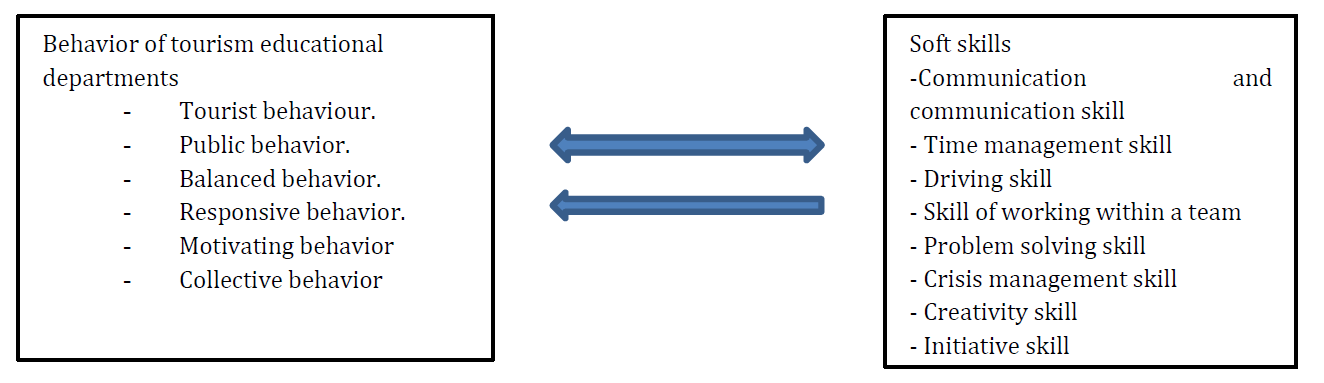
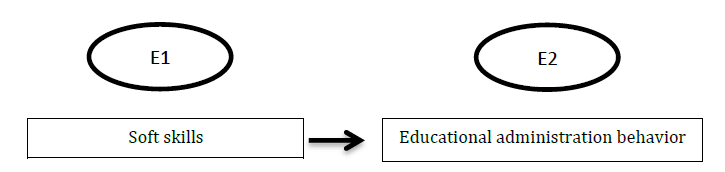
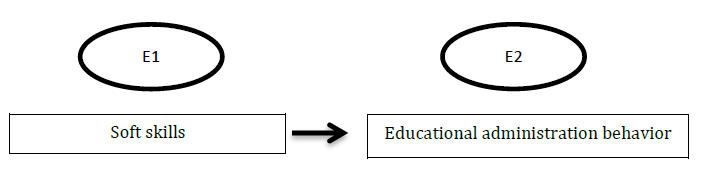
Figure 1: Study model
Source: (Prepared by the researcher)
Characteristics of Soft Skills
Soft skills must characterize departments, as it is their responsibility to formulate the strategic vision for the organization's directions and influence the working individuals [9] and [10], and it can be summarized as follows:
Flexibility: the extent to which departments can achieve balance and adapt to rapid environmental developments, which contribute to achieving sustainability for the organization
Rapid movement by responding to the requirements and needs of individuals and presenting products to the market before competing organizations
Strategic directions by setting long-term plans, defining their goals, objectives, and mission, and drawing the future vision and the extent of its applicability
It represents a continuous process of confronting constantly evolving situations, which prompts workers to develop it and learn more and more
They are the individual's internal capabilities and personal competence and contribute to providing added value to the individual and the organization in professional or personal work
An individual's competence changes based on his psychological state, external circumstances and the type of individuals he interacts with
Types of Soft Skills
Communication and Communication Skills: The skill of Communication and Communication is necessary for individuals and societies in light of technological development, through which one can deal with others in an appropriate manner that leads to achieving the desired goals of the communication process [11]. Communication is defined as the process of purposeful transfer of information from one individual to another to find a kind of mutual understanding between them [12], and [13] defines it as producing, providing, or collecting data and information necessary for the continuation of the administrative process and transferring, exchanging, or broadcasting them so that the individual or group can inform others of matters, news, or New information, influencing the behavior of an individual or group, or changing this behavior and directing it in a specific direction. Communication means the arrival of an idea, word, or feeling from one individual to another [14], and it is also the process of transferring information, thoughts, feelings, and opinions from one individual to another to influence him through certain symbols such as language, signs, expressions, [15]. With communication skills, departments can obtain information that contributes to the correct completion of administrative work, in addition to their influential role in strengthening human relations between departments and society, removing all barriers at all organizational levels and thus enhancing the efficiency and effectiveness of the human resource [16].
Time Management Skill
Time is a vital resource that God Almighty has given to every human being, urging them to exploit it to the fullest. Time is the most valuable thing, as it cannot be bought. It is of the same value for all individuals, and we must preserve it and benefit from it as much as possible because if it is gone, it will not come back. It is a fleeting, non-renewable resource, the container for every work and every production. It is the natural capital of individuals [17], and it is a process of carefully determining how to use time at work. Specific in the future, it may be for a day, a week, or a month, and this is done through a written recorder to be a guide while doing work [18], and [19] pointed out that time management is good planning of how to invest time. A good investment that helps achieve the highest productivity rate in the shortest time and with the least possible effort. He also defined it [20] as the optimal use of time to achieve specific goals by planning, organizing, directing, following up, and effectively evaluating activities and duties during a particular period. Accordingly, management Time is the completion of the most significant amount of planned tasks in the estimated time in the manner intended for them before the beginning of implementation, and it is the process that distributes time effectively among different works to complete them at the appropriate and specified time [21].
Driving Skill
Leadership is considered a complex art because it is linked to human nature and the dissimilar characteristics of individuals. Leaders are distinguished by arts, skills, and rules that, if mastered, can reach the level of excellence, even if they initially did not possess a high degree of innate leadership talent. Leadership is defined as a mutual personal influence that appears clearly in situations. Specific to individuals to achieve the desired goals, it is a philosophy that must be understood and practiced and requires action with knowledge [22], and according to, it is a set of abilities and skills that the leader has. He can Influence subordinates and direct them in a way that gains their affection, respect, obedience, loyalty, and affiliation and makes them work within a cooperative team to achieve the desired goals.
The Skill of Working within a Team
This skill is considered one of the necessary skills necessary for individuals and the group, and everyone must acquire it because of its multiple benefits and advantages in making the work successful and achieving its desired goals. Everyone works with a shared sense of responsibility towards the required tasks, a complete commitment to the prevailing goals and values, and an insistence on achieving the common goal for the team members. A team can be defined. It is a group of individuals working together to achieve specific and shared goals, characterized by integrated skills and united by common goals and one purpose. The team or group is the basis of any work in life, whether economic, social, or political and the organizational environment depends on the system. The administrative foundations and leadership progression require great skill and understanding [23].
Problem Solving Skill
This skill is a cognitive activity that proceeds in orderly and organized mental cognitive steps (scientific thinking to solve problems) and moves automatically if one has control over all its elements and actions to reach a state of cognitive balance. It provides the individual with the performance skills to confront pressures and obstacles efficiently. The problem is a difference. Or a gap or deviation between the actual level (achieved) and the targeted level (planned) [24], and it is one of the essential skills that must be available in departments precisely when problems occur at work so that they can predict the issue before it happens or identify and formulate it quickly and gather The information that must be available to solve problems creatively and identify alternatives and solutions to solve them in an ideal manner, [25].
Crisis Management Skill
Crisis management means the actions taken by departments in the organization to create the appropriate climate to obtain sufficient information about a crisis so that there is the ability to predict the problem before it occurs, to prevent, treat it, or limit its effects and benefit from it in the future [26]. The ability to behave well, find appropriate solutions to problems, anticipate risks and issues, deal with difficult situations, and predict the behavior of others [27]. Given the importance of management behavior and skills in dealing with crises and preventing them as much as possible and mitigating their severity, strategies for coping with problems must be used, and their use depends on them throughout facing crises and based on the management's assessment of situations [28], and taking specific measures in It is the appropriate time to return to customary conditions, make decisions, and exploit the available resources to deal with the crisis in an initiative manner and not by reaction, and improve ways to confront it in the future and seize the opportunities that the problem may present [29].
Creativity Skill
The insane increase in knowledge, the growth in the information and communications revolution, and the sudden, rapid changes that lead to rapid development across organizations globally, this progress requires a new outlook and a view of the future, and market requirements must be given to generate new ideas to achieve creativity, raise the level of performance, and complete the ambitions of the organization, [30], and creativity is the ability to find original ideas or new aspirations for existing ideas, [31]. [32] pointed out that creativity is the process of inventing everything new as a result of improving the products and services provided by the organization or working to develop production lines in modern ways to increase their effectiveness and efficiency.
Initiative Skill
It expresses the organization's tendency to anticipate future needs and environmental developments according to modern technological methods [2], and it is the desire or rush to discover market opportunities by tracking, anticipating, and monitoring environmental variables, tools, desires, and modern technologies [33]. Both [34] indicated that initiative is the ability of individuals to transform ideas into ideas to achieve creativity and innovation and the ability to plan and manage organizations to achieve goals. It generally supports society and contributes to seizing opportunities, moral values, and rational decisions. The initiative contributes to creating a competitive advantage because it puts competitors in a position to respond to the organizations' successful initiatives, enter new markets, and adopt new operational technology. Organizations that work well achieve great success and can sustain competitive advantages [35].
The Behavior of Tourism Educational Departments
Introduction
Administrations in tourism educational institutions are concerned with the behavior of their individuals to achieve success and excellence at work through developing their talents, abilities, and aspirations and involving them in decision-making to achieve their desired goals. Accordingly, the following must be stated:
The Concept of Behavior and Its Definition
The behavior of the individual is highly complex and variable, and the human element is considered one of the most important assets that the organization possesses, as its value can be increased by investing in developing its skills and capabilities, increasing its motivation, and arousing its enthusiasm to work more efficiently and effectively to identify motives and goals and understand needs, desires, and expectations to reach the best possible results. Methods and methods for managing behavior, directing it, and motivating it to work effectively to understand the behavioral phenomena arising from the presence of individuals with each other. The individual may show different behavioral patterns in the case of his interactions with others in the work environment [36], and his definition [37], which is the individual's psychological reactions to internal and external variables and includes subconscious activities and processes. It also means the direct actions and actions of individuals to obtain a good or service, which includes making purchasing decisions [38]. Others go by their definition to aspects of mental activity, The motor, emotional, social and physical actions that individuals produce and can be observed or measured such as thinking, remembering, obsession, etc. [39]. As for [40], he defines behavior as everything that individuals say and do, and it is a function of the two variables, the individual, represented by skills, personal abilities, perception, attitudes, values, morals, and the environment represented by the organization, the work group, and personal life. [41] He confirms that behavior formation results from interaction and adaptation between innate and acquired factors, called subjective personality. He adds [42] that behavior is a simple human phenomenon in which many factors and influences are intertwined and have various individual manifestations.
The Importance of Behavior
The importance of individuals’ behavior appears to enable the tourism organization to effectively adapt to its environment and make a decision regarding long-term survival [43]. The importance of behavior has been identified as follows:
Contributing to developing the capabilities of individuals
Using modern scientific methods to exploit available resources
Continuously update work systems in accordance with surrounding variables
Rejecting the monotony that limits thinking, creativity, and creating new ideas
Contributing to solving problems and responding to the dynamic environment
Types of Behavior
Behavior is characterized by complexity and interconnectedness, as several factors interact in arousing it and determining its trends, extent, and pattern. Accordingly, a specific group of these types was selected that is consistent with the nature of the group’s behavior, which is (collective, mass, motivating, responsive, balanced, and touristic), as follows:
Tourist Behavior
Tourism has a role that must be noticed. Traveling, meeting others, and dealing with them enhances individual relationships. It shows tourist behavior in a significant and tangible way that leads to a renewal of people’s behavior and results in tourist behavior that is consistent with the aspirations of individuals and the progress of people [44]. It identifying the behavior carried out by a local or foreign tourist as a result of his exposure to an internal or external stimulus, or both, towards tourist services or elements of tourist attraction, such as natural resources or landmark monuments in the country that are present in the tourist market or areas frequented by tourists, which are expected to satisfy his needs and desires according to his capabilities. Purchasing and the stimuli that influence his behavior are either external, such as culture, lifestyle, marketing tools, demographic characteristics, social status, reference group, etc., or internal, which are learning, perception, motivation, personality, attitudes, trends, and previous experiences. [45].
Mass Behavior
It is practiced by individuals of varying ages and cultural levels. It is distinguished by its traditions, rules, and collective tendencies as a result of industrialization and urbanization and the factors that accompany them that led to the separation of individuals from their original environment and group, such as migration, changing place of residence and education, and they began to face the world and adapt to it. [46]. [47] defined it as representing many individuals and social classes that include different individuals and cannot act unified in terms of organization.
Balanced Behavior
Administrative leaders generate a coherent set of ideas and principles to map the comprehensive path of their organizations to track the translation of the vision into an interconnected set of standards that contribute to developing business and communication strategies that help coordinate between the management of the target group and the other organizational ones to achieve the goals. This is claimed to exist. A multi-faceted system in design results in balancing processes between these actions towards the goal, thus showing balanced behavior for all parties. Therefore, those leaders must recognize that behavior and translate its components in a way that is consistent with the effectiveness of managing the behavior of the selected group [36] and define it [48] as balanced performance that translates operational goals and improves operations, and is achieving the influential role through which a new idea is created to complete the exchange. This may be behavior that affects others or the decision maker or when the decision is made. Consult him so he becomes influential and creates a balanced situation between all parties [49].
Responsive Behavior
This type of behavior arises as a result of the presence of specific stimuli in the situation as soon as the intention appears, and it consists of associations between the response stimuli, which are the reflections, as the individual possesses some of these associations from birth, and others are acquired during the conditional processes that occur in behavioral situations. During its growth stages [50]. It is also defined as the behavior in which an individual appears to be caused by emotion towards others, i.e., feelings represented by happiness, joy, sadness, fear, hatred, and anything else, and the reactions are clear and stem from their interaction with the feelings of others [51].
Motivating Behavior
Through the cognitive process of perception, the individual tries to understand the external world, focuses on goals that he wants to achieve, and on that basis, determines the ways and means by which he obtains the information that helps in his success or failure, so he practices some activities that lead to winning even if he tries and several times, using the same methods, changing them, or modifying the same goals [52]. The individual’s behavior is the result of motives and incentives. Motives are internal or internal drivers of behavior, while incentives are external factors that indicate the rewards that the individual expects from acting [53].
Collective Behavior
Within the framework of interest in studying the behavior of groups and its impact on the individual and the organization, researchers touched on the importance of sharing goals through participatory management, collective leadership, collective decision-making, problem-solving, and collective responsibility, and it emphasizes the individual’s effective participation [54]. Likewise, group behavior is described as the ability to automatically develop behavioral rules and habits. The group, like individuals, is exposed to situations of rupture from time to time, which moves the group into a state of agitation and tension [55].
Scientific Aspect
Introduction: As part of the study population, the sample was randomly selected from faculty members at the College of Tourism Sciences at Al-Mustansiriya University and the University of Karbala. The study hypotheses were presented in the form of questions, and to confirm the validity or otherwise of the assumptions, the tools and methods used to collect and analyze data on the reality of soft skills were identified. And its role in the behavior of administrations in tourism educational institutions, as explained in the following paragraphs:
First, the locations for conducting the study (Al-Mustansiriya University and the University of Karbala) were chosen to conduct the research and test its variables with the approved standards items
Study Population and Sample
The study population was represented by departments in tourism educational institutions in Baghdad and Karbala. 50 Questionnaires were distributed to the selected sample 25 for each college, and after being marked by them, they were retrieved in full and unpacked in a form that serves the study project.
Tools used
The following tools and methods were adopted for analysis purposes:
The Questionnaire: A group of interconnected questions was identified in a way that achieves the goal that the study seeks within the framework of the chosen problem to obtain data and information to get numerical results to measure the variables of the research, and a set of standards was used and approved after they were arranged and prepared according to the requirements and trends of the study, where it was adopted The triple histogram for the variables paragraphs, as shown in the appendix.
Description of the Questionnaire
It was considered the primary source for measuring and analyzing questions and hypotheses and testing them towards detailing soft skills and the extent to which they contain and cause the behavior of administrations in educational tourism institutions, and according to the variables of the study on the theoretical side, and the questionnaire was divided into:
The first axis includes the independent variable and includes 8 paragraphs centered on soft skills
The second axis includes the dependent variable (behavior of administrations in tourism educational institutions), which includes 6 items centered around types of behavior
Methods of Describing and Analyzing Data
Various statistical means and methods are used to obtain results during the conduct of the study, through which hypotheses are tested to understand the problems and answer the questions raised in the study through the application of SPSS v23 and Amos v23 [56]. .iugaza.edu.ps/nbarakat-SPSS.pdf. Stability test:
Reliability of the Questionnaire
The tools and measures achieve positive results and give the same results if it is re-applied several times in a row. If the researcher repeats the measurement, she obtains the same results. Reliability was calculated for the paragraphs of the study variables studied according to the answers of the sample learned and based on a three-way Likert scale. The results were as follows:
Cornbach's Alpha coefficient
This coefficient is used to measure the stability of the estimates obtained from tests or questionnaires that measure a subject whose items are assumed to be homogeneous. After extracting the reliability coefficient, its value was more significant 0.60. This means accepting the stability of the questionnaire, and its results can be analyzed, which will be suitable for research and studies in which the questionnaire is an approved tool. The results are as in Table 1:
The importance of the study variables soft skills and behavior of departments in tourism educational institutions
We refer here to the answers of the sample members, who numbered 50 individuals, regarding the paragraphs and questions of the questionnaire related to the independent variable soft skills and the dependent variable (behavior of administrations in educational tourism institutions). Tables were adopted to show the trends in the sample's answers for each paragraph of the study's variables. The arithmetic means standard deviation and relative importance were used according to the answer strength matrix in Table 2.
Table 1: Reliability Test Results
Paragraphs
Cronbach's Alpha
Interpretation
Soft skills
0.724
(Passes the test) There is stability in the questionnaire items
Behavior of administrations in tourism educational nstitutions
0.769
(Passes the test) There is stability in the questionnaire items
All paragraphs of the questionnaire
0.775
(Passes the test) There is stability in the questionnaire items
Source: Prepared by the researcher according to the results of the SPSS V23 program
Table 2: Estimated Scale According to the Three-Way Likert Scale
Response
Weighted average
The Level
Disagree
From 1 to 1.66
Low
Not Sure
From 1.67 to 2.33
Middle
Agree
From 2.34 to 3
High
Source: [57] The length of the category in the matrix =} (3-1 = 2) \ (the highest value taken by the scale = 3) = 0.66 (when a triple Likert scale was adopted in the study)
Table 3: Description of The Sample’s Responses to The Soft Skills Variable Items
The dimension
Paragraphs
Arithmetic mean
standard deviation
Relative importance%
1
2
3
Sample answers and percentages
f
%
f
%
f
%
X
Soft skills
Communication and Connectionskills
33
66
10
20
7
14
1.48
0.735
49.33
Time management skill
26
52
21
42
3
6
1.54
0.613
51.33
Driving skill
20
40
19
38
11
22
1.82
1.82
60.67
Skill of working within a team
22
44
17
34
11
22
1.78
0.790
59.33
Problem solving skill
21
42
21
42
8
16
1.74
0.723
58.00
Crisis management skill
29
58
15
30
6
12
1.54
0.706
51.33
Creativity skill
28
56
18
36
4
8
1.52
0.646
50.67
Initiative skill
22
44
18
36
10
20
1.76
0.771
58.67
Total
1.65
0.72
54.92
Source: Prepared by the researcher according to the results of the SPSS V23 program
Soft Skills
The study questionnaire, in its axis of measuring soft skills, included 8 items to determine the availability of soft skills components in the management of the two colleges of tourism sciences at the two universities Al-Mustansiriya and Karbala study model, and the results of the sample’s answers to the soft skills items were as Come:
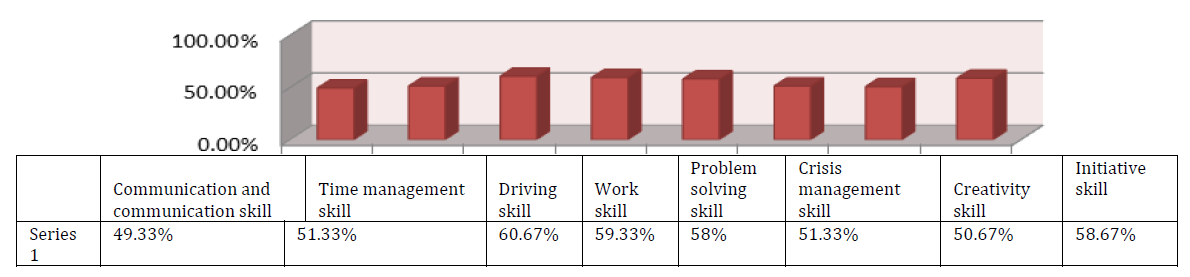
The value of relative importance reached 54.92%, which is an acceptable percentage that shows the level of agreement of the study sample on the items of this variable, where the arithmetic mean for it was recorded 1.65, which falls within the period from 1 to 1.66. This means that the sample’s answers are heading towards disagreement and deviation. Standard 0.72, which indicates the extent of homogeneity of the responses regarding soft skills as in Table 3.
The levels of importance of the paragraphs of the variable soft skills were distributed between the highest level of response achieved by (driving skill), with an arithmetic mean of 1.82 and a standard deviation of 1.82, and relative importance of 60.67%, confirming that most of the study sample members were not sure about this paragraph. This shows (that leaders are distinguished by the arts, skills, and rules to reach the level of excellence, even if they do not have a high degree of innate leadership talent in the first place). In contrast, the skills communication and communication achieved the lowest response level among the items soft skills, as the value of the mean reached Its arithmetic score was 1.48, and its standard deviation was 0.735. Its relative importance was 49.33%. This confirms that most of the sample members do not agree that dealing with others is done appropriately, which leads to achieving the desired goals of the communication process and transferring information from one individual to another purposefully.
The behavior of administrations in tourism educational institutions: It included 6 paragraphs to find out the extent of the behavior of administrations in tourism educational institutions at the universities of Al-Mustansiriya and Karbala study model, and the results of the sample answers were as follows:
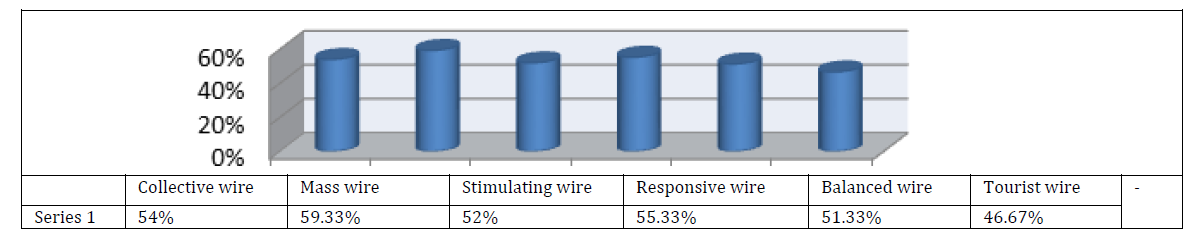
The value of relative importance reached 53.11%, which is a high percentage that confirms the agreement of the study sample on most of the items of this variable, as the arithmetic mean for it was recorded 1.59, which falls within the period from 1 to 1.66. This means the sample’s answers are heading towards disagreement, with a deviation. Standard 0.65, which indicates the extent of homogeneity of the responses regarding the behavior of administrations in educational tourism institutions as in Table 4.
The levels of importance of the variable paragraphs (behavior of administrations in educational tourism institutions) were distributed between the highest level of response achieved by the section (public behavior) with an arithmetic mean of 1.78 and a standard deviation of 0.708, and relative importance of 59.33%, confirming that most of the sample members were not sure. The study in this paragraph shows that individuals of varying ages, social and economic classes, and different centers, professions, and cultural levels behave in behavior that prompts them to change their place of residence, education, or emigrate etc., while the paragraph tourist behavior achieved the lowest level of response among its sections, The arithmetic mean value reached 1.40. The standard deviation was 0.606, and the relative importance constituted 46.67%, confirming that most of the sample members did not agree on conducting a tourist trip that the individual takes alone or with others to satisfy his needs and desires in terms of importance. Relativity is shown in Figure 3.
Figure 2: Shows the Relative Importance of the Soft Skills Items
Table 4: Description of The Sample’s Responses to The Items on the Behavior Variable of Administrations in Tourism Educational Institutions
The dimension
Paragraphs
Arithmetic mean
standard deviation
Relative importance%
1
2
3
Sample answers and percentages
f
%
f
%
f
%
Y
Behavior of administrations in tourism educational institutions
Collective behavior
25
50
19
38
6
12
1.62
0.697
54.00
Public behavior
19
38
23
46
8
16
1.78
0.708
59.33
Motivational behavior
27
54
18
36
5
10
1.56
0.675
52.00
Responsive behavior
20
40
27
54
3
6
1.66
0.593
55.33
Balanced behavior
27
54
19
38
4
8
1.54
0.646
51.33
Tourist wire
33
66
14
28
3
6
1.40
0.606
46.67
Total
1.59
0.65
53.11
Source: Prepared by the researcher based on the results of the SPSS V23 program
Figure 3: Shows the Relative Importance of the Paragraphs on the Behavior of Departments in Tourism Educational Institutions
Testing the Study Hypotheses
The Pearson correlation coefficient was used to know the relationship between the study variables and test the effect of the independent variable on the dependent variable using a simple regression model, the F test F-test, and the coefficient of determination R2 to find out the percentage of influence and contribution of the independent variable on the dependent variable. Testing of the study hypotheses included the following:
Testing Hypotheses of Association and Influence (Simple Regression)
To test the hypotheses of the correlation between soft skills and the behavior of administrations in tourism educational institutions, the correlation coefficient was extracted between the variables to explain the strength and direction of the correlation between the variables of the hypothesis, as the idea will be accepted if the value of the correlation coefficient is limited between 0.50 and 1, which is correct. This indicates the strength of the correlation.
Table 5: Results of testing the primary hypothesis (relationship and impact) of the soft skills variable on administration behavior Tourism educational institutions
Variables
Correlation Coefficient Between The Two Variables
The Coefficient Of Determination
R2 %
Fixed Limit
À
Regression Coefficient
ß
F- Test
Interpretation
The Independent
Approved
The Calculated One
Tabulation
Probability Value Sig.
Soft Skills
Behavior Of Administrations In Tourism Educational Institutions
0.62
0.39
0.65
0.58
30.127
4.04
0.000
There Is A Moral Correlation Between Soft Skills And The Behavior Of Administrations In Tourism Educational Institutions, And Thus Accepting The First And Second Main Hypothesis, And Accordingly There Is An Effect
Figure 4: Shows the Confirmation of the Relationship and Connection between Soft Skills and the Behavior of Departments in Tourism Educational Institutions According To the Amos V23 Program
Figure 5: Shows the Confirmation of the Impact of Soft Skills on the Behavior of Administrations in Tourism Educational Institutions According To the Amos V23 Program
The F-test F-test was applied to determine the significance of the effect of the independent variable soft skills on the dependent variable behavior of departments in educational tourism institutions. Suppose the probability value is Sig. less than the level of significance of 0.05, this indicates the presence of a significant effect, and vice versa. If the calculated value of F is more important than its probability tabular matter, it indicates a statistically significant impact, and vice versa. Likewise, the value of the coefficient of determination R2 was extracted. which shows the percentage of interpretation of soft skills and its achievement of the variable behavior of departments in educational tourism institutions.
The hypotheses will be tested as follows:
The First Main Hypothesis: There is a statistically significant correlation between soft skills and the behavior of administrations in tourism educational institutions
The Second Primary Hypothesis: There is a statistically significant effect of soft skills on the behavior of administrations in tourism educational institutions
The results of testing the hypothesis of correlation and influence between the two variables, according to the opinions of the study sample, which are shown in Table 5, are as follows:
Accepting the first central hypothesis, which states there is a statistically significant correlation between soft skills and the behavior of administrations in tourism educational institutions with a confidence rate of 95%, the value of the correlation coefficient was recorded 0.62, which is significant, to establish that moral correlation between them (Figure 4-5).
The calculated F value was 30.127, which is significant. That is, there is a statistically significant effect of the variable soft skills on (the behavior of administrations in tourism educational institutions), and this means accepting the second central hypothesis (there is an effect between the two variables). Accordingly, the value of the coefficient of determination 0.39% was recorded, which indicates the percentage of influence and contribution of skills. Al-Naameh Behaviour of administrations in tourism educational institutions.
Table 6: Results of Testing the Hypothesis of the Association and Impact of Soft Skills on the Behavior of Tourism Educational Departments
The variables that have the most influence on the dependent variable
Pearson correlation coefficient r
The coefficient of determination
R2
Fixed limit
a
Regression coefficient
ß
F- test
Interpretation
Independent
Approved
The calculated one
Tabulation
Probability value
sig.
Initiative skill
Departmental behavior
In educational institutions
Tourist
0.73
0.54
0.698
0.195
13.036
2.58
0.000
The independent dimensions that most influence the dependent variable
These are skills (initiative, crisis management, communication, problem solving)
Crisis management skill
0.136
Communication and communication skill
0.129
Problem solving skill
0.095
Source: Prepared by the researcher based on the results of the SPSS V23 program
Sequential multiple regression test to determine the independent variables that most influence the behavior of administrations in educational institutions:
Through the results of testing the hypotheses of correlation and influence between them, a sequential multiple regression test was applied to identify and determine the soft skills that have the most impact on the studied phenomenon the behavior of departments in educational tourism institutions to reach the best linear regression model that represents it with the strength of influence, and the results were according to Table 6 as follows:
The secondary independent variables that have the most influence on the dependent variable (department behavior) are the skills (initiative, crisis management, communication, and problem-solving), where the value of the coefficient of determination was 0.54%, which shows the percentage of influence they have on the behavior variable of administrations in educational institutions. The calculated F value was 13.036, which is significant because it is greater than the tabulated F of 2.58. Thus, according to the Stepwise Regression test, the model that represents the phenomenon includes four variables among soft skills.
Analysis
It indicates (the importance of having the desire or rush to discover market opportunities by tracking, anticipating, and monitoring environmental variables, tools, desires, and modern technologies and creating the appropriate climate to obtain sufficient information about a crisis and the process of communication and transferring data from one individual to another in a purposeful manner, as well as following steps An organized and organized mental cognitive system that follows scientific thinking to solve and control problems) all together leading to the direct actions and actions of individuals to obtain a good or service by making appropriate decisions.
CONCLUSION
Any scientific study produces some results in light of the answers of the study sample, which were evaluated and analyzed by the scientific directions of the study project, based on which a set of conclusions are drawn within the first paragraph, and the second paragraph includes its recommendations.
There is a statistically significant relationship and influence between soft skills and the behavior of departments in tourism educational institutions according to the answers of the study samp
The results confirmed, in light of the responses of the sample members, that soft skills, in general, contribute to the behavior of administrators in educational tourism institution
The soft skills that most influence the behavior of administrations in educational institutions are initiative, crisis management, communication, and problem-solving
The sample members disagreed that the administrative leaders in the educational institutions studied deal with others appropriately, leading to achieving the desired communication and information transfer goals
There is no time limit to complete the work management process
The organization’s departments do not create the appropriate climate to obtain sufficient information about a crisis so that there is the ability to predict it before it occurs, prevent it, treat it, limit its effects, or benefit from it in the future
Departments do not have a vision for the future and market requirements to generate new ideas, achieve creativity, raise the level of performance, and achieve the organization’s ambitions
There is a need for new patterns to develop rules and habits of behavior automatically
Material and non-material incentives are not provided to increase motivation towards achievement and creativity
Recommendations
The administrations in the educational institutions and those studied in particular must excel in efficiency and ability in positions and dealing with humanitarian issues in a way that distinguishes them from ordinary individuals
Commitment to the prevailing goals and values and insistence on achieving the common goals of the work team
Follow scientific thinking to solve problems and control their elements and steps to reach a state of cognitive balanc
Work to obtain sufficient information to create the appropriate climate and the ability to predict crises before they occur to prevent them or limit their effects
Leaders must excel in the arts, skills, and rules of leadership talent to reach excellence
Tracking, anticipating, and monitoring environmental variables, tools, desires, and modern technologies
Work to develop rules and habits of behavior in an automatic manner that contradicts what is familiar and acceptable in societ
Enhancing individuals’ satisfaction and increasing their motivation toward achievement and creativity by giving them material and non-material incentives
Drawing a map of the organization’s comprehensive path through coherent ideas and principles
REFERENCES
Tobin, P. Managing our selves experiential leadership: Experiential learning and leadership development. Vol. 12, Brathay Journal, 2006, Ambleside.
Taylor, P. “Investigating the perception of stakeholders on soft skills development of students: Evidence from South Africa.” Interdisciplinary Journal of E-Skills and Lifelong Learning, 2016.
Shakir, R. Soft skills at the Malaysian institutes of higher learning. Education Research Institute, Seoul National University, 2009, Seoul.
Klopp, O.M. Personal and administrative skills among police officers. 1st ed., Dar Al-Arqam Library and Press, 2011, Gaza.
Al-Subaie, S.B.Q. Evaluation of training methods to develop the specialized skills of the security man to confront the terrorist event. Master’s thesis, Naif University for Security Sciences, 2009, Riyadh.
Awan, M.H. et al. “Impact success.” Journal of Poverty, Investment and Development, no. 8, 2015.
Al-Jarayda, M.S. et al. “The degree of school principals’ practicing soft skills in the state of Sur in the Sultanate of Oman.” Arabic Research in the Fields of Specific Education, vol. 6, no. 12, 2018.
Ajeel, S. “Soft leadership and its role in achieving organizational commitment.” Journal of Management and Economics, vol. 7, no. 25, 2018.
Sadq, Z. “The role of leadership soft skills in promoting learning entrepreneurship.” Journal of Process Management – New Technologies International, vol. 7, no. 1, 2019.
Madden, M. “Soft leadership competencies for stodgy healthcare finance executives.” Healthcare Financial Management, 2015.
Al-Sayrafi, M. Personal selling: A study of the skills that must be available in a salesman. Vol. 2, Wael Publishing and Distribution House, 2002, Amman.
Al-Sakarna. Administrative skills and management of business organizations. Dar Al-Masirah for Publishing and Distribution, 2009, Amman.
Tawfiq, A.R. Behavioral skills approach: Communication skills and relationships with others. Center for Professional Management Experiences, 2006, Cairo.
Tawfiq, A.R. Secretarial: Skills for dealing with others. Vol. 2, Center for Professional Experiences in Management, 2003, Cairo.
Al-Widyan, S. Communication skills. College of Education, Wadi Al-Dawasir, Al-Kharj University, 2011, Saudi Arabia.
Shiaa, H.H. et al. “The mediating role of organizational justice in the relationship between organizational complexity and the effectiveness of human resources performance.” Iraqi Journal of Administrative Sciences, vol. 15, no. 59, 2019.
Abu Sheikha, N.A. Introduction to time management. Dar Al-Masirah for Publishing and Distribution, 2009, Amman.
Alwan, Q. et al.Time management: Concepts, processes, applications. Dar Al-Thaqafa for Publishing and Distribution, 2009, Amman.
Alyan, R.M. The basics of time management for career and public life. Jarir Publishing and Distribution House, 2011, Amman.
Qatani, M. Administrative leadership and innovation management. Dar Al-Fikr Publishers and Distributors, 2010, Amman.
Ghazawi, R.T. Time management and its impact on the performance of workers in the civil status and passports department in the northern region. Master’s thesis, Yarmouk University, 2012, Jordan.
Dimas, M. The arts of distinguished leadership. Dar Ibn Hazm for Printing, Publishing and Distribution, 2000, Beirut.
Al-Fiqi. Collective work. Ajyal Publishing and Distribution House, 2009, Amman.
Shabeer, R. Soft skills and their relationship to entrepreneurial orientations among students of technical and vocational colleges in Gaza Governorate. Master’s thesis, Islamic University of Gaza, 2016.
Hajjaj, O. The role of soft skills in obtaining administrative jobs. Master’s thesis, Islamic University of Gaza, 2014.
Al-Khowaiter. “Developing the role of academic leaders at Prince Sattam Zakwi bin Abdulaziz University in crisis management.” Arab Journal of Specific Education, vol. 3, no. 10, 2019.
Khamis, A. The soft skills they are looking for. Al-Ruya Foundation for Press and Publishing, 2013, Amman.
Al-Asmari, A.A. Strategic leadership and its role in preventing and confronting crises. Naif Arab University for Security Sciences, 2015, Saudi Arabia.
Al-Sharif, R.B.O. The role of the administrative development department in improving job performance. Master’s thesis, King Abdulaziz University, 2014, Jeddah.
Hill, M. et al.Strategic enterprise: Creating value for individual organizations and society. Academy of Management, vol. 25, 2011.
Probie, S. The role of creativity and innovation in highlighting competitive advantage. Master’s thesis, University of Setif, 2001.
Zain Al-Abidin, D. Management in a climate of creativity. Business Council Conference Proceedings, 2006.
Vincent, K. Effective leadership: Explains the hard facts of soft skills management. 2013.
Al-Adwan, M.M. et al. “The role of management information systems in enhancing the soft skills of employees of Jordanian industrial companies.” Second International Forum on Digital Transformation, 2017.
Jumaa, M.H. “Information technology and its role in achieving organizational leadership.” Cihan University–Erbil Scientific Journal, vol. 1, no. 1, 2017.
Al-Barzanji, A.K.H. Managing group behavior and cultural diversity and their impact on tourism organization growth. Doctoral thesis, Al-Mustansiriya University, 2016.
Jaber, A.H. et al.Dictionary of psychology and psychiatry. 1st ed., Dar Al-Nahda Al-Arabiya, 1993.
Dorothy, H.N. et al.Behavior in organizations. Little, Brown & Company, 1975.
Al-Fafsous, A.A. Methods of modifying human behavior. 1st ed., Guidance Series 2, 2006, Palestine.
Jalab, I.D. Managing organizational behavior in the era of change. Safaa Publishing and Distribution House, 2011, Amman.
Al-Hasina, S.I. Organizational behavior and behavioral sciences. Dar Al-Warraq for Publishing and Distribution, 2013, Amman.
Dorra, A.B.I. The ten skills of self-confidence: Theory and application. 2nd ed., Wael Publishing House, 2013, Amman.
Kraft, M.H.G. “Antecedents and perspectives of ambidextrous leadership.” 2018, doi:10.21272/mmi.pp(4-1).
Haddad, Y.M. Jordan and tourism: Problems and concerns on the scene. University of Irbid, 1997.
Al-Taie, H.A.N. et al.Tourist behaviors and tourist demand. Zahran Publishing and Distribution House, 2000, Amman.
Malika, L.K. Group psychology and leadership. 3rd ed., Egyptian Nahda Library, 1969.
Wright, C. The social perspective of mass communication. Translated by M. Fathi, Egyptian General Book Authority, 1983.
Loning, H. et al.The control of the gestion, organization and its display. 2nd ed., Dunod, 2003, Paris.
Al-Ghadeer, H. et al.Consumer behavior: An integrated introduction. 1st ed., Zahran Publishing and Distribution House, 2012, Amman.
Al-Madhoun, M. et al.Analysis of organizational behavior psychologically and administratively for employees. Arab Center for University Services, 1995, Amman.
Al-Ghamry, I. Human behavior. Anglo-Egyptian Library, 1983, Cairo.
Abu Jalil, M.M. et al.Consumer behavior and purchasing decision making: An integrated introduction. Dar Hamed for Publishing and Distribution, 2013, Amman.
Harem, H. Organizational behavior: Behavior of individuals and groups in business organizations. 3rd ed., Dar Al-Hamid for Publishing and Distribution, 2009, Amman.
Abbas, A.A.B. Organizational behavior in business organizations. Dar Al-Masirah for Publishing and Distribution, 2013, Amman.
Barakat, N.M. Statistical analysis using the SPSS program. Islamic University of Gaza, 2013.
The Employee Training and Development Programme at Principal Education Department Quelimane–Zambezia-2010 to 2015
Manuel Bana
Published: 31/10/2021
Download PDF
Research Article
The ‘Evolution’ of Retired and Experienced Employees in Quelimane District Zambezia Province - Mozambique
Manuel Bana,
Chiome Chrispen
Published: 25/07/2021
Download PDF
Research Article
Political Economy Transforming Into Financial Freedom for the Improvement of Business Diplomacy
Md. Enamul Kabir
Published: 25/07/2021
Download PDF
Research Article
The Contribution of Evaluation of Employee Performance in the Provision of Public Services: At Damião Full Primary School - Mocuba District - Zambezia Province - Mozambique (2017 - 2019)
Manuel Bana,
Chrispen Chiome
Published: 20/11/2021
Download PDF
PO Box 101, Nakuru
Kenya.
Email: office@iarconsortium.org
Editorial Office:
J.L Bhavan, Near Radison Blu Hotel,
Jalukbari, Guwahati-India
Al-Baraznji, A. K. H. (2023). The Impact of Soft Skills on the Behavior of Administrations in Tourism Educational Institutions in Iraq. Scientific Research Journal of Review of Public Administration and Management, 3(2), 1-12.
MLA
Al-Baraznji, Amal K. H.. "The Impact of Soft Skills on the Behavior of Administrations in Tourism Educational Institutions in Iraq." Scientific Research Journal of Review of Public Administration and Management 3.2 (2023): 1-12.
Chicago
Al-Baraznji, Amal K. H.. "The Impact of Soft Skills on the Behavior of Administrations in Tourism Educational Institutions in Iraq." Scientific Research Journal of Review of Public Administration and Management 3, no. 2 (2023): 1-12.
Harvard
Al-Baraznji, A. K. H. (2023) 'The Impact of Soft Skills on the Behavior of Administrations in Tourism Educational Institutions in Iraq' Scientific Research Journal of Review of Public Administration and Management 3(2), pp. 1-12.
Vancouver
Al-Baraznji AKH. The Impact of Soft Skills on the Behavior of Administrations in Tourism Educational Institutions in Iraq. Scientific Research Journal of Review of Public Administration and Management. 2023 Jul;3(2):1-12.


 Download PDF
 Download XML