The structures of Schiff-base compounds (A and B) derived from the ceftriaxone drug were determined using spectroscopic techniques. The synthesis started by starting a chemical reaction between ceftriaxone and the suitable substituted benzaldehydes such as 4-dimethylaminobenzaldehyde and 4-chlorobenzaldehyde. The antimicrobial activities of Schiff base compounds containing the ceftriaxone moiety were assessed in vitro against two types of bacteria: gram-positive microorganisms (Bacillus subtilis and Enterococcus faecalis) and Candida and Asperigillus nigaer at varying concentrations (50 and 100 M). The findings indicated that some derivatives had favorable antibacterial efficacy in comparison to the parent drug (ceftriaxone), whereas amoxicillin drug showed significant biological potency.
Keywords
Drug
Antimicrobial
Bacterial Resistance
Ceftriaxone
INTRODUCTION
Ceftriaxone is one of the types of antibiotic drug that returned to the cephalosporin/cephamycin family of beta lactam antibiotics [1]. Ceftriaxone is using for treatment for bacterial infections. Ceftriaxone, in vitro have biological activity against different types of bacteria as gram-positive and gram-negative aerobic bacteria [2], addition to anaerobic bacteria. Ceftriaxone have capacity to inhibition and kill different bacteria is due to its ability to inter and block the form of the cell wall of bacterial [3]. When broken down by many types of beta-lactamases, ceftriaxone is stable, the beta-lactamases containing penicillinases, cephalosporinases and extended-spectrum [4,5]. Ceftriaxone is third generation of that return to cephalosporins and the ceftriaxone wide range of effectiveness against many types of bacteria [6]. Compared to other drugs, it has a more longer half-life and a big ability to penetrate the eyes and ear [7,8]. Ceftriaxone has a wider and more potent spectrum of action against gram-negative bacteria compared to second generation drugs [9]. Ceftriaxone is often used as an antibacterial agent because of its notable efficacy against multi-drug-resistant Enterobacteriaceae, its relatively benign side-effect profile and its extended half-life that permits the ease of daily or twice-day administration.
An azomethine or imine group is a characteristic of a class of chemicals known as Schiff bases, which Hugo Schiff, an Italian-German scientist, successfully synthesized in 1864 [10,11].
As part of Schiff's standard method, a carbonyl molecule and a primary amine were joined together using azeotropic distillation. To get an excellent yield, the reversible condensation reaction requires the elimination of the produced water. This is done by using a carbinolamine intermediate to promote the forward reaction. Schiff bases are special because they can be made in a lot of different ways [12]. This means that you can precisely control:
The types of atoms that act as donors
The number of binding sites and their ability to form chelates
The electronic and steric properties
Schiff bases are extensively used organic compounds with diverse uses, such as serving as intermediates in organic synthesis, functioning as chemosensors and polymer stabilizers, acting as dyes and pigments in the food industry, playing a role in catalysis and more [13].
In addition to exhibit a wide play activity of biological applications. The azomethine or imine group playing essential role. Schiff base compounds have a good medicine appications because Schiff base have multi-active groups. These applications in many fields, such as biochemical processes and biological control. Schiff bases can chelating abilities due to the presence of azomethine and other coordinating groups [14].
The aim of this study was to synthesize Schiff base derivatives (C and D) and characterize these derivatives by spectroscopic methods. These derivatives of Schiff base were tested as antibacterials and antifungals and compare with ceftriaxone and amoxicillin drugs.
MATERIALS AND METHODS
Synthesis of Schiff Base Derivatives (A and B)
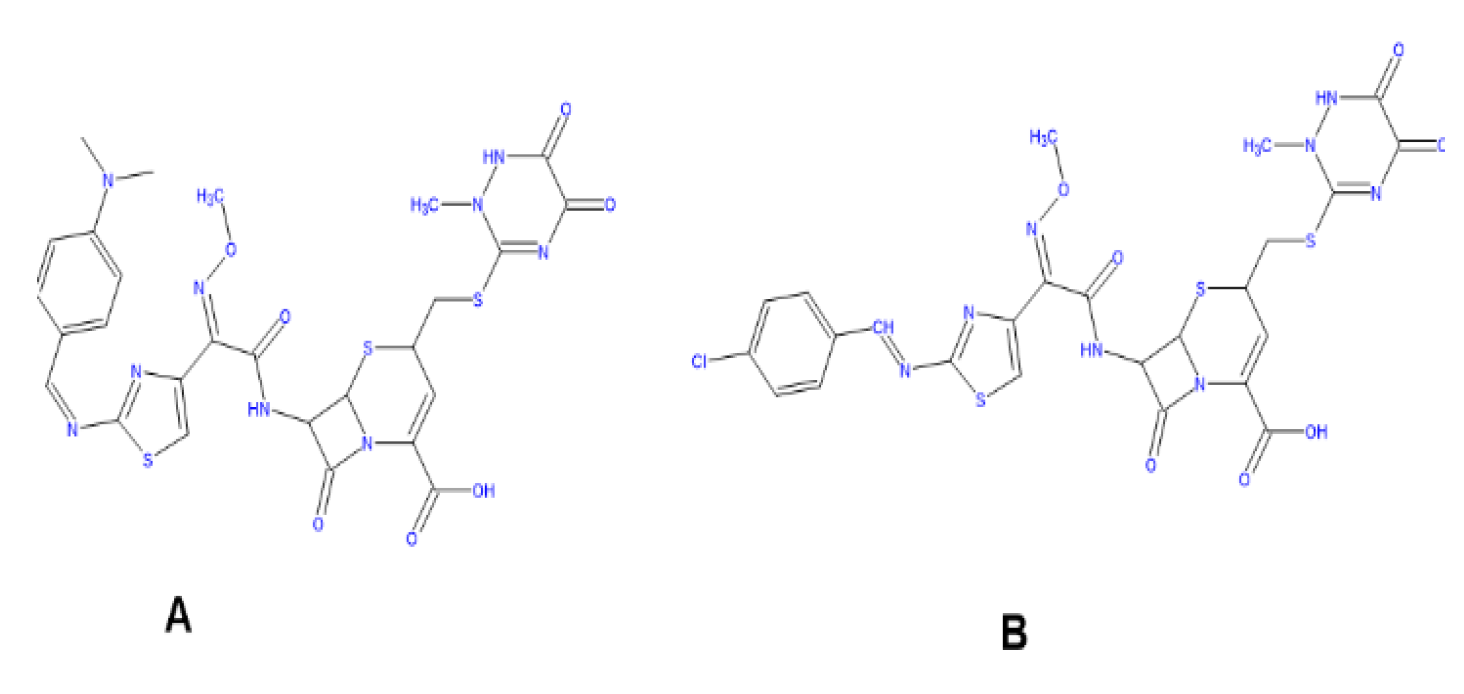
Dissolve (0.001 mol, 0.14 g) of 4-dimethylaminobenzaldehyde and (0.001 mol, 0.14 g) of 4-chlorobenzaldehyde separately in 15 ml of absolute ethanol and (2–3) drops of glacial acetic acid. Subsequently, ceftriaxone (0.554 g, 0.001 mol) was added to each of these solutions for 4 hours. Following formation and filtering of the yellow precipitates, ethanol washing and vacuum drying take place [15,16] (Figure 1).
Figure 1: Chemical Structures of Derivatives A and B
A Study of the Antibacterial Activity of Ceftriaxone and its Synthetic Modifications
The several bacterial strains, including Bacillus subtilis and E. coli, were grown on Muller-Hinton agar plates using a sterile loop and streaking techniques, starting with the broth culture. Subsequently, a solitary well was generated in the agar. Each well received 50 and 100 μL of the corresponding dilution of ceftriaxone and produced derivatives, which were well absorbed. The dish was hermetically sealed and cultured at a temperature of 37 ºC overnight for additional testing on the next day [17].
Docking Experiment
The protein data bank (PDB code: 1MOQ) was used to get the crystallographic 3D structure of glucose-6-phosphate synthase (GP6 synthase). The compounds produced were displayed using Chem Draw Ultra (version 12.0) and stored in a sdf format file. The energy reduction was performed using Chem3D (version 12.0) and then converted to a pdb file.
The docking procedure was executed using Autodock Tools (version 1.5.7) [18].The outcomes were saved in pdbqt file format subsequent to reducing the energies of both enzymes and ligands. The grid box was defined with dimensions of 60 × 60 × 60 and its center was positioned at coordinates 21.864 in the x dimension, 24.853 in the y dimension and 9.8123 in the z dimension [19]. The program Discovery Studio was used to create visual depictions.
RESULTS AND DISCUSSION
FTIR Characterization
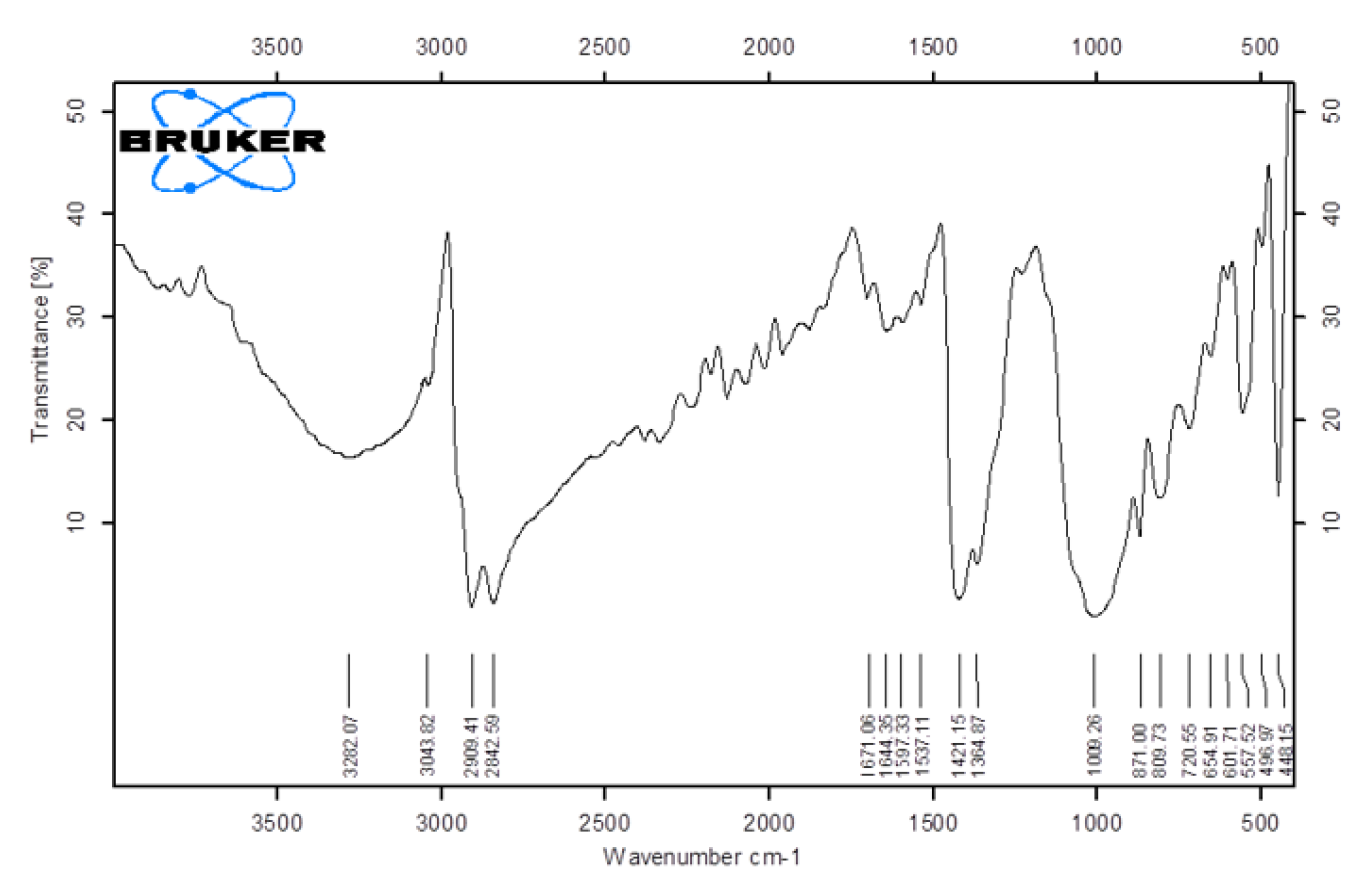
The FTIR (cm-1) of derivative (A): The C-H bond of aromatic rings appeared at 3043, while the C-H aliphatic at 2909 and 2842 and the carbonyl group of the azomethine appeared at 1644. The C-C of aromatic rings that appeared as sharp peak 1597 [15,20] (Figure 2).
Figure 2: FTIR of Derivative A1
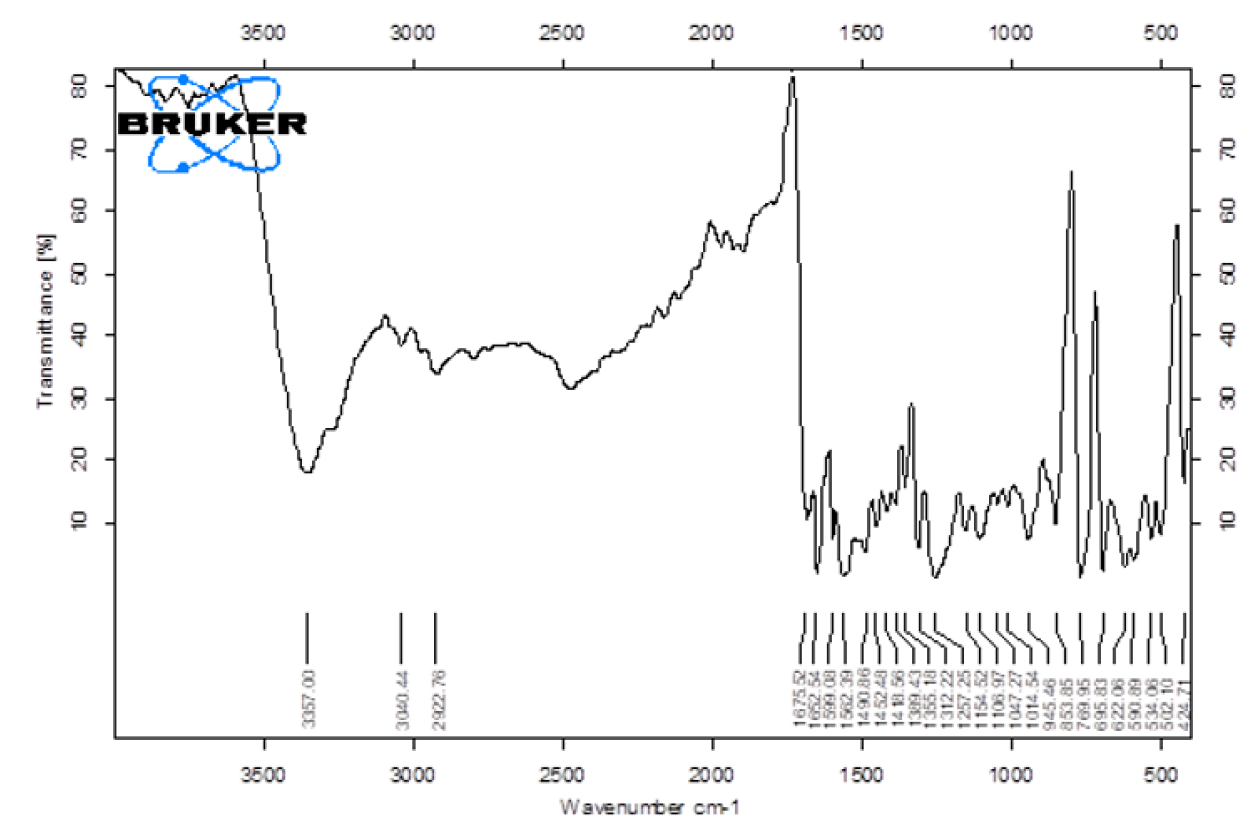
The FTIR (cm-1) of derivative (B): The C-H bond of aromatic rings appeared at 3040, while the C-H aliphatic at 2922 and the carbonyl group of the azomethine appeared at 1652. The C-C of aromatic rings that appeared as sharp peak 1599 [17,21] (Figure 3).
Figure 3: FTIR of Derivative A2
Study of Docking
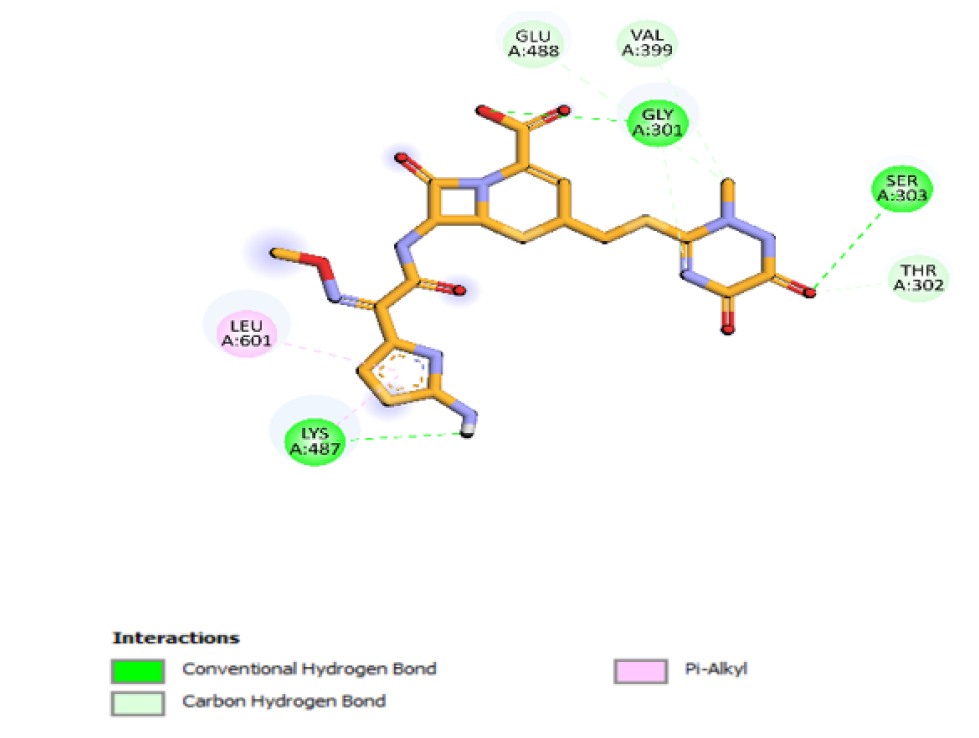
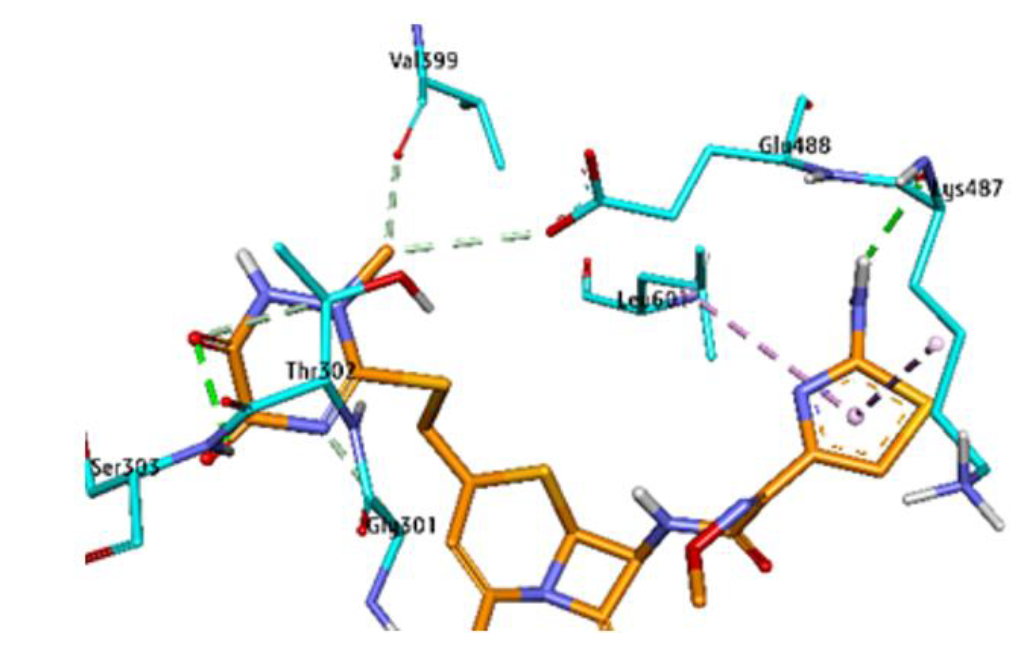
In the first stage of hexosamine biosynthesis, enzymes assist in the conversion of fructose-6-phosphate into glucosamine-6-phosphate, thus increasing the process. The GlcN-6-P is an important part of making uridine diphosphate N-acetyl glucosamine (UDP-NAG), which is a part of the peptidoglycan layer in microorganisms' cell walls [22]. The docking characteristics of the medication are shown in Figures 4 and 5.
Figure 4: Docking of Ceftriaxone Drug Against GP6 Synthase
The ligand's 3D structures display a multitude of interactions, notably hydrogen bonding, as well as other interactions, including van der Waals and pi-alkyl. The computed values of -6.9 kcal/mol for ceftriaxone demonstrated that the affinity between the two compounds was comparable. The experimental findings further confirm the data that both compounds have antibacterial activity. Molecular docking analysis, the 3D structures of the ligand exhibit several interactions, namely hydrogen bonding, along with additional interactions such as van der Waals and pi-alkyl. The calculated values of -6.9 kcal/mol for ceftriaxone indicate that the affinity between the two molecules is similar.
Figure 5: Docking 3D of Ceftriaxone Drug Against GP6 Synthase
Biological Activity
The derivative B has an increased effect on preventing bacterial growth in petri dishes. Derivative B had the most important effect on Bacillus subtilis microorganisms by (21 mm) zone inhibition.
The parent drug has little impact on Enterococcus faecalis bacteria by (9 mm). The derivative B exhibits better biological activity compared to the standard drug and Azithromycin drug [23] (Table 1).
Table 1: Anti-Bacterial Activities for Amoxicillin and Parent Drug (Ceftriaxone) and Derivatives Synthesized (A and B)
Derivative
Zone inhibition (mm)
Bacillus subtilis
Enterococcus faecalis
parent drug (ceftriaxone)
12
9
A
15
12
B
23
17
Amoxicillin
42
25
The most significant impact on Fungal was seen in Asperigillus nigaer due to derivative B. The derivative B has a higher level of biological activity compared to the standard drug (Table 2).
Table 2: Anti-Fungal Activities for Ceftriaxone and Derivatives Synthesized (A1 and A2)
Derivative
Zone inhibition (mm)
Candida
Asperigillus nigaer
ceftriaxone
13
15
A1
13
16
A2
15
19
CONCLUSION
Schiff-base compounds were synthesized from the ceftriaxone drug and spectroscopic methods were used to determine their structures. The process of making it began with a reaction between ceftriaxone and the appropriate substituted benzaldehydes. The Schiff base compounds containing the ceftriaxone moiety have been evaluated in vitro for their antimicrobial activities against two types of bacteria: Gram-positive (Bacillus subtilis and Enterococcus faecalis) microorganisms and Candida and Asperigillus nigaer in different concentrations (50 and 100 μL). The results showed that some of these derivatives have good antibacterial activity compared to the parent drug, but amoxicillin has high biological activity.
REFERENCES
Zeng L. et al. “Safety of ceftriaxone in paediatrics: A systematic review.” Archives of Disease in Childhood, 2020.
Nakayama S.-i. et al. “New ceftriaxone- and multidrug-resistant Neisseria gonorrhoeae strain with a novel mosaic penA gene isolated in Japan.” Antimicrobial Agents and Chemotherapy, vol. 60, no. 7, 2016, pp. 4339–4341.
Shimels T. et al. “Evaluation of ceftriaxone utilization in internal medicine wards of general hospitals in Addis Ababa, Ethiopia: A comparative retrospective study.” Journal of Pharmaceutical Policy and Practice, vol. 8, 2015, pp. 1–8.
Nasir N. et al. “Risk factors for mortality of patients with ceftriaxone-resistant E. coli bacteremia receiving carbapenem versus beta-lactam/beta-lactamase inhibitor therapy.” BMC Research Notes, vol. 12, no. 1, 2019, pp. 1–5.
Kuang D. et al. “Increase in ceftriaxone resistance and widespread extended-spectrum β-lactamase genes among Salmonella enterica from human and nonhuman sources.” Foodborne Pathogens and Disease, vol. 15, no. 12, 2018, pp. 770–775.
Tamma P.D. et al. “Molecular epidemiology of ceftriaxone-nonsusceptible Enterobacterales isolates in an academic medical center in the United States.” Open Forum Infectious Diseases, 2019.
Pacifici G.M., Marchini G. “Clinical pharmacology of ceftriaxone in neonates and infants: Effects and pharmacokinetics.” International Journal of Pediatrics, vol. 5, no. 9, 2017, pp. 5751–5778.
Jordan J. et al. “Drugs used in treating infectious diseases.” Pharmacotherapeutics for Advanced Practice Nurse Prescribers, pp. 691.
Vaidya A., Jain S. “Chemistry and pharmacology of β-lactam analogs.” Handbook of Research on Medicinal Chemistry: Innovations and Methodologies, 2017, pp. 339.
Wei L., Wang C.J. “Synergistic catalysis with azomethine ylides.” Chinese Journal of Chemistry, vol. 39, no. 1, 2021, pp. 15–24.
Santos H. et al. “1,3-dipolar cycloaddition reactions of phthalic anhydrides with an azomethine ylide.” Organic Chemistry Frontiers, vol. 2, no. 6, 2015, pp. 705–712.
Kumawat G.L. et al. “Cyclic voltammetric studies of biologically active azomethine 2′-hydroxyacetophenone sulfamethoxazole.” Oriental Journal of Chemistry, vol. 35, no. 3, 2019, pp. 1117.
Hossain M.S. et al. “Selected Schiff base coordination complexes and their microbial application: A review.” International Journal of Chemical Studies, vol. 6, no. 1, 2018, pp. 19–31.
Chaturvedi D., Kamboj M. “Role of Schiff base in drug discovery research.” Chemical Sciences Journal, vol. 7, no. 2, 2016, pp. 7–8.
Odabasoglu H.Y. et al. “Synthesis and characterization of heterocyclic disazo-azomethine dyes and investigation of their molecular docking and dynamics properties on acetylcholine esterase, heat shock protein 90α, nicotinamide N-methyl transferase and SARS-CoV-2 main protease.” Journal of Molecular Structure, vol. 1252, 2022, article 131974.
El-Atawy M.A. et al. “New nitro-laterally substituted azomethine derivatives: synthesis, mesomorphic and computational characterizations.” Molecules, vol. 26, no. 7, 2021, article 1927.
Burlov A. et al. “Synthesis, characterization, luminescent properties and biological activities of zinc complexes with bidentate azomethine Schiff-base ligands.” Polyhedron, vol. 154, 2018, pp. 65–76.
Erdoğan M. et al. “Synthesis and characterization of some benzidine-based azomethine derivatives with molecular docking studies and anticancer activities.” Chemical Papers, vol. 77, no. 11, 2023, pp. 6829–6847.
Korkmaz A., Bursal E. “Benzothiazole sulfonate derivatives bearing azomethine: synthesis, characterization, enzyme inhibition and molecular docking study.” Journal of Molecular Structure, vol. 1257, 2022, article 132641.
Sahan F. et al. “New azo-azomethine-based transition metal complexes: synthesis, spectroscopy, solid-state structure, density functional theory calculations and anticancer studies.” Applied Organometallic Chemistry, vol. 33, no. 7, 2019, article e4954.
Alamro F.S. et al. “Experimental and theoretical investigations of three-ring ester/azomethine materials.” Materials, vol. 15, no. 6, 2022, article 2312.
Mezoughi A. The synthesis and evaluation of novel soluble lytic transglycosylase inhibitors. Cardiff University, 2019.
Peiffer-Smadja N. et al. “In vitro bactericidal activity of amoxicillin combined with different cephalosporins against endocarditis-associated Enterococcus faecalis clinical isolates.” Journal of Antimicrobial Chemotherapy, vol. 74, no. 12, 2019, pp. 3511–3514.
None
Recommended Articles
Research Article
Virtualization of the Drug Analysis III laboratories: Systematization of the pedagogical strategy implemented because of the pandemic caused by COVID-19
Juan José Mora-Román,
...
Eleaneth Baltodano-Viales
Download PDF
Research Article
Inhalation Insights: Assessing Anesthesia Knowledge among Himachal Pradesh's Resident Anesthetists
Akanksha Sharma,
...
Kanika Prashar
Published: 29/05/2023
Download PDF
Research Article
Phytochemical Evaluation of Anti-Diabetic Activity of Syzygium cumini in Alloxan-Induced Diabetic Rats
Yahya Hussain Borbhuyan
Published: 30/06/2025
Download PDF
Research Article
Health Educational Program on Nurses' Knowledge at Children with Pneumonia
Ammar Abd AL Kareem Jassm
Download PDF
PO Box 101, Nakuru
Kenya.
Email: office@iarconsortium.org
Editorial Office:
J.L Bhavan, Near Radison Blu Hotel,
Jalukbari, Guwahati-India
Mohammed, T. I. (2024). Molecular Docking Analysis, Synthesis of Drug Modification and study of its In Vitro Biological Evaluation. Scientific Research Journal of Pharmacy, 4(1), 1-4.
MLA
Mohammed, Tiba I.. "Molecular Docking Analysis, Synthesis of Drug Modification and study of its In Vitro Biological Evaluation." Scientific Research Journal of Pharmacy 4.1 (2024): 1-4.
Chicago
Mohammed, Tiba I.. "Molecular Docking Analysis, Synthesis of Drug Modification and study of its In Vitro Biological Evaluation." Scientific Research Journal of Pharmacy 4, no. 1 (2024): 1-4.
Harvard
Mohammed, T. I. (2024) 'Molecular Docking Analysis, Synthesis of Drug Modification and study of its In Vitro Biological Evaluation' Scientific Research Journal of Pharmacy 4(1), pp. 1-4.
Vancouver
Mohammed TI. Molecular Docking Analysis, Synthesis of Drug Modification and study of its In Vitro Biological Evaluation. Scientific Research Journal of Pharmacy. 2024 Jan;4(1):1-4.


 Download PDF
 Download XML