Each year, some 12 million adolescent girls and young women (ages 15-19) and another million girls (ages 15) give birth. Many of these newborns are born in countries with poor infrastructure (LMICs). Sub-Saharan Africa (SSA) has a 102.8 births per 1000 person-years teenage fertility rate (birth rate per 1000 girls and young women aged 15-19) in 2015-2020, whereas South Asia has a 26 births per 1000 female child years adolescent fertility rate (WHO, 2021). As adolescents are in a formative stage of their lives, a pregnancy at this time might have negative effects on the health of both the mother and the child. Pregnancy and birth in adolescent girls may have disastrous consequences for the mother's health. As compared to other causes of death among 15–19-year-old girls and women, complications during pregnancy and childbirth now rank first. Certain communities are more likely to give inadequate prenatal care to pregnant teens (ANC). However, many adolescent mothers in SSA do not use maternity services for a variety of private, interpersonal, institutional, and structural reasons. Negative social effects, such as isolation and dropped out of school, have been linked to adolescent pregnancy and parenthood. They may be unable to return to school because of their dual roles as caretakers and breadwinners, which will limit their future earning potential and keep them mired in a cycle of poverty and dependence (Yakubu, 2018).
Pregnant adolescents have needs that are like those of full-term mothers. Adolescents have unique needs throughout pregnancy and the postpartum period and may need more assistance and instruction than usual. However, teenage moms, in comparison to women of reproductive age, often lack the life experience to adequately negotiate the various emotional and physical transformations that occur with pregnancy and delivery. Providing prenatal care to adolescents requires interactions that are both age-appropriate and nonjudgmental. Physical, mental, and academic requirements of pregnant adolescents are examined, along with the nursing care that may meet those need before, during, and after pregnancy. In most national surveys, publications, and World Health Organization proclamations, mothers under the age of 20 are included together. Yet, since adolescence is a time of transition in all elements of a person's development, from physical to mental, the 10-19 age range is highly varied. Few studies have looked at the risk profile as a function of maternal age, even though there are a lot of young mothers. Several studies, even those that account for socioeconomic background, have demonstrated that a mother's young age is associated with undesirable delivery outcomes such low birth weight, small height, and early birth. Nevertheless, two recent worldwide studies failed to find a link between adolescent pregnancies and stillbirths. Several questions about the authenticity of these links persist despite the wealth of available evidence (Noori, 2022). Participation in such a project affords medical professionals the chance to be asked to take a more active role in the community's battle against adolescent pregnancy. Programs may recommend that professionals speak to either adults or adolescents on topics including the changing sexual and reproductive health needs of this demographic. One strategy for health care providers to stimulate contemplation among parents is to speak to members of a household at schools, churches, or other community organisations about adolescent sexuality in a manner that encourages parents to reflect on both their own views and the values their children hold. Furthermore, they may easily include curriculum-based talks for youth organisations and schools into their schedules (AMA, 2022). Provide your adolescent patients with services that are culturally sensitive, private, courteous, and easy to access, as well as giving flexible scheduling and enough information. Maintain frequent visits with a reproductive health expert throughout adolescence and see that professional for the first time between the ages of 11 and 15 as recommended by professionals. There are times when it's best for the practitioner and the adolescent to speak alone, such as during a sexual history interview or counselling. It may be necessary to include the adolescent's parents or legal guardians at various times throughout the visit. Teens who are sexually active may safely use any method of contraception, including long-acting reversible methods, without worrying about becoming pregnant (LARC). Increase efforts to inform sexually active teens about their options for contraception (HCP, 2021).
BACKGROUND OF THE STUDY:
The physical, social, and economic consequences of teen pregnancies are substantial, and research has uncovered a few causes. Although the adolescent birth rate (ABR) has been decreasing globally, its rate of fall varies greatly by region. Both across and within countries, large gaps may be seen. The adolescent pregnancy rate is higher among the poor and the educationally underprivileged. Another factor contributing to the expanding gap is the slower rate of achievement in reducing teenage births. Because of issues like child marriage and sexual abuse, girls are more likely to become pregnant than males. Because of barriers to obtaining and utilising contraception, many young women throughout the globe have unintended pregnancies. More and more resources are being dedicated to studying and improving adolescent pregnancies and new moms' access to high-quality maternal care. The World Health Organization (WHO) works in tandem with other organisations to reduce adolescent pregnancy by increasing public awareness of the issue, building an evidence base for action, developing policy and programme support tools, bolstering state capabilities, and so on. Concerns about underage pregnancies are shared by young moms and medical experts. Instances where this is already the case include when moral questions arise about how to handle contraception and abortion. In addition, it affects the well-being and prospects of today's youth. Nurses are under increased scrutiny to ensure that pregnant adolescents get the care they need to avoid complications during pregnancy and other negative health effects. In conclusion, it has been demonstrated that institutions may be affected by the rising costs connected with adolescent pregnancy (Romero et al., 2016).
Studies of risk and protective factors in LMICs show that adolescent pregnancy is more prevalent among individuals of lower socioeconomic status or with lower levels of education. In these vulnerable groups, progress in reducing adolescent pregnancy rates has been extremely slow, contributing to growing disparities. Adolescent pregnancy and delivery are challenging for many reasons. To begin, in many societies, young women are expected to get married and have a family as soon as possible. As many as 650 million minors were forecast to wed by 2021. Women who enter marriage at a tender age may find themselves unable to delay having children or use their right to contraception if they get pregnant. Women's early decisions to have families are influenced, in part, by the lack of career and educational options they face. Motherhood is highly valued regardless of whether it happens inside a married or union setting, therefore for adolescent girls in many nations, marriage or union and pregnancy may be the best of their limited options. According to the National Association of School Nurses (NASN), the role of the school nurse is crucial to the health and well-being of pregnant and parenting students and to their long-term success because of the school nurse's ability to provide access to services and to advocate for policies and practices that promote high school graduation. Evidence-based policies, nursing care procedures, learning centers, and materials for students and their parents are developed and implemented by school nurses, who play a crucial role in addressing issues such as teen pregnancy, teen parenting, and dropout prevention, as stated by the National Association of School Nurses (NASN). Among a school nurse's many duties is keeping tabs on teen pregnancies, analysing the school's human development curriculum, helping teachers choose lessons that are suitable for their students' ages and cultural backgrounds while also addressing any potential health risks they may face, and finally, evaluating the programmes' short- and long-term efficacy (Will, 2008).
PROBLEM STATEMENT:
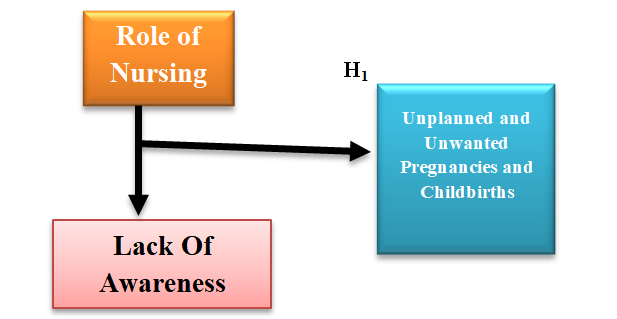
“There has been a growing awareness in recent years of the potential significance of adolescent pregnancies and childbirths, which are often unplanned and unwanted for many young women, but little is known about the frequency of it being adolescent pregnancies and childbirths in the early stages of development with various demands for many young women, with the role of nurses to provide encouragement to adolescents' during pregnancy and teen parenting.”
Unwanted pregnancies among young people are a result of a lack of education about reproductive health, specifically about methods to delay conception. Women nearly often bear the burden of blame when they give birth to a child against their will. Adolescent girls are often held responsible for a portion of the responsibility for unintended births that occur among mothers. Many births to women aged 15–19 occur in countries with low or moderate per capita income. This has far-reaching consequences for the well-being of children and the society since more young women will become single mothers. Teenage boys' ignorance of reproductive health issues, and of available forms of birth control, may lead to unwanted births. A lack of knowledge about reproductive health, especially regarding birth control, a lack of social support, poverty, compelled sexual activity, and even rape may all contribute to unwanted births among teenagers. Adolescent pregnancy and childbirth rates are high because of societal and economic factors. The increased prevalence of accidental births among teenagers is influenced by a few variables, including a lack of knowledge about reproductive health and a lack of awareness about the repercussions of unexpected pregnancy among adolescents. An unwanted pregnancy would have significantly more severe effects in terms of social welfare and financial stability. Every individual responds differently when faced with the reality of an unintended pregnancy. It will be challenging for young women to maintain good connections with their boyfriends and parents if they became pregnant at a young age, as this is especially true if the adolescent was a student, was unmarried, and had no employment prospects. Girls will seek their boyfriends' advice on how to handle their pregnancies in certain cases (Pertiwi, 2011).
The presence of health care professionals and health care organisations and institutions may substantially enhance a community's efforts to lower the occurrence of adolescent pregnancies. While most of their time is spent in a workplace such as an office, clinic, school, or hospital, doctors and nurses may play a significant part in community-based preventative efforts and coalitions by teaching young people and their parents. Doctors and nurses are respected allies because of their ability to teach and influence other fields and serve as public spokespeople. Several groups have prepared materials to assist their members combat the epidemic of teen pregnancy that has swept the nation in recent years (AMA, 2022).
Although the general adolescent pregnancy rate in the United States has been declining, it is still worrisomely high, particularly among specific groups (Romero et al., 2016). An infant delivered to a young mother is at increased risk for infection and may have delays in cognitive and physical development (Jeha et al., 2015). The increased cost of adolescent pregnancies to the government and the healthcare sector also has consequences on the availability of treatment for other illnesses and disorders (Romero et al., 2016). The following makes it very evident that adolescent pregnancy is a major issue that requires attention, particularly among vulnerable populations.
RESEARCH OBJECTIVE:
To understand the main reasons for unplanned and unwanted pregnancies in young women.
To find out the ways to avoid unplanned and unwanted adolescent pregnancies and childbirths.
To recognise the response of young women regarding unplanned and unwanted pregnancies and childbirths.
To learn about the awareness of adolescent pregnancies and childbirths among young women.
To evaluate the accurate predicament of unplanned and unwanted adolescent pregnancies and childbirths for many young women.
To recognise the role of nurses towards adolescent pregnant young women.
LITERATURE REVIEW:
Unintended pregnancies are pregnancies that occur at an inappropriate time or are otherwise unwanted. A pregnancy should be considered unplanned if either spouse is not enthusiastic about the pregnancy. The phrase "unintended pregnancy" is used to describe pregnancies that are not desired by either parent, whether they are unaware of the pregnancy or not. This includes both accidental pregnancies and those that are unwelcome by both parents. Worldwide, the World Health Organization estimates that about 87 million pregnancies every year are unintended, with 41 million resulting in a live birth (WHO, 2022). Teens' mental health suffers when they must care for a kid they didn't want, and the mother and child typically end up with a worse quality of life because of the teen's decision to drop out of school. After an abortion and a baby's birth, it's critical to have a strategy in place to lessen the possibility that the adolescent may get pregnant again. Adolescents who have had an unintended pregnancy or who have had many pregnancies often experience postpartum depression, anxiety, and uncertainty about parenthood. Teenagers who get pregnant more than once face a higher risk than they did during their first pregnancy. Dangers to life at home, including health, prosperity, and contentment. Adolescents' lack of knowledge about reproductive health is a significant cause of unwanted births. A better understanding of reproductive health may help educated adolescents avoid unwanted births. A pregnancy that is planned and carried out at the right time has much better physiological, emotional, and financial effects than an unanticipated pregnancy carried out at an improper age. It is imperative that we do all in our power to prevent teen pregnancies that result from a lack of education on sexual and reproductive health. Regulating bodies in low- and middle-income nations are often lax and poorly oriented. Despite the existence of a programme, having children is nevertheless stigmatised since it is not optimally implemented. Teenagers often fail to fully account for the potential negative repercussions of unplanned pregnancies on their physical and emotional health, as well as their financial security and future career opportunities (Fitriani, 2019).


 Download PDF
 Download XML