Objective: To take advantage of HIIT workout for neuro-muscular efficiency and blocking abilities of volleyball players. To evaluate the effectiveness of HIIT training in the development of neuromuscular efficiency and blocking skill in volleyball players. The experimental approach was chosen because it was the most suitable method for the research problem. The population, specifically advanced volleyball players, was intentionally selected using a list of sports clubs in Diyala Governorate, and the population is divided into four clubs. The principal sample used for the study was randomly selected through a lottery method. It was made up of players from the Khanaqin Sports Club, and Al-Wajihiya Sports Club. The sample was separated into experimental and control groups. Players of the Khanaqin Sports Club are the experimental group, numbering 18 players while players of the Al-Wajihiya Sports Club are the control group, numbering 14 players. The results of the study showed statistically significant differences in the level of neuromuscular efficiency between the experimental and control groups. The differences favored the experimental group that underwent HIIT training, demonstrating the effectiveness of this type of training in stimulating neuromuscular adaptations in volleyball players. Furthermore, HIIT training has a qualitative impact on developing specific motor abilities that require rapid response, explosive strength, and precise neuromuscular coordination. The researcher recommends the necessity of adopting high-intensity intermittent training (HIIT) within the training programs directed at age groups in volleyball, due to its positive impact in enhancing neuromuscular efficiency and improving skill performance, especially in vital defensive skills such as blocking, and encouraging coaches of sports clubs in Diyala Governorate and others to employ HIIT training according to scientific foundations (in terms of intensity, repetition, and rest periods) in a manner that is compatible with the level of players and their physical conditions, to achieve the best training results.
Keywords
Effectiveness of HIIT Training
Neuromuscular Efficiency
Volleyball
INTRODUCTION
One of the most effective and modern methods of training is high-intensity interval training (HIIT), which has a significant positive effect on the physical performance of a person, along with many health benefits as well (23). They're characterised by short bursts of maximum effort, followed by brief bouts of active recovery or lower-intensity work. Research shows science has shown HIIT not just helps your aerobic capacity, but neuromuscular efficiency, or how well the body runs muscle fibers more quickly together and connect better, boosting coordination between the nervous and muscular systems.
Altogether, the innate neuromuscular efficiency (but not those that belong to properties of the muscle itself) can be a primary determinant of physical performance in sport, especially in activities characterised by a explosive power. Joint mobilisations aim to increase communication throughout the body, specifically between the neuromuscular control system and muscular extremities, in order to enable athletes to obtain their full ability to perform during training or competitions.
Volleyball is prominent team sport depending on high level interplay of physical and functioning abilities considering the context where quick execution may appear as essential with respect to rhythm timing, and the need to carry out higher repetitions of motors under the effects of physical and nervous stresses. As a consequence of these prerequisites, targeted training programs should be reconsidered and integrated aerobic and anaerobic stimulation and intense neuromuscular loading techniques as HIIT needed in this respect.
It is essential to improve neuromuscular efficiency, particularly in skills requiring rapid and accurate interaction eg. blocking. HIIT training helps improve neuromuscular adaptation response speed, and reaction time due to increased blush poker coordination between muscle, and nervous system; so players can perform these complex movements more quickly and accurately.
Neuromuscular Efficiency:
A more advanced physiological measure assesses the ability of the central nervous system to activate muscle fibers and is a functional measure of this type of training effect. Such as the accuracy and effectiveness of motor performance, particularly in fast response, explosive strength, and timing and precision. In sports where jumping, take-off, anticipation, and rapid response are paramount (like blocking in volleyball, the latter being a complex skill with direct dependence on the performance of the neuromuscular system), this indicator is of particular importance. This research is significant in that it aims at a scientific and practical integration in determining the effect of highintensity interval training (HIIT), which is a modern training method on the neuromuscular system in volleyball players. This training modality, which alternates short periods of high effort with shorter, higher volume periods of active rest, has been postulated to produce multi-system adaptive responses within the neuromuscular system that may lead to improved motor and functional performance of players.
Although HIIT training is a common component in physical preparation programs for many team sports, particularly the link between this type of training and some of the more modern physiological measures (e.g. neuromuscular efficiency) remain poorly defined between targeted populations, particularly volleyball players, who may be in a crucial period of physiological and skills development. Therefore, a systematic scientific investigation to explore the effectiveness of HIIT training on these key indicators is warranted. It is important to understand the adaptations it may provide and how this may influence competition performance, specifically regarding a many type of complex skills that combine high physical effort and skills (for example blocking).
Research Objective
To utilize the effectiveness of HIIT training in enhancing neuromuscular efficiency and developing blocking skills in volleyball players.
To identify the effectiveness of HIIT training in enhancing neuromuscular efficiency and developing blocking skills in volleyball players
MATERIALS AND METHODS
Research Methodology and Field Procedures
Research Methodology: The researcher used the experimental method as it was the most appropriate method to address the research problem.
Research Population and Sample
The research population was intentionally selected from among advanced volleyball players in Diyala Governorate, distributed across four sports clubs. The main sample for the research was randomly selected using a lottery method, and comprised players from the Khanaqin Sports Club and Al-Wajihiya Sports Club. The sample was divided into two groups: experimental and control. The Khanaqin Sports Club players represented the experimental group, numbering 18 players, while the Al-Wajihiya Sports Club players represented the control group, numbering 14 players.
To implement the exploratory experiment procedures, 4 players were selected from the Khanaqin Club, whose results were subsequently excluded from the main experiment. Thus, the final sample size was 28 players, who were selected to conduct the study applications and analyze the impact of the proposed training program according to the research variables. 2-3 Devices, Tools, and Data Collection Methods:
Data Collection Methods
Arab and foreign sources. The Internet. Observation. Testing and measurement.
Devices and Tools Used in the Research
A legal volleyball court. Legal volleyballs. A whistle. Pointers. Cones. A measuring tape. Boxes. Weights. Medicine balls of various weights. Rubber bands. A Nikon D5100 camera. A Suny video camera. A Dell laptop calculator. An EMG device.
Field Research Procedures
Tests Used in the Research: Neuromuscular Activity Measurement (EMG)
Electrical Activity Measurement Device (EMG) Used in the Research
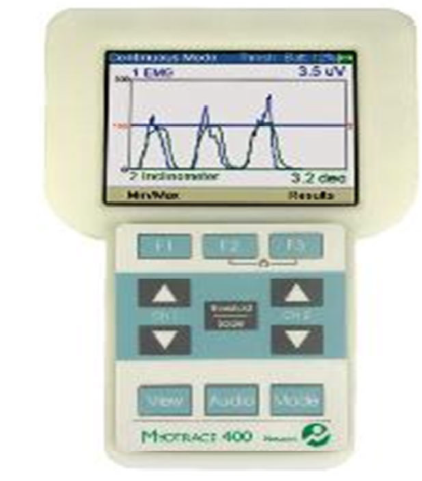
The researcher used a newly manufactured device to record electrical signals emitted from muscles, the Myotrace 400, which operates with two channels. This device consists of:
A device that receives and transmits the signal via Bluetooth, weighing 370 grams
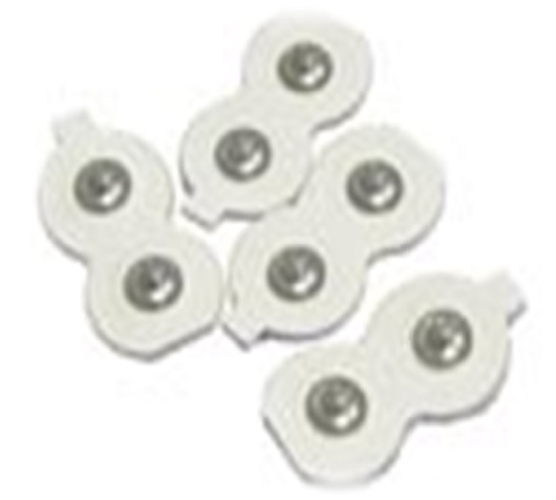
Surface sensors
Connection wires between the device and the surface sensors
An application program for the device (Noraxon Myotrace 400), which is installed on a computer. Through this program, the EMG signal can be displayed and stored (the signal for each muscle separately). This program also contains the locations for placing the surface sensors for each muscle in the anterior and posterior body muscles.
Because recruitment of motor units is dynamic, the EMG signal is inherently unpredictable. To eliminate interference from nearby electronics and electrical lines, the signal is sent through a high-pass filter. In order to eliminate any potential interference from the device's
Table 1: Translated Into English with the Same Formatting
Time
Exercise Type
High-Intensity Task
30 seconds
Developing explosive leg power
Repeated explosive jumps (Vertical Bounds)
30 seconds
Upper body activation
Fast overhead press with medicine ball
45 seconds
Neuromuscular skill activation
Lateral shuffles + ball reception
30 seconds
Full neuromuscular system activation
Jump with simulated block at the net
45 seconds
Increasing cardiac pressure and sympathetic activity
Short sprint races (10 m × 4)
Table 2: Experimental Group's Pre- and Post-Test Arithmetic Means, Standard Deviations, and Computed T-Values
Variables
Pre-Test
Post-Test
t
Error Ratio
Significant
Arithmetic mean
Standard deviation
Arithmetic mean
Standard deviation
Neuromuscular activity
Right deltoid muscle
1491.98
2.318
1531.61
4.024
4.597
0.000
Significant
Left deltoid muscle
1022.46
4.515
1128.38
4.225
72.669
0.001
Significant
Triceps muscle
1263.01
14.302
1468.13
16.454
34.615
0.000
Significant
Explosive power of the legs
38.304
1.745
43.291
2.154
4.984
0.001
Significant
Explosive power of the arms
5.122
0.282
6.219
0.241
7.742
0.000
Significant
Smashing block wall
30.926
2.092
39.002
2.038
8.805
0.000
Significant
Table 3: The Arithmetic Means, Standard Deviations, and the Calculated (T) Value for the Pre- and Post-Tests for the Control Group
Variables
Pre-Test
Post-Test
t
Error Ratio
Significant
Arithmetic mean
Standard deviation
Arithmetic mean
Standard deviation
Neuromuscular activity
Right deltoid muscle
1475.023
37.811
1512.05
45.114
2.490
0.032
Significant
Left deltoid muscle
1020.04
2.356
1062.07
59.659
2.374
0.039
Significant
Triceps muscle
1257.398
12.645
1298.61
53.991
2.738
0.021
Significant
Explosive power of the legs
38.304
37.945
1.660
39.136
1.714
1.749
0.111
Explosive power of the arms
5.122
5.041
0.297
5.455
0.655
2.214
0.051
Smashing block wall
30.926
30.428
1.949
34.285
1.772
6.211
0.000
Table 4: The Arithmetic Means, Standard Deviations, and the Calculated (T) Value Between the Experimental and Control Groups in the Post-Tests of the Research Variables
Variables
Experimental group
Control group
Arithmetic mean
Standard deviation
Arithmetic mean
Standard deviation
Neuromuscular activity
Right deltoid muscle
1531.61
4.024
1512.05
45.114
Left deltoid muscle
1128.38
4.225
1062.07
59.659
Triceps muscle
1468.13
16.454
1298.61
53.991
Explosive power of the legs
43.291
2.154
39.136
1.714
Explosive power of the arms
6.219
0.241
5.455
0.655
Smashing block wall
39.002
2.038
34.285
1.772
Table 5: The Difference in the Arithmetic Means, Standard Deviations, the Calculated (T) Value, The Error Rate, and the Significance Level Between the Experimental and Control Groups in the Post-Tests of the Research Variables
Variables
Mean Difference
SD of Differences
SE of Differences
t-Value
Error Ratio
Significance Level
Neuromuscular effectiveness
Right deltoid muscle
19.552
45.360
13.676
1.699
0.005
Significant
Left deltoid muscle
66.305
60.408
18.213
3.641
0.005
Significant
Triceps brachii muscle
169.525
61.209
18.455
9.186
0.000
Significant
Explosive leg power
4.154
2.652
0.7999
5.194
0.006
Significant
Explosive arm power
0.763
0.765
0.230
3.310
0.000
Significant
Blocking against spike attack
4.714
2.091
0.558
8.434
0.000
Significant
Figure 1: EMG Device
Figure 2: Surface Collectors
wiring or the device itself, it is additionally filtered via a low-pass filter. An amplifier is required for the EMG signal prior to its storage or presentation on a screen due to the signal's low-pass nature. There may be no distortion or change in the signal's spectrum if it stays unchanged throughout amplification. Appropriate processing of the signal follows. For this, a laptop will do. Keep in mind that the raw signal goes through a number of processing stages before the final data is generated. Some of the indications employed include the signal's peak, mean, and area under the curve. According to Al-Azzawi The explosive force of the legs: Sargent's standing-start vertical leap. As stated by Hammoudat [1]. The test's objective is to quantify the participant's leg muscles' explosive power.
Tools and Equipment Utilized
Three and a half meters of wall space, a measuring tape, and a 0.5-by-1.50-meter chalkboard attached to the wall is required. The blackboard is marked with white lines that are 2 centimeters apart. After the tester reads each attempt, they use pieces of chalk and towel to wash the blackboard.
Test Method
The tester holds a piece of chalk and stands facing the blackboard. The tester extends the arm holding the chalk upwards to its full extent to make a mark on the blackboard. The tester records the number. The tester then jumps upward, swinging their arms forcefully forward and upward to reach the maximum height, i.e., the difference between the two readings, as shown in Figure (5).
Test Conditions
Jump upwards should be performed using both feet from a stationary position, not by taking a step
Measurements should be taken to the nearest centimeter
Each subject is given three attempts, the best of which is recorded
Recording
The distance between the first and second marks indicates the amount of muscle power in the legs.
Explosive Arm Strength Test
Purpose of the Test: To measure the explosive strength of the arm muscles [2].
Equipment and Tools
A medicine ball weighing 3 kg, a measuring tape 1, a chair with a belt to secure the torso firmly to the chair.
Performance Method
The subject sits on the chair and holds the medicine ball with both hands above his head, with his torso adjacent to the edge of the chair. The belt is placed around the subject's torso and tied to the back edge of the chair to prevent the subject from moving forward while throwing the ball with both hands. The ball is thrown with both hands without using the torso, as shown in Figure (6). Each subject is given three attempts, and the best one is recorded.
Recording
The distance between the front edge of the chair and the closest point where the ball is placed is calculated. Smash-Block Wall Test [3].
Purpose of the Test
To measure the accuracy of the skill of blocking against an opponent's smash.
Equipment
A legal volleyball court, 10 legal volleyballs, and a net with a legal height of (2.43) m.
Performance Specifications
The examinee stands in the middle of one half of the court, while in the other half is a player who excels in the smash skill, accompanied by the coach (the coach prepares the ball by throwing it upwards from next to the net. The player must perform five smashes from position 2, five from position 3, and five from position 4. The examinee must perform the block against the player's smash.
Conditions
Any attempt in which the smash is inappropriate will be disqualified
The sequence mentioned above in the performance specifications for the smash hit shall be observed
The examinee shall perform the blocking wall in accordance with the legal requirements
A 30-second rest period shall be granted between every five attempts
Any performance that violates the above conditions shall result in the attempt being disqualified
Scoring
Each attempt (15 attempts) shall be performed according to the following conditions:
If the ball falls within the opponent's court (the half of the court where the coach and the smash hitter are located), preventing the opposing team from pursuing the ball, the examinee shall be awarded three points, provided that the blocking wall performance complies with the legal requirements
If the ball falls within the examinee's own court (the half of the court where the examinee is located) in a manner that allows the examinee's teammates to continue playing, the examinee shall be awarded two points
If the ball falls within the opponent's court in a manner that allows the opposing team to continue playing, the examinee shall be awarded one point
Any performance that violates the above distribution and conditions shall result in the examinee receiving a zero
In light of the above, the examinee is awarded the total marks allocated to him in the fifteen permitted attempts to perform the test. Thus, the maximum marks for this test are (45) marks
Pilot Experiments
The first pilot experiment, involving physiological devices, was conducted in the Physiology Laboratory at the College of Physical Education and Sports Sciences, University of Diyala, on February 3, 2025, at 10:30 a.m. The purpose of the experiment was to:
Verify the validity of the physiological devices used and ensure their accuracy in recording data under controlled laboratory conditions
Test the suitability of the laboratory environment for performing the required measurements according to the study requirements
Ensure the researcher and the work team are able to use the analytical software accompanying the devices and adjust the settings for each tool
Determine the optimal time for performing each physiological test and ensure smooth operation during the basic field measurement phases without confusion or human error
Identify any potential technical or procedural obstacles before the actual experiment begins, and work to address them to ensure accurate and reliable data collection during the pre- and post-measurement phases. The second pilot study, conducted on February 4, 2025, examined the explosive power of the legs and arms at 10:30 a.m. at the College of Physical Education and Sports Sciences, University of Diyala
Pretest
Pretests for the research variables were conducted on Sunday and Monday, February 11-12, 2025, at 10:30 a.m., in the Physiology Laboratory and Physical Training Hall at the College of Physical Education and Sports Sciences, University of Diyala, under the direct supervision of the researcher and the specialized team. This phase aimed to measure the initial values of the study variables according to standardized and precise procedures. 2-4-4 Main Experiment:
The training program was designed according to the High Interval Training (HIIT) methodology, which alternates short periods of high-intensity physical performance, ranging from 85–95% of maximum heart rate, with active rest periods that allow for partial recovery while maintaining metabolic stimulation. The program aimed to develop physiological adaptations of the heart and autonomic nervous system (through HRV activation), enhance the efficiency of neuromuscular conduction and activation of high-threshold motor units, increase the explosive strength of the associated upper and lower extremities, and improve tolerance to intermittent effort.
The experimental program began on February 15, 2025, and continued until April 10, 2025, for a period of 8 weeks, with 3 training units per week on Sundays, Tuesdays, and Thursdays. The duration of each training unit was 60 minutes, while the duration of the high-intensity effort ranged from (30–45 seconds). Active rest 60-90 seconds, and the number of repetitions in the training session ranged from 6-10 repetitions depending on the week.
Warm-up (10-12 minutes)
General conditioning exercises (light jogging, dynamic stretching, joint movements)
Specific conditioning (light jumps, short agility exercises)
Main part (30-40 minutes)
Performed using the HIIT system.
Cool-Down (5–10 Minutes)
Stretching and muscle relaxation exercises.
Heart rate monitoring to ensure return to baseline.
Post-Test
On Wednesday and Thursday, April 12-13, 2025, at 10:30 a.m., after the research sample completed the high-intensity interval training (HIIT) program, they were given post-tests to measure the study variables. The lab and physical training hall at the University of Diyala's College of Physical Education and Sports Sciences served as the same settings for the tests as the pre-tests, and the researcher was present throughout to make sure everything was consistent.
Approaches to Statistics
To analyze the data and draw conclusions, the researcher used SPSS, a statistical tool.
Discussion, analysis, and presentation of findings. Mathematical means and standard deviations of the study variables' pre- and post-test outcomes for the control and experimental groups. This Section presents the findings of the analysis of the study variables, including the averages and standard deviations of the pre- and post-tests administered to the members of the experimental group.
Presenting and analyzing the results of the arithmetic means and standard deviations for the pre- and post-tests for the experimental group members for the research variables
Displaying the results of the arithmetic means and standard deviations for the experimental and control groups in the post-tests of the research variables and analyzing them.
DISCUSSION
Discussion of the Neuromuscular Activity Variable – Right Deltoid Muscle (Right Deltoid EMG)
Results indicated that neuromuscular activity of the right deltoid muscle in the experimental group significantly improved following HIIT training and was maintained posttest compared to the validity test. The actual difference, though numerically small, is statistically significant and represents a real effect from the specific intensive training used to target this muscle region.
Electromyography (EMG)- Neuromuscular activity is routinely measured using EMG. This essentially means the nervous system is efficiently recruiting and activating motor units working inter-muscle during muscle actions, which is especially useful for expressed average strength production that requires instantaneous and accuracy, such as in the case of the volleyball block where an athlete has to jump to execute the skill [4]. The increase in the EMG signals in the right deltoid muscle suggests that the neural activation of this muscle becomes more efficient, and this reflects the repetitive nature of arm-specific use during HIIT sessions.
Del Vecchio et al. [5] Lloyd Ragnarok The hypothesis states that training with high intensity increases the amount of central nervous system activity and enhances nerve conduction efficiency to the muscle groups being targeted, thereby speeding up activation of fast twitch muscle fibers and facilitating skill responses.
The researcher considers that the increase of neural activity of the right deltoid muscle in the experimental group is the result of an actual use-dependent neuronal adaptation of the neuromuscular system due to chronic high-intensity loading. It is hardly surprising to note this particular improvement when this muscle is quite central to the execution of the fundamental volleyball skills, especially serving and passing. The control group, by contrast, did not improve significantly, supporting the idea that the beneficial neural remodeling is due specifically to the features of the exercises in the training and not due to chance. Variable of Neuromuscular Activity – Left Deltoid Muscle (Left Deltoid EMG) – Discussion
Each part wields a concrete importance to unveil the standout feature while allowing readers to explore a bit further; Results were observed between players of the experimental group in forehand HIIT training by comparison of left elbow flexor, left deltoid, left biceps brachii, left extensor digitorum, and lateral musculature of left foot The increase in the electrical signals given off by this muscle reflects an improvement in neuromuscular conduction efficiency, responding directly to the precise high and repetitive loads of the HIIT program.
Electromyography (EMG) is an accurate tool for measuring neuromuscular changes and is used to determine the effectiveness of motor units when performing skillful movements and physical effort, especially in sports that require symmetry and balance in the use of the upper extremities, such as volleyball [6]. The improvement achieved in this muscle is attributed to the training program's reliance on exercises that stimulate both arms in a balanced manner, with periods of high effort that accelerate central and peripheral neural adaptation.
The study by Farina et al. [7] found that exposure to high-intensity intermittent muscle activity induces a clear stimulation of the neural pathways supplying the muscles, leading to increased muscle fiber recruitment and improved motor neuron efficiency. The researcher believes this clear improvement is an indication that the training program was not only directed at the skill aspect, but also aimed to stimulate subtle neurophysiological responses, most evident in muscles less frequently used in basic performance, such as the left deltoid. This also reflects the effectiveness of the exercise design in creating a neuromuscular motor balance between the two sides. This is considered a basic requirement in developing the overall functional performance of volleyball players.
Discussion of the Neuromuscular Activity Variable – Triceps
The results of the study showed significant improvement in the neuromuscular activity of the triceps muscle among the players in the experimental group. This improvement is an indication of increased efficiency of motor neuronal activation of this muscle as a result of the training. The triceps muscle is one of the primary muscles in executing the block wall, relying on the rapid and precise recruitment of motor units, which can be improved through short, high-intensity repetitions [8]. HIIT training accelerates nerve conduction and stimulates fast-twitch (Type II) fibers, which explains the significant increase in EMG signals.
The researcher believes that this improvement is directly attributable to the design of the exercises, which included pushing and jumping phases using the arms, providing a suitable environment for stimulating the deep muscles. The control group, however, showed no significant improvement, proving that the neuromuscular transformation was a direct result of the training program. Discussion of the Explosive Leg Power Variable
The results of the study showed a significant improvement in the explosive power of the legs of the experimental group after implementing the effectiveness of HIIT training. This result reflects an improvement in the player's ability to produce high force in a short period of time, one of the most important physical requirements in volleyball, especially in the blocking skill.
This improvement is attributed to the nature of HIIT training, which included high-intensity repetitions of short, multi-directional jumps, which stimulated fast-twitch muscle fibers and increased the efficiency of neuromuscular conduction [9]. The frequent alternation between effort and relative rest also helped develop anaerobic endurance and improve neuromuscular adaptations associated with explosive power.
The researcher believes that the inclusion of specialized high-intensity training provided the players with an opportunity to improve their motor response to the vertical jump, especially by combining the skillful movement with high repetitions, which increased the effectiveness of neurological and mechanical responses. While the control group did not record any significant improvement, confirming that the training pattern is the main differentiating factor in the development of this variable. Consequently, these improvements contributed to an increase in the level of jumping in the blocking skill.
Discussion of the Explosive Arm Power Variable.
The explosive power of the arms resulted in a significant increase in the experimental group without previous HIIT training periods. This amelioration reflects the positive impact of the training on generating explosive high force in the upper limbs. It is one of the most important components of blocking skill in volleyball as it contributes in more power application for jumping & extending to the most distant point of the blocking wall.
The ability to produce explosive arm power is not just determined by the angle of the joints or how well we are able to get the relevant muscles here activated, but rather, by the efficiency of the nervous system in recruiting the fastest acting muscle fibers available, and the overall coordination of motion between the working and stabilizing muscles needed for the performance. Research has confirmed that this system can be strongly stimulated with HIIT training, as long as repetitive pushing, throwing and pressing exercises are implemented [10]. Following repeated high intensity, short rest arm stimulation, neuromuscular efficiency and motor control improved. So physiological demands are effectively addressed through careful consideration of gradual manipulation (progression) and variety (periodization) in the loads within training programs designed based on their temporal interrelationships [11] about skilled volleyball players (Rashed Al-Rubaie H. confirming the same). Training methods are some of the best ways to improve neuromuscular coordination when performing the use of fast contraction and timing. This indicates that a programme of competitive specificity, if sufficiently intensive and selective, can obviously promote the integrated functional and skill adaptations that are required. This supports the viability of implementing HIIT as part of player preparation programs, especially targeting skills that integrate together explosive force and the use of visual and motor pathways at high speed. The researcher attributed this factor to training with variables that included exercises such as forward push-ups, medicine ball throws, and arm jumps with an emphasis on utilizing the neuromuscular system to integrate local performance. On the other hand, the control group did not significantly change, supporting the hypothesis that the real improvementis due to the training carried out and not to chance.
CONCLUSION
The results of the study showed statistically significant differences in the level of neuromuscular efficiency between the experimental and control groups. The differences favored the experimental group that underwent HIIT training, demonstrating the effectiveness of this type of training in stimulating neuromuscular adaptations in volleyball players. Furthermore, the qualitative impact of HIIT training on developing specific motor abilities that require rapid response, explosive power, and precise neuromuscular coordination is demonstrated. It is concluded that implementing HIIT training in a thoughtful and systematic manner effectively contributes to achieving integrated physiological and skill adaptations, positively impacting the functional aspects associated with athletic performance, particularly in the advanced stages of development among young players. The researcher recommends the adoption of high-intensity intermittent training (HIIT) as part of training programs for age groups in volleyball, given its positive impact on enhancing neuromuscular efficiency and improving skill performance, especially in vital defensive skills such as blocking. He also encourages coaches of sports clubs in Diyala Governorate and elsewhere to employ HIIT training according to scientific principles (in terms of intensity, repetition, and rest periods) in a manner consistent with the players' level and physical conditions, to achieve the best training results. He also emphasizes the need for player development centers to adopt training programs based on HIIT training as part of comprehensive development strategies, especially given the statistically significant results the study demonstrated in favor of this method compared to traditional training.
REFERENCE
Hamoudat F.B., Jassim M.A. "Basketball." Mosul: Dar Al-Kutub for Printing and Publishing, 1987.
Hassanein M.S., Abdel Moneim H. "Scientific foundations of volleyball and measurement methods." 1st ed., Cairo: Kitab Publishing Center, 1997.
Enoka R.M., Duchateau J. "Inappropriate interpretation of surface EMG signals and muscle fiber characteristics impedes understanding of the control of neuromuscular function." J Appl Physiol, vol. 119, no. 12, 2015, pp. 1516–1518. doi:10.1152/japplphysiol.00873.2015.
Del Vecchio A. et al. "The increase in muscle force after 4 weeks of strength training is mediated by adaptations in motor unit recruitment and rate coding." J Physiol, vol. 597, no. 7, 2019, pp. 1873–1887. doi:10.1113/JP277250.
Rainoldi A., Melchiorri G., Caruso I. "A method for positioning electrodes during surface EMG recordings in lower limb muscles." J Neurosci Methods, vol. 134, no. 1, 2004, pp. 37–43. doi:10.1016/j.jneumeth.2003.10.014.
Farina D. et al. "The extraction of neural strategies from the surface EMG." J Appl Physiol, vol. 117, no. 11, 2014, pp. 1215–1230. doi:10.1152/japplphysiol.00170.2014.
Macaluso A., De Vito G. "Muscle strength, power and adaptations to resistance training in older people." Eur J Appl Physiol, vol. 91, no. 4, 2004, pp. 450–472. doi:10.1007/s00421-.
Markovic G., Mikulic P. "Neuro-musculoskeletal and performance adaptations to lower-extremity plyometric training." Sports Med, vol. 40, no. 10, 2010, pp. 859–895. doi:10.2165/11318370-000000000-00000.
Cormie P., McGuigan M.R., Newton R.U. "Developing maximal neuromuscular power: part 1—biological basis of maximal power production." Sports Med, vol. 41, no. 1, 2011, pp. 17–38.
Rashid M.H., Al-Rubaie S.S. "The effect of a proposed training approach to develop the skill of serving and some physiological capabilities in volleyball for youth." J Sport Sci, vol. 12, no. 44, 2020.
Recommended Articles
Research Article
The Effectiveness of Neuromuscular Coordination Exercises in Regulating the Electrical Activity of Shoulder Muscles and Its Reflection on Biomechanical Characteristics and the Level of Shot Put Achievement for Juniors
Waleed Khairullah Fayhan
Published: 20/01/2026
Download PDF
Research Article
Design of an Electronic Device for Measuring Complex Motor Reaction Time to Auditory and Visual Stimuli
Imad Saadallah Khamis,
Ibrahim Khalil Ibrahim
Published: 22/01/2026
Download PDF
Research Article
Effectiveness of the Hexagonal Thinking Strategy on Psychomotor Coordination and Learning the Forehand and Backhand Groundstrokes in Tennis for Students
Hameed Hammad Khalaf
Published: 02/02/2026
Download PDF
Research Article
Phosphogenic Power as a Function of Maximum Speed and Impulse Force and Their Relationship to the Triple Jump Performance of Students
Mustafa Ismal Aseen
Published: 18/01/2026
Download PDF
PO Box 101, Nakuru
Kenya.
Email: office@iarconsortium.org
Editorial Office:
J.L Bhavan, Near Radison Blu Hotel,
Jalukbari, Guwahati-India
Wahan Hamid, A. (2025). The Effectiveness of HIIT Training in Enhancing Neuromuscular Efficiency and Developing Blocking Skills in Volleyball Players. Scientific Research Journal of Multidisciplinary, 5(2), 1-7.
MLA
Wahan Hamid, Ahmed. "The Effectiveness of HIIT Training in Enhancing Neuromuscular Efficiency and Developing Blocking Skills in Volleyball Players." Scientific Research Journal of Multidisciplinary 5.2 (2025): 1-7.
Chicago
Wahan Hamid, Ahmed. "The Effectiveness of HIIT Training in Enhancing Neuromuscular Efficiency and Developing Blocking Skills in Volleyball Players." Scientific Research Journal of Multidisciplinary 5, no. 2 (2025): 1-7.
Harvard
Wahan Hamid, A. (2025) 'The Effectiveness of HIIT Training in Enhancing Neuromuscular Efficiency and Developing Blocking Skills in Volleyball Players' Scientific Research Journal of Multidisciplinary 5(2), pp. 1-7.
Vancouver
Wahan Hamid A. The Effectiveness of HIIT Training in Enhancing Neuromuscular Efficiency and Developing Blocking Skills in Volleyball Players. Scientific Research Journal of Multidisciplinary. 2025 Jul;5(2):1-7.


 Download PDF
 Download XML