The purpose of the study is to determine how compound workouts affect the basic skills and development of some functional indicators in young soccer players at the Sporting Housing Forum for the 2022–2023 season. The experimental approach with the equivalent groups methodology was employed by the researcher. Thirty-five players from the Sporting Youth Housing Forum in Al-Qadisiyah Governorate made up the research population. After removing the five goalkeepers, there were thirty players remaining. To ensure homogeneity and equivalency, they were split into experimental and control groups at random, with 15 players in each. The young athletes began performing the compound exercises on May 10, 2023., Wednesday, over an 8-week duration and 24 units in total—three units a week (Saturday, Monday, Wednesday). The study's significant findings showed that compound exercises had a definite beneficial effect on a number of fundamental skills and critical functional markers for young people. Additionally, statistical differences were noted in the research variables between the pre- and post-tests, with the experimental group performing better in the post-test. Regarding the suggestions, it is advised to choose age-appropriate workouts to guarantee appropriate performance, supporting the development of functional indicators and fundamental young soccer abilities.
Keywords
Compound Exercises
Youth Soccer Players
Functional Indicators
Basic Soccer Skills
INTRODUCTION
The game of football is one of the team sports that stands out for its various physical, skilful, strategic, and mental abilities. These abilities play an active role in achieving the highest artistic level of the game. The elevation of this level can only be achieved through a balanced scientific training that encompasses all aspects of the training process, whether physical, strategic, or mental. It aims to enhance everything that contributes to demonstrating a good artistic level during competition or matches. The effort exerted by the player during the game is not limited to physical and skilful effort, but rather involves a complete interaction between the functional and mental body systems to produce a good artistic level by linking physical and skilful attributes in complete harmony, granting the player a pleasing performance to the observer [1-2].
It has been found that compound exercises performed by the player play a significant role in developing the mentioned preparation aspects, as mentioned by Arnold, stating, "The learner is required to apply various forms of skill execution in different situations and train to perform the skill in situations similar to real play as much as possible." Performing compound exercises that impose a set of mental skills on the player, starting from attention and concentration, leading to the performance of the required motor tasks. Compound exercises raise the level of players' performance due to their impact on both skilful and mental aspects. Functional indicators play a role in motor behaviour practiced by the athlete by reducing unnecessary movements and precision in decision-making, resulting in precise motor responses and, consequently, reaching the integrated player needed for football [3-5].
Hence, the importance of the research lies in providing diverse exercises to enhance essential functional indicators and develop some basic skills. This contributes to improving the levels of football players, especially youth players, enabling them to achieve better results in matches.
Research Objectives
The research aims to:
Prepare compound exercises for young football players in the Youth Housing Forum
Examine the impact of compound exercises on developing some functional indicators for young football players in the Youth Housing Forum
Examine the impact of compound exercises on developing some basic football skills for young football players in the Youth Housing Forum
Research Hypotheses
Compound exercises have a positive effect on some functional indicators for young football players in the Youth Housing Forum
Compound exercises have a positive effect on some basic football skills for young football players in the Youth Housing Forum
Research Fields
Human Field: Players of the Youth Housing Football Forum for the sports season 2022-2023
Time Field: The period from 3/4/2023 to 1/7/2023
Spatial Field: Youth Housing Forum football field
Research Method
The best research approach is determined by the nature of the problem and the goals of the study. Because the experimental approach was appropriate for the nature of the research challenge, the researcher employed it with a single group. "Represents the most accurate coupling to solve many problems scientifically and theoretically" (1) is how the experimental approach puts it.
MATERIALS AND METHODS
Research Community and Sample
Thirty-five athletes, representing the youth housing sports forum, were identified as the research community for the 2022–2023 sports season. As indicated in Table (1), the research sample, which consisted of thirty players, was evaluated and randomly split into two groups (control and experimental), each with fifteen players, using the straightforward approach of a lottery.
Table 1: Shows the Sample Individuals and the Methodology Used
Group
Number of Sample Individuals
Used Methodology
Control
15
Methodology prepared by the coach
Experimental
15
Exercises prepared by the researcher
Homogeneity and Equality of Sample Individuals
In spite of the fact that the sample represented a cohesive mix, the researcher employed procedures targeted at controlling influencing variables (scoring, suppression, ball control) in order to achieve homogeneity and equality among the individuals in the research sample. To guarantee the homogeneity and equality of the research sample individuals, the data was processed using the proper statistical methods (mean, standard deviation, skewness, and the t-value for independent samples). The control and experimental groups' equality and homogeneity are shown in Tables (2).
Table 2: Illustrates the Homogeneity and Equality of the Control and Experimental Groups
Variables
Control Group
Experimental Group
t
Sig.
Levene
Sig.
S
M
S
M
Pulse
174.400
3.247
174.467
3.204
0.057
0.955
0.059
0.810
Systolic Blood Pressure
180.400
2.131
180.467
2.100
0.086
0.932
1.160
0.296
Diastolic Blood Pressure
87.000
1.464
87.067
1.486
0.124
0.902
1.569
0.113
Vital Capacity
3.780
0.121
3.787
0.125
0.149
0.883
0.014
0.908
Handling
13.467
0.915
13.600
0.910
0.400
0.692
0.011
0.918
Dribbling
16.667
1.047
16.351
0.858
0.903
0.374
0.045
0.834
Scoring
9.400
0.910
9.267
0.961
0.390
0.699
0.040
0.844
Values of the tabulated t at a degree of freedom of 28 and a significance level (0.05) = 2.05
Tools, instruments, and devices used in the research
Research tools:
Arabic and foreign scientific sources and references
Personal interview
Observation
Experimentation
Assistant work team
Tools and devices used in the research:
Legal football field
Footballs (20)
Cones (30)
Balls of various sizes and weights (45)
Height and weight measurement device
Digital watch for measuring to the nearest 1/100 second
Whistle
Cones
Goalkeeper dividing ropes
Fabric measuring tape
Tests used in the research
Functional test
Pulse Rate Test
Measurement Unit: Beats per minute
Tool: Medical device for measuring pulse rate
Pulse rate can be determined from either the carotid artery site on the side of the neck below the jaw (on either side). The examiner needs to press on that side with two or three fingers until feeling the pulse.
The pulse can also be felt from another site, the brachial artery site above the elbow joint and above the wrist joint with the hand extended and spread, and the palm upwards (i.e., on the side of the arm at the wrist joint with the hand extended and spread).
The pulse rate is determined by measuring the number of pulses within 10 seconds, for example, then multiplying the result by 6, or measuring the number of pulses within 15 seconds and multiplying the result by 4 and so on to obtain the pulse rate per minute.
Note that the pulse rate was measured using a medical stethoscope.
Blood Pressure Measurement
Test Goal: Determine blood pressure.
Steps
Prepare the person before measurement, in a calm state for at least five minutes
Wrap the rubber bag of the device around the arm at heart level
Determine the passing point of the brachial artery above the elbow joint and usually the point is in the lower-middle part of the forearm, where it can be marked with a pen. The ability to quickly identify this point and important assisting factors in obtaining accurate results. The inability to place the medical stethoscope over this point reduces the ability to hear the heart sound
Inflate the air pressure inside the rubber bag until it reaches the level of 18 mm mercury when measuring at rest, and during training, it may reach (200-220) mm mercury. Place the stethoscope above the indicated point
Listen to the first heart sound called Korotkoff sound, which occurs as a result of the sudden rush of blood when the artery opens. This sound is attributed to systolic blood pressure, and this moment is the first stage of changes in heart sound
After reading the systolic blood pressure, the cuff continues to gradually lower the air pressure in the rubber bag until just before the pulse sound disappears, where the reading at this indicates the value of diastolic blood pressure
Vital Capacity
• Measurement unit: Litres and parts
• Tool: Spirometer for measuring vital capacity
The laboratory technician held the rubber blowing tube attached to the spirometer while sitting on the chair, then began to take the maximum possible inhalation. After that, he exhaled the maximum possible exhalation into the rubber tube. A nasal mask was placed to ensure that no air leaked out through the nose. During this time, the device recorded the readings on a clear screen with litres and parts (Figure 1-2).
Tests of some basic football skills
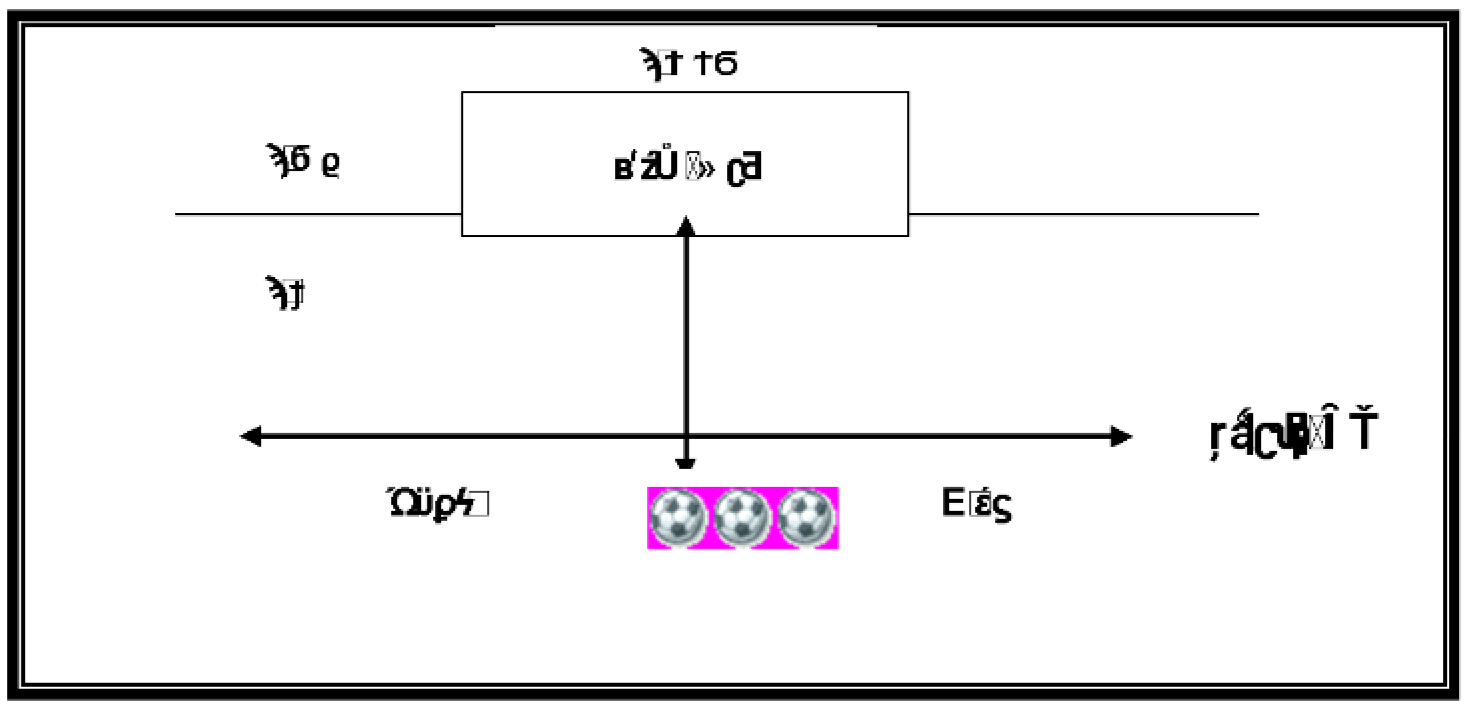
Test First: "Rebounding Handling on the Wall for 20 Seconds"
Test Purpose: Measure the speed and accuracy of handling
Figure 1: Illustrates the Test of Rebound Handling On the Wall for 20 Seconds
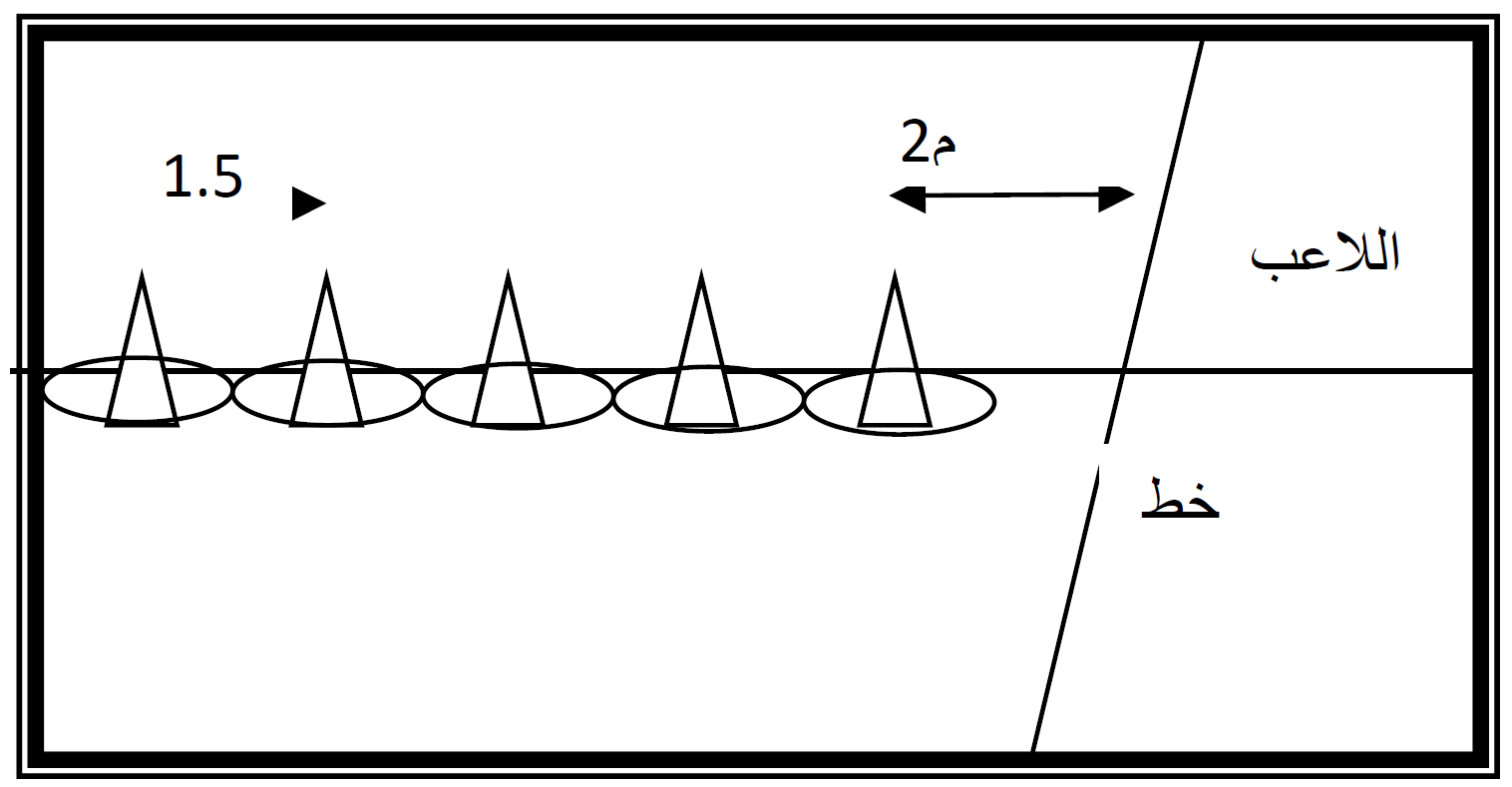
Figure 2: Illustrates the Test of Rolling Between 5 Cones Back And Forth
Tools Needed a line drawn in front of the wall at a distance of three metres, and a smooth wall with a designated area of 1.5 metres by 2.20 metres. - Football games 3 - Electronic timer 2
Performance Parameters: The player behind the starting line smashes the ball on the wall upon receiving the start signal, and when it bounces off the wall, hits it once more, and so on, until the test is over. It is best to wait to hit the rebounding ball until it is behind the starting line. One of the other two cards may be taken without pausing if the player loses control of the ball. Any foot, or any component of a foot, can be used to hit the ball
Assessment: Number of accurate ball hits should be noted towards
Test Two
"Rolling Between 5 Cones Back and Forth"
Test Purpose: Measure the ability to roll quickly by changing direction
Required Tools: A place for test performance where the starting line is marked at a distance of (2m) from the first cone, and four consecutive cones with a distance between each cone and the next (1.5m), so that the test distance is 8m and the number of cones is 5. Two footballs. Electronic timer
Performance Specifications: After hearing the player's start signal, they roll the ball quickly, passing the five cones and returning by passing the cones again and reaching the starting and ending line in the fastest time
Test Instructions
The player can start by passing the first cone from either the right or left side
The player's movement should not stop during the test
If the ball goes out of the player's control, the attempt is not counted
The player is given two attempts, and the shorter time recorded is counted for them
Test Three
Accuracy of Scoring
Test Purpose: Measure the accuracy of scoring in football
Required Tools: Football field, footballs 10, tape to define the shooting area for the test, measuring tape
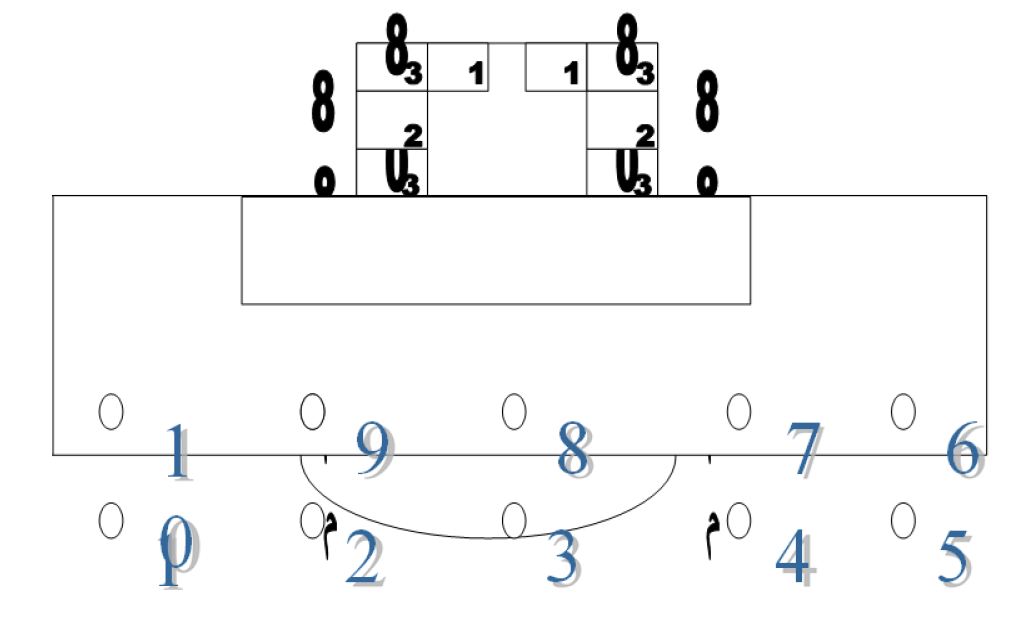
Test Procedures: Place 10 footballs in different positions on the line and inside the penalty area, as illustrated in the figure below. The player targets the test's specific regions in order of significance and difficulty, going through each one in turn. Running is the mode of operation for this test
Ball number 1 is where the exam begins, and ball number 10 is where it finishes. If there are no goals scored—three on each side—the attempt is deemed unsuccessful.
Method of Recording
Using either foot, count the number of goals that enter or touch each of the four designated goals on each side. Among the ten balls, give each ball the following number of points:
Points for scoring in area number 3
Points for scoring in area number 2
point for scoring in area number 1
points for the remaining areas of the other goal
The player is given only one attempt
Scientific Foundations of the Tests Used in the Research
To ensure the scientific conditions of the tests, the researcher applied the tests under study in the pilot experiment to a group of youth players, numbering 10 players (Figure 3).
Figure 3: Measuring the Accuracy of Football Scoring
Test Validity
To ensure the validity of the tests used, the researcher presented them to a group of experts and specialists. Valid tests suitable for the study and regulated by logical validity were selected. The researcher presented a questionnaire form to choose the most appropriate test for each skill from the basic football skills under study to a group of experienced individuals specialising in the field of testing, measurement, and football. Presenting the forms to experts and specialists is considered content validity (Table 3).
Table 3: Shows the Validity, Reliability, and Objectivity Scores of the Tests under Study
Parameters
Reliability Coefficient
Objectivity Coefficient
Significance
Dribbling
0.891
0.931
Significant
Rolling
0.401
0.494
Not Significant
Scoring Accuracy
0.702
0.781
Significant
Test Reliability
To calculate the reliability coefficient, the test was applied to a sample of 10 randomly selected players from the research community for the first time. Afterward, the test was re-administered after one week on the same sample and under the same test conditions. The researcher made every effort to conduct the first and second tests under the same conditions in terms of time, staff, and test location. Reliability depends on the correlation of the true scores of the test with itself when the test is repeated on the same group. The simple correlation coefficient (Pearson) between the scores of the two tests is calculated.
Objectivity
The researcher must verify objectivity by recording the test results simultaneously by two referees. The calculated correlation coefficients showed a high correlation in the tests.
Exploratory Experiment
The exploratory experiment was conducted on a sample from the research community, totaling 5 players. The skill tests were applied during the period from 3/4/2023. The aim was to train the assistants, test the tools and devices used, examine the tests under study, reach the final format for data recording forms, and identify any obstacles and difficulties the researcher might face during the measurement procedures. Results of the initial exploratory study:
Ensuring the validity of the sports club and the tools and devices used
Designing registration cards
Confirming the validity of the tests and their measurement methods
Determining and calculating the time required to complete the recreational activity
Main Experiment
It included
Preliminary Tests
The preliminary test was conducted on 5/4/2023, Tuesday, at 2:00 PM, on the sports field of Al-Diwaniya Sports Club. The research sample was tested in motor compatibility and basic football skills (dribbling, ball control, and shooting). The scores were recorded on special forms.
Compound Exercises
The researcher prepared qualitative compound exercises and training intensity variations for weeks and training units based on previous studies and research in the field of sports training and football. This included:
Ensuring diversity in the used exercises to prevent players from feeling bored.
The training period lasted for 8 weeks, with 3 units per week (Sunday, Tuesday, Thursday), totaling 24 units, using the periodized training method
The exercises were implemented from 10/4/2023 to 5/6/2023
The researcher used a training load of (1-1) to ensure continuous player development
Post-Tests
After completing the application of qualitative exercises, the post-tests were conducted on 7/6/2023, Wednesday, at 2:00 PM, on the sports field of Al-Diwaniya Sports Club. The research sample was tested in motor compatibility and basic football skills (dribbling, ball control, and shooting) under the same conditions as the preliminary test.
Statistical Methods
The statistical package (SPSS) was utilized by the researcher
RESULTS
Presentation of Differences in Some Functional Indicators and Basic Football Skills for Preliminary and Post-Tests for the Control Group
Table 4 shows variations in some functional indicators of basic football skills (pulse, systolic blood pressure, diastolic blood pressure, vital capacity, handling, rolling, and scoring) between the pre and post tests for the control group based on the data extracted for the individuals in the research sample. Using the t-test for correlated samples, the computed differences 6.437, 18.330, 29.000, 7.483, 12.909, 6.179, 10.983 were obtained. At a significant threshold of 0.05 and a degree of freedom of 14, they are less than the tabulated value of 2.093, indicating that the differences in the control group's pre- and post-test scores in a number of functional markers and fundamental football skills were arbitrary.
Presentation of the differences in some functional indicators and fundamental football skills for the pre and post tests of the experimental group, and their analysis and discussion.
Table 4: Shows Differences In Preliminary and Post-Tests In Functional and Skill Indicators for the Control Group
N.
Variables
Pre-Test
Post-Test
Sig.
Effect Size
t-Value
Significance Level
Mean
SD
Mean
SD
1
Pulse
174.400
3.247
168.000
0.926
6.400
3.851
6.437
0.000
Systolic Blood Pressure
180.400
2.131
175.600
1.404
4.800
1.014
18.330
0.000
Diastolic Blood Pressure
87.000
1.464
85.067
1.534
1.933
0.258
29.000
0.000
Vital Capacity
3.780
0.121
3.940
0.051
-0.160
0.083
7.483
0.000
2
Handling
13.467
0.915
17.000
0.756
-3.533
1.060
12.909
0.000
3
Rolling
16.667
1.047
14.667
0.488
2.000
1.254
6.179
0.000
4
Scoring
9.400
0.910
13.333
0.976
-3.933
1.387
10.983
0.000
Table 5 presents the differences in pre- and post-test scores for a few functional indicators of basic football skills between the experimental group based on data extracted for the research sample (pulse, systolic blood pressure, diastolic blood pressure, vital capacity, handling, dribbling, and scoring). The computed values 8.671, 7.6130, 6.081, 5.976, 17.654, 6.676, 27.465 that were obtained when the t test for correlated samples was used to extract the differences are smaller than the tabular value 2.093 at a degree of freedom 14 and a significance level 0.05, respectively. This demonstrates that the differences between the experimental group's pre- and post-test results in a number of functional indicators and fundamental football skills are coincidental.
Presenting the results of the differences in the values of some functional indicators and basic football skills, analyzing them, and discussing them for the control and experimental groups in the post-test.
Table 5: Shows the Differences in Pre and Post Tests in the Functional and Skill Indicators for the Experimental Group
N.
Variables
Pre-Test
Post-Test
Sig.
Effect Size
t-Value
Significance Level
Mean
SD
Mean
SD
1
Pulse
174.467
3.204
167.000
1.309
7.714
3.148
8.671
0.000
2
Systolic Blood Pressure
180.467
2.100
174.133
1.642
6.643
2.678
7.613
0.000
3
Diastolic Blood Pressure
87.067
1.486
83.467
1.767
3.643
2.341
6.081
0.000
4
Vital Capacity
3.787
0.125
4.040
0.118
-0.271
0.209
5.976
0.000
5
Handling
13.600
0.910
20.000
1.363
-6.500
1.286
17.654
0.000
6
Rolling
16.351
0.858
13.933
0.961
2.448
1.483
6.676
0.000
7
Scoring
9.267
0.961
17.600
0.632
-8.357
1.216
27.465
0.000
Based on data collected from the research sample participants, Table 6 displays the fluctuations in values for a few functional indicators of fundamental football skills (pulse, systolic blood pressure, diastolic blood pressure, vital capacity, handling, dribbling, and scoring) in the post-test. The aforementioned table shows how the sample characteristics for the experimental and control groups showed differences in the post-test. In the post-test for both the control and experimental groups, the computed values 2.415, 2.630, 2.648, 3.009, 7.456, 2.635, 14.210 were obtained, preferring the experimental group, at a significant level 0.023, 0.014, 0.013, 0.005, 0.000, 0.014, 0.000 with a degree of freedom 28. To isolate the differences, the (t) test for independent samples was employed.
Table 6: Illustrates the Differences in Post-Tests in Some Functional Indicators and Basic Football Skills for the Control and Experimental Groups
N.
Variables
Pre-Test
Post-Test
Sig.
Effect Size
t-Value
Significance Level
Mean
SD
Mean
SD
1
Pulse
168.000
0.926
167.000
1.309
2.415
0.023
168.000
Significant
2
Systolic Blood Pressure
175.600
1.404
174.133
1.642
2.630
0.014
175.600
Significant
3
Diastolic Blood Pressure
85.067
1.534
83.467
1.767
2.648
0.013
85.067
Significant
4
Vital Capacity
3.940
0.051
4.040
0.118
3.009
0.005
3.940
Significant
5
Handling
17.000
0.756
20.000
1.363
7.456
0.000
17.000
Significant
6
Rolling
14.667
0.488
13.933
0.961
2.635
0.014
14.667
Significant
7
Scoring
13.333
0.976
17.600
0.632
14.210
0.000
13.333
Significant
DISCUSSION
Discussion of the results of the study variables for the control and experimental groups in the (post-post) tests.
The findings of the study tests, as shown by the researcher in Tables (4-6) show changes in development as a result of substantial variations in post-test scores between the experimental and control groups, with the experimental group performing better. The impact of compound workouts, which are specifically employed to help young football players acquire some functional indicators and fundamental skills, is credited by the study for this improvement. The experimental group's superiority over the control group, notably in handling, rolling, and scoring skills, provides the researcher with an explanation for this development.
The researcher explains the improvement in handling skills as a result of exercises focusing on manoeuvring in various directions. This significantly contributed to the development of handling skills, crucial in football for precise and quick ball control, creating spaces, and exploiting gaps in the opposing team's defence. The researcher attributes the superior performance of the experimental group in rolling skills to the effectiveness of compound exercises involving uick ball movements in different directions, enhancing the players' skill levels.
Regarding the superiority of the experimental group in scoring skills, the researcher attributes this to the nature of compound exercises used, which include scoring skills from various positions and angles, simulating real-game scenarios. The researcher concludes that the continuous application of compound exercises during the training period played a fundamental role in maintaining and improving performance, indicating positive adaptation and development.
CONCLUSION
Compound exercises have a positive impact on some functional indicators for young football players in the Youth Housing Forum in Al-Qadisiyah Province
Compound exercises have a positive impact on some basic football skills for young football players in the Youth Housing Forum in Al-Qadisiyah Province
Statistical differences appeared between the control and experimental groups in the study variables, favouring the experimental group
Recommendations
Conduct similar studies on other age groups
Promote awareness of the importance of compound exercises in maintaining the skill levels of young players
Integrate specialized exercises as an integral part of training programs and curricula
Compound exercises are suitable and effective in improving some functional indicators for youth
REFERENCE
Abu Alaa Abdel Fattah and Mohamed Sobhi Hassanein. Physiology and morphology of sports: Measurement and evaluation methods. 1st ed., Dar Al-Fikr Al-Arabi, n.d.
El-Moumen, H. A proposed approach to develop some basic skills and abilities for futsal players. Master’s thesis, University of Baghdad, College of Physical Education, 2001.
Hassanein, S.F. Fundamentals of evolutionary psychology. 1st ed., Dar Al-Jabal, 1989.
Turki, A. and S. Jabbar. Football: Teaching and training. 1st ed., Al-Nakhil Printing Press, 2009.
Al-Hayani, M.K.A. Football for students of the College of Physical Education and Sports Sciences. 2nd ed., Dar Al-Kitab for Printing, Publishing, and Distribution, 1999, pp. 215.
Appendix
Model for Some Compound Exercises
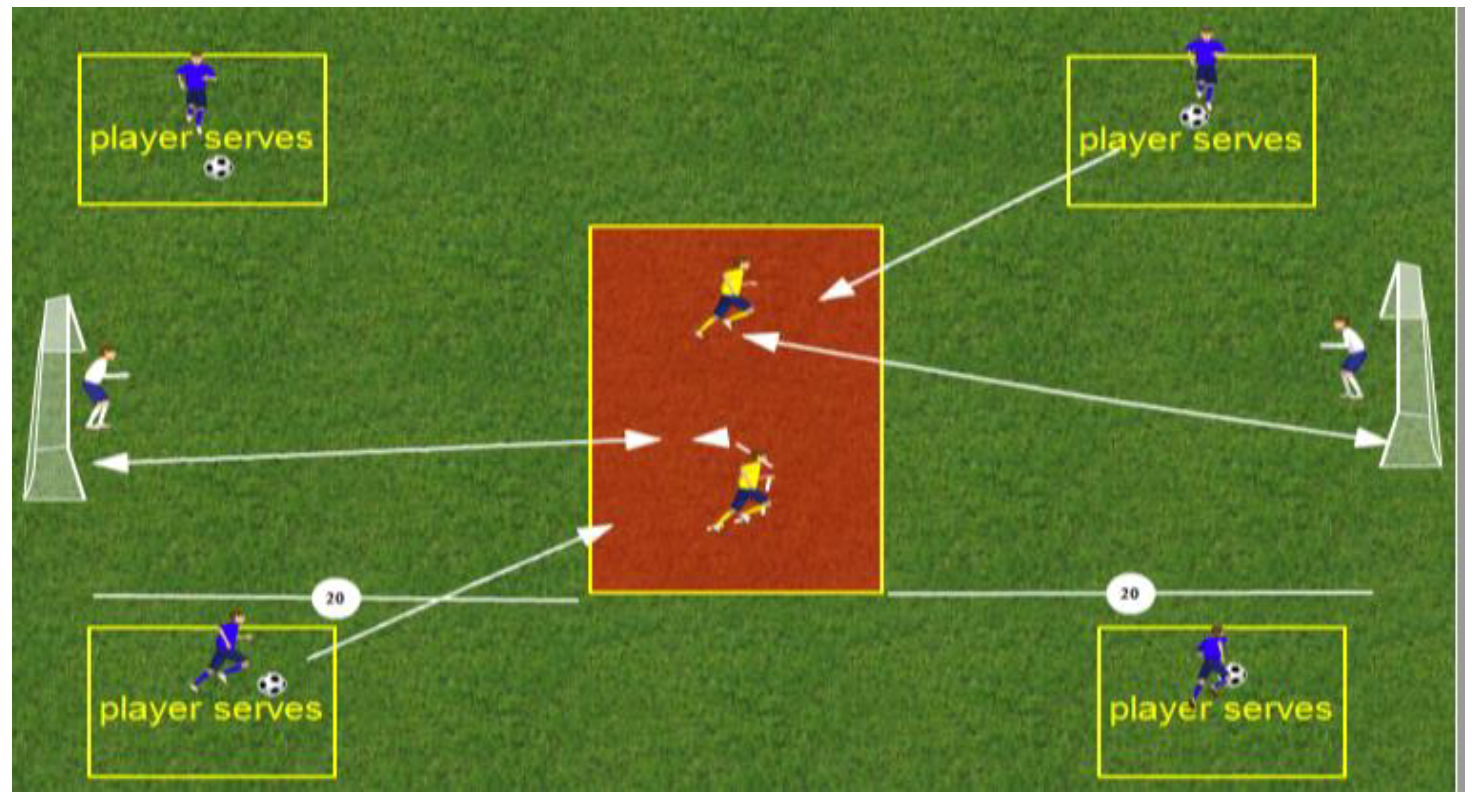
Exercise One: Half a football field (rectangle 10x10m) (4 players serve) 2 attacking players + goalkeepers. The game starts simultaneously from both sides with a serve from the player on the right to the player inside the rectangle, who receives the ball and faces the goal to score. On the left side, the same exercise is performed, but the difference is that the player, upon receiving the ball, controls it with a turning move and then scores on the goal.
Figure 1: Player Serving and Movement Pattern Drill
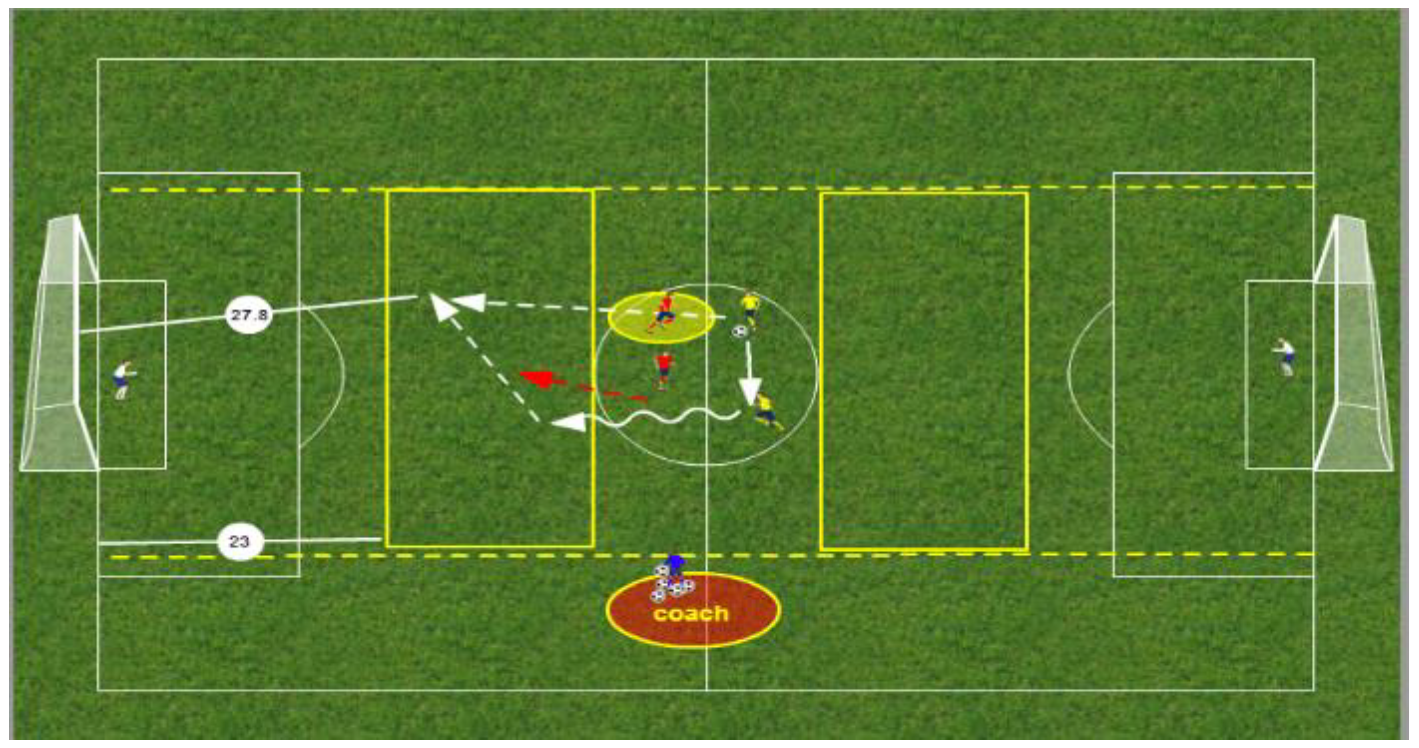
Figure 2: Illustration of a Small-Sided Game Training Setup
Exercise Two
A football field divided longitudinally into three sections, (2 attacking players vs. 2 defending players + goalkeepers), creating two rectangles (10x20m) with a distance from the goal on each side (23m). The attacking player, after receiving a rolled or regular serve from the teammate, performs a dribble against the defender and enters the rectangle. The player then either passes the ball to a teammate or approaches for a goal exclusively from inside the rectangle, as shown in the diagram. One defending player is allowed to return and defend inside the rectangle, and the attacking players are allowed to enter together to outnumber the defenders and create numerical superiority.
Recommended Articles
Research Article
Measuring Cherenkove Radiation Energy at a Specific Angle
Samaher W. Hashim
Published: 22/02/2026
Download PDF
Research Article
The Effect of Using Special Exercises on the Development of the Defensive Movement Speed Skill of Misan Futsal Club Players
Yasser Jumaa Falih
Published: 02/02/2026
Download PDF
Research Article
The Effectiveness of Neuromuscular Coordination Exercises in Regulating the Electrical Activity of Shoulder Muscles and Its Reflection on Biomechanical Characteristics and the Level of Shot Put Achievement for Juniors
Waleed Khairullah Fayhan
Published: 20/01/2026
Download PDF
Research Article
Design of an Electronic Device for Measuring Complex Motor Reaction Time to Auditory and Visual Stimuli
Imad Saadallah Khamis,
Ibrahim Khalil Ibrahim
Published: 22/01/2026
Download PDF
PO Box 101, Nakuru
Kenya.
Email: office@iarconsortium.org
Editorial Office:
J.L Bhavan, Near Radison Blu Hotel,
Jalukbari, Guwahati-India
Adhab, M. R. & Hataf, R. M. (2024). The Impact of Compound Exercises on some Functional Indicators and Basic Skills in Youth Soccer. Scientific Research Journal of Multidisciplinary, 4(1), 1-7.
MLA
Adhab, Mohammed R. and Rafeef M. Hataf. "The Impact of Compound Exercises on some Functional Indicators and Basic Skills in Youth Soccer." Scientific Research Journal of Multidisciplinary 4.1 (2024): 1-7.
Chicago
Adhab, Mohammed R. and Rafeef M. Hataf. "The Impact of Compound Exercises on some Functional Indicators and Basic Skills in Youth Soccer." Scientific Research Journal of Multidisciplinary 4, no. 1 (2024): 1-7.
Harvard
Adhab, M. R. and Hataf, R. M. (2024) 'The Impact of Compound Exercises on some Functional Indicators and Basic Skills in Youth Soccer' Scientific Research Journal of Multidisciplinary 4(1), pp. 1-7.
Vancouver
Adhab MR, Hataf RM. The Impact of Compound Exercises on some Functional Indicators and Basic Skills in Youth Soccer. Scientific Research Journal of Multidisciplinary. 2024 Jan;4(1):1-7.


 Download PDF
 Download XML