Contents
Download PDF
pdf Download XML
458 Views
191 Downloads
Share this article
Research Article | Volume 1 Issue 1 (Jul-Dec, 2021) | Pages 1 - 6
Risk Mitigation, a Priority in Establishing an Industry
 ,
 ,
1
Department of Mechanical Engineering, Michael Okpara University of Agriculture, Umudike Abia State, Nigeria
2
Department of Mechanical and Production Engineering, Enugu State University of Science and Technology, Enugu State, Nigeria
Under a Creative Commons license
Open Access
Received
July 3, 2021
Revised
Aug. 9, 2021
Accepted
Sept. 19, 2021
Published
Oct. 30, 2021
Abstract

This paper focused on identification, isolation and assessment of risk prone activities in the industry with the view of mitigating/preventing injuries on people/workers, damages to equipment and above all providing safe working environment. The method adopted involves the risk analysis of selected industrial activities, identification of some parameters against risk format and evaluation of risk assessment model by weighing the probability of an event occurring against its consequences. Six case studies of job activities/operations were evaluated and subjected to risk assessment using risk matrix. Analyses of critical components that constitute hazard to suit the risk severity of high, medium and low risks were presented. Results showed that operations associated with high risk regime on implementation of risk management model were mitigated to low risk and situation brought under control or eliminated.

Keywords
INTRODUCTION

Risk is the probability of damage, loss, injury or any negative occurrence caused by negligence which may be avoided by planned actions [1]. The two elements of risk are the likelihood that hazard may occur and the consequence of such occurrence. Damages to humans/equipment (always referred to as: man, machine and material) are the results of accident occurring. However, situation exists where something goes wrong but with no consequence of damage or injury, and may be given no attention as such is regarded as a near miss. It is convenient to consider risk on the conditions of whether the occurrence, action or situation was planned, under control or normal without which risk may either cause damage/ injury or both. 


Identification of risks in the workplace is possible if one knows what hazards are and how to identify them correctly. Hazards are objects or situations that have the potentials of causing harm to the health of workers [2]. For instance, hazards can be constituted by objects at heights, sharp objects, working at heights, toxic substances, compounds of hydrogen and carbon under pressure etc. Hazards can be classified into physical, chemical, psychological, and biological hazards. Meanwhile, the current study concentrated on the physical and chemical hazards.


The determination of risk from any harm can be estimated by considering the likelihood of the harm occurring and also its consequences. To estimate the likelihood of the harm occurring, control measures are provided. For the consequence of harm to be estimated, considerations are made on the part of the body to be affected and the nature of the harm [3], evaluating its level of severity from slightly harmful, moderately harmful, harmful, highly harmful and extremely harmful. A risk matrix is a useful tool employed in rating of risk severity [4].


Risk mitigation refers to the prevention, eradication, control or removal of what in the nature of operations may cause harm to the people, by making decisions of sufficient precautions [5]. Before any risk can be mitigated; the preventive measures must be put in place [6].  However, as a rule of thumb, risk mitigation is not intended to be static; one can try one approach, monitor its success and reevaluate with time.  Some basic job operations that require risk mitigation and the risk preventive measures needed to put them under control are as listed in (Table 1).


Apart from risk mitigation as a tool for accident prevention, other ways of guiding against accidents include use of personal protective equipment, good housekeeping practice, etc.


Accident can be caused by unsafe condition(s) (working in a slippery surface or noisy environment, using faulty equipment); acts of god (lightening or thunder strike) or unsafe Act(s) (operating without authority, operating carelessly, operating with over-confidence). Among some careless acts which lead to unpleasant event are smoking in an unauthorized environment, cigarettes not well disposed after smoking overloaded electrical joint and welding without taking precaution. These acts can lead to fire outbreak. Incidences of fire outbreak constitute hazards. Fire, a chain reaction which involves fuel, oxygen and heat can be extinguished by removal of any of the three essential components (fuel, oxygen and heat) [2,8].


It is therefore pertinent and a good practice to conduct detailed risk assessment and mitigation strategies to be put in place prior to establishment of workshops, factories or industries.


Table 1: Job Classification and Risk Preventive Measures

S/N

Job Operations

Risk preventive measures

1

Welding


Use of Personal Protective Equipment Provision of lock out/Tag out

Provision of Fire Extinguisher/Fire water

Isolation of flames and combustible items

2

Grinding

Use of Personal Protective Equipment

Provision of lock out/Tag out

Availability of Fire water

Availability of coolant

3

Drilling, Shaping, Turning Milling, Cutting


Use of Personal Protective Equipment

Provision of lock out/Tag out

Availability of Fire water

Provision of coolant

Provision of standby power plant                                           

Availability of Oil absorbent liquid/powder

 Provision of job safety analysis

4

Pump Installation/Services


Use of Personal Protective Equipment

Provision of lock out/Tag out

Identification of the suction and discharge pipes

Provision of a well stated job safety analyses and 

Pump couplings

Provision of standby power plant                                                                      

Provision of Oil absorbent liquid/powder

5

Flange/Blind Couplings

Use of Personal Protective Equipment

Provision of lock out/Tag out

Identification marks on the blinds/flanges

Provision of a well stated job safety analyses

Provision of standby power plant                   

Pump shutdown

Availability of Oil absorbent-liquid/powder

6

Fixing of Bulbs/Lamb holders         

Use of Personal Protective Equipment

Provision of lock out/Tag out

Provision of a well stated job safety analyses

Provision of ladder

Provision of fire extinguisher/water             

Avoiding overloaded-electrical joint

7

Preventive/Corrective maintenance 

on Survival Capsule

Use of Personal Protective Equipment

Provision of lock out/Tag out

Provision of a well stated job safety analysis

Availability of life rafts

Provision of fire extinguisher/water

8

Preventive/Corrective maintenance on 

Turbines

Use of Personal Protective Equipment

Provision of lock out/Tag out

Provision of a well stated job safety analysis

Availability of public address system

Provision of fire extinguisher/water

Provision of fire standby generator

9

Refrigerator Maintenance

Use of Personal Protective Equipment

Provision of lock out/Tag out

Provision of a well stated job safety analyses                  

Provision of fire extinguisher

10

House Ventilation and Air Condition 

(HVAC) Unit- Preventive/Corrective   

maintenance

Use of Personal Protective Equipment

Provision of lock out/Tag out

Provision of a well stated job safety analysis

Availability of public address system

Provision of fire extinguisher

11

Working at elevated height

Use of Personal Protective Equipment

Provision of lock out/Tag out

Provision of a well stated job safety analyses

Availability of ladder

Source: [7]


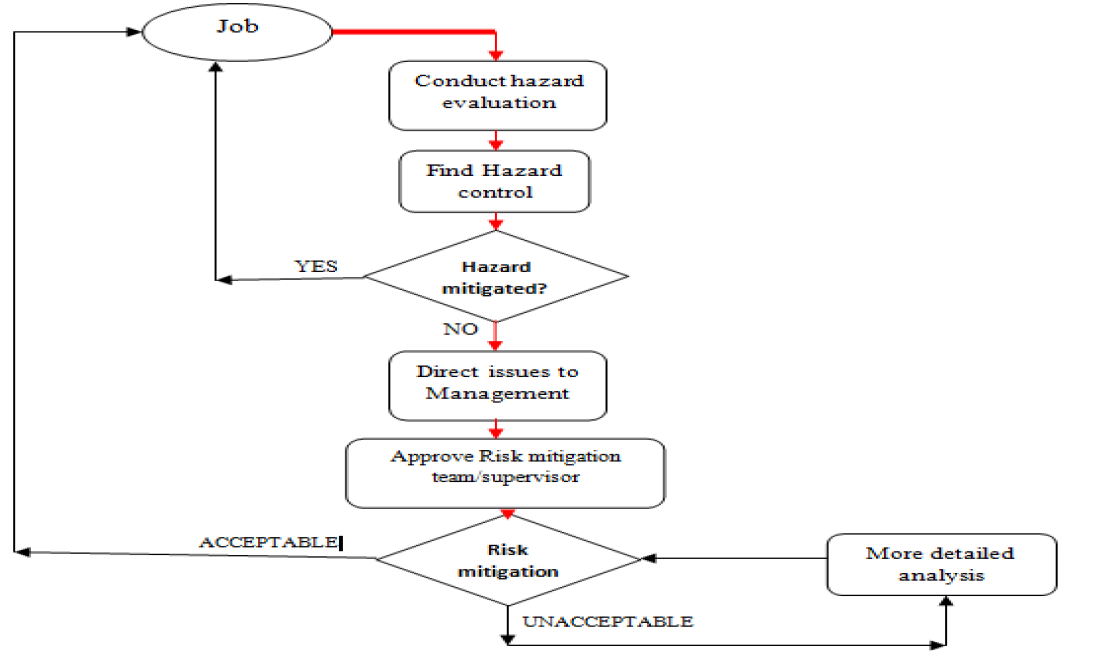
Figure 1: Risk assessment and mitigation process


Table 2: Consequence Scenario

Consequence

Considerations


Safety/Health

Damage to Community

Environmental Impact

Financial Impact

I

Minor Impact on worker

Minimal to none

 No response needed

-

II

No impact on Public/Treatment to worker

Insignificant

Little response

Minor

III

Major Injury to Worker

Little to Community

Major response to community

Industry

1V

Impact   on worker/site

Large to Community

Major response

Industry

MATERIALS AND METHODS

In detailed risk management procedures, job safety evaluation are conducted, supervisor’s role in risk mitigation identified, interpretation of the probability and consequence scenario performed and then using the risk assessment matrix; the level of risk is determined. HIRA [9], simply categorized basic steps in risk management as hazard identification, risk assessment, risk analysis and monitor/review 


Job Safety Evaluation

This includes the process of identifying hazards associated with a job and determining detailed ways of controlling the hazards. It could also be described as a thinking accident prevention tool. In carrying out job evaluations, the basic steps to be followed include:


  • Select the job to be evaluated

  • Separate the job into its basic stages

  • Indicate the hazards accompanying every stage

  • Bring out ways to control/mitigate the hazards in every stage

  • Carry out the job, taking into considerations, the safety methods and precautions of the work in process


Roles in Risk Mitigation

The roles in risk mitigation process can simply be represented in the flow chat (Figure 1).  The Job/operation is subjected to hazards evaluation and hazard control sought for. If hazard(s) is mitigated, proceed on the job otherwise direct issues to management.  The management will then approve the risk mitigation team/supervisor, who will conduct the risk assessment by preparing report and recommending risk reduction measures. If risk is mitigated to acceptable stage, proceed on the job otherwise stop the job and proceed on more detailed analysis


Interpretation of the Probability Scenario

Following the likelihood of event occurring, the probability scenario was denoted with A, B, C, D and E such that:


  • Probability of event ‘A’ occurring = Impossibility

  • Probability of event ‘B’ occurring = May not occur

  • Probability of event ‘C’ occurring = Likely to occur sometime

  • Probability of event ‘D’ occurring = Likely to be isolated

  • Probability of event ‘E’ occurring = Likely to repeat


Interpretation of the Consequence Scenario

The consequences were classified into four categories (I - IV) with the considerations on safety /health, damage to community, environmental and financial impact as shown in (Table 2)


Table 3: Risk Assessment Matrix Probability Consequence

No

I

II   

III   

IV

A

##############

##############

##############

##############

B

##############

##############

##############

##############

C

##############

##############

##############

##############

D

##############

##############

##############

##############

E

##############

##############

##############

##############


Table 4: Key

##############

High Risk

##############

Medium Risk

##############

Low Risk


Risk Assessment/Analysis

Considering the basic roles/steps in risk mitigation and control since injuries/damages happen as a result of accident, the Risk Assessment Matrix (Table 3-4) was deployed in the risk analysis. The decision model is related such that risk would be evaluated/controlled as an interception of probability and consequence of event as shown in Equation 1 (Adapted from WHO, 1999 Risk Assessment Equation)


R = Pe X Ce

                                                         (1)

Where R = Risk


  • Probability of an event

  • Consequence of the event


Therefore, using risk matrix, level of risk was determined at the interception of the probability scenario (row) and consequence scenario (column).

RESULTS

With the risk matrix in (Table 3), every hazard can be analyzed and controlled/mitigated for the safe running of activities.


Case I: Working in an Elevated Height

Applying the risk management procedure to evaluate the risk involved in a welding technician carrying out construction works in an elevated height, near a petrol filling station.


Hazards Relating to Working in an Elevated Height, Near a Petrol Filling Station


  • Elevated height

  • Petrol

  • Sharp objects


Likelihood and Consequences of Working in an Elevated Height, Near a Petrol Filling Station

The risk is likely to occur and the consequence may involve major impact on workers/public, serious damages to firm and public.


Following the risk matrix: The probability and consequence scenario fall under “high risk” (ie ‘C’ under ‘IV’, in the risk matrix).


Risk Preventive Measures of Working in an Elevated Height, Near a Petrol Filling Station

The preventive measures are as listed below:


  • Provision of standing ladder or crane

  • Provision of fire extinguishers

  • Provision of fire water

  • Fire fighters standing by

  • All electrical connections switched off

  • Petrol station shutdown

  • Worker puts on safety belt while at work

  • Personal protective equipment worn during operation

  • Isolation of flames and combustible materials

  • Removal of sharp objects


Risk Mitigation of Working in an Elevated Height, Near a Petrol Filling Station

With these preventive measures, the risk may not occur and the consequence will involve minor impact on worker, minimal to public and no response will go to the firm regarding the risk.


Following the risk matrix, the probability and consequence scenarios now fall under “low risk” (ie ‘B’ under ‘I’, in the risk matrix).


With low risk, it is now brought under control.


Note that these steps can also be applied while welding in any confined space, especially in offshore locations.


Case II: Drilling Operation 

To evaluate the risk involved in carrying out drilling operation


Hazards Associated with Drilling Operation


  • Fluid (Oil)

  • Rotary motion of the drill bit

  • Sound/Noise


Likelihood and Consequences of Drilling Operation 

The risk is likely to occur and the consequence may involve major impact on worker and serious damages to firm/Community.


Following the risk matrix: The probability and consequence scenario fall under “high risk” (ie ‘C’ under ‘IV’, in the risk matrix).


Risk Preventive Measures on Drilling Operation


  • Use of Personal Protective Equipment

  • Provision of lock out/Tag out

  • Availability of Fire water

  • Provision of coolant

  • Provision of standby power plant

  • Availability of oil absorbent-liquid/powder


Risk Mitigation of Drilling Operation


  • With these preventive measures, the risk may not occur and the consequence will involve minor impact on worker and no response will go to the firm regarding the risk

  • Following the risk matrix: The probability and consequence scenario now fall under “low risk” (ie ‘B’ under ‘I’, in the risk matrix)

  • With low risk, it is now brought under control


Case III: Flange/Blind Couplings

To produce Flange/blind couplings


Hazards Associated with This Operation 


  • Fluid flow while at work which can lead to oil spills

  • High pressure of the discharged fluid


Likelihood and Consequences of Flange/Blind Couplings


  • The risk is likely to occur and the consequence may involve major damage/impact on workers/public and serious financial impact to firm

  • Following the risk matrix: The probability and consequence scenario fall under “high risk” (ie ‘E’ under ‘IV’, in the risk matrix)


Risk Preventive Measures on Flange/Blind Couplings 


  • Use of Personal Protective Equipment

  • Provision of oil absorbent-foam/powder/liquid

  • Provision of lock out/Tag out

  • Identification marks on the blinds/flanges

  • Provision of a well stated job safety analyses

  • Pump shutdown

  • Provision of standby power plant         


Risk Mitigation of Flange/Blind Couplings


  • With these preventive measures, possibility of the risk occurring is not there and the consequence will involve minor impact on workers/public and no response will go to the firm regarding the risk

  • Following the risk matrix: The probability and consequence scenario now fall under “low risk” (ie ‘A’ under ‘I’, in the risk matrix)

  • With low risk, it is now brought under control


Case IV: Fixing of Bulbs/Lamp Holders     

To fix bulbs/lamp holders


Hazards Associated with Fixing of Bulbs/Lamp Holders


  • Elevated height

  • Flow of electricity while on duty

  • Overloaded electrical joints


Likelihood and Consequences of Fixing of Bulbs/Lamp Holders 


  • The risk is likely to occur repeatedly when fixing bulbs/lamp holders and the consequence may involve major damage to worker(s) and serious financial impact will be done to the industry

  • Following the risk matrix: The probability and consequence scenario fall under “high risk” (ie ‘E’ under ‘III’, in the risk matrix)


Risk Preventive Measures on Fixing of Bulbs/Lamp Holders 


  • Use of Personal Protective Equipment

  • Provision of lock out/Tag out

  • Provision of a well stated job safety analyses

  • Provision of ladder                    

  • All electrical connections switched off.


Risk Mitigation of Fixing of Bulbs/Lamp Holders


  • With these preventive measures, possibility of the risk occurring repeatedly is not there and the consequence will involve minor impact on worker(s) and no response will go to the industry regarding the risk

  • Following the risk matrix: The probability and consequence scenario now fall under “low risk” (ie ‘A’ under ‘I’, in the risk matrix)

  • With low risk, it is now brought under control


Case VPreventive/Corrective Maintenance on Survival Capsule Hazards:


  • Man overboard 


Likelihood and Consequences of Fixing of Bulbs/Lamp Holders 


  • The risk is likely to occur and the consequence may involve major damage to worker(s) 

  • Following the risk matrix: The probability and consequence scenario fall under “high risk” (ie ‘E’ under ‘III’, in the risk matrix)


Risk Preventive Measures


  • Use of Personal Protective Equipment

  • Provision of lock out/Tag out

  • Provision of a well stated job safety analyses

  • Availability of life rafts

  • Well trained personnel on duty


Risk Mitigation in Maintenance on Survival Capsule

With these preventive measures, the risk may not occur and the consequence will involve minor impact on worker, non to public and no response will go to the firm regarding the risk.


Following the risk matrix, the probability and consequence scenarios now fall under “low risk” (ie ‘B’ under ‘II’, in the risk matrix).


 

  • With low risk, it is now brought under control


Case (VI): Preventive/Corrective Maintenance on Turbines Hazards:


  • Fire

  • Heat

  • Electric current


Likelihood and Consequences of Maintenance on Turbine

The risk is likely to be isolated when maintaining a turbine and the consequence may involve major damage to worker(s)/ community and serious financial impact will be done to the industry.


Following the risk matrix: the probability and consequence scenario fall under “high risk” (ie ‘D’ under ‘III’, in the risk matrix).


Risk Preventive Measures


  • Use of Personal Protective Equipment

  • Provision of lock out/Tag out

  • Provision of a well stated job safety analyses

  • Proper means of communication

  • Well trained personnel on duty


Risk Mitigation in Maintenance on Turbine

With these preventive measures, the risk may not occur and the consequence will involve minor impact on worker, minimal to public and no response will go to the firm regarding the risk.


Following the risk matrix, the probability and consequence scenarios now fall under “low risk” (ie ‘B’ under ‘II’, in the risk matrix).

 

  • With low risk, it is now brought under control

CONCLUSION

Injuries/damages happen as a result of accident and its consequence has far reaching effect on personnel and resources of any industry. Careful implementation of risk management procedure/model in risk assessment, mitigation and control is a panacea for providing safe working environment in industries. The study revealed that hazards and preventive measures depend on the type of job carried out. Therefore, to ensure safe and effective job delivery, hazards associated with operations should be properly identified, isolated and subjected to detailed risk assessment with view of preventing and/or mitigating the consequences thereby bringing it under control. Evident from the case studies of six selected operations, a general model can be followed in in risk analysis of job operations to bring any risk under control.

REFERENCE
  1. River Logic Blog. “How to perfect your risk mitigation strategies.” 2018, blog.riverlogic.com.

  2. Nigerian Institute of Safety Professionals. General HSE manual. 2015.

  3. Arnold J.L. “Risk and risk assessment in health emergency management.” Prehospital Disaster Medicine, vol. 20, no. 3, 2005, pp. 143–154.

  4. Ferrier N. and C.E. Haque. “Hazards risk assessment methodology for emergency managers: A standardized framework for application.” Natural Hazards, vol. 28, 2003, pp. 271–290.

  5. National Research Council. Risk mitigation: The owner’s rule in project risk management. National Academies Press, 2005, Washington, DC. doi:10.17226/11183.

  6. Peterson O. The ultimate risk management guide: ISO, management and process. Process Street, 2019.

  7. IAMGOLD. “Mitigation measures.” Côté Gold Project: American EIS/Final Environmental Assessment Report, Amec, 2015.

  8. Wilson A. Ontario fire loss reporting system: Additional information. Ontario Fire Marshal, National Research Council, 2009.

  9. Emergency Management Ontario. Hazard identification and risk assessment for the province of Ontario. 2012, www.emergencymanagementontario.ca/english/emcommunity/ProvincialPrograms/hira/hira_2012.html

Recommended Articles
Research Article
Measuring Cherenkove Radiation Energy at a Specific Angle | قياس طاقة اشعاع تشيرنكوف عند زاوية معينة
Published: 22/02/2026
Download PDF
Research Article
The Effect of Using Special Exercises on the Development of the Defensive Movement Speed Skill of Misan Futsal Club Players
Published: 02/02/2026
Download PDF
Research Article
The Effectiveness of Neuromuscular Coordination Exercises in Regulating the Electrical Activity of Shoulder Muscles and Its Reflection on Biomechanical Characteristics and the Level of Shot Put Achievement for Juniors
Published: 20/01/2026
Download PDF
Research Article
Design of an Electronic Device for Measuring Complex Motor Reaction Time to Auditory and Visual Stimuli
Published: 22/01/2026
Download PDF
Chat on WhatsApp
Flowbite Logo
PO Box 101, Nakuru
Kenya.
Email: office@iarconsortium.org

Editorial Office:
J.L Bhavan, Near Radison Blu Hotel,
Jalukbari, Guwahati-India
Useful Links
Order Hard Copy
Privacy policy
Terms and Conditions
Refund Policy
Shipping Policy
Others
About Us
Team Members
Contact Us
Online Payments
Join as Editor
Join as Reviewer
Subscribe to our Newsletter
+91 60029-93949
Follow us
MOST SEARCHED KEYWORDS
Copyright © iARCON International LLP . All Rights Reserved.