Background: A most of, multicenter, studies of case-control were carried out to prospecting the incidence of bleeding as a further assess the complications post-operative dental extraction in patients who were receiving anticoagulant therapy. The study's results were favorable, so it was carried out following the findings of an earlier study. Materials and Methods: A comparison was made between patients receiving anticoagulant therapy who needed dental extraction and a control group consisting of one hundred thirty individuals who were not receiving anticoagulant therapy but were undergoing the same treatment. In the group that was treated with anticoagulants, the oral anticoagulant regimen was kept the same throughout the study. As a result, the patients in this group had an International Normalized Ratio that fell somewhere in the range of 2 to 6 and local hemostatic measures were used. Outpatient settings were utilized for each and every one of the treatments. Results: The number of bleeding complications that occurred in the anticoagulant therapy group was seven, while the number of bleeding complications that occurred in the group of control was four. The bleeding number is different in the events that occurred in the anticoagulant therapy group and the control group was not statistically significant Odds Ratio (OR) ratio 1.554, CI 95 percent 0.612 – 5.224, p-value = 0.455. The adjunctive local hemostatic treatments were sufficient to control the bleeding and there were no late bleeds after surgery that required hospitalization and/or blood transfusions. Conclusion: Dental extractions may be performed simply and safely in anticoagulated outpatients without modifying anticoagulant medication, as shown in this large, multicenter trial. This reduces expenditures and patient suffering.
The method that has been shown to be the safest and most efficient for removing teeth from patients who are undergoing therapy with oral anticoagulants is still the subject of much debate [1]. The question at the heart of the debate is how best to strike a balance between the risks of thromboembolic events and the complications that might arise from bleeding. In point of fact, the research that has been carried out on this topic over the course of the previous three decades has produced inconclusive findings [2]. A number of the writers suggest that before to dental surgery, the patient should either stop taking any anticoagulant medicine they are currently on for a period of several days or they should take heparin [3]. Other scholarly works advocate for reducing the dosage of anticoagulant medication administered to a patient until the individual's International Normalized Ratio achieves a value of [4]. More recently, it has been suggested that the OAT regimen might be kept unaltered and the patient should instead be treated with a number of post-procedural local homeostatic treatments in order to limit the risk of bleeding. This was done in order to ensure that the patient would not experience any complications as a result of the procedure. In point of fact, no life-threatening bleeding issues have been recorded in the literature in relation to this method [5]. On the other side, it has been related to several fatalities because patients stopped receiving anticoagulant therapy in order to have tooth extractions done. It is noteworthy to note that they already advised continuing to provide anticoagulant medicine while teeth were being extracted [6]. A detailed regimen for the care of patients who are now being treated with anticoagulant medication was only recently published by our group. The results of a prospective case-control research that was carried out served as the basis for the development of this procedure [7]. The publication of this protocol was prompted by recent consistent evidence in favor of the maintenance of anticoagulant therapy when a dental extraction must be performed, as well as suggestions that this might be the gold standard for the management of patients who are currently receiving anticoagulant therapy [8]. In addition, the publication of this protocol was prompted by recent consistent evidence in favor of the maintenance of anticoagulant therapy when a dental extraction must be performed [9]. In that particular piece of research, there was a comparison made between a group of healthy patients and a group of anticoagulated patients who underwent treatment that did not involve the withdrawal of anticoagulant therapy [10]. The comparison was made in terms of the incidence of bleeding complications following dental extraction. The researchers came to the conclusion that there was no statistically significant difference between the two groups in terms of the result of the bleeding [11]. However, in order to give further validation for our methods, we carried out case-control research that was prospective and multicenter in character. The findings of the study have already been included into the establishment of guidelines for anticoagulant therapy.
Study Design
Between January 2020 and December 2022, oral surgery clinics that are operated by our organization will remove 150 teeth from patients who have diseases that might cause excessive blood clotting. The arrival of these patients is anticipated to take place between the years 2020 and 2022. Oral surgery was done on these patients by our staff member who specializes in the field. Before the beginning of the experiment, each person who took part in the study had already established a stable anticoagulant regimen and had been taking warfarin for at least three months. They were advised that they would be treated without having to stop taking their medicine and that although there was a larger risk of bleeding connected with the treatment, there was a lower chance of thromboembolism. After being provided with sufficient information on the experiment, patients gave their consent to take part in it. After being provided with sufficient information, one hundred fifty patients agreed to take part in the study.
Divided Samples
After that, patients who had an INR that was more than 6 were sent back to their physicians so that they may make adjustments to their treatment. After that, the twenty people who had an INR that was lower than two and the three others who were lost during the follow-up were taken out of the trial. Patients who had an International Normalized Ratio (INR) that was lower than 2 were unable to participate in the trial because they did not get adequate anticoagulation and posed a low risk of bleeding. The case group for the study consisted of 150 people who used anticoagulants. Conditions that must be treated with anticoagulant medicine are recorded in (Table 1).
In the control group, there were 130 patients who did not take any medication that may affect coagulation but who needed tooth extractions. These patients were selected. 130 individuals who were not being treated with anticoagulants gave their consent to have surgery. Patients in the anticoagulant therapy group and those in the control group required dental extractions. Prior to surgery, the INR levels of all of the patients in the control group were evaluated. After rigorous questioning about previous bleeding events, liver diseases and anticoagulant drug usage, ten participants serving as controls were ruled ineligible for the study. Final control group contained 130 individuals. Three trained oral surgeons performed extractions on each participant in the anticoagulant and control groups. Surgical procedures were done at the Dental Clinic. The same research approach was utilized once the initial data were analyzed. This was a single-blind experiment, which means that the surgeons were not informed as to which group the patients belonged to. Patients were instructed to report any bleeding that occurred after their operation. The homeostatic procedures for the molars, wisdom teeth and incisors were all the same. In the individuals in the control group who had bleeding, congenital coagulation abnormalities were analyzed.
Plexus, intraligamentous, or truncal infiltration with mepivacaine at a concentration of 4 percent, without the addition of adrenaline, was used to provide local anesthesia and avoid bleeding. Extractions might be done singly or in large numbers. We looked at the possibility of gum-incision surgery and surgical extraction. After half an hour, gauze soaked with tranexamic was placed to the wound. On the patient's cheek, an ice pack was kept in place for the full 30 min. Surgeons were not privy to the information on which patients with prosthetic valves were given antimicrobial prophylaxis. We chose not to use acetylsalicylic acid and instead relied on paracetamol, ibuprofen and noramidopirin instead. On days 4 and 10, after surgery, the same oral surgeons reevaluated both groups to look for any signs of edema, pain, infection, leaking, or substantial bleeding.
Table 1: Disease Indicated Coagulant Therapy for all 150 Cases
Disease | Sample of cases | |
Vascular diseases | 25% | 37 |
Valve disease | 20% | 30 |
Myocadiac disease | 18% | 27 |
Stroke | 18% | 27 |
Thrombosis of venues | 14% | 21 |
Hearth-pathy | 4% | 6 |
No- diagnosed causes | 1% | 2 |
Data Analysis
In order to evaluate whether or not there was a statistically significant difference in the prevalence of bleeding events between the case group and the control group, the Chi-square test was carried out. In order for a p-value to be considered statistically significant, both of its tails have to be lower than 0.05.
Following the completion of the surgical investigation of the wound, a fresh suture was placed using a gelatin sponge and gauze that had been drenched with tranexamic acid. These local homeostatic measures were adequate to control the post-operative bleeding issues, with no patients requiring either hospitalization or transfusion as a result of the situation. Four late bleeding issues, two molars and two wisdom teeth, were identified in the control group two days following the evacuation of the teeth. These difficulties required surgical treatment and sutures to manage (Table 2).
Table 2: Dental Extraction According to The Type of Extraction
| Group | Number | Gender | Dental extraction | ||||
| Male | Female | Number | Single | Multiple | Surgery | ||
| Case | 150 | 85 | 65 | 565 | 234 | 123 | 208 |
| Control | 130 | 79 | 51 | 455 | 188 | 156 | 111 |
The number of bleeding complications in the anticoagulated patients and in the control, group were not statistically different (OR = 1.554, 95 percent CI 0.612 – 5.224, p = 0.455). Even hypothesizing that all three patients lost to follow-up had bleeding complications, from am statistical point of view, the association was not statistically significant. Data on bleeding complications are summarized in (Table 3).
Table 3: Bleeding Complications After Dental Extraction
| Group | Bleeding cases | Duration of bleeding |
| Case | 5 | 1 day + 2 day + 3 day after surgery |
| Control | 3 | 1 day+2 day after surgery |
OR = 1.554, 95 percent CI 0.612 – 5.224, p = 0.455
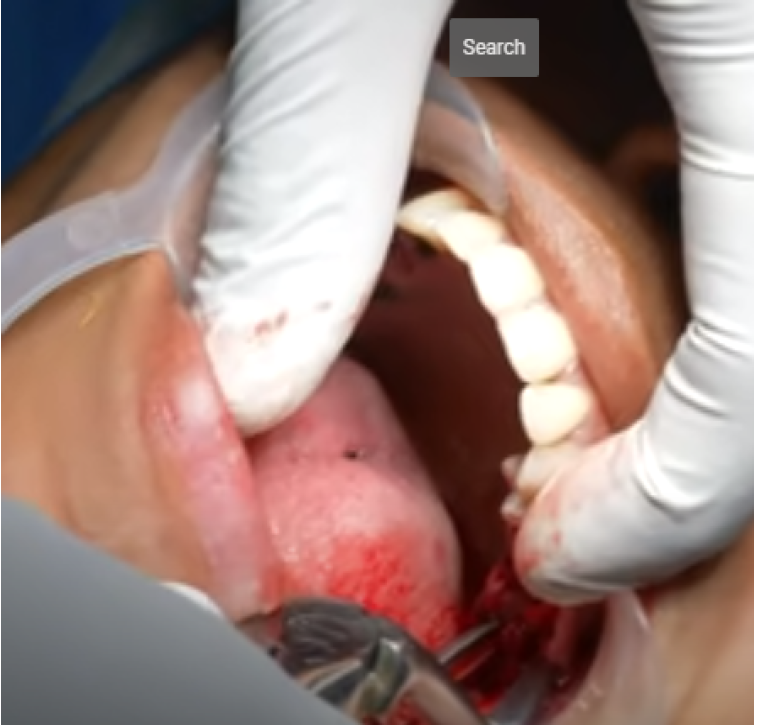
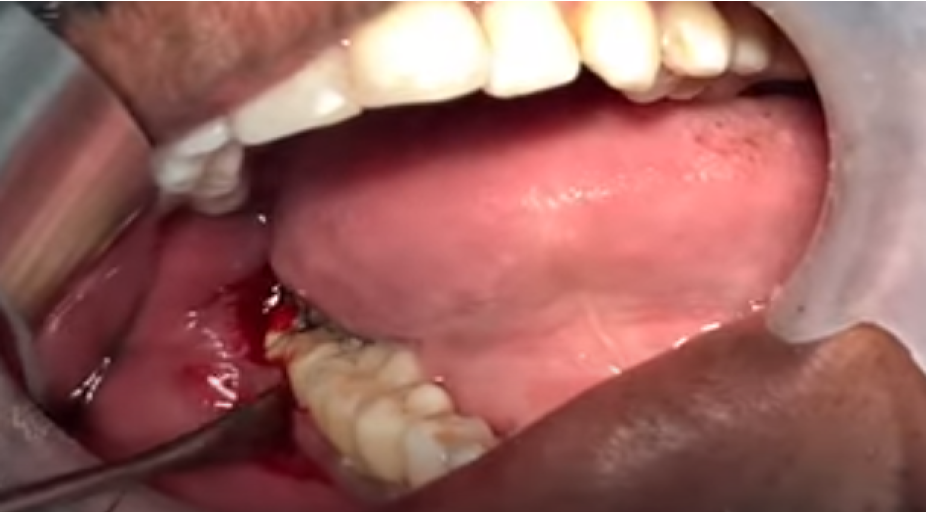
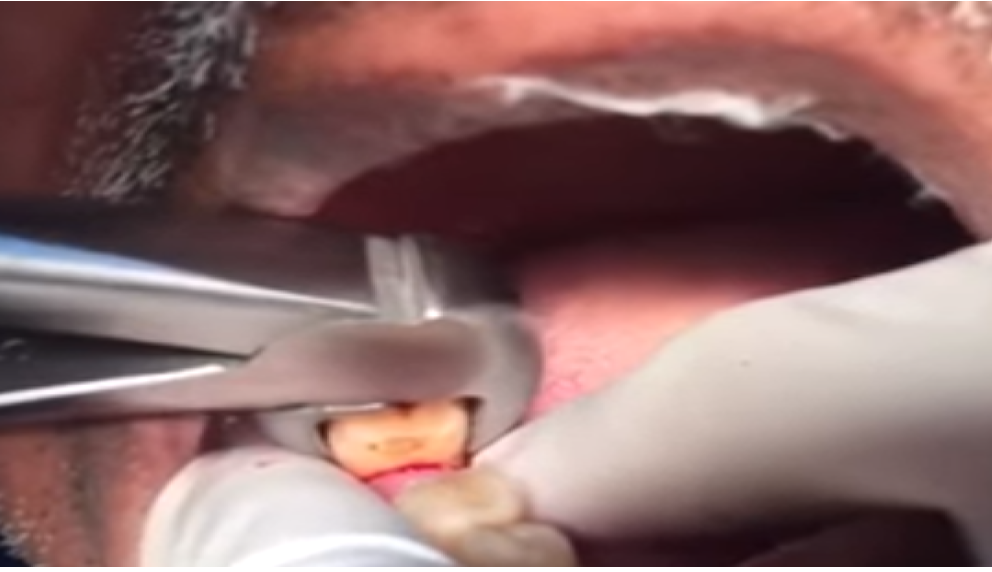
The local measures were effective at contrasting bleeding (Figures 1-3). in all patients and further systemic drug administration, changes of anticoagulant therapy, hospital admissions and blood transfusions were never necessary. No defects of components of the coagulation cascade were detected in the control patients who showed excessive bleeding. No thromboembolic complications were detected in any patient.

Figure 1: Case Number 23 Patient Bleeding of Surgical Dental Extraction

Figure 2: Case Number 2 Patient Bleeding of Surgical Dental Extraction

Figure 3: Control Number 14 Patient Bleeding of Dental Extraction
There is no universally accepted method for performing dental extractions on patients who are anticoagulated. According to recent findings, adjusting the dosage of anticoagulant medicine is not necessary and it is sufficient to take local haemostatic precautions to prevent bleeding issues. In spite of this most recent perspective on the maintenance of anticoagulant medication, a lot of oral surgeons still don't utilize it [12]. It is still unclear what the best local haemostatic measures are for individuals on anticoagulant medication and what the safest INR range is for tooth extractions [13]. There are currently no well-documented case-reports of serious bleeding complications following dental surgery in anticoagulated patients and there are several documented cases of serious embolic complications in patients whose warfarin therapy was withdrawn [14]. Wahl found that the risk of hemorrhage after dental extraction is minimal in patients who were maintained at a therapeutic level of anticoagulation and managed locally. In most of the investigations, there were not many patients [15]. When comparing anticoagulated patients and normal participants, this prospective, multicenter, case-control study with the largest sample size looks at bleeding concerns following tooth extraction in anticoagulated patients. Gelatine sponges, sutures and gauze soaked in tranexamic acid were the local haemostatic measures recommended by our protocol [16], which was developed after reviewing the results of various studies that had been carefully planned. In our previous investigation, we followed a different method [17]. In the second trial, surgeons did not know whether or not the patients were taking anticoagulants. This was done so that there would be no differences in the surgical techniques used [18]. The INR of both groups was tested thirty minutes before surgery. Every socket was stitched shut and a gelatine sponge was inserted into each one. Additionally, tranexamic acid–soaked gauze was utilized. Because it causes less discomfort, we went with an absorbable suture rather than a non-absorbable one in this procedure [19]. There was no difference in the amount of blood that occurred during surgical versus non-surgical tooth extractions [20]. Patients who had an INR that was higher than 2 did not have any dental extractions performed. Our opinion is that it is possible, but you should consider this number to be the upper limit of the procedure's range [21]. We decided to refer patients who did not require immediate surgery to their primary care physician so that they may have an adjustment made to the anticoagulant therapy they were receiving [16]. Every operation was performed as an outpatient procedure and none of the patients who experienced post-operative late bleeding required hospitalization, blood transfusions, or additional medicine prescriptions [8]. Although the management strategies are more comprehensive and time-consuming than typical ones, it is nevertheless possible to use them in a regular dental office [22]. According to the findings of this study, individuals undergoing therapy with anticoagulants can be managed safely in dental clinics by following a select few protocols [24]. Following dental surgery, anticoagulant therapy patients who are handled locally are not expected to experience significant bleeding complications [5,10,24]. Patients who were taking anticoagulant medication and those who were in the control group saw comparable amounts of bleeding. It is possible to effectively execute dental extractions on anticoagulated patients as outpatients, which can reduce both expenses and the amount of patient suffering [3,7,15,17].
This large, multicenter experiment demonstrated that dental extractions may be performed in anticoagulated outpatients in a straightforward and risk-free manner without the need for any modifications to the anticoagulant medication. This results in lower costs and less discomfort for the patient.
Weltman, N.J. et al. “Management of dental extractions in patients taking warfarin as anticoagulant treatment: A systematic review.” Journal of the Canadian Dental Association, vol. 81, 2015, article f20.
Zanon, E. et al. “Safety of dental extraction among consecutive patients on oral anticoagulant treatment managed using a specific dental management protocol.” Blood Coagulation & Fibrinolysis, vol. 14, no. 1, 2003, pp. 27–30.
Napeñas, J.J. et al. “Review of postoperative bleeding risk in dental patients on antiplatelet therapy.” Oral Surgery, Oral Medicine, Oral Pathology, Oral Radiology, vol. 115, no. 4, 2013, pp. 491–499.
Olmos-Carrasco, O. et al. “Hemorrhagic complications of dental extractions in 181 patients undergoing double antiplatelet therapy.” Journal of Oral and Maxillofacial Surgery, vol. 73, no. 2, 2015, pp. 203–210.
Napeñas, J.J. et al. “The frequency of bleeding complications after invasive dental treatment in patients receiving single and dual antiplatelet therapy.” Journal of the American Dental Association, vol. 140, no. 6, 2009, pp. 690–695.
Krishnan, B. et al. “Exodontia and antiplatelet therapy.” Journal of Oral and Maxillofacial Surgery, vol. 66, no. 10, 2008, pp. 2063–2066.
Bajkin, B.V. et al. “Dental extractions and risk of bleeding in patients taking single and dual antiplatelet treatment.” British Journal of Oral and Maxillofacial Surgery, vol. 53, no. 1, 2015, pp. 39–43.
Herman, W.W. et al. “Current perspectives on dental patients receiving coumarin anticoagulant therapy.” Journal of the American Dental Association, vol. 128, no. 3, 1997, pp. 327–335.
Martínez-Moreno, E. et al. “Bleeding complications in anticoagulated and/or antiplatelet-treated patients at the dental office: A retrospective study.” International Journal of Environmental Research and Public Health, vol. 18, no. 4, 2021, article 1609.
Sáez-Alcaide, L.M. et al. “Dental management in patients with antiplatelet therapy: A systematic review.” Journal of Clinical and Experimental Dentistry, vol. 9, no. 8, 2017, article e1044.
Piot, B. et al. “Management of dental extractions in patients with bleeding disorders.” Oral Surgery, Oral Medicine, Oral Pathology, Oral Radiology and Endodontology, vol. 93, no. 3, 2002, pp. 247–250.
Devani, P. et al. “Dental extractions in patients on warfarin: is alteration of anticoagulant regime necessary?” British Journal of Oral and Maxillofacial Surgery, vol. 36, no. 2, 1998, pp. 107–111.
Bajkin, B.V. et al. “Risk factors for bleeding after oral surgery in patients who continued using oral anticoagulant therapy.” Journal of the American Dental Association, vol. 146, no. 6, 2015, pp. 375–381.
Dinkova, A. et al. “Dental management and bleeding complications of patients on long-term oral antiplatelet therapy: review of existing studies and guidelines.” Journal of IMAB, vol. 19, no. 2, 2013, pp. 298–304.
Al-Mubarak, S. et al. “Evaluation of dental extractions, suturing and INR on postoperative bleeding of patients maintained on oral anticoagulant therapy.” British Dental Journal, vol. 203, no. 7, 2007, pp. E15–E15.
Alwan, A.M. et al. “The impact of CYP19A1 variants and haplotypes on breast cancer risk, clinicopathological features and prognosis.” Molecular Genetics & Genomic Medicine, vol. 9, no. 7, 2021, article e1705.
Shah, A.H. et al. “Knowledge of medical and dental practitioners towards dental management of patients on anticoagulant and/or anti-platelet therapy.” Saudi Journal for Dental Research, vol. 6, no. 2, 2015, pp. 91–97.
Cañigral, A. et al. “Evaluation of bleeding risk and measurement methods in dental patients.” 2010.
Ahmed, A.M. and A.T. Jalil. “Investigating the protective role of Rhodanese enzyme against cyanide, the cytotoxic by-product of amygdalin, in HDF and L929 cell lines.” Letters in Drug Design & Discovery, vol. 19, 2022, www.eurekaselect.com/article/124333.
Lu, S.-Y. et al. “Management of dental extractions in patients on warfarin and antiplatelet therapy.” Journal of the Formosan Medical Association, vol. 117, no. 11, 2018, pp. 979–986.
Mingarro-de-León, A. et al. “Dental management of patients receiving anticoagulant and/or antiplatelet treatment.” Journal of Clinical and Experimental Dentistry, vol. 6, no. 2, 2014, article e155.
Wahl, M.J. “Myths of dental surgery in patients receiving anticoagulant therapy.” Journal of the American Dental Association, vol. 131, no. 1, 2000, pp. 77–81.
Alwan, M.A. et al. “Significance of the estrogen hormone and single nucleotide polymorphisms in the progression of breast cancer among females.” Archives of Razi Institute, vol. 77, no. 3, 2022, pp. 943–958, archrazi.areeo.ac.ir/article_126343.html.
Pototski, M. and J.M. Amenábar. “Dental management of patients receiving anticoagulation or antiplatelet treatment.” Journal of Oral Science, vol. 49, no. 4, 2007, pp. 253–258.