salt creeping, stuck pipe, casing failure, rock mechanics, salt formations, casing ovality.
Keywords
Salt Creeping
Stuck Pipe
Casing Failure
Rock Mechanics
Salt Formations
Casing Ovality
INTRODUCTION
The occurrence known as salt creeping, which involves the gradual and inevitable distortion of salt formations, presents a distinct and enduring hazard to oilfield activities conducted in such geological settings. The insidious characteristic of this phenomenon is rooted in its slow and time-dependent advancement, frequently remaining unnoticed until it materializes in harmful consequences. The consequences of salt creep have wide-ranging effects on the whole life cycle of oil and gas operations, presenting significant challenges that require a focused attention and innovative solutions [1].
Over the course of time, salt experiences deformation, resulting in a progressive increase in pressure exerted on wellbores, ultimately leading to their gradual narrowing. The aforementioned phenomenon has the potential to hinder the smooth movement of hydrocarbons, resulting in decreased efficiency in production and requiring the implementation of expensive remediation measures. Additionally, this phenomenon might present itself as a cause of pipe stuck, which can pose significant challenges for drilling operations. That resulting in operational setbacks, escalated expenditures and higher probability of equipment damage or loss [2].
Casing failures are an additional severe sequence resulting from salt creep. The continuous deformation of salt formation has the potential to generate stresses on well casings, which may lead to casing collapse.
One of the most concerning consequences of salt creep is the occurrence of ground subsidence, which refers to the slow sinking of the overlying land due to deformation of the underlying salt formation. The phenomenon of ground subsidence can have extensive environmental and socioeconomic consequences, encompassing infrastructure deterioration, alterations in local hydrological patterns and the potential endangerment of nearby communities due to land instability [1,2].
Rock Mechanics Fundamentals
Rock is a solid geological material made of consolidated mineral particles bonded together by strong cohesive forces. Nonetheless, undamaged rocks' composition, characteristics and behavior vary widely. Inherently, rocks are neither homogeneous nor isotropic. Rocks are anisotropic and heterogeneous due to their structure. Rock grains vary in size, shape, orientation and mineral composition at the microscopic level. Lamination and micro-cracking cause embedded discontinuities in these grains. Grain cementation and interlocking affect mechanical rock properties spatially. Rocks also fracture, modify and weather according to geological and environmental processes. Rocks with strength, deformability and in-situ stresses may respond differently to stresses in different orientations. Rock mechanical properties are affected by grain orientation. However, this reliance may make practical applications in numerous technological domains difficult. In applied rock mechanics, it is usual to assume the rock is homogeneous and has low anisotropy to simplify analysis. This allows material parameters like Young's modulus (E) and Poisson's ratio (v) to be considered as scalar values, implying isotropicity in the volume under study. This paper does not analyze rock behavior; thus readers are directed to the cited literature for a deeper understanding. One of the most important parameters that have an essential effect on the stability of the rocks within the salt formations is pore pressure and fracture pressure that will be addressed in the following paragraphs [3].
Geomechanical Parameters in Salt Formations
Geomechanical aspects in salt formations for oil wells involve the study of stress, deformation and failure mechanisms in the subsurface. When drilling through salt layers, it's essential to consider the following geomechanical factors:
Stress Analysis
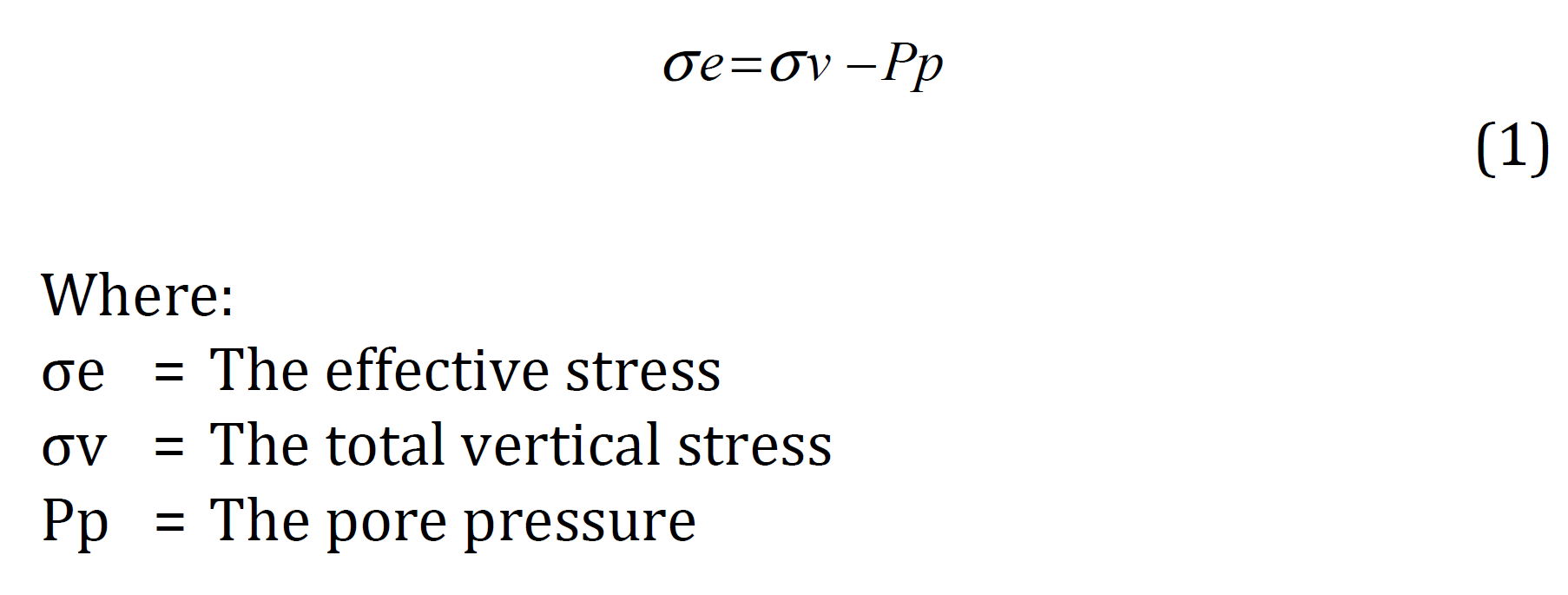
The stress state in salt formations is influenced by factors such as overburden pressure (σv), pore pressure (Pp) and tectonic stresses (σt). The effective stress (σe) is critical for assessing wellbore stability and is calculated using Terzaghi's effective stress principle:
Where:
σe = The effective stress
σv = The total vertical stress
Pp = The pore pressure
Salt Creep
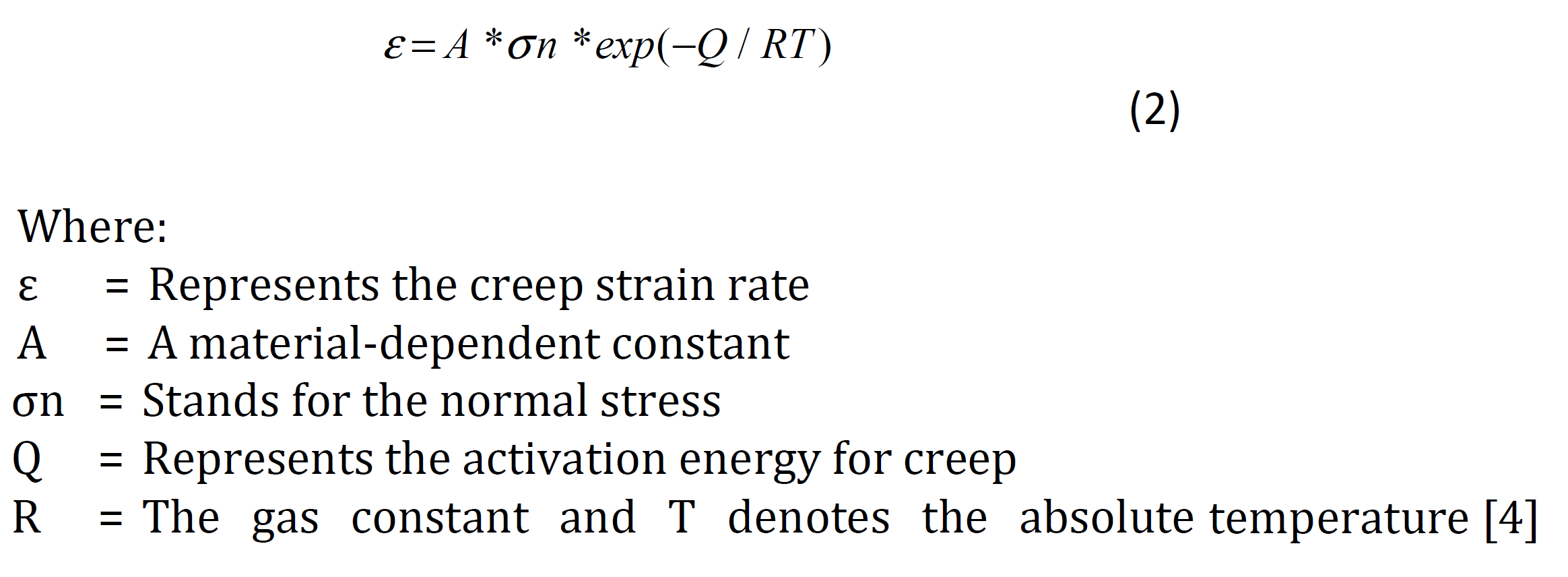
Salt is viscoplastic and can flow over geological time scales under stress. The rate of salt creep (ε) can be described using the Norton-Bailey creep law:
Where:
ε = Represents the creep strain rate
A = A material-dependent constant
σn = Stands for the normal stress
Q = Represents the activation energy for creep
R = The gas constant and T denotes the absolute temperature [4]
Wellbore Stability
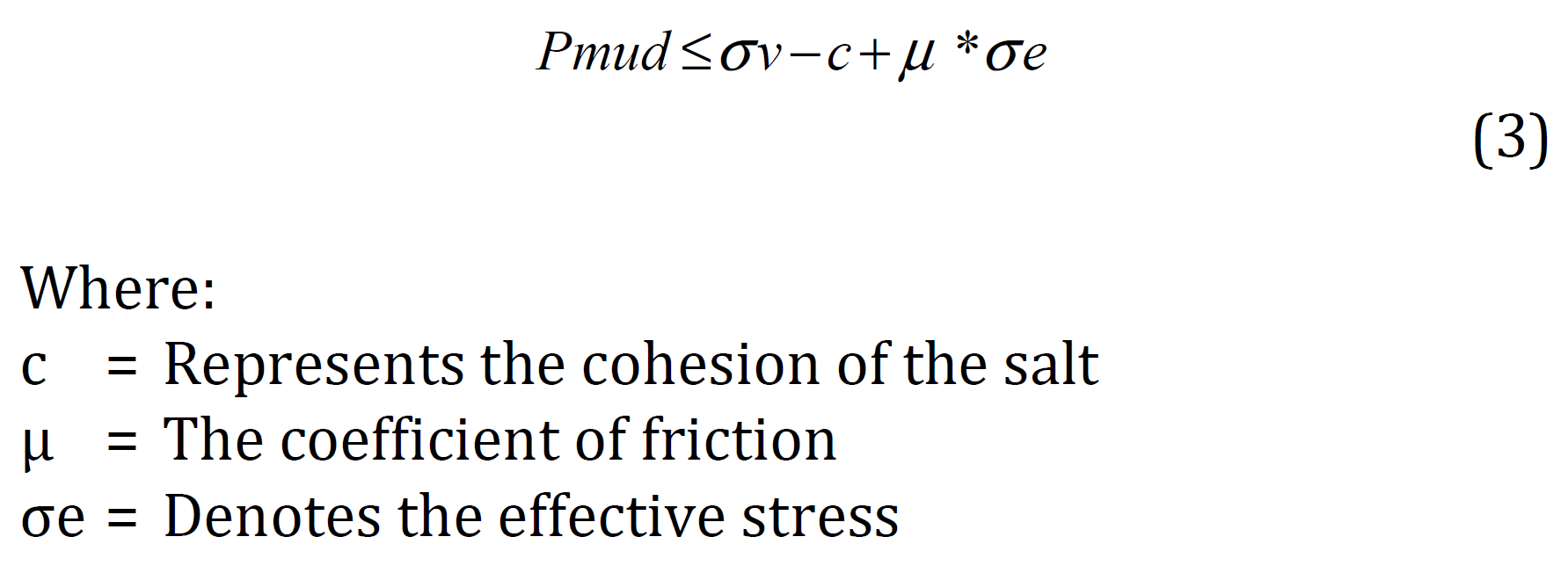
Assessing wellbore stability involves calculating the safe mud weight (Pmud) to prevent borehole collapse. The Mohr-Coulomb failure criterion is commonly used:
Where:
c = Represents the cohesion of the salt
μ = The coefficient of friction
σe = Denotes the effective stress
Thermo-Mechanical Effects
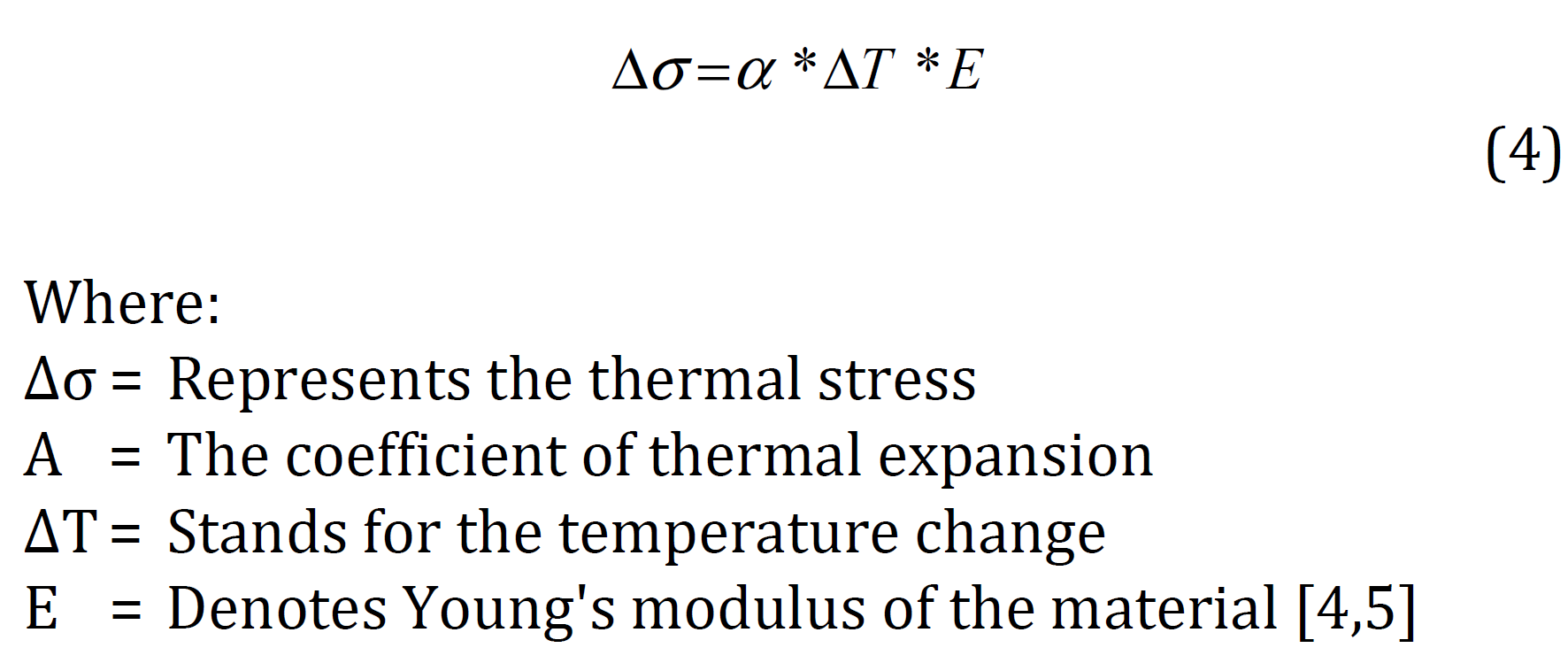
Salt formations are often subjected to temperature variations. The geomechanical behavior of salt can be influenced by thermal stresses, which are calculated using the coefficient of thermal expansion (α) and temperature change (ΔT):
Where:
Δσ = Represents the thermal stress
Α = The coefficient of thermal expansion
ΔT = Stands for the temperature change
E = Denotes Young's modulus of the material [4,5]
Salt Creeping Consideration
Salt creep is a significant consideration in the design and operation of oil and gas wells. When salt formations are penetrated during drilling operations, the salt around the wellbore begins to creep, causing the wellbore to be tight. This can lead to a number of problems, including:
Stuck Pipe: Salt creep can cause drill pipe to become stuck in the wellbore, leading to costly delays and damage
Casing Failure: Salt creep can also cause casing to collapse, which can lead to the loss of the well
Wellbore Instability: Salt creep can also cause the wellbore to become unstable, which can increase the risk of wellbore blowouts and other accidents [6]
The rate of salt creep is influenced by a number of factors, including the temperature, stress and composition of the salt. Salt creep is generally more rapid at higher temperatures and stresses. It is also more rapid in salt formations that contain impurities, such as clay [3].
Salt Properties
Enclosed saline water evaporates and desiccates, forming salt deposits. Stress and compacting salt displace brine until the porosity is completely occluded as burial depth increases. High temperatures and stress can yield brine-filled porosity of 0.3 to 1.5%. Thin, dendritic voids at grain boundaries make up the remaining porosity. The permeability of unaltered salt is usually 10-21 m2. Thus, flow is likely via salt only occurs in non-salt lithologies around the salt body or in non-salt inclusions at well-engineering timescales. Natural rock salts range from 99% halite to diverse mineral combinations. Common salts and minerals found in salt deposits are categorized by chemical composition as follows: Sodium salts: Halite (NaCl), potassium salts: sylvite, carnallite, poly-halite, sulphates: gypsum, anhydrite, langbeinite, kieserite, epsomite, kainite and chlorides: Bischofite and tachyhydrite. Halite is the most common drilling salt. However, pure halite often contains anhydrite, gypsum and clay. GoM salt deposits are mostly huge halite deposits with an average purity of 96% and some trapped sediment inclusions. Extremely pure salt has an in-situ density of 2,16 g/cm3. Due to its composition and impurities, impure salt has a somewhat higher density than pure salt. Salts with high clay impurities and shale interbedding can cause wellbore instability and tight hole conditions [7].
Salt Strength Property
Although there is little published information about sub/pre-salt formations' strength, the limited data indicates an Unconfined Compressive Strength (UCS) to range from 20.68 to 24.13 MPa (3000 to 3500 psi). Likewise, the same group of authors reported that the tensile strength of approximately one -twelfth of the unconfined strength was observed. In the case of polymineralic salt (non-single salt component), its strength will fall in between the strengths of their weak and strong constituents, following nonlinear proportionality between the strength values of these minerals. Therefore, proper laboratory testing is required to characterize salt strength [8,9].
Salt Formation Behavior
Salts formation considered one of the sedimentary rocks that called evaporates, resulted from the evaporation of the sea water. When under stress, salt rock acts as a visco-plastic material that tends to creep. Many factors influence the creep strain rate, such as the temperature [10]:
Temperature
Differential pressure
The confining pressure
The grain sizes
The presence of inclusions of free gas bubbles or free water
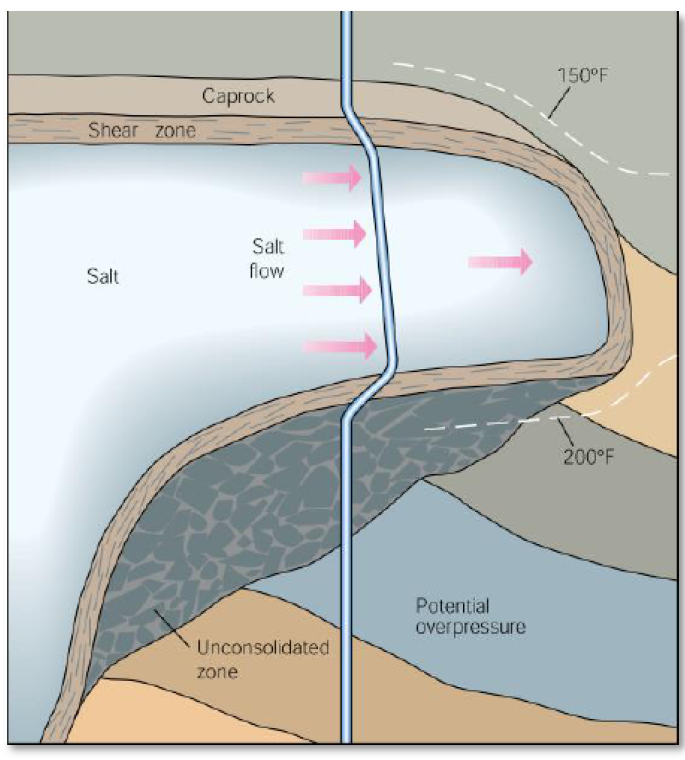
There are two primary factors that cause salt creep: temperature differences and stress differences. If the temperatures and stresses are the same, the creeping strain rate of the rock tachyhydrite is two orders in magnitude quicker than halite rocks for the variables in the same, such as tension and temperature, Figure 1 shows the flow of salt and the deformation that occurs in the oil well string [6].
Figure 1: Salt Creeping Scheme [10]
Flowing Nature of Salt
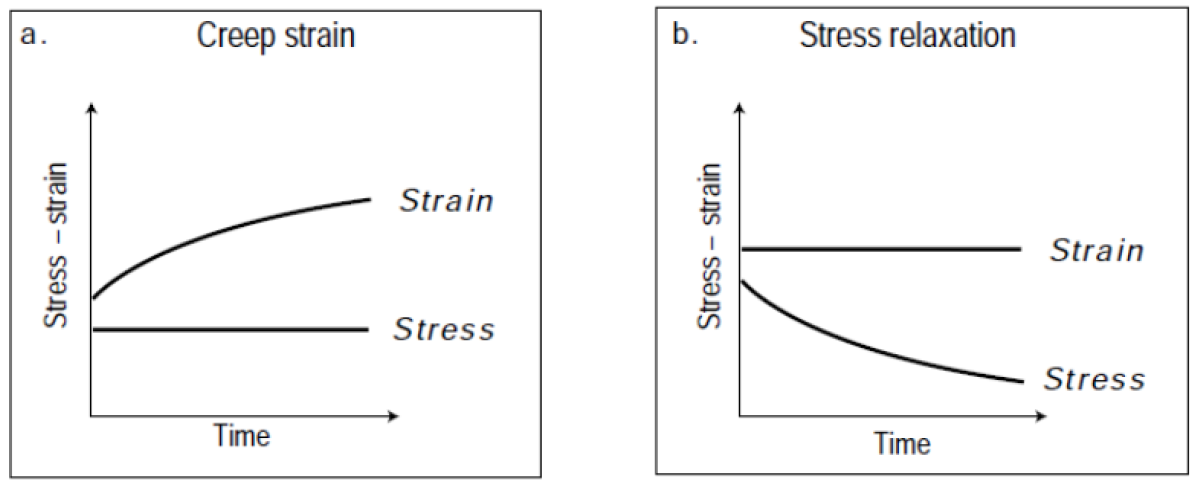
Most rocks for petroleum engineering applications can be characterized as elastoplastic solids. However, materials with uncemented grains, like loose sands, immature shales and salt do not behave elastically. These materials exhibit rheological behavior and undergo time-dependent processes such as creep (increasing strain under constant stress) and relaxation (decreasing stress under constant strain). These two processes are shown in Figure 2. Creep is defined as the gradual flow of a crystalline material under a deviatoric load, which results in permanent distortion. Because of that, such materials can even fail under constant, maintained, long-term load or strain conditions. Salt is a specific engineering material with a pertinent behavior, unlike other materials such as consolidated rocks or metals. Due to their ductile characteristics, salts have a limited linear stress-strain curve extending over a small stress increment. At stress levels as low as 10 to 20% of its ultimate strength salt starts deforming plastically. Its stress-strain curve is very dependent on temperature, confining pressures, salt composition, water content, impurities, prior stress history, loading rate, etc. [6,7].
Aspects of Salt Creeping
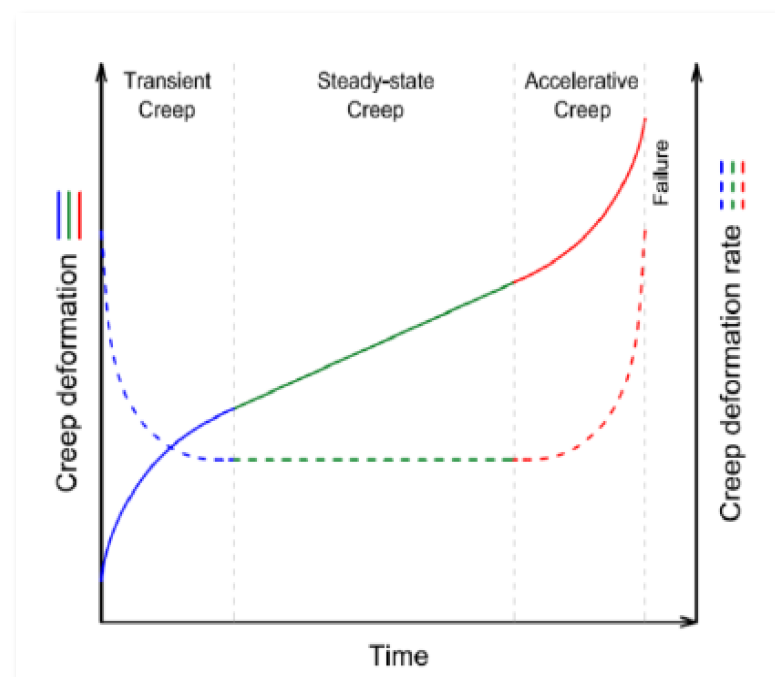
It is the deformation of rock produced by dissipation of the strain energy resulting from stress reduction in an undisturbed salt rock mass. Well construction and operations are severely hindered when a well's casing and pipe become caught and collapse due to creep closure. Casing failures in salt formations are common, even when the creep process is gradual. This is because the stress on the casing is greater than its mechanical strength and this can lead to well closure and serious issues. Figure 3 depicts an example of an axial salt creep deformation curve [6,8].
Figure 2: Mechanisms of (a) Creep Strain (b) Stress Relaxation
Figure 3: Typical Creep Deformation and Deformation Rate with Time
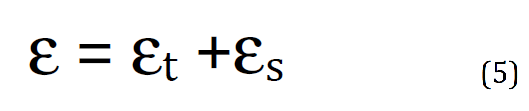
It is common for salt rock to exhibit a two- or three-stage creep curve. Immediately after the stress differential is applied, the strain rate is extremely high. As time passes, this high rate of strain diminishes monotonically until it becomes constant. Two stages are made reference to as transient and steady state creeping. A third stage, is known as tertiary creeping, may be visible depending on the temp. and the differential force that applied to the material. The sample structure deterioration produced by creeping strain accumulation by the time accelerates the creep strain rate. The specimen fails due to an increase in volume caused by micro-fracturing during the tertiary creep stage, also known as the dilation phenomena. Tertiary creep in the surrounding salt rock is unlikely to occur during well bore completions due to the constraint on deformations. Two components can be used to define the creep rate in salt deposits as indicated above: [7,11] one is known as the transient creep rate (et) the second is known as the steady state creeping rate (es). The overall rate of strain caused by creeping is given by:
Because of the transient creeping that occurs immediately after excavation process & only lasts for short period of time, transient creeping is usually dissipated during cementing and drilling operations, which take days, if not weeks, to complete. So, it is reasonable to assume that the steady-state creep primarily contributes to the overall strain rate owing to creep and the relationship of is valid after the section of salt formation is cemented and cased [6,12].
Salt Creeping Determination Methods
Salt creep determination methods can be divided into two main categories: Laboratory testing and simulations models. For Laboratory testing can be defined direct method for determining salt creep properties. It involves measuring the creep rate of salt samples under controlled conditions of stress, temperature and humidity. A variety of laboratory tests can be used [13], such as:
Uniaxial compression test: A salt sample is loaded in compression and the strain is measured over time
Triaxial compression test: A salt sample is loaded in compression and subjected to a confining pressure. The strain is measured over time
Point load test: A salt sample is loaded with two conical points. The load and displacement are measured. For Simulation models can be used to predict the creep behavior of salt formations [14]. These models are based on a mathematical understanding of the physical processes that control salt creep. Simulation models can be used to estimate the creep rate of salt formations under different conditions of stress, temperature and humidity [15,16]. ABAQUS and FLAC 3D are two popular commercial software packages that can be used to simulate salt creep. ABAQUS is a general-purpose finite element analysis software package, while FLAC 3D is a software package specifically designed for geotechnical engineering applications. Many researchers have made significant contributions to the understanding of salt creep mechanics in oil wells through laboratory and simulation researches as shown in Table 1.
Mitigation Strategies of Salt Creeping
There are a number of mitigation strategies that can be used to reduce the risks associated with salt creep. These strategies include [29]:
Wellbore design: One way to make wellbores more resistant to salt creep is to use thicker casing. This will help to support the wellbore and prevent it from collapsing as shown in Figure 4
Special casing designs: There are also a number of special casing designs that can be used to improve salt creep resistance. For example, some casing designs have a larger cross-sectional area, which helps to distribute the load more evenly. Other casing designs have a spiral pattern, which helps to stiffen the casing and make it more resistant to deformation [30]
Drilling in a less susceptible area of the salt formation: Another way to reduce the risk of salt creep is to drill the wellbore in a less susceptible area of the salt formation. For example, salt formations often have layers of different strengths and compositions. Drilling in a stronger layer of salt can help to reduce the risk of salt creep
Table 1: Researchers Contributions and Efforts to Maximize the Understanding of Salt Creep
No.
Author name
Year
Method
Result
1
Wang [16]
2004
Uniaxial compression testing
Salt creep is a time-dependent process that is accelerated by stress and temperature.
2
Dusseault et al. [17]
2004
a tri-axial test and changing the temperature repeatedly
The rate of salt deformation (creep rate) as shown in Figure (2-4) is heavily affected by temperature in addition to being controlled by the stress variation between the salt rock and the well hydrostatic pressure
3
Liang et al. [18]
2007
a tri-axial cyclic loading
The transient and steady-state strain rates exhibited a tendency to increase if the maximum applied stress increased or the minimum applied stress decreased
4
Fjar et al. [19]
2008
a tri-axial test
Thermos elsatic strains are the result of even small variations of temperature that can be corrected if temperature during the experimental testing is recorded precisely
5
Nasehi [20]
2011
Tensile strength test
The cement-covered casings, the tensile stresses decreased with increasing cement thickness and the tangential stresses remained almost constant, whereas the majority of the radial stresses increased over the thickness of the cement.
6
Mansouri and Ajalloeian [21]
2018
uni-axial compressional tests and creeping test
They found that the salt rock is ductile and that the creep rate increases with axial stress
7
Mohebi and Jalalifar [22]
2014
Numerical model by Flac 3D
Over time, the higher strain caused by the absence of cement behind the casing can be reduce the casing resistance
8
Omojuwa et al. [23]
2010
Uniaxial compression testing, triaxial compression testing, point load testing
The octa-hedral shear values in salt formations prior to drilling are determined by the 3 main stresses exercised by neighboring formations, whereas the octa-hedral shear stress values in salt formations during or after drilling are determined by the minimum horizontal stress, wellbore pressure, wellbore radius, and radial distance from a selected stress center
9
Willson et al. [24]
2004
Numerical model by Abaqus
Salt creep loading on well casings can be reduced by casing selection, design, well spacing, and production management.
10
Castagnoli et al. [25]
2016
Analytical model
Developed a new way to monitor the wellbore diameter in salt formations while drilling. Their method uses a computer model to predict how the wellbore diameter will change over time.
11
Wang and Samuel [26]
2017
A 3D geomechanical model by Flac 3D
Salt creep behavior can be predicted by a 3D geomechanical model, which can provide information for wellbore casing design and assessment.
12
Gholami et al. [27]
2017
A tri-axial test followed by a numerical model by Abaqus
Found that a thick salt layer in a well in southern Iran caused significant wellbore closure and viscoelastic salt behavior during drilling. They also observed a complex shift in the stress regime
13
Ghodusi et al [28]
2019
Numerical model by Abaqus
Casing construction flaws such as ovality, eccentricity, and residual stress could lessen the casing's ability to resist collapsing
14
Taheri et al [1]
2020
Simulation by Hysys
Casing collapse could be significantly influenced by the creep of rock salt. Prior to reaching the constant value at oil reservoirs, the external pressure on the casing nearly doubled in comparison to the pressure at the beginning of production.
Figure 4: Thicker Casing for Salt Creep Resistance
CONCLUSION
Geomechanical factors exert significant influence on the stresses within salt formations, encompassing parameters such as pore pressure, fracture pressure, vertical stress and total stresses. The Terzaghi equation stands as one of the foremost methods for calculating these stresses. Furthermore, the strain occurring within salt formations can be assessed through various creep laws, with the Bailey creep law being particularly pertinent, contingent upon material properties, stress levels and temperature. Simulations such as Flac 3D, Abaqus and Hysys prove invaluable in providing a comprehensive outlook on salt creep behavior over time, crucial for completion engineers in anticipating potential casing deformations and their consequences in oil wells. Temperature variation within salt formations emerges as a pivotal factor governing salt creep, with increased temperatures accelerating this phenomenon, corroborated by laboratory testing on salt formation samples. The temporal aspect also assumes paramount importance, as time plays a critical role in salt creep development post-drilling of oil wells. Salt creep engenders numerous challenges during and after drilling operations within salt formations. To address these challenges, it is imperative to control mud weight effectively during drilling to manage or minimize salt formation creep. Subsequently, post-drilling, the adoption of appropriate casing designs, incorporating sufficient safety factors, becomes indispensable in mitigating the adverse effects of salt creep on oil well integrity and performance that can be optimized by Landmark software.
REFERENCES
Taheri, S.R. et al.“Investigation of rock salt layer creep and its effects on casing collapse.” International Journal of Mining Science and Technology, vol. 30, no. 3, 2020, pp. 357–365.
Xie, J. and G. Tao. “Modeling and analysis of salt creep deformations in drilling applications.” SIMULIA Community Conference, 2013.
Harada, Y. et al. “Creep behaviors of in-situ single-crystal Al₂O₃/YAG and Al₂O₃/GAP Eutectic Composites.” Journal of the Ceramic Society of Japan, Supplement, vol. 112, 2004.
Terzaghi, K. and R.B. Peck. Soil Mechanics in Engineering Practice. John Wiley & Sons, 1996.
Les, B. Geomechanical Aspects of Deepwater Well Planning around Salt Structures. PhD dissertation, University of Zagreb, Faculty of Mining, Geology and Petroleum Engineering, 2022.
Dehghan, A.N. and M. Khodaei. “The effect of rock salt creep behavior on wellbore instability in one of the southwest Iranian oil fields.” Arabian Journal of Geosciences, vol. 14, 2021, pp. 1–12.
Omojuwa, E.O. et al. “Properties of salt formations essential for modeling instabilities while drilling.” Nigeria Annual International Conference and Exhibition, Abuja, 2011.
Cheatham, J.B. and J.W. McEver. “Behavior of casing subjected to salt loading.” Journal of Petroleum Technology, vol. 16, no. 9, 1964, pp. 1069–1075.
Faraj, A.K. et al.“Variation of total stresses during field operation using finite element technique, Zubair oil field.” Iraqi Journal of Oil and Gas Research, vol. 3, no. 1, 2023, pp. 25–42.
Wang, H. and R. Samuel. “3D geomechanical modeling of salt-creep behavior on wellbore casing for Presalt reservoirs.” SPE Drilling & Completion, vol. 31, no. 4, 2016, pp. 261–272.
Faraj, A.K. et al.“Estimation of internal friction angle for the third section in zubair oil field: A comparison study.” Iraqi Journal of Oil and Gas Research, vol. 2, no. 2, 2022, pp. 102–111.
Chen, F. et al. “Experimental study on creep behaviors of rock salt in Yunying salt mine.” Chinese Journal of Rock Mechanics and Engineering, vol. 25, 2006.
Li, W. et al. “DEM micromechanical modeling and laboratory experiment on creep behavior of salt rock.” Journal of Natural Gas Science and Engineering, vol. 46, 2017.
Costa, A.M. et al. “Geomechanics applied to the well design through salt layers in Brazil: A history of success.” 44th US Rock Mechanics Symposium and 5th US–Canada Rock Mechanics Symposium, OnePetro, 2010.
Asadi, A. et al. “Prediction of collapse in a casing and tubing: With case study of Iran.” Australian Journal of Basic and Applied Sciences, vol. 5, no. 11, 2011.
Wang, G.J. “A new constitutive creep-damage model for salt rock and its characteristics.” International Journal of Rock Mechanics and Mining Sciences, vol. 41, 2004, pp. 61–67.
Dusseault, M.B. et al. “Drilling through Salt: Constitutive Behavior and Drilling Strategies.” Gulf Rocks 2004: 6th North America Rock Mechanics Symposium, OnePetro, 2004.
Liang, W.G. et al.“Experimental investigation of mechanical properties of bedded salt rock.” International Journal of Rock Mechanics and Mining Sciences, vol. 44, no. 3, 2007, pp. 400–411.
Fjær, E. et al.Petroleum Related Rock Mechanics. Elsevier, 2008.
Nasehi, M. et al. “Analysis of stress in casings covered with cement in oil and gas wells using the finite element method.” Third National Congress of Petroleum Engineering, 2011.
Mansouri, H.and R. Ajalloeian. “Mechanical behavior of salt rock under uniaxial compression and creep tests.” International Journal of Rock Mechanics and Mining Sciences, vol. 110, 2018, pp. 19–27.
Mohebi, R.and H. Jalalifar. “Analysis of the effect of cement on the casing stability in salt formations.” Third National Conference on Oil and Gas and Related Industries, 2015.
Omojuwa, E. et al. “Understanding the influence of rock stresses on wellbore inclination in salt formations.” Nigeria Annual International Conference and Exhibition, OnePetro, 2010.
Willson, S.M. et al. “Assessment of salt loading on well casings.” IADC/SPE Drilling Conference, OnePetro, 2002.
Castagnoli, J.P. et al. “Drilling Geomechanics Salt Creep Monitoring: Optimization of mud weight in real time.” International Conference and Exhibition, 2016.
Wang, H.and R. Samuel. “3D geomechanical modeling of salt-creep behavior on wellbore casing for Presalt reservoirs.” SPE Drilling and Completion, vol. 31, no. 4, 2016, pp. 261–272.
Gholami, R. et al. “A methodology for wellbore stability analysis of drilling into presalt formations.” Journal of Petroleum Science and Engineering, vol. 167, 2018, pp. 249–261.
Ghodusi, F. et al. “Analysis of the casing collapse in terms of geomechanical parameters and solid mechanics.” Journal of Chemical and Petroleum Engineering, vol. 53, 2019.
Les, B. Geomechanical Aspects of Deepwater Well Planning around Salt Structures. PhD dissertation, University of Zagreb, 2022.
Zhang, J. et al. “Casing Ultradeep, Ultralong Salt Sections in Deep Water.” SPE Annual Technical Conference and Exhibition, SPE, 2008
Recommended Articles
Research Article
Assessing the Effectiveness of Risk Management Practices in Green
Construction Projects Evidence from Iraq
Mazin Fahem Neamah
Published: 25/01/2026
Download PDF
Research Article
Recent Advances in β-Tilting Theory and its Generalizations in Module Categories
Dhuha Taima Al-Dawoodi
Published: 25/02/2026
Download PDF
Research Article
Predictive Security Analytics for Large-Scale Multi-Tenant Linux Shared Hosting Environments: An Empirical Study
Ayad A. Yass
Published: 25/02/2026
Download PDF
Research Article
Some Properties of Fuzzy g-Regular Spaces
Hassan Abid Al-Hadi Ahmed,
Noor Al-Huda A. Haider
Published: 10/12/2025
Download PDF
PO Box 101, Nakuru
Kenya.
Email: office@iarconsortium.org
Editorial Office:
J.L Bhavan, Near Radison Blu Hotel,
Jalukbari, Guwahati-India
Abed, A. N. & Hosseinian, A. (2023). Salt Creeping: A Major Challenge for Oilfields, A Review. Scientific Research Journal of Engineering and Computer Sciences, 3(2), 1-7.
MLA
Abed, Ali N. and Armin Hosseinian. "Salt Creeping: A Major Challenge for Oilfields, A Review." Scientific Research Journal of Engineering and Computer Sciences 3.2 (2023): 1-7.
Chicago
Abed, Ali N. and Armin Hosseinian. "Salt Creeping: A Major Challenge for Oilfields, A Review." Scientific Research Journal of Engineering and Computer Sciences 3, no. 2 (2023): 1-7.
Harvard
Abed, A. N. and Hosseinian, A. (2023) 'Salt Creeping: A Major Challenge for Oilfields, A Review' Scientific Research Journal of Engineering and Computer Sciences 3(2), pp. 1-7.
Vancouver
Abed AN, Hosseinian A. Salt Creeping: A Major Challenge for Oilfields, A Review. Scientific Research Journal of Engineering and Computer Sciences. 2023 Jul;3(2):1-7.



 Download PDF
 Download XML