The term form of e-commerce a reality exceeded a lot of expectations and was talking to his appearance in the impact of change many of the traditional concepts in all areas, making it constitutes interest from many academic and commercial entities to the extent that make it live up to the high ranks. Research will try to monitor best practices and stand on the effect of e-commerce in the sector is so specific it is "the banking sector" Last universe of more dealers in modern technology and has a worthy monitoring and attention, especially in the area of quality of services practices and therefore the researchers' study reconnaissance of the views of a sample of employees of some banks in the province of Misan, "it was adopted descriptive analytical method, to analyze the information collected by a questionnaire to gather information and represented the research sample random sample consisting of 50 employees in the surveyed banks and researcher used statistical methods to deal with field data and the analysis showed" that there is a relationship link between the moral and the impact of e-commerce and quality of banking services in the surveyed banks.
Keywords
Electronic Commerce
E-Commerce
Quality of Banking Service
Misan
INTRODUCTION
This research aims to measure the impact of e-commerce on the quality of banking services. It is a survey study of the views of a sample of employees of some banks in the province of Misan. The importance of this topic is evident in its dimensions that indicate the importance of e-commerce and what it tries to offer to the banks in the research sample to improve the quality of banking services.
The rapid technological changes that trade has witnessed recently (represented by the transition from the market place to the market space), (i.e., from traditional trade to e-commerce) have imposed on institutions the need to keep pace with this development to defend their place and strive to survive. Therefore, it is required that decision-makers in bank management should take the initiative to benefit from this development in order to provide their services to customers with modern and advanced technologies that meet the required quality of service.
Research Problem
The study addresses the impact of e-commerce on the quality of banking services. This is because it deals with many aspects of technological development and the challenges that this imposes on service sectors, including the banking sector, which is the most important user of e-commerce. These challenges include changes in systems and the pursuit of excellence in banking products (services) to achieve customer satisfaction. Based on this, the research problem was formulated through the following question: Is there a correlation and impact of e-commerce on the quality of banking services in the surveyed banks?
Importance of the Research
The importance of the study stems from its study of one of the most popular topics in contemporary organizations. It reviews the most important ideas and foundations brought by e-commerce and its reflections on providing the best service to customers (individuals or companies), especially in the banking sector, by focusing on one of the competitive priorities, namely (service quality). It also seeks to provide customers with an information base on the evaluation of the quality of banking services in the surveyed banks.
Research Objectives
The study aims to identify the relationship between e-commerce and the quality of banking services and how e-commerce can serve the banking sector. It also seeks to draw field conclusions that shed light on the nature of the relationship between the two variables, as well as to describe and diagnose the research variables.
Research Hypotheses
The research is based on two hypotheses:
Hypothesis 1: There is a statistically significant correlation between e-commerce and the quality of banking services in the surveyed banks
Hypothesis 2: E-commerce has a statistically significant impact on the quality of banking services in the surveyed banks
Research Model
Data Collection and Analysis Methods
The research used a descriptive-analytical approach to test its hypotheses. This approach involved studying the relationship between the independent and dependent variables by collecting data related to the organization and analyzing it using the following methods:
Personal Interviews: These interviews were conducted with managers and employees of the surveyed banks to collect information about their experiences with e-commerce and the quality of banking services
Questionnaire: A questionnaire was distributed to a sample of customers of the surveyed banks to collect their opinions about the quality of banking services
The data collected from the interviews and the questionnaire were analyzed using statistical methods to test the hypotheses.
MATERIALS AND METHODS
Statistical Analysis Methods
Based on the nature of the research trends and the contents of its hypotheses, a set of statistical tools were used, which are as follows:
Frequencies, percentages, arithmetic means and standard deviations for use in describing and diagnosing the research variables
Correlation coefficient, which is used to determine the strength of the relationship between the independent variable and the dependent variable
Linear regression, which is used to measure the significant effect of the independent variable on the dependent variable
Research limitations:
Time limits: Field research tests were conducted for the period from March 2023 until September 2023
Spatial boundaries: A group of government banks (Al-Rafidain Bank, Al-Rasheed Bank and Baghdad Al-Ahli Bank) in Maysan Governorate were chosen as a research community
Human limits: The study sample represented a group of employees of the banks studied from different organizational levels
Theoretical Framework
E-Commerce
The Concept of E-Commerce
E-commerce is one of the new terms that has recently entered economic life and has become used in many activities related to the information and communications technology revolution to be part of a different international economic reality. Electronic commerce is the literal translation of the term (Electronic Commerce), which consists of two parts, the first: commerce (Commerce is an expression of an economic activity through which goods and services are traded in one country or between different countries. The second: Electronic (Electronic), which means performing commercial activity through electronic means and the Internet and Extranet are among the most important of these media and methods [1].
As a result of the development that has occurred since 1995, many definitions of e-commerce have emerged, each with a different perspective and angle. Haddad, defined e-commerce as a general term referring to the use of computers and communications technology to support the exchange of goods and services between sellers and buyers. It is defined as "the use of information technology to effectively link the functions performed by sellers and buyers in commerce."
Figure 1: Research model
It is also described as "a form of commercial exchange using an electronic communications network between companies, between companies and their customers, or between companies and the public administration” [2]. The World Trade Organization (WTO) defined it as “an integrated set of processes for concluding deals, establishing commercial ties and distributing, marketing and selling products by electronic means” [3]. The term electronic commerce is applied to all commercial processes that depend on processing Electronic data transfer, text, sound and image transfer and this includes a number of technologies such as electronic data interchange, fax machines, digital money and smart cards. Today, electronic commerce mainly means “the buying and selling of goods and services via electronic means, especially the Internet [4]”.
Explain that e-commerce “is the use of computers to facilitate all of an organization’s operations and many of the operations are performed internally in the areas of finance, human resources, information services, manufacturing and marketing.” defined e-commerce as "the use of information technology to create effective links between trading partners." It was also defined as "a new business model targeting goods, services and speed of performance, including the use of the Internet to search for and retrieve information to support and assist purchasing decision makers, whether businesses or customers, or the ability to buy, sell and advertise services via electronic means." Some described it as "a basic technological environment aimed at reducing intermediaries in response to market demands and completing business in a timely manner" [5]. He pointed out [6] “It is the use of information technology to create effective links between partners in trade, or it is a type of buying and selling process between consumers and producers, or between companies and each other using information and communications technology.”
Based on the above, the researcher defines e-commerce as the application of everything related to the buying and selling of goods, services and information over the internet. This includes negotiations and interactions between sellers and buyers, customer relationships supporting sales and purchases, distribution and delivery of goods, follow-up procedures, settlement of financial obligations, conclusion of contracts, completion of transactions, after-sales services and electronic data exchange, including banking transactions, electronic invoicing and product inquiries.
Characteristics of E-Commerce
Al-Salmi [4] defined the characteristics of e-commerce as follows:
The vast nature of global digital networks such as the Internet
Speed and ease of implementing and processing business operations
The ease with which digital documents can be changed, exported or canceled without side effects
The opportunity for electronic products (computer programs, for example) to cross natural borders without the state’s knowledge
Until recently, most of the old e-commerce applications, such as electronic data exchange, were carried out through private networks restricted to a few individuals due to their high costs and their installation often requiring fully compatible equipment. Therefore, the main users of these systems were only large companies and their suppliers
While [6] pointed out the characteristics of electronic commerce as follows:
The use of information technology and communications networks in managing business operations activities between companies with each other on the one hand and between companies and their customers (consumers)
It works to increase efficiency in performance and achieve effectiveness in dealing by optimally exploiting information technology and the communications network
Using information technology and communications networks to manage business operations between companies and e-governments
It works to overcome the temporal and spatial boundaries that usually restrict the movement of commercial transactions
It reacts very quickly to meet the market’s need by responding quickly to its requirements through interaction with customers (consumers) requesting goods and services on the communications network.
E-commerce is based on simplifying procedures, clarity of dealing and performance of commercial operations
Benefits of E-Commerce
Due to the many features of the electronic calculator, which prompted specialists in the field of marketing to adopt it as a high technology that has a major role in the success of marketing strategies and when these specialists decide to rely on electronic commerce in order to implement the strategic plan, they have thus made a decision to rely on the latest technologies and restructure the business [7].
Some of the benefits of electronic commerce can be identified as follows:
More effective marketing and greater profits: Organizations' reliance on the Internet allows them to showcase their products and services worldwide without interruption throughout the year, providing these organizations with a greater opportunity to generate profits and reach a larger number of customers
Lower business expenses: Building and maintaining an e-commerce website is more cost-effective than building retail stores or keeping offices. Businesses don't need to spend large sums on promotions or install expensive customer service equipment. They also don't need to employ a large staff to manage inventory and administrative tasks, as electronic databases maintain sales records and customer names. This enables one person to easily retrieve information from the database to verify sales history
Effective communication with partners and customers: E-commerce transcends geographical boundaries, providing an effective means of exchanging information with partners. It also provides them with a valuable opportunity to benefit from goods and services offered by other parties (i.e., suppliers), a phenomenon known as business-to-business e-commerce
E-Commerce Requirements
In order for e-commerce to become viable in any society, the appropriate environment and prerequisites must be established. These prerequisites are categorized as follows [8].
Electronic Infrastructure
There are several key components. The most prominent is the Information and Communications Technology (ICT) sector, which includes wired and wireless telecommunications networks, communication devices such as fax machines, landlines and mobile phones, as well as computers, application software, operating systems, technical support services and the human capital used in business and e-commerce activities.
In addition to the availability of IT production sectors, these elements collectively provide the electronic infrastructure necessary to promote internet use and create a favorable environment for e-commerce. The widespread use of the internet is a crucial factor in the adoption of e-commerce, as it represents the electronic channel or market through which commercial transactions and exchanges are conducted.
Expanding Internet use depends on the availability of several basic elements, including personal computers, host computers and reliable Internet access.
Legislation and Regulations for Electronic Commerce
This dimension includes the legislation, laws and regulations that are consistent with the nature of e-commerce. These legal provisions constitute the regulatory framework that ensures the sustainability of e-commerce and protects the rights of all stakeholders. This legal framework is responsible for establishing appropriate legal tools for e-transactions, such as e-contracting mechanisms and the necessary conditions governing these contracts.
Furthermore, the law addresses the resolution of e-commerce disputes, whether within a single jurisdiction or across borders between parties in different countries. It also regulates the means of evidence acceptable in commercial disputes conducted online.
Furthermore, this legislation addresses issues related to intellectual property rights, cybercrimes and the definition of harm resulting from them. It also addresses issues such as electronic signatures, the validity of digital documents and the legal recognition of electronic offers and acceptances.
Availability of Human Resources
This aspect is one of the most important components of e-commerce success in any society. These human resources include specialists in information technology, communications networks, the internet and e-commerce-related application software.
Moreover, e-commerce requires what is known as e-readiness-a society that has the ability and desire to engage in e-commerce. The level of e-readiness in any society can be enhanced by improving the quality of educational systems and expanding access to opportunities that enable individuals to benefit from digital developments.
This, in turn, contributes to building a technology-savvy society that is culturally prepared for digital transformation. Furthermore, it is essential to provide opportunities for institutions, educational centers and schools to embrace ICT and integrate technical knowledge into educational curricula.
The Relationship of Electronic Commerce to Services
Online commerce is considered an effective means through which the questions and inquiries of customers can be answered and responded to in the direct interactive manner available to Internet users, especially with regard to the service sector and intangible products such as software, research, consulting, financial services, tourism services, etc. [9]. Dealing with services has flexibility, which makes it different from dealing with goods. It is easy to pay an invoice or receive an amount electronically, but purchasing tangible products requires careful knowledge of the details, in addition to the fact that it comes under the heading of certainty, taste and actual knowledge of what is on offer. These goods and this is what made dealing with tangible material goods take on the character of being limited.
In light of this, the number of organizations that manufacture and provide services in the private and public sectors has increased over the past three decades. This growth has taken two dimensions: The diversity of services, the multiplicity of service-providing companies and the similarity of goods to services in terms of the components that make up the production system: inputs, transformation processes, outputs and nutrition. The opposite.
Quality of Banking Service
The Concept of Banking Service: The banking system has occupied an important position in economic systems over time. It has represented and continues to represent the main engine of all financial and investment operations within the state, outside it and even between countries. This is due to the distinguished services it provides and the experiences and technologies it has acquired in the context of its ongoing pursuit of attracting its customers and drawing their attention away from other banks. In order for any bank or banking unit to achieve this goal in the field, it must focus and distribute these services efficiently and effectively, in a way that allows it to capture both the savings and investment pool.
Distinguished banking service represents the basic focal point that adds a touch of uniqueness to the banking institution and through which its economic and social role is evident [10].
Although the role of the banking system as a supporter of economic activity in any society has not changed much over the ages, this role has sublimated, expanded and increased in importance in contemporary circumstances due to the multiplicity and diversity of economic activities on the one hand and the development taking place in the preferences of banking customers on the other hand. On the third hand, the great and distinctive feature of our current era [11].
Banks perform many services, whether personal services, or services related to the exercise of economic activities and in most cases their provision of these services does not require financing for them, but rather they perform them as services in exchange for a price represented by the commission or the wage that banks receive from the customer when providing them to him [12]. The most important activities of the banking system can be summarized as follows [13]:
Accepting deposits and other forms of funds required to be returned to the customer
Lending in all its forms, including consumer loans and financing commercial operations
Payments and money transfer services including credit, credit cards, traveler’s and bank checks
4.Guarantees and obligations
Trading on behalf of the bank or on behalf of customers in money market instruments, checks, bills of exchange and certificates of deposit
Participating in the issuance of shares and providing services related to this issuance
Currency brokerage
Manage and maintain a portfolio of securities.
Credit services
Providing safekeeping services to preserve jewelry and documents [14]
Quality of Banking Service
There are many definitions of banking service quality. The reason for this is the difficulty of defining the characteristics of the service and the factors affecting it, which makes the process of measuring its quality a difficult process [15]. Quality is the key for banks to enter the market and attract customers, while excellence is the price of success. The contemporary banking market demands more services that are provided to customers at a distinguished level and in line with the expectations of these customers. Excellence has become the important factor in differentiating between normal performance and high performance for service organizations, especially for banks that provide their banking services [7]. As quality is one of the first pillars of competition for any good or service provided to the customer, whether this customer is an individual, company, public or private sector and entry into the World Trade Organization, the increase in economic blocs and the emergence of multinational companies, is a call for quality to be the strongest survival in economic markets. Banking and quality in banking service is evidence of the element of competition [16].
Based on the above, the researcher believes that the quality of banking service “is the total sum of the advantages and characteristics of the banking service directed to the customer to meet or exceed his expectations and desires.”
Classification of Banking Services
Due to the decisive development in banking, which made it take a new and different direction represented by the emergence of money and the expansion of banking activities in many areas, which led to the development and diversification of banking services provided [10].
Writers and researchers have classified banking services in several ways, including:
In Terms of Reliability: It varies either on the basis of its dependence on equipment such as ATMs or its dependence on individuals. Services that depend on individuals also vary according to their performance by skilled or unskilled individuals
In Terms of Customer Presence: Most banking services require the customer’s presence in order for the service to be performed
In Terms of the Type of Need: Services vary in whether they fulfill a personal need or a business need
In terms of the objectives of service providers: Service providers differ in terms of their objectives (profitable and non-profitable) or in terms of ownership (private or public), i.e. government commercial banks or private commercial banks
As for [17], he agreed with [18] that banking services are classified into the following forms:
Convenient Services
These services are available to customers whenever needed, with minimal difficulty. They are easily accessible and include functions such as cash withdrawals, deposits and the use of bank cards. Customers can access them through automated machines and equipment located inside or outside the bank, as well as via telephone or electronic networks that cover the region or the entire country. These services are often offered at low or no cost. Banks provide them in various forms to meet customer needs and they are frequently used on a daily, weekly, or as-needed basis, depending on the service type.
Shopping Services
Customers often exert effort to obtain such services, which may be used infrequently or only once over an extended period. These services are typically accessed as needed, during specific seasons, or under particular circumstances. For instance, a customer may seek to acquire a loan with predetermined specifications and terms; however, the service may not always be readily available. Loans are not granted arbitrarily or without clear conditions. Instead, specific criteria must be fulfilled, such as demonstrating the ability to repay and providing collateral, among other requirements.
Special Services
These services are provided to specific beneficiaries only and are specific to each bank. Some banks may not accept deposits or open accounts without fees. Services provided may be primarily based on customer recommendations, such as personalized services, VIP services, investment loans, investment management and others. The service is specifically designed to meet the customer's needs and what they deem appropriate for their business or activity.
Levels of Banking Service Quality
Banking services-both traditional and conventional-do not differ from one bank to another in their procedural nature. Traditionalism may preclude the possibility of service excellence, a prerequisite for competition. From this perspective, the concept of service quality emerged as an area of relative differentiation and arose within this context. Concepts such as customer service, speed of service delivery, privacy, confidentiality, service delivery methods and others are areas of differentiation in the provision of banking services (Al-Karki, 2020: 27). Many researchers have identified five levels of banking service quality, as both [10] and [19] agreed with [16] that the levels of banking service quality are:
The quality that the customer expects: This is the level of quality of banking services that the customer believes should be available
The quality perceived by the bank's management: This is the quality that the bank's management expects will satisfy the needs and desires of the customer
The standard quality: This is the quality that is defined by the quality specifications of the service.
The promoted quality: This means providing information about the banking service and its characteristics and what the bank has pledged to provide to customers through the promotional mix of advertising and personal promotion, etc
The actual quality: This refers to the performance of bank employees in providing quality service and delivering it according to the specifications that it has defined. It depends on the skills and good training of the employees
Standards (Dimensions) of Banking Service Quality
Researchers in the field of studying service quality have worked to find indicators that customers rely on in their evaluation of the quality of service provided to them. This is to review its level and the improvements it requires to gain customers’ satisfaction and loyalty [20].
Measuring and controlling the quality of service products is considered somewhat difficult, due to the nature of the work of service companies, as they represent intangible things and processes.
Some writers have identified ten criteria that the consumer uses to evaluate the quality of service, which are presented in the following Table 1.
These dimensions were combined into five dimensions: [10]:
Dependability: The ability to perform the required service with reliability, accuracy and stability (i.e. reliable, trustworthy and with correct performance)
Responsiveness: (The management’s ability to provide service quickly and constantly assist customers upon request
Trust: (Guarantee): Knowledge of employees, courtesy, ability to gain trust and self-confidence
4-Empathy: ease of communication, good communication, understanding and caring for customers
Tangibles: Material facilities, equipment and the appearance of people in one unit (i.e., the appearance of material elements)
Table 1: Dimensions of Service Quality
Dimension
Concept
Credibility
Reliability (the fact that something is trustworthy and reliable), the possibility of authentication, the honesty and integrity of the supplier.
Security
Free from danger (imminent risk).
Access
Accessibility and ease of communication.
Communication
Listen to your customers and keep telling them in the language they can understand.
Understanding Customer
Putting efforts to know customers and accurately identify their needs.
Tangibility
Show physical facilities, equipment, people, means of communication...etc.
Reliability
The ability to fulfill service promises reliably, accurately and correctly.
Responsiveness
Management's response to assist customers and provide them immediately with service.
Courtesy
Kindness (courtesy), respect, consideration and friendship to people of contact and friendliness.
Source: Al-Dawaji, Abi Saeed Ahmed, Quality in Banking Service According to E-Commerce Considerations, College of Administration and Economics/University of Mosul/Al-Rafidain Development, Volume 81, Issue (28), 2016, p. 27
Given that the last vision (the five dimensions of quality) represents the most accepted trend in academic circles, the researcher will focus their attention on it and it will be adopted as a basis for preparing a measure of banking service quality.
To clarify how the customer judges each of the five dimensions, we will explain these dimensions separately [21]:
Reliability: Refers to the ability of the bank to deliver its promises in a reliable and accurate manner. In the past, banks were limited by the physical considerations of time and place, but the use of modern communication methods has made reliability more applicable
Responsiveness: Refers to the bank's willingness to assist customers and provide prompt service. This dimension focuses on courtesy, kindness and the speed with which customers respond to their requests, inquiries, complaints and problems
Assurance: This refers to the customer's feeling of security and trust in the service and the person providing it. This dimension is related to the perceived risk of the consequences of receiving service from this organization or from its provider, or both
Empathy: Refers to the ability of the service provider to be respectful and polite and to be friendly with the customer. This dimension refers to the affection and respect between the service provider and the customer. In the banking industry, this dimension is embodied in the ability to interact and create strategic partnerships with customers and provide service according to the customer's request
Tangibles: Refers to the physical appearance of the service. This dimension includes physical facilities, equipment, personnel and communication materials. All of these give the customer a tangible image and understanding of the service, especially for new customers who will use it to evaluate quality
RESULTS AND DISCUSSION
Practical Framework
Description of the Respondents: The field study relied on the questionnaire prepared for this purpose, as (57) questionnaires were distributed to the respondents, of which (53) were returned and (3) were excluded due to incomplete answers. The remaining questionnaires, which are (50), were subjected to analysis, which is 88% of the distributed questionnaires.
Table 2 shows that the majority of the research sample are males, with (27) individuals, accounting for (54%) of the sample size, while the number of females is (23) and their percentage is (46%).
The age group (31-40) was (42%), the highest percentage among the total number of respondents, with (21) individuals, followed by the age group (41-50), with (15) individuals and a percentage of (30%). It was followed by the age group (51 and over) with (9) individuals and a percentage of (18%), followed by the age group (30 and under) with (5) individuals and a percentage of (10%) of the total research sample.
As for the educational qualification, the highest percentage was for those with a diploma and bachelor's degree, with (37) individuals and a percentage of (74%), followed by those with a preparatory degree or less, with (9) individuals and a percentage of (18%), followed by those with a diploma and master's degree, with (3) individuals and a percentage of (6%) and finally those with a doctoral degree, with (1) individual and a percentage of (2%) of the total number of respondents.
While the highest percentage was for those with (11-15) years of service, with (26) individuals and a percentage of (52%) of the sample size, followed by those with (16 or more) years of service, with (15) individuals and a percentage of (30%), followed by those with (5-10) years of service, with (5) individuals and a percentage of (10%) of the total number of individuals, followed by those with (5 or less) years of service, with (4) individuals and a percentage of (8%) of the total number of individuals.
Testing Research Hypotheses
Testing Correlations Between Research Variables
Reaching the research results required testing the correlation between the variables, the indicators of which are explained in Table 3.
Table 3 indicates the existence of a significant correlation between e-commerce as an independent variable and banking service quality as a dependent variable, as the correlation value reached (0.59*), which justifies the first main hypothesis that states: “There is a significant correlation between e-commerce and banking service quality in the banks under study.”
Testing the Influence Relationships Between Research Variables
In order to verify the research hypotheses, the influential relationship was tested and the test results based on the indicators of the linear regression model showed as shown in Table 4.
Table 2: Description of the respondents
Gender
Male
Female
No.
%
No.
%
27
54%
23
46%
Age
30 years or less
31-40
41-50
50 or more
No.
%
No.
%
No.
%
No.
%
5
10%
21
42%
15
30%
9
18%
Academic achievement
Technical Diploma or below
Bachelor
Master
PhD
No.
%
No.
%
No.
%
No.
%
2
6%
4
12%
15
46%
12
36%
Length of service in the bank
Less than 5
10-5
15-11
More than 15
No.
%
No.
%
No.
%
No.
%
4
8%
5
10%
26
52%
15
30%
Source: SPSS N=50
Table 3: Correlations between the Research Variables
Correlations
e-commerce
Quality of banking service
e-commerce
Pearson Correlation
1
0.590**
Sig. (2-tailed)
0.000
N
Quality of banking service
Pearson Correlation
0.590**
1
Sig. (2-tailed)
0.000
N
**: Correlation is significant at the 0.01 level (2-tailed), Source: SPSS p*≤0.05 N=50
Table 4: Statistical effects of the influential relationship between the research variables
Independent variable
Dependent variable
e-commerce
R2
F
B0
B1
Calculated value
Tabular value
Quality of banking service
1.72
0.59 (8.34*)
0.35
26.09
4.04
Source: SPSS p*≤0.05 N=50 , ( ) indicates the calculated t value df (1. 48)
Table 4 indicates that the value of the coefficient of determination R2 was (0.35), meaning that (35%) of the explained differences in the quality of banking service are due to the effect of the e-commerce dimension and the rest (65%) are due to random variables that cannot be controlled, or they are It is not included in the regression model at all and in terms of the calculated F value (26.09), which is greater than its tabulated value of (4.04), at degrees of freedom (1.48) and a level of significance (0.05) and from analyzes of the (beta) value of β and in terms of the calculated t Which is greater than its tabulated value of (1.67), showing that there is an impact of electronic commerce on the quality of banking service. Thus, the second main hypothesis is accepted, which states: “There is a significant effect of electronic commerce on the quality of banking service.”
CONCLUSION
First Conclusion:
E-commerce preceded the advent of the internet, but it spread and flourished thanks to its use and the technologies and networks associated with it. Many organizations have implemented successful e-commerce programs, but they have not reached a convincing level
The many types of quality that occur in services in general and banking services in particular are no longer subject to traditional considerations after the absence or reduction of the importance of spatial and temporal considerations
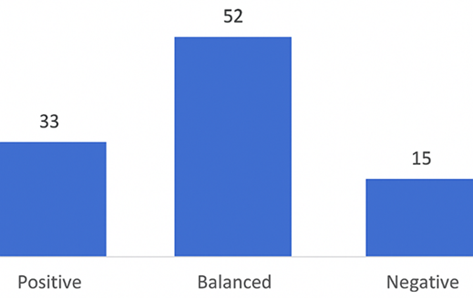
The results of the field analysis showed that the overall rate of respondents' answers regarding the dimension of e-commerce and service quality was positive, which confirms the importance of e-commerce and its impact on service quality in the surveyed banks
The results of the analysis showed that the reasons for the delay in the use of the internet by many banks in the sample of the research are due to: lack of experience in the field of information technology, the unwillingness of many to change and deal with modern technologies due to ignorance of the English language, as well as the fear of using the internet and the unwillingness to deal with the intangible reality (non-material)
The results of the analysis showed that there is a significant correlation between e-commerce and the variables of banking service quality, which indicates that e-commerce is related to banking service quality in the surveyed banks, in terms of reliability, responsiveness, trust (guarantee), empathy (mechanisms of dealing) and tangibles
There is a significant impact of e-commerce on the dimensions of banking service quality, which confirms, in a clear way, the impact of e-commerce on banking service quality in the surveyed banks, in addition to the existence of random variables that cannot be controlled or that are not included in the regression model in the first place
Second Recommendation:
In light of the conclusions reached, the researcher can provide a number of recommendations for the development of banking activity, as follows:
It is essential to keep pace with the latest developments in e-commerce and reach customers through the latest electronic means, as this has a direct impact on the quality of banking services
Bank management should adopt quality of service as a strategy for competition and excellence and should not rely on the current situation of customer satisfaction and should provide high capabilities and very advanced technologies with a wider spread globally, which increases customer satisfaction and loyalty
Expand the range of ATMs by banks that still have a modest share of the total number of devices and to issue credit cards and smart cards, which helps them to spread in terms of providing service and achieving quality and excellence
Banks should work to create an atmosphere of trust and security in their relationships with customers and take into account customer suggestions and complaints about the service provided, as these suggestions constitute feedback that banks use to update and develop their services
Preparing programs to develop employees' skills and expertise to provide the best possible services to customers
The importance of continuing comprehensive future studies to diagnose and address the obstacles to the use of e-commerce in banks at the level of Iraq, especially with regard to the position of bank customers on the adoption of e-commerce
REFERENCES
Haji, Anmar Amin. "The impact of electronic commerce and some economic variables on the flow of foreign capital to a selected sample of Asian countries by adopting the industrial classification." Taniyat Al-Rafidain, vol. 27, no. 77, 2015, College of Administration and Economics - University of Mosul.
Al-Azzawi, et al. "Applying the qualitative characteristics of e-commerce within the framework of total quality management (a theoretical analytical study)." Al-Rafidain Development, vol. 26, no. 47, 2014, College of Administration and Economics - University of Mosul.
Al-Ziwani, Awatif Younis Ismail Amin. "The implications of e-commerce on the marketing performance of service organizations." Doctoral thesis, 2014.
Al-Salmi, Alaa Abdel Razzaq Muhammad. Electronic Management Networks: Basics and types of electronic networks, security and control of networks, electronic commerce and remote work. 1st ed., Dar Wael for Publishing and Distribution, Jordan-Amman, 2015.
Abdullah, Adel Muhammad. "The reality of electronic commerce for marketing electronic computers in the city of Mosul, as applied to a sample of computer dealers." Al-Rafidain Development, vol. 30, no. 91, 2018, College of Administration and Economics, University of Mosul.
Arafa, Sayed Salem. Retail Market Management. 1st Edn., Al-Raya Publishing and Distribution House, Jordan-Amman, 2020.
Al-Sumaidaie, Mahmoud Jassim and Youssef, Rudaina Othman. Banking Marketing - A Strategic-Quantitative-Analytical Introduction. 1st Edn., Dar Al-Manhaj for Publishing and Distribution, Amman, Jordan, 2015.
Allam, Rashid. "Obstacles to the development of electronic commerce in the Arab world: A case study of Algeria." Master’s thesis, United Kingdom-Britain, 2020.
Al-Khatib, Fahd and Al-Husseini, Falah. "E-commerce and its impact on the strategic position of companies: An applied study on a sample of Jordanian industrial companies." Derasat Journal, no. 1, University of Jordan, 2012.
Tartar, Ahmed and Halimi, Sarah. "Total quality management in the services sector: Quality of banking services as a mechanism for activating the bank’s competitive advantage." International Forum, Mentouri University/Constantine/Faculty of Economic, Commercial and Management Sciences, 2020.
Al-Hamidi, Najm Abdullah, et al.Management Information Systems: A contemporary introduction. 1st ed., Wael Publishing House, Amman, 2015.
Khalaf, Falih Hassan. Money and Banks. 1st ed., Jedar International Book Publishing and Distribution, Jordan-Amman, 2016.
Al-Tayeb, Abdel Moneim Muhammad. "The impact of liberalizing trade in banking services on Islamic banks." Journal of the Union of Arab Banks, no. 31, Higher Institute for Banking and Financial Studies, Lebanon, 2016.
Al-Shalhoub, Ali Muhammad. Money Affairs and Banking. 1st Ed., Shuaa Publishing and Sciences, Syria-Aleppo, 2017.
Shasha’a, Hatem Ghazi. "Measuring the quality of banking services provided by the Bank of Palestine Limited in Palestine from the customers’ point of view." Master’s thesis, Islamic University - Faculty of Commerce, 2014.
Owusu, Khairy Ali and Boutros Louay Latif. "Evaluating the quality level of banking services from the customers’ point of view." Tanmiyah al-Rafidain, vol. 30, no. 89, 2018.
Farhat, Khawla. "The impact of electronic commerce on improving the quality of banking service." Master’s thesis, Lakhdar University-Batna, 2018.
Al-Ajarmah, Tayseer. Banking Marketing. 5th Ed., Dar Al-Hamid for Publishing and Distribution, Jordan-Amman, 2015.
Al-Barwari, et al. Quality Management is an Introduction to Excellence and Leadership: Concepts, foundations and applications. 1st Ed., Al-Warraq Publishing and Distribution Foundation, Amman, 2021.
Al-Raqqad, Saliha. "Assessing service quality from the customer’s point of view." Master’s thesis, Hajj Lakhdar University - Batna, 2018.
Al-Dewa Ji, Abu Saeed Ahmed. "Quality in banking service according to electronic commerce considerations." Al-Rafidain Development, vol. 280, no. 81, 2016.
Recommended Articles
Research Article
The Effect of Knowledge Capital in Enhancing Cognitive Performance: The Mediating Role of Organizational Learning Requirements
Download PDF
Research Article
Country of Origin and Foreign Branding on Perceived Quality of Local Products in Indonesia: The Moderating Role of Consumer Ethnocentrism
Download PDF
Research Article
The Effect of Employer Attractiveness and Compensation on Job Persuit Intention to Fmcg Companies in Indonesia: Coporate Reputation as an Intervening Variable
Download PDF
Research Article
The Effect of Beauty Vlogger on Purchase Decision for Local Skincare Products in Indonesia: Brand Image as a Mediating Variable
Download PDF
PO Box 101, Nakuru
Kenya.
Email: office@iarconsortium.org
Editorial Office:
J.L Bhavan, Near Radison Blu Hotel,
Jalukbari, Guwahati-India
Thea Azeez Alsafo, R. (2025). The Effect of e-Commerce in Quality of Banking Service: A Survey Study for of a Sample of Banks in Misan Government. Scientific Research Journal of Economics and Business Management, 5(1), 1-9.
MLA
Thea Azeez Alsafo, Reyath. "The Effect of e-Commerce in Quality of Banking Service: A Survey Study for of a Sample of Banks in Misan Government." Scientific Research Journal of Economics and Business Management 5.1 (2025): 1-9.
Chicago
Thea Azeez Alsafo, Reyath. "The Effect of e-Commerce in Quality of Banking Service: A Survey Study for of a Sample of Banks in Misan Government." Scientific Research Journal of Economics and Business Management 5, no. 1 (2025): 1-9.
Harvard
Thea Azeez Alsafo, R. (2025) 'The Effect of e-Commerce in Quality of Banking Service: A Survey Study for of a Sample of Banks in Misan Government' Scientific Research Journal of Economics and Business Management 5(1), pp. 1-9.
Vancouver
Thea Azeez Alsafo R. The Effect of e-Commerce in Quality of Banking Service: A Survey Study for of a Sample of Banks in Misan Government. Scientific Research Journal of Economics and Business Management. 2025 Jan;5(1):1-9.


 Download PDF
 Download XML