The Employment of Strategic Leadership in Achieving Strategic Success through the Mediating Role of Strategic Behavior: An Exploratory Analytical Study of the Perspectives of a Sample of Instructors in Iraqi Technical Universities
Munaf abdulkadhim Mohammed
1
,
Abdulridha Nasser Mohsin
1
1
Technical College of Management, Sothern Technical University, Basra, Iraq
The current study aimed to investigate the mediating role of strategic behavior between strategic leadership and strategic success in Iraqi technical universities. This was prompted by a problem identified through several questions addressing the extent of the impact relationship between the variables in the field. The strategic leadership variable was measured through four dimensions: Entrepreneurial leadership, entrepreneurial thinking, entrepreneurial culture and strategic resource management. The strategic behavior variable was assessed through four dimensions: explorers, defenders, analyzers and responders. Meanwhile, the strategic success variable was evaluated based on three dimensions: survival, adaptability and growth. The study sample consisted of 253 faculty members from various administrative levels. A descriptive analytical approach was primarily adopted for presenting, analyzing and interpreting the study information. A questionnaire was used as the main tool for data collection and for statistical analysis, statistical programs (SPSS, SMART PLS 3) were employed. The study reached several conclusions, the most important being that the universities in the study sample are attentive to the dimensions of the study variables, indicating a correlation between strategic leadership and strategic behavior. Furthermore, there is a direct impact relationship between the strategic leadership variable and the strategic success variable. The current study culminated in a set of recommendations, the most significant being the necessity for the researched university administrations to clearly and accurately formulate the dimensions and strategies of strategic behavior, in addition to urging these administrations to prioritize strategic leadership due to its significant role in enhancing strategic success.
Keywords
Strategic Leadership
Strategic Behavior
Strategic Success
INTRODUCTION
In recent years, there has been tremendous development in management thinking in general and strategic business thinking in particular, leading to a significant accumulation of knowledge and practical experience within organizations. Academic organizations play a prominent and important role in the global economy due to their extensive influence on public life. The ongoing developments and changes have affected the performance of many technical educational organizations. Strategic entrepreneurship has become a significant contemporary issue, garnering increased attention across all organizations, particularly technical universities. In the face of intense competition and rising risks among technical universities, many have recognized that the only path to achieving a competitive advantage in a changing work environment is through strategic entrepreneurship and adopting a deep strategic vision for the future. This vision aims to build a distinctive presence among competitors. Consequently, technical universities strive to identify what sets them apart from their competitors, especially under conditions of fierce competition, by proposing various alternatives to find the appropriate one that leads to achieving excellence and strategic success. This research will focus on discussing how to employ strategic entrepreneurship to achieve strategic success through the mediating role of strategic behavior, ultimately leading to some conclusions within the framework of knowledge movement to establish a strategic entrepreneurial theory.
REVIEW OF THE LITERATURE
Strategic Entrepreneurship
Strategic entrepreneurship is a new concept that originates from strategic management and entrepreneurship [1]. It refers to the integration of business (the behavior of seeking opportunities) and strategic management (the behavior of seeking advantages) [2]. Khan et al. [3] describes strategic entrepreneurship as a scientific theory within the framework of strategic management and entrepreneurship. In this context, Hitt et al. [4] clarified that strategic entrepreneurship is concerned with the simultaneous presentation of behaviors that seek opportunities and advantages, ultimately leading to greater value for individuals, organizations and society. Strategic Entrepreneurship (SE) can be considered an extension of the definition of formulating entrepreneurial strategy, integrating various strategies with the external environment.
Khan et al. [3] noted that Strategic Entrepreneurship (SE) is based on two fundamental principles: strategy formulation and implementation, which require entrepreneurial ideas such as alertness, creativity, governance and the search for opportunities (the main focus of entrepreneurship) as well as the search for advantages (the main focus of strategic management). Strategic Entrepreneurship (SE) promotes a dynamic approach that enhances sustainable business growth by integrating innovative and improved strategies.
Mazzei [5] describes strategic entrepreneurship as a conceptual field where decision-makers in organizations systematically explore creative possibilities within multifaceted dynamics. Strategic Entrepreneurship (SE) is seen as a cyclical process involving strategic entrepreneurial activities that begin with an entrepreneurial mindset to identify new opportunities. This process continues towards strategic behavior, leading the organization into the entrepreneurial movement through the adoption of creativity and innovation development [6]. Amadi and Edenkwo [7] define strategic entrepreneurship from an academic perspective as the analysis of how to explore, evaluate and exploit opportunities for creating future goods and services.
Thus, the integration of entrepreneurship with an understanding of strategic management leads us to strategic entrepreneurship. This concept encompasses the simultaneous search for opportunities (entrepreneurial orientation) and the behaviors aimed at seeking advantages (strategic orientation), resulting in high performance. Therefore, strategic entrepreneurship represents an activity with a strategic perspective. Alayoubi et al. [8] clarified that strategic entrepreneurship facilitates organizational activities by providing and employing optimal capabilities within the strategic plan, enabling rapid responses to various environmental changes. This contributes to enhancing the organization's ability to seize opportunities and mitigate future risks.
Strategic Behavior
Relationships among individuals are foundational to human life, as most human behavior occurs within the context of interactions with others. Psychologists share this view through the development of relational science, believing that the context of human relationships significantly influences individual behavior and development throughout life [9]. Thus, human behavior is defined as the manner in which an individual interacts with others, society or even objects that require specific handling [10]. Riedl et al. [11] note that strategic behavior enables organizations to gain additional opportunities to achieve their goals and understand the interconnections between strategic behaviors and the capabilities of competitors.
Hussein and Hafedh [12] emphasize that strategic behavior represents the responses of leaders to changes and developments in their environment, which inform the strategic decisions impacting organizations. Strategic behavior is a crucial topic in both strategic management and organizational behavior, focusing on the nature of behaviors adopted by top management in dealing with human resources within and outside the organization. These behaviors drive various strategic decisions related to future challenges, ensuring the organization's sustainability and operational continuity. The impact of strategic behavior extends to all stakeholders interacting with the organization, promoting alignment of interests and enhancing collaborative efforts to adopt desired strategic orientations, thus bolstering teamwork within the organization. Furthermore, strategic behavior positions managers at the forefront of new scientific knowledge, resulting from strategic management processes that occur upon adopting behavioral strategies. The survival and longevity of the organization increasingly depend on new knowledge and advanced technology. Therefore, selecting appropriate strategic behaviors will subsequently affect the organization’s outcomes [13]. Interest in the concept of strategic behavior has grown over the past five decades, with numerous researchers and writers in the field of strategy publishing scientific articles that highlight the importance of strategic behavior in organizations [14].
Thus, Svobodová and Rajchlová [15] argue that managers must be capable of identifying their customers and selecting strategic behaviors towards them to enhance their loyalty to the organization, especially in the most competitive sectors.
Strategic Success
Business organizations face significant challenges due to increasing competition and rapid changes in their operating environment. Consequently, many organizations have resorted to utilizing various modern management methodologies and philosophies to ensure their survival and success [16]. The concept of strategic success has gained considerable importance in strategic thought studies, as it relies on the extent to which an organization invests its actual capabilities in learning, transferring new knowledge and implementing it. Waldron and Antonio [17] indicated that strategic success is the organization’s ability to create added value in its operations in a way that enhances the value for stakeholders who influence and are influenced by the achievement of the organization’s goals.
David [18] affirmed that the success of any organization depends on its ability to formulate a strategy that aids in achieving long-term objectives, with this strategy needing to align with the organization's vision and mission to ensure effective implementation. Rainey [19] explained that strategic success represents the company's vision, strategic orientations and long-term goals. Gweh stressed that strategic success must be effectively implemented to promote growth and stability within the organization.
An organization can achieve strategic success by placing significant importance on market position, quality, positive change, social responsibility and both human and financial resources [20]. Orlov et al. [21] noted that strategic success depends on the organization’s ability to build its organizational capabilities and establish vital options that allow for high coordination in the efficient and effective use of available resources, contributing to outstanding results and ensuring superiority over competitors. Mahmoud [22] indicated that strategic success is reflected in the organization's ability to survive, adapt and grow in light of the objectives it seeks to achieve. The secret to strategic success lies in effective adaptability between the organization and its environment.
In summary, strategic success can be viewed as successful managerial leadership that aims to achieve the organization's goals while responding to the dynamics of the business environment. It reflects the organization's ability to achieve its strategic objectives by keeping pace with environmental developments and changes. Dawood posited that overall strategic success lies in the following aspects:
Success in formulating and implementing a strategy that significantly contributes to achieving the organization's goals
Achieving long-term success requires a holistic perspective that focuses on critical success factors or internal organizational factors, including vision and the development of intellectual capital and personnel. This ensures that the success of peer organizations is translated to the markets the organization engages with, seizing new opportunities and demonstrating the organization's ability to break boundaries and undertake high-achieving work, along with considering external factors
METHODOLOGY
Research Problem
The research problem can be clarified through three aspects. First, there is the intellectual issue of interpreting the relationship between strategic leadership and strategic success, along with the mediating role of strategic behavior in that relationship. The ongoing intellectual debate regarding the current research variables has prompted researchers to delve into constructing a theoretical framework for these variables. The second aspect stems from the researchers' observations, through field visits and unstructured interviews, indicating a weak interest in the research variables within the studied sample. This suggests that strategic behavior, as a mediating variable between strategic leadership and strategic success, has not been adequately addressed. Moreover, the limited adoption of these topics in Iraqi institutions, including technical universities, has made it essential not to miss the opportunity to benefit from these insights. Therefore, this research aims to clarify the mediating role of strategic behavior in the relationship between strategic leadership and strategic success, based on the perspectives of the sample from four technical universities.
The final aspect focuses on transforming the researchers' formed perceptions into questions. Based on the above, the research problem is delineated through the following set of questions:
Does strategic behavior, in its combined dimensions, act as a mediating variable in the relationship between strategic leadership, in its combined dimensions and strategic success, in its combined dimensions, in the studied technical universities?
To what extent does strategic leadership, in its combined dimensions, influence the studied technical universities?
How significantly does strategic behavior, in its combined dimensions, affect the sample in the technical universities?
What is the level of achievement of strategic success, in its combined dimensions, in the studied technical universities?
What is the level and direction of the relationships of influence and correlation among the research variables?
Importance of the Research
The importance of this research lies in three areas. The first area pertains to the intellectual and philosophical significance of the three research variables. Researchers have engaged with these variables in study and analysis and this ongoing interest encourages further exploration by others. The second area relates to the application environment, which is crucial for all institutions (both public and private) employing qualified personnel in skills, intellect and psychology. This necessitates providing a work environment free from negative influences, positively impacting the quality of outcomes.
The third area concerns the potential contribution of this research to enriching knowledge on topics that are relatively lacking in the Arabic and specifically Iraqi literature, such as strategic leadership, strategic behavior and strategic success. This enrichment extends beyond the intellectual aspects of the variables to explore their potential interrelations through logical analysis and practical testing of various hypotheses. Additionally, this research builds on previous studies by highlighting the barriers governing these variables. It is hoped that the findings will benefit educational institutions in our country generally and the entities involved in the research sample specifically, by creating a comprehensive framework to identify strengths and weaknesses in strategic leadership and strategic behavior, as well as the importance of qualifications for strategic success, ultimately contributing to improvement efforts.
Hypothetical Framework of the Research
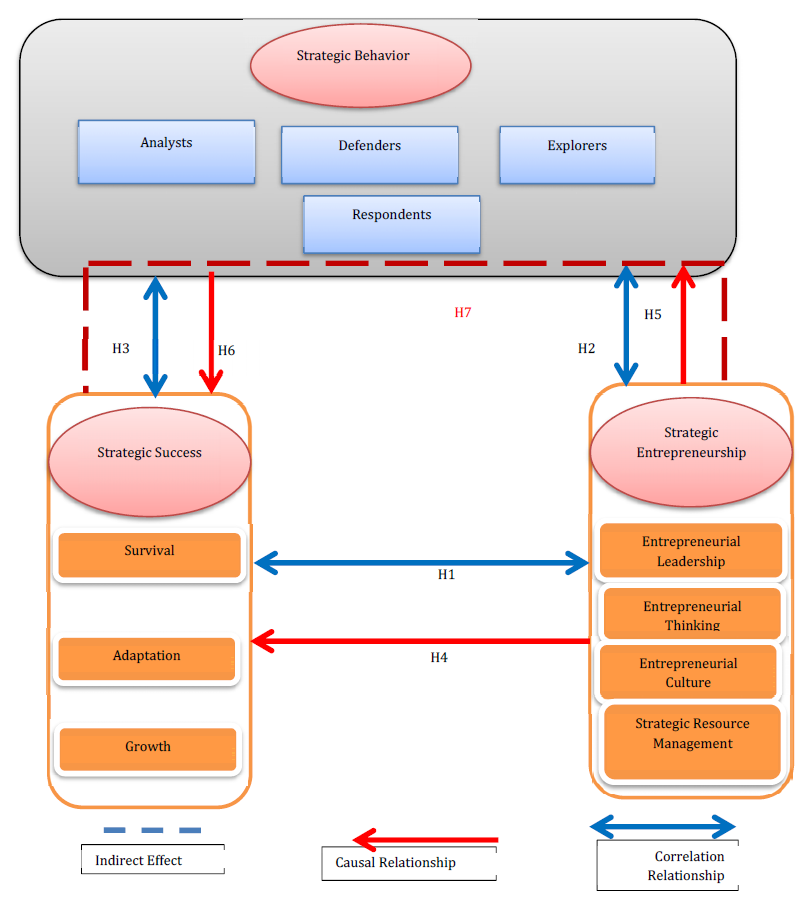
Figure 1 illustrates the research framework, highlighting the set of variables constituting the current study. It provides an initial overview of the correlation and influence relationships among the current research variables. This framework aligns with the research problem, its questions and the overall design. The research hypotheses have been formulated based on a confirmatory hypothesis approach, aiming to investigate and validate these relationships quantitatively.
Figure 1: Hypothetical Diagram
Hypothetical Diagram
Research Hypotheses
There is a significant correlation between strategic entrepreneurship and strategic success
There is a significant correlation between strategic entrepreneurship and strategic behavior
There is a significant correlation between strategic behavior and strategic success
There is a statistically significant effect between the strategic entrepreneurship variable and the strategic success variable
There is a statistically significant effect between the dimensions of strategic entrepreneurship and strategic behavior
There is a statistically significant effect between the dimensions of strategic behavior and strategic success
Strategic behavior mediates the relationship between strategic entrepreneurship and strategic success
Research Boundaries
Spatial Boundaries: The four technical universities (Southern Technical University, Al-Furat Al-Awsat Technical University, Middle Technical University and Northern Technical University).
Human Boundaries
The human boundaries of this research are represented by the faculty members at Iraqi technical universities, totaling 253 faculty members.
Scientific Boundaries
The researcher relied on (Mansour et al.) to define and measure strategic entrepreneurship and its dimensions. For measuring strategic behavior and its dimensions, Martins et al. was referenced. Finally, Katz and Creen was used to measure the strategic success variable and its dimensions.
Temporal Boundaries
In line with the themes of the current research, the temporal boundaries included three time periods: The first period involved preliminary surveys of the universities in the research sample, which spanned from 02/01/2024 to 03/01/2024. The second period, related to the theoretical framework and field research application, extended from 04/15/2024 to 06/15/2024. The final period focused on statistical analysis and research results, spanning from 06/20/2024 to 07/25/2024.
Statistical Results
Statistical Programs Used: The SPSS program was utilized to describe the nature of the variables by calculating the mean, standard deviation, frequencies and coefficient of variation. Additionally, PLS Smart 3 was used, a specialized program for path analysis based on partial least squares method, with a significance level of 5%.
Description of the Study Sample
We observe from the following Table 1:
The percentage of males in the sample was higher than that of females, with males constituting 67.6% while females accounted for 32.41%
Age: The highest age group in the study sample was the (30-40) age range, comprising 41.1%, followed by the (40-50) age group at 25%. The lowest percentage was for those aged 60 and above, at 2%
Position: The largest percentage in the study sample were faculty members, making up 76%, followed by department heads at 19.8%
Academic Title: The highest percentage was among those with the title of Assistant Lecturer, at 41.9%, followed by Associate Professors at 36.8%. The lowest percentage was for Professors, at 5.9%
Degree: The largest percentage of holders were Master's degree holders, accounting for 53%
Years of Service: The highest percentage among the sample members were those with 5-10 years of service, at 23.3%, followed by those with 25 years or more, at 19%
Table 1: The Distribution of the Sample Participants Based on General Information
Variable
Frequency
Percentage
Gender
Male
171
67.6
Female
82
32.4
Age
20-30
6
2.4
30-40
104
41.1
40-50
65
25.7
50-60
73
28.9
60 and above
5
2.0
Position or Job Title
Faculty Member
193
76.3
Department Head
50
19.8
Vice President
5
2.0
Dean or Assistant Dean
5
2.0
Academic Title
Professor
15
5.9
Associate Professor
93
36.8
Lecturer
39
15.4
Assistant Lecturer
106
41.9
Degree
PhD
118
46.6
Master's Degree
135
53.4
Years of Service
5-10
76
30.0
11-15
59
23.3
16-20
35
13.8
21-25
35
13.8
25 and above
48
19.0
Total
253
100.0
Source: Prepared by the researcher using SPSS outputs
Description of the Study Sample Responses
Table 2 presents the average responses of the sample participants to the questionnaire items.
Table 2: Presents the Average Responses of the Sample Participants to the Questionnaire Items
Code
Item
Mean
Standard Deviation
Response Level
Variable: Strategic Entrepreneurship
X1
The university has a visionary leadership for both the organization and its staff.
4.04
1.08
Agree
X2
University leaders have the ability to make and implement strategic decisions.
3.97
1.07
Agree
X3
The leadership can address workplace issues effectively.
3.96
1.11
Agree
X4
University leaders strive to find innovative solutions to problems.
3.65
1.17
Agree
X5
There are indicators that reflect the satisfaction of stakeholders' desires and aspirations.
3.57
1.06
Agree
X6
Necessary metrics are available to assess the university's impact on the community and environment.
3.70
1.23
Agree
X7
The university seeks to achieve strategic entrepreneurship by providing opportunities for staff learning.
3.67
1.03
Agree
X8
Previous strategic decisions that proved effective are utilized in current decision-making.
3.54
1.11
Agree
X9
The university prioritizes understanding the components of organizational culture and the factors that influence it.
3.66
1.13
Agree
X10
Innovation is a fundamental part of the university's strategies.
3.59
1.17
Agree
X11
The university encourages initiative and risk-taking as essential practices.
3.66
1.19
Agree
X12
Employees are encouraged to share and express their ideas.
3.71
1.22
Agree
X13
The university aims for optimal resource investment to achieve strategic entrepreneurship.
3.80
1.12
Agree
X14
Efforts are made to minimize costs as much as possible.
3.93
1.07
Agree
X15
Processes and operating methods are monitored to ensure high performance levels.
3.72
1.11
Agree
X16
Continuous development of university operations is ensured to achieve strategic entrepreneurship.
3.66
1.17
Agree
Variable: Strategic Behavior
Z1
The university has the ability to identify opportunities that enhance its services.
3.79
1.02
Agree
Z2
The university continuously monitors competitors in the local and regional environment.
3.66
1.18
Agree
Z3
The university seeks to develop and improve its services.
3.79
1.15
Agree
Z4
Research and development are relied upon to face competition.
3.65
1.21
Agree
Z5
The university has the capacity to maintain its position in the business environment.
3.83
1.10
Agree
Z6
The university strives to consistently develop its service features, such as adopting electronic automation.
3.94
1.08
Agree
Z7
The university is focused on addressing risks that could hinder its current operations.
3.75
1.09
Agree
Z8
The university works to improve the efficiency of its existing processes.
4.00
0.99
Agree
Z9
University leaders possess high analytical capabilities.
3.85
1.01
Agree
Z10
University leadership considers the impact of competitors in the business environment.
3.72
1.09
Agree
Z11
University leadership is committed to maintaining the success of its current services.
4.01
1.10
Agree
Z12
Leadership analyzes decisions before making them to avoid risks.
3.70
1.06
Agree
Z13
University leaders are capable of responding to changes and circumstances.
3.77
1.15
Agree
Z14
Leadership responds to risks arising from environmental changes.
3.75
1.06
Agree
Z15
The university confronts its competitors based on ongoing adjustments.
3.78
1.09
Agree
Z16
University leadership seeks to understand the causes of environmental changes.
3.66
1.15
Agree
Variable: Strategic Success
Y1
The university's ability to remain competitive is a success in itself.
4.14
1.02
Agree
Y2
The university seeks to secure the necessary resources to continue providing the best services.
4.01
1.05
Agree
Y3
University leadership is committed to satisfying employees by providing a suitable work environment.
3.75
1.22
Agree
Y4
There is clarity among staff regarding the strategic goals the university aims to achieve in order to stay competitive.
3.82
1.06
Agree
Y5
University leadership aims to utilize modern technological techniques that enable adaptation to the environment.
4.00
1.07
Agree
Y6
The university is focused on adapting to sudden changes in the surrounding environment.
3.88
1.21
Agree
Y7
The university strives to adapt to environmental changes through modifications in structures and administrative procedures.
3.92
1.12
Agree
Y8
Employees adapt flexibly to changes in both the internal and external environments of the university.
3.68
1.15
Agree
Y9
Growth is a motivating factor for seizing opportunities.
3.94
1.11
Agree
Y10
The university aims to produce technically skilled graduates to meet the increasing demands of the job market.
3.96
1.18
Agree
Y11
The university's growth injects vitality and energy through the challenges it faces and the returns it generates.
3.81
1.05
Agree
Y12
Growth is one of the primary objectives the university seeks to achieve.
4.03
1.07
Agree
Source: Prepared by the researcher using SPSS outputs
Descriptive Analysis of the Main Study Variables
Table 3 illustrates the descriptive analysis of the main study variables.
Table 3: Illustrates the Descriptive Analysis of the Main Study Variables
Main Variables
Mean
Std. Deviation
C.V
Strategic Entrepreneurship
3.74
0.96
25.60
Strategic Behavior
3.79
0.96
25.40
Strategic Success
3.91
0.97
24.87
Source: Prepared by the researcher using SPSS outputs
Normality Test
A normality test is conducted to determine whether the data follows a normal distribution, which is necessary for performing specific statistical tests for the research hypotheses (Table 4).
Table 4: Presents the Results of the Normality Test for the Study Data
Parameter
Kolmogorov-Smirnova
Shapiro-Wilk
Statistic
df
Sig.
Statistic
df
Sig.
Strategic Entrepreneurship
0.103
253
0.000
0.900
253
0.000
Strategic Behavior
0.141
253
0.000
0.893
253
0.000
Strategic Success
0.183
253
0.000
0.845
253
0.000
Source: Prepared by the researcher using SPSS outputs
If the data is not normally distributed, alternative tests will be conducted to achieve the study's hypothesis. The null hypothesis for the normality test is:
Null Hypothesis: The data is normally distributed.
Alternative Hypothesis: The data is not normally distributed
SEM-PLS Methodology for Evaluating the Quality of the Research Model
This evaluation determines whether the model possesses better discriminant validity compared to other possible constructs and it involves two phases:
First: Assessing and testing the nature of the correlational relationships between the research variables and their corresponding indicators, referred to as the measurement assessment phase
Second: Evaluating the relationship and the goodness of fit of the model among the latent variables in the research model, known as the structural model assessment phase. The results of the SEM-PLS methodology are outlined as follows:
Measurement Model Assessment
The aim of this assessment is to ensure the validity and reliability of the variables and their indicators. Table 5 presents the criteria for evaluating the measurement model's reliability and convergent validity.
Table 5: The Criteria for Evaluating the Measurement Model's Reliability and Convergent Validity
Parameter
Variables
External Loadings: Should be greater than 0.7
Variance Extracted (AVE): Should be greater than 0.5
Cronbach's Alpha: The reliability coefficient should be greater than 0.7
Entrepreneurial Leadership
X1
0.928
0.856
0.944
X2
0.944
X3
0.923
X4
0.904
Entrepreneurial Thinking
X5
0.899
0.86
0.946
X6
0.876
X7
0.913
X8
0.811
Entrepreneurial Culture
X9
0.913
0.839
0.936
X10
0.926
X11
0.952
X12
0.916
Strategic Resource Management
X13
0.922
0.767
0.899
X14
0.874
X15
0.944
X16
0.912
Explorers
Z1
0.841
0.859
0.945
Z2
0.933
Z3
0.92
Z4
0.87
Defenders
Z5
0.92
0.834
0.934
Z6
0.949
Z7
0.932
Z8
0.908
Analysts
Z9
0.897
0.809
0.921
Z10
0.92
Z11
0.926
Z12
0.92
Respondents
Z13
0.908
0.862
0.947
Z14
0.868
Z15
0.904
Z16
0.917
Survival
Y1
0.953
0.836
0.935
Y2
0.919
Y3
0.922
Y4
0.92
Adaptation
Y5
0.927
0.856
0.944
Y6
0.92
Y7
0.896
Y8
0.915
Growth
Y9
0.925
0.795
0.914
Y10
0.946
Y11
0.945
Y12
0.883
Source: Prepared by the researcher using SMART PLS outputs
To assess convergent validity, we note that the external loadings should be greater than 0.7 for each indicator. If this condition is not met, indicators with external loadings less than 0.7 are removed and the model is reevaluated to achieve the best AVE value, aiming to ensure the items are closely related to each other.
From the table, we observe that the external loadings for all indicators and variables in the study are above 0.7, indicating that the model has high levels of convergent validity. Additionally, the AVE values for the latent variables, which should exceed 0.5, range from 0.76 to 0.89. This suggests that the variables (strategic entrepreneurship, strategic behavior and strategic success) and their indicators exhibit convergent validity. Furthermore, the Cronbach's Alpha values for all variables are above 0.7, indicating the model's reliability.
Discriminant Validity (Discriminatory Validity)
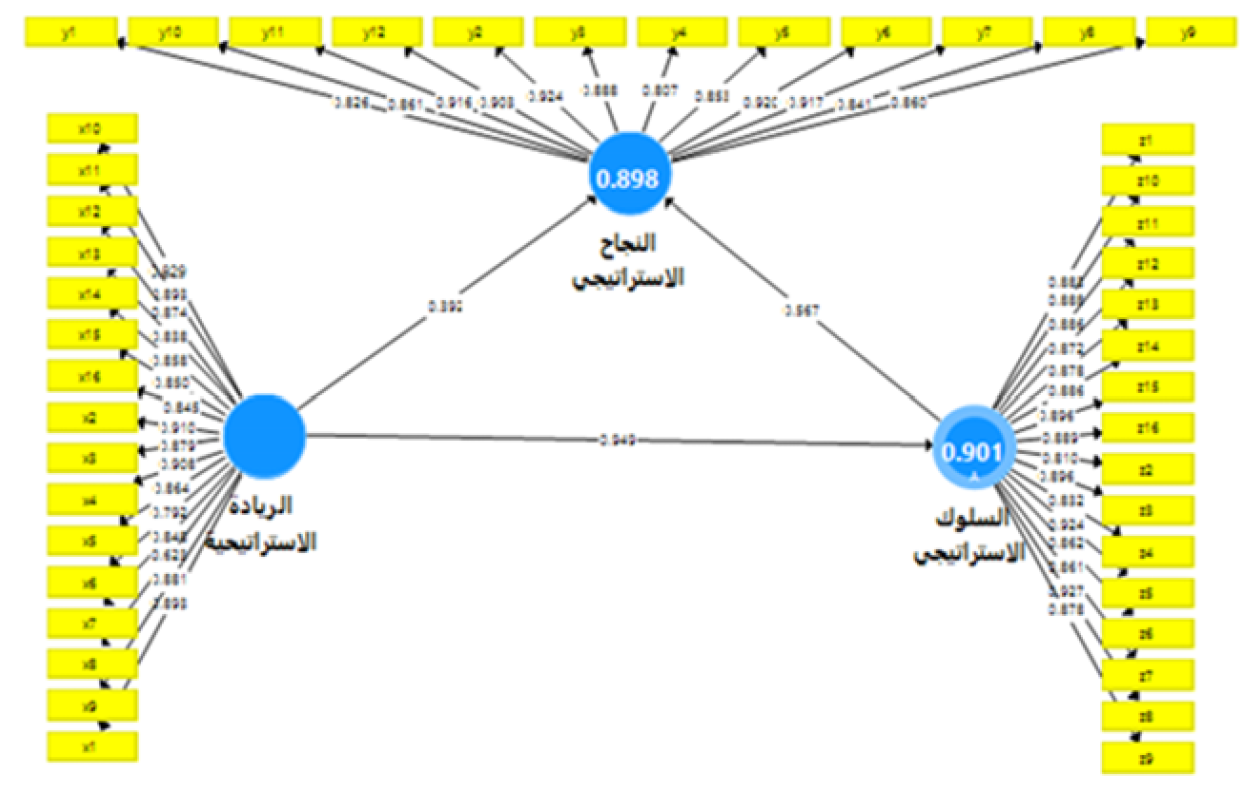
This criterion assesses whether the indicators measuring a specific latent variable do not measure another latent variable. Using the Fornell-Larcker criterion to calculate correlations, the results are shown in the following Table 6 and 7 (Figure 2).
Source: Prepared by the researcher using SMART PLS outputs
Table 6: The Correlation Coefficients Between the Study Variables, Indicating their Discriminant Validity
Parameter
Entrepreneurial Leadership
Entrepreneurial Thinking
Entrepreneurial Culture
Strategic Resource Management
Explorers
Defenders
Analysts
Respondents
Survival
Adaptation
Growth
Entrepreneurial Leadership
0.89
Entrepreneurial Thinking
0.83
0.87
Entrepreneurial Culture
0.88
0.87
0.89
Strategic Resource Management
0.87
0.85
0.84
0.88
Explorers
0.89
0.84
0.78
0.78
0.83
Defenders
0.87
0.80
0.81
0.76
0.84
0.81
Analysts
0.87
0.83
0.85
0.76
0.82
0.82
0.80
Respondents
0.81
0.87
0.86
0.87
0.84
0.88
0.84
0.83
Survival
0.85
0.81
0.87
0.79
0.79
0.86
0.89
0.89
0.81
Adaptation
0.88
0.88
0.87
0.86
0.84
0.88
0.87
0.80
0.81
0.83
Growth
0.89
0.88
0.79
0.81
0.84
0.70
0.88
0.89
0.87
0.81
0.89
Source: Prepared by the Researcher using SMART PLS Outputs
Table 7: The Discriminant Validity (Loading Coefficients) for Cross-Loading
Parameter
Strategic Entrepreneurship
Strategic Behavior
Strategic Success
Strategic Entrepreneurship
Entrepreneurial Leadership
x1
0.893
0.84
0.868
x2
0.91
0.832
0.836
x3
0.879
0.811
0.819
x4
0.908
0.846
0.861
Entrepreneurial Thinking
x5
0.864
0.835
0.851
x6
0.792
0.737
0.711
x7
0.858
0.84
0.813
x8
0.623
0.577
0.571
Entrepreneurial Culture
x9
0.881
0.814
0.816
x10
0.829
0.749
0.748
x11
0.893
0.808
0.811
x12
0.874
0.773
0.81
Strategic Resource Management
x13
0.859
0.767
0.835
x14
0.858
0.844
0.84
x15
0.891
0.789
0.855
x16
0.845
0.77
0.833
Strategic Behavior
Explorers
z1
0.814
0.851
0.813
z2
0.739
0.844
0.81
z3
0.881
0.899
0.866
z4
0.811
0.864
0.832
Defenders
z5
0.887
0.894
0.824
z6
0.858
0.885
0.862
z7
0.868
0.896
0.861
z8
0.848
0.899
0.827
Analysts
z9
0.785
0.893
0.878
z10
0.828
0.896
0.888
z11
0.814
0.823
0.816
z12
0.795
0.919
0.872
Respondents
z13
0.856
0.899
0.878
z14
0.857
0.884
0.836
z15
0.85
0.878
0.832
z16
0.85
0.895
0.829
Strategic Success
Survival
y1
0.786
0.826
0.883
y2
0.885
0.924
0.952
y3
0.855
0.888
0.866
y4
0.748
0.807
0.88
Adaptation
y5
0.808
0.853
0.893
y6
0.825
0.92
0.948
y7
0.825
0.917
0.974
y8
0.819
0.841
0.883
Growth
y9
0.759
0.86
0.875
y10
0.774
0.861
0.896
y11
0.839
0.916
0.935
y12
0.86
0.903
0.936
Source: Prepared by the researcher using SMART PLS outputs
Structural Model
To test the research hypotheses, SMART PLS 3 and SPSS were used for path analysis to verify that strategic behavior serves as a mediating variable between the relationship of strategic entrepreneurship and strategic success (Table 8).
Table 8: The Study Hypotheses and Measures the Effects of Direct and Indirect Relationships
Hypotheses/Type of Effect
Relationship
Beta Coefficient
Sample Mean
Standard Deviation
t-test
p-value
Decision
H1/Direct Effect
Strategic Entrepreneurship → Strategic Behavior
0.943
3.73
0.957
39.437
0
Accept H1
H2/Direct Effect
Strategic Entrepreneurship → Strategic Success
0.392
3.789
0.962
46.66
0
Accept h2
H3/Direct Effect
Strategic Behavior → Strategic Success
0.567
3.911
0.972
42.85
0
Accept h3
H4/Direct Effect
Strategic Entrepreneurship → Strategic Behavior through Strategic Success
0.538
3.48
0.925
18.365
0
Accept h4
Source: Prepared by the researcher using SMART PLS outputs
It is noteworthy that there are three types of mediation between variables: complete mediation, complementary partial mediation and competitive partial mediation. Complete mediation occurs when both direct and indirect effects are not statistically significant, meaning they have no impact. Complementary partial mediation occurs when both the direct and indirect effects are statistically significant. Competitive mediation occurs when the direct effect is significant while the indirect effect is not. Consequently, the type of mediation between strategic entrepreneurship and strategic success is complementary partial mediation and they both move in the same direction, indicating a positive effect.
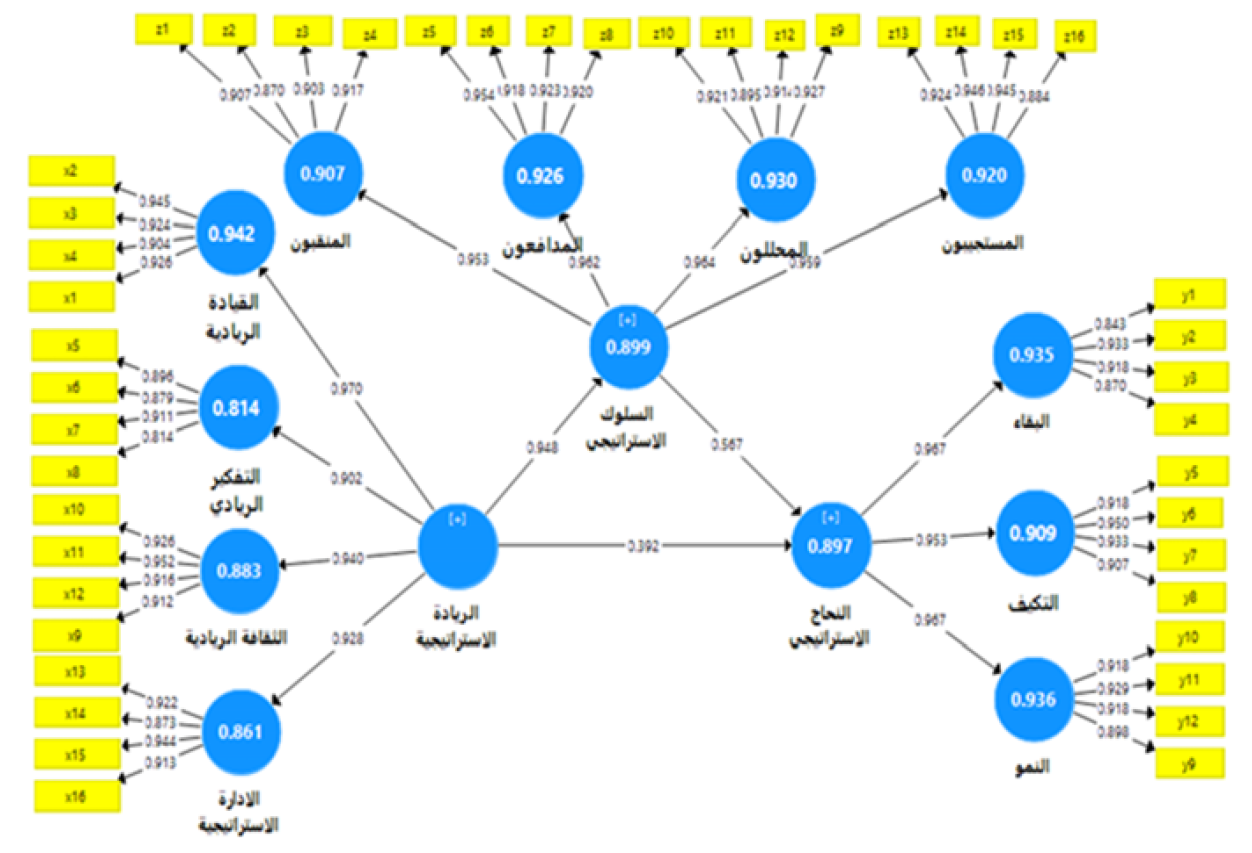
The Figure 3 illustrates the nature of the relationships between the variables.
Figure 3: The Relationship Between the Study Variables
Interpretation of the coefficient of determination and effect size in Table 9.
Table 9: The Values of R2, f2 and Q2 for the Study Model
Variable
R2
F2
Q2
Strategic behavior
0.89
0.532
0.347
Strategic success
0.77
2.31
0.521
Source: Prepared by the Researcher, SMART PLS Outputs
DISCUSSION
Concerning the Responses of the Study Sample
From Table 2, we observe a description of the sample responses for the study variables, which shows that all the study indicators were agreed upon by the sample participants.
Descriptive Analysis of the Main Study Variables
When examining the study variables as a whole, we notice that the average for the strategic leadership variable tends towards agreement, as well as for the strategic behavior and strategic success variables. Additionally, we observe that the coefficient of variation is less than 30%, which indicates homogeneity and agreement among the sample participants on these responses.
Normality Test
From the results in Table 4, we observe whether the data follows a normal distribution. It is evident that the hypothesis is rejected, meaning that the data does not follow a normal distribution, which necessitates using PLS-SEM modeling through the SMART PLS 3 software.
Correlation Coefficient between the Study Variables
Table 6 demonstrates the strength of the correlation between the latent variables. This indicates that the model has discriminant validity, as all values are below the threshold level of 0.9 for each latent variable. This means there is no overlap between the variables and each variable represents itself. This also confirms the model's suitability for measurement and analysis. Additionally, we observe that the indicators within the constructs do not suffer from multicollinearity issues. For instance, the Fornell-Larcker criterion for the strategic leadership variable, one of the independent variables, showed a significance level of 0.89. Similarly, the "explorers" variable, one of the mediating variables, recorded 0.83, while "sustainability," one of the dependent variables, recorded 0.81.
Discriminant Validity (Cross Loadings)
Table 7 presents the external loadings of the variables. By comparing these with the cross-loadings of the other variables, it is evident that they recorded the highest values. As shown in the table, the items for each construct achieved the highest values compared to the other items. For instance, in the strategic leadership construct, values ranged between 0.623 and 0.91. In the strategic behavior construct, the values ranged between 0.823 and 0.919, while for strategic success, the values ranged between 0.875 and 0.974, as illustrated in Figure 2.
The Structural Model
Evaluation of the Study Hypotheses and Measurement of Direct and Indirect Effects: From the results in Table 8 and the outputs of the Smart PLS program, it is observed that there is a positive and statistically significant relationship between strategic leadership and strategic behavior, as the t-test value for the parameter significance was high (39.437). Consequently, the p-value was less than 0.05%, which means the null hypothesis is rejected and the alternative hypothesis is accepted, stating that there is a direct effect between strategic leadership and strategic behavior.
Additionally, the Table 8 shows that there is a direct effect relationship between the strategic leadership variable and the strategic success variable, which is positive and significant. The t-test value for parameter significance was 46.66, resulting in a p-value less than 5%. This leads to rejecting the null hypothesis and accepting the alternative hypothesis, which states that there is a direct effect relationship between the strategic leadership variable and strategic success.
Similarly, the table shows a direct effect relationship between the strategic behavior variable and the strategic success variable, which is positive and significant. The t-test value for parameter significance was 42.85, leading to a p-value of less than 5% and thus, the null hypothesis is rejected and the alternative hypothesis is accepted, stating that there is a direct effect relationship between strategic behavior and strategic success.
Furthermore, there is an indirect effect relationship between strategic leadership and strategic success, with strategic behavior as a mediating variable. The t-test value for parameter significance was 18.362, which is statistically significant at the 5% level. This means that the alternative hypothesis is accepted, stating that there is an indirect effect relationship between strategic leadership and strategic success, with strategic behavior as a mediating variable. The total effect value (direct effect+ indirect effect) was 0.329+0.538 = 0.867.
It is evident from Table 9 that the value of the R2 coefficient for the dependent variable, strategic success, is 0.89, which is considered high according to Falk and Miller. They explained that if the coefficient of determination is greater than 67%, it is considered high, if greater than 33%, it is considered moderate and if the value is less than 19%, it is considered low and is rejected. Therefore, the coefficient of determination for this model is considered high. The interpretation of the coefficient of determination shows that the strategic leadership variable could explain 77% of the variance in strategic success, while the combination of strategic leadership and strategic behavior could explain 89% of the variance in strategic success.
As for the F2 value, Cohen explained that if the model's results achieve 35%, the effect size is considered high. If the results range between 0.02 and 0.15, the effect size is considered small and anything lower is deemed to have no effect. From the Table 9, it is observed that the value was higher than 35%, indicating that the effect size was high.
In analyzing predictive ability, which refers to the model's capacity to predict the dependent variable, we observe from the table that the Q2 value is greater than zero, indicating an acceptable value.
REFERENCE
Boudreaux, C.J. “The Importance of Industry to Strategic Entrepreneurship: Evidence from the Kauffman Firm Survey.” Journal of Industry, Competition and Trade, Vol. 20, pp. 93-114, 2020.
Ireland, R.D. et al.“Strategic Kauffman Firm Survey.” Journal of Industry, Competition and Trade, vol. 20, no. 1, 2023, pp. 93-114.
Khan, S. et al. “Analysing the Barriers of Strategic Entrepreneurship: A DEMATEL Approach.” Sustainability, vol. 16, no. 11, 2024.
Hitt, M.A. et al.“Strategic Entrepreneurship: Entrepreneurial Strategies for Wealth Creation.” Strategic Management Journal, vol. 22, no. 6-7, 2001, pp. 479-491.
Mazzei, M.J. “Strategic Entrepreneurship: Content, Process, Context and Outcomes.” International Entrepreneurship and Management Journal, vol. 14, 2018, pp. 657-670.
Alshagawi, M. and H. Mabkhot. “The Impact of Strategic Entrepreneurship and Entrepreneurial Marketing, Entrepreneurship Values on Small and Medium Enterprises’ Performance: Evidence from Saudi Arabia.” Cogent Business & Management, vol. 11, no. 1, 2024.
Amadi, K.I. and C.T. Edenkwo. “Strategic Entrepreneurship and Firm Performance: A Conceptual Discourse.” International Journal of Business, Economics and Entrepreneurship Development in Africa, vol. 13, no. 11, 2024.
Alayoubi, M. et al. “Requirements for Applying the Strategic Entrepreneurship as an Entry Point to Enhance Technical Innovation: Case Study-Palestine Technical College-Deir al-Balah.” International Journal of Business and Management Invention, vol. 9, no. 3, 2020, pp. 1-17.
Reis, H.T. et al. “The Relationship Context of Human Behavior and Development.” Psychological Bulletin, vol. 126, no. 6, 2000.
Tsauri, S. “Behaviour Modification.” Regional Training Seminar on Guidance and Counselling Module 4: Behaviour Modification, vol. 47, no. 2, 2000, pp. 495-523. https://doi. org/10.1177/10422587221111727.
Riedl, C. et al. “Strategic Behavior in Contests with Ability Heterogeneous Contestants: Evidence from Field Data.” SSRN Electronic Journal, 2020. https://doi.org/10.2139/ ssrn.3387056.
Hussein, H.W. and A.A. Hafedh. “Reflection of Strategic Behaviors in Scenario Planning.” International Journal of Research in Social Sciences and Humanities, vol. 10, 2020, pp. 141-144.
Kim, H.R. “Managerial Cognition, Strategic Behavior and Innovation: Biopharmaceutical R and D.” Pharmaceutical and Pharmacological International Journal, vol. 2, no. 1, 2015.
Ingram, T. et al. “Relationships between Miles and Snow Strategic Types and Organizational Performance in Polish Production Companies.” Central European Management Journal, vol. 24, no. 1, 2016, pp. 17-45.
Svobodová, Z. and J. Rajchlová. “Strategic Behavior of E-Commerce Businesses in the Online Industry of Electronics from a Customer Perspective.” Administrative Sciences, vol. 10, no. 4, 2020.
Abuzaid, A. “Employees’ Empowerment and Its Role in Achieving Strategic Success: A Practical Study on Jordanian Insurance Companies.” Jordan Journal of Business Administration, vol. 14, no. 4, 2018.
Waldron, D.G. “Transnationality: An Index of Strategic Success?” Journal of International Business Strategy, vol. 8, no. 2, 2008.
Rainey, D.L. Enterprise-Wide Strategic Management: Achieving Sustainable Success through Leadership, Strategies and Value Creation. Cambridge University Press, 2010.
Chankoson, T. “Multilevel Causal Factors Affecting the Strategic Success of Thai Export Businesses.” Polish Journal of Management Studies, vol. 19, 2019.
Orlov, O. et al. “Company’s Strategic Success as the Basis of Its Potential Sustainability.” E3S Web of Conferences, vol. 166, 2020.
Mahmoud, A.S.A. The Role of the Dyson Model for Strategic Development in Achieving Strategic Success: Case Study in Baghdad Municipality. 2021.
Recommended Articles
Research Article
The Effect of Knowledge Capital in Enhancing Cognitive Performance: The Mediating Role of Organizational Learning Requirements
Download PDF
Research Article
Country of Origin and Foreign Branding on Perceived Quality of Local Products in Indonesia: The Moderating Role of Consumer Ethnocentrism
Download PDF
Research Article
The Effect of Employer Attractiveness and Compensation on Job Persuit Intention to Fmcg Companies in Indonesia: Coporate Reputation as an Intervening Variable
Download PDF
Research Article
The Effect of Beauty Vlogger on Purchase Decision for Local Skincare Products in Indonesia: Brand Image as a Mediating Variable
Download PDF
PO Box 101, Nakuru
Kenya.
Email: office@iarconsortium.org
Editorial Office:
J.L Bhavan, Near Radison Blu Hotel,
Jalukbari, Guwahati-India
Mohammed, M. A. & Mohsin, A. N. (2024). The Employment of Strategic Leadership in Achieving Strategic Success through the Mediating Role of Strategic Behavior: An Exploratory Analytical Study of the Perspectives of a Sample of Instructors in Iraqi Technical Universities. Scientific Research Journal of Economics and Business Management, 4(2), 1-11.
MLA
Mohammed, Munaf A. and Abdulridha N. Mohsin. "The Employment of Strategic Leadership in Achieving Strategic Success through the Mediating Role of Strategic Behavior: An Exploratory Analytical Study of the Perspectives of a Sample of Instructors in Iraqi Technical Universities." Scientific Research Journal of Economics and Business Management 4.2 (2024): 1-11.
Chicago
Mohammed, Munaf A. and Abdulridha N. Mohsin. "The Employment of Strategic Leadership in Achieving Strategic Success through the Mediating Role of Strategic Behavior: An Exploratory Analytical Study of the Perspectives of a Sample of Instructors in Iraqi Technical Universities." Scientific Research Journal of Economics and Business Management 4, no. 2 (2024): 1-11.
Harvard
Mohammed, M. A. and Mohsin, A. N. (2024) 'The Employment of Strategic Leadership in Achieving Strategic Success through the Mediating Role of Strategic Behavior: An Exploratory Analytical Study of the Perspectives of a Sample of Instructors in Iraqi Technical Universities' Scientific Research Journal of Economics and Business Management 4(2), pp. 1-11.
Vancouver
Mohammed MA, Mohsin AN. The Employment of Strategic Leadership in Achieving Strategic Success through the Mediating Role of Strategic Behavior: An Exploratory Analytical Study of the Perspectives of a Sample of Instructors in Iraqi Technical Universities. Scientific Research Journal of Economics and Business Management. 2024 Jul;4(2):1-11.


 Download PDF
 Download XML