Banking governance has greatly helped the institutions that apply it to strengthen and lay the foundations of safety and development in their areas of work and to add a kind of transparency and disclosure to their data, which enhances the principles of applying governance well. With the increasing competitiveness in the banking business environment and openness due to globalization, that environment began to be exposed to crises, which affects institutions. Therefore, the application of banking governance can reduce these effects, as the research concluded that the application of banking governance in Al-Mansour Investment Bank achieved results in the banking risk management process, as it worked to reduce the amount of risks that the bank may be exposed to as a result of conducting its daily business in various ways. Types of risks (liquidity, operational, capital, and credit risks). Therefore, the application of governance had a positive impact on banking risk management at Al Mansour Investment Bank.
Keywords
Banking governance
Risks
Banking risk management
The most important financial indicators of Al-Mansour Bank
Governance and banking risk management
THE FIRST AXIS: THE GENERAL FRAMEWORK OF THE RESEARCH INTRODUCTION
The banking sector is considered one of the most prominent economic sectors due to its significant impact on international and local economic variables, especially in light of the economic liberalization resulting from globalization. This liberalization opened new markets and increased the freedom of capital flow, which prompted banks to bear additional risks to achieve increased returns. Banks have adopted governance concepts to regulate and improve banking risk management, especially after the economic and financial crises and corruption scandals that affected many countries and global companies in recent years, such as the 2008 crisis, which resulted partly from banks’ excessive granting of real estate loans as a result of weak oversight and the absence of effective governance. Therefore, governance has proven its importance in supporting and enhancing banking risk management by enhancing accountability and transparency, and improving the level of disclosure. By adopting a set of principles and mechanisms, including those developed by the Basel Committee on Banking Supervision, banks can increase trust between all parties to the relationship, which reduces the risks of financial crises and limits the possibility of bankruptcy.
Research problem
The role of governance in rationalizing and activating banking risk management in banks is a vital and decisive matter, given the importance of the safety and stability of banks in the financial system. Therefore, the research problem lies: the extent to which the application of banking governance in Al-Mansour Bank affects the banking risk management process in it?
Research hypothesis
There is a direct influence between the application of banking governance and banking risk management at Al-Mansour Bank
Research Aims
The research aims to explain the nature of banking governance, its developments, and its relationship to banking risk management, leading to studying the relationship between them in the research sample after tracking the development of the most important financial indicators in it and showing the extent of banking risk management under the applied governance.
Search Limits
Spatial boundaries: Al-Mansour Investment Bank
Time limits: period 2010-2023
THE SECOND AXIS: THE EMERGENCE AND DEVELOPMENT OF BANKING GOVERNANCE
Researchers' opinions varied regarding the pronunciation and history of the emergence of the term governance, in addition to the origin from which it was derived, which raised questions about its meaning in various fields. In English, the term " governance " is derived from the Greek verb ( κυβερνάω kubemáo ), which means "to direct". Plato adopted this term in a metaphorical sense, and it later moved to Latin and from there to other languages. The term "governance" is used as a translation of the original term " Corporate Governance ". The approved scientific translation of this term is: “the method of practicing good management” [1].
The definitions that have been used to translate the term governance have varied, including good management, corporate governance, and governance itself. In this context, the Arabic Language Academy issued its statement in 2005 in which it adopted the word “governance” to translate the English term, as stated in the aforementioned reference. The spread of the new concept of governance dates back to the year 1997, when it witnessed a financial crisis in Asia, which prompted the world to re... A new look at the concept of governance. This crisis is described as a crisis of confidence between institutions and legislation that regulate business activities and relations between business institutions and the government [2].
Many economists, jurists, analysts, writers, and researchers have spoken about the concept of governance in different ways and with multiple definitions, due to their diverse interests and different backgrounds . Governance can be defined as “the way in which policy makers are empowered to make decisions, the way in which policies are formulated and implemented, and the degree to which governments participate in making decisions on behalf of citizens . ” [3].
Bank governance does not differ in its general concept from the concept of corporate governance, but some researchers prefer to use labels such as “corporate governance of banking organizations, ” “corporate governance in the banking sector,” or “corporate governance in banks.” [4]
The Basel Committee on Banking Supervision defined bank governance as “the rational management and definition of relationships between a bank’s partners, such as shareholders, depositors, creditors, customers, the board of directors, the government, and others, and an attempt to avoid conflicts of interest through a strict organizational structure that ensures bank management and risk management.” Clear and effective, to ensure the stability of the banking system . The governance of banking companies differs from that followed in non-financial companies that are not subject to regulation, and banks suffer from more severe problems of mismanagement, as their failure can lead to greater costs due to their significant impact on the stability of the financial system. [5] Since the beginning of the financial crisis in 2007-2008, governments around the world have launched massive rescue packages to support banks affected by the crisis. . At the national level, regulatory bodies express concern about the impact of governance on bank performance, as good governance of banking companies is a vital concern for banks, other countries and banking supervisors . In addition to shareholders, depositors and creditors, supervisors and regulatory bodies have a direct interest in a bank's performance and stability [6].
THE THIRD AXIS: PRINCIPLES AND RULES OF BANKING GOVERNANCE
In September 1999, the Basel Committee on Banking Supervision issued a bulletin entitled “Improving Bank Governance” as part of its continuing efforts to address banking supervision issues. This bulletin enhances the activity of the Basel Committee on Banking Supervision in effectively benefiting from the supervisory expertise gained from its committee, its members, and other interested parties. The supervisory guide issued by the Basel Committee highlights the importance of implementing safe and reasonable banking practices quickly, stressing that supervision is only effective if banking governance is consistent with the approved framework. Therefore, banking supervisors feel it is of great importance to ensure effective banking governance in every banking institution, as supervisory expertise reinforces the urgent need for adequate levels of accountability and examination of balances in every bank. Acceptable banking management contributes to facilitating the work of supervisors and enhances the possibility of establishing cooperative relationships between bank departments and supervisors In 2006, he issued a new version that includes how to apply governance principles in banks, which is as follows [6-8]:
The first principle: The competence of board members requires that they be qualified to fully perform their duties, that they have a clear understanding of their role, that they are not influenced by any internal or external influences, and that they are able to make appropriate decisions to manage the bank’s affairs .
The second principle: Formulating and following up on the implementation of goals requires setting the bank’s strategic goals by the Board of Directors, following up on the implementation of those goals, and strengthening the institutional values that guide the activities of the banking institution, with the need to announce them to all employees of the bank .
The third principle: Granting powers and responsibilities includes granting the Board of Directors the necessary powers and responsibilities, setting clear rules and limits, and applying the principles of accountability and accountability within the bank, whether this is towards members of the Board of Directors or all employees of the bank .
The fourth principle: An effective internal control system requires the Board of Directors to ensure the availability of an effective internal control system in the bank, and to enhance supervisors’ awareness of the importance of their role .
The fifth principle: Risk monitoring includes special monitoring of risks in situations where there may be a conflict of interests, including relationships between employees and borrowers associated with the bank, major shareholders, and senior management .
Sixth Principle: Compatibility of rewards and incentives with objectives: Financial rewards and incentives policies are required to be consistent and compatible with the bank’s systems and the bank’s general culture, in addition to its strategies and strategic objectives .
The Seventh Principle: Transparency and Disclosure includes the necessity of providing transparency and disclosure in all work, activities and reports issued therefrom .
The eighth principle: Compliance with laws and instructions requires members of the Board of Directors and executive and senior management to understand the legislative environment that regulates the bank’s work, and to strictly adhere to the laws and instructions .
As for the rules of banking governance, many researchers and those interested have referred to the rules of governance in a variety of ways, and the most important of these rules can be summarized as follows [9]
Discipline: It consists of following appropriate ethical behavior and adopting laws and instructions that define rights and duties, and it is the essence of governance that ensures stability and integrity in institutions .
Transparency: It represents a clear and true picture of everything that happens within the organization, which contributes to making information available to all parties and enhancing transparency and trust .
Independence: means ensuring that we are not affected by unjustified external pressures, which contributes to reducing conflicts of interest between various parties such as the Board of Directors, executive management, auditors, owners, and others .
Accountability: Refers to the ability to evaluate and evaluate the performance of the Board of Directors and Executive Management, and hold them accountable for any illegal acts, corruption, or fraud .
Responsibility: It relates to all stakeholders in the organization assuming specific powers and duties with clear responsibility.
Fairness: Respecting the rights of all stakeholders within the organization, while treating everyone with equality and justice without bias .
Social Responsibility: It is represented by the organization adopting the role of a good citizen, by raising social awareness, exemplary behavior and values among employees and society .
These rules represent the basis of effective governance that ensures the stability of institutions and enhances their social and financial responsibility .
THE FOURTH AXIS IS THE NATURE OF BANKING RISK MANAGEMENT
Risk management is a dynamic process where all necessary steps are taken to identify and address risks that may affect objectives. From this standpoint, risk management in general, and banking risk management in particular, has become a topic of wide interest to specialists in the banking sector and international monetary authorities. This demonstrates the focus on developing advanced strategies to study and control this phenomenon of increasing banking risks through risk management systems . is defined as the possibility that the bank will be exposed to unexpected and unplanned losses, and it may also lead to fluctuations in the expected return on a specific investment. These fluctuations and losses can cause negative effects that affect the bank’s ability to achieve its targeted goals and implement its strategies successfully [10].
Banking inherently involves assuming a wide range of risks, and supervisors must understand the nature of these risks and ensure that the banks concerned appreciate these risks and deal with them appropriately. The risks facing banks can be divided into several types :
Credit risk: refers to the risk that the customer or debtor will not be able to pay his financial obligations on time. This risk is usually associated with advances and loans granted by financial institutions or banks to individuals or companies. Advances and loans are an essential part of the credit facilities provided by financial institutions to customers with the aim of financing their activities or financial needs . Credit risk is usually when a loan or advance is granted to a customer, and these loans or advances are due for repayment in a specific period of time in the future. If the customer is unable to meet his financial obligations on time, this may result in the financial institution being exposed to financial losses. To reduce credit risk , financial institutions carefully evaluate the loans and advances provided, and set strict repayment terms based on an analysis of the customer’s credit capacity and an assessment of his risk level. Finance. Institutions also rely on managing credit portfolios, implementing collection strategies, and dealing with customers who may face payment difficulties [11].
Liquidity risk: Liquidity risk relates to the financial institution or lender itself, and not to the customer or debtor. Liquidity risk arises when an organization faces difficulties in meeting its financial obligations as a result of insufficient cash flows to meet the needs of cash withdrawals from customers or to pay other financial obligations on time . To mitigate liquidity risk, financial institutions rely on effective cash management, identifying adequate cash reserves, and implementing prudent liquidity management policies to ensure the necessary cash flows are available at all times. Institutions also periodically assess and monitor financial risks to ensure they respond effectively to any changes in the market environment or economic conditions [10].
Exchange rate risks: This type of risk appears when loans are granted to customers abroad in a foreign currency. If there is a decline in the value of the foreign currency after granting the loan, the lending bank will face a loss because the value of the returns it will earn will be less than expected. Conversely, if the loan was granted in a strong currency such as the US dollar and the dollar depreciated after the loan, the borrower would have to pay larger amounts in their local currency to repay the debt.
Operational risks are the factors that may affect the ability of institutions and companies to achieve their operational goals and their impact on their daily operations. These risks include issues such as skills shortages, increased wage costs, and changes in key talent and leadership, not to mention other risks related to daily transactions. Therefore, operating risk management It requires effective strategies by companies and institutions to ensure business continuity and achieve targeted goals effectively.
Capital risk is the risk to which funds or investments used by companies or individuals are exposed in their commercial or investment activities, as these risks include the aforementioned risks.
In general, banking risk management is considered essential to the sustainability and success of any financial institution, as it ensures a balance between potential gains and the resulting risks, and provides a framework for strategic planning and effective decision-making, as it helps protect the bank or financial institution from large losses or financial crises resulting from Exposure to unexpected or uncontrolled risks. In addition to achieving financial stability: by reducing fluctuations in profits and losses, which helps achieve greater financial stability in the long term. As well as compliance with applicable financial and banking legislation and standards, which reduces legal risks and potential financial penalties, and enhances trust and reputation: good risk management. It contributes to building the confidence of customers, investors, and the financial community in general, as they know that the institution is capable of dealing with challenges effectively.
THE FIFTH AXIS IS THE RELATIONSHIP BETWEEN GOVERNANCE AND BANKING RISK MANAGEMENT
are characterized by characteristics and characteristics that make them an important tool in driving economic development, and this requires distinct treatment from other non-banking companies, especially in managing the risks they face . The nature of the governance relationship with banking risk management can be explained through the following:
First: The Council’s responsibility related to risk management
The legal principles in banking laws and regulations leave no doubt that the board of directors should be treated as a key party in the risk management process. The primary responsibilities of the Board of Directors are :
Developing clear strategies for each aspect of risk management, and this requires necessity Setting specific and realistic risk management goals, including controlling financial and practical risks . A comprehensive analysis of the potential risks that may affect the bank, such as credit, market, and liquidity risks, with the establishment of specific policies and procedures that determine how to evaluate and address each type of risk . And promoting an internal culture that encourages effective dealing with risks and reporting them on a regular basis . Not to mention providing training and continuing education to employees on how to deal with risks and implement policies as well Establishing mechanisms to monitor and evaluate the performance of risk management strategies and make the necessary adjustments when needed
Designing structures that include a clear delegation of powers and responsibilities at every level within the bank. This requires defining the powers and responsibilities of each party within the bank, including the administrative board, executive management, and various departments. Clearly distribute those powers to ensure effective decisions and implementation at every level of management. Identifying the procedures required to approve sensitive and high-risk decisions to ensure that structures are compatible with banking legislation and regulations, and to ensure the independence of concerned parties in making decisions. Providing mechanisms for effective and regular reporting to higher authorities and the Administrative Council on the implementation of policies and procedures.
Reviewing and approving policies that precisely define the acceptable risks and capital required to ensure the safe operation of the bank, as it represents a fundamental and vital step
Conducting periodic reviews of regulatory controls to verify their adequacy .
Requires detailed explanations and explanations In the event that risks exceed specified limits, including credit granted to members of the Board of Directors and other related parties, large credit exposures, and the adequacy of the provisions made,
Forming a risk management committee and determining the content and quality of the required reports, not to mention an annual evaluation of the performance of the Board of Directors, while ensuring the adoption of professionalism in filling positions.
Second: The responsibility of senior management related to risk management
The financial soundness and performance of the bank system ultimately depend on the boards of directors and senior management of the banks, the strategic position and nature of the risks faced by the bank, and the adequacy of the systems to identify, monitor and manage them. All of these factors reflect the quality of oversight of the bank's management team and board of directors. For this reason, the most effective strategy for promoting a strong financial system is to strengthen the role of board members and motivate them to manage the bank wisely and rationally . Therefore , the role of top management is an essential component of market-based policies of regulation and supervision. Regulatory authorities increasingly aim to enhance the involvement and responsibility of senior management in accepting the primary responsibility for maintaining the integrity of the bank . We summarize the most important responsibilities that senior management must assume in risk management as follows :
Develop and recommend strategic plans and risk management policies for approval through :
Risk analysis The types of risks that the bank may face are identified and evaluated, such as financial, credit, market, operational, and other risks .
Strategy development : A strategy is developed to manage each type of identified risk, by defining the objectives and policies necessary to deal with them
Recommendation of plans : The risk management team submits recommendations of strategic plans and proposed policies to the Board of Directors for approval .
Approval : The proposed plans and policies are discussed and reviewed by the Board of Directors, and the decision is taken to approve them after ensuring their suitability and effectiveness .
Implementation of plans : After approval, strategic plans and policies are implemented, and management undertakes implementation and follow-up to implement them correctly .
Monitoring and evaluation : Periodic reviews and evaluations of the plans and policies in place are conducted to ensure their effectiveness and compatibility with changes in the environment and new potential risks .
In brief, plans are developed, established, and policies are recommended for risk management, then implemented and monitored regularly to ensure that financial soundness objectives are achieved and compliance with applicable legal and regulatory standards .
2. Establishing an institutional culture that promotes high ethical standards and integrity. This requires several basic steps:
Leadership by example : Senior management and members of the Board of Directors must set an example in their commitment to ethical standards and integrity, and their actions and decisions reflect these principles .
Clarity of policies and procedures : Accurate and clear policies and procedures should be developed that define ethical standards and acceptable behaviors, which must be followed by all employees within the bank .
Training and awareness : Regular training and awareness programs must be provided to employees on the importance of ethical standards and how to apply them in performing their daily work .
Monitoring and evaluation system : A system must be established to monitor and evaluate compliance with ethical standards, including mechanisms to report violations of standards and address them promptly and appropriately .
Encouraging eloquence and transparency : Employees should be encouraged to report any violations or unethical behavior without fear of punishment, while ensuring that their identity is protected and that every report is taken seriously .
Punishments and rewards : There must be effective mechanisms to assess compliance with ethical standards, with appropriate penalties imposed on violators and rewards for those who adhere to the standards .
Continuous review and improvement : Integrity policies and ethical standards should be reviewed regularly, and necessary improvements made based on lessons learned and changes in the legislative and financial environment .
By adopting these steps, banks can build a strong corporate culture that promotes high ethical standards and enhances integrity in all aspects of their work .
3- To ensure the preparation of guides containing policies, procedures and standards for the bank’s main functions and the risks it may face, as this contributes to enhancing integrity and achieving financial goals in a sustainable and safe manner . This can be achieved by following the following steps :
Identify key functions and risks : The main functions within the bank must first be identified such as risk management, internal audit, finance, finance, etc. Next, risks that may affect each of these functions are identified .
Establish policies and procedures : Detailed policies are developed covering each major function within the bank, setting out the basic standards and acceptable behaviors that employees must follow in performing their work. For example, we will have policies for risk management, internal audit, auditing, financial reporting, etc.
Documentation of procedures : Detailed procedures must be in place regulating how specific policies will be implemented, including the precise steps that must be taken to reduce risks and adhere to standards. These procedures should include daily procedures, emergency procedures, and reporting mechanisms .
Review and update evidence : Policies and procedures must be reviewed regularly to ensure their compatibility with changes in the legislative and regulatory environment, as well as to ensure their effectiveness and suitability to the bank's business. The guides are updated based on these reviews and updates .
Employee training : Proper training must be provided to employees on the new policies and procedures, and ensure that they fully understand the standards and requirements to which they must adhere .
Reporting and monitoring : Mechanisms are in place to report violations of policies and procedures, and compliance with them is monitored periodically and regularly, taking the necessary measures to address any violations or violations .
4. Develop and implement an administrative reporting system that adequately reflects business risks, by designing an accurate and comprehensive administrative reporting system that adequately reflects all business risks that may affect the bank’s performance. This includes identifying the basic data and information that must be included in reports to ensure adequate analysis, evaluation, review, and compliance with regulations and instructions .
Third: The responsibility of the Risk Management Committee
Sometimes called the Asset and Liability Management Committee, the board of directors can appoint one or more risk management committees, other than strategic risk management. The powers and competencies of risk management committees include setting the necessary frameworks and procedures to deal with all other types of risks. Other than strategic risks, these main types of risks include :
Banking risk, also known as operational risk .
Banking transaction risks, which include market and credit risks .
In this context, the Committee verifies the satisfactory performance of the system through management and internal audit, while adhering to approved administrative procedures for granting or extending loans and examining borrowers’ ability to repay. It is also necessary to ensure that discretionary powers are not exceeded at all levels, and to ensure that loan officers and managers collect and maintain borrowers' credit data. As part of its duties, the Committee may wish to ensure that loan applications are routinely prepared and submitted, accompanied by the latest financial statements and information relating to previous loans. All large loans and guarantees should be reviewed in detail, and recommendations for approval or rejection made according to the needs of the case, for submission to the Board of Directors or Executive Committee for final approval . Bank board members and employees must also ensure that guarantees are approved regularly, as if they were credit facilities. They must also request the competent authorities to certify the continuity of the positions of the parties contracting with these guarantees, to ensure that no fundamental changes occur. The importance of these procedures should be emphasized given that guarantees are not included in the accounts, and an unexpected default could cause significant damage to the bank .
THE SIXTH AXIS: THE IMPACT OF APPLYING GOVERNANCE ON BANKING RISK MANAGEMENT AT AL-MANSOUR BANK
First: The establishment of Al-Mansour Investment Bank and the development of its most important financial indicators
The bank was established as a private joint stock company on September 13, 2005, and obtained a banking license from the Central Bank of Iraq on February 20, 2006. The bank carries out various investment activities at home and abroad, in addition to other banking activities such as opening current accounts and accepting deposits of various types . The bank works to employ its cash surpluses after meeting the needs of other activities, such as external transfers and cash credit, in various fields, including employing them in cash credit, whether in national or foreign currencies, and in various types of credit such as overdraft accounts, debits, and loans. Pledged credit also constitutes an important aspect of the bank's activities through internal and external letters of guarantee and credits . The bank also plays an active role through the social assistance program. The bank’s capital currently amounts to 250 billion Iraqi dinars, and it has 10 branches distributed in various governorates of Iraq. [13].
The bank seeks to implement all banking operations authorized under Banking Law No. 94 of 2004 and Companies Law No. 21 of 1997, as amended, in addition to obtaining the necessary permits to practice banking business from the Central Bank of Iraq, including accepting and employing deposits . The bank also accepts deposits for different periods and in the Iraqi currencies and the dollar. It also discounts commercial papers and bonds, finances commercial operations, and grants loans and advances of all kinds in Iraqi and foreign currencies, in exchange for in-kind or personal guarantees and other guarantees in accordance with the directives of the Central Bank of Iraq and the bank’s policies . In addition, the bank opens current and savings accounts in both currencies, provides payment and collection services, and issues payment instruments such as bank withdrawals, payment and credit cards in accordance with instructions issued by the Central Bank of Iraq .
The scope of the bank's activities also includes the purchase and sale of all means of payment denominated in foreign currencies and dealing with them in the spot and future exchange markets in accordance with the applicable regulations.
The bank's activity also includes providing loans, buying and selling shares and bonds of joint-stock companies that are offered for public subscription, in addition to trading in the Iraq Stock Exchange (Al-Mansour Bank, official website) .
It is clear from Table (1) that total assets increased gradually during the study period from about (172.4) billion dinars in 2010 to about (1135) billion dinars in 2023. This is due to the bank’s ability to acquire assets and its successful policy in attracting customers, as this contributed to increasing The volume of deposits with the bank of various types and terms ranged from about (83.3) billion dinars in 2010 to about (671) billion dinars in 2023, which enabled the bank to use those deposits to employ them in monetary financial investment, increasing the volume of loans granted from about (34.7) billion. dinars in 2010 to about (223) billion dinars in 2023, which effectively helps the bank achieve its goals and ambitions.
Table (1) Development of the most important financial indicators of Al-Mansour Investment Bank for the period 2010-2023
year
findings
Deposits
Loans
2010
172.4
83.3
34.7
2011
271.8
156.2
65.7
2012
407.5
136
67.4
2013
789.1
485.3
89.6
2014
883
568.3
102
2015
1075
735
128
2016
1104
781
130
2017
1316
978
131
2018
1550
1215
136
2019
1461
1131
143
2020
1279
952
138
2021
698
377
150
2022
737
387
192
2023
1135
671
223
Source: Prepared by the researcher based on data from the Iraq Stock Exchange, annual bulletins, Al-Mansour Investment Bank, multiple years.
Second: Risk management policy at Al Mansour Investment Bank in light of the application of corporate governance
Risk management is considered an integral part of operations and decision-making at our bank, as it depends on our ability to increase business volume while reducing risks, especially in light of the rapid development of banking technology and various financial activities. The bank continuously monitors and periodically evaluates potential risk factors as a preventive measure, which helps establish an organizational structure that ensures achieving a precise balance between risks and returns . The framework and risk acceptance document are approved by the bank’s Board of Directors and its Risk Committee, and are then interpreted and disseminated to all departments and employees. The Risk Acceptance Document is an essential part of the Bank's integrated approach to risk management, as it defines the principles of culture, governance and risk limits for Al Mansour Investment Bank. This document provides a framework for risk tolerance and acceptance, and is aligned with the risk management principles that govern an organization's risk culture . The bank also believes that risk management is a shared responsibility for all bank employees. Therefore, we began intensive efforts to raise awareness and enhance the sense of individual responsibility through the third lines of defence. In coordination with the Basel Guidelines, Qatar National Bank Group (the strategic partner of Al Mansour Investment Bank) has implemented the Third Lines of Defense model as follows :
1 - Business and operations:
It is responsible for identifying and monitoring the risks of banking operations and activities.
2 - Risks and control:
Provides policies, procedures and systems to ensure business and operational risks are identified and managed appropriately.
3 - Auditing and internal control
An independent assessment of the adequacy of procedures and controls and making recommendations regarding their suitability and effectiveness require improving work and promoting the adoption of best practices .
The Board of Directors has full responsibility for identifying strategic risks and implementing the relevant principles, frameworks and policies, including appropriate restrictions on products, geographic locations and vesting periods. The
Assets, Liabilities, Risk Management and Internal Audit Committee is committed to complying with these restrictions established by the Board. In addition, the Board of Directors manages the credit, market, operational and liquidity risk management processes affecting the Bank, and sets the objectives and frameworks of the risk management policy . The bank's risk management, in cooperation with the strategic partner, is responsible for developing and reviewing the risk management strategy, defining its policies, evaluating its activity, and establishing monitoring mechanisms. It also evaluates and identifies operational, credit, market and liquidity risks, in addition to reputational risks and any other risks, and deals with legal disputes at all levels .
Credit risk
The bank's credit risks are managed through an independent department that works in accordance with the policies and procedures specified for measuring and managing credit risks. This system includes a clear separation between the duties of front-line employees who execute transactions and credit risk employees as reviewers and auditors. Credit exposure limits are approved by an independent committee within a specific approval framework . Policies, procedures and approvals are implemented and updated and loans are reviewed regularly . This includes monitoring credit execution, checking assessments, analyses, approvals, document management, collateral management, monitoring credit limits at multiple levels, classifying the credit portfolio, following up on bad debts to reduce them to the minimum possible and collecting the bank's rights. Provisions are made against non-performing loans, in accordance with the requirements of IAS 9, including the calculation of provisions and creditworthiness. Stress tests and scenario analysis are also performed, and recommendations are submitted to the Risk Committee of the Board of Directors . It is clear from Table (2) and Figure (1) that credit risks, based on the indicator ( provision for doubtful debts/volume of loans), began to decline gradually and continuously throughout the study period, where it was about (60%) in 2010 and then decreased to about ( 26%) in 2023. This is, of course, a result of the institution’s ability to manage its credit risks effectively and its commitment to international standards and the application of credit policies that would reduce the amount of risks associated with it, along with its ability to apply governance well that allowed it to achieve its basic principles that we mentioned previously. This is evident by observing the size of the risks before and after the implementation of banking governance, as the risk rates were very high before 2016, ranging between 15%-65%, while they decreased after that to be between (26%-45%).
Table (2) Development of the credit risk index at Al-Mansour Bank for the period 2010-2023
the year
Loans
Provision for doubtful debts
Credit risk %
2010
34.7
20.82
60
2011
65.7
42.705
65
2012
67.4
34.374
51
2013
89.6
49.28
55
2014
102
58.14
57
2015
128
71.68
56
2016
130
68.9
53
2017
131
58.95
45
2018
136
58.48
43
2019
143
48.62
34
2020
138
42.78
31
2021
150
45
30
2022
192
53.76
28
2023
223
57.98
26
The source was prepared by the researcher based on data from the Iraq Stock Exchange, annual bulletins, Al-Mansour Investment Bank, for several years.
Figure (1)
Source: Prepared by the researcher based on the data in Table 2
Market and liquidity risk management
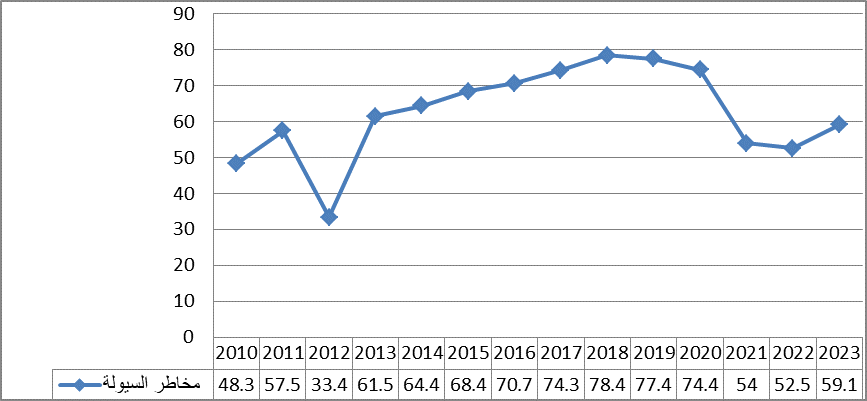
Market and liquidity risk management at Al Mansour Investment Bank is carried out by implementing stress tests and scenario analysis. Liquidity management is essential to ensure business continuity and profitability, to maintain the confidence of shareholders and the financial markets, and to avoid any unjustified or sudden pressure on the bank’s liquidity that may lead to a reduction in its position in the market . The ultimate responsibility for liquidity management lies with the Board of Directors, but supervision of the bank's assets and liabilities is delegated to a committee affiliated with the executive management. Supervisory work ensures that financial resources and liquidity are adequate in terms of size, diversity and focus . Among the basic tasks of market risk management is estimating capital adequacy and reviewing risks resulting from interest and exchange rates, in addition to classifying financial instruments in banking and commercial portfolios in accordance with policies approved by the Assets and Liabilities Committee. A periodic review is also conducted to accept risks related to market and liquidity risks within their specified limits, and it is clear from Table (3) and Figure (2) that liquidity risks, based on the indicator ( deposits / total assets), have witnessed clear fluctuations during the research period, sometimes in the direction of increase and other times in the direction This decline, of course, results from the fluctuation in levels of deposits and assets alike, which are primarily linked to the economic conditions in the country and the factors affecting them. Despite the application of banking governance in the institution, through this indicator, its advantages in application did not appear, as the risk index ranged between (33 %-78%) This is mainly due to the institution’s weak management in expanding the volume of its banking transactions and increasing the rate of its investments to increase the size of its assets compared to the size of its deposits.
Table (3) Evolution of the liquidity risk index at Al-Mansour Bank for the period 2010-2023
year
findings
Deposits
Liquidity risk
2010
172.4
83.3
48.31787
2011
271.8
156.2
57.46873
2012
407.5
136
33.37423
2013
789.1
485.3
61.50044
2014
883
568.3
64.36014
2015
1075
735
68.37209
2016
1104
781
70.74275
2017
1316
978
74.31611
2018
1550
1215
78.3871
2019
1461
1131
77.41273
2020
1279
952
74.43315
2021
698
377
54.01146
2022
737
387
52.51018
2023
1135
671
59.11894
The source was prepared by the researcher based on data from the Iraq Stock Exchange, annual bulletins, Al-Mansour Investment Bank, for several years.
Figure (2) Development of the liquidity risk index at Al Mansour Bank for the period 2010-2023
Source: Prepared by the researcher based on the data in Table 3
Operational risk management
Operational risk management is considered a distinct and separate category of risks, which represent losses resulting from inadequacy or failure of internal processes, people, or systems, or from external events. The Operational Risk Management Unit seeks to enhance awareness and culture in the Operational Risk Unit across all departments of the bank and set standards to avoid unexpected and catastrophic losses, and reduce expected losses. Ensuring the achievement of business objectives by taking into account risks . As well as ensuring compatibility with best practices and compliance with regulatory requirements . The ability to continue work and provide services in cases of sudden interruption . The bank also classified the seven operational risk principles as follows :
Internal fraud .
External fraud (such as information theft, hacking)
Work practices and safety in the workplace .
Customers and products (e.g. manipulation, market, monopoly)
Damage to physical assets (such as natural disasters, terrorism, and sabotage )
Business disruption and systems failure .
Implementing banking operations management .
These principles aim to achieve effective management of operational risks and ensure business continuity in a sustainable and safe manner . In addition to business continuity planning to ensure the continuity of the bank’s operations and increase operational flexibility against potentially disruptive scenarios, this is done through business continuity management, which includes :
Implementing and testing the business continuity plan: An integrated business continuity plan is developed and tested, which includes quick and effective response procedures in emergency situations .
Evaluation of results and continuous training: The performance of the business continuity plan is regularly evaluated, updated and modified as needed, in addition to implementing continuous training for employees to learn to use the plans and respond effectively .
Business Impact Analysis and Threat Risk Assessment: A careful business impact analysis and risk assessment of various potential scenarios is performed, which helps in setting priorities and allocating resources effectively .
Review and maintenance of management plans for business continuity and crisis management: Periodic reviews and maintenance of business continuity management plans and crisis response plans are conducted, to ensure that they are updated and compatible with new developments and environmental changes .
Epidemic response plan: An integrated and regular response plan is developed to deal with potential epidemics, which helps avoid emergency crises and ensure business continuity with a high level of safety and readiness .
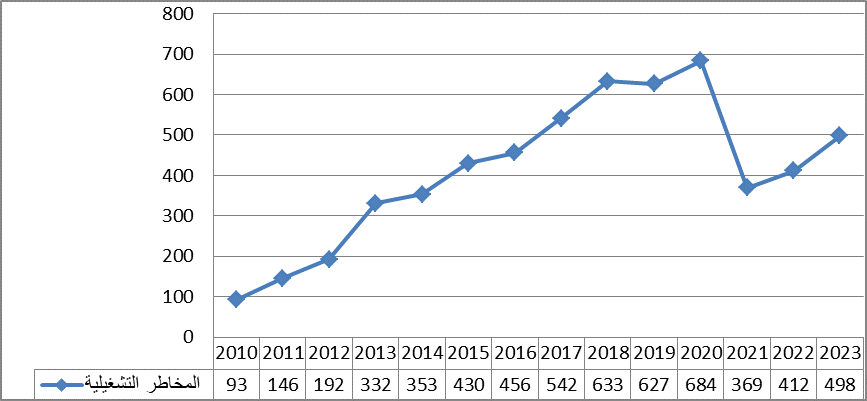
In this way, the bank's readiness to face any unexpected challenges is enhanced and its operations are ensured to continue effectively and smoothly under all circumstances. As all of these measures achieved their goals based on the indicator (total assets / number of employees), which had very large rates that reflect the decline of this type of risk to its lowest levels, as shown in Table (4) and Figure (3). The application of governance played a major role in the rise in the index levels, indicating a decrease in the volume of operational risks if the highest value of the index reached in 2020, at (683), and this indicates a very significant decrease in the volume of operational risks.
Table (4) Development of the operational risk index at Al Mansour Bank for the period 2010-2023
year
findings
Number of employees
Operational risks
2010
172.4
186
92.69
2011
271.8
186
146.13
2012
407.5
212
192.22
2013
789.1
238
331.55
2014
883
250
353.20
2015
1075
250
430.00
2016
1104
242
456.20
2017
1316
243
541.56
2018
1550
245
632.65
2019
1461
233
627.04
2020
1279
187
683.96
2021
698
189
369.31
2022
737
179
411.73
2023
1135
228
497.81
The source was prepared by the researcher based on data from the Iraq Stock Exchange, annual bulletins, Al-Mansour Investment Bank, for several years.
Figure (3) Development of the operational risk index at Al Mansour Bank for the period 2010-2023
Source: Prepared by the researcher based on the data in Table 4
Capital risks
These risks are more comprehensive than the previous risks because they include them in one way or another because they represent a general picture of the size of the risks to which the bank may be exposed. To reduce these risks, the financial institution must have effective risk management. Risk management consists of controlling risks by reducing the frequency of their occurrence and reducing the size of expected losses. This process includes monitoring, identifying, measuring, monitoring and controlling risks, with the aim of ensuring a comprehensive understanding of these risks and ensuring that they are consistent with the acceptable limits and the framework approved by the Bank’s Board of Directors. Risk management is also known as an integrated system that aims to address risks in the best ways and at the lowest costs, through detecting, analyzing, and measuring risk. But all these steps must be part of a comprehensive system to implement them effectively . It is clear from Table (5) and Figure (4), based on the capital risk index (total assets/equity), the extent of the bank’s ability to reduce this type of risk after applying banking governance and reaching its lowest level in 2018 and 2019, at a limit of (19.2). If this indicates, it indicates the bank’s ability to harmonize its assets on the one hand with its ownership rights on the other hand, in addition to increasing the size of its assets while reducing the size of ownership rights, which was reflected positively in the decrease in the amount of capital risks after it was close to (61%) in 2012 before the implementation of governance. .
Table (4) Development of the capital risk index at Al-Mansour Bank for the period 2010-2023
year
findings
Property rights
Capital risks
2010
172.4
84
48.7
2011
271.8
109
40.1
2012
407.5
250
61.3
2013
789.1
280
35.5
2014
883
281
31.8
2015
1075
288
26.8
2016
1104
287
26.0
2017
1316
290
22.0
2018
1550
297
19.2
2019
1461
280
19.2
2020
1279
287
22.4
2021
698
280
40.1
2022
737
283
38.4
2023
1135
312
27.5
The source was prepared by the researcher based on data from the Iraq Stock Exchange, annual bulletins, Al-Mansour Investment Bank, for several years.
Figure (4) Development of the capital risk index at Al Mansour Bank for the period 2010-2023
Source: Prepared by the researcher based on the data in Table 5
THE SEVENTH AXIS: CONCLUSION
Banking risk management represents the process that aims to identify, evaluate, monitor and address all types of risks facing banks and financial institutions within the scope of their work. It thus aims to achieve a balance between achieving financial returns and protecting capital, through developing and implementing policies and procedures for identifying, evaluating and constantly monitoring risks. This also includes the use of various financial instruments to mitigate risks, such as insurance, futures, options, etc. As risks are an integral part of banking work, but they should be within the limits of control, and with the many financial and banking crises, international institutions began to impose special standards and principles to reduce the impact of these crises, and with the development of the banking environment for workers came what is known as governance and its positive effects. On that environment if it is applied well, as the research concluded that the application of banking governance in Al-Mansour Investment Bank achieved results in the banking risk management process, as it worked to reduce the amount of risks that the bank may be exposed to as a result of conducting its daily business of various types (risks Liquidity, operation, capital, and credit risks. Therefore, implementing governance had a positive impact on banking risk management at Al Mansour Investment Bank.
Conflict of Interest:
The authors declare that they have no conflict of interest
Funding:
No funding sources
Ethical approval:
The study was approved by the AL -Furat AL -Awsat Technical University, Technical Institute of Dewaniya, Iraq,
REFERENCES
Ahmed, Malawi, and Nassima Sharati. Bank Governance: An Introduction to Enhancing the Safety of the Banking System. Collective author by Muhammad Al-Shuwayat, Governance and Administrative and Financial Corruption, Proceedings of the Third Reviewed Scientific Conference of the College of Business Administration, Ajloun, Jordan: Modern World Book House for Publishing and Distribution, 2015.
Abdul Razzaq, Habar. "Commitment to the Requirements of the Basel Committee as an Entry Point to Establishing Governance in the Arab Banking Sector - The Case of North African Countries." North African Economics Journal, no. 7, 2009.
Abdel-Al, Tarek Hammad. Risk Management. University House, Alexandria, Egypt, 2005.
Al-Sayrafi, Muhammad. Bank Management. 1st ed., Dar Al-Manhaj, Amman, Jordan, 2006.
Matar, Hamad. Modern Trends in Financial and Credit Analysis: Methods, Tools, and Practical Uses. 2nd ed., Dar Wael, Amman, Jordan, 2006.
Iraq Stock Exchange. Annual Bulletins. Al-Mansour Investment Bank, multiple years.
Abdel-Al, Tariq Hammad. Corporate Governance in the Public, Private Sector and Banks. University House, Egypt, 2008.
Adams, Renée B., and Harita Mehran. "Bank Board Structure and Performance: Evidence for Large Bank Holding Companies." Journal of Financial Intermediation, vol. 21, no. 2, 2012.
Grossman, Eric, and Christine Woll. "Saving the Banks: The Political Economy of Bailouts." Comparative Political Studies, vol. 47, no. 4, 2014.
Abu Al-Ata, Nermin. "Corporate Governance is the Path to Progress: Shedding Light on the Egyptian Experience." Al-Islah Al-Eqtisadiah Journal, no. 8, 2003.
Lakhdar, Aussif. "The Role of Corporate Governance in Addressing the Problems of Agency Theory." Economic and Administrative Research, no. 24, 2018.
Fawzi, Samiha. "Evaluating the Principles of Corporate Governance in the Arab Republic of Egypt." Working Paper No. 82, Egyptian Center for Economic Studies, Cairo, 2003.
Recommended Articles
Research Article
The Effect of Employer Attractiveness and Compensation on Job Persuit Intention to Fmcg Companies in Indonesia: Coporate Reputation as an Intervening Variable
Download PDF
Research Article
The Effect of Beauty Vlogger on Purchase Decision for Local Skincare Products in Indonesia: Brand Image as a Mediating Variable
Download PDF
Research Article
Country of Origin and Foreign Branding on Perceived Quality of Local Products in Indonesia: The Moderating Role of Consumer Ethnocentrism
Download PDF
Research Article
The Effect of Knowledge Capital in Enhancing Cognitive Performance: The Mediating Role of Organizational Learning Requirements
Download PDF
PO Box 101, Nakuru
Kenya.
Email: office@iarconsortium.org
Editorial Office:
J.L Bhavan, Near Radison Blu Hotel,
Jalukbari, Guwahati-India
Jwesim, M. H. (2024). Analysis of The Impact of Governance Application In The Process of Improving Banking Risk Management, Al-Mansour Bank, A Case Study. Scientific Research Journal of Economics and Business Management, 4(2), 1-12.
MLA
Jwesim, Muaamal H.. "Analysis of The Impact of Governance Application In The Process of Improving Banking Risk Management, Al-Mansour Bank, A Case Study." Scientific Research Journal of Economics and Business Management 4.2 (2024): 1-12.
Chicago
Jwesim, Muaamal H.. "Analysis of The Impact of Governance Application In The Process of Improving Banking Risk Management, Al-Mansour Bank, A Case Study." Scientific Research Journal of Economics and Business Management 4, no. 2 (2024): 1-12.
Harvard
Jwesim, M. H. (2024) 'Analysis of The Impact of Governance Application In The Process of Improving Banking Risk Management, Al-Mansour Bank, A Case Study' Scientific Research Journal of Economics and Business Management 4(2), pp. 1-12.
Vancouver
Jwesim MH. Analysis of The Impact of Governance Application In The Process of Improving Banking Risk Management, Al-Mansour Bank, A Case Study. Scientific Research Journal of Economics and Business Management. 2024 Jul;4(2):1-12.



 Download PDF
 Download XML