Contents
Download PDF
pdf Download XML
971 Views
266 Downloads
Share this article
Research Article | Volume 4 Issue 1 (Jan-June, 2024) | Pages 1 - 7
Honoring (Ikram) the Elderly Project for Home Health and Social Care Services
 ,
 ,
 ,
 ,
 ,
1
Tikrit Nursing College, Tikrit University, Iraq
2
Subspecialty of Cancer Screening, Salahdeen Health Directorate, Iraq
Under a Creative Commons license
Open Access
Received
Nov. 3, 2023
Revised
Dec. 9, 2023
Accepted
Jan. 2, 2024
Published
Jan. 13, 2024
Abstract

This descriptive paper dealing with a graduation research project for the fourth year student of Tikrit Nursing College–Tikrit University in collaboration with a team of medical students from Dalian medical university and Tongji Medical College - Huazhong University of science and Technology. This pioneer project is applied from the period between 1st October 2021-1st May 2022 and aims at providing a group of elderly people with home social & health care and to identify the main problems of this population. Mean age was (68.8±6.6) years, and male represent 54 (51.4%), and female 51 (48.6%). Most of the elderly were illiterate 45 (42.9%), and high education was only 13 (12.4%). Most of the married 79 (75.2%) Widow or divorced 26 (24.8%). Had child about 102 (97.1%), and had sister or brother 94 (89.5%). Home Care Services by IKRAM are the followings; Leisure trips (200), Group Leisure trips (40), Food basket  (208), Sociability Session (210 hours), Small Group communication (50), Phone communication (450 calls), Rehabilitation services (30 sessions), Self-care sessions (200), Coordination services (588), Nursing care (300), and Health assessment (330). The Ikram project is very useful, fruitful and effective in alleviating the suffering of the elderly and their families.


Keywords
INTRODUCTION

Anas ibn Mālik (may Allah be pleased with him) reported that the Messenger of Allah (may Allah's peace and blessings be upon him) said: "No youth honors an elderly person for his old age except that Allah will appoint someone to honor him in his old age." This is one of the Hadīths that confirms the obligation of the youth showing respect and reverence to the elderly. There are corroborating pieces of evidence that encourage this magnificent social moral. The Messenger of Allah (may Allah's peace and blessings be upon him) trained his Companions (may Allah be pleased with them) to adopt it until it was instilled in their hearts and minds. Moreover, the Hadīth gives the addressee the feeling that honoring his elders is, in fact, an honoring of himself, and that the youth's honoring of his elderly people is a reason for appointing a person who will honor him as he progresses in old age [1].


Aging of population has been a worldwide phenomenon because of declining mortality as well as improved public health interventions .[2] Nowadays more old people are alive than at any time in human history due to sharp increment in the number of elderly. In the period from 2015 to 2050 there will be double increment from 12% to 22% in elderly population over 60 years. [3] In Iraq, the percentage of elderly population over 60 years elevated from 3.4% in 2010 to 5% in 2015 according to annual statistical report of Ministry of Health and expected to reach 7.2% in 2050. [4,5] Population Aging of population has been a worldwide phenomenon because of declining mortality as well as improved public health interventions .[3 4] Nowadays more old people are alive than at any time in human history due to sharp increment in the number of elderly. In the period from 2015 to 2050 there will be double increment from 12% to 22% in elderly population over 60 years. [4] In Iraq, the percentage of elderly population over 60 years elevated from 3.4% in 2010 to 5% in 2015 according to annual statistical report of Ministry of Health and expected to reach 7.2% in 2050. [5, 6]. The aim of this pioneer project is to provide a group of elderly people with home social & health care services and to identify the main problems of this population. 

MATERIALS AND METHODS

Patient and Methods

This descriptive paper dealing with a graduation research project for the fourth year student of Tikrit Nursing College–Tikrit University. This pioneer project is applied from the period between 1st October 2021-1st May 2022 and aims at providing a group of elderly people with home social and health care services and to identify the main problems of this population. The Home health and social Care Services Program works to provide care and improve the quality of life for elderly by providing services and a package of care programs necessary for them in their homes by nursing students trained to care and care for elderly, and providing them with home care, in accordance with best practices and the highest standards, while respecting their dignity and independence, and appreciating their bids. This program’s services are comprehensive, including mainly health care include the following (general clinical and physical examination by two medical consultants, one graduated physician and 4 medical students, blood pressure measurements, blood sugar, basic blood investigations on need). The elderly is referred on need to the appropriate consultant, who are volunteered to Ikram Project to examine refereed cases freely. The other services are the followings; social, knowledge, rehabilitative, self-care, recreational and entertainment services, and follow-up of the needs of the elderly with service and health authorities, among others. 


They are provided to the elderly registered in their homes and abroad within an approved rehabilitation and training plan. Services are the following: Health care, Social Services, Knowledge Services, Rehabilitative Services, Self-care services, Recreational and Entertainment Services, Coordination Services, & Awareness and counseling services. Volunteering in the program: The program includes opening the door to volunteering in the “Ikram” service, raising community awareness of the special needs of elderly, encouraging young people to serve this group and ensuring their continued integration into society, noting the social responsibility of institutions and companies towards them, as well as deepening and consolidating family values committed to caring for senior citizens and giving back the righteousness of parents, grandparents and relatives. 

RESULTS

The mean age was (68.8±6.6) years, and the rang (65-100 years), male represent 54(51.4%), and female 51 (48.6%). Most of the elderly were illiterate 45 (42.9%), and high education was only 13 (12.4%). Most of the married 79 (75.2%) Widow or divorced 26 (24.8%). Had child about 102 (97.1%), and had sister or brother 94 (89.5%), as shown in Table 1.


Table 1: The General Characteristics of the Elderly

General characteristics of the elderlyFrequency%

Age mean ± SD*


68.8±6.6 Rang (65-100 years)

Gender

Male

54

51.4

Female

51

48.6

Educational level


Illiterate

45

42.9

Read and write

12

11.4

1ry school

16

15.2

intermediate school

7

6.7

secondary school

12

11.4

college or diploma

13

12.4

Marital status


Married

79

75.2

Widow or divorced 

26

24.8

did you have child


Yes

102

97.1

NO

3

2.9

did you have sister


Yes

94

89.5

NO

11

10.5

 Total

105

100.0


Previous job analysis show that 35 (33.3%) of them had governmental job, followed by working in public sector 26(33.3%), and housewife in 22(21%), as shown in Table 2.


Table 2: The Previous Job Done by the Elderly

Previous job

Frequency

Percent

public sector

26

24.8

Governmental sector

35

33.3

privet sector

9

8.6

farmer

13

12.4

Housewife

22

21.0

Total

105

100.0


Feeling of support reported among 94(89.5%). The support was good among 90(85.7%), about 13(12.4%) faced financial and social problems, having bad feeling upon their situation reported among 9(8.6%) of the elderly, as shown in Table 3.


Table 3: The Feeling and Support Received by the Elderly

Feeling and support received


Frequency

Percent

Do you find psychological support

Yes

94

89.5

No

3

2.9

Usually

5

4.8

Some times

3

2.9

Is the support is good

Yes

90

85.7

No

4

3.8

Usually

7

6.7

Some times

4

3.8

Do you face financial and social problems

Yes

13

12.4

No

82

78.1

Usually

5

4.8

Some times

5

4.8

Did you feel you in this stay bad

Yes

9

8.6

No

96

91.4

Total

105

100.0


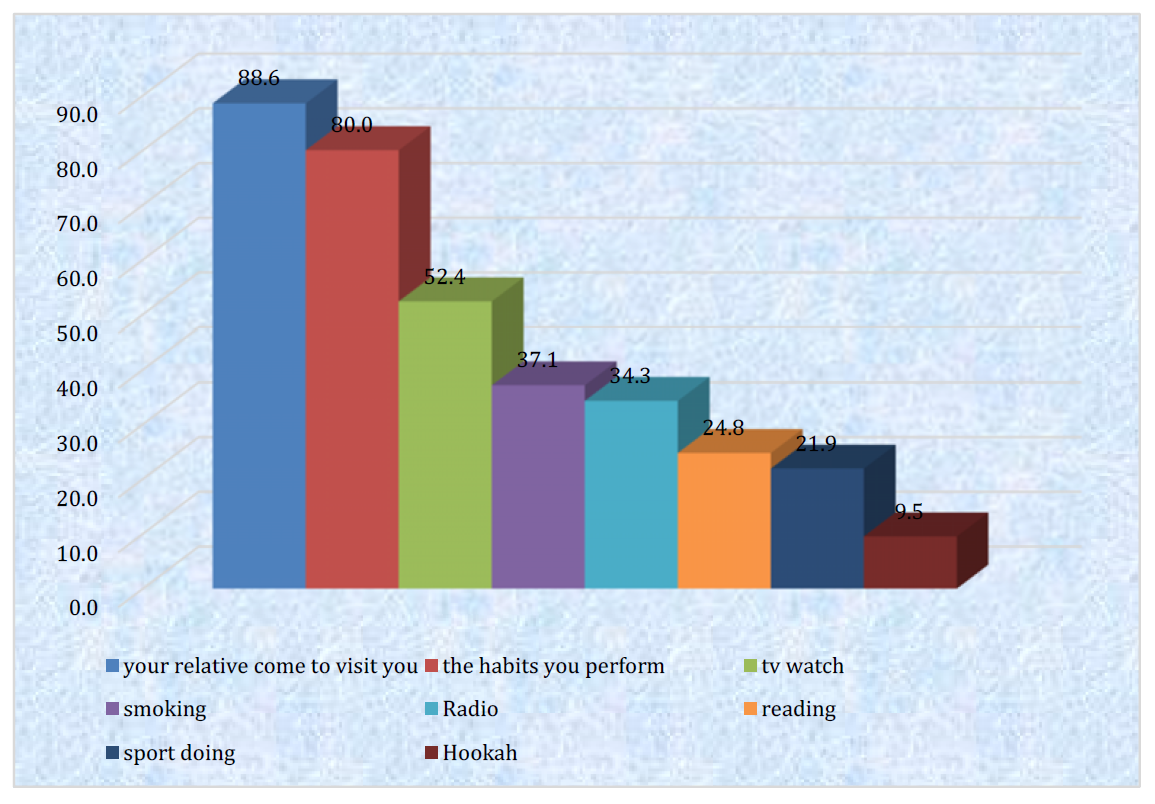
About 93 (88.6%) of the elderly reported that they received visited from their relatives. Habits was reported among 84 (80%) of them, these habits were smoking 39 (37.1%). Hookah drinking 10 (9.5%), reading 26 (24.8%), sport 23 (52.4%), radio listening 36 (34.4%) and TV watching 55 (52.4%), as shown in Figure 1.


Figure 1: The Habits and Facilities Available for the Elderly


The entertainment programs show that religious programs 76 (72.4%), news 51 (48.6%), sport programs 34 (32.4%) and drama series and films watched by 28 (26.7%). Only 52 (49.5%) go to picnic or religious accumulations. as shown in Table 4.


Table 4: Entertainment Programs for the Elderly

Entertainment programs

Frequency

Percent

religious programs

76

72.4

News programs

51

48.6

sport program

34

32.4

Drama series and films

28

26.7

did you go to picnic or religious accumulations

52

49.5


The psychological problems among elderly were isolation 41 (39%), forgot thinks 54 (51.4%), Feeling of constriction and tightness 40 (38.1%), Lack of security and tranquility 13 (12.4%), and missing family 35 (33.3%), as shown by Table 5.


Table 5: The Psychological Problems among Elderly

Psychological problems


Frequency

Percent

Did you feel isolated

Yes

41

39.0

No

62

59.0

Some times

2

1.9

Did you forgot thinks

Yes

54

51.4

No

48

45.7

Some times

3

2.9

Feeling of constriction and tightness

Yes

40

38.1

No

64

61.0

Some times

1

1.0

Nervousness for the simplest things

Yes

38

36.2

No

66

62.9

Some times

1

1.0

Poor ability to comprehend and focus

Yes

36

34.3

No

64

61.0

Some times

5

4.8

Lack of sleep and anxiety

Yes

40

38.1

No

59

56.2

Some times

6

5.7

Lack of security and tranquility

Yes

13

12.4

No

86

81.9

Some times

6

5.7

Missing family

Yes

35

33.3

No

67

63.8

Some times

3

2.9


The chronic disease found among 86(81.9%), and common chronic disease were hypertension 49 (46.7%), followed by cardiovascular 35 (33.3%) DM 33 (31.4%), joint pain 21 (20%), irritable bowel syndrome and intestinal disease 27(25.7%),renal problems 16 (15.2%) and depression 14 (13.3%), as shown in Table 6.


Table 6: The Chronic Disease among Elderly

 Chronic disease

Frequency

Percent

Chronic disease

86

81.9

Hypertension 

49

46.7

Cardiovascular

35

33.3

Diabetes Mellitus

33

31.4

Irritable bowel and/or intestinal problems

27

25.7

Joint pain

21

20.0

Renal problems

16

15.2

Depression

14

13.3

Asthma

9

8.6

Hyperlipidemia

4

3.8

Fracture

3

2.9

chronic obstructive air way disease

2

1.9

Alzheimer disease

2

1.9


The modality in which help is needed for daily activities were movement 20 (19%), wearing cloths 19 (18.1%), eating 17 (16.2%), and showing 16 (15.2%). The help was get from family member among 55(52.4%), friends 15 (14.3%), and from others like servants or nurse 9 (8.6%) (Table 7).


Table 7: Help Modality that is Needed for Daily Activities and who Provide Help

 Modality in which Help is needed 

Frequency

Percent

Movement

20

19.0

Wearing Cloths

19

18.1

Eating

17

16.2

Showering

16

15.2

Taking Medicines

12

11.4

Person who give Help 


Family Member

55

52.4

Friends

15

14.3

Help Get From Others

9

8.6


The disabilities among elderly found among 71 (67.6%)of the elderly: vision disability among 33 (31.4%), hearing 23 (21.9%), speaking 13 (12.4%), and walking 6 (5.7%) as shown in Table 8.


Table 8: The Disabilities among Elderly

 Disability

Frequency

Percent

do you have disability

71

67.6

vision

33

31.4

hearing

23

21.9

speaking

13

12.4

walking

6

5.7


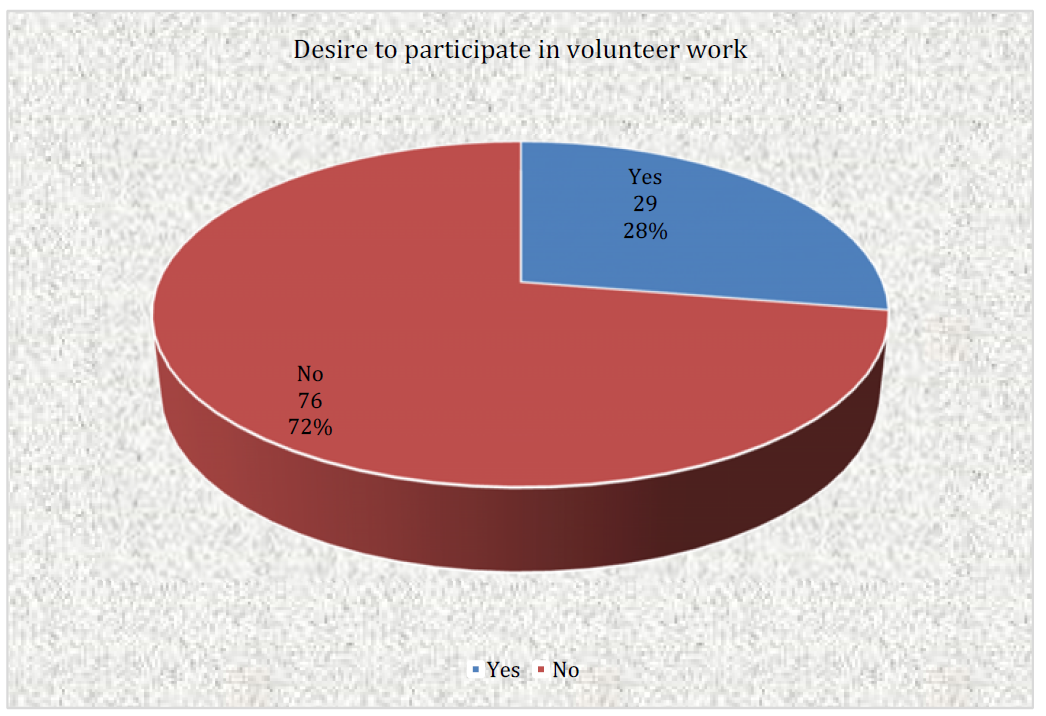
Figure 2: The Desire to Participate in Volunteer Work

DISCUSSION

Iraqi population is an expansive population: is a young and growing population. It has high fertility rates and lower than average life expectancies. (WHO, 2015). The proportion of elderly aged > 55 years was increasing with years [7]. 


The mean age was 68.8±6.6 years, and the rang (65-100 years), this goes with what found by Hamid Y Hussain 2016 found that age group 65 years and over: 3.2% [8] the life expectancy was 69.2 years in 2001 [9] Male represent 54 (51.4%), and female 51 (48.6%). This goes with Zardawi AR et al that in 2020 the male represent 3.2% of total male population and elderly female 3.9 % of total female population , this explained by the war crisis in Iraq that usually cause more life o be lost among males and decrease the life expectancy among them. [10] Most of the elderly were illiterate 45(42.9%), and high education was only 13 (12.4%). 


Most of the married 79 (75.2%) widow or divorced 26 (24.8%). This goes with Ibrahim A in 2017 who found that the social status (73%) of the elderly are married, and 23.5% are separated. Bad long term Iraqi situation push young people to migrate outside the country and leave elderly alone, sad, helpless, homeless. Additionally many elderly have no children to take care of them or unmarried. Elderly misery is complicated by deficiency of suitable health care services, difficult access, deficiency of drinking water and electricity. [11] Had child about 102 (97.1%), and had sister or brother 94(89.5%), this supported by a survey done in Iraq found that 13.4% of elderly live in households with an average of (6.5 members) [12] Feeling of support reported among 94 (89.5%). The support was good among 90 (85.7%), about 13 (12.4%) faced financial and social problems, having bad feeling upon their situation reported among 9 (8.6%) of the elderly. Iraqi elderly are most frail and delicate portion of society and need special health, social and psychological care. Majority of them suffered from delayed or absence of required care due to poor financial support. [13]


Keruly et al., 2002; Ruiz,2002 found that poor and limited access to health care services, absence of health insurance, race, other socio-demographic characteristics among the factors strongly affect elderly health. [14, 15]. Lack of health insurance affect both access to health services and diseases outcome. [16] Additionally, education, age, gender, satisfaction with health services provider may affect perception of access to medical services and diseases outcome. [17] About 93(88.6%) of the elderly reported that they received visited from their relatives. habits was reported among 84(80%) of them, these habits were smoking 39(37.1%). Hookah drinking 10(9.5%), reading 26(24.8%), sport 23 (52.4%), radio listening 36 (34.4%) and TV watching 55(52.4%). This may be due to the tight social and family structure provided care for the elderly for centuries. Due to the impacts of modern life and the weakness of family ties, many families are no longer a safe environment for the elderly. Still on limited extent elderly care was provided by religious places. [14]


The entertainment programs show that religious programs 76 (72.4%), news 51 (48.6%), sport programs 34 (32.4%) and drama series and films watched by 28 (26.7%). Only 52 (49.5%) go to picnic or religious accumulations. This can be used for increase their winless in life. About (28%) of the elderly persons wanted to participate in volunteer work. This related to the fact that Iraqi population is productive and strong persons that want to give support to others, and this could be used to give happens to the elderly and give them chance for better life.


The psychological problems among elderly were isolation 41 (39%), forgot thinks 54 (51.4%), Feeling of constriction and tightness 40 (38.1%), Lack of security and tranquility 13 (12.4%), and missing family 35 (33.3%). This goes with Hussain HY found that about 11% of these women reported that they are unhappy with their life in general of whom 6.4 % in Kurdistan and 11. 4 percent in other governorates. [8] The chronic disease found among 86 (81.9%), and common chronic disease were hypertension 49 (46.7%), followed by cardiovascular 35 (33.3%) DM 33 (31.4%), joint pain 21(20%), irritable bowel syndrome and intestinal disease 27(25.7%), renal problems 16 (15.2%) and depression 14 (13.3%). The modality in which help is needed for daily activities were movement 20 (19%), wearing cloths 19 (18.1%), eating 17 (16.2%), and showering 16 (15.2%). This goes with survey in 2011 in Iraq found 31.1 % of elderly needed help in eating, drinking, wearing clothes, moving around and using the bathroom in the year that preceded the survey [12].


The help was get from family member among 55 (52.4%), friends 15 (14.3%), and from others like servants or nurse 9(8.6%). The disabilities among elderly found among 71 (67.6%)of the elderly: vision disability among 33 (31.4%), hearing 23 (21.9%), speaking 13 (12.4%), and walking 6 (5.7%). This goes with previous studies In Iraq, during the years of war, and all the man-made disasters throughout, have further increased the number of disability, to approximately reach two-million people. [18] In 2004 Kamil EA found that only one-third of the elderly were completely independent, the other two-thirds admitted having different degrees of dependency, with a significantly higher rates among females. The presence of functional disability showed a significant association with poor health perception and bad Morale index. [19] The hard circumstances that the country faced - the fighting and killings, the displacement - all of these factors have left senior citizens homeless. Aging Iraqis traditionally lived with relatives, but as conditions in the nation have worsened, a new phenomenon has popped up: the old folks’ home [11]


The elderly in Iraq have been dealt a very bad hand and short of a miracle very little can be done to help them,” according to Iraqi Medical Association. “Sometimes they just close the door of the house and wait to die slowly.” The most vulnerable senior citizens are in frail health with little or no income and cannot live independently. Many have no children to support them or have never married. Adding to their misery, Iraq’s devastated health care system makes it nearly impossible for Baghdad’s elderly residents to receive adequate medical treatment. The lack of potable water and electricity here further threatens their welfare during the sweltering summer months. [20]

CONCLUSION

Ikram is very fruitful and effective help for elderly, and 100% of elderly are very happy and support for Ikram. We recommend to apply this project by ministry of health and Ministry of social Affairs.

REFERENCE
  1. The comprehensive Islamic encyclopedia of content vocabulary. Islamic Content, available at: https://islamic-content.com/

  2. World Health Organization and US National Institute of Aging. “Global health and ageing.” World Health Organization, 2011, available at: http://www.who.int/ageing/publications/global_health/en/

  3. World Health Organization. “Definition of an older or elderly person.” World Health Organization, available at: http://www.who.int/healthinfo/survey/ageingdefnolder/en/

  4. World Health Organization. “Ageing and life course.” World Health Organization, 2015, available at: http://www.who.int/ageing/en/

  5. United Nations, Department of Economic and Social Affairs, Population Division. “World population prospects: the 2012 revision, highlights and advance tables.” United Nations, 2013, Working paper no. ESA/P/WP.228, available at: https://population.un.org/wpp/Publications/Files/WPP2012_HIGHLIGHTS.pdf

  6. Republic of Iraq Ministry of Health. “National health policy.” Ministry of Health, 2014–2023, available at: http://www.nationalplanningcycles.org/sites/default/files/planning_cycle_repository/iraq/iraqs_national_health_policy_2014-2023.pdf

  7. World Health Organization. “Age-friendly primary health care centers toolkit.” World Health Organization, 2015, available at: https://www.who.int/ageing/publications/upcoming_publications/en/

  8. Hussain, H.Y. “Elderly, health and socio-demographic profile in Iraq, the context of conflict, violence and social exclusion: systematic review.” Middle East Journal of Age and Ageing vol. 83, no. 4013, 2016, pp. 1–8.

  9. Kowal, P. et al. “Data resource profile: the world health organization study on global AGEing and adult health (SAGE).” International Journal of Epidemiology vol. 41, 2012, pp. 1639–1649.

  10. Hussain, H.Y. “Elderly, health and socio-demographic profile in Iraq, the context of conflict, violence and social exclusion: systematic review.” Middle East Journal of Age and Ageing vol. 13, no. 2, 2016, pp. 18–25.

  11. Abdulameer, I.A., and Al-Lami, F. “Mental disorders among elderly people in Baghdad, Iraq, 2017.” INQUIRY: The Journal of Health Care Organization, Provision, and Financing vol. 56, 2019, pp. 1–22.

  12. United Nations Population Fund. “Iraq woman integrated social and health survey (I-WISH): woman’s issues from man’s perspective.” UNFPA, 2011, available at: https://iraq.unfpa.org/sites/default/files/pub-pdf/Man-design-e.pdf

  13. Hussain, H.Y. “Elderly, health and socio-demographic profile in Iraq, the context of conflict, violence and social exclusion: systematic review.” International Journal of Biomedical and Clinical Sciences vol. 1, no. 2, 2016, pp. 43–50.

  14. Keruly, J.C. et al. “Association of medical insurance and other factors with receipt of antiretroviral therapy.” American Journal of Public Health vol. 92, no. 5, 2002, pp. 852–857.

  15. Ruiz, P. “Commentary: Hispanic access to health/mental health services.” Psychiatric Quarterlyvol. 73, 2001, pp. 85–91.

  16. Porell, F.W., and Miltiades, H.B. “Access to care and functional status change among aged Medicare beneficiaries.” The Journals of Gerontology: Series B, Psychological Sciences and Social Sciences vol. 56, no. 2, 2001, pp. S69–S83.

  17. Fausto, M.C. et al. “Evaluation of Brazilian primary health care from the perspective of the users: accessible, continuous, and acceptable?” The Journal of Ambulatory Care Management 2017, (2 Suppl), pp. S60–S70.

  18. IRIN News. “Iraq: elderly most vulnerable to insecurity.” IRIN, 2016, available at: http://www.irinnews.org/report/70649/iraq-elderly-most-vulnerable-to-insecurity (accessed 04 February 2016).

  19. Al-Kamil, E., and Ajeel, N. “Functional ability of elderly people in Basrah, Iraq.” 2004.

  20. Al-Suwiadi, S. “Care services for old populations in the Middle East.” 2013, available at: http://www.adidubai2013.org/files/pres/Salwa-AlSuwaidi-Health

Recommended Articles
Research Article
Knowledge of the Patient's Family about the Level of Emergency Based on Triage with the Satisfaction of the Patient's Family in the Emergency Department of the Sumedang Area General Hospital
...
Published: 30/03/2024
Download PDF
Research Article
The Influence of Murottal Al Qur'an Surat Ar Rahman Irama Hijaz Therapy on the Pain Scale of Post-Explorative Laparatomy Patients in the Icu Room of Bandung City Hospital
...
Published: 30/03/2024
Download PDF
Case Report
Oculomotor Nerve Palsy in Herpes Zoster Ophthalmicus
...
Published: 30/07/2024
Download PDF
Research Article
The role of IFN-g gene polymorphism (+874 T/A) as predisposing factor for pulmonary tuberculosis
Download PDF
Chat on WhatsApp
Flowbite Logo
PO Box 101, Nakuru
Kenya.
Email: office@iarconsortium.org

Editorial Office:
J.L Bhavan, Near Radison Blu Hotel,
Jalukbari, Guwahati-India
Useful Links
Order Hard Copy
Privacy policy
Terms and Conditions
Refund Policy
Shipping Policy
Others
About Us
Team Members
Contact Us
Online Payments
Join as Editor
Join as Reviewer
Subscribe to our Newsletter
+91 60029-93949
Follow us
MOST SEARCHED KEYWORDS
Copyright © iARCON International LLP . All Rights Reserved.