The experiment was conducted in the poultry field of the Department of Animal Production at the College of Agriculture/ University of Basra, for the period from 22/11/2022-21/1/2023 to find out the effect of astaxanthin addition to the diet on some egg specific characteristics of laying hens from the sixty ISA- Brown hybrid. 60-week-old chickens were used and the birds were divided into five treatments, three replicates each and 4 chickens per repeater. The trial transactions included: Treatment T1 treatment control (no addition), treatment T2 addition 3 mg/kg feed, treatment T3 extra 6 mg/g, treatment T4 extra 9 mg/kg feed, T5 addition 12 mg/kg feed. Some specific characteristics of eggs were studied: yolk color, yolks height, weight and percentage, yolk index, Hugh unit, shell weight, thickness and percentage. The results of the study indicated that the addition of astaxanthin to the diet of laying hens in advanced ages led to a significant improvement in the color of the yolk and did not show significant differences in the height of the yolk and white, their weight, percentage, yolk index, Hugh unit, shell weight, thickness and percentage. Compared to the control treatment, as well as the arithmetic superiority in favor of astaxanthin addition coefficients over the control coefficients in those qualities.
Keywords
Astaxanthin
Laying Hens
Egg Quality
INTRODUCTION
The poultry industry is one of the most important agricultural sectors that contribute to meeting the needs of humans for animal protein. Raising laying hens is an important part of this industry, as egg production is one of the most important products provided by these birds and improving the productive and qualitative qualities of eggs is vital to maintain the strength of this industry and increase profits for breeders [1]. The type and quality of eggs produced depends on a few factors, including breeding and feeding conditions. The use of various food additives is vital in facing environmental challenges, because of their positive roles in enhancing the immunity and productivity of birds [2]. Among these additions comes astaxanthin, which is one of the safe alternatives to industrial food additives and has a potential impact in improving the tolerance of laying hens to heat stress, improving the productive and qualitative qualities of eggs and reducing their harmful effects. It may be an effective strategy and one potential solution to improve tolerance to extreme thermal conditions and enhance the ability of chickens to adapt to environmental challenges [3]. Astaxanthin is a natural compound belonging to the carotenoid family and is found in some foods and plants, mainly produced from the aquatic algae Haematococcus pluvialis, which is widespread around the world [4]. It has antioxidant properties that contribute to protecting cells from the harmful effects of free radicals formed during heat stress and inhibits their action, as well as its various roles and uses in therapeutic, medical, immunological and nutritional preparations [5]. Astaxanthin is believed to contribute to improving the color of the yolk, which enhances the attractiveness of the product to consumers and reflects better egg quality. Some studies suggest that the use of astaxanthin in chicken diets may lead to an increased content of omega-3 fatty acids in egg yolk, a beneficial compound for human health [6]. To achieve these benefits and effects, the use of astaxanthin in the diets of laying hens exposed to heat stress represents a promising potential for improving productive qualities. Adding astaxanthin to chicken diets may be an effective strategy to improve tolerance to extreme thermal conditions and enhance chickens' adaptability to environmental challenges [7].
The experiment aims to find out the effect of astaxanthin addition to the diet of laying hens (ISA Brown) on some qualitative characteristics (external and internal) of eggs produced at advanced ages.
MATERIALS AND METHODS
This experiment was conducted in the poultry field of the Department of Animal Production/College of Agriculture/ University of Basra, where it extended to 8 weeks from 22/11/2022 to 21/1/2023 and used 60 laying hens aged 60 weeks from the ISA Brown hybrid. The birds were randomly distributed to five Transactions and by 3 repeaters/transaction, where each transaction consisted of 12 chickens and (4) chickens/repeater. Males were placed in individual cages with dimensions of (41×41×45) cm, distributed the transactions are as follows:
First transaction T1: Control group (no addition)
Second treatment T2: A group taking a control diet with astaxanthin at a concentration of 3 mg/kg feed
Third treatment T3: A group taking the control diet with astaxanthin at a concentration of 6 g / kg feed
Forth Treatment T4: A group taking a control diet with astaxanthin at a concentration of 9 mg/kg feed
Fifth treatment T5: A group taking a control diet with astaxanthin at a concentration of 12 mg/kg feed
Water was prepared freely throughout the study period; the birds were fed on the diet of laying hens (Table 1) and the amount of feed provided per day was (112) g/bird/day.
According to the chemical composition of feed materials according to the feed material analysis tables contained in the reports of the National World Research Council [8] (Table 1).
Table 1: The Chemical Analysis of the Diets
17.4
Croud protein %
2753.2
Energy Metabolic (kcal/kg feed)
5.21
Fat %
3.64
Ash %
3.13
Fibber %
0.89
Lysine
0.28
Methionine
0.72
Methionine+Cysteine
4.09
Calcium
0.459
Phosphorus available
Qualitative Qualities of Eggs
Eggs were collected daily and the following tests were conducted the qualitative characteristics of eggs were measured according to the method indicated by Al Fayyad et al. [9]. Calculating the weight of the egg, yolk, white and shell using a sensitive scale.
Characteristics of Yolk
Yolk color: The color of yolk was measured by means of a hand-held plastic fan
Yolk weight (gm): based on a sensitive scale's measurement of the yolk's weight
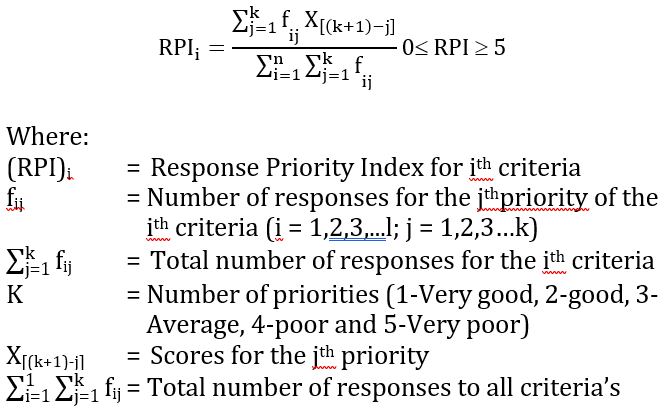
The Relative weight of the yolk (%) is as follows: The following equation states:
Yolk height (m): The height of the yolk was measured using a three-base micrometer
Yolk diameter (m): I measured the yolk's diameter using a digital Vernia measuring device
Yolk index: The yolk index and the white index were calculated according to the treatment mentioned by Naji et al. [10]:
Characteristics of Albumin
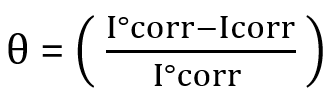
The weight of the egg albumin (gm): According to the weight of the egg white, by applying the following equation:
Albumin weight (gm) = Egg weight (gm)-(Yolk weight+shell weight)
The relative weight of the egg white, %: according to the following equation:
The Haugh Units
This was measured according to equation mentioned by Nesheim et al. [11].
Haugh Units = 100×log (H-1.7 W0.37+7.57)
H = The height of thick albumen
W = The egg weight
0.37 are constants
Characteristics of Eggshell
Eggshell weight (gm): According to the weight of the eggshell using a sensitive scale
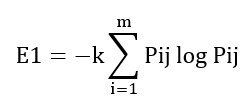
The relative weight of the eggshell (%): According to the following equation:
Eggshell Thickness (mm): The thickness of the shell was measured from the pointed and convex ends of each egg (after lifting the membranes of the eggshell) and left to dry for a period of more than 24 hours by a micrometer and took an average of two readings for the ends of each egg.
The study data was analyzed to a Completely Randomized Design (CRD) analysis of variance to analyze the results using the completed program SPSS [12]. Duncan [13] multiples test was applied to separate means at a significant level (p≤0.05).
RESULTS AND DISCUSSION
Qualitative Qualities of Eggs
Specification of Yolk: Table 2 indicates the effect of the use of astaxanthin in the diets of laying hens in the specifications of the yolk, shown from Table 2 on the qualitative characteristics of the yolk (yolk weight, relative weight of the yolk, yolk height, yolk diameter and yolk index).
The use of astaxanthin in laying hens diets at a concentration of 3.6, 9.12 mg/kg feed did not have a significant effect on the yolk weight and percentage compared to eggs taken from chickens who were fed on a diet free of astaxanthin control treatment (T1) where the yolk weight was 18.25 g and its percentage was 29.95%, while the value of these two traits when adding astaxanthin at a concentration of 3, 6 , 9 12 mg/kg feed 19.11 g, 30.03%, 18.75 g, 29.91%, 18.55 g, 30.07%, 18.47 g and 29.94%, respectively and no significant differences were observed in the yolk index as a result of the use of astaxanthin by 3, 6, 9, 12 mg/kg as it reached 0.48, 0.48 and 0.50 and 0.50, respectively compared to the control coefficient of 0.49 .
Since the yolk index represents the product of dividing the height of the yolk by a drop and therefore we note in Table 2 that there is no significant effect of the use of astaxanthin on the height of the yolk as well as a drop in concentrations.
Mentioned in Table 2 as the average increase was 16.80, 16.68, 16.69, 16.75, 16.79 and the drop rate was 34.33, 34.67, 34.67, 33.67 mm in the coefficients T1, T2, T3, T4, T5, respectively. These results are consistent with the findings of Heng et al. [14] who did not record a significant effect of astaxanthin level in laying hens' diets in yolk specifications.
Table 2: Effect of Astaxanthin Use in Diets of Laying hens on Egg Yolk Specification (Mean±SE)
1Treatments
Control T1
T2
T3
T4
T5
p-value
Yolk weight (g)
18.25±0.21
19.11±0.04
18.75±0.24
18.55±0.54
18.47±0.34
0.438
Relative weight of the yolk (%)
29.95± 0.28
30.03± 0.34
29.91 ± 0.35
30.07± 0.30
29.94± 0.13
0.992
Yolk height (mm)
16.80± 0.15
16.68± 0.12
16.69 ± 0.16
16.75 ± 0.15
16.79± 0.16
0.967
Yolks diameter (mm)
34.33 ± 0.88
34.67 ± 0.88
34.67 ± 1.20
33.67 ± 0.88
33.67 ± 1.20
0.906
Yolk Index
0.49± 0.02
0.48± 0.01
0.48± 0.01
0.50± 0.01
0.50± 0.02
0.768
T11 control diet (no additive) and T2, T3, T4, T5: Astaxanthin use coefficients 3, 6, 9, 12 g/kg feed, respectively
The Color of the Yolk
From the results of Figure, it is clear that there are significant differences at the level (p≤0.05) in the degree of color of the yolk between the different experimental treatments, as the average readings when using 12 mg/kg feed of astaxanthin were recorded, the highest rates amounted to 12.33 degrees, followed by the effect of the treatment that used 9 mg/kg feed of 10.67 degrees, then the treatment of 6 mg/kg feed, which recorded 8.33 degrees, while the treatment of 3 mg/kg feed did not differ with the control treatment (without addition), as they recorded 6.33 and 5.67 degrees, respectively.
The color of the yolk is an important indicator of egg quality, the addition of astaxanthin to the diets of laying hens led to a gradual rise in the color of the yolk by increasing its concentration, as astaxanthin is considered a carotenoid and is the main pigment in animals [7].Astaxanthin can be stored in tissues without alteration or biochemical transformation after absorption by birds[15], which makes the yolk of bird eggs appear golden yellow or reddish, however, adding astaxanthin to the diet of laying hens can affect the color of the yolk and make it redder. It may be because of astaxanthin in increasing the content of unsaturated fatty acids in egg yolk [16]. These results are consistent with Reached by Zhu et al. [17] who noticed a significant increase in the color of the yolk gradually with the level of astaxanthin added to the diet of laying hens.
Albumin Specifications
Table 3 indicates the effect of astaxanthin use in laying hen diets on laying hens’ specification. It is clear from Table 3 that there is no significant effect of the use of astaxanthin on the albumin and percentage of whiteness, as the weight of albumin was 36.50, 38.09, 37.58, 36.93 and 36.99 gm and the percentage of albumin was 59.90, 59.83, 60.75, 60.17 and 60.99% in the treatments T1, T2, T3, T4, T5, respectively. Also, no significant effect of the use of astaxanthin in different concentrations in the diets of laying hens was found in the rate of elevation of albumin, as it reached 8.79, 8.82, 8.87, 8.84 and 8.77 mm in the coefficients T1, T2, T3, T4, T5, respectively.
Table 3: Effect of Astaxanthin Use in Diets of Laying Hens on Albumin Specifications (Mean±SE)
1Treatments
Control T1
T2
T3
T4
T5
p-value
Albumin weight (g)
36.50± 0.34
38.09 ± 0.34
37.58± 0.27
36.93± 0.61
36.99± 0.39
0.177
Relative weight of the albumin (%)
59.90± 0.67
59.83± 0.82
60.75± 0.90
60.17± 0.87
60.99± 0.73
0.972
Albumin height (mm)
8.79± 0.10
8.82± 0.13
8.87± 0.07
8.84 ± 0.08
8.77± 0.12
0.958
Hough Unit
91.23± 0.37
90.68± 0.85
91.22± 0.32
91.34± 0.13
90.96± 0.46
0.871
1T1 control diet (no additive) and 2T, T3, T4, T5: Astaxanthin use Coefficients 3, 6, 9, 12 g/kg Feed, respectively
The use of astaxanthin at concentrations 0, 3, 6, 9 ,12 mg/kg feed did not significantly effect on Hough Unit, reaching 91.23, 90.68, 91.22, 91.34 and 90.96, respectively. The absence of significant differences in Hough Unit is because these measures depend in its calculation on two measurements, namely egg weight and egg height. These results are consistent with his statement Honda et al. [18]; Yang et al. [19] Who did not observe a significant effect of the addition of different concentrations of astaxanthin 0, 7, 9, 11 mg/kg feed in the specification of albumin.
Eggshell Specifications
Table 4 indicates the effect of the use of astaxanthin in laying hens’ diets in the specifications of the shell and it is noted from the data of Table 4 that there is no significant effect of the use of astaxanthin in the thickness of the shell at concentrations of 0, 0.33, 0.31, 0.32, 0.33 and 0.34 mm. The results shown in Table 3 showed no significant differences in the weight and percentage of eggshell when feeding laying hens on diets containing astaxanthin at concentrations of 0, 3, 6, 9 and 12 mg/kg feed if the rate of the weight of the shell is 6.19, 10.15, 6.46, 10.14, 6.34, 10.12, 6.19, 10.04, 6.22 g and 10.08%, respectively. These results are consistent with those obtained by Shevchenko et al. [20] who indicated that there were no significant differences in shell characteristics when astaxanthin was added to laying hens' diets at concentrations of 10, 20 and 30 mg/kg feed.
Table 4: Effect of Astaxanthin Use in Diets of Laying Hens on Egg Shell Specifications (Mean± SE)
1Treatments
Control T1
T2
T3
T4
T5
p-value
Shell thickness (mm)
0.33± 0.019
0.31± 0.007
0.32± 0.020
0.33± 0.017
0.34± 0.017
0.869
Shell weight (gm)
6.19± 0.089
6.46± 0.161
6.34± 0.098
6.19± 0.055
6.22± 0.160
0.451
Relative weight of the (%)
10.15± 0.04
10.14± 0.14
10.12± 0.16
10.04± 0.13
10.08± 0.12
0.963
1T1 control diet (no additive) and 2T, T3, T4, T5: Astaxanthin use coefficients 3, 6, 9, 12 g/kg feed, respectively
CONCLUSION
The current study showed that by adding different levels of astaxanthin in the diet of laying hens, it led to an improvement in the color characteristic of the yolk in order to increase the concentration of astaxanthin in the eggs, so adding it at a concentration of 6, 9 and 12 mg/kg feed in the diet of laying hens leads to the production of healthy eggs and that eating such type of eggs has beneficial health benefits and we can also conclude that the qualities of yolk, albumin and egg shell are not affected by the addition of astaxanthin in the concentrations used in the study.
Acknowledgment
The author sincerely thanks to the animal farm team at the Agriculture College, Basrah University for their assistance in this study.
REFERENCE
FAO. Food Outlook-Biannual Report on Global Food Markets. June 2022, Food and Agriculture Organization of the United Nations, https://doi.org/10.4060/cb9427en.
Abbas, R.J. and R.A. Al-Subaihawi. "The Effect of Aqueous and Alcoholic Extract of Asparagus (Asparagus officinalis L.) Roots on the Inhibition of Some Bacteria and Fungi." Basrah Journal of Agricultural Sciences, vol. 35, no. 2, 2022, pp. 119-131. https://doi.org/10.37077/25200860.2022. 35.2.09.
Yu, T. et al. "Astaxanthin but Not Quercetin Preserves Mitochondrial Integrity and Function, Ameliorates Oxidative Stress, and Reduces Heat-Induced Skeletal Muscle Injury." Journal of Cell Physiology, vol. 234, 2019, pp. 13292-13302. https://doi.org/10.1002/jcp.28006.
Ding, Y.W. et al. "Directed Evolution of the Fusion Enzyme for Improving Astaxanthin Biosynthesis in Saccharomyces cerevisiae." Synthetic and Systems Biotechnology, vol. 8, no. 1, 2023, pp. 46-53. https://doi.org/10.1016/j.synbio. 2022.10.005.
Henke, N.A. and V.F. Wendisch. "Improved Astaxanthin Production with Corynebacterium glutamicum by Application of a Membrane Fusion Protein." Marine Drugs, vol. 17, 2019, pp. 621. https://doi.org/10.3390/md17 110621.
Takahashi, T. et al. "Egg Laying Performance and Egg Quality with Paracoccus carotinifaciens Supplementation Containing High Astaxanthin Levels." British Poultry Science, vol. 64, no. 1, 2023, pp. 47-55. https://doi.org/10. 1080/00071668.2022.2126933.
Magnuson, A.D. et al. "Supplemental Microalgal Astaxanthin Produced Coordinated Changes in Intrinsic Antioxidant Systems of Layer Hens Exposed to Heat Stress." Algal Research, vol. 33, 2018, pp. 84-90. https:// doi.org/10.1016/j.algal.2018.04.0317.
NRC, National Research Council. Nutrient Requirements of Poultry. 9th rev. ed., National Academy Press, 1994, pp. 176.
Al Fayadh, H.A. et al. Technology of Poultry Products (Part One). 2nd ed., Directorate of Higher Education, 2011.
Naji, S.A. et al. Poultry Products Technology - Part Two. Ministry of Higher Education and Scientific Research, College of Agriculture, University of Baghdad, 2008.
Nesheim, M.C. et al. Poultry Production. 12th ed., Lea and Fibiger, 1979, pp. 123-125.
SPSS. IBM SPSS Statistics for Windows, Version 26.0. IBM Corp., 2019. https://www.ibm.com/analytics/spss-statistics-software.
Duncan, D.B. "Multiple Range and Multiple F-Test." Biometrics, vol. 11, no. 1, 1955, pp. 1-42. https://doi.org/ 10.2307/3001478.
Heng, N. et al. "Effects of Supplementing Natural Astaxanthin from Haematococcus pluvialis to Laying Hens on Egg Quality During Storage at 4°C and 25°C." Poultry Science, vol. 99, no. 12, 2020, pp. 6877-6883. https://doi. org/10.1016/j.psj.2020.09.010.
Lim, K.C. et al. "Dietary Supplementation of Astaxanthin Enhances Hematobiochemistry and Innate Immunity of Asian Seabass, Latescalcarifer (Bloch, 1790)." Aquaculture, vol. 512, 2019, pp. 734339. https://doi.org/10.1016/j. aquaculture.2019.734339.
Tolba, S.A. et al. "Dietary Supplemental Microalgal Astaxanthin Modulates Molecular Profiles of Stress, Inflammation and Lipid Metabolism in Broiler Chickens and Laying Hens Under High Ambient Temperatures." Poultry Science, vol. 99, 2020, pp. 4853-4860. https://doi. org/10.1016/j.psj.2020.05.022.
Zhu, Y. et al. "Astaxanthin Supplementation Enriches Productive Performance, Physiological and Immunological Responses in Laying Hens." Animal Bioscience, vol. 34, no. 3, 2021, pp. 443-448. DOI: 10.5713/ab.20.0550.
Honda, M. et al. "Possibility of Using Astaxanthin-Rich Dried Cell Powder from Paracoccus carotinifaciens to Improve Egg Yolk Pigmentation of Laying Hens." Symmetry, vol. 12, 2020, pp. 923. https://doi.org/10.33 90/sym12060923.
Yang, Y.X. et al. "Effects of Dietary Supplementation of Astaxanthin on Production Performance, Egg Quality in Layers and Meat Quality in Finishing Pigs." Asian-Australasian Journal of Animal Sciences, vol. 19, no. 7, 2006, pp. 1019-1025.
Shevchenko, L.V., et al. "Influence of Lycopene and Astaxanthin in Feed on Metabolic Parameters of Laying Hens, Yolk Color of Eggs and Their Content of Carotenoids and Vitamin A When Stored Under Refrigerated Conditions." Polish Journal of Veterinary Sciences, vol. 24, 2021, pp. 525-535. DOI: 10.24425/pjvs.2021.139977.
Recommended Articles
Research Article
The Impact of Medicinal Plant Extracts on Entamoeba histolytica Parasite in Rats: A Study on Hematological and Biochemical Parameters
Haneen Mohanad Maher,
...
Noor Rassam kamil
Published: 28/02/2026
Download PDF
Research Article
Determination of the Factors that Define the Tropism of Astroviruses in Established Cell Lines
Marwah Ali Oudah,
...
Shahad Ahmed Bakheet
Published: 15/12/2025
Download PDF
Research Article
Study the Influence of Planting Depths and Soil Type on Broad Bean Seed Germination and Growth
Muhammad Amin Walid Taha
Download PDF
Research Article
Blood Parasites of Budgerigar (Melopsittacus undulatus) in Maysan Governorate, Iraq
Rehal Jehad Husain
Published: 28/01/2026
Download PDF
PO Box 101, Nakuru
Kenya.
Email: office@iarconsortium.org
Editorial Office:
J.L Bhavan, Near Radison Blu Hotel,
Jalukbari, Guwahati-India
Hussan, S. J., Al-hummod, S. K. & Al-asadi, M. H. (2023). Effect of Astaxanthin Addition to Diets of Laying Hens on Egg quality Characteristics. Scientific Research Journal of Agriculture and Life Sciences, 3(2), 1-4.
MLA
Hussan, Shahla J., Sabah K. Al-hummod and Majid H. Al-asadi. "Effect of Astaxanthin Addition to Diets of Laying Hens on Egg quality Characteristics." Scientific Research Journal of Agriculture and Life Sciences 3.2 (2023): 1-4.
Chicago
Hussan, Shahla J., Sabah K. Al-hummod and Majid H. Al-asadi. "Effect of Astaxanthin Addition to Diets of Laying Hens on Egg quality Characteristics." Scientific Research Journal of Agriculture and Life Sciences 3, no. 2 (2023): 1-4.
Harvard
Hussan, S. J., Al-hummod, S. K. and Al-asadi, M. H. (2023) 'Effect of Astaxanthin Addition to Diets of Laying Hens on Egg quality Characteristics' Scientific Research Journal of Agriculture and Life Sciences 3(2), pp. 1-4.
Vancouver
Hussan SJ, Al-hummod SK, Al-asadi MH. Effect of Astaxanthin Addition to Diets of Laying Hens on Egg quality Characteristics. Scientific Research Journal of Agriculture and Life Sciences. 2023 Jul;3(2):1-4.


 Download PDF
 Download XML