Dialog Tubuh : A Dance Choreography as The Embodiment of Beahoi in The Concept of Reinterpretation
Prasika Dewi Nugra
1
,
Sabri Gusmail
1
1
Lecturer of Dance Study Program, Department of Performance Art, Institut Seni Budaya Indonesia (ISBI) Aceh T. Tanoh Abee Street, Gampong Jantho Makmur Aceh Besar 23911 Indonesia
Dialog Tubuh (Dialogue of the Body) is a dance work inspired by the phenomenon of communication and social interaction. Observing the Beahoi cultural events that took place in Langkat, North Sumatra, Indonesia. An activity that emphasizes traditional communication that prioritizes face to face in its implementation. Linking traditional communication with popular communication that is happening nowadays. the focus is on the individual as the most important thing in addressing global influences in terms of communication. The focus of the problems that the writer presents in this work is internal communication (the individual with himself) as a form of manifestation of esternal communication (individuals with other individuals). Good analysis is the key in examining the two communication problems (good and bad depending on each personal). The method of creation is carried out through field observations, interviews, elaboration, synthesis, realization and completion. Then proceed with the creation process including initial preparation, exploration, improvisation, composition/formation, evaluation and performance preparation. This work is divided into three parts and several scenes in each section. The first part visualizes the traditional communication carried out by various individuals in a community environment, the second part describes the symbolic form of popular communication, the third part visualizes the individual's internal communication and the action of external communication.
Keywords
Choreography
Reinterpretation
The Phenomenon of Communication
Social Interaction
INTRODUCTION
Beahoi is a form of cultural expression in the event of threshing rice born by the Langkat Malay community, North Sumatra Province, Indonesia. There are several socio-cultural aspects that can be seen in the social relations system of society and divine relations. Social interaction to improve communication between fellow humans and humans with their creators is a bargaining value that is presented in this activity. There are many things that can be done to strengthen the friendship among humans and strengthen faith in the creator, one of which is done by the Langkat Malay community through Beahoi. Poerwanto in Sukman, Culture becomes a body that cannot be separated from the community, either individual or communal form. All the human activities from the past to the present become a cultural product for its community [1].
The word Ahoi has two understandings according to the people who support these activities. First, the word Ahoi is interpreted as a way to urge the community to carry out mutual cooperation in a harvest activity. Second, the word Ahoi also means harvesting activity, so that local people often add the prefix "be" in the pronunciation of the activity. Beahoi is carried out as a form of cooperation in an activity of threshing rice in the harvest process. The supporters are men, numbering 30 until 50 people. The activity is carried out at night after maghrib prayer, the duration of the Beahoi depends on the amount of rice to be threshed, so it is possible that this event can be carried out from night to dawn. The clothes that are used are the clothes of the teluk belanga, kain pelekat/sarung and peci (the cap). Beahoi activities are usually assisted by accompanying music, namely a gendang melayu (Malay drum). At the time of Beahoi, the women are in a place called para (place or like a house that is higher and made of bamboo). In essence, Beahoi cultural events prioritize traditional communication as a form of application for social interaction in society. Beahoi still emphasizes the resam custom as the basic thing that becomes the identity of ethnic Malays, especially ethnic Malays in North In Arabic, adat means customs, institutions, regulations or laws. Meanwhile, in Malay it can be matched with the word resam. Resam is a type of large fern, its leaf stalk is usually used for kalam, a writing tool for writing Arabic letters. Another meaning of the word resam is custom. So in Malay, adat and resam have been combined into one, namely resam adat. According to Lah Husni, customs in the Malay ethnicity are covered in four types, namely: adat yang sebenar adat (real customs), adat yang diadatkan (customary customs), adat yang teradat (traditional customs) and adat istiadat (customs) [2]
This choreography was born from the phenomenon of communication, social interaction that occurs in Beahoi cultural events and popular communication at this time. This life phenomenon is the main idea in the creation of this dance work. This was born based on the empirical experience of the visual stimuli experienced by the choreographer, namely in seeing the existence of Beahoi activities in the past 10 years. Beahoi's past activities are considered to have decreased. Observing the social phenomena contained in these activities, namely communication and social interaction as the basic essence and associated with popular culture communication which is currently being discussed.
We can see that communication is also offered in cyberspace. The virtual world is a world created by humans as a form of freedom in creation and appreciation, being able to know something broader without having to be at the location of the incident, meeting without meeting face to face. Therefore, what is meant by virtual world communication is communication that is carried out not in the form of face-to-face, but the interaction of sending and receiving messages or information through the use of internet network vehicles, one example is Facebook.
Based on this description, the choreographer is interested in reinterpreting and visualizing into the dance work regarding the current communication phenomenon. Linking traditional communication which is the basic essence of Beahoi cultural events by the Langkat Malay community with popular culture communication such as the Facebook service which is currently rife and popular, especially in Langkat Regency, North Sumatra. As a form of anxiety about the communication phenomenon described above, the writer expresses it in a separate way. One of the ways for openly elaborating and reinterpreting is by using art media, so that criticism of these conditions can be expressed in a subtle and elegant way. The hope is that this work can become a topic of discussion for a wider discussion.
Choreographer's interest leads to problems regarding the phenomenon of communication and social interactions that occur during the beahoi cultural events. Linking traditional cultural communication which is the basic essence of the beahoi event with popular culture communication which is currently rife and popular at this time. Choreographers take the basic essence of the two forms of communication examples that occur and reinterpret them in creating choreography.
In the article Budaya Pingit Dalam Tari "Perempuan Dalam Batas", it explains that the concept of reinterpretation is "Art work which in the process of creating art chooses the phenomenon of the archipelago tradition as a means of expression, stimulation to create, themes and sources of ideas" [3]. The concept of the Dialog Tubuh choreography chooses beahoi culture as a stimulant for creativity and a source of ideas. The interpretation of the beahoi culture regarding communication is the main essence for the concept of creating a dance work that does not transfer the actual beahoi culture to the stage, but reinterprets a dance work. This concept is the initial assumption for creating the dance work of Dialog Tubuh. The form of the work is contemporary dance. Eko Supriyanto stated that contemporary dance in Indonesia tends to take tradition as the root of his work by visiting, questioning and reinterpreting traditions and implementing them in new creative ideas [4]
Innovative and novelty values are found in the experimental process starting from how to see cultural events as the background of creation, namely using the interpretation method. Based on the concept of reinterpretation described above, the concept of the creation of the Dialog Tubuh is divided into 3 structures:
Visualizing traditional communication carried out by various individuals in a community environment
Showing symbolic forms of popular communication
Visualizing individual internal communication and external communication action. The focus of the problems that the writer presents in this work is internal communication (the individual with himself) as a form of manifestation of esternal communication (individuals with other individuals). Good analysis is the key in examining the two communication problems (good and bad depending on each personal)
Dialog Tubuh (Body Dialogue) is defined by the choreographer as a form of communication carried out by individuals through the intermediary of the body as the main medium for applying communication with other individuals, so that the individual becomes the main indicator in the formation of good communication. The same is true in dance science regarding the body as the main medium for dance and movement as its manifestation. Cultivation methods are carried out through field observations, interviews, elaboration, synthesis, realization and completion. Then proceed with the creation process, including initial preparation, exploration, improvisation, composition / formation, evaluation and performance preparation.
RESULTS
The Dialog Tubuh was staged at the Hoeridjah Adam Performance Building on Thursday, May 8, 2014. It was watched by hundreds of spectators consisting of the general public and the academics of the Institut Seni Indonesia Padangpanjang (Institute of Arts in West Sumatera). The performance stage of the building is in the form of a large enough proscenium stage with a layered screen division to the rear so that the stage space can be narrowed and enlarged. However, the work "Dialog Tubuh" that night was presented on a wide stage with the seats of the audience that rose to the back. So that the audience can see the work presentation carefully without being covered by the person in front of it.
Plan Preparations
Data Collection and Observation: Before stepping into the choreography work process, the first makes observations to collect data related to the idea, be it data about Beahoi cultural events or social communication phenomena that occur at this time. Observations are made to observe the extent to which these two objects remain interesting as ideas for creation. All data sources were obtained from direct observation, books, interviews and scientific articles. At this step, The choreographer has not yet classify the data found. All data related to the object of research is collected as much as possible in order to find opportunities that arise on the subject matter that occurs from the two objects. The choreographer shares experiences with the dancers regarding the observations that have been made, so that in the studio process the dancers can better understand the ideas and dance works created.
Interview
Interviews were conducted to collect data from informants as a choreographer's guide to understand more deeply about the concept of the work that will be created. Interviews that are conducted can be related to the idea of the work or technical work on it. The interview process was carried out directly and used the assistance of cell phone communication media for informants who were outside the city. Several informants who were the target of interviews with the authors were Asril Muchtar, who emphasized the discussion on the concept of work and the form of the work. Freidi Idris, discussed beahoi activities in Langkat, North Sumatra and other related matters. Mateus Suwarsono, talked about his experience in creating choreography and observing objects in order to get the desired target idea. Raja Alfirafindra, discusses the Malay culture, the similarities and differences between the beahoi events that occurred in Langkat, North Sumatra and the beahoi events in Tanjung Pinang, Riau Islands. Tengku Muhammad Muhar and Muhammad Fadlin Jafar, as cultural observers and artists of North Sumatra, they guide choreographers in examining beahoi events and the problems that may occur in them.
All interview data are stored in written and audio form. This is to make it easier for authors to review the data. The choreographer also conducts informal interviews with several random individuals, in order to obtain more data related to work ideas
Elaboration
Elaboration is an explanation of a problem or topic using the perspective and understanding of the person conducting the elaboration. The data obtained is taken into consideration by the choreographer to take the problem from the research object. From the two objects, the choreographer gets the focus of the problems that occur, namely problems related to communication. So that finally we can classify the two objects in the types of traditional communication and popular communication. The rapid development of technology seems to be a dividing wall between the two. This is what is often found in everyday life. In general, this problem occurs in Indonesia, especially in Langkat, North Sumatra. All data obtained are qualitative data which are interpreted in the process of creating choreography.
Synthesis
After obtaining a focus on the problem of creation from data collection, the next step is a design to combine several dance elements as material in the creation process. The design is in the form of a sketch in which there are supporting works, properties, stage sets, make-up, costumes, music, lighting arrangements and staging locations. The entire design will receive a feasibility selection along with the creation process. The possibilities for substitution or reduction can occur, all of these things are adjusted to the ideas and concepts of the dance work.
Realization
This stage leads to the studio process of creating works. Based on the combination of elements or media for expressing art, then the artist puts it into dance work with the form of symbolic abstraction. The form of this presentation is to sharpen the content of the problems discussed in the Dialog Tubuh choreography, namely the essence of traditional communication and popular communication. So that the authors focus more on internal communication (individuals with themselves) as a form of manifestation of esternal communication (individuals with other individuals).
Completion
The understanding of completion can be interpreted as the process of studio work and execution in the creation of works of art, in this case dance works. All things that have become reflections and data related to the concept will be poured in accordance with the interpretation and creativity in the creation of the work. At this stage, the choreographer has obtained supporters of the work and has an overview of the final work to be created. The work process journey that is passed allows changes or shifts in the working material that has been arranged. However, these changes are still in the area of the concept that has been chosen by the choreographer. So that the work does not deviate from the ideas of creation.
The Creation Process
Early Preparations: This is a initial steps are taken to start the studio process. The preparations made include the selection of supporting works, such as: dancers, musicians, artistic teams and other supporters. Without leaving the other support team aside, the dancer will be the main recovery in this stage. The choreographer selects several dancers who are considered to be helpful in the choreography work process. Dancers who are in the selection list are dancers who have been involved in the workings of previous works, then some dancers who have cultural backgrounds and characters that are close to choreographed characters, in this case the characteristics of movement or who already have the basis of Malay dance. These considerations are in order to make it easier for workers to transfer the desired motion material.
Apart from dancers, musicians are also a consideration to prepare for the next work stage. The choreographer trusted one of his colleagues to be the composer of this work. A composer who understands the characters and forms of work that are usually created by an artist. Thus, the selection of musicians is the responsibility of the composer to select several members who are considered appropriate to assist in this work
Eksploration (Movement, Stage Set and Dance Property)
The exploration of motion is carried out by thinking, imagining and looking for new possibilities of motion from the development of the North Sumatra Malay motion pattern, namely the lenggang movement, lompat kijang (deer jump), kecak musang attitude and tekuk attitude. Colaboration with other motion techniques such as jumping, turning and breathing. So it is possible that there is a combination of basic footing with other movements. At this stage, both the artist and the dancer are mutually working on the body to try to get some new forms of motion with the main motion that the writer wants. The movement patterns obtained by the artist and dancer are summarized to be used as motifs, phrases, motion sentences and clusters of sentences in the cultivation of this dance work.
Apart from motion, sets and properties also undergo exploration stages. Before doing direct exploration using sets and properties. In the course of the process, there were many experiments on the form of the stage set and the properties. In fact, the form produced by the stage set and the properties must be utilized and processed by the dancers on the stage so that the stage set and props do not appear to be attached to this work. This exploration is carried out to increase the dancer's sensitivity to dance aids. Another goal is for dancers to feel more familiar with the properties used, so as to minimize stage accidents that might occur.
Improvisation
The choreographer considers several forms of motion produced by dancers from the results of their improvised motion, there are several patterns of motion from the dancers' improvisations which are used as standard movements. In this dance work, improvisation of the movements performed by several dancers in certain scenes will be presented, this is done to get a cool atmosphere. However, the improvisation that is carried out cannot be separated from the main movements and structures of the work in this dance work. The choreographer also emphasizes the dancers to show their creative abilities in improvising. The ability to improvise creativity is the ability that is always demanded from time to time to show creativity spontaneously on stage.
Composition/Formation
The process of selecting material and composing the entire material into a dance work. At this stage the results obtained in the exploration and improvisation stages are combined with music to create a unified work. So in this process there are movements that may not be used in the previous stages and there is the possibility of adding material from what already exists. The principles of formation include unity, variation, repetition (repetition), displacement (transition), series, comparison and climax. Unity is a very important principle in the form of motion or choreography, this unity includes aspects of space, time and energy. Artists are required to present the intactness of dance work with all aspects in mind so that the audience can enjoy and understand it. The variations in this work can be seen from the forms of motion that have been presented based on the basic motion patterns and the development of motion techniques to produce new forms of motion. The repetition of some of the movements in this dance work is to show the distinctiveness of a choreography. Hawkins emphasized in the book Study of Dance, Text and Context by Y. Sumandiyo Hadi that "repetition" is used in shaping dance movements not only as a way of conveying ideas, but also as a method to ensure observers have the opportunity to capture and absorb dance forms.
In order to take advantage of the space created by the stage, the properties and the set on the stage, the choreogarfer performs several dancer movements as a binder between the interconnection of the motives that are carried out. The formation of a series of choreographies carried out at this stage will be adjusted to the desired structure. Comparisons will appear in this process, so that the motives, phrases, motion sentences and sentences that have been obtained can move from place to place according to the atmosphere of the part and the right scene. This work is presented with an anti-climactic finish with a graphic that decreases at the end of the completion of the dance work. At this stage, all elements and media to help dance one by one join in the choreography process. The work process includes joint training with musicians, artistic teams, stage managers, stage crews and other supporters. This aims to simplify and finalize the technical concept of the show.
Evaluation
At this stage, the choreographer standardizes the forms of motion that have been processed through the stages of exploration, improvisation and composition / formation. This stage can be said to be the final stage in a dance choreography. This stage is used to select some of the achievements at the formation stage. This stage is also used to consider the standard structure of the work that will be used and determine the conceptual content or essence of the scenes according to the ideas and focus of the work.
Show Preparation
This stage emphasizes the technicalities of the final performance or execution. The things that have been evaluated are then rearranged so that the show can run smoothly. Recollection of all properties, sets, costumes. This stage also includes issues related to stage orientation, setting the stage set, setting the lights and sterilizing the theater.
Dance only has a single medium, namely the human body, which is called a dancer, because only dancers are a medium for expressing dance. The success or failure of the performed dance depends on the dancer. Thus dancers are selected humans, humans who are not arbitrary when they become dancers, because they imitate an incarnation or are like the second body and soul of the creator of the dance. Sumandiyo Hadi in his book “Group Choreography” states that: A group choreography or motive towards group composition, a dance designer at certain moments also awakens some dancers as “key” dancers (Hadi, 2003). This dance work does not have characterizations, the dancers will show the various characters of a person in carrying out a form of communication, so it is possible that in a certain scene in this work, dancers will move singly, in pairs or in groups. There are leader dancers in a more strategic position so that the movements can be carried out more clearly.
This work is supported by ten male dancers. The selection of male dancers is because the authors only concentrate on processing the form of motion which is more likely to be done by male dancers, there is no gender problem in this work. The selection of male dancers is only related to the technicalities in the cultivation process. Considering the training process which is often done at night, the choreographer decided to concentrate more on the processing of the male dancer's body. The dancers who are presented on the stage represent several individual characters in communication problems. The selection of dancers is adjusted to the distribution of characters that are presented on the stage, including the character of the local Langkat community, individuals as technology users to communicate, urban communities and excessive Facebook network users.
The body is not only a source of motion, but a media tool to convey messages. The body is the main thing in the purpose of choreography, so the body is substantial. The basic footholds used in this work are several forms of movement patterns and attitudes found in Malay dance in North Sumatra, including the movement of the lenggang movement, lompat kijang (deer jump), kecak musang attitude and tekuk attitude. As a son of the North Sumatra region, the choreographer is required to make the movement patterns and attitudes in the North Sumatra Malay dance as a source of movement, this is an effort to care for the local culture of North Sumatra. The choreographer hopes to show the characteristics of North Sumatran Malay in every work he creates, one of his efforts is to make the movements and attitudes in North Sumatra Malay dance as the basis for movement to produce new patterns of motion with North Sumatra Malay characteristics.
Lenggang Movement
Lenggang is the dominant movement that occurs and is performed in every Malay dance. However, there is a slight difference in the lenggang movement found in North Sumatra with the gait movement in other regions. The lenggang movement found in North Sumatra is a little firmer in its implementation, the position of the base of the hand (armpit) is not too open (about 45 degrees from the base of the arm and body). The position of the hands, both right and left, is shaped like supporting the waist with an estimated diameter of 120 degrees between the base of the arm and the forearm (the elbow as the shaft). From the base of the arms to the fingers, the position of the hands seems to be dropping, hands clenched into fists. Footwork is done against the position of the hands. There is a downward pressure and the knee supports the foot. The reasons for employers to use the lenggang motion as a footing for movement include: Constant and stable lenggang motion (repetition of counts 1 and 2) can be interpreted as an individual's consistency to act and make decisions about what is felt, thought and done. This becomes the basis for the worker to develop this movement into a new pattern of motion by prioritizing consistency and balance of movement. Consistency of communication service users in seeing the main purpose of the communication.
Lompat Kijang
Lompat Kijang (Deer jump) is a motion that is carried out in the air with the hand position such as a swinging motion and the leg swinging alternately between the right and left legs while in the air (like the motion of a deer when jumping). The height of the jump is estimated to be between 30-50 cm. Before jumping, a starting motion is usually done or it can also be done spontaneously without moving a start. Deer jumping is usually only performed by male dancers. This movement is a description of the dexterity and agility of the ethnic Malay men shown in dance works, especially the Malay dance in North Sumatra. Serampang Dua Belas dance is one of the dances that shows a lot of deer jumping. This movement is usually performed by male dancers as a form of variation of motion instead of a two-step motion. This movement is a reflection of the agility of the ethnic Malay youth in Langkat, North Sumatra. It is this agility that is processed to be able to create variants of new movement patterns in the Dialog Tubuh choreography.
Tekuk
Tekuk is an attitude in dances found in North Sumatra. Most of the Malay dance must use it. Bending or tilting is the predominant posture in the leg position, with the knees slightly broken at about 15 degrees so that body weight and support are on the feet, especially the knees. The buckling attitude in this work becomes an interpretation by the author of the readiness and introspection in taking action. A bending attitude that prioritizes leg muscle endurance and emphasis on the floor shows how individuals must actually remain one with the earth as a place to take shelter and see and pay attention to the surrounding environment to act.
Kecak Musang
Kecak musang is a visible gesture in the shape of the hand. The two fingers are clenched into fists and leaving the thumb (90 degrees), then the left hand is placed on the left side of the waist with the thumb attached to the waist. The right hand is placed in front of the stomach with the thumb pointing towards the left side of the waist (just above the left fist). The kecak musang is an attitude performed by male dancers before the break and the end of the movement. This principle can be said that men in Malay land always try to think before acting. This principle will be used by choreographer to develop the attitude of the kecak musang into the work of the choreography.
The basic sources of movement above will be developed and combined with motion techniques that the worker has learned, such as jumping, turning, breathing and others. So that the patterns of new forms of motion can be generated from the source of the basic movements of the North Sumatra Malays. Talking about motion as an element of a choreography cannot actually let go of the unity between other basic elements, namely motion-space-time. The relationship between these elements is the main thing of the nature of choreography, meaning that a choreography is an implicit arrangement of dance movements using a time pattern and occurs in certain spatial awareness, so that these three elements form a "Tri Tunggal Sensation" which is very meaningful in a form of choreography [5]. In accordance with the design of forms or forms in space, the audience can perceive an understanding of space and space towards form. This raises an understanding of positive negative space (positive space and negative space). A form of dance or choreography always requires repetition or repetition, considering that enjoying a dance is more dominated by the sense of vision [5]. A moment and a way to convey ideas. Repetition must have a thickness of "development" or "variation" so as not to be boring and always show novelty [5]. The repetitions of the movements are carried out to highlight or strengthen the characteristics of North Sumatra Malay and the characteristics of the creation of dance works performed by choreographers.
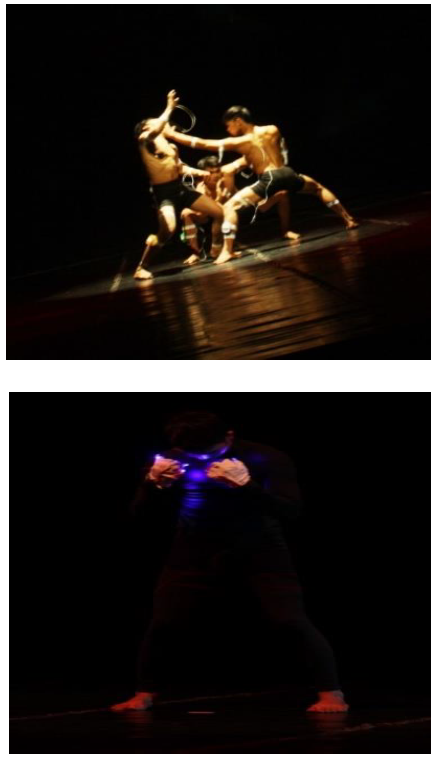
The make-up that will be used is stage make-up. Make-up is classified as an effort to provide firmness or clarity from facial anatomy, because dance performances are generally witnessed by the audience at a considerable distance, between 5-7 meters. The make-up used can be said to be collective makeup, namely by emphasizing facial lines, and covering up flaws in the face. So that with the distance created, the audience can still see the dancer's facial anatomy well. The choreographer presents one dancer's character makeup in the structure of the second part of the work. The goal is to show the differences in individuals who use communication. An individual who thinks he can be anyone on the Facebook communication service, a man in real life and a woman in cyberspace.
Figure 1: Different Makeup Characters, Dancer by Yuli Andre
Source: Vujji El Ikhsan
Figure 2: Costumes in Part 3
Source: Yogi Audra Nessa and Arif Rahman
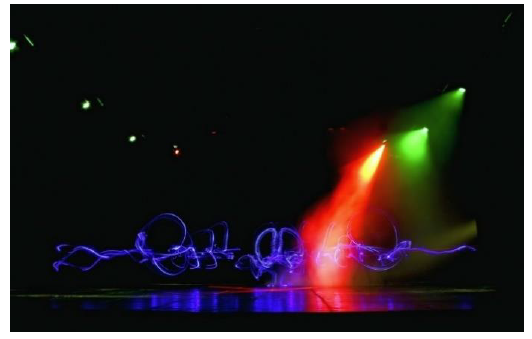
Figure 3: One of the Lighting Works in the Dialog Tubuh Choreography “Dialog Tubuh”
Source: Arif Rahman
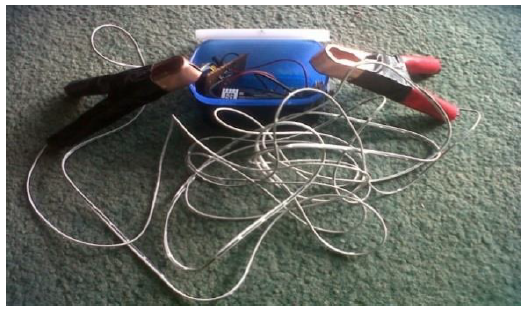
Figure 4: Skindio, Creation by Sulaiman
Source: Sabri Gusmail
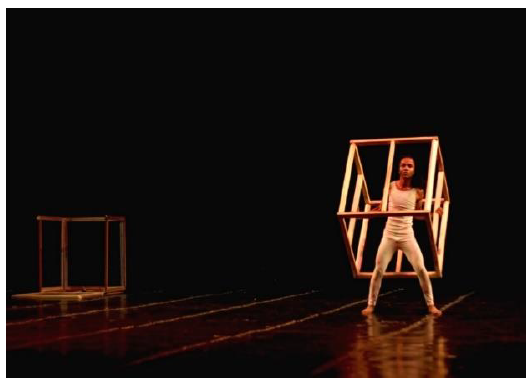
The costumes used in this work are tailored to the parts of the dance that will be created. In the first part using a vest, corset, green pants and wearing a waistband. The vest used is golden in color, a symbol of the color of splendor. The choice of green on the pants is because green is one of the distinctive colors besides yellow for ethnic Malays in the archipelago, especially North Sumatra Malays. Meanwhile, corsets and waistbands are additional fashion accessories. In the first two scenes, the costumes are the same as in the first scene, but not wearing vests and then there are five people wearing individual daily costumes in big cities. This illustrates the beginning of the influx of globalization on the North Sumatra Malay community and their individual behavior in communicating in urban cities. In scene three in part two, the dancer uses a helmet shaped like a cube with a rib size of 30 cm. The costumes used provide an understanding of individuals who communicate in cyberspace. The choreographer interprets a picture of an individual in an urban city with busy activities so that communication can be carried out anywhere and anytime. The first scene in the third part presents dancers wearing shorts and a body wrapped in electric cables, as a picture of technology that affects communication. At the end of the third part all the dancers wear only short black sequins and black cuffs and wear gloves that have been attached to the lights. This costume aims to build the third part of the atmosphere, which is symbolic of individual internal communication and action on other individual communications.
Lighting is not just another element whose function is only as a light, but it can help the choreographer to convey the message he wants to achieve to the audience, because the use of good lights will get a distinct impression on each desired scene. Some of the lights used are zoom spoot, plano, par light, fresnel, moving light and ultraviolet light. In the first part, the lighting is more general light and makes use of green and blue filters to provide a calm and lively atmosphere in the first part. In the second part, there is the use of focus lights by the zoom spot to emphasize the lighting of single-moving dancers and duet. In the third part, moving light is used as an imitation of laser light which can produce biases of light, usually symbolic of external influences that come in the form of communication. Other lamps are equally important to other parts of the dance and help with light filters to bring color to the light, so as to enhance the atmosphere that the choreographer wants.
Malay ethnic music is presented in this dance work. There is internal music that will be produced by dancers, settings, properties and other supporting elements. The artist also presents the sound that is presented directly by the dancer with the help of a skin sensor which is used as a dance property in the third part. Some of the musical instruments that the composer considered were helpful in cultivating this dance choreography, including the aqordion, violin, darabuka, gendang melayu (Malay drum), gendang tambur and pano (Minangkabau drum), tambourine, gong and gambus (lute). Using electronic music, which is music that is presented by advanced technology and uses an electric current, usually assisted by software (software) and hardware (hardware) such as laptops, keyboards, electric guitars, hand sonics. The selection of musical instruments is adjusted to the ideas and concepts of presenting the work. Ethnic musical instruments are used to describe the atmosphere of the Malay area of North Sumatra, while electronic music is a implementation of current technological developments. The sound produced by a musical instrument and the movement of the dancer's body become a separate form of communication that is created. Music and dance are a perfect union. Therefore, the choreographer and music arranger must pay more attention to this problem. The rhythm or tempo or time division of music that does not bind motion can be at risk between the two of them running independently, even the danger of the accompanying music dominates the dance so that it is like being separated, the ear listens to music and the eyes see dance movements. So that the authors combine traditional elements in ethnic music with popular music from electronic musical instruments with the aim of creating harmonious communication between the two, in accordance with the concept of communication which is the idea of the choreographer.
This choreography uses the laser pointer property to create straight-line light in the dark. The lights produced from the laser pointer are symbolic of the communication paths between individuals. Using an electric sensor on the
Figure 4: Dance Property and Stage Set
Source: Yogi Audra Nessa
dancer so that it makes a sound in every movement the dancer makes. "Motion that sounds". Skindio, a simple electronic musical instrument with a distinctive synthesizer sound that is attached to the skin surface of the body and allows it to produce sound. This circuit works based on the resistance between two points which is not fixed. Potentiometer as one of the electro components which is included in the variable resistor category, has the same principle with the human body which naturally can function as a non-permanent electrical barrier, based on how strong the body pressure is applied to two electronic points. The basis of this circuit is the astable multivibrator circuit which is common in electronics as a timer. "Astable multivibrator is a series of generating square waves which does not have a steady state and always rolls from one state to another (free running)". Physically, this circuit uses an IC 555 which functions as a timer where pin 6 and pin 2 points can be triggered by an unstable resistor. In principle, each movement is a trigger for the circuit to produce a digital sound signal, then the signal will be processed by another circuit to produce a unique digital sound and will be responded to by movement. This tool is used as a property that will symbolize the dancer's movement in an effort to carry out internal communication.
The skin sensor device used as a dance property is symbolic of the internal communication that the artist wants to present. The message was carried out by the author not only through the body, but combined with other media as a means of expression. The sound that is generated from the friction between the skin and the tool is symbolized as a dialogue carried out by the individual with himself. So that the sound becomes a signal of internal communication action. Choreographers use a series of LED (Light Emitting Diode) on the inner fingertips. The use of this property is symbolic of internal communications carried out by individuals and symbols of external communication actions. The symbolic will be seen from the straight line produced by the LED. Presents the dance property of two cube frames with a length of 1 meter each. The use of this property is only in the structure of part two of the work, this property is the result of the choreographer's imagination of the media and communication space at this time. These props and stage sets represent the imaginary space of the Facebook social network. A room that consists of dividing walls but does not have a distance limit in communicating. Dance properties must be able to convey messages to the audience, so that their presence becomes important in a performance [6].
CONCLUSION
“Dialog Tubuh” merupakan karya tari yang terinspirasi dari fenomena sosial komunikasi dan interaksi sosial. Mencermati peristiwa budaya Beahoi yang terdapat di Kabupaten Langkat Sumatera Utara dan megambil esensi utama dari peristiwa budaya tersebut yaitu bentuk komunikasi dan interaksi sosial yang lebih menekankan pada komunikasi tradisional, komunikasi yang mengutamakan tatap muka dalam pelaksanaannya. Mengkaitkan komunikasi tradisional dengan komunikasi populer yang sedang marak terjadi pada saat ini dan mengambil fokus individu sebagai hal terpenting dalam menyikapi pengaruh global dalam hal berkomunikasi. Judul “Dialog Tubuh” diartikan oleh sebagai sebuah bentuk komunikasi yang dilakukan oleh individu melalui perantara tubuh sebagai media utama untuk mengaplikasikan komunikasi dengan individu lain. Hal yang sama jika dikaitkan dalam ilmu tari mengenai tubuh sebagai media utama tari dan gerak sebagai bentuk perwujudannya. Oleh karena itu, Dialog Tubuh menjadi bagian ari perwujudan Beahoi dengan menggunkan konsep reinterpretasi. Sebuah proses mencipta karya seni dengan memilih fenomena tradisi nusantara sebagai sarana berekspresi, rangsang cipta, tema dan sumber gagasan.
Konsep karya tari Dialog Tubuh memilih budaya beahoi sebagai rangsang cipta dan sumber gagasan. Interpretasi terhadap budaya beahoi tentang komunikasi sebagai esensi utama untuk konsep penciptaan karya tari yang tidak memindahkan budaya beahoi yang sebenarnya ke atas pentas, melainkan menginterpretasikan kembali terhadap sebuah karya tari. Berbentuk ekspresi simbolik (abstraksi simbolik). Sebuah penciptaan seni dengan meminjam atau memanfaatkan motif simbol tradisi sebagai bahasa metafora dalam garap seni secara ekspresi atau abstraksi simbolik. Bentuk karya seperti ini menekankan pada interprestasi analisis penjelasan emik dalam kebudayaan. Sehingga menimbulkan ide garap dan mengacu pada pelahiran garap secara ekspresi personal yang kultur (seni modern dengan sentuhan tradisi ataupun sebaliknya).
Dialog Tubuh is a choreography inspired by the social phenomena of communication and social interaction. Observing the Beahoi cultural events in Langkat, North Sumatra and taking the main essence of these cultural events, namely communication and social interaction. Emphasizes traditional communication which prioritizes face to face in its implementation. Linking traditional communication with popular communication that is happening nowadays and taking individual focus as the most important thing in dealing with global influences in terms of communication. The title Dialog Tubuh (Body Dialogue) is defined as a form of communication carried out by individuals through the body as the main medium for applying communication with other individuals. The same is true in dance science regarding the body as the main medium for dance and movement as its manifestation. Therefore, This choreography is part of Beahoi's manifestation by using the concept of reinterpretation. A process of creating works of art by selecting the phenomenon of the archipelago tradition as a means of expression, stimulation of creativity, themes and sources of ideas.
The concept of the dance work Dialog Bodies chooses beahoi culture as a stimulant for creativity and a source of ideas. The interpretation of the beahoi culture regarding communication is the main essence for the concept of creating a dance work that does not transfer the actual beahoi culture to the stage, but reinterprets a dance work. This choreography takes the form of symbolic expressions (symbolic abstraction). An art creation by borrowing or utilizing traditional symbolic motifs as a metaphorical language in art work in expression or symbolic abstraction. This form of work emphasizes the analytical interpretation of emic explanations in culture. So that it gives rise to the idea of working on it and refers to the creation of works with cultural personal expressions (modern art with a touch of tradition or otherwise).
REFERENCES
Sukman, F.F. and S. Gusmail. “The pattern of vertical inheritance and the role of sheikh in inheritance system of Ratoeh Bantai dance in Aceh Province.” e-Prosiding Pascasarjana ISBI Bandung, vol. 1, no. 1, 2020.
Takari, M. and H. Dewi. Budaya musik dan tari Melayu Sumatera Utara. Universitas Sumatera Utara (USU) Press, 2008.
Nugra, P.D. et al. “Budaya pingit dalam tari ‘Perempuan Dalam Batas.’” Bercadik: Jurnal Pengkajian dan Penciptaan Seni, vol. 3, no. 2, 2016, p. 103.
Supriyanto, E. “Tubuh tari Indonesia Sasikirana Dance Camp 2015–2016.” Jurnal Panggung, vol. 28, no. 2, 2018, pp. 175–187.
Gusmail, S. “Properti tari waktu dalam lipatan: Analisis semiotika melalui pendekatan Charles Sanders Peirce.” Puitika, vol. 14, no. 1, 2018, pp. 14–24.
Recommended Articles
Research Article
Classifying Problems of Diabetic Foot
Amit Kumar C Jain
Published: 23/11/2020
Download PDF
Research Article
Effect of Laser Bio stimulation and Bone Graft in Treatment of a Large Periapical Lesion – A CBCT Analysis
Ruchika Gupta Dewan,
Unnavi Chauhan
Published: 22/11/2020
Download PDF
Research Article
Rare Presentation Heterogeneous Pregnancies
Imad Abedzaid Mohan Aljanabi,
...
Marwa Habeeb Nazal
Published: 20/03/2021
Download PDF
Research Article
Emerging Role of Nutraceuticals in Covid 19
Naaz Huda,
...
Kaur Charanjeet
Published: 22/11/2020
Download PDF
PO Box 101, Nakuru
Kenya.
Email: office@iarconsortium.org
Editorial Office:
J.L Bhavan, Near Radison Blu Hotel,
Jalukbari, Guwahati-India
Nugra, P. D. & Gusmail, S. (2020). Dialog Tubuh : A Dance Choreography as The Embodiment of Beahoi in The Concept of Reinterpretation. IAR Journal of Humanities and Cultural Studies, 1(1), 1-9.
MLA
Nugra, Prasika D. and Sabri Gusmail. "Dialog Tubuh : A Dance Choreography as The Embodiment of Beahoi in The Concept of Reinterpretation." IAR Journal of Humanities and Cultural Studies 1.1 (2020): 1-9.
Chicago
Nugra, Prasika D. and Sabri Gusmail. "Dialog Tubuh : A Dance Choreography as The Embodiment of Beahoi in The Concept of Reinterpretation." IAR Journal of Humanities and Cultural Studies 1, no. 1 (2020): 1-9.
Harvard
Nugra, P. D. and Gusmail, S. (2020) 'Dialog Tubuh : A Dance Choreography as The Embodiment of Beahoi in The Concept of Reinterpretation' IAR Journal of Humanities and Cultural Studies 1(1), pp. 1-9.
Vancouver
Nugra PD, Gusmail S. Dialog Tubuh : A Dance Choreography as The Embodiment of Beahoi in The Concept of Reinterpretation. IAR Journal of Humanities and Cultural Studies. 2020 Jul;1(1):1-9.


 Download PDF
 Download XML