Food insecurity remains globally widespread and stubbornly high. In Kenya, more than 10 million persons and their households are highly food insecure. Irrigation is one of the means by which agricultural productivity can be improved to meet the growing food demand. Small-scale farmers often face difficulties in production of their produce and are consequently prone to food insecurity. Contract Farming (CF) is a possibility to improve such a situation. The extent of the influence of contractual farming arrangements on household production, food security and incomes in the study area has not been investigated and documented and therefore necessitating this study. The main aim of this study was to assess influence of contractual farming on household food security in Weiwei Irrigation Scheme, Pokot Central Sub-County. This research adopted descriptive survey research design that involved collection of information through interviews and questionnaires from a sample of respondents. The target population of the study was 298 smallholder farmers in Weiwei Irrigation scheme engaged in contract farming with Kenya Seed Company Working. The study used systematic random sampling technique to arrive at the required sample size. The questionnaires used to collect data was developed by the researcher and validated by experts in agricultural education and extension field. The research instruments were pilot tested to determine the reliability of the instrument in Perkerra Irrigation Scheme, Marigat, using a samples of 30 farmers. Using Cronbach's alpha, an index of 0.92α for the questionnaire was established. Data collected was analysed using ordered logistic regression. This study found that engagement in contract farming significantly improved household food security. This study recommended that farmers in the study area should be encouraged to engage in contract farming in order to improve their food security status.
Keywords
Contractual Arrangements
Contract Farming
Weiwei Irrigation Scheme
Household Food Security
Pokot Central Sub-County
INTRODUCTION
According to Food and Agriculture Organization, FAO [1], food insecurity remains globally widespread and stubbornly high Over 900 million people globally experience the hardship that hunger imposes, a figure which continues to rise even amidst the riches of the 21st century [1]. In Sub Saharan Africa alone, over 218 million people (95 percent) live under extreme poverty and hunger are in the developing counties [2]. Household food insecurity is one of the major catastrophes in the Sub-Saharan Africa. In Kenya, more than 10 million persons and their households are highly food insecure, with 3.2 million food insecure persons living in Arid and Semi-Arid Lands (ASALs) of the country [3].
The vision 2030 particularly recognizes the importance of agriculture in the achievement of a sustained GDP growth rate [3]. Kenya has not attained the level of investment and efficiency in agriculture that can guarantee food security and coupled with resulting poverty, a significant portion of the population regularly starves and is heavily dependent on food aid [4]. The Kenya Vision 2030 and the National Food Security and Nutrition Policy (NFSNP) stipulate that the Government of Kenya (GOK) has consistently emphasized on local food production as one of the means of alleviating household food insecurity [3]. However, despite the formulation of the strategic plans, household food insecurity continues to persist since there is marked reliance on relief supplies by the poor and in Kenya, 53% of the people in rural areas are overall poor while 51% are food poor [3].
The developed and industrialized world have confronted food insecurity by putting in place strategies that enable access to livelihoods, assets, strong institutional support and favorable external environment which play crucial roles in agricultural productivity and hence reduced food insecurity [5]. However, food security initiative projects implemented over the years in many countries seem to be far from realization [6]. Sub-Saharan African countries face numerous challenges as they struggle to feed themselves with most of them constantly experiencing food shortages [7].
Irrigation is one of the means by which agricultural productivity can be improved to meet the growing food demand [8]. International agencies like the FAO and the World Bank, as well as national governments of low-income countries point at irrigation as an important tool to overcome food security. Such countries make huge investments in the construction, improvement and maintenance of physical infrastructure for efficient capture, distribution and use of water for irrigation [9].
In 2010, world leaders committed themselves to the Millennium Development Goals (MDGs) and one aim of the Millennium Development Goals is to eradicate poverty and hunger, including reducing by half the proportion of people who suffer from hunger between 2010 and 2015 [10]. Currently, more than 800 million people are affected by hunger in developing countries and the numbers of hungry people in the world is growing fast, each year.
Small-scale farmers often face difficulties in production and marketing of their produce [6]. They usually sell their produce individually at the farm gate to middlemen or on local markets at given prices [11]. This reduces farmers to price takers irrespective of the costs they incur in the production and marketing process. Furthermore, they must bear the high risk of not being able to market the entire amount of their produce [12]. Contract Farming (CF) is a possibility to improve such a situation. It is one form of vertical co-operation along value chains where a farmer or producer organization co-operates with a marketing partner (wholesaler or agro-processor) by stipulating regulations and mutual liabilities within a contract on the production, supply and acceptance of the agricultural produce [13]. Contract farming as a tool has existed for many years as a means of commercially organizing agricultural production of both large-scale and small-scale farmers [14].
Neoliberal market reforms, revolution of the supply chain management, increased urbanization and increase in per capita incomes have led to the rise of contract farming arrangements in Kenya (IFAD, 2010). Changes in consumption habits, such as the increasing number of fast-food restaurants, the growing importance of supermarkets in many countries and the continued expansion of world trade in fresh and processed products, have also provided the impetus for further development of this mode of production [14].
According to Dedehouanou et al. [15] well-managed contractual agreements can help reduce transaction costs as well as risks on both sides. In addition, the fulfilment of standards increasingly required by international buyers can be more easily controlled in contract farming arrangements [16]. Thus, traceability of the food chain is one important incentive to enter into contract farming ventures [17]. The ultimate objective is to achieve a sustainable long-term collaboration between producer/producer organization and the marketing partner, resulting in a win-win situation for both sides and based on mutual trust. Improved contract farming is important for global reduction of hunger and poverty and for economic development.
Glover and Kusterer [18] observed that contract farming has been seen as a way of moving from traditional way of farming to conventional and commercial agriculture. Contract farming is a prospective strategy between firms in the agro industry and smallholder farmers because of risk sharing in production of crops [19]. The agribusiness farms support the farmers through providing inputs to farmers and in return benefitting from assured and constant supply of farm produce to meet their needs [20].
West Pokot County is a semi-arid area which constantly experience rainfall shortage and several incidences of food insecurity. For more than five years, Kenya Seed Company Limited (KSC) has contracted smallholder farmers in Weiwei Scheme to be producing maize, okra, sunflower, watermelon and green grams seeds for the company. This relationship is likely to continue for a long time since KSC dominates the seed market in Kenya for these crops [21].
Contract Farming (CF) has been seen as a promising linkage strategy between smallholders and agribusiness firms with vested interests in sharing the risks associated with the production of a specific crop. Contract farming continues to be promoted in the study area and indeed most parts of Kenya, despite the insufficient information available on the state of contract farming and its respective success or failure factors. The way in which contract farming can achieve the development of food security through stable business relationships is equally unknown. The extent of the influence of contractual farming arrangements between Kenya Seed Company Limited and Weiwei farmers association on household food security in the Weiwei irrigation scheme has not been investigated and documented and therefore necessitating this study. This study sought to determine the influence of contractual arrangements on Weiwei irrigation scheme household food security in Pokot Central Sub-County. The study focused on the following elements of contractual farming arrangement: advisory services, input provision, credit provision and marketing. The study adopts three theories; Principal–Agent, Productionist Paradigm and Yield Gap theories that will address contract farming.
MATERIALS AND METHODS
The study was conducted in Weiwei Irrigation Scheme located in Sigor, Central Pokot Sub-County, West Pokot County, Kenya. The study adopted descriptive survey research design. The study targeted 298 people that comprised 73 employees of Kenya Seed Company working in research, production, processing and quality assurance department and 225 beneficiaries of the scheme. The sample size determination in this study was guided by Barlett et al. formula as shown below:
Where:
S: Sample size
Z: Value of selected alpha level (in this study 0.25 in each tail = 1.96)
d: Acceptable margin of error for proportion being estimated (0.05); (p) (q) = estimate of variance (0.25)
Table 1: Sample Size
Function
No. Employees
Sample
Kenya Seed Company Employees
73
61
Weiwei Irrigation Scheme Beneficiaries
225
142
Total
298
203
Source: Kenya Seed Company (2018)
This produced a maximum possible sample size of 384. Cochran’s correction formula was used to calculate the final sample size:
Where:
s1: Required sample size
s: Uncorrected sample
n: Total target population
A sample size of 61 technical employees and 142 households (beneficiaries) was selected from the target population for the study. Table 1 gives a summary of the sample size from each category of the target population for the study. A list of technical employees of Kenya Seed Company as well as Weiwei Irrigation Scheme Beneficiaries was obtained from Kenya Seed Company limited. The list formed the sampling frame from which respondents were selected. Systematic random sampling technique was employed in selecting the specific number of respondents in this study.
Table 1: Sample Size
Function
No. Employees
Sample
Kenya Seed Company Employees
73
61
Weiwei Irrigation Scheme Beneficiaries
225
142
Total
298
203
Source: Kenya Seed Company (2018)
The researcher used self-administered questionnaire to collect data from the respondents. Validity was ensured through expert judgment of research supervisors from Egerton University and expert food security practitioners drawn from the Ministry of Agriculture. In order to ensure reliability of the instruments, a pilot study was conducted at Perkerra Irrigation Scheme, Marigat, using the same tool to gauge responses for the purposes of improving the tool. Samples of 30 farmers from Perkerra Irrigation Scheme were selected for pilot testing. A reliability coefficient of 0.84 was calculated at α = 0.05 and therefore deemed accepted. Prior to data collection, an introductory letter from Egerton University Graduate School and Egerton University Research Ethics Committee was sought in order to facilitate the acquisition of the research permit from the National Commission for Science Technology and Innovation (NACOSTI). Data was analyzed with the use of the Statistical Package for Social Science (SPSS) version 22 for windows. Descriptive and inferential statistics were used. Descriptive statistics included measures of dispersion, central tendencies and distribution. Inferential statistics used in this study included ordered logistic regression (to determine the influence of contractual arrangements on household incomes and food security).
RESULTS AND DISCUSSION
Characteristics of Contracted Smallholder Maize Farmers of Weiwei Irrigation Scheme
The subjects for the study comprised of Weiwei Irrigation Scheme beneficiaries and employees of Kenya Seed Company in Pokot Central Sub-County. The study gathered information on the respondents’ personal attributes. The characteristics of the respondents that were assessed by the study include gender, marital status, age and level of education, size of land and livestock keeping.
Gender of the Respondent
Table 2 gives the status of gender composition in the irrigation scheme. Analysis of the results shows significant gender parity. Majority (62.1%) of the respondents were male. It was only 37.9% of the respondents who were female.
Table 2: Characteristics of Respondents
Gender
Description
Frequency
Percentage
Male
87
62.1%
Female
53
37.9%
Totals
140
100.0%
Marital status
Married
120
85.7%
Single
15
10.7%
Widowed
5
3.6%
Totals
140
100.0%
Age brackets
Less than 20
5
3.6
20-30
23
16.4
31-40
24
17.1
41-50
60
42.9
Above 50
28
20.0
Total
140
100.0
Level of education
No formal education
13
9.3
Primary
84
60.0
Secondary
19
13.6
Tertiary
14
10.0
Degree
10
7.1
Total
140
100.0
Source: Field Data (2020)
This may imply that majority of the contract farming related decisions such as what to grow, when to grow and the size of the enterprise may be dominated by male gender. The study by Handschuch [22] however, indicated that women mostly carry out production operations in most farms. This alludes to the need for sensitization programs on the role of women in agricultural production and marketing to increase their participation in farming decision-making process.
Marital Status of the Respondent
Majority (85.7%) of the farmers were married implying that most of the farming activities may have been targeted to benefit a number of household members. Some of the respondents were single (10.7%) while a few were widowed (3.6%). This is summarised in Table 2.
Since majority of the agricultural activities in the study area is labour intensive and utilizing family labour, married farmers may thus be advantaged as far as labour acquisition is concerned. This may also imply that most of the households in the study area are likely to have high numbers of members.
Age of the Respondents
Majority (42.9%) of the respondents were aged 41-50 years. About 20.0% of the total respondents were aged above 50 years while 17.1 and 16.4% were aged 31-40 years and 20-30 years, respectively. There were very few respondents aged below 20 years as shown in Table 2. The fact that farming in the study area is popular among the older persons may have a negative effect on contract farming productivity and production due to the effect of technology adoption. According to Kinuthia [23], while older farmers are poor adopters of new technologies, young and middle aged farmers are generally receptive to adoption of new technology in farming. If young farmers in the study area could embrace contract farming, this could be a plus to the sub-sector. Since young cohorts are hypothesized to be, better educated and therefore more certain about better methods of farming to improve sub-sector.
Level of Education of the Farmers
A cumulative of 82.9% of the total respondents had less than tertiary level of education (Table 2). Majority of the respondents (60.0%) had primary level of education. Nine point three percent (9.3%) of the respondents had no formal education. About 13.6% of the respondents had secondary level of education. It was just 10.0 and 7.1% of the respondents who had tertiary and degree level of education, respectively.
These results imply that majority of the farmers may lack adequate technical education which is a prerequisite to better contract farming. In addition to this, the level of education of the household head can influence the kind of decision that may be made on behalf of the entire household with regard to farming. More educated farmers are likely to make better decisions as well as quickly adopt new technologies in farming as compared to their less educated counterparts.
Household Composition by Age Brackets
This study had sought to determine the household composition by age. An average household in the study area had approximately 7.84 members (with a standard deviation of 3.81). Majority of the household members were of the school going age (5-17 years). An average household had members’ composition as follows: Less than 5 years (1.18 members), 5-17 years (2.69 members), 18-35 years (2.24 members), 36-64 years (1.36 members), 65 years and above (0.39 members). The results are summarized in Table 3.
Table 3: Household Composition by Age Brackets
Age brackets
Minimum
Maximum
Mean
Std. Deviation
Less than 5 years
0
4
1.18
1.10
5 – 17 years
0
10
2.69
1.80
18 – 35 years
0
8
2.24
1.98
36 – 64 years
0
5
1.36
1.24
65 years and above
0
5
0.39
1.05
Totals
-
-
7.84
3.81
Source: Field Data (2020)
According to Mukasa [24], household size accounts for availability of labour supply and household consumption levels. The findings could mean that most households in the study area have enough family labor and might not hire labor to meet the demands of maize production operations. More labour force is useful in contract maize farming on activities such as ploughing, weeding and harvesting, among others.
Size of Land under Contractual Arrangement
Respondents were requested to state their size of land under contractual arrangement. The amount of land under contract farming as owned by respondents in the study area is shown in Table 4. The results show that land under contract farming ranged from a minimum of 0.75 acres to a maximum of 5.5 acres. The average land size under contract farming was 2.504 acres with a standard deviation of 0.702. Majority of the households held between 2.1-3.0 acres under contract farming. About 21.4% of the households had land under contract farming ranging between 1.0-2.0 acres. About 2.9% of the households had less than 1 acre of land under contract farming. It was only 3.6% of the households who had more than 3 acres of land under contract farming.
Table 4: Size of Land under Contract Farming
Land size
Frequency
Percentage
Less than 1 acre
4
2.9
1.0 - 2.0 acres
30
21.4
2.1 -3.0 acres
101
72.1
More than 3
5
3.6
Total
140
100.0
Note: Minimum = 0.75; Maximum = 5.5 acres; Mean = 2.504; Std. dev. = 0.702
Source: Field Data (2020)
Respondent Livestock Keeping
As far as livestock rearing by the sampled farmers was concerned, the results are depicted in Figure 1. Majority (91.8%) of the farmers in the study area kept livestock. A few respondents (8.2%) did not keep livestock in their farms.
Figure 1: Livestock Rearing
There were different types of livestock that were kept by the sampled farmers in Weiwei Irrigation Scheme as shown in Figure 2.
Figure 2: Type of Livestock Reared
Majority of the respondents indicated that they sold livestock products from their enterprises. About 60.2% of the respondents were selling their livestock products as compared with only 39.8% of the respondents who did not sell any products. The results are summarized in Table 5.
Table 5: Respondent Sale of Livestock Products
Selling of livestock product
Frequency
Percentage
Yes
209
60.2
No
138
39.8
Total
347
100.0
Source: Field Data (2020)
Influence of Contractual Arrangements on Household Food Security
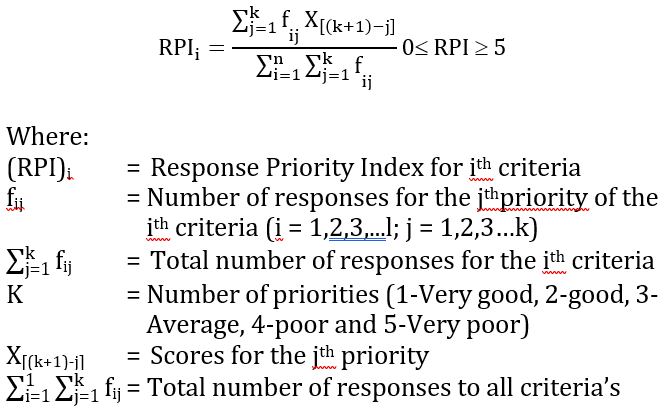
Use of Food Consumption Score (FCS) and Household Dietary Diversity Scale (HDDS) was adopted as measures of food security in this study. The frequency weighted diet diversity score in Food Consumption Score (FCS) was calculated using the frequency of consumption of different food groups consumed by a household during the 7 days before the survey.
Using a 24-hour recall period, this study sought to determine the households’ dietary diversity by assessing consumption over a reference period of one week. A total of 15 foods and food groups were assessed. These include: Cereals/grain, roots/tubers, legumes/nut, orange vegetables (vegetables rich in Vitamin A), green leafy vegetables, other vegetables, orange fruits (fruits rich in Vitamin A), other fruits, meat, liver/kidney/heart/other organ meats, fish/shellfish, eggs, milk/other dairy products, oil/fat/butter, sugar/sweet and condiments/spices.
Households who participated in this study had their food security scores computed and summarized in Figure 3. With respect to Food Consumption Score (FCS), an average household in this study scored a mean of 7.89 (standard deviation = 3.74; Skewness = -0.19; Kurtosis = 3.54). On the other hand, with respect to Household Dietary Diversity Scale (HDDS), an average household in this study scored a mean of 13.06 (Std. Dev. = 2.11; Skewness = -0.25; Kurtosis = 2.80).
Figure 3: Food Security Scores
Respondents in the study area indicated that they had explored different means in getting food in the last 12 months. The results are summarized in Figure 3. The most popular means of getting food as reported by the sampled respondents include (own livestock products, own crop production, milk/other dairy sales and purchases). An average household in the study area accessed food through own livestock production for an average of 8.13 months (with a standard deviation of 2.75). An average household in the study area accessed food through own crop production for an average of 7.16 months (with a standard deviation of 0.71). An average household in the study area accessed food through milk and other dairy sales for an average of 5.55 months (with a standard deviation of 0.18). An average household in the study area accessed food through purchase for an average of 2.34 months (with a standard deviation of 1.88). There was a small section of respondents who accessed food through sources such as stocks, exchange for labour or food for work, loans, barter (exchange for a product with another), food at work/school, wild food collection, fishing/hunting, gifts of food and food aid, among others.
The respondents’ self-rated household food availability in the last 12 months was summarized in Figure 4. Majority of the respondents indicated to be averagely sufficient in food availability as represented by 64.3% of the total responses. About 19.3% were below averages while 13.6% were very sufficient. A small portion of households (2.9%) were very bad in terms of availability.
Figure 4: Means mainly used to Get Food in the Last 12 months
Respondents who practiced contract farming were asked to describe the nature of change they have witnessed in the current times (with contract farming) against the past (when they were not practicing contract farming). The results are summarized in Table 6.
Table 6: Type of Change on Food Availability Situation Associated with Contract Farming
Situation
Better
No change
Worse
Totals
Availability of money to purchase food
63.6
20.7
15.7
100
Availability of food (produced from the farm)
67.1
13.6
19.3
100
State of household food security
67.1
20.7
12.1
100
Source: Field Data (2020)
Majority of the respondents indicated that availability of money to purchase food, availability of food (produced from the farm) and state of household food security have become better after practicing contract farming as compared to non-practice.
Most of the respondents (63.6%) reported that availability of money to purchase food is now better with practice of contract farming, compared to 20.7% and 15.7% who argued that the situation has not changed or has become worse, respectively. About 67.1% of the respondents reported that availability of food (produced from the farm) is now better with practice of contract farming. A few respondents indicated that food availability has either become worse (19.3%) or has not changed (13.6%). An overwhelming majority (67.1%) of the respondents reported that the state of household food security is now better with practice of contract farming. A few respondents indicated that household food security has either not changed (20.7%) or has become worse (12.1%).
Respondents were requested to indicate the extent to which they agreed with a set of statements relating to their household food security. The results are summarized in Table 6.
Majority of the respondents disagreed with the statement, “My household is often worried about likelihood of running out of food before the next harvest season or access of money to buy more”. About 37.9 and 20.0% of the respondents disagreed and strongly disagreed with the statement, respectively. Those who agreed with the statement comprised 19.3% with an additional 12.9% strongly agreeing. A small portion of respondents (10.0%) were neutral about the statement.
Majority of the respondents disagreed with the statement, “My household often have to cut the size of its meals because the harvest is low or there isn't enough money for food”. About 30.7% and an additional 20.0% of the respondents disagreed and strongly disagreed with the statement, respectively. About 29.3 and 12.9% of the respondents agreed and strongly agreed with the statement. A small portion of respondents (7.1%) were neutral about the statement.
Respondents were requested to indicate their level of agreement with the statement, “My household sometimes receive food from neighbours or friends”. Majority of the respondents strongly disagreed with this statement (with an additional 23.6% of the respondents disagreeing with the statement). On the other hand, those who agreed and strongly agreed with the statement were 29.3 and 10.0%, respectively. About 3.6% were undecided.
Respondents were requested to indicate their level of agreement with the statement, “My household sometimes buy food on credit from the shop”. Majority of the respondents disagreed with this statement (27.1% strongly disagreed and 30.7% disagreed). On the other hand, those who agreed and strongly agreed with the statement were 29.3 and 12.9%, respectively. None of the respondents was undecided.
This study sought respondents’ level of agreement with the statement, “My household sometimes collect wild plants from the field for food”. Majority of the respondents disagreed with this statement (30.0% strongly disagreed and 27.1% disagreed). About 25.77 and 17.1% of the respondents agreed and strongly agreed with the statement, respectively. None of the respondents was undecided.
Respondents were requested to indicate how frequently they encountered with situations that had an effect on their food security and the results summarized in Table 7.
Table 7: Respondent’s Agreement with a Set of Statements Relating to Household Food Security
Statements
SD
D
N
A
SA
Totals
Mean
Std. dev
My household is often worried about likelihood of running out of food before the next harvest season or access of money to buy more
20.0
37.9
10.0
19.3
12.9
100.0
2.67
1.34
My household often have to cut the size of its meals because the harvest is low or there isn't enough money for food
20.0
30.7
7.1
29.3
12.9
100.0
2.84
1.38
My household sometimes receive food from neighbours or friends
33.6
23.6
3.6
29.3
10.0
100.0
2.59
1.45
My household sometimes buy food on credit from the shop
27.1
30.7
0.0
29.3
12.9
100.0
2.70
1.46
My household sometimes collect wild plants from the field for food
30.0
27.1
0.0
25.7
17.1
100.0
2.73
1.54
Source: Field Data (2020)
Majority of the respondents indicated that they never lacked problems or anxiety about consistently accessing adequate food as represented by 50.7% of the total responses. About 29.3% of the respondents indicated that they sometimes lacked challenges on consistency of accessing adequate foods. Twenty percent of the respondents often lacked problems or anxiety about consistently accessing food.
Majority of the respondents indicated that they never encountered problems or anxiety about accessing adequate food (with normal quality, variety and quantity of their food intake) as represented by 47.1% of the total responses. About 40.0% of the respondents indicated that they sometimes encountered problems or anxiety about accessing adequate food (with normal quality, variety and quantity of their food intake). A few respondents (12.9%) cited that they often encountered problems or anxiety about accessing adequate food (with normal quality, variety and quantity of their food intake).
Majority of the respondents indicated that they sometimes reduced the quality, variety and desirability of diets (with normal quantity of food intake and eating patterns) as represented by 50.2% of the total responses. About 36.9% of the respondents indicated that they never reduced quality, variety and desirability of diets (with normal quantity of food intake and eating patterns). A few respondents (12.9%) cited that they often reduced quality, variety and desirability of diets (with normal quantity of food intake and eating patterns).
Majority of the respondents indicated that they sometimes faced disruption of eating patterns of one or more household members (reducing food intake due to lack of money and other resources) at times during the year as represented by 43.6% of the total responses. About 40.0% of the respondents indicated that they never faced disruption of eating patterns of one or more household members at times during the year. A few respondents (16.4%) cited that they often faced disruption of eating patterns of one or more household members (reducing food intake due to lack of money and other resources) at times during the year.
Majority of the respondents indicated that they sometimes worried on whether food would run out before getting money to buy more.as represented by 41.4% of the total responses. About 40.0% of the respondents indicated that they never worried on whether food would run out before getting money to buy more. A few respondents (18.6%) cited that they often worried on whether food would run out before getting money to buy more.
Majority of the respondents indicated that they never had to buy less food due to lack of money as represented by 57.9% of the total responses. About 26.4% of the respondents indicated that they sometimes had to buy less food due to lack of money. Fifteen point seven percent of the respondents often had to buy less food due to lack of money.
Majority of the respondents indicated that they were never unable to afford to eat balanced meals as represented by 50.0% of the total responses. About 34.3% of the respondents indicated that they were sometimes unable to afford to eat balanced meals. Fifteen point seven percent of the respondents were often unable to afford to eat balanced meals (Table 8).
Table 8: Respondents Frequently of Encounter with Situations that had an Effect on Food Security
Statements
Often
Sometimes
Never
Totals
Lack of problems, or anxiety about, consistently accessing adequate food.
20.0
29.3
50.7
100.0
Problems or anxiety about accessing adequate food (with normal quality, variety and quantity of their food intake).
12.9
40.0
47.1
100.0
Reduced quality, variety and desirability of diets (with normal quantity of food intake and eating patterns).
12.9
50.2
36.9
100.0
Disruption of eating patterns of one or more household members (reducing food intake due to lack of money and other resources) at times during the year
16.4
43.6
40.0
100.0
Worries on whether food would run out before getting money to buy more.
18.6
41.4
40.0
100.0
Having to buy less food due to lack of money.
15.7
26.4
57.9
100.0
Being unable to afford to eat balanced meals.
15.7
34.3
50.0
100.0
Source: Field Data (2020)
In the last 12 months, majority of the respondents indicated that themselves or other adults in the household did not cut the size of their meals or skip meals because there wasn’t enough money for food. About 57.9% did not eat less than they felt they should because there wasn’t enough money for food. Similarly, in the last 12 months, majority of the respondents (61.4%) did not go hungry because they couldn’t afford enough food. About 57.9% of the respondents, did not lose weight because they didn’t have enough money for food in the last 12 months. About 65.0% of the total respondents (or other adults in their household) did not ever failed to eat for a whole day because there wasn’t enough money for food.
Respondents’ extent of agreement with the statements concerning the effects of contractual arrangements on food security was summarized in Table 9. Majority of the respondents agreed with the statement that contract farming gives higher yields and surplus food for consumption with 37.1 and 43.6% agreeing and strongly agreeing with the statement, respectively. Those who disagreed with the statement comprised 12.9% (disagree) and 6.4% (strongly disagree) while none of the respondents was undecided.
Table 9: Respondents Encounter with Difficult Situations that had an Effect on their Household Food Security
Statement
Yes
No
Total
In the last 12 months, did you or other adults in the household ever cut the size of your meals or skip meals because there wasn’t enough money for food?
35.7
64.3
100.0
In the last 12 months, did you ever eat less than you felt you should because there wasn’t enough money for food?
42.1
57.9
100.0
In the last 12 months, were you ever hungry, but didn’t eat, because you couldn’t afford enough food?
38.6
61.4
100.0
In the last 12 months, did you lose weight because you didn’t have enough money for food?
42.1
57.9
100.0
In the last 12 months did you or other adults in your household ever not eat for a whole day because there wasn’t enough money for food?
35.0
65.0
100.0
Source: Field Data (2020)
Majority of the respondents agreed with the statement that contract farming had improved the living standards of people of Pokot central sub-county with 32.9% and 51.4% agreeing and strongly agreeing with the statement, respectively. Those who disagreed with the statement comprised 6.4% (disagree) and 2.9% (strongly disagree) while 6.4% were undecided.
Majority of the respondents agreed with the statement that they can use contract arrangement to get loans with 40.7 and 33.6% agreeing and strongly agreeing with the statement, respectively. Those who disagreed with the statement comprised 15.7% (disagree) and 10.0% (strongly disagree) while none of the respondents was undecided.
Majority of the respondents agreed with the statement that household income had improved since their engagement in contract farming with 54.3% and 33.6% agreeing and strongly agreeing with the statement, respectively. Those who disagreed with the statement comprised 6.4% (disagree) and 5.7% (strongly disagree) while none of the respondents was undecided.
Majority of the respondents agreed with the statement that since contract farming household income had improved with 60.7 and 23.6% agreeing and strongly agreeing with the statement, respectively. Those who disagreed with the statement comprised 2.9% (disagree) and 9.3% (strongly disagree) while 3.6% were undecided.
Majority of the respondents agreed with the statement that since contract farming, they had stable income with 47.1 and 23.6% agreeing and strongly agreeing with the statement, respectively. Those who disagreed with the statement comprised 19.3% (disagree) and 6.4% (strongly disagree) while 3.6% were undecided.
Majority of the respondents agreed with the statement that generally contract farming had improved their household welfare with 36.4 and 45.0% agreeing and strongly agreeing with the statement, respectively. Those who disagreed with the statement comprised 9.3% (disagree) and 6.4% (strongly disagree) while 2.9% were undecided.
Table 10 and 11 shows the Ordered Logistic Regression analysis results for the influence of contract farming on household food security in the study area. The log likelihood for the fitted model of -447.68 and the likelihood ratio chi-squared value of 14.26 (Prob> chi2 = 0.002) indicate that the two parameters are jointly significant at 5%. Pseudo R2 of 0.257 meet the statistical threshold confirming that contract household food security in the study area was well attributed to contract farming.
Table 10: Effects of Contractual Arrangements on Food Security
Statement
SA
A
U
D
SD
Total
Mean
Std. Dev.
Contract farming gives higher yields and surplus food for consumption
37.1
43.6
0.0
12.9
6.4
100.0
2.92
1.21
Contract farming has improved the living standards of people of Pokot central sub-county
51.4
32.9
6.4
6.4
2.9
100.0
3.24
1.02
I can use my contract arrangement to get a loan
33.6
40.7
0.0
15.7
10.0
100.0
2.72
1.34
Household income has improved since my engagement in contract farming
33.6
54.3
0.0
6.4
5.7
100.0
3.04
1.06
Since contract farming household income have improved
23.6
60.7
3.6
2.9
9.3
100.0
2.86
1.10
Since contract farming, I have stable income
23.6
47.1
3.6
19.3
6.4
100.0
2.62
1.22
Generally contract farming has improved our household welfare
The coefficient for contract farming (0.746) was statistically significant at 5% (p-value = 0.000). This implies that engagement in contract farming significantly improved household food security. These results agrees with Bellemare [25] who concluded that contract farming reduces the duration of the hungry season by approximately nine days for the participating households. The study noted that there are channels through which the link between increased food security and contract farming could fail. In addition to finding that contract farming translate into increased food security for participating households, Bellemare [25] observed that households with more children benefit more from contract farming and in particular those households with female children benefit the most. Children and particularly female children, bear the largest burden of food insecurity. These burdens include stunting, wasting, listlessness and cognitive impairment.
CONCLUSION
Engagement in contract farming significantly improved household food security. This study revealed that the most popular means of getting food included own livestock products, own crop production, milk/other dairy sales and purchases. Most farmers were averagely sufficient in food availability. The availability of money (to purchase food), food (produced from the farm) and state of household food security have become better due to contract farming practice. Contract farming should be supported and encouraged in order to ensure improved households food security in the study area. Contract arrangements enables farmers to gain enough incomes that is used in purchase of variety of foods that are not necessarily produced by the household. Contract farming is very key for food security in the study area. More trust should be cultivated among the parties involved in contract arrangement in the study area. Greater trust is a highway to configuration of contract farming in order to include possibilities of provision of food items to farmers who have proven their ability to repay for the foods (or financial resources) that have been offered in advance.
REFERENCE
FAO. The State of Food Insecurity in the World. FAO, 2020.
FAO. Contribution of Agricultural Growth to Reduction of Poverty, Hunger and Malnutrition. The State of Food Insecurity in the World 2012. FAO, 2012.
GoK. Kenya Climate Smart Agriculture Project (KCSAP). Government Printers, 2017.
Gichuhi, W. “Resilience in the Face of Starvation: Coping Strategies for Food Security among Women in Kenya.” Pathways to African Feminism and Development: Journal of African Women's Studies Centre, vol. 1, no. 2, 2015.
Herrero, M. et al. “Farming and the Geography of Nutrient Production for Human Use: A Transdisciplinary Analysis.” Lancet Planetary Health, vol. 1, no. 1, 2017, pp. 33–42. https://doi.org/10.1016/S2542-5196(17)30007-4.
Fanzo, J. “The Role of Farming and Rural Development as Central to Our Diets.” Physiology & Behavior, vol. 193, no. 1, 2018, pp. 291–297. https://doi.org/10.1016/j.physbeh.2018.05.014.
Awulachew, B. Experiences and Opportunities for Promoting Small Scale Micro Irrigation and Rain Water Harvesting for Food Security in Ethiopia. Working Paper 98, IWMI, 2005.
Bosire, C.K. et al. “Adaptation Opportunities for Smallholder Dairy Farmers Facing Resource Scarcity: Integrated Livestock, Water and Land Management.” Agriculture, Ecosystems & Environment, vol. 284, 2019, pp. 65–92.
FAO and FHI360. Minimum Dietary Diversity for Women—A Guide to Measurement. FAO, 2016.
Woodhouse, P. “Beyond Industrial Agriculture? Some Questions about Farm Size, Productivity and Sustainability.” Journal of Agrarian Change, vol. 10, no. 3, 2010, pp. 437–453.
Popkin, B.M. “Nutrition, Agriculture and the Global Food System in Low and Middle Income Countries.” Food Policy, vol. 47, 2014, pp. 91–96. https://doi.org/10.1016/j.foodpol.2014.05.001.
Bellemare, M.F. and L. Novak. “Contract Farming and Food Security.” American Journal of Agricultural Economics, vol. 99, no. 2, 2017, pp. 357–378.
Eaton, C. and A.W. Shepherd. Contract Farming: Partners for Growth. FAO, 2001.
Dedehouanou, S.F.A. et al. “Does Contracting Make Farmers Happy? Evidence from Senegal.” Review of Income and Wealth, vol. 139, no. 1, 2013, pp. 138–160.
Hu, D.H., Z.G. Chen, Q.Z. Sun and T.N. Duo. “The Impact of Contract Farming on the Farmer’s Income and Food Safety.” Chinese Rural Economy, no. 11, 2006, pp. 17–24.
Opara, L.U. “Traceability in Agriculture and Food Supply Chain: A Review of Basic Concepts, Technological Implications and Future Prospects.” Food, Agriculture & Environment, vol. 1, no. 1, 2003, pp. 101–106.
Glover, D. and K. Kusterer. Small Farmers, Big Business: Contract Farming and Rural Development. Macmillan, 1990.
Bellemare, M.F et al. “The Welfare Impacts of Commodity Price Volatility: Evidence from Rural Ethiopia.” American Journal of Agricultural Economics, vol. 95, no. 4, 2013, pp. 877–899.
IFPRI. Linking Smallholders to Markets. Background Paper No. GSSP 0001, 2006.
Kakuko, K.J. Impact of Irrigation Scheme on Food Security: A Case of Wei-Wei Irrigation Scheme in Central Pokot District, West Pokot County, Kenya. MA Thesis, University of Nairobi, 2013.
Handschuch, C. Traditional Food Crop Production and Marketing in Sub-Saharan Africa: The Case of Finger Millet in Western Kenya. Doctoral dissertation, Niedersächsische Staats- und Universitätsbibliothek Göttingen, 2014.
Kinuthia, B.K. The Impact of Agriculture Technology Adoption on Farmers’ Welfare in Uganda and Tanzania. Master’s thesis, University of Nairobi, 2016.
Mukasa, A.N. Technology Adoption and Risk Exposure among Smallholder Farmers: Panel Data Evidence from Tanzania and Uganda. African Development Bank Group Working Paper No. 233, 2016.
Bellemare, M.F. “As You Sow, So Shall You Reap: The Welfare Impacts of Contract Farming.” World Development, vol. 40, no. 7, 2012, pp. 1418–1434.
Advertisement
Recommended Articles
Research Article
Pedagogic Competencies Provided To Student Teachers through Biology Teacher Education in Universities in Kenya In Light of Classroom Practice
Download PDF
Research Article
Outcome of COVID-19 in Patients with Myasthenia May Not Only Depend on the Immunologic Disease
Josef Finsterer,
...
Ana C Fiorini
Published: 31/10/2020
Download PDF
Research Article
A Study To Understand Research Into The Formation of Educator Profiles for Use by Institutions Whose Primary Mission is The Preparation of Future Educators
Jin Xianzhao,
...
Aminul Islam
Published: 29/07/2024
Download PDF
Research Article
The Effect of a Picture Book on the Pre-Primary School Children's Literacy Skills Development: Implication on the Teacher Education and Child Language Development
Dominion ,
Joanna Ngozi
Published: 15/07/2020
Download PDF
PO Box 101, Nakuru
Kenya.
Email: office@iarconsortium.org
Editorial Office:
J.L Bhavan, Near Radison Blu Hotel,
Jalukbari, Guwahati-India
Menach, C. C., Obara, J. & Maina, S. W. (2021). Influence of Contractual Arrangements on Weiwei Irrigation Scheme Household Food Security in Pokot Central Sub-County, Pokot County, Kenya. International Academic Journal of Education & Literature, 2(1), 1-9.
MLA
Menach, Caroline C., James Obara and Stephen W. Maina. "Influence of Contractual Arrangements on Weiwei Irrigation Scheme Household Food Security in Pokot Central Sub-County, Pokot County, Kenya." International Academic Journal of Education & Literature 2.1 (2021): 1-9.
Chicago
Menach, Caroline C., James Obara and Stephen W. Maina. "Influence of Contractual Arrangements on Weiwei Irrigation Scheme Household Food Security in Pokot Central Sub-County, Pokot County, Kenya." International Academic Journal of Education & Literature 2, no. 1 (2021): 1-9.
Harvard
Menach, C. C., Obara, J. and Maina, S. W. (2021) 'Influence of Contractual Arrangements on Weiwei Irrigation Scheme Household Food Security in Pokot Central Sub-County, Pokot County, Kenya' International Academic Journal of Education & Literature 2(1), pp. 1-9.
Vancouver
Menach CC, Obara J, Maina SW. Influence of Contractual Arrangements on Weiwei Irrigation Scheme Household Food Security in Pokot Central Sub-County, Pokot County, Kenya. International Academic Journal of Education & Literature. 2021 Jan;2(1):1-9.



 Download PDF
 Download XML