Fermented milk is a product that positively influences human health. Different types of fermented milks are developed, because through the probiotic microorganisms of these products, consumers can have improvements in their intestinal health. This work aimed to produce a Piima-type fermented milk with honey and to analyze, through physical-chemical, microbiological and sensory tests, the consumption potential of this product. Sensory evaluation results show high acceptability by the consumers, this shows that fermented mil Piima can be regarded as possible health-promoting food. Keywords: Lactococcus lactis, Probiotic, Fermented milk, Piima-type.
Nutrition quality is an important factor in the equilibrium and maintenance of human health. The growth in people’s concern in knowing the characteristics of the food they consume has raised the development of products that, other than their function of nutrition, promote health and well-being, denominated functional foods [1].
The word probiotic was introduced by Lilley and Stillwell [2], to describe microorganisms that perform beneficial activities to the human organism. Probiotics are defined as living microorganisms capable of improving the intestinal microbial balance, producing beneficial effects on the individual's health. The regular consumption of these foods can be associated with different beneficial health effects, such as improving the intestinal transit of food, facilitating digestion, relieving symptoms of lactose intolerance, decreasing infantile colic, increasing the resistance of the gastrointestinal tract to the colonization of pathogens, stimulating the immune system, reducing cholesterol and preventing or suppressing colon cancer [1,3].
Fermented milk is products added or not with other food substances, obtained by coagulating and lowering the pH of the milk, or reconstituted milk, added or not with other dairy products, by lactic fermentation through the action of specific microorganisms, which must be viable, active and abundant in the final product during the shelf life. According to legislation, the cultures or microorganisms used in fermentation define the name of the product, which can be yogurt, fermented milk, acidophilic milk, kefir, kumys and curd [4].
The Piima fermented milk, of Scandinavian origin, have a finer consistency, a milder flavour and is less acid than other yogurts. It is mesophilic fermented milk, which means that it can be fermented at room temperature [5]. It is described as a mixture of bacteria of the genera Streptococcus and Lactococcus, however, other bacteria and yeasts can be associated with the culture [6]. The probiotic Lactococcus lactis, is a non-pathogenic Gram-positive bacterium, related to the genus Streptococcus, is also the best characterized lactic acid bacterium [7]. The Lactococcus lactis are of great importance in the dairy industry, mainly cheese and butter production [8]. Thus, the purpose of this work was to prepare a fermented milk piima with honey and to analyze the physicochemical, (carbohydrate, protein, lipids, moisture, ash, acidity and pH), elaborate the nutrition facts table of the product, besides microbiological analysis, molecular identification and sensory evaluation.
Fermented Milk Piima Preparation
The Piima type fermented milk was obtained per donation and kept viable through daily cultivation. One tablespoon (about 20 g) of fermented milk Piima was added on a bottle containing 150 mL of whole milk, the mixture was homogenized and kept at room temperature for 12 hours. The result is creamy fermented milk, low acidity, with a texture close to plain yogurt. The fermented milk of this new flask was used to produce the yogurt of the next analyzes.
Was used 250 mL of fermented milk Piima in 2 litres of whole milk and fermented for 12 hours at room temperature. After this period, it was kept refrigerated (4±1ºC) for 12 hours and then added with 5 % honey, homogenized and refrigerated again until the analysis.
Molecular Identification
The identification of bacteria was performed using high-performance sequencing of the V3 / V4 regions of the 16S rRNA gene. For sequencing, it was necessary to amplify the gene with the primers 341F CCTACGGGRSGCAGCAG [9] and 80R GGACTACHVGGGTWTCTAAT [10]. The DNA extraction using magnetic beads was performed according to the manufacturer's protocol (Neoprospecta Microbiome Technologies, Brazil). The libraries were sequenced using the MiSeq Sequencing System (Illumin Inc., USA) and the kit V2, with 300 cycles and single-end sequencing. The sequences were analyzed using a proprietary pipeline (Neoprospecta Microbiome Technologies, Brazil).
Microbiological Analysis
Microbiological analysis was performed 1 day after yogurt production in order to guarantee the food safety of samples to be used on sensory analysis. Termotolerant coliforms, yeasts and moulds were analyzed, since they are those who have presence limits established by current Brazilian legislation [4]. The MRS agar culture medium was used for the Lactococcus analysis, since this is the main microorganism in this fermented milk.
A total of 25 mL of the sample was transferred into a stomacher containing 225 mL of sterile 0.1 % w/v peptone water (Himedia Ltd., Curitiba, Brazil). Further dilutions were made from this original dilution. For yeasts and moulds quantification 0.1 mL from dilutions was inoculated on dry 2 % potato glucose agar surface (Himedia, Curitiba, Brazil), acidified to pH 3.5. The plates were incubated without inverting at 25±1 °C, for 5 days [11]. For Lactococcus quantification, 1 mL from dilutions was inoculated on MRS agar plates. The plates were incubated in an oven at 43°C for 72 hours.
Thermo-tolerant coliforms were quantified in EC broth (Himedia, Curitiba, Brazil) using colonies from total coliform plates, after incubation at 45 ºC for 48 h [12].
Physicochemical Analysis
Protein, fat, moisture and, ashes were performed within 2 days of manufacture. Crude protein was determined via the Kjeldahl method as nitrogen (%) and then multiplied by a conversion factor (6.38) [13]. Fatwas determined by Soxhlet [13]. Moisture was determined by drying (MA033, Marconi, Brazil) the samples at 105 °C to a constant weight [13]. For the ash determination, samples were previously dried at 105 °C and then incinerated at 550 °C (CE-800/R, Cienlab, São Paulo, Brazil). The ash content was measured gravimetrically. All samples were measured in triplicate.
The pH and titratable acidity were performed after 1day of refrigerated storage. The pH values were measured using a pHmeter (Digimed DM-20, SPLabor, Presidente Prudente, Brazil) by direct insertion of the electrode into the sample. Titratable acidity was determined after mixing 10 mL sample with 40 mL distilled water and titrating with 0.1 N NaOH using a 1 % phenolphthalein indicator to an endpoint of faint pink colour [14]. Amount of titratable acidity (a lactic acid percentage) was calculated. All samples were measured in triplicate.
Total carbohydrate was calculated using Eq.1:
Total carbohydrate: [100 – (% moisture + % ash + % protein + % fat)]
1
Sensoriy Analysis
Sensory evaluation was carried out in the Sensory Laboratory, at Tuiuti University of Paraná, PR, Brazil. The selection criterion was the nonexistence of allergic reactions to milk and consumption of fermented milk. Analyses were performed 6 days after production and lasted 2 days.
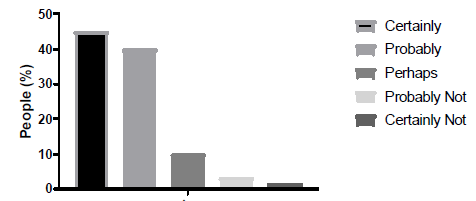
Sixty untrained sensory assessors evaluated the sample in individual sensory booths. Sample (25 mL) were served at refrigeration temperature in white plastic cups. An effective (hedonic) sensory test and a purchase intent test was performed. For the effective test the appearance, flavour, taste and, the texture was investigated on a 9-point hedonic scale (1 = dislike extremely, 5 = neither like nor a dislike, 9 = like extremely). The consume intent test was performed to better understand the likely consumers of the products and was evaluated using a five-point structured scale (1 = certainly would not consume and 5 = certainly would consume) according to the methodology proposed by Dutcoski [15].
For the calculation of the (AI) of the product, the expression was measured using Eq. 2:
AI (%) = A x 100 / B
2
where,
A: Average grade obtained for the product
B: Maximum grade given to the product
The coefficient of variation allows comparisons between variables of different natures and provides an idea of the accuracy of the data. At first it is considered that the smaller the CV, the more homogeneous the data are [16]. The CV was calculated using Eq. 3:
CV = (standard deviation / mean) x 100
3
The AI, CV and graphics formulations was performed using Graph Pad Prims 7.05 version program.
Molecular Identification
The sequences that passed through the initial procedures and that had 100% identity were grouped into phylotypes/clusters and were used for taxonomic identification, by comparison with a database of accurate sequences of 16S rRNA [17]. Results of molecular identification show that 85% of the strains presented on the fermented milk piima analyzed are Lactooccus lactis, while other strains represent values lower than 1% (they are lactobacillus and streptococcus species).
Lactic acid bacteria used in the fermentation of foods are able to inhibit or reduce contamination by deteriorating and/or pathogenic microorganisms through the production of antimicrobial compounds, such as a reduction in pH (acidification), production of diacetyl, carbon dioxide, peroxide, ethanol and bacteriocins that can exert an inhibitory action on different groups of microorganisms [17].
Among the bacteriocins used, the most used is nisin, which is used by several lines of Lactococcus lactis subsp. Lactis. Considered as a safe and non-toxic substance, it was used in the food industry of countries as an antimicrobial agent in cheeses, liquid eggs, sauces and canned foods, extending the shelf life of products [17].
Microbiological Analysis
It was not detected the presence of coliforms at 45°C, moulds nor yeasts during analysis. That indicates adequate handling of the product and fits it as within the microbiological standards required by the current Brazilian legislation [4].
The results obtained in the Lactococcus count showed a value of 9,1x10⁷ CFU/g, where the consumption of adequate amounts of the desired probiotic microorganisms in the bioproducts is of 0,77 UFC/g sufficient to maintain the physiologically active concentration [18]. The probiotic cells should survive during the time until reaching the consumer [19] and after ingestion, at adverse conditions present in the gastrointestinal tract, maintain their effectiveness to get metabolically active in the intestine and exercise beneficial functions in the host [20]. When the concentration found was compared with the Brazilian legislation, we can be fixing the attention, but it is not worrisome because the high concentrations can be used in the dairy industry [21].

Figure 1: Acceptability Index (IA) of Fermented Milk Piima Type
Physicochemical and Nutritional Analysis
The nutritional analysis resulted in 88.18% of moisture, 3.12% of protein, 4.74% of carbohydrates and 3.15% of total fat and can see in Table 1. The results obtained has a CV of more than 25 % when compared with other products, except moisture with 8.77%, showing that different ingredients in composition alter the nutritional value [22,23]. Many ingredients can be used for yogurt development to improve nutritional quality, the buffala milk and goat milk are can be to use for the production of the yogurt [24] or the addition of fruit jelly [22], result in yogurts with different physicochemical characteristics. This work produced a fermented milk Piima type with honey than reached characteristics shows in other development and accepted by the tasters.
Table 1: Physicochemical Analysis of Fermented Milk Piima Type
| Author | Lima, 2020 | Nóbrega, 2020 | Cunha et al, 2018 | CV (%) | |
Moisture (%) | 88,18 | 88 | 72,75 | 81,91 | 8,77 |
Protein (%) | 3,12 | 4,3 | 5,07 | 2,23 | 34,13 |
Carbohydrates (%) | 4,74 | 1,83 | 9,34 | 13,29 | 89,98 |
Total Fat (%) | 3,15 | 4,89 | 3,05 | 1,91 | 37,83 |
Sensorial Evaluation
The final product of this work was considered acceptable by the evaluators, since an AI above 70% indicates the acceptance of the food, on different categories, shown on Figure 1. The values are similar of others yogurts development where, the addition of honey is demonstrated good acceptability [25] and the addition of others ingredients how the fruits with the attention for the amount, can be to attract the consumer for the product [26].
Garcia and Travassos [27], developed the umbu-flavoured goat fermented milk, which in their sensory attributes obtained good acceptance, registering average values between 6.07 to 7.17, which corresponds to the “ I slightly liked it “and the hedonic scale "I moderately liked it". They obtained results like those found for fermented milk Piima type with honey. Among the comments of the tasters, there was a positive highlight about the taste of honey that pleased them a lot, as Barroso et al. [28], in his work on the acceptability of the Cajá pulp used as a flavour, softened the taste and texture of goat's milk. The flavouring used also helped the acceptability of fermented milk of the Piima type to which honey was added. Garcia and Travassos [27], developed a goat fermented milk umbu flavour. The samples of fermented milk with additions of umbu candy obtained good acceptance and might be an interesting option for the dairy industry. With scored 85% of ‘would consume’ answers (Figure 2), the fermented milk Piima type with honey presented a greater potential for consumers if the product is marketed.

Figure 2: Consume Intent of Fermented Milk Piima Type
The results obtained by the present study were satisfactory when compared to other studies. In addition, its nutritional composition points this product as a positive alternative for the dairy market.
The fermented milk Piima type with honey was accepted by the e valuators, with the results obtained in the affective acceptance test, it was concluded that all the attributes presented (aroma, flavour, texture and general appearance) were accepted by the untrained tasters who contributed to the realization. from this analysis, the effective test of consumption intention resulted in a large percentage of consumers if the product were available, among the comments of the tasters there was a positive highlight about the taste of honey, which pleased them a lot.
Macedo, R.E.F. et al. “Desenvolvimento de Embutido Fermentado por Lactobacillus Probióticos: Características de Qualidade.” Revista Ciência e Tecnologia de Alimentos, vol. 28, no. 3, 2008, pp. 509–519.
Lilly, D.M. and R.H. Stilwell. “Probiotics: Growth-promoting factors produced by microorganisms.” Science, vol. 147, no. 3659, 1965, pp. 747–748. https://doi.org/10.1126/science.147.3659.747
Heenan, C.N. et al. “Growth medium for culturing probiotic bacteria for applications in vegetarian food products.” Lebensmittel-Wissenschaft und Technologie, vol. 35, no. 2, 2002, pp. 171–176.
Brasil. Ministério da Agricultura, Pecuária e Abastecimento (MAPA). “Portaria nº 46, de 23 de novembro de 2007: Regulamento Técnico de Identidade e Qualidade (PIQ) de Leites Fermentados.” 2007.
Tamime, A.Y. Probiotic Dairy Products. Blackwell Publishing, UK, 2005.
Hupping, C. Stocking Up: The Third Edition of the Classic Preserving Guide. Fireside Edition, New York, 1990.
Bolotin, A. et al. “The complete genome sequence of the lactic acid bacterium Lactococcus lactis ssp. lactis IL1403.” Genome Research, vol. 11, no. 5, 2001, pp. 731–753. https://doi.org/10.1101/gr.gr-1697r
Mulder, J. et al. “Unleashing natural competence in Lactococcus lactis by induction of the competence regulator ComX.” Applied and Environmental Microbiology, 2017. https://doi.org/10.1128/AEM.01320-17
Wang, Y. and P.-Y. Qian. “Conservative fragments in bacterial 16S rRNA genes and primer design for 16s ribosomal DNA amplicons in metagenomic studies.” PLoS ONE, vol. 4, no. 10, 2009, e7401.
Caporaso, J.G. et al. “Ultra-High-throughput microbial community analysis on the illumina HiSeq and MiSeq platforms.” The ISME Journal, vol. 6, 2012, pp. 1621–1624.
Tournas, V. et al. “Yeasts, molds and mycotoxins.” Bacteriological Analytical Manual Online, 3rd ed., FDA’s CFSAN Laboratory Quality Assurance Manual, 2009.
Feng, P. et al. “Escherichia coli and the coliform bacteria.” Bacteriological Analytical Manual Online, 8th ed., FDA’s CFSAN Laboratory Quality Assurance Manual, 1998.
Brasil. Ministério da Agricultura, Pecuária e Abastecimento. “Instrução Normativa nº 68, de 12 de dezembro de 2006: Métodos Analíticos Oficiais Físico-Químicos para Controle de Leite e Produtos Lácteos.” Diário Oficial da União, December 2006.
AOAC International. Official Methods of Analysis. 18th ed., AOAC International, Washington, D.C., 2005.
Dutcosky, S.D. Análise Sensorial de Alimentos. 4th ed., revised and expanded, Champagnat, Curitiba, 2013.
Garcia, C.H. “Tabelas para Classificação do Coeficiente de Variação.” IPEF: Filosofia de Trabalho de uma Elite de Empresas Florestais Brasileiras, November 1989. https://www.ipef.br/publicacoes/ctecnica/nr171.pdf. Accessed August 2019.
Nascimento, M.S. et al. “Atividade Antimicrobiana de Lactococcus lactis subsp. lactis ATCC 11454 Produtor de Nisina sobre Patógenos Gram-Positivos.” Brazilian Journal of Food Technology, vol. 11, no. 4, October–December 2008, pp. 322–328.
Brasil. Ministério da Agricultura, Pecuária e Abastecimento. “Instrução Normativa nº 16, de 23 de agosto de 2005: Regulamento Técnico de Identidade e Qualidade de Bebida Láctea.” Diário Oficial da República Federativa do Brasil, August 2005.
Elenany, Y.E. “Effect of incorporation of marjoram honey on the sensory, rheological and microbiological properties of goat yogurt.” Journal of Entomology, vol. 16, no. 1, 2019, pp. 9–16.
Saad, S.M.I. “Probióticos e Prebióticos: O Estado da Arte.” Revista Brasileira de Ciências Farmacêuticas / Brazilian Journal of Pharmaceutical Sciences, vol. 42, no. 1, January–March 2006.
Larish, B.C. et al. “Microencapsulation of Lactococcus lactis subsp. cremoris.” Journal of Microencapsulation: Micro and Nano Carriers, vol. 11, September 1994, pp. 189–195.
Nóbrega, J.P.M. et al. “Physical and physicochemical characterization of prebiotic caprine yogurt added with mandacaru and passion fruit jelly.” Research, Society and Development, vol. 9, no. 6, 2020.
Cunha et al. “Avaliação Físico–Química, Microbiológica e Reológica de Bebida Láctea e Leite Fermentado Adicionado de Probióticos.” Semina: Ciências Agrárias, Universidade de Londrina, PR, 2008.
Lima, N.P. et al. “Physical-chemical and sensorial analysis of yogurts produced with buffalo milk, goat and cow.” Brazilian Journal of Development, vol. 6, no. 1, January 2020, pp. 5184–5192.
Santos, M.S. et al. “Rheological and sensorial evaluation of yogurt incorporated with red propolis.” Journal of Food Science and Technology, vol. 57, no. 3, March 2020, pp. 1080–1089.
Almeida, M.H.B. et al. “Effect of the AÇAÍ PULP ON THE SENSORIAL ATTRIBUTES OF PROBIOTIC YOGURTS.” International Journal of Probiotics and Prebiotics, vol. 4, no. 1, 2009, pp. 41–44.
Garcia, R. and A. Travassos. “Leite Fermentado Caprino Sabor Umbu: Elaboração e Aceitabilidade.” Revista do Instituto Adolfo Lutz (Imprensa), vol. 71, no. 1, São Paulo, 2012. Available at: http://periodicos.ses.sp.bvs.br/scielo.php?script = sci_arttextandpid = S0073-98552012000100019andlng = ptandnrm = iso. Accessed August 2019.
Barroso, A. et al. “Aceitabilidade da Polpa de Cajá como Saborizante em Iogurte de Leite de Cabra.” Congresso Norte Nordeste de Pesquisa e Inovação, Palmas, Tocantins, 2012. Available at: http://propi.ifto.edu.br/ocs/index.php/connepi/vii/paper/viewFile/1826/2869. Accessed July 2019.