Efficiency in the management of court records has been a key issue of concern for the Kenyan Judiciary. Good records management practices are vital for timely administration of justice. This study sought to assess records disposal procedures for the Eldoret High Court. The study adopted quantitative research design; a structured questionnaire was used to collect data from a sample of 25 respondents drawn from the court registry. The data was analyzed using descriptive statistics. The study findings indicate that registry personnel are conversant with Records Disposal Act, Cap 14 which gives guidelines on the retention and disposal of records. The findings also indicate that records survey exercise is not carried out frequently as recommended in the Records Disposal Act, cap 14. The study is of great value towards improving the current management practice and in future research concepts.
Keywords
Disposal Procedures
Court Records
Eldoret Court Records
High Court Records
Records Survey
Records Disposal Act Cap 14 Kenya
Records Appraisal And Retention
INTRODUCTION
The constitutional framework of majority of the countries provides for division of Government into distinct branches (executive, legislature and judiciary) in the principle of separation of power to limit concentration of power and provide checks and balances. According to [1] court records are either documents or materials received, maintained by court in connection with or in relation to judicial proceeding. They include records that emanate from legal processes, work of courts, public prosecutors and the police departments of a particular or respective country. The day to day running of the court depends on the accuracy, authenticity and reliability of information available and to be presented in time upon request. There is therefore the need to maintain a functional system for keeping record for the judicial system. The court staff should be able to have access to the records and retrieve them in time. If they cannot find a file relating to the particular case being handled; it hinders the judges from passing judgment, thus leading to denial of justice. The Kenyan Judiciary is established under Cap 10 of the Kenyan Constitution. Article 159 of the Constitution identifies the Kenyan people as the source of Judicial Authority and broadly commits tribunals and courts to speedy administration of justice without bias to status and without undue regard to procedural technicalities; promote and protect the principles and purpose of the Constitution; and promote and seek arbitration [2]. The High Court has authority to hear appeals from lower courts, civil and criminal cases. Other courts established under the 2010 constitution include the industrial, land and environment. These courts are on the same level of the court’s hierarchy as the high court. There are 41 high court stations and 14 environment and land court stations. The Eldoret high Court serves the Uasin Gishu County.
A court registry is where the recording, maintaining supporting documents; pleadings and all orders and decisions of the Court are kept. This is done in accordance with the rules stipulated in the records management manual is done. This office is mandated to receive pleadings from litigants for the purpose of processing and forwarding them to the Courts. Registries are managed by each Court’s respective Registrar and are headed by Executive Officers with experience in the management of court records [2]. The registries have other functions such as collection and accountability of the fees received by the Court; ensuring there is court records security and responding to queries on filing of court documents, fees schedule, cause list and duty judge.
Court registries are of paramount importance in the quest of justice administration. They are charged with the mandate of documentation, storage and a retrieval centre for files and legal documents; registration and processing of cases at every stage till they are finalized, dispatch and handling correspondences. The preparation of documents like summons, remand warrants and bond prepared by the legal officers are also stored in court registries. The report on the sub-committee on Ethics and Governance [3] stated that some court registries were faced with management issues which led to situations of missing files, maltreatment of litigants and creating a favorable environment for corruption. While no actual accusation of corruption and integrity issues on the part of the registry personnel was reported, it was concluded that there was lack of adequate supervision of the registry staff thus leading to poor service delivery to litigants. This was a common scenario also in Murang’a and Bungoma registries. The sub-committee further received presentations on the difficulty faced by litigants whose files were misplaced or destroyed after judgments and who would like to appeal against judgments or orders. These complaints were particularly in respect to files of cases razed in fire accidents in records management units in, Nakuru, Kerugoya, Nyahururu and Sotik.
The guidelines for the disposal of records emanates from a retention schedule. A retention schedule stipulates the amount of a time records should be kept. Records disposal eliminates the backlogs of cases, since the records whose value has elapsed to the courts are removed from records storage facilities. This also eliminates redundancy and duplication of records thus providing more storage space for the required records. Where records are not disposed of in a timely manner, they take up a lot of stored space making the organization incur storage costs and server and cloud storage costs for electronic records. This makes it difficult to access and retrieve the relevant records which still have value to an organization. Millar [4] states that disposal of records reduces the costs of storage and maintenance of records that do not have administrative or legal value to the organization. Retention schedule also ensures consistency in duration of keeping records of different value. Retention schedules also ensure there is compliance with legislation destruction of records after their value to an organization has elapsed.
The decision of disposal of records is determined by the outcome of the appraisal exercise based on guidelines in the retention schedule. According to IRMT [5], appraisal is the process in which the value of records to an organization is determined. Records appraisal determines the different value of records such as administrative, fiscal, legal or intrinsic value. Willey, further states the process of appraisal determines the duration, the media and under what conditions records need to be preserved. There are two types of appraisal. There is appraisal for continuing utility, which involves a decision of the records to kept and how long. The other type of appraisal is appraisal for enduring value, where the records are permanently preserved, due to their enduring value to either the government or the public [5]. According to Smith, records are kept as archives to document activities of government and for historical research. According to Wiley, the decision to permanently preserve records or destroy them is dependent on their value in conducting daily business operation in an organization. The different values of records are:
Administrative value is the usefulness of records for current business operations. They document the operations of a business
Legal value is the usefulness of records that define legal obligations of stakeholders
Statutory value is the usefulness of records that shows an organization meets regulatory requirements
Fiscal value is the usefulness of records to determine the financial operations of an organization
Historical value is the usefulness of records to provide material for historical research.
The process of preserving and maintaining records for continuing use either by the creating agency, records centre or in an archival institution is known as retention [5]. Retention periods are assigned depending on their value to an organization. Retention of records ensures records remain accessible to the creating agency. A retention schedule serves as a guideline to identify the records in a series; stipulate the appraisal decision; specifies the retention periods and where the records will be housed and gives the guidelines for records disposal [5].
Retention follows a series of common principles such as:
All records must be included
Records should in included in the retention schedule regardless of format
Retention schedule should reflect the legal and regulatory requirement
Disposal of records, involves either destruction or permanent preservation of an organization’s records. Permanent preservation involves transfer of ownership to the archival institution. The process of disposal records ensures economy of space in that only necessary records are retained in the premises. Destruction of records is done after the timeline given in the retention schedule has elapsed. This ensures accountability in the event a party wants to litigate and the records were already destroyed. There should be proper documentation for the destruction exercise, for accountability purposes. Permanent preservation involves transferring records to the archives. These are the records of enduring value. This could be transfer to the archives for print records. Electronic records are backed up on different storage media and migration is done to ensure interoperability of the media device thus enhancing long term digital preservation. The disposal of records eliminates redundancy particularly on duplicated records. It also helps in preservation of archives of both electronic and print cases. In line with GARP on disposal, destruction of ephemeral records is ensures only the records required for current and semi-current business are retained in the records storage facilities. Paper based records should be destroyed in a manner that will not allow a possibility of their reconstruction. The most appropriate methods include burning, pulping, pulverizing, shredding and cross-shredding and recycling for non-confidential records. Electronic records, are appraised earlier to mitigate on the issue of technological obsolescence. These records need to be appraised on average of two years, to enable migration of those records with value to the organization to be retained. According to IRMT [5] the authenticity and integrity of electronic records is assessed by examining the associated metadata to that record and their contextual environment. Associated metadata includes the creator of thee records. Electronic records management is a component of Enterprise Content Management (ECM), web content management. This forms bulk of the unstructured electronic records in an organization. These records included databases, social media posts, e-mails and content on websites. Disposal of electronic records involves two decisions, as is the case with print records, retention and destruction. Retention of records involves a proactive commitment to ensure records are always accessible. This involves putting measures of Long-Term Digital Preservation (LDTP). Wiley, defines digital preservation as long-term, error-free storage for digital information providing a means of ease of retrieval and interpretation. The destruction of electronic records must ensure, the records are purged from the system and cannot be reconstructed. It can be prompted by automated deletion of electronic records such as emails from the system; going offline for web content records; overwriting the disks for hard drives.
According to ILAC & IBAHRI [6], without effective case management in place, the proper and timely disposal of cases is not achievable by officers of the judiciary. In Kenya, however, it is quite common for lawyers and litigants to set the pace of court proceedings. ILAC & IBAHRI [6] further notes that the Judiciary requires effective mechanisms to manage their judgments and case files. Electronic case management systems help in facilitating the staff to efficiently manage the court’s cases from their creation which is electronic filing to the termination of the case while still keep track of all processes during the case trial. The ideal system should be capable of automatically tracking the court dates, cause lists and deadlines. It could create lists of actions needed with appropriate reminders being forwarded to judges where necessary such is the case with bring-up diaries. It would assist officers of the judiciary to identify inactive or ‘cold’ court cases, thus reducing duplication and redundancy and enabling such cases to be removed from backlog [6].
Disposal of court records in Kenya guidelines are stipulated in the Records Disposal Act, Cap 14 and are summarized below as adapted from the High Court Registry Operation manual (Table 1).
Table 1: Disposal of Court Records
Description of Records
Period after which destruction occurs
Useless records which may be illegible due to destruction by weather, biological agents such as insects, water or fire.
Immediately
Civil proceedings records, with the exception of those that relate to:
Title deeds
Inheritance
Human rights violation and the Kenyan Constitution
Water, air, way, light or other easement rights
Customary boundary issues (can either be tribal, community or based on locality)
12 years from date of verdict
Criminal proceedings records where judgments (acquittal, discharge or fines have been imposed) have been made, imprisonment sentences not exceeding one (1) year elapsed and appeals have been dismissed by a magistrate.
3 Years from date of verdict
Police reports on death, railway accidents etc.
3 Years from creation date.
Judicial returns from magistrates Courts
3 Years from creation date.
Records pertaining bankruptcy proceedings
3 Years from date of discharge.
Miscellaneous correspondence on warrants, trial dates, attendance of witnesses’, transfer of proceedings, service of summons and related correspondence.
3 Years from date of correspondence.
Other financial documents, with the exception of records relating to deceased persons estates which have been distributed and accounts audited.
3 Years from audit date.
Books of account lodged in connection with bankruptcy proceedings
12 Years from adjudication date.
Source: Records Disposal Act, Cap 14: High court Registry operation Manual
Prior to the records disposal exercise, a physical case files audit should be conducted after the cases are concluded. This process is carried out to verify which disposal decision to proceed with. It is either destruction or permanent preservation as per the guidelines provided for by the Records Disposal Act Cap 14.
The study adopted Records Management Theory developed by Buckland [7]. The theory states that, records management process is the management of access of the working records of an organization that has three-fold aspects namely retrieval of information, records life cycle and information policy. The information retrieval aspect deals with fetching and identification of a document. The records lifecycle aspect deals with the involvement of the records manager in full records lifecycle issues such as format and management; the human resource and workflow; retention scheduling and appraisal for archival retention, Information Technology (IT) and vital records protection. The information aspect deals with access rights to records and the ethical and legal issues that arise from legislation, freedom of information and privacy, trade secrets etc. This theory relates to the study in the management practices of the records. Buckland further explains the records management theory. The three main concepts that arise are the functional; professional and intellectual concepts. The functional concept of the theory, views records management service to serve an organization or institution. The mission of records management service should be in line with the mission of the organization as a whole. According to Buckland [8] the roleof the records management program needs to be interrelated with the roles of other parts of the organization: The roles of other information-related programs, such as data processing, Management Information Systems, the library and the archives. This ensures employees are able to easily access information. In other words, records management theory may not serve the intended purpose if it is not related to a view of the organization as a whole. The professional context of the theory implies that records management is seen as a part of retrieval-based information systems such archives, libraries and corporate databases. The intellectual context deals with where the ideas of records management emerged from and where they are headed. The records management theory emerged from the archival theory and it is used widely in retrieval of records, even electronic records. The functional context of the theory indicates that records management practices should enable an organization meet its objectives. This theory also shows the access rights of different individuals in an organization and also the importance of an effective based information retrieval system. The timely disposal of records ensures ease of retrieval of records from the registry.
MATERIALS AND METHODS
Experimental Section This study used quantitative and qualitative research methods. The case study assessed in details the records management practices at the Eldoret high court registry using questionnaires to collect data. The population of the study comprised of Judiciary’s technical and administrative units. The sample size in this study was selected through a census. The study used self-administered structured questionnaire to collect data from the sample size of 25 respondents. Validity and reliability of the questionnaires was established by administering the questionnaires to the Nakuru High court judiciary staff, deputy registrars, executive assistants, archivists and the registry staff. This helped assess the ambiguity, relevance of the questions in the questionnaires. The questionnaires were revised to ensure the questions would capture the desired responses based on the objectives.
RESULTS
The data was first classified into similar groups based on the objectives under study and edited to ensure there were no omissions. This study used descriptive statistics to analyze and interpret the data. Graphical presentations such as tables, bar graphs and pie charts were used to effectively communicate the data.
The study sought to find out how conversant the respondents are with the Records disposal act, cap 14. The findings are presented in the Table 2.
Table 2: Conversant with Records Disposal Act, Cap 14
Conversant with records disposal
Frequency
Percent
Yes
7
54
No
6
46
Total
13
100
Source: research data 202)
Based on the findings, 54% of the respondents stated that they are conversant with the Records Disposal Act while 46% of the respondents are not conversant with the records disposal act. The records disposal act provides the legislation on how court records should be disposed. It also outlines, the retention period for records prior to their disposition either by preservation or destruction. This is an indication that some of the registry staff at the Eldoret high court registry has knowledge on the disposition of records. This includes the criteria to use in retention of the court records and guidelines to follow in the disposition of court records.
The open-ended responses indicate that, 15% of the respondents stated that the records are transferred to the archives, they then arrange for disposal. This exercise is done by the archivist.
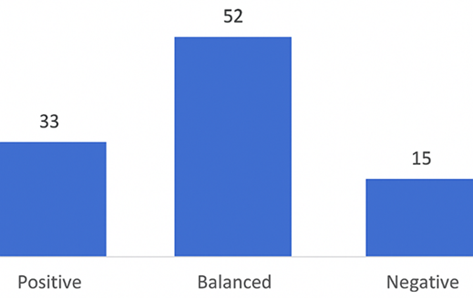
The respondents were asked how often records survey was carried out and the findings are as illustrated in Figure 1.
Figure 2: Records Survey
Source: Research data 2020
CONCLUSION
Based on the findings of the study, a record surveys are rarely carried out as stated by 6(46%) of the respondents; or it is carried out upon request to dispose records as from 2(15%) responses; records survey is also based on cap 14 guidelines was stated by 2(15%) of the respondents while 3(23%) of the respondents stated they did not know how often the exercise was carried out. Records survey is rarely carried out at the Eldoret high court registry. The records survey exercise involves the gathering of basic information regarding the quantity, rate of accumulation, physical form and type, physical condition, location, accommodation facilities, uses and similar data about the records of an organization [4], this therefore disagrees with the findings of this study. The data collected from the records survey assists the court to make plans on accommodation of records, retention periods necessary for records in the Eldoret high court registry.
The GARP on retention and disposition provides guidelines on how long records should be kept and the criteria for determining the value of records respectively. The disposal of records at the Eldoret high court registry is left entirely to the archivist. The other records management staff are not conversant with the guidelines laid out in Cap 14 (Records Disposal Act) and therefore do not carry out the records survey exercise. This has led to the records survey exercise, which is carried out prior to disposal of records, being omitted thus leading to unnecessary retention of records, some of which their value has elapsed as per retention schedule. The records management practices in place meets the basic principles of retention and disposition.
The following are the recommendations of the study:
Records survey should be scheduled regularly to plan for accommodation and retention periods for all court records. This will ensure that only the necessary records are retained thus creating the necessary space for the files in current use
The personnel should be trained on appraisal, retention and disposal procedures of court records based on the guidelines in Cap 19 of the Kenyan Constitution. This will equip the staff with the required knowledge on the value of records from their creation stage. Thus ephemeral records are not retained at the registry longer than necessary
The personnel should strictly adhere to the guidelines on disposal of court records in Kenya. This ensures that records are transferred to the archives at the appropriate time, leaving appropriate space for the records in the current phase of the records life cycle
There should be recruitment of staff with relevant skills in records and archives administration. The staff will assist in the management of records throughout their lifecycle. This eliminates lapses in the appraisal, retention and disposal of records. This will therefore greatly reduce the backlog of records in the registry
Increase in funding by the Judiciary for records management activities. This may include funding for accommodation of records such as archives with the required special conditions for permanent preservation of records
Adaptation of ICT. This includes automating the disposal schedules to give alerts on records due for appraisal. Also ICT will enable maintenance of both paper based records and electronic records from their creation stage.
REFERENCE
International Records Management Trust (IRMT). Evidence-Based Governance in the Electronic Age: Case Studies Summary. IRMT, 2009.
Judiciary. High Court Registry Operation Manual. 2012, judiciary.go.ke. Accessed August 2016.
Republic of Kenya. Report of the Sub-Committee on Ethics and Governance of the Judiciary. Government Printers, 2006.
Millar, T. et al.Computer Security Incident Handling Guide. NIST Special Publication, no. 800-61, 2012, pp. 1–147.
International Records Management Trust (IRMT). Managing Legal Records. IRMT, 1999.
International Legal Assistance Consortium (ILAC) and International Bar Association Human Rights Institute (IBAHRI). Restoring Integrity: An Assessment of the Needs of the Justice System in the Republic of Kenya. Law Society of Kenya, 2010.
Buckland, M. “Documentation, Information Science, and Library Science in the USA.” Information Processing & Management, vol. 32, no. 1, 1994, pp. 63–76.
Buckland, C. “Budgeting-The Role of Trust and Participation: A Research Note.” Abacus, vol. 37, no. 3, 2001, pp. 369–388.
Recommended Articles
Research Article
The Legal Regulation for Protecting Persons with Mental Disabilities
Budoor Salim Mahdi
Published: 30/06/2025
Download PDF
Research Article
The Role of the United Nations in Combating the Crime of Money Laundering
Asan Juma Fadil,
Musaab Ayad Ibrahim
Published: 04/01/2026
Download PDF
Research Article
Better Understanding as To Artificial Intelligence, Argumentation and Law in India
K. Sangeetha
Published: 26/11/2020
Download PDF
Research Article
The Management of Forest Area by Forest Management Unit in Creating Law Certainty and Justice (A Case Study in Daerah Istimewa Yogyakarta Province)
Septiawan Risma Saputra,
...
Lego Karjoko
Published: 30/06/2021
Download PDF
PO Box 101, Nakuru
Kenya.
Email: office@iarconsortium.org
Editorial Office:
J.L Bhavan, Near Radison Blu Hotel,
Jalukbari, Guwahati-India
Mwangi, J. W. & Kimani, G. (2022). The Disposal of Court Records in High Court: A Case of Eldoret High Court Kenya. International Academic Journal of Law, 3(2), 1-5.
MLA
Mwangi, June W. and Grace Kimani. "The Disposal of Court Records in High Court: A Case of Eldoret High Court Kenya." International Academic Journal of Law 3.2 (2022): 1-5.
Chicago
Mwangi, June W. and Grace Kimani. "The Disposal of Court Records in High Court: A Case of Eldoret High Court Kenya." International Academic Journal of Law 3, no. 2 (2022): 1-5.
Harvard
Mwangi, J. W. and Kimani, G. (2022) 'The Disposal of Court Records in High Court: A Case of Eldoret High Court Kenya' International Academic Journal of Law 3(2), pp. 1-5.
Vancouver
Mwangi JW, Kimani G. The Disposal of Court Records in High Court: A Case of Eldoret High Court Kenya. International Academic Journal of Law. 2022 Jul;3(2):1-5.


 Download PDF
 Download XML