Blumea lacera (Burn. f.) DC. (Family: Asteraceae) is an important member of Bangladeshi natural plant resource and it is an herbaceous weed locally known as Kukursunga. Different parts of this plant are used traditionally to cure various diseases. But detail study on the antioxidant and antineoplastic potentials of Blumea lacera leaves, has not yet been done. Aim of this study is to examine the antioxidant and antineoplastic properties and quantify the different type of phytochemical content of the methanolic extract of leaves of Blumea lacera (MELB). MELB contained a rich polyphenol, flavonol, flavonoid and proanthocyanidins. MELB showed moderate cytotoxic effect against Artemia salina (brine shrimp nauplii) where its LD50 values was 66.12µg/ml. In vitro antioxidant assay, MELB exhibited a remarkable capacity to scavenge the tested reactive species. MELB scavenged DPPH with an IC50 of 33.64µg/mL and 42.69µg/mL, respectively. In vivo antineoplastic assay, MELB significantly (p<0.05) decreased viable cell count and increased the survival time of EAC cell bearing mice. Hematological profiles were also restored significantly (p<0.05) to normal levels in MELB treated mice as compared to untreated EAC control mice. In addition, fluorescence microscopic view of EAC cells derived from MELB-treated group showed apoptotic characteristics in treated cells compared to untreated EAC control. Our findings suggest that methanolic extract of Blumea lacera leaves (MELB) might be a potential agent with antioxidant properties for prevention of cancer and has the merit for further investigation in isolating its active constituents. Abbreviation: DPPH: 1,1-diphenyl-2-picrylhydrazyl, MELB: methanolic extract of leaves of Blumea lacera . EAC: Ehrlich’s Ascites Carcinoma, DAPI: 4,6-diamidino-2-phenylindole
Keywords
Anti-Oxidant
Anti-Cancer
DPPH Scavenging Activity
MELB
INTRODUCTION
Medicinal plants may be defined as a group of plants that possess some special properties or virtues that qualify them as articles of drugs and therapeutic agents and are used for medicinal purposes [1]. Traditional medicinal plants play an important role in modern medicine due to development of research and scientific knowledge. About 25% of the prescription drugs available in markets contain at least one active ingredient derived from plant material [2]. Medicinal uses of plants have been documented in approximately 10,000 to 15,000 of world’s plants and roughly 150-200 have been incorporated in western medicine [2]. A good number of secondary metabolites from plants possess interesting biological activities with various applications, such as pharmaceutical ingredients, insecticides, dyes, flavors, and fragrances [3-4].
The Arabian Muslim physicians, like Al-Razi and Ibn Sina (9th to 12th century AD), brought about a revolution in the history of medicine by bringing new drugs of plant and mineral origin into general use [5].
Population rise, inadequate supply of drugs, prohibitive cost of treatments, side effects of several synthetic drugs and development of resistance to currently used drugs for infectious diseases have led to increased emphasis on the use of plant materials as a source of medicines for a wide variety of human ailments. Recently, WHO (World Health Organization) estimated that 80 percent of people worldwide rely on herbal medicines for some aspect of their primary health care needs [6]. According to them, around 21,000 plant species have the potential for being used as medicinal plants. Worldwide, 50,000–80,000 flowering plants are used for medicinal and therapeutic purposes [7].
Herbalism (also known as herbal medicine or phototherapy) is the study and use of plants intended for medicinal purposes [8]. Globally phytomedicine has been the matter of interest in primary source of healthcare [9] that encouraged its utilization as a source of chemical diversity in drug development [10]. Plants contain enormous number of natural compounds with important pharmacological properties, and these natural molecules have revolutionized the medicinal system [11-12].
Recently, all over the world, there is an upsurge and interest among scientific institutions, biological research institutions in the use of medicinal plants, crude extracts or active ingredients to treat various ailments [13-14]. Most of the research that is done on medicinal plants continues to focus on identifying and isolating active ingredients [15]. Compounds which have been identified and extracted from terrestrial plants for their anticancer properties include polyphenols, brassinosteroids and taxols. Plant-derived drugs are desired for anticancer treatment as they are natural and readily available. They can be readily administered orally as part of patient’s dietary intake. Also, being naturally derived compounds from plants they are generally more tolerated and non-toxic to normal human cells.
MATERIALS AND METHODS
Collection and Proper Identification of the Plant Sample: The plant samples selected for this investigation were collected from the area of Rajshahi University campus in August 2018. The plants were authenticated by the authority of Herbarium, Department of Botany, Rajshahi University, Rajshahi where a voucher specimen No. 01 was deposited for Blumea lacera (Burn. f.) Drying and pulverization of plant materials, Extraction of powdered plant materials with methanol at room temperature
Quantitative Analysis of Phytochemical Compounds: Determination of total phenolic content: The content of total phenolics of methanolic extract of leaves of Blumea lacera (Burn. f.) was determined employing the method as described by Singleton et al. using Folin-ciocalteu reagent (FCR) as oxidizing agent and Gallic acid as standard [16]. Determination of total flavonoid: The content of total flavonoids of Blumea lacera (Burn. f.) was determined by Aluminum chloride colorimetric method [17]. Determination of total proanthocyanidins: Proanthocyanidins in the plant extracts were estimated using the previously described method [18]. Determination of total flavonols content: Total flavonols in the plant extracts were estimated using the method of Kumaran and Karunakaran. Total content of flavonols was expressed as mg of quercetin equivalent/g of dry extract
Preparation of the Test Samples: Crude extract such as methanol extract of leaves of Blumea lacera (Burn. f.) (MELB) was selected. Gallic acid was used as positive control. All the extracts and gallic acid were measured accurately (10mg each) in vials and were dissolved in 1% DMSO with 10ml of distilled water to get a concentration of 10µg/10µl for each of the samples. These solutions were used as stock solution
Experimental Animal: Male and female Swiss albino mice (25-30g) were collected from the Animal Research Branch of Pharmacy department, Jahangirnagar University, Dhaka. The mice were grouped and housed in iron cages with ten animals per cage and maintained under standard laboratory conditions (temperature 25±2oC; humidity 55±5%) with 12hrs dark/light cycle. The mice were allowed free access to standard dry pellet diet (Collected from ICDDR, B) and water ad libitum. Mice were acclimatized to laboratory conditions for 10 days before beginning of the experiment. The experiments were carried out after approval of the protocol by the Institutional Ethics Committee for Experimentations on animal, human, microbes and living natural sources (225/320-IAMEBBC/IBSc), Institute of Biological Sciences, University of Rajshahi, Bangladesh
Experimental Tumor Model: Transplantable tumor (Ehrlich’s ascites carcinoma) used in this study were obtained from the Department of Pharmacy, Jahangirnagar University, Dhaka and were maintained in our laboratory in Swiss Albino mice by intra peritoneal transplantation
Collection of EAC Cells: The EAC cells collected from donor mice (Swiss albino) of 20-27g body weight were suspended in sterile isotonic saline. A fixed number of viable cells (usually 1.5 × 10⁶cells/ml) were implanted into the peritoneal cavity of each recipient mouse, as described in the above experimental method as control. Mice were sacrificed on the sixth day and the intraperitoneal tumor cells were harvested by normal saline
Determination of DPPH. Scavenging Activity: Phenolic compounds, flavonoids, flavonols and proanthocyanidins function as antioxidants and scavengers of free radicals by rapid donation of a hydrogen atom to radicals. DPPH is a free radical compound and it has been widely used to test the free radical scavenging ability of antioxidants. Phenolic, flavonoids, flavonols and proanthocyanidins have ability to scavenge 1,1-diphenyl-2-picrylhydrazyl (DPPH) free radicals. DPPH free radical is reduced to the corresponding hydrazine when it reacts with hydrogen donors. DPPH can generate stable free radicals in aqueous or methanol solution. With this method, it is possible to determine the anti- radical power of an antioxidant by measuring the decrease in the absorbance of DPPH at 517nm. In the radical form, this molecule has an absorbance at 517nm which disappears after acceptance of an electron or hydrogen radical from an antioxidant compound to become a stable diamagnetic molecule
Counting of Cells using Haemocytometer: The simplest, most convenient and cheapest means of accurately determining the numbers of cells in a sample is to use a haemocytometer and a microscope. A haemocytometer is a specialized slide that has a counting chamber with a known volume of liquid
Measurement of Hemoglobin (Hgb) [19]: The amount of haemoglobin (Hgb) was measured by using Shali’shaemometer. 20µl non coagulating blood was transferred to the cuvette (tube) in haemometer containing a little amount of N/10 HCl. Distilled water was added and stirred until a good color match was obtained. The final reading of the solution in the cuvette was noted. From the cuvette reading gram % (g/dL) of hemoglobin was calculated
Total Count of WBC [20]: Exactly 10µl non coagulating blood was diluted with 1ml WBC counting fluid and mixed properly. The resultant mixture was checked in haemocytometer and the number of cells was counted with a Microscope. Here the dilution factor was 100. Total WBC cells per ml were calculated
Total Count of RBC [21]: Exactly 10µl non coagulating blood was drawn with the tip of a micropipette and diluted to 1000 times with RBC cou
nting fluid. Total RBC was counted with heamocytometer like WBC counting technique
Statistical Analysis: All values were expressed as mean±SD (Standard deviation). Statistical analysis was performed with one way analysis of variance (ANOVA) followed by Dunnett’s ‘t’ test using SPSS statistical software of 15 version. p<0.05 were considered to be statistically significant when compared with control
RESULTS
Total Phenolic Content in Blumea lacera (Burn. f.)
MELB was standardized for their total phenolic contents. The calibration curve showed linearity for Gallic acid in the range of 25 – 400µg/ml, with a correlation coefficient (R2) of 0.995 and equation y = 0.003x+0.142 where y is absorbance at 725nm and x is the concentration of gallic acid in µg/ml (Figure 1). Total phenolic content in Blumea lacera (Burn. f.) was calculated using the formula:
TPC = (c × V) ÷ m
Figure 1: Standard Curve of Gallic Acid for the Determination of Total Phenolics
Total Flavonoid Content in Blumea Lacera (Burn. f.)
MELB was standardized for their contents of flavonoids compounds. The calibration curve showed linearity for Catechin in the range of 6.13-100µg/ml, with a correlation coefficient (R2) of 0.999 and equation y = 0.009x – 0.004 where y is absorbance at 510nm and x is the concentration in µg/ml of Catechin (Figure 2). Total flavonoids content in Blumea lacera (Burn. f.) were calculated using the formula:
TFC = (c × V) ÷ m
Figure 2: Standard Curve of Catechin for the Determination of Total Flavonoids
Total Proanthocyanidin Contents in Blumea Lacera (Burn. f.)
Methanol extract of leaves of Blumea lacera (Burn. f.) was standardized for their contents of proanthocyanidins compounds. The calibration curve showed linearity for Catechin in the range of 5-100µg/ml, with a correlation coefficient (R2) of 0.995 and equation y = 0.001x + 0.014 where y is absorbance at 510nm and x is the concentration in µg/ml of Catechin (Figure 3). Total proanthocyanidins content in Blumea lacera (Burn. f.) were calculated using the formula:
TFC = (c × V) ÷ m
Figure 3: Standard Curve of Catechin for the Determination of Total Proanthocyanidins
Total Flavonol Contents in Blumea lacera (Burn. f.)
Here MELB was standardized for its flavonol contents. The calibration curve showed linearity for quercetin in the range of 50-800µg/ml, with a correlation coefficient (R2) of 0.985 and equation y = 0.002x+0.090 where y is absorbance at 510nm and x is the concentration in µg/ml of quercetin (Figure 4). Total flavonols content in MELB were calculated using the formula:
TFC = (c × V) ÷ m
Figure 4: Standard Curve of Quercetin for the Determination of Total Flavonols
DPPH Radical Scavenging Activity
MELB and ascorbic acid showed free radical scavenging activity as shown in Figure 5,6.
Figure 5: DPPH Radical Scavenging Activity of Blumea Lacera (Burn. F.) And Ascorbic Acid as Reference Standard
Figure 6: An Overall Overview of IC50 Value of Ascorbic Acid and Blumea Lacera (Burn. F.)
The different concentration of MELB and standard (Ascorbic acid) exhibited antioxidant activities in a dose dependent manner. The scavenging activity of Blumea lacera (Burn. f.) was promising when compared with standard ascorbic acid. The IC50 of Blumea lacera (Burn. f.) and ascorbic acid were 33.64µg/ml and 29.03µg/ml respectively.
An overall comparison of IC50 value of Blumea lacera (Burn. f.) with Ascorbic acid is given in the following graph:
Brine Shrimp Lethality Bioassay
The methanol extract of leaves of MELB showed positive result indicating that the extract was biologically active. The crude extract of MELB showed moderate cytotoxic activity with LD50 value of 66.125µg/ml in comparison with gallic acid standard whose LD50 value is 7.2µg/ml (Table 1). In this bioassay, the mortality rate of brine shrimp was found to be increased with the increase in concentration of the test sample (Table 1). So it was observed that there is a positive correlation between brine shrimp toxicity and cytotoxicity.
In vivo Antineoplastic Activity
MELB against EAC cell bearing mice was assessed by the parameters such as viable EAC cell (% inhibition in cell growth), mean survival time (MST), percentage (%) increase in life span (%ILS) and body weight gain. The average number of viable tumor cells per mouse of untreated EAC control group was found to be (6.75±0.56) x 106 cells/ml. Treatment with MELB (25mg/kg and 50mg/kg) decreased the viable cells significantly (p<0.05) (Figure 7).
Figure 7: Effect of MELB on Viable EAC Cells on the Day 6 after Tumor Cell Inoculation. Data Are Expressed As Mean±SD (N = 6), *p<0.05: Significance Difference With Respect To EAC Control
MELB showed 62.52% and 80.24 % EAC cell growth inhibition at the dose of 25 and 50mg/kg body weight, respectively (Figure. 8).
Figure 8: Effect Of MELB on % Of Cell Growth Inhibition; Data Are Expressed As Mean±SD (N = 5); *p<0.05: Significance Difference With Respect To EAC Control
Moreover, DAPI staining showed reduction in the number of EAC cells and fluorescence microscopic view of EAC cells derived from treated groups demonstrated the alterations (i.e., nuclear condensation, fragmentation, membrane blabbing) in the cell morphology of the EAC cells when compared with untreated control (Figure 9 -10).
Figure 9: Percentage Increase of Life Span (%ILS) of MELB Treated EAC Cell Bearing mice. Data are Expressed as Mean±S.D (n = 8). *p<0.05: Significance Difference with Respect to EAC Control
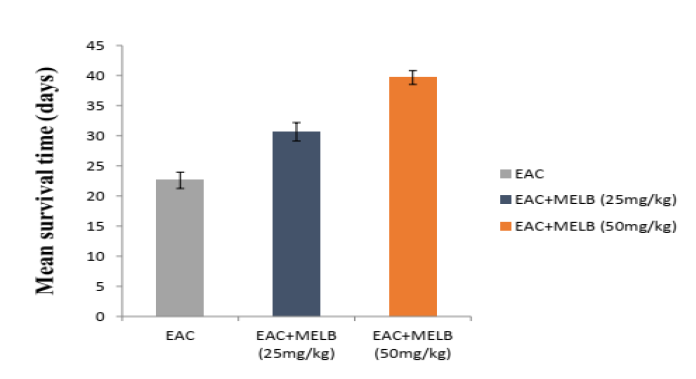
Figure 10: Mean Survival Time (MST) With MELB Treated EAC Cell Bearing Mice. Data are Expressed as Mean±S.D (N = 8). *p<0.05: Significance Difference With Respect To EAC Control
The effect of MELB on the survival of EAC bearing mice is shown in Figure 11. The MST of the untreated control group was 22.60±1.36days, whereas it was 30.66±1.52and39.67±1.15 (p<0.05) for the group treated with MELB at 25 and 50mg/kg, respectively. The increase in the life span of EAC cell bearing mice treated with MELB (25 and 50mg/kg) was found to be 35.67 % and75.53 % (Figure 11).
Figure 11: Effect of MELB on Tumor Weight Gain in Tumor Bearing Mice after 14 Days. Data Are Expressed As Mean±S.D (N = 8). *p<0.05: Significance Difference With Respect To EAC Control
On 15th day of EAC cell inoculation, the average weight gain of only EAC cell bearing mice was 28.85±0.92g whereas it was 18.83±1.46 (p<0.05) and 8.84±0.65 (p<0.05) for the groups treated with MELB at 25 and 50 mg/kg, respectively (Figure 11). All these are considered as important and promising aspects in justifying the potency of a compound in cancer chemotherapy.
Hematological parameters of untreated EAC cell bearing mice on the day 13 were showed significant (p<0.05) changes when compared to normal mice (Table 2). The total WBC count was found to increase with a reduction in the hemoglobin content and total RBC count in EAC cell bearing mice. At the same time interval, treatment of EAC cell bearing mice with MELB (25 and 50mg/kg) restored all the altered hematological parameters toward normal range.
Table 1: Concentration Dependent Cytotoxic Potential of Crude Methanol Extracts of MELB and Standard against Brine Shrimps Nauplii
Test sample
LD50 (μg/ml)
95% Confidence limits (μg/ml)
Regression equation
χ2 value (Degrees of freedom-df)
Gallic acid
7.21±0.47
4.00 to 13.03
y = 3.117+2.213x
0.049 (1)
MELB
66.12±0.80
37.5949 to 116.3072
Y = 1.9859+1.655x
0.39 (3)
Table 2: Effect of MELB on Blood Parameters of Tumor Bearing and Normal Swiss Albino Mice
Parameters
Normal
EAC+control
EAC+MELB (25 mg/kg )
Hgb (g/dL)
11±1
6.1±1.10*
7.9±1.08t
RBC(x107 cells/mL)
3.5±0.07 0.070.07
1.4±0.02* 1.46*
2.02±0.25t
WBC(x106 cells/ml)
20±0.50
75.5±2.53*
51±2.42t
Data are expressed as Mean±S.D for eight animals in each group. *p<0.05; against normal group and tp<0.05: against EAC control group
DISCUSSION
Extensive research has been done on the ability of antioxidant compounds to prevent various human cancers. As flavonoids are the most abundant antioxidant found in the plant kingdom, a number of plant species with rich flavonoid contents have been reported to possess high therapeutic efficiency for the treatment of cancer. In addition, phenolic contents of plant kingdom have also produced remarkable effects in the prevention of numerous oxidative stress associated diseases including cancer due to their strong antioxidant activities [22-23]. In this investigation, we found MELB as a rich source of flavonoid and phenolic compounds.
Furthermore, we employed several in vitro assay models to assess the antioxidant activity of MELB. As a free radical scavenger, plant extracts or compound donate hydrogen or electron to DPPH and thus the radicals become reduced. This phenomenon has been used in DPPH assays to determine free radical scavenging properties of plant sample [24]. In addition, excessive NO undergoes reaction with oxygen to generate toxic free radicals like nitrite and peroxynitrite anions although NO plays important role in many physiological processes and regulation of cell mediated toxicity [25-26]. This study demonstrated notable antioxidant activity of MELB in DPPH (IC50; 33.64 µg/mL), which suggests its probable use in the treatment of various oxidative stress related diseases including cancer [27].
EAC cells offer special benefits for anticancer drug test due to their suitability to study in almost any mouse host; hence they were used in the present investigation. Moreover, these cells lack H-2 histocompatibility antigens, which is the probable reason for their quick proliferation. In vivo anticancer activity of MELB was evaluated by using EAC cell-bearing mice model and the results showed that untreated EAC cell-bearing mice gained body weight (28.85±0.92 g) rapidly due to tumor burden but the treatment of the EAC-cell bearing mice with MELB reduced body weight gain (18.83±1.46 and 8.84±0.65 g at 25 and 50mg/kg doses) significantly (p<0.05) (Figurer 7). MELB significantly (p<0.05) decreased the viable EAC cells of treated group in respect to untreated EAC control thereby producing 62.52% and 80.24 % cell growth inhibition at the dose of 25 and 50mg/kg body weight, respectively. Mean survival time of MELB-treated groups (30.66±1.52 and 39.67±1.15 days at 25 and 50mg/kg doses) was also increased when compared with untreated control (22.60±1.36 days) and the percentage (%) increase of life span was found to be 35.67 and 75.53% at 25 and 50mg/kg doses, respectively (Figurer 7).
Reduction of average body weight gain, cell growth inhibition and enhancement of life span of tumor bearing mice are measured for the judgment of potency of a certain compound as anticancer agent. The data obtained from this study are consistent with those reported in the literature [14,27], suggesting that MELB possesses potent anticancer activity.
Further evaluation of anticancer activity of MELB was carried out by examining the change in hematological parameters. EAC cells bearing mice were found to reduce the hemoglobin contents and RBC counts gradually, the major problems in cancer bearing mice. Administration of MELB in EAC cell-bearing mice reversed back all the altered hematological parameters more or less to normal level (Table 7) and this result is similar with that of previous studies where EAC cell-bearing mice were treated with bioactive compounds [27-28], suggesting the protective action of MELB on the hemopoetic system.
Apoptosis, a cell-suicidal mechanism, is characterized by the change of morphological features, such as nuclear fragmentation, blabbing, cell shrinkage and chromatin condensation [29]. In our present study, when EAC cells were treated with MELB, cell shape was changed and the nucleus was fragmented and condensed. After comparison with the control EAC cells suggested that MELB can play significant role in cancer prevention by inducing apoptosis [30]. Induction of apoptosis in EAC cells by different plant extracts has been revealed by several previous studies [32-32].
CONCLUSION
We have achieved the following findings from this study: MELB contained rich amount of polyphenolic and flavonoids compounds.MELB had remarkable free radical DPPH scavenging properties and showed moderate cytotoxic effect against Artemia salina (Brine Shrimp naupli) [33].In antineoplastic study, treatment with MELB significantly decreased the viable EAC cells and body weight gain thereby increasing the life span of EAC bearing mice and also brought back the altered hematological parameters to normal values.MELB showed its activity against EAC cells by inducing apoptosis as investigated by observing morphological changes of MELB-treated EAC cells under fluorescence microscope [34-36].
From the above results it can be concluded that antioxidant and antineoplastic abilities of the methanolic extract of Blumea lacera leaves render its suitability to be considered as a source for the development of anticancer drug [37-38]. However, it is necessary to carry out extensive research on leaves of this plant to isolate the active compounds responsible for antioxidant and antineoplastic activities. In future, our research will be forwarded along this direction.
Acknowledgment
This Research paper was originally experimented and written by Md Rakibul Islam Bhuiyan during thesis study. Then this paper was reviewed and corrected by Md. Sadikuj Jaman. The all cost or funding for experiment was carried out by department of biochemistry and molecular biology, University of Rajshahi, Rajshahi 6205.
REFERENCE
“Medicinal plants and their importance as alternative medicine.” 2011.
Lewington, A. Plants for people. Natural History Museum, 1990, pp. 135–136.
McChesney, J.D. et al. “Plant natural products: back to the future or into extinction?” Phytochemistry, vol. 68, no. 14, 2007, pp. 2015–2022.
Birari, R.B. and K.K. Bhutani. “Pancreatic lipase inhibitors from natural sources: unexplored potential.” Drug Discovery Today, vol. 12, nos. 19–20, 2007, pp. 879–889.
Fuller, H.J. and Z.B. Carothers. The plant world. 4th ed., Holt, Rinehart and Winston, 1967, pp. 1–4.
World Health Organization. WHO traditional medicine strategy: 2002–2005. 2002.
Marinelli, J. Plant: The ultimate visual reference to plants and flowers of the world. Dorling Kindersley, 2004.
Ashraf, M.A. et al. “MPDB 1.0: a medicinal plant database of Bangladesh.” Bioinformation, vol. 10, no. 6, 2014, pp. 384–386.
Farnsworth, N.R. and R.W. Morris. “Higher plants: the sleeping giant of drug development.” Steroids, vol. 225, no. 14, 1976, p. 69.
Evans, B.E. et al. “Methods for drug discovery: development of potent, selective, orally effective cholecystokinin antagonists.” Journal of Medicinal Chemistry, vol. 31, no. 12, 1988, pp. 2235–2246.
Jeong, K.E. et al. “Modeling for blended coal combustion and its impact on ash deposition in a supercritical power plant.” Asia-Pacific Conference on Combustion, 2019.
Koehn, F.E. and G.T. Carter. “The evolving role of natural products in drug discovery.” Nature Reviews Drug Discovery, vol. 4, no. 3, 2005, pp. 206–220.
Saifujjaman, M. et al. “Modeling for mineral redistribution of coal blending during pulverized coal combustion.” Proceedings of the ASME International Mechanical Engineering Congress and Exposition, 2018.
Hoareau, L. and E.J. DaSilva. “Medicinal plants: a re-emerging health aid.” Electronic Journal of Biotechnology, vol. 2, no. 2, 1999, pp. 3–4.
“Importance of medicine: Stevia, the sweet herb.” 2005.
Jaman, M. and M. Sayeed. “Ellagic acid, sulforaphane, and ursolic acid in breast cancer prevention and therapy.” Breast Cancer, vol. 25, no. 5, 2018, pp. 517–528.
Noronha, V. et al. “Oncology facts in South Central Asia and SAARC countries.” South Asian Journal of Cancer, vol. 1, no. 1, 2012, pp. 1–4.
Hussain, S.M.A. “Cancer scenario of Bangladesh.” South Asian Journal of Cancer, vol. 2, no. 4, 2013, pp. 279–284.
Choudhary, R. and R.V. Tandon. “Functional food consumption and health concerns.” Pakistan Journal of Physiology, vol. 5, no. 1, 2009, pp. 76–83.
Hosseinimehr, S.J. et al. “In vitro antioxidant activity of selected medicinal plants.” Pakistan Journal of Biological Sciences, vol. 10, no. 4, 2007, pp. 637–640.
Robak, J. and E. Marcinkiewicz. “Scavenging of reactive oxygen species as a drug mechanism.” Polish Journal of Pharmacology, vol. 47, no. 2, 1995, pp. 89–98.
Mathew, S. and T.E. Abraham. “Antioxidant activity of Cinnamomum verum leaf extract.” Food and Chemical Toxicology, vol. 44, no. 2, 2006, pp. 198–206.
Jaman, S. et al. “Mean platelet volume and platelet distribution width association with HbA1c.” Journal of Endocrinology and Diabetes, vol. 4, no. 4, 2017, pp. 1–6.
Madhavi, D.L. and D.K. Salunkhe. “Toxicological aspects of food antioxidants.” Food Antioxidants, CRC Press, 1995, pp. 281–374.
Jeong, M.S. et al. “Modeling for mineral redistribution of coal blending.” International Mechanical Engineering Congress & Exposition, 2018.
Choi, H.Y. et al. “Flow injection–chemiluminescence for radical scavenging activity in plants.” Phytotherapy Research, vol. 14, no. 4, 2000, pp. 250–253.
Saifujjaman, M. Predictive modeling on mineral redistribution of blended coals. PhD dissertation, Arkansas State University, 2018.
Farnsworth, N.R., and D.D. Soejarto. “Global importance of medicinal plants.” The Conservation of Medicinal Plants, vol. 26, 1991, pp. 25–51.
Miliauskas, G. et al. “Radical scavenging activity of medicinal and aromatic plant extracts.” Food Chemistry, vol. 85, no. 2, 2004, pp. 231–237.
Sam, T.W. “Toxicity testing using Artemia salina.” Bioactive Natural Products, CRC Press, 1993, pp. 442–456.
Michael, A.S. et al. “Artemia salina as a test organism for bioassay.” Science, vol. 123, no. 3194, 1956, p. 464.
Meyer, B.N. et al. “Brine shrimp bioassay for active plant constituents.” Planta Medica, vol. 45, no. 5, 1982, pp. 31–34.
Engel, N. et al. “Antitumor evaluation of Pakistani plant extracts.” BMC Complementary and Alternative Medicine, vol. 16, no. 1, 2016, pp. 1–18.
Ahmed, S.I. et al. “Pharmacologically active flavonoids from Cassia angustifolia.” BMC Complementary and Alternative Medicine, vol. 16, no. 1, 2016, pp. 1–9.
Jaman, M.S. et al. “Antioxidant activity of fresh and commercial mango juices.” GSC Biological and Pharmaceutical Sciences, vol. 1, no. 2, 2017, pp. 26–33.
Coseri, S. “Natural products as anticancer drugs.” Mini Reviews in Medicinal Chemistry, vol. 9, no. 5, 2009, pp. 560–571.
Lawson, M.H. et al. “Determinants of etoposide resistance in lung cancer.” Cancer Research, vol. 71, no. 14, 2011, pp. 4877–4887.
Blagosklonny, M.V. “Combining natural anticancer drugs with artificial agents.” Trends in Pharmacological Sciences, vol. 26, no. 2, 2005, pp. 77–81.
Recommended Articles
Research Article
Identification of some Bacterial virulence factors of Staphylococcus aureus and Klebsiella pneumoniae
Download PDF
Research Article
Electrochemical Comparative Studies On The Redox Behavior Of Cu(II) And Cr(II) Before And After Interactions With Ciprofloxacin In Solutions
H. M. Naseem Akhtar,
M. Q. Ehsan
Published: 10/08/2021
Download PDF
Research Article
In Acute Appendicitis, Neutrophil/Lymphocyte Rate and C-Reactive Protein’s Radiological Relation with Appendix Diameter and İnvestigation of İts İmpact on The Diagnosis
Ethem Bilgiç,
Özden Yıldırım Akan
Published: 10/03/2021
Download PDF
Research Article
Non – Invasive Ventilation in Patients with Type 2 Respiratory Failure
Sarang Patil
Published: 10/03/2021
Download PDF
PO Box 101, Nakuru
Kenya.
Email: office@iarconsortium.org
Editorial Office:
J.L Bhavan, Near Radison Blu Hotel,
Jalukbari, Guwahati-India
Bhuiyan, R. H., None, M., Akter, S., Rashid, M. H. B., None, E. & Jaman, S. (2022). Assessment of Antioxidant and Antineoplastic Activities Blumea lacera (Burn. F) Leaves. International Academic Journal of Applied Bio-Medical Sciences, 3(2), 1-7.
MLA
Bhuiyan, Rokibul Hasan, et al. "Assessment of Antioxidant and Antineoplastic Activities Blumea lacera (Burn. F) Leaves." International Academic Journal of Applied Bio-Medical Sciences 3.2 (2022): 1-7.
Chicago
Bhuiyan, Rokibul Hasan, Maniruzzaman , Sabina Akter, Most. H. B. Rashid, Ehasanullah and Sadikuj Jaman. "Assessment of Antioxidant and Antineoplastic Activities Blumea lacera (Burn. F) Leaves." International Academic Journal of Applied Bio-Medical Sciences 3, no. 2 (2022): 1-7.
Harvard
Bhuiyan, R. H., None, M., Akter, S., Rashid, M. H. B., None, E. and Jaman, S. (2022) 'Assessment of Antioxidant and Antineoplastic Activities Blumea lacera (Burn. F) Leaves' International Academic Journal of Applied Bio-Medical Sciences 3(2), pp. 1-7.
Vancouver
Bhuiyan RH, Maniruzzaman M, Akter S, Rashid MHB, Ehasanullah E, Jaman S. Assessment of Antioxidant and Antineoplastic Activities Blumea lacera (Burn. F) Leaves. International Academic Journal of Applied Bio-Medical Sciences. 2022 Jul;3(2):1-7.


 Download PDF
 Download XML