The aim of this study is to investigate scale-specific determinants of profitability in Turkey. Data used in this study obtained from Real Sector Statistics published by Central Bank of Turkey. In this study, multiple linear regression models used to analyze the determinants of profitability. Profitability is represented by Return on Assets (ROA). Seven independent variables which were expected to explain profitability were selected. These independent variables are; Liquidity, Leverage, Tangibility, Cost Ratio, Operating Profit Margin, Interest Coverage Ratio and Lagged Profitability. The analysis established that liquidity is negatively affect profitability in all firm scales. Leverage ratio on the other hand, only affects micro firms positively. For other business scales, it is found that there is an inverse relationship between debt usage and profitability. Increase in tangibility also increases profitability of micro and small businesses but negatively influence on profitability for medium and large-scale enterprises. Analysis found that cost ratio, 1 unit increase operating margin and interest coverage ratio increases profitability for small, medium and large enterprises but operating margin is not significant for medium size enterprises. Lastly, analysis results indicate that lagged profitability is the most influential variable on profitability of micro and small size enterprises. Even though there is a positive and significant relationship between lagged profitability and current year’s profitability for medium size firms, its coefficient is not as strong as other variables. For large scale businesses, there is no significant relationship between lagged profitability and current year’s profitability.
Keywords
Business scales
Profitability
Leverage
Liquidity
SME
Financial Analysis
INTRODUCTION
Al-Jafari and Samman [1], investigated determinants of profitability for 17 industrial firms in Oman. In their study, they focused on firm specific determinants such as average tax rate, size (Natural logarithm of sales), growth rate of assets, fixed assets to total assets ratio, Leverage and Liquidity. The findings show that there is a positive and significant relationship between profitability of industrial firms and size, growth, fixed assets ratio and liquidity. They also found leverage and average tax rate of a firm negatively affect profitability.
Asimakopoulos et al. [2], examined determinants of profitability of non-financial firms listed in Athene Stock Exchange for the period of 1995-2003. In the conclusion of their study, results indicated that size, growth rate of sales and change in fixed assets positively influence a firm’s profitability while liquidity and leverage have negative effects.
Pratheepan [3], conducted research on what factors determine profitability by analyzing 55 Sri Lankan manufacturing firm. At the end of the study, it was found that size of a firm positively effects profitability whereas Tangibility (fixed assets to total assets) has negative impact on. He also reported that leverage and liquidity do not significant impact on firm profitability.
In her study, Vătavu [4], analyzed 126 Romanian firm listed on Bucharest Stock Exchange for 2003-2012. She used Tangibility, leverage, size (Natural logarithm of sales), liquidity ratio, standard deviation of EBIT/Total Assets, tax coverage ratio and inflation as independent variables to explain profitability of Romanian companies. As a result, it is found that there is a negative relationship between profitability of a firm and usage of debt. on the Furthermore, tangibility, risk and taxation and inflation level have also negatively affected profitability. On the other hand, increase in liquidity and size of a firm are positively and significantly increase its profitability.
Fareed et al. [5], focused on determinants of profitability of energy companies in Pakistan. 16 energy firms are investigated for the period of 2001 to 2016. They used Firm Size (log Sales), firm age, firm growth, productivity, financial leverage, lagged profitability and electricity crises as dummy variable. The result showed that productivity and firm growth rate are the most influential determinants of profitability in power and energy sector businesses in Pakistan. Firm size, firm growth rate, electricity crises are the variables that effect profitability positively. On the other side, firm age, financial leverage and productivity are the three variables that have negative impacts on profitability in the sector. This empirical study also revealed that lagged profitability is a significant determinant of profitability.
Işık [6], performed a study on firm-specific determinants of profitability in manufacturing industry firms of Turkey. In the study, 153 firms are investigated for a period of 2005 to 2012. Işık had classified firms as small and large according to their position compared to mean of total assets of sample which was investigated. Afterwards, firms were investigated according to this classification. In his study, Işık [6], found that firm size is one of the strongest determinants of corporate profitability. For large firms, liquidity is an important determinant of profitability whereas tangibility correlates negatively. Işık [6], study also indicates that high level of debt usage decrease profitability for both large and small size businesses.
Nguyen and Nguyen [7], collected data belong to 1343 Vietnamese company traded Vietnamese Stock Exchange over a period of 4 years cover 2014 to 2017 to specify the determinants of profitability. ROA, ROE and Return on Sales (ROS) ratios are used as dependent variables whereas firm size (Natural logarithm of total assets), liquidity, solvency, financial leverage and financial adequacy ratios are taken as independent variables. At the end, they received the following results:
Firm Size has positive impact on profitability
Adequacy has positive impact on ROA and ROE whereas negatively affect ROS
High level of financial leverage increases ROA but also decreases ROE and ROS
Firms with high level of liquidity tend to have lower ROA, but higher ROE and ROS
Solvency ratio positively correlated with ROA and ROS while negatively act with ROE
Khan et al. [8], with financial information of 5 telecommunication company whose shares traded in National Stock Exchange in India, analyzed determinants of profitability Indian telecom industry. They used firm size (Natural log of total assets), Leverage, Liquidity, non-debt tax shield (Depreciation/Total Assets), tangibility, MV/BV and Altman Z Score as explanatory variables. It is reported that size and MV/BV are positively influences on corporate profitability. They found a negative relationship between leverage ratio and profitability. To conclude, it is stated that tangibility, non-debt tax shield, Altman Z Score and liquidity do not have any significant impact on profitability of telecommunication firms in India.
A study conducted by Le et al. [9], focused on 73 construction firms listed in Hanoi Stock Exchange and Ho Chi Minh City Stock Exchange. They collected data belong to these firms cover the period 2008-2015 to analyze determinants of profitability of construction firms in Vietnam. ROA and ROE used as indicators of profitability. At the end of the research, they reported that size (Natural log of assets), revenue growth rate and assets turnover ratio have positive impact on profitability of construction companies in Vietnam. Beside age of company and debt ratio have negative impact on profitability of companies included in analysis.
Glancey [10], studied on what determines profitability of small manufacturing businesses in Scotland, Tayside. ROA was used as dependent variable where Size (number of employee), age, location (urban or rural), inter-industry differences and growth rate of assets were taken as explanatory indicators of profitability. As a result of the work, a meaningful relationship that could be commented on could not be determined (R2 = 0,07).
Vaidya and Patel [11], made research on relationship between capital structure and profitability of asset-heavy industrial firms in India. 214 firm belong to automobile, cement and steel industries were investigated for the period between 2011-2018. As a result of the study, they found that there is a negative relationship between corporate debt usage and firm profitability in asset-heavy industry firms in India.
Pattitoni et al. [12], searched for determinants of profitability by using data on private firms in the EU-15 area. Three types of independent variable groups; typical micro level variables, additional micro level variables and macro level variables were used in study. For typical micro-level variables, they used leverage, net working capital to total assets ratio, growth rate of sales and firm size (natural log of total assets). As additional micro-level variables, selected indicators were industry-country average unlevered opportunity cost of capital and commitment level as dummy variables which takes 1 if a stockholder own more than % 50 of shares or 0 vice versa. For macro-level independent variables, annual GDP growth rate, annual inflation and annual return of market indices were selected. The result of the study revealed that opportunity cost of capital, leverage, firm size and inflation cause adverse impact on profitability. On the other hand, increase in liquidity, growth rate of sales, GDP rate and market return of stock indices directly causes higher profitability. In addition to result given above, Pattitoni et al. [12], showed that firms with a shareholder who owns more than %50 of shares tend to more profitable.
In their study, Goddard et al. [13], investigated determinants of profitability for manufacturing and service sector companies by using data from four European country, Belgium, France, Italy and United Kingdom. Six variables were used to explain profitability of European firms used in study; firm size (natural log of assets), gearing ratio which represent long term liabilities plus loans divided shareholders’ equity, percentage of firm’s sales measured by total industry sales level, liquidity and lagged profitability ratios (ROA of previous year ROAt-1 and ROA of 2 years ago ROAt-2). Goddard et al. [13], found out that lagged profitability (ROAt-1) is a strong indicator of current year’s profitability. When a firm’s size and debt usage increase, profitability inversely affected by this situation. But an increase in liquidity and market share boost profitability as well.
Stierwald [14], pointed out that profitability is mainly determined by firm-specific variables. In Stierwald [14], study, 961 Australian company investigated. The results of the study showed that lagged profitability, lagged productivity and lagged financial leverage positively correlated with current profitability of Australian firms.
Demirci [15], investigated profitability of Turkish manufacturing sector by using manufacturing industry data published by Central Bank of Turkey. Demirci [15], study covers the period of 1996-2015. He found that in manufacturing sector, profitability mainly influenced by size (total assets) and receivables turnover ratios. However, there is a negative relationship between fixed assets ratio and leverage ratio with manufacturing industry profitability in Turkey.
Yazdanfar [16], investigated determinants of profitability for micro firms in Sweden. In his study, Yazdanfar [16], used a sample size that consist of 12.530 micro firms in Sweden. He found that firm growth, firm size (natural log of assets), lagged profitability and productivity have positive and significant relationship with profitability. His study also revealed that industry affiliation and firm age effects profitability of micro firms negatively.
Objective
As a contribution to the existing literature, this study aims to identify the determinants of profitability by business-scale level which are represented by:
Micro Scale Businesses
Small Scale Businesses
Medium Scale Businesses
Large Scale Businesses
MATERIALS AND METHODS
Data Collection
This research investigates business-scale determinants of profitability. Secondary data are used in this study. Secondary data is collected from Central Bank of Turkey’s annual reports about industry statistics. These statistics consist vast majority of Turkish firms, approximately 542.208 to 706.940 entity. Detailed information about number of companies by sector and scale are given in Appendix 1. In this study, I used average values and ratios of number of firms by scale given in Appendix 1.
Data set consists of 10 years period (2010-2019) of 13 sector which are:
Information and Communication
Education
Electricity, Gas, Steam and Air Conditioning Supply
Real Estate Activities
Administrative and Support Service Activities
Manufacturing
Human Health and Social Work Activities
Construction
Accommodation and Food Service Activities
Mining and Quarrying
Professional, Scientific and Technical Activities
Trade
Transportation and Storage
Three sectors (Agriculture Forestry and Fishing, Arts Entertainment and Recreation, Water Supply) are excluded in scope of this study due to lack of information.
Research Model
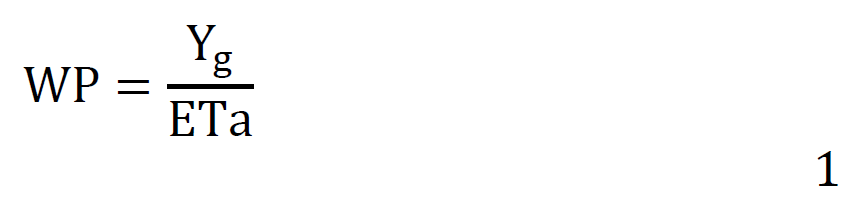
Within the scope of this study, multiple linear regression method was used for analyze. To investigate what are the determinants of profitability by scale, the model is used given below.
In Equation 1, dependent variable represents profitability (Return on Assets) of scale i at year t. independent variables and their meanings are given in Table 1.
To determining profitability for year t, I used current year’s OM, ICR, LEV and CR values because these variables represent current year’s performance outputs. However, the values for LR and FAR variables are the values of the previous year. Because it is thought that the effect of these variables on profitability has a delayed effect on earnings. The values of these variables in the current year are already the result of profitability.
Scale Classification of Enterprises
Turkish firms constitute of the sample of this study. Scale Classification Criteria for Turkish businesses are given in Table 2. This classification consists two steps. Firstly, a business should determine Number of Employees as given in table.
Afterwards, one of the other criteria are check for enterprises. Meeting one of the criteria is sufficient to classify businesses. For example, to be classified as Micro Business, number of employees of a firm must be less than 10. After that it is sufficient to meet one of the following criteria;
Having 3 million TL or less annual revenue
Having total assets of 3 million TL or less
Research Findings
The aim of this study is to investigate determinants of profitability by business scales. In accordance with this purpose, firstly, each scale will be examined within itself. Four model are developed for four business scales compared. Then the results will be evaluated together. SPSS (Statistical Package for Social Science) program is used for analysis. Within the scope of the study, all analyzes are made at a 95% confidence level and the results are interpreted. Summary of descriptive statistics is given in Table 3.
Micro Scale Firms
Two variables, ICR and ROA t-1, had high level of correlation (0,819). Even though multicollinearity test results showed that these variables are at acceptable level (above 0,10 Tolerance and Below 10 VIF; Merard, Dagnaw et al. [17]), ICR variable excluded from Micro Scale Businesses analysis.
Regression model results are given in Table 3. Model results show explanatory power of independent variables on profitability. As R2 indicates, independent variables that used in regression model have a high level of explanatory on profitability (Adj. R2 = 0,919, p <0,05). This means that independent variables explain 91,9% of changes in profitability. For multicollinearity test, VIF and Tolerance values are given in Table 3. Multicollinearity occurs when independent variables highly correlate each other. This is an undesirable situation for the significance of regression model. To check multicollinearity between independent variables, VIF and Tolerance statistics are used. VIF statistics desired to be 10 [17], while Tolerance is above 0,10. As table 4 shows, model has no multicollinearity between independent variables.
Table 6 shows ANOVA results of regression model. ANOVA test results show that regression model is statistically significant at %95 confidence level (F = 243,676; p <0,05).
Table 5 shows regression coefficients of model. In this regression model, it is found that liquidity is not a significant determinant of profitability for micro scale businesses (p >0,05). All other variables are statistically significant in the model.
Table 1: Variables Abbreviations
Variable Abbreviations
Meaning
LR
Liquidity Ratio: represent a firm’s ability to pay its Short-Term Liabilities
LEV
Leverage Ratio: Denotes how much of its assets provided by creditors
FAR
Tangibility: Fixed Assets divided by Total Assets. Shows degree of capital intensity
CR
Cost Ratio: Cost of Goods Sold divided by Sales. Shows a firm’s cost for each unit of sales
OM
Operating Profit Margin = Shows EBIT margin of a firm. Measures how successful a firm operates its business
ICR
Interest Coverage Ratio: Shows ability to pay cost of debt
ROA
Return on Assets: Represent how profitable of a firm is
Table 2: Classification of Business Scales in Turkey
Criteria
Micro
Small
Medium
Large
No Employee
<10
<50
< = 250
>250
Annual Revenue
< = 3 million TL
< = 25 million TL
< = 125 million TL
> = 125 million TL
Total Assets
< = 3 million TL
< = 25 million TL
< = 125 million TL
> = 125 million TL
Table 3: Descriptive Statistics
Descriptive Statistics
Micro
Small
Medium
Large
Observation
Mean
Std. Deviation
Mean
Std. Deviation
Mean
Std. Deviation
Mean
Std. Deviation
N
ROA
-0,091
0,132
0,014
0,041
0,022
0,026
0,020
0,023
130
LR t-1
1,446
1,233
1,033
0,525
1,035
0,334
1,079
0,260
130
LEV
0,423
0,072
0,561
0,090
0,584
0,082
0,578
0,097
130
FAR t-1
0,360
0,084
0,363
0,120
0,416
0,138
0,516
0,165
130
CR
0,751
0,076
0,792
0,064
0,805
0,074
0,783
0,098
130
OM
-0,051
0,147
0,034
0,064
0,056
0,043
0,074
0,062
130
ICR
-2,339
14,492
4,575
5,332
4,642
4,770
3,455
2,490
130
ROA t-1
-0,092
0,135
0,017
0,040
0,023
0,024
0,020
0,023
130
Table 4: Regression Model Results (Micro-Size Enterprises)
Model Summaryb
Model
R
R Square
Adjusted R Square
Std. Error of the Estimate
Change Statistics
Durbin-Watson
R Square Change
F Change
df1
df2
Sig. F Change
0,960a
0,922
0,919
0,0375
0,922
243,676
6
123
0,000
1,892
a : Predictors: (Constant), ROA t-1, LR t-1, FAR t-1, CR, OM, LEV, b: Dependent Variable: ROA
Table 5: ANOVA Test (Micro-Size Enterprises)
ANOVAa
Sum of Squares
df
Mean Square
F
Sig.
Regression
2,062
6
0,344
243,676
,000b
Residual
0,173
123
0,001
-
-
Total
2,236
129
-
-
-
a: Dependent Variable: ROA, b: Predictors: (Constant), ROA t-1, LR t-1, FAR t-1, CR, OM, LEV
When the leverage ratio is examined, it affects profitability positively for micro-scale businesses. 1 unit increase in leverage also increases profitability by 0,288 unit. Micro businesses utilize debt usage beneficially. Fixed asset ratio and operating margin are also positive coefficients but these variables show weak performance. But previous year’s profitability is positioned different from all other variables. Standardized coefficient value of ROAt-1. variable is 0,802. It means that previous year’s profitability explains 80% of change in variance of current year’s profitability. For micro scale businesses, the most important determinant of profitability seems as previous year’s profitability. After that, debt usage is another important factor for profitability but it does not impact result as much as ROAt-1.
Small Scale Firms
Model results of Small-Scale firm analysis is given in Table 7. Seven independent variables are used to explain profitability of Small-Scale firms. As R2 shows, independent variables that used in regression model have a high level of explanatory on profitability (Adj. R2 = 0,821, p<0,05). This means that independent variables explain 82,1% of changes in profitability of small-scale businesses. To test whether regression model is statistically significant, ANOVA test is performed. Test results shows that regression model is statistically significant at %95 confidence level (F = 85,756, p<0,001). Regression coefficients are given in Table 5.3. As VIF and Tolerance values show, there is no multicollinearity problem between independent variables (VIF<10; Tolerance>0,1).
There is only one variable that is not statistically insignificant for this model. There is no significant relationship between fixed asset level of a small firm and profitability according to the analysis (p = 0,562). Regression model demonstrates that there is an inverse relationship between liquidity and profitability of small size businesses. 1 unit increases in liquidity decreases profitability by -0,013. Profitability and debt usage have an inverse relationship for small size businesses. This model also detected positive and statistically significant relationships between Cost Ratio, Operating profit margin and Interest coverage ratio. These variables explain respectively; 33,7%, 28,3% and 47,8% of change in variance of profitability. Regression model also indicates a strong relationship between current and previous year’s profitability.
Medium Scale Firms
The third model created within the scope of the study is on the determinants of the profitability of medium-sized enterprises. Model summary is given in Table 10. As model results show, independent variables explain approximately 70% of profitability of medium-sized companies. ANOVA test results indicate that regression model is significant at %95 confidence level. Table 12. shows regression coefficients results. There is no multicollinearity problem in third model as well (VIF<10, Tolerance>0,10). But there are two independent variable that are insignificant to explain profitability in medium-sized enterprises. These variables are liquidity and operating profit margin (p = 0,562; p = 0,150). Two independent variables, leverage and fixed asset ratio, have significantly negative impact on profitability of medium-scale firms. 1 unit increase in leverage ratio decreases profitability 0.09 unit. Also, as fixed asset ratio increases 1 unit, profitability of decreases approximately by 0.05 times. Cost ratio and interest coverage ratio have linear relationships with profitability. Especially interest coverage ratio is a strong determinant of profitability for this model (Std. β = 0,571). Previous year’s profitability is a significant determinant of profitability but its coefficient is not as strong as it was in first and second model which represent micro and small enterprises (Std. β = 0,201).
Large Scale Firms
The fourth and last model of this study examines large-scale companies. Regression model summary is given in Table 13. Adjusted coefficient of determination of model is 0,716. This result means that selected independent variables explain 71.6% of variability in profitability of large-scale firms. Considering the results of the ANOVA test, it is seen that the regression model is statistically significant (p<0,05). Multicollinearity test results shows that VIF and Tolerance values are respectively between 1,874-6,517 and 0,153-0,534. According to Merard tolerance values are acceptable when above 0.10. For VIF values, Dagnaw [17], suggests that VIF values supposed to be lower than 10. This model does not contain multicollinearity between independent variables.
On contrary to results of other models (Micro, Small, Medium Sizes), this regression analysis does not find any significant relationship between ROAt-1 and dependent variable, ROA. It can be commented that under this study’s limitations, there is no statistically significant relationship between current and previous year’s profitability in large scale firm (p = 0,113; p>0,05). As is seen in Table 15, profitability inversely related with liquidity, leverage and fixed asset ratio (respectively; β = -0,223, β = -0,734, β = -0,460). In particular, leverage ratio is the strongest variable that negatively affects profitability (β = -0,734). As model results show, there are three independent variables that have positive and significant impact on profitability for large scale businesses. These are cost ratio, operating profit margin and interest coverage ratio (respectively; β = 0,399, β = 0,407, β = 0,406).
Table 8: Model Summary (Small-Size Enterprises)
Model Summaryb
R
R Square
Adjusted R Square
Std. Error of the Estimate
Change Statistics
Durbin-Watson
R Square Change
F Change
df1
df2
Sig. F Change
0,912a
0,831
0,821
0,0172331
0,831
85,756
7
122
0,000
1,954
a: Predictors: (Constant), ROA t-1, LEV, OM, ICR, FAR t-1, LR t-1, CR, b: Dependent Variable: ROA
Table 9: ANOVA Test Results (Small-Size Enterprises)
ANOVAa
Model
Sum of Squares
df
Mean Square
F
Sig.
Regression
0,178
7
0,025
85,756
0,000b
Residual
0,036
122
0,000
-
-
Total
0,215
129
-
-
-
a: Dependent Variable: ROA, b: Predictors: (Constant), ROA t-1, LEV, OM, ICR, FAR t-1, LR t-1, CR
The aim of this study is to investigate what the determinants of profitability are by business scale. To achieve this objective, four regression model have been developed. As a result of the study, following results have been received.
For Micro enterprises, I found that liquidity does not have any significant impact on profitability. Financial leverage and positive impact on profitability. Micro firms take advantage of debt usage moderately. Even though investing in fixed assets increase profitability, it is not a powerful factor for micro-level enterprises.
Liquidity: For all scales, I did not find a positive relationship between profitability and liquidity. There is no statistically significant relationship between liquidity and profitability in micro and medium-sized enterprises. This result shows similarity with Pratheepan [3] study. On the other hand, liquidity has a profitability-reducing effect in small and large-scale enterprises. Of course, liquidity is important for a firm to meet its liabilities and operate efficiently. But having holding excess cash represents idle capacity. These results demonstrate similarities with Nguyen and Nguyen [7], study and conflict with studies of Al-Jafari and Samman [1], Vătavu [4], Işık [6], Pattitoni et al. [12] and Goddard et al. [13].
Tangibility: Tangibility is positively correlated with profitability of micro firms. These group of firms utilize cash-generating units such as machineries, lands and production facilities efficiently. Al-Jafari and Samman [1], found similar results as well in their research. In other respects, for medium and large-scale firms’ tangibility and profitability have inverse relationship. This may be a signal of uncontrolled business expands in Turkish firms. This is in the line with the findings of Pratheepan [3], Vătavu [4], Işık [6] and Demirci [15]. In addition to results above, this research did not find any significant relationship between tangibility and profitability of small-size enterprises.
Leverage ratio: The results obtained by first model indicates that increase debt usage in micro level firms also increases profitability. Studies of Nguyen and Nguyen [7] and Stierwald [14], also found similar results. This result is not unexpected intrinsically. Micro level firms have some barriers to access funds from financial markets. Main financing source for micro level businesses are equity-based resources. Thereby, debt usage is expected to be low levels. In this situation, once these firms obtain debt as source of financing, its marginal effect increases capacity, productivity and increase profitability. In addition, these companies benefit best from the tax shield provided by borrowing due to low percentage of debt usage. On the contrary, the opposite case is true for other business scales, small, medium and large businesses. Existing literature supports the second findings of this topic. Studies found an inverse relationship between leverage and profitability as this study did are Al-Jafari and Samman [1], Asimakopoulos et al. [2], Vătavu [4], Fareed et al. [5], Işık [6], Khan et al. [8], Le et al. [9], Vaidya and Patel [11], Pattitoni et al. [12], Goddard et al. [13] and Demirci [15].
Cost Ratio
This variable performed unexpected results. Analysis results indicated an opposite relationship between cost ratio and profitability for micro scale businesses. For small, medium and large-scale enterprises, results showed a linear relationship between cost ratio and profitability. In other words, when gross profit margin (1-cost ratio) increases, profitability of small, medium and large-scale enterprises decrease. This could be indicator of two situations. Firstly, as sales increase, firms might have false predictions and expectations about future. These firms may assume cyclical increases in sales will be continues and become a part of their operation size. Therefore, they may take decisions on increasing level of investment in fixed assets which directly related to production, idle direct labor costs and expanding organizational structure. These expenditures straight-forwardly increase depreciation and production costs that causes linear relationship between profitability and cost ratio, or in other words inverse relationship between gross profit margin and profitability. When the fixed asset ratio coefficients are investigated from the analysis results, this thesis is confirmed.
Operating Profit Margin and Interest Coverage Ratio
Both variables have positive and significant impact on profitability of all level of business scales. Only exception with Operating Margin is medium size enterprises. There is no significant relationship between operating margin and profitability of medium size enterprises. For all business scales, as a firm carry out its activities successfully, profitability increases as well. For micro and small businesses, operating margin is the second most significant variable to explain profitability. Interest coverage ratio represents a firm’s earning’s ability to meet cost of debt. Analysis results exhibited positive and significant relationship between profitability and firm’s ability to meet cost of debt for all business scales.
Lagged Profitability (ROAt-1)
Lagged and current year’s profitability is related in many ways. Because previous year profitability refers more resources for current year. These resources occur as ease to access capital and money market funds, preferable customer relationship and increasing market share [16]. In addition, as a result of performing operations successfully in previous year and resulting highly profitable, company’s managers and employees supposed to be more motivated and productive for current year. In consequence of this, a firm’s lagged profitability is expected to be related with current year’s profitability. The results of the study show that lagged profitability has positive and significant impact on current period profitability for micro and small size enterprises. As study results indicate, lagged profitability is the most influential determinants of micro and small size enterprises. However, when medium size enterprises investigated, its impact is not as powerful as micro and small-scale enterprises. These results consist with studies of Fareed et al. [5], Goddard et al. [13] and Yazdanfar [16]. For large scale firms, results showed that relationship between lagged profitability and current year’s profitability is insignificant. As businesses climb to other level in their life cycles, the significance of lagged profitability leaves its place to other variables.
This study investigated scale specific determinants of profitability in Turkey. But each country has its own unique conditions that may conflict with results of this study. Furthermore, this study investigated firm specific determinants of profitability, ignored macroeconomic variables. Further studies may include macroeconomic variables such as inflation, GDP growth, energy prices, interest rates etc. Thus, different results may be obtained from the results of this study.
REFERENCES
M.K. Al-Jafari and H.A. Samman. "Determinants of profitability: Evidence from industrial companies listed on muscat securities market." Review of European Studies, vol. 7, no. 11, 2015, pp. 303–311.
I. Asimakopoulos et al. "Firm specific and economy wide determinants of firm profitability: Greek evidence using panel data." Managerial Finance, vol. 35, no. 11, 2009, pp. 930–939.
T. Pratheepan "A panel data analysis of profitability determinants: Empirical results from sri lankan manufacturing companies." International Journal of Economics, Commerce and Management, vol. 2, no. 12, 2014, pp. 1–9.
S. Vătavu "The determinants of profitability in companies listed on the bucharest stock exchange." Annals of the University of Petroşani, Economics, vol. 14, no. 1, 2014, pp. 329–338.
Z. Fareed et al. "Determinants of profitability: evidence from power and energy sector." Studia UBB Oeconomica, vol. 61, no. 3, 2016, pp. 59–78.
Ö. Işık "Determinants of profitability: Evidence from real sector firms listed in Borsa İstanbul." Business and Economics Research Journal, vol. 8, no. 4, 2017, pp. 689–698.
T.N.L. Nguyen and V.C. Nguyen. "The determinants of profitability in listed enterprises: A study from vietnamese stock exchange." Journal of Asian Finance, Economics and Business, vol. 7, no. 1, 2019, pp. 47–58.
T. Khan et al. "Panel data analysis of profitability determinants: evidence from Indian telecom companies." Theoretical Economics Letters, vol. 8, 2018, pp. 3581–3593.
T.N. Le et al. "Determinants of profitability: evidence from construction companies listed on Vietnamese securities market." Management Science Letters, vol. 10, 2019, pp. 523–530.
K. Glancey "Determinants of growth and profitability in small entrepreneurial firms." International Journal of Entrepreneurial Behaviour and Research, vol. 4, no. 1, 1998, pp. 18–27.
R. Vaidya and P. Patel. "Determinants of profitability of capital-intensive firms in indian capital market: A static and dynamic panel approach." The IUP Journal of Accounting Research and Audit Practices, vol. 18, no. 4, 2019, pp. 33–51.
P. Pattitoni et al. "Determinants of profitability in the EU-15 area." Applied Financial Economics, vol. 24, no. 11, 2014, pp. 763–775.
J. Goddard et al. "Determinants of profitability in european manufacturing and services: Evidence from a dynamic panel model." Applied Financial Economics, vol. 15, no. 18, 2005, pp. 1269–1282.
A. Stierwald "Determinants of profitability: An analysis of large australian firms." Melbourne Institute Working Paper Series, no. 10 (3), 2010, pp. 1–34.
N.S. Demirci "The determinants of profitability in manufacturing industry sector: Panel data analysis with cbrt sectoral balance sheets (1996–2015)." Ege Academic Review, vol. 17, no. 3, 2017, pp. 381–394.
D. Yazdanfar "Profitability determinants among micro firms: Evidence from swedish data." International Journal of Managerial Finance, vol. 9, no. 2, 2013, pp. 150–160.
F.T. Dagnaw et al. "Determinants of person-centered maternity care at the selected health facilities of dessie town, northeastern, ethiopia: community-based cross-sectional study." BMC Pregnancy and Childbirth, vol. 20, no. 524, 2020, pp. 1–10.
Recommended Articles
Research Article
Analysis of the Influence of Leadership Style, Compensation Commitment and Work Stress on Performance (Case: Almarhamah Foundation Employee Padang Pariaman Regency)
Download PDF
Research Article
Marketing Agility: A Multi Layer Perspektif SME opportunities in Indonesia
Download PDF
Research Article
The Effect of Local Tax and Retribution on Direct Expenditure with Special Autonomy Fund as a Moderation In Districts / Cities of Aceh Province, Indonesia
Download PDF
Research Article
Consumer Behavior and the Effect of Covid-19 on Markets: An Empirical Study
Download PDF
PO Box 101, Nakuru
Kenya.
Email: office@iarconsortium.org
Editorial Office:
J.L Bhavan, Near Radison Blu Hotel,
Jalukbari, Guwahati-India



 Download PDF
 Download XML