Background: Surgical operations constitute a significant aspect of treatment administered in hospitals. The situations where patients’ surgical appointments are cancelled are an unfortunate occurrence within medical practice. The main objective of this study was to survey cancellation rate, reasons, and its psychological effect on patients at Komfo Anokye Teaching Hospital (KATH) in Ghana. Methods: A prospective, descriptive cross-sectional study involving a self-administered questionnaire conducted at KATH over a period of three months from May 2018 to July 2018. The purposive sampling (total population) technique was used for patient recruitment. Results: During the study, 1078 elective surgical operations were booked and 74.2% elective operations were performed over the study period. 278 cases were cancelled representing 25.78%. The study found the lowest rate of 3% for cardio-thoracic and the highest (28.1%) for trauma orthopaedics. Medical /work-up, patient-related, administrative-related, and others accounted for 16.3, 54.1, 30.7 and 18.9% of the cancelled surgeries respectively. The most common patient-related reason for the cancellation was patients not turning up (40.7%). The majority of the patients expressed their feeling of disappointment (46.7%). The women in the cancellation group had a significantly higher degree of anxiety and depression as per the Hospital Anxiety and Depression (HAD) Scale. Conclusions: The patients reacted negatively to the cancellation of scheduled elective surgery. It has long term emotional effects on patients as anxiety and depression even after hospital discharge. Patients who visited a preadmission clinic experienced less anxiety and depression.
Keywords
Surgical operations
Anokye Teaching Hospital
Depression
Trauma
Cardio-thoracic
INTRODUCTION
Background
Surgical operations constitute a significant aspect of treatment administered in hospitals. It offers the only meaningful hope of a cure in certain disease conditions. Unanticipated postponement and cancellation of scheduled elective surgical operation is not a new thing in medical practice. These situations may cause significant and undesirable consequences such as anxiety and depression [1]. The incidence of failure in carrying out scheduled surgery is a global phenomenon [2].
Many studies evaluated cancellation of booked and scheduled surgery cancellation rates which ranges from 23 to 37% [3]. A study by Schuster et al. showed that within 24 hours, 2 to 3 out of 10 appointed numbers of surgical cases are cancelled in the UK. In total 10 to 40% of booked surgical operations are cancelled before the surgery takes place on the first appointed date [4].
The reasons for the cancellation of elective surgery are not unknown in the medical field. Ivarsson et al. cited many factors that may lead to the cancellation of a surgical appointment. Common among the factors were patient factors, lack of or inadequate pre-operative assessment and preparation, lack of operative room time, unavailable beds, and surgeon related issues [5]. Kaddoum et al. emergency surgical cases also disrupting the elective list [6].
However, over the years increasing cancellations of booked surgery is receiving public attention, and researchers in the medical field seek to search for answers to the numerous challenges in surgical units in most regional and national hospitals [7]. There are relatively poor statistics on the number of cases cancelled in a year in Asian and African countries. As per Dexter et al. the maximum number of cancellations occurs in Africa than any other part of the world due to the poor medical condition and lack of surgeons and or anesthetists in most medical centres and hospitals in Africa [8].
Cancellation of elective surgery may cause significant and undesirable consequences such as emotional stress to the patient and his / her family, in addition to increasing financial burden and social disturbances. These may worsen client conditions and also lead to mortality [1]. Cancellation of scheduled surgery creates an economic and psychological effect for patients and caregivers. It has long term negative emotional effects on the patient which includes anxiety and depression after hospital discharge. The Hospital Anxiety and Depression (HAD) Scale was devised by Zigmond and Snaith in 1983 to measure anxiety and depression in a general medical population of patients [9]. Bailey described the validity and reliability of the HAD scale. It has become a popular tool, for clinical practice and research to measure anxiety and depression in a general medical population of patients [10].
In Ghana, the situation of cancelled surgery is not uncommon in most of the regional hospitals and referral hospitals across the country. There is a paucity of literature on studies to specifically examining the cancellation of elective surgeries in Ghana and its psychological effect on patients, which include anxiety and depression. However, there are cases of cancelled elective surgeries in most referral hospital such as KATH. The study aimed to survey cancellation rate, reasons, and its psychological effect on patients at KATH in Ghana.
MATERIALS AND METHODS
This study was undertaken after obtaining ethical approval from the Committee on Human Research, Publications, and Ethics (CHRPE) in the Komfo Anokye Teaching Hospital (KATH), Kumasi, Ghana in 2018. KATH is the second-largest teaching hospital in the country and the only tertiary institution in the Ashanti region with 1264 beds. KATH has a staff of 4,857 and the Directorate of Anaesthesia having the strength of 221 at KATH (KATH Annual Report, 2019). The theatres operate 24 hours daily from Sunday to Saturday. The study included all surgical patients, of all ages, scheduled for elective surgical procedures but whose elective surgery has been cancelled at KATH during the study period.
Study Design
A prospective, observational, hospital-based study conducted after obtaining ethical approval. The study adopted a non-probability, purposive sampling technique that includes all patients who gave Informed consent of all ages scheduled to undergo elective surgeries at KATH during the study period.
Inclusion Criteria
All patients scheduled to undergo elective surgeries at KATH (from May to July 2018) of both sex and all age group willing to participate in the study were enrolled in the study without coercion.
Exclusion Criteria
Patient’s refusal to participate, emergency surgical procedures, and elective caesarean sections were excluded from the study. Data on surgeries on public holidays and weekends were also excluded.
Study Process, Tools, and Data
A scheduled surgical procedure was considered cancelled when a patient’s name had appeared on the list for surgical operations but the operation was not performed on the scheduled date. Patients were scheduled by the surgeon after confirming the diagnosis, indication, and pre-anaesthetic evaluation. All fit patients were informed about the diagnosis, date of operation, and type of anaesthesia. The operating list was agreed upon and approved by surgeons in each service before being sent to the operating theatre manager before surgery. If necessary, booked patients are requested to come in two days before the scheduled surgery date for preoperative blood-work up preparation. Most patients are usually admitted to the surgical wards a few days before surgery.
The data was collected daily before patients enter into the operating theatre and completed the consent form at that point. The questionnaire was used to collect data from patients whose operation was cancelled. The questionnaire was subdivided into three sections. The first section was on the socio-demographic, the second section focused on the reasons for cancellation of elective surgery and the third focused on the effects of the cancelled surgery on the patients. All forms were collected at the end of each day and checked for completeness. Data were kept confidential and patient anonymity respected. These instruments were developed based on pertinent literature and the research objectives.
Demographic data, type of surgery, number and reasons for cancellation, and emotional reaction were assessed. Patients who had their surgery cancelled were requested to express their emotional response regarding surgical cancellation and to state the number of surgeries that had been previously cancelled. When possible, the investigator was present at the time the patient was informed of the surgical cancellation, to assess the patient’s immediate emotional response. When the investigator could not be present at the time of the announcement of the cancellation, the patient’s emotional response was assessed as soon as possible prior to discharge. The emotional response was assessed by:
The patient’s spontaneous reaction and oral response to the cancellation when notified, and then
The investigator asked the patient to express orally her/his mood regarding the cancellation. The investigator was guided by a psychiatrist for the definition of an emotional state. The Hospital Anxiety and Depression Scale (HADS) by Zigmond and Snaith used to measure anxiety and depression. The questionnaire comprises seven questions for anxiety and seven questions for depression, and takes 2–5 min to complete. Although the anxiety and depression questions are interspersed within the questionnaire, these must be scored separately. Cut-off scores are available for quantification, for example, a score of 8 or more for anxiety has a specificity of 0.78 and a sensitivity of 0.9, and for depression a specificity of 0.79 and a sensitivity of 0.83
At the end of the data collection, the data were checked for completeness and internal consistency. The quantitative data collected were entered, processed, and analyzed with SPSS software package version 25.0. All variables were tested for normality. Nominal, non-continuous data were reported as frequency and percentages. The emotional state was expressed in frequency and percentage. A Chi-square test was used for comparing categorical variables. P<0.05 is considered statistically significant.
RESULTS
This study sought to assess the cancellation of elective surgery and its impact on the patients for 3 months from May to July 2018, 1078 elective surgical operations were booked. Data was gathered from the cancellation of two hundred and seventy-eight elective surgeries with a response rate of 97.12%. The average age of the patient was (mean±SD) 33.74 ±22.21 years, from 3months to 88 years. Most of the patients were having a primary education level and inpatients represented 28.9 and 57% respectively. The majority of the patients were unemployed and single represented 25.6 and 43.3% respectively as illustrated in Table 1.
Over 3 months from May to July 2018, 1078 elective surgical operations were scheduled/ booked. A total of 800 elective operations were performed on the planned date as indicated in Table 2. The cancellation rate was recorded 25.78%. It was observed that the rate of cancellation varied greatly depending on the type of surgery. The study found different rates of cancellation fluctuating between the lowest rate of 15.1% for plastic surgery and the highest 53.3% for cardio-thoracic as illustrated in Table 2.
Cancellation rate = (No. of cancellation/ No. of booked per specialty) %, Contribution to Total Cancellation = (No. of cancellation per specialty/ total number of cancellation) %.
General - Gen., surgery -Surg, Orthopedics- Ortho
The total contribution of cancelled surgical cases by each specialty were 31 (11.2%) urology, 78 (28.1%) trauma/orthopedics, 17 (5.5%) plastic, 30 (10.8%) pediatric surgery, 31 (11.2%) gynecology, 13 (4.7%) neurosurgery, 70 (25.2%) general surgery, and 8 (3.0%) cardio thoracic as indicated in Table 2.
Among the cancelled cases, 139 patients (50%) experienced their first-ever surgery cancellation between the ages of 20-29 and 40-49 years both the groups had 18%. Males 54.7% and females 45.3% indicated that this is their first time their surgery had been cancelled.
In the study, the patient’s demographic characteristics significant p-value (p<0.05) found for educational level and hospital stay 0.034 and 0.02 respectively, which indicates that they are significant to the cancellation of elective cases. No formal education or primary level education represented with >50% cancellation. However, there were no significant found in cancellation elective cases for age and gender.
Table 4 shows the qualitative data on the type of surgery and rate of cancellations according to surgical specialists. Cancellations among specialists for the field of cardiothoracic accounted for 50% of all cardiothoracic cases while pediatric surgery cancellations accounted for 15.7% of all general surgery cases.
Outpatients’ cancellations accounted for 25% of all cancelled elective surgeries and inpatient cancellations accounted for 75%. Table 5 shows the reasons for cancellation according to the patients’ status (inpatients and outpatients).
Medical-related, patient-related, administrative-related and other reasons accounted for 15.5, 50.4, 30.7 and 18.9% of the cancelled operations respectively. Unavailability of blood was the most common medical/work up related reasons for total cancellations 4.8% and accounted for 30.95% in this category. The most common patient-related reason for the cancellation was patient non-attendance which accounted for 40.7% of all cancellations and 80.8% within the category. The most common administrative reason for cancellations was unavailability or failure of hospital equipment such as faulty anesthetic machine, power drill, unavailability of the surgical implant, air condition malfunctioning among others. This accounted for 11.5% of all cancellations and 37.35% within the category.
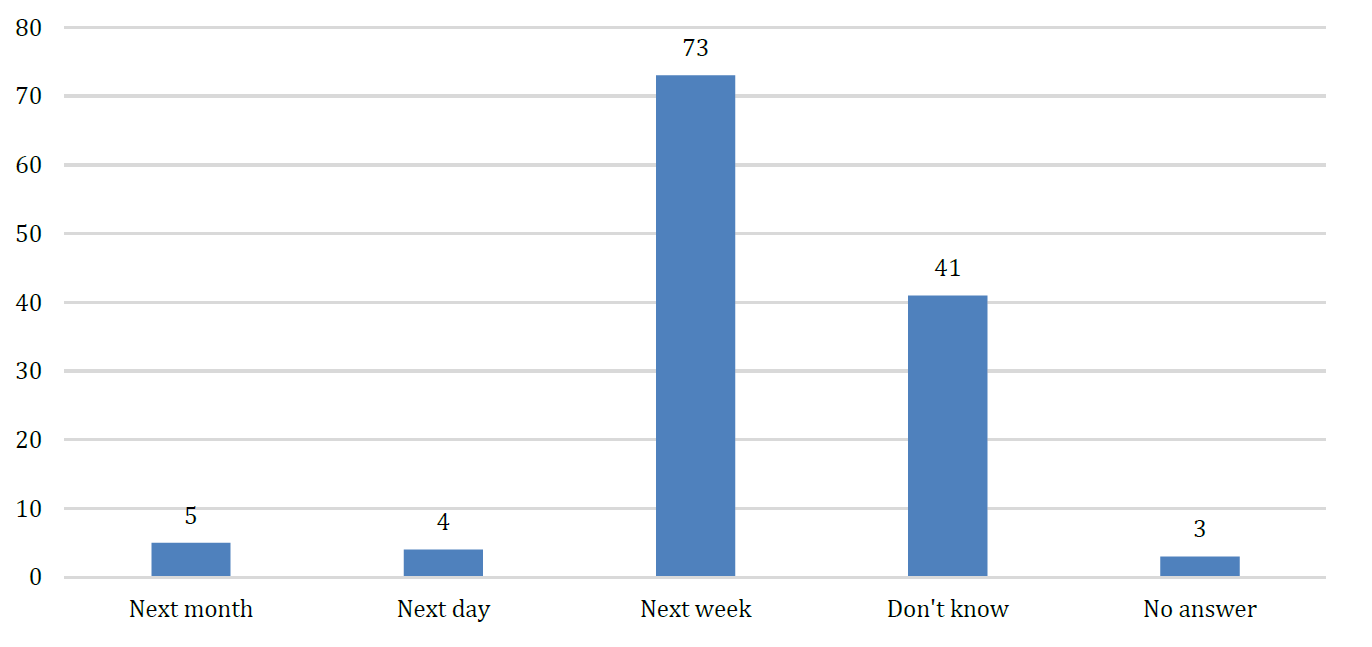
Among the rescheduled patients, 27% indicated that they had been rescheduled for next week or the following week while over 15% indicated they don’t know the rescheduled date as illustrated in figure 3.
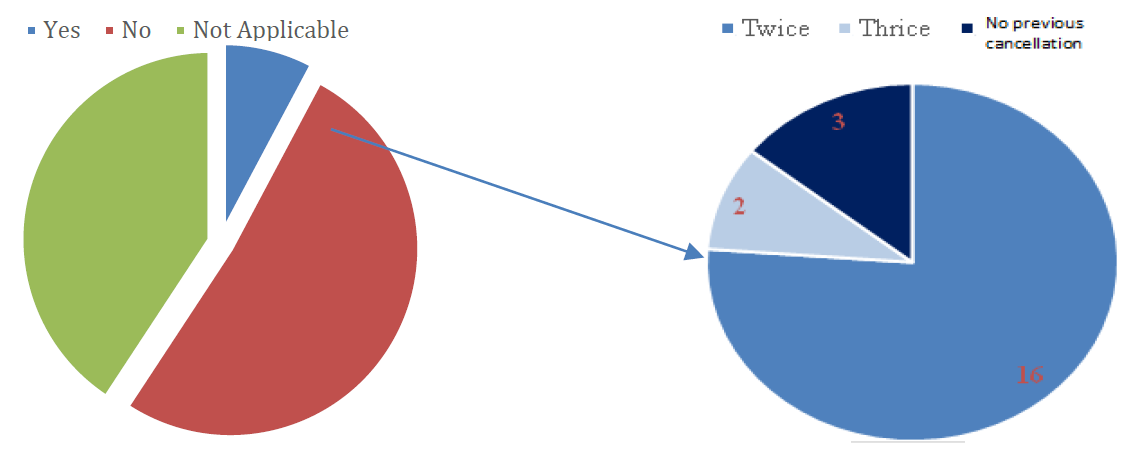
From Figure 4 patients who had encountered previous cancellation (n = 21) 8% indicated that this current cancellation is their first (n = 3) 12%, second (n = 16) 78% and third (n = 2) 10%.
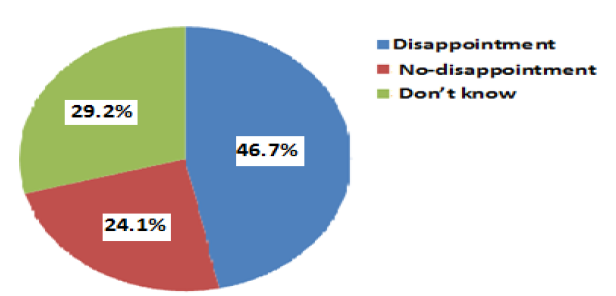
The majority of the patients expressed their feeling of disappointment 46.7% as seen in Figure 5. Sadness, frustration, and anger were reported 30.7, 7.4 and 4.4% respectively as seen in Table 6. We can note that women have a higher score of the hospital anxiety and depression (HAD) on average than men (15.08 and 12.26 vs. 10.35 and 9.41) as seen in Table 7 and 8. The effects of HAD as mild, moderate, and severe in the male and female populations. The scores of anxiety and depression increased with the age as HAD score: 8.9, 8.5, 9.7, 11.4, 12.1, 13.5, 15.4, and 14.6 for the <10, 10-19, 20-29, 30-39, 40-49, 50-59, 60-69 and >69 years respectively in Table 9.
Table 1: Percentage Distribution of Patient Characteristics
Variables
Sub Group
Frequency n
Percent
Age (Years)
Mean±SD
33.74±22.21
Employment/
Work Status
Government employee
16
5.9
Private employee
26
9.6
Student
40
14.8
Farmer
9
3.3
Trader
42
15.6
Self-employed
36
13.3
Unemployed
69
25.6
Retired
17
6.3
No Responses
23
5.6
Hospital Stay
Inpatient/Outpatient
155/115
57.0/43.0
Missing
8
2.9
Marital status
Single
117
43.3
Married
105
38.9
Divorced
3
1.1
Separated
6
2.2
Widowed
16
5.9
No Responses
23
8.5
Education
No Formal
50
18.5
Pre-school
3
1.1
Primary
78
28.9
Secondary
71
26.3
Tertiary
26
9.6
No responses
42
15.6
Cancellation Rate of Elective Surgical Cases
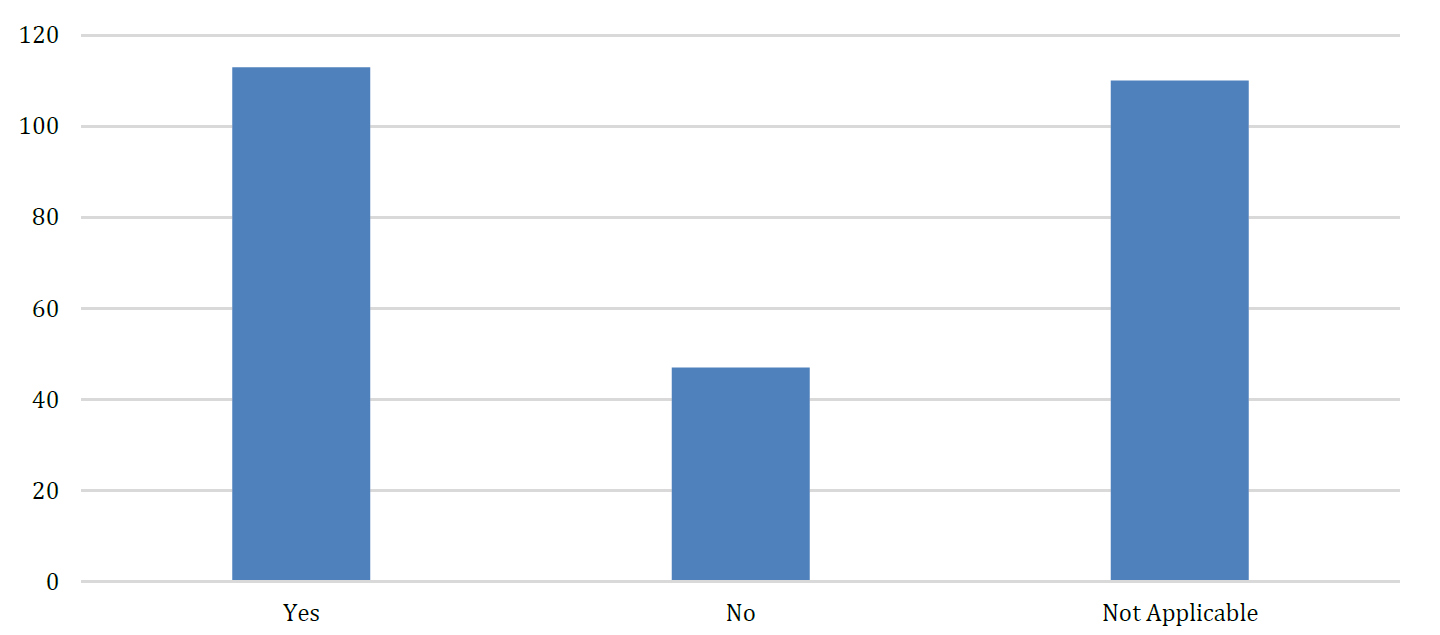
Figure 1: Distribution of Patients Whose Cancellation were Explained to Them (n = 270)
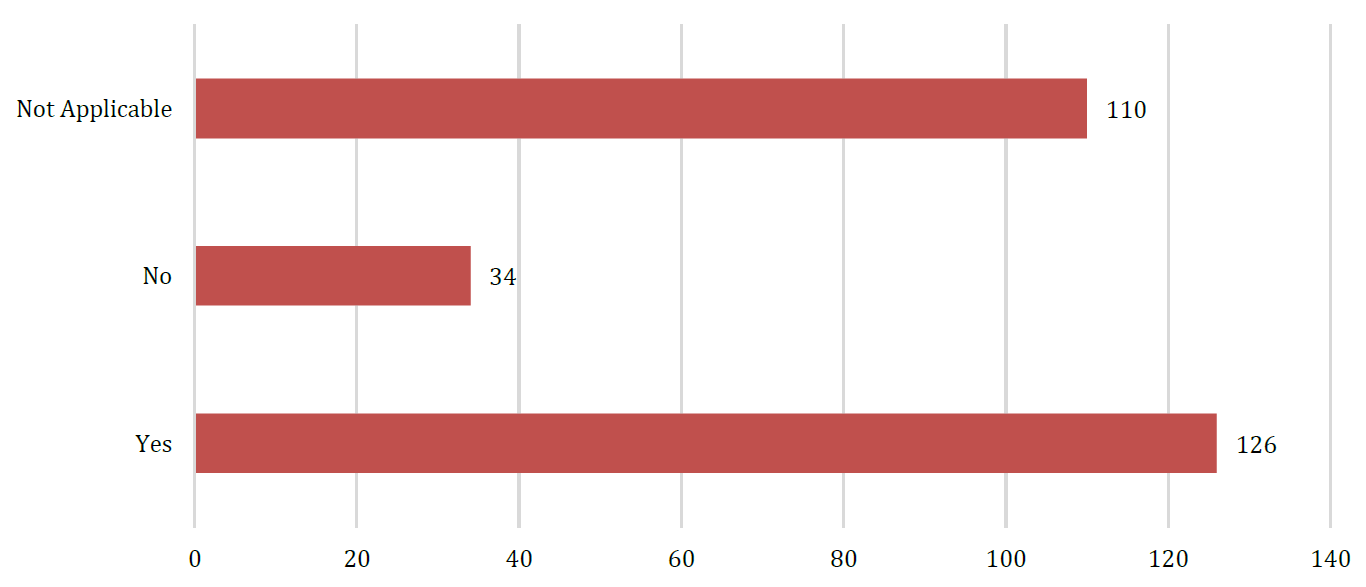
Figure 2: Distribution of Patients Whose Surgery were Rescheduled (n = 270)
Table 2: Surgical Specialty Distribution of Case
Type of Surgery
Booked Surgery
Operated Cases
Operations Cancelled
Cancellation Rate
Contribution to Total Cancellation
Trauma/Ortho
336
258
78
23.2
28.1
Gen Surg
203
133
70
34.5
25.2
Urology Surg
91
60
31
34.1
11.2
Gynaecology
126
95
31
24.6
11.2
Paediatrics
138
108
30
21.7
10.8
Plastic Surg
112
95
17
15.1
5.5
Neuro Surg
57
44
13
22.8
4.7
Cardio-thoracic
15
7
8
53.3
3.0
Total
1078
800
278
25.78
100
Table 3: Scheduled Surgery and Cancellations According to Demographic Data (n=270)
Demographic Data
No. of Patients
Surgery at first Cancellation (n = 139)
p–Value
N (%)
Freq. (n)
Percent
Age (Years)
< 10
46 (17.0)
22
15.8
0.235
10-19
37 (13.7)
18
12.9
20-29
41 (15.2)
25
18.0
30-39
35 (13.0)
15
10.8
40-49
49 (18.1)
25
18.0
50-59
24 (8.9)
10
7.2
60-69
17 (6.3)
11
7.9
> 69
21 (7.8)
13
9.4
Gender
Male
152 (56.3)
76
54.7
0.142
Female
118 (43.7)
63
45.3
Education
No Formal
50 (18.5)
34
24.5
0.034
Pre-school
3 (1.1)
1
0.7
Primary
78 (28.9)
37
26.6
Secondary
71 (26.3)
29
20.8
Tertiary
26 (9.6)
15
10.8
No responses
42 (15.6)
23
16.5
Hospital Stay
Impatient
155 (57)
104
74.8
0.02
Outpatient
115 (43)
35
25.2
There is a significant difference (p<0.05)
Table 4: Types of Surgery and Rates of Cancellations by Specialty (n = 270)
Type of Surgery
Booked Surgery
Operations Cancelled
Cancellation Rate
Cardio-thoracic
2/day
1 day
50.0%
Neuro-
3/day
1/day
33.3%
Plastic
4/day
1/day
25.0%
Trauma
8/day
2/day
25.0%
Urology
4/day
1/day
25.0%
Gynae
4/day
1/day
25.0%
General.
10/day
2/day
20.0%
Paediatrics
10/day
1-2/day
15.0%
Total
40/day
8/day
20.0%
Reason for Cancellation of Elective Surgical Cases
Figure 3: Reschedule Date discussed with Patients (n = 126)
Table 5: Reasons for Cancellation on the Day of Intended Surgery (n = 270)
Cause- related
Reasons
Specific Causes
Percent
In-patient N
Out-patient N
Within Total
Within Category
Medical/ Work up
(n = 42, 15.5%)
High Blood pressure
3
3
6 (2.2)
14.29
Hyperglycaemia
2
-
2(0.74)
4.76
Upper respiratory tract infection
1
2
3(1.1)
7.14
Acute Change in medical status
3
-
3(1.1)
7.14
Low Haemoglobin level
8
-
8(3.0)
19.05
Patient Eaten/ not fasted
5
2
7(2.6)
16.67
Blood not available/ arranged
8
5
13(4.8)
30.95
Patients
(n = 136, 50.4%)
Patient refusal/non-attendance
38
72
110 (40.7)
80.88
Financial problems
12
9
21 (7.8)
15.4
Spiritual beliefs
2
1
3(1.1)
2.21
Lack of confidence in the system
-
2
2(0.74)
1.47
Logistics / Administrative (n = 83, 30.7%)
Equipment failure/ unavailable
25
6
31(11.5)
37.35
No ventilator at the ICU
2
-
2 (0.74)
2.41
No water/ electricity supply
-
-
-
-
Lack of linen/ surgical drapes
1
-
1(0.37)
1.20
Lack of theatre space
5
6
11(4.1)
13.25
No bed
-
2
2(0.74)
2.41
Overbooked list
4
2
6(2.2)
7.23
Staff not available
19
11
30(11.1)
36.14
Others
(n = 51, 18.9%)
Biomedical Scientist on strike
7
4
11(4.1)
21.57
Blood bank not functioning
4
4
8(3.0)
15.69
CSSD not working
6
1
7(2.6)
13.73
Family issues
2
6
8(3.0)
15.69
Inconvenient appointment date
2
2
4(1.5)
7.84
Medical school examination
3
3
6(2.2)
11.76
Patient inadequately prepared
4
-
4(1.5)
7.84
Some investigations need to be done
3
-
3(1.1)
5.88
Table 6: Patient Response to the Question “How Do You Feel After The Cancellation of Your Surgery? “(n = 270)
Psychological and emotional Effects
Freq. (n)
Percentage
Sig. (2tailed)
Mean Diff.
95% CI
Low
Upp.
Sad
83
30.7
0.001
0.944
0.84
1.04
Angry
12
4.4
0.001
1.156
1.04
1.27
Disappointed
126
46.7
0.001
0.848
0.67
1.02
Discouraged
11
4.1
0.001
1.119
1.00
1.23
Stress
9
3.3
0.001
1.159
1.04
1.28
Frustrated
20
7.4
0.001
1.133
1.02
1.25
Confused
1
0.4
0.001
1.148
1.03
1.26
Disrespect
5
1.9
0.001
1.167
1.05
1.28
Weeping
3
1.1
0.001
1.126
1.03
1.27
Table 7: Hospital Anxiety and Depression (HAD) Score of Cancellation on Patients (n=270)
Effects
Mean Score+SD
Male
Female
p-Value
Anxiety
12.71+3.7
10.35
15.08
0.002
Depression
10.83+3.2
9.41
12.26
0.003
Table 8: Hospital Anxiety and Depression (HAD) Scale According to Gender (n=270)
Effects
Scale
Male cancellation
Female cancellation
Mild
8-10
73%
54%
Moderate
11-14
21%
27%
Severe
15-21
6%
19%
Figure 4: Number of Cancellation of Recent Surgeries (n = 270)
Figure 5: Patient Single Response to the Question “Your Response to the Cancellation of Your Surgery? “ (n = 270)
Table 9: Hospital Anxiety and Depression (HAD) Scale Scores According to Age
Age (Years)
No. of Patients
Percentage
Mean Score
<10
46
17.0
8.9
10-19
37
13.7
8.5
20-29
41
15.2
9.7
30-39
35
13.0
11.4
40-49
49
18.1
12.1
50-59
24
8.9
13.5
60-69
17
6.3
15.4
>69
21
7.8
14.6
DISCUSSION
Cancellation of elective surgery is a worldwide problem. Booking elective surgery is considered a contract between the patient and the healthcare institution. Booking determines the day of service. Cancellation is defined as any surgery scheduled on a given date that did not occur on a scheduled date [11]. Therefore, any cancellation of the booking, without prior notice or arrangement from either the patient or the healthcare provider, has far-reaching implications for both [12]. Most of the patients waiting for surgery experience worry and uncertainty [13].
During this study at Komfo Anokye Teaching Hospital (KATH), 1078 surgical interventions were booked and 25.78% (n = 278) were cancelled. The cancellation rate at KATH was lower than the studies conducted in some other African countries, such as Ojo and Ihezue in Nigeria [14], Kingham et al. in Sierra Leone [15], Lavy et al. in tropical countries in Africa [16], Notrica et al. in Rwanda [17] and Lankoande et al. [11], in Burkina [11] reported 28.5%, 28.6%, 30% to 55%, 35% and 36.9% respectively, while in developed countries the rate is much lower. In Saudi Arabia 7.6% [18], the United Kingdom 8% of scheduled interventions were cancelled compared to 11.8% in the U.S.A. [4] Nevertheless, Lankoande et al. study found the incidence of cancelled scheduled surgery can reach up to 63.9% [11]. Likewise, the rate of elective surgery cancellation in our study was lower than the rate reported in another Ghanaian study by Timmers et al., who observed a cancellation rate of 32% [19]. The high cancellation rate may be due to insufficient organization and the role of the studied facility, as it was not a referral and Teaching Hospital. The low cancellation rate of 21.9% in Lankoande et al. study might be related to the monitoring of cancellation as a quality indicator in the hospital quality improvement programme [20]. Another source of variation in the reported rates of cancellations is the approach to data collection, whether it is prospective or retrospective as seen in the study by Mesmar et al. [21]. In our study, data on cancellation were collected prospectively; therefore, under-reporting of cancellations is expected to be minimal compared to Kingham et al. [15].
In our study, patient-related 50.4% reasons were the most common cause of cancellation followed by Logistics 30.7% and medical causes 15.5%. Mutwali et al. found 68.3% patient-related and 33.3% related to anesthesia decisions. Other authors found that work-up and/or medical issues were the most common causes for cancellation [22].
Bjelland et al. explained a score of 8 or more for anxiety has a specificity of 0.78 and a sensitivity of 0.9 and for depression a specificity of 0.79 and a sensitivity of 0.83. Cancellation affects patients psychologically and emotionally [23]. An earlier study of Singh et al. showed that anxiety is common before surgery. [24] In our study 46.7% of the patients expressed their feeling of disappointment over the cancellation of their elective surgery. Lankoandea and Ivarsson et al. studies patients reacted negatively to cancellation were 85.7% and 61%. [20, 25] Our low disappointment over the cancellation may be due to the preadmission clinic. AS shown by Lindsay 1998 Patients’ preadmission anxiety could be reduced from 74% to 24% by a preadmission clinic. [26] If the patients visit a preadmission clinic staffed with experienced nurses after booking an elective case, it will identify and measure both medical and psychological problems in time to prevent late cancellations. In case of uncertainty, it is important that the nurse involves an experienced surgeon.
These patients reported mild, moderate, and sever hospital anxiety and depression (HAD) score 63.5%, 24%, and 12.5% respectively. Elder population in the age group of 60 to 69 years showed a sever HAD score of 15.4 and the age group 10 to 19 years showed a mild HAD score of 8.5. Generally, elder persons show more worry, stress, and fear before an operation than a younger person as suggested by Weaver Moore et al. and justify our findings [27].
CONCLUSION
This prospective study demonstrated that the elective surgery cancellation rate was high. Cancellation causes were mainly patient-related. Most causes were avoidable. The patients reacted negatively to having their surgery cancelled. The women in the cancellation group had a significantly higher degree of depression than the other studied patients. The results indicate that cancellations should be minimized. It is therefore important to identify the reasons for the cancellations and make suitable changes in the organization. With preadmission clinic most of incomplete preoperative and psychosocial problems can be detected, may be of great value. Special efforts should be made to inform patients with cancelled surgery adequately and arrange a new operation date as soon as possible. A prospective study is necessary to evaluate the medical impact of cancellation on the outcomes of scheduled surgeries.
Conflicts of Interest
The authors declare that they have no competing interests.
REFERENCE
Mutwali, I.M. et al. "Cancellation of elective surgical operations in a teaching hospital at Khartoum Bahri, Sudan." Sudan Medical Monitor, vol. 11, no. 2, 2016, p. 45.
Argo, J.L. et al. "Elective surgical case cancellation in the Veterans Health Administration system: identifying areas for improvement." The American Journal of Surgery, vol. 198, no. 5, 2009, pp. 600–606.
Dexter, F. et al. "Use of operating room information system data to predict the impact of reducing turnover times on staffing costs." Anesthesia & Analgesia, vol. 97, no. 4, 2003, pp. 1119–1126.
Schuster, M. et al. "The effect of hospital size and surgical service on case cancellation in elective surgery: results from a prospective multicenter study." Anesthesia & Analgesia, vol. 113, no. 3, 2011, pp. 578–585.
Ivarsson, B. et al. "Postponed or cancelled heart operations from the patient's perspective." Journal of Nursing Management, vol. 12, no. 1, 2004, pp. 28–36.
Kaddoum, R. et al. "Causes of cancellations on the day of surgery at a tertiary teaching hospital." BMC Health Services Research, vol. 16, no. 1, 2016, p. 259.
Sanjay, P. et al. "Cancelled elective operations: an observational study from a district general hospital." Journal of Health Organization and Management, vol. 21, no. 1, 2007, pp. 54–58.
Dexter, F. et al. "Descriptive study of case scheduling and cancellations within 1 week of the day of surgery." Anesthesia & Analgesia, vol. 115, no. 5, 2012, pp. 1188–1195.
Zigmond, et al. "The Hospital Anxiety and Depression Scale." Acta Psychiatrica Scandinavica, vol. 67, 1983, pp. 361–370.
Stern, A. F. "The Hospital Anxiety and Depression Scale." Occupational Medicine, vol. 64, 2014, pp. 393–394.
Lankoande, M. et al. "Cancellation of elective surgical procedures in the university teaching hospital center Yalgado Ouedraogo in Burkina Faso: incidence, reasons and proposals for improvement." South African Journal of Anaesthesia and Analgesia, vol. 1, no. 1, 2016, pp. 1–5.
Perroca, et al. "Surgery cancelling at a teaching hospital: implications for cost management." Revista Latino-Americana de Enfermagem, vol. 15, 2007, pp. 1018–1024.
Jonsdottir, H. and Baldursdottir, L. "The experience of people awaiting coronary artery bypass graft surgery: the Icelandic experience." Journal of Advanced Nursing, vol. 27, 1998, pp. 68–74.
Ojo, E.O. and Ihezue, C. H. "An audit of day case cancellations in a Nigerian tertiary hospital." East and Central African Journal of Surgery, vol. 13, no. 2, 2008, pp. 150–153.
Kingham, T.P. et al. "Quantifying surgical capacity in Sierra Leone: a guide for improving surgical care." Archives of Surgery, vol. 144, no. 2, 2009, pp. 122–127.
Lavy, C. et al. "State of surgery in tropical Africa: a review." World Journal of Surgery, vol. 35, no. 2, 2011, pp. 262–271.
Notrica, M.R. et al. "Rwandan surgical and anesthesia infrastructure: a survey of district hospitals." World Journal of Surgery, vol. 35, no. 8, 2011, pp. 1770–1780.
Dhafar, K.O. et al. "Cancellation of operations in Saudi Arabian hospitals: frequency, reasons and suggestions for improvements." Pakistan Journal of Medical Sciences, vol. 31, no. 5, 2015, p. 1027.
Timmers, T.K. et al. "Experience of collaboration between a Dutch surgical team in a Ghanaian Orthopaedic Teaching Hospital." African Health Sciences, vol. 16, no. 3, 2016, pp. 838–844.
Lankoandé, M. et al. "Economic and psychological burden of scheduled surgery cancellation in a sub-Saharan country (Burkina Faso)." Southern African Journal of Anaesthesia and Analgesia, vol. 23, no. 6, 2017, pp. 145–151.
Mesmar, M. et al. "Reasons for cancellation of elective operations at a major teaching referral hospital in Jordan." Eastern Mediterranean Health Journal, vol. 17, no. 8, 2011, p. 651.
Mutwali, I.M. et al. "Cancellation of elective surgical operations in a teaching hospital at Khartoum Bahri, Sudan." Sudan Medical Monitor, vol. 11, 2016, pp. 45–51.
Bjelland, I. et al. "The validity of the Hospital Anxiety and Depression Scale. An updated literature review." Journal of Psychosomatic Research, vol. 52, 2002, pp. 69–77.
Singh, et al. "The effect of combined conventional and modified ultrafiltration on mechanical ventilation and hemodynamic changes in paediatric congenital heart surgery." EAS Journal of Anaesthesiology and Critical Care, vol. 2, no. 1, 2020, pp. 30–39.
Ivarsson, B. et al. "Patients reactions to cancelled or postponed heart operations." Journal of Nursing Management, vol. 10, 2002, pp. 75–81.
Lindsay, G. et al. "Implementing research in nurse-led care." Nursing Times, vol. 94, 1998, pp. 46–47.
Weaver Moore, et al. "Communicating effectively with elderly surgical patients." AORN Journal, vol. 58, 1993, pp. 345–355.
Recommended Articles
Research Article
Evidence Guided, Experience Based and Patient Compatible 3-Step Protocol for Managing Moderate to Severe Category of COVID19 Infections
Farah Husain,
...
Kirti N Saxena
Published: 05/01/2021
Download PDF
Research Article
A Descriptive Cross-Sectional Study to Evaluate the Knowledge about Symptoms and Risk Factors for Heart Attack (Myocardial Infarction) Among the General Population of New Delhi
Aastha Sehgal,
...
Avneet Kaur
Published: 06/05/2023
Download PDF
Research Article
Knowledge About Risk and Preventive Factors for Osteoarthritis Knee among Ortho OPD Patients in Regional Hospital, Keylong in District Lahaul and Spiti of Himachal Pradesh
Ajay Thakur,
Jaspal Chaudhary
Published: 20/06/2022
Download PDF
Research Article
A Randomized Controlled Trial Comparing the Effect of Oral Preemptive Pregabalin Compared to IV Lignocaine in Attenuating Hemodynamic Response to Laryngoscopy
P. Aashik,
...
B.N. Reddy
Published: 17/05/2023
Download PDF
PO Box 101, Nakuru
Kenya.
Email: office@iarconsortium.org
Editorial Office:
J.L Bhavan, Near Radison Blu Hotel,
Jalukbari, Guwahati-India
Anarfi, N., Singh, S. & Nakua, E. (2020). Effect of Cancellation of Elective Operation on Patient. IAR Journal of Anaesthesiology and Critical Care, 1(1), 1-8.
MLA
Anarfi, Nicholas, Sanjeev Singh and Emmanuel Nakua. "Effect of Cancellation of Elective Operation on Patient." IAR Journal of Anaesthesiology and Critical Care 1.1 (2020): 1-8.
Chicago
Anarfi, Nicholas, Sanjeev Singh and Emmanuel Nakua. "Effect of Cancellation of Elective Operation on Patient." IAR Journal of Anaesthesiology and Critical Care 1, no. 1 (2020): 1-8.
Harvard
Anarfi, N., Singh, S. and Nakua, E. (2020) 'Effect of Cancellation of Elective Operation on Patient' IAR Journal of Anaesthesiology and Critical Care 1(1), pp. 1-8.
Vancouver
Anarfi N, Singh S, Nakua E. Effect of Cancellation of Elective Operation on Patient. IAR Journal of Anaesthesiology and Critical Care. 2020 Jul;1(1):1-8.



 Download PDF
 Download XML