Contents
Download PDF
pdf Download XML
31 Views
8 Downloads
Share this article
Research Article | Volume 6 Issue 2 (July-December, 2025) | Pages 1 - 4
Comparison of Lidocaine and Dexamethasone in Alleviating Postoperative Sore Throat Following General Anaesthesia: A Comparative Study Among a Sample of Iraqi Patients
1
M.B.Ch.B, F.I.C.M.S, Specialist in Anaesthesia and Intensive Care, Ministry of Health, Iraq
Under a Creative Commons license
Open Access
Received
Sept. 14, 2025
Revised
Oct. 14, 2025
Accepted
Oct. 22, 2025
Published
Oct. 25, 2025
Abstract

Background: Following endotracheal intubation, postoperative sore throat (POST) is a recurrent complication and is regarded as a significant concern after surgery. Aim: To compare intravenous dexamethasone and lidocaine for the effectiveness in the prevention of POST. Patients and Method: A double-blind, randomized controlled, comparative study was conducted in the Private Nursing Home Hospital during the period from January to June 2025. A convenient sample of 150 pregnant women who were planned to undergo elective cesarean section under general anaesthesia was enrolled in the current study. Those patients were categorized into the dexamethasone group which involved 150 patients with intravenous dexamethasone (8 mg) ampule and the lidocaine group which involved 150 patients who received intravenous lidocaine with a dose of 1.5 mg/kg. Results: The higher incidence of POST was stated in the lidocaine group at 21.3% compared to the incidence in the dexamethasone group at 12.7%, this difference was significant with a P-value of 0.046. On the other hand, no significant difference was obtained between lidocaine and dexamethasone groups regarding the severity of POST (P-value=0.170). Conclusion: Dexamethasone use seemed to be more effective than lidocaine use in reducing the incidence of POST. It is recommended to use dexamethasone regularly to help lower the occurrence of POST.

Keywords
INTRODUCTION

The management of the airway is a fundamental responsibility for anaesthetists when caring for patients undertaking diagnostic procedures or surgical operations [1]. Unfortunately, endotracheal intubation is a high-risk procedure, with significant rates of complications [2], POST is defined as pain or irritation in the laryngeal or pharyngeal region that develops during the postoperative hours. In contrast, the sore throat is a general, non-medical term often used to describe pharyngitis and may encompass a range of symptoms, including cough, laryngitis, dysphagia, tracheitis, or hoarseness [3]. The reported frequency of POST differs among various studies, with most reporting a prevalence ranging from 14.5% to 50% [4]. POST typically peaks within six postoperative hours and gradually decreases in both incidence and severity over time [5]. POST is primarily attributed to injuries of the supraglottic structures, often resulting from laryngoscope insertion, as well as injuries to the subglottic structures, which may be triggered by endotracheal intubation or endotracheal tube cuff pressure [6]. Several factors have been associated with the etiology of POST, including dehydration and/or edema of the mucosa, tracheal ischemia resulting from endotracheal tube cuff pressure, vigorous oropharyngeal suctioning, mucosal erosion due to contact between fragile airway tissues and the endotracheal tube, as well as postoperative vomiting [7,8]. Non-pharmacological methods to decrease the incidence of POST and its severity include pre-intubation gargling with agents such as licorice or sodium azulene sulfonate, use of normal saline to inflate the cuff of the endotracheal tube, administering cold vapor after extubation, and gargling by using honey-lemon water. Another approach involves using thermal-softened endotracheal tubes to reduce mechanical    and     thermal      injuries     associated   with traditional cold and rigid tubes. Although several pharmacological strategies have been suggested, none has gained universal acceptance [9]. Various pharmacological agents are used in the preoperative setting, intraoperative setting, and postoperative setting to minimize the occurrence of POST after general anaesthesia. These agents include corticosteroids (such as dexamethasone, betamethasone, fluticasone, and methylprednisolone), α₂-agonists, local anaesthetics, opioids, nonsteroidal anti-inflammatory drugs, and ketamine [10]. Dexamethasone is a potent glucocorticoid drug used for a variety of indications [11]. Steroids are well known for their anti-inflammatory properties, which include the inhibition of leukocyte migration and suppression of cytokine release at sites of inflammation. Additionally, they inhibit fibroblast proliferation, thereby limiting tissue injury. Dexamethasone, in particular, produces its anti-inflammatory effects by blocking arachidonic acid metabolism, resulting in reduced production of leukotriene and suppression of interleukin-2 activity [12]. Lidocaine possesses antihyperalgesic, analgesic, and anti-inflammatory properties, making it an adjunct to be used with general anesthesia [13]. Lidocaine may offer several potential benefits in the perioperative setting, including its anti-inflammatory effects, prevention of hyperalgesia, reduction of propofol-induced injection pain, enhancement of the depth of general anesthesia, protection against bronchial reactivity through broncho-tracheal relaxation during surgery, and attenuation of nociceptive and cardiovascular responses to surgical stress [14,15].


Aim of the study: To compare intravenous dexamethasone and lidocaine for the effectiveness in the prevention of POST.

MATERIALS AND METHODS

A double-blind, randomized controlled, comparative study was conducted in the Private Nursing Home Hospital during the period from January to June 2025. A convenient sample of 300 pregnant women who were planned to undergo elective cesarean section under general anaesthesia and met the inclusion criteria was enrolled in the current study. Those patients were categorized into the dexamethasone group which included 150 patients who received intravenous dexamethasone (8 mg) ampule and the lidocaine group which consisted of 150 patients who received intravenous lidocaine (1.5 mg/kg) ampule. The inclusion criteria included patients with grade 1 or grade 2a according to the Modified Cormack-Lehane classification and grade II American Society of Anesthesiologists. Patients with chronic steroid use, patients with a history of sore throat and hoarseness before surgery, patients with more than two endotracheal intubation attempts, and patients with complicated intubation were excluded from the study. At the time of induction, the agent was prepared by an individual not participating in the anaesthetic-surgical procedure. The researcher was unaware of the injected agent. The gathered data were body mass index (BMI), age, duration of intubation, time of attempts, duration of anaesthesia, and need for external pressure. 


Statistical Analysis

Statistical Package for the Social Sciences, version 26 software, was used for analysis. The categorical variables were displayed as numbers and percentages, while continuous variables were displayed as mean ± standard deviation. The calculation of the differences between study groups were achieved by the t-test and the Chi-square test. A p-value less than 0.05 reflected statistical significance.

RESULTS

The study registered 300 patients. The difference was not significant between dexamethasone and lidocaine groups regarding age, with a P-value of 0.234 and BMI, with a P-value of 0.074, as displayed in Table 1.


Table 1: Basic characteristics of the patients

CharacteristicsDexamethasone group

Lidocaine 

group

P-value

Age (years) 

Mean±SD

26.1 ±4.9

25.4 ±5.7

0.234

BMI (Kg/m2)

Mean±SD

23.7 ±2.8

23.1 ±3.0

0.074


The characteristics of anaesthesia, including duration of intubation, duration of anaesthesia, number of attempts, and applications of external pressure, were not significantly different between the study groups (P-values were 0.772, 0.245, 0.218, and 0.659) as displayed in Table 2.


Table 2: Characteristics of the anaesthesia

Characteristics of anaesthesia

Dexamethasone group

Lidocaine 

group

P-value

Mean ±SD

Mean ±SD

Duration of the intubation (seconds)

23.9 ±2.4

24.0 ±2.4

0.772

Duration of the anaesthesia (minutes)

46.4 ±11.9

44.8 ±10.7

0.245


Dexamethasone group

Lidocaine 

group


N (%)

N (%)

Number of attempts

1

140 (93.3)

134 (89.3)

0.218

2

10 (6.7)

16 (10.7)

Application of external pressure 

Yes

27 (18.0)

30 (20.0)

0.659

No

123 (82.0)

120 (80.0)


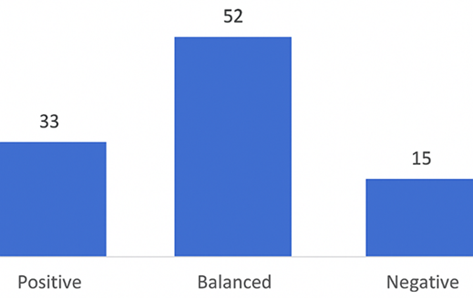
A statistically significantly higher POST incidence was in the lidocaine group at 21.3% compared to the dexamethasone group at 12.7% (P-value=0.046), as displayed in Table 3 and Figure 1.


Table 3: Distribution of POST incidence in the two study groups

Characteristics

Dexamethasone group

Lidocaine group

P-value

N (%)

N (%)

POST

Yes 

19 (12.7)

32 (21.3)

0.046

No

131 (87.3)

118 (78.7)


Figure 1: Incidence of POST


Regarding the severity of POST, no statistically significant variance was obtained between the study groups with a P-value of 0.170 as displayed in Table 4.


Table 4:   The association between the severity of POST and the drug used in the current study

CharacteristicsDexamethasone group

Lidocaine 

group

P-value

N (%)

N (%)

Minimal 

13 (68.4)

14 (50.0)

0.170

Moderate 

4 (21.1)

13 (46.4)

Severe

2 (10.5)

1 (3.6)


DISCUSSION

For better patient satisfaction, avoiding POST is one of the main priorities among patients undergoing endotracheal intubation. Many drugs were used to reduce POST with varying degrees of success [16]. This study was one of several that aimed to evaluate the success of certain drugs in preventing POST and assessing their impact. The main outcome of the current study was that the POST incidence was significantly decreased by using dexamethasone compared to using lidocaine. In comparison, the same results were obtained in another study that was done in Ethiopia by Samue et al. [17] which revealed that the POST incidence was 40% with lidocaine use and 32%. This agreed with the results of another study that was done in Egypt by Mohammed et al. [18] which concluded that intravenous administration of dexamethasone seems to be more promising than lidocaine in decreasing the POST incidence. In the same line, Asish et al. [19] concluded that dexamethasone, alone or combined with lidocaine, effectively reduced the incidence of POST in patients undergoing prolonged tracheal intubation, with incidences of 36% in the dexamethasone group versis 43% in the lidocaine group. The second finding of the present study, both dexamethasone and lidocaine had the same outcome on the severity of POST. This agreed with the results of another study that was in Ethiopia by Samue et al. [17] The same results were obtained in another study that was done in Egypt by Mostafa et al. [20]. In the same line, Hassan et al. [21] revealed that a prophylactic one dose of intravenous dexamethasone (8 mg) decreases both the incidence and severity of POST.

CONCLUSION

Dexamethasone use seemed to be more effective than lidocaine use in reducing the incidence of POST. It is recommended to use dexamethasone regularly to help lower the occurrence of POST.

REFERENCES
  1. Van Zundert, A.A., et al. “2021 Update on Airway Management from the Anaesthesia Continuing Education Airway Management Special Interest Group.” Anaesthesia and Intensive Care, vol. 49, no. 4, 2021, pp. 257–267. https://doi.org/10.1177/0310057X20984784.

  2. Turner, J.S., et al. “Association of Checklist Use in Endotracheal Intubation with Clinically Important Outcomes: A Systematic Review and Meta-analysis.” JAMA Network Open, vol. 3, no. 7, 2020, p. e209278. https://doi.org/10.1001/jamanetworkopen.2020.9278.

  3. Teshome, D., et al. “Prevalence and Factors Associated with Postoperative Sore Throat in Ethiopia: A Systemic Review and Meta-analysis.” Preventive Medicine Reports, vol. 45, 2024, p. 102818. https://doi.org/10.1016/j.pmedr.2024.102818.

  4. Ali, J., et al. “Postoperative Sore Throat Following General Surgical Procedures under General Anesthesia with Endotracheal Intubation.” Journal of Health and Rehabilitation Research, vol. 4, no. 2, 2024, pp. 1039–1045. https://orcid.org/0009-0004-4811-1903.

  5. Chen, Z., et al. “Postoperative Sore Throat after Tracheal Intubation: An Updated Narrative Review and Call for Action.” Journal of Pain Research, vol. 18, 2025, pp. 2285–2306. https://doi.org/10.2147/JPR.S498933.

  6. Gemechu, B.M., et al. “Risk Factors for Postoperative Throat Pain after General Anaesthesia with Endotracheal Intubation at the University of Gondar Teaching Hospital, Northwest Ethiopia, 2014.” Pan African Medical Journal, vol. 27, 2017, p. 127. https://doi.org/10.11604/pamj.2017.27.127.10566.

  7. Teymourian, H., et al. “Magnesium and Ketamine Gargle and Postoperative Sore Throat.” Anesthesia and Pain Medicine, vol. 5, no. 3, 2015, p. e22367. https://doi.org/10.5812/aapm.5(3)2015.22367.

  8. Hee, H.-Z., et al. “The Effect of Thermal-Softened Endotracheal Tubes on Postoperative Sore Throat and Other Complications: A Systematic Review and Meta-analysis.” Journal of Clinical Medicine, vol. 14, no. 11, 2025, p. 3620. https://doi.org/10.3390/jcm14113620.

  9. Chattopadhyay, S., et al. “Postoperative Sore Throat Prevention in Ambulatory Surgery: A Comparison between Preoperative Aspirin and Magnesium Sulfate Gargle – A Prospective, Randomized, Double-blind Study.” Anesthesia: Essays and Researches, vol. 11, no. 1, 2017, pp. 94–100. https://doi.org/10.4103/0259-1162.186602.

  10. Spoorenberg, S.M.C., et al. “Pharmacokinetics of Oral vs. Intravenous Dexamethasone in Patients Hospitalized with Community-Acquired Pneumonia.” British Journal of Clinical Pharmacology, vol. 78, no. 1, 2014, pp. 78–83. https://doi.org/10.1111/bcp.12295.

  11. Reichardt, S.D., et al. “The Role of Glucocorticoids in Inflammatory Diseases.” Cells, vol. 10, no. 11, 2021, p. 2921. https://doi.org/10.3390/cells10112921.

  12. Estebe, J.P. “Intravenous Lidocaine.” Best Practice & Research Clinical Anaesthesiology, vol. 31, no. 4, 2017, pp. 513–521. https://doi.org/10.1016/j.bpa.2017.05.005.

  13. Beaussier, M., et al. “Perioperative Use of Intravenous Lidocaine.” Drugs, vol. 78, no. 12, 2018, pp. 1229–1246. https://doi.org/10.1007/s40265-018-0955-x.

  14. Özsoy, H., and T. Yeşilyaprak. “Non-Pharmacological Methods in the Management of Postoperative Sore Throat in Patients Undergoing Endotracheal Intubation: A Systematic Review.” Bezmialem Science, 2024. https://doi.org/10.14235/bas.galenos.2023.12754.

  15. Ayalew, S.B., et al. “Comparison between Intravenous Lidocaine and Dexamethasone in Reducing Postoperative Sore Throat after Endotracheal Extubation at Tikur Anbessa Specialized Hospital, Addis Ababa, Ethiopia: A Prospective Cohort Study.” BMC Anesthesiology, vol. 24, no. 1, 2024, p. 259. https://doi.org/10.1186/s12871-024-02634-2.

  16. Mohammed, M.N., and A. El Said Rashad. “Lidocaine versus Dexamethasone for Reduction of Sore Throat after General Anesthesia: A Comparative Study.” Research and Opinion in Anesthesia & Intensive Care, vol. 9, no. 4, 2022, pp. 297–301. https://doi.org/10.4103/roaic.roaic_74_21.

  17. Subedi, A., et al. “Effect of Intravenous Lidocaine, Dexamethasone, and Their Combination on Postoperative Sore Throat: A Randomized Controlled Trial.” Anesthesia & Analgesia, vol. 129, no. 1, 2019, pp. 220–225. https://doi.org/10.1213/ane.0000000000003842.

  18. Abdelkhalek, M., et al. “Does the Combination of Intravenous Lidocaine and Dexamethasone Reduce the Incidence of Postoperative Sore Throat? A Randomized Controlled Trial.” Trends in Anaesthesia and Critical Care, vol. 59, 2024, p. 101503. https://doi.org/10.1016/j.tacc.2024.101503.

  19. Hassan Sarhaan, H., and A.A. Bashar Taha. “The Role of Dexamethasone in Reducing the Severity of Postoperative Sore Throat.” The Iraqi Postgraduate Medical Journal, vol. 12, no. 3, 2013, pp. 454–459. https://doi.org/10.1177/0310057X20984784.

Recommended Articles
Research Article
A Descriptive Cross-Sectional Study to Evaluate the Knowledge about Symptoms and Risk Factors for Heart Attack (Myocardial Infarction) Among the General Population of New Delhi
...
Published: 06/05/2023
Download PDF
Research Article
Clinical Effects of Combined Spinal–Epidural Anaesthesia versus Spinal Anaesthesia in Major Orthopaedic Surgeries: A Systematic Review of Outcomes and Complications
Published: 05/04/2025
Download PDF
Research Article
Evidence Guided, Experience Based and Patient Compatible 3-Step Protocol for Managing Moderate to Severe Category of COVID19 Infections
...
Published: 05/01/2021
Download PDF
Research Article
Knowledge About Risk and Preventive Factors for Osteoarthritis Knee among Ortho OPD Patients in Regional Hospital, Keylong in District Lahaul and Spiti of Himachal Pradesh
Published: 20/06/2022
Download PDF
Chat on WhatsApp
Flowbite Logo
PO Box 101, Nakuru
Kenya.
Email: office@iarconsortium.org

Editorial Office:
J.L Bhavan, Near Radison Blu Hotel,
Jalukbari, Guwahati-India
Useful Links
Order Hard Copy
Privacy policy
Terms and Conditions
Refund Policy
Shipping Policy
Others
About Us
Contact Us
Online Payments
Join as Editor
Join as Reviewer
Subscribe to our Newsletter
+91 60029-93949
Follow us
MOST SEARCHED KEYWORDS
Copyright © iARCON International LLP . All Rights Reserved.